
Essentials of Human Anatomy and Physiology Ebook: The Complete Student Guide for 2026 September
Find the essentials of human anatomy and physiology 12th edition ebook — formats, costs, features & study tips. 📚 Everything students need to know.
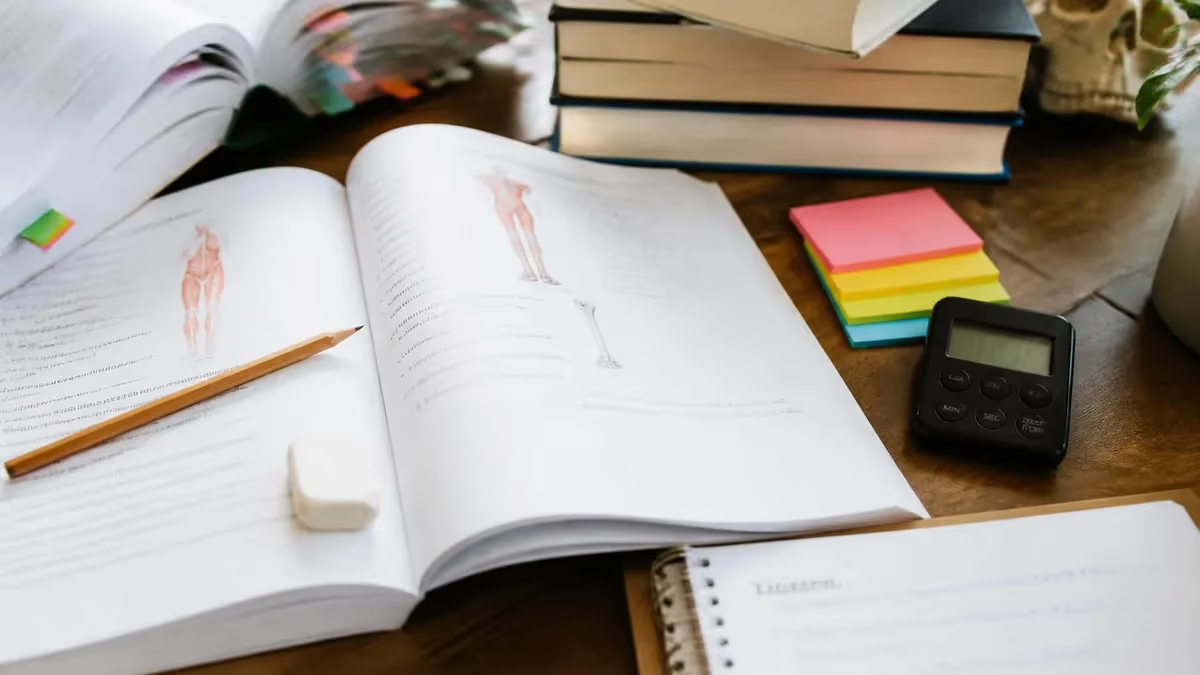
The essentials of human anatomy and physiology 12th edition ebook by Elaine Marieb is one of the most widely adopted introductory textbooks in undergraduate biology and allied health programs across the United States.
First published decades ago and continuously refined through twelve major revisions, this digital edition delivers the same rigorously accurate content students expect from the print version — covering body organization, cellular biology, tissue types, and every major organ system — while adding hyperlinked navigation, embedded review questions, and search functionality that print simply cannot match. For students balancing lecture, lab, and clinical hours, the ebook format represents a genuine quality-of-life upgrade that goes far beyond mere convenience.
Accessing the ebook begins with choosing the right platform. Pearson's MyLab and Mastering platform hosts the official digital edition and is the version most commonly bundled with course access codes. Students can also purchase standalone ebook licenses through VitalSource Bookshelf, RedShelf, and Chegg eReader. Each platform offers slightly different features: VitalSource allows offline reading after download, RedShelf integrates instructor annotations, and Chegg bundles rental access with a 24/7 homework-help service. Understanding these distinctions before you buy can save you both money and frustration during a high-stakes semester.
Cost is a major driver behind ebook adoption. A new print copy of the 12th edition typically retails between $180 and $240 at campus bookstores, whereas ebook rentals on Pearson's platform run approximately $49 to $89 for a semester-long license. Permanent digital purchase sits in the $99 to $129 range depending on the vendor. Many students report saving $100 or more by choosing the ebook route, money that can go toward lab materials, NCLEX prep resources, or anatomy model kits that reinforce hands-on learning during the course.
The 12th edition introduced several meaningful updates over the 11th. New clinical application boxes spotlight real patient scenarios — from diagnosing compartment syndrome to interpreting arterial blood gas results — making the content immediately relevant for nursing and allied health majors. Updated figures incorporate more photorealistic 3-D renderings of muscle origins, insertions, and nerve pathways. The skeletal, muscular, nervous, endocrine, cardiovascular, respiratory, digestive, urinary, and reproductive systems are all covered with the same balanced depth that made earlier editions so popular with instructors nationwide.
One of the most underappreciated advantages of the digital format is the ability to annotate without permanently marking a rental. Students can highlight key terms, drop sticky-note comments on complex figures, and export those notes as a PDF study guide at the end of the semester. This workflow is especially valuable when studying the nervous system's intricate cranial nerve pathways or the cardiovascular system's pressure gradients, where color-coded highlighting by topic dramatically improves retention compared to passive reading.
For students who are unsure whether anatomy and physiology will be a manageable workload, the ebook's built-in search makes it easy to cross-reference terminology across chapters. Searching "action potential" instantly surfaces every context in which the term appears — from the neuromuscular junction section to the cardiac conduction system chapter — giving you a richer, more connected understanding of physiology than reading linearly ever could.
If you are still evaluating the difficulty of the course itself, our guide on the essentials of human anatomy and physiology ebook covers realistic time commitments and grade distributions that will help you plan your semester effectively.
Finally, accessibility features built into modern ebook platforms make the 12th edition more inclusive than ever. Screen-reader compatibility, adjustable font sizes, high-contrast display modes, and text-to-speech playback all ensure that students with visual impairments or reading disabilities can engage with the full content of the textbook. Institutions with ADA compliance requirements increasingly favor ebook formats precisely because these features are built in rather than bolted on as afterthoughts, and Pearson's accessibility team has made significant strides in this area with each successive digital release.
Essentials of Human Anatomy & Physiology Ebook by the Numbers

Ebook Platforms: Where to Access the 12th Edition
The official publisher platform. Bundled with most course access codes. Includes instructor-assigned quizzes, adaptive learning modules, and real-time grade sync with your LMS. Semester license runs $49–$89. Best choice if your professor requires MyLab assignments.
Widely trusted third-party ebook platform. Supports offline reading after downloading chapters, cross-device syncing, and note export. Permanent purchase typically costs $99–$129. Strong annotation tools make it popular with students who prefer owning their digital library.
Integrated into many campus bookstore portals. Allows instructors to embed notes and highlights visible to the whole class. Rental terms match the academic semester. Best for students whose school has a RedShelf partnership and wants seamless LMS integration.
Pairs the ebook rental with Chegg's Study and Expert Q&A services. Good value bundle for students who anticipate needing homework help. Watch out for rental return deadlines — missing them can trigger auto-purchase charges on your account.
Understanding the true cost of the Essentials of Human Anatomy and Physiology ebook requires looking beyond the sticker price and factoring in the full value equation. A semester-long rental from Pearson typically costs between $49 and $89, compared to $180 to $240 for a brand-new hardcover at most campus bookstores. However, the savings calculation does not end there.
Students who sell their used print textbooks at the end of the semester typically recover only 20 to 40 percent of the purchase price, especially when a new edition is forthcoming. Ebook rentals eliminate this resale risk entirely, making the net savings even larger than the upfront price difference suggests.
Permanent ebook purchases occupy a middle ground that is worth considering for students who will reference the material beyond a single course. A nursing student, for example, who takes both Anatomy and Physiology I and II, followed by a pharmacology course, will find the 12th edition useful across multiple semesters.
In this scenario, spending $99 to $129 on a permanent VitalSource license rather than renting twice at $89 per semester can actually be the more economical choice. Run the numbers before defaulting to the cheapest short-term option, because the cheapest option per semester is not always the cheapest over an entire program.
Financial aid and institutional subsidies can further reduce your out-of-pocket cost. Many community colleges and four-year institutions have inclusive access programs that automatically bill a reduced ebook fee — often $30 to $60 — to students' tuition accounts at the start of the term. Students have the option to opt out and source the textbook independently, but the institutional rate is frequently the lowest available anywhere. Check your course registration confirmation email or your student portal for an inclusive access notification before purchasing the ebook through a third-party vendor.
Open Educational Resources (OER) are another option worth knowing about, though the tradeoff is real. OpenStax publishes a free, peer-reviewed Anatomy and Physiology textbook that covers similar ground and is used at hundreds of institutions. The OpenStax text lacks the brand recognition of the Marieb edition and some instructors feel its clinical application content is thinner, but for students in budget-constrained situations it represents a legitimate, zero-cost alternative. If your professor does not require the Marieb text specifically, asking about OER options during the first week of class is a reasonable move.
Piracy is a topic that comes up whenever textbook costs are discussed, and it deserves a clear-eyed response. Websites offering free PDF downloads of the 12th edition almost universally distribute files that contain malware, are missing figures, have scrambled page numbering, or are outdated editions presented with misleading labels.
Beyond the ethical issues, the practical risk is significant: a corrupted file or missing figure during a high-stakes study session is the last thing you need the night before an exam on the cardiovascular system. Legitimate discount options — inclusive access, semester rentals, library reserves — are affordable enough that the tradeoff is not worth it.
Library reserves are an underused resource at many institutions. Most university libraries hold at least one print copy of the Marieb text on two-hour reserve, allowing students to study on campus without purchasing anything. Some libraries have also negotiated unlimited simultaneous ebook access through ProQuest Ebook Central or similar services, meaning enrolled students can read the full text through the library portal at no cost. Check your library's catalog before spending a dollar — you may already have access.
For a deeper dive into how the workload of this course compares to other science prerequisites, and how students at different institutions approach the reading load, the article linked here provides an honest, data-driven perspective on course difficulty and time investment for students who are planning their semester around the essentials of human anatomy and physiology ebook and want realistic expectations before they begin.
Key Features of the Essentials of Human Anatomy and Physiology 12th Edition
The 12th edition includes expanded clinical application boxes that connect textbook concepts to real patient care scenarios, such as interpreting ECG readings in the cardiac chapter and explaining how diuretics affect nephron function in the renal unit. New figures use photorealistic 3-D renderings developed with medical illustrators, replacing older schematic-style diagrams that students frequently found hard to translate into practical anatomical knowledge during cadaver labs or clinical rotations.
Updated chapters on the immune system reflect current understanding of innate versus adaptive immunity pathways, incorporating post-pandemic research insights that were absent from the 11th edition. The endocrine chapter now includes expanded coverage of hormone receptor signaling cascades, while the reproductive physiology section has been revised to reflect contemporary clinical language and inclusive terminology, ensuring the text remains relevant and respectful for diverse student populations preparing for patient-facing careers in nursing, physical therapy, and diagnostic imaging.

Ebook vs. Print: Is the Digital Edition Right for You?
- +Costs $49–$89 per semester versus $180–$240 for a new print copy, saving most students over $100
- +Instant delivery — no waiting for shipping or bookstore stock, accessible the first day of class
- +Built-in search finds any term across all 800+ pages in under a second
- +Annotations sync across all your devices, so notes from lecture appear automatically during lab
- +Accessibility tools including screen readers, text-to-speech, and adjustable fonts serve diverse learners
- +No physical weight — the entire textbook lives on your laptop, tablet, or smartphone
- −Rental licenses expire at semester's end, so you lose access to notes and highlights you accumulated
- −Reading extended diagrams and full-page anatomical figures is harder on a 13-inch laptop screen than in print
- −Requires a reliable internet connection for cloud-based platforms; offline mode must be manually enabled beforehand
- −Some students retain information better from physical paper, and research on digital versus print reading does support this for dense technical content
- −Sharing the textbook with a study partner is not permitted under single-user license agreements
- −Platform shutdowns or license changes by the publisher could theoretically revoke permanent purchases, as has happened with other digital media markets
Ebook Setup Checklist Before Your First Lecture
- ✓Confirm whether your professor requires Pearson MyLab access or if a standalone ebook is sufficient for the course.
- ✓Check your institution's inclusive access program in your student portal before purchasing from any third-party vendor.
- ✓Download the VitalSource Bookshelf or Pearson app and enable offline access for all chapters before the first exam week.
- ✓Set up your annotation color system — for example, yellow for vocabulary, green for clinical applications, blue for figures to revisit.
- ✓Test screen-reader or text-to-speech functionality in the first chapter before you need it under time pressure.
- ✓Bookmark the Table of Contents and the Glossary pages for fast navigation during timed quizzes and lab practicals.
- ✓Export your highlights and notes to PDF at the end of each unit so you have a backup if your license expires.
- ✓Join your institution's library waitlist for print reserves as a backup resource for extended study sessions.
- ✓Sync the ebook app across all your study devices — laptop, tablet, and phone — and verify note syncing works correctly.
- ✓Locate the practice quiz and chapter review sections at the end of each chapter and schedule time to complete them weekly.
Export Your Annotations Before Your License Expires
Most ebook rental licenses expire 180 days after activation, taking all your highlights and sticky notes with them. Export your annotations to PDF at the end of each major unit — not just at semester's end. VitalSource and Pearson both offer a one-click export feature in the Notes panel. Doing this weekly ensures you always have a study guide that survives the license expiration date and is ready for NCLEX or board exam prep months later.
Studying effectively from the Essentials of Human Anatomy and Physiology ebook requires a different approach than simply reading the chapters linearly from start to finish. The digital format rewards active engagement — highlighting, annotating, cross-referencing — and punishes passive scrolling just as much as passive page-turning does in print.
The single most important habit you can build in the first two weeks of the course is a consistent annotation system that you apply to every chapter before lecture, not after. Pre-reading with active markup forces you to identify what you do not understand before class, which transforms lecture time from information transfer into targeted clarification.
The 12th edition is organized around 16 chapters that follow a logical progression from cell biology through tissues, then outward to each organ system. Chapter 1 establishes the language of anatomy — directional terms, body planes, and the organ-cavity framework — which every subsequent chapter assumes you know cold.
Many students underestimate this foundational chapter because it appears simple, but a shaky grasp of terms like "ipsilateral," "contralateral," or "retroperitoneal" will slow you down significantly during the kidney and digestive system chapters later in the semester. Spend extra annotation time in Chapter 1 and revisit it before each new organ system unit.
Visual learning strategies are particularly effective with this textbook because Marieb's figures are exceptionally well designed. For each organ system, the ebook's high-resolution figures can be enlarged to fill your screen, and zooming in on a labeled diagram of the brachial plexus or the nephron loop of Henle reveals detail that is genuinely difficult to see in the smaller printed format. Students who spend ten minutes per chapter examining each figure in full-screen mode, tracing pathways and labeling structures from memory, consistently outperform students who treat the figures as supplementary rather than central to the content.
Practice questions embedded throughout the ebook chapters are often overlooked by time-pressed students, but they function as low-stakes retrieval practice, which decades of cognitive science research identify as the single most effective learning strategy for factual material. Every time you read a section, attempt the Did You Get It questions at the end before reading the answers.
The slight discomfort of not knowing an answer immediately is exactly the cognitive state that drives long-term retention, a phenomenon psychologists call the desirable difficulty effect. Anatomy and physiology courses typically cover enormous volumes of vocabulary — students routinely encounter 600 to 800 new terms in a single semester — and retrieval practice is the most efficient tool available for vocabulary acquisition at that scale.
Study group workflows adapt naturally to the ebook format in ways that print does not support. When a study group member makes annotations in a shared Google Doc summarizing each ebook chapter, all group members can contribute simultaneously rather than passing a single marked-up textbook around. Dividing chapters among group members and then sharing annotation exports creates a collaborative study guide that covers more ground than any individual could manage alone, which is especially valuable during the muscular system chapter, where memorizing 30 to 40 major muscles with their origins, insertions, and actions is a genuine time-management challenge.
Spaced repetition works exceptionally well when paired with the ebook's built-in glossary builder. After completing each chapter, export your highlighted vocabulary terms and import them into a spaced repetition application such as Anki. The physiology vocabulary from the endocrine, nervous, and cardiovascular chapters is particularly well-suited to flashcard-style review because the terms appear repeatedly across subsequent chapters, and seeing a term like "aldosterone" in the urinary chapter is much easier when you already drilled it during the endocrine unit three weeks earlier.
Time blocking your ebook study sessions matters more than most students realize. Research on effective reading of technical texts consistently shows that 45- to 60-minute focused sessions with a 10-minute break outperform marathon 3-hour sessions for both comprehension and retention.
Use your phone's Do Not Disturb mode during each block, close all social media tabs, and set a specific goal for each session — for example, "annotate Chapter 9 cardiac physiology sections 9.1 through 9.4 and complete all Did You Get It questions" — rather than a vague "study cardio for an hour." Specific goals produce measurably better outcomes than time-based goals alone, and the ebook's chapter navigation makes it easy to scope a session precisely.

Many online retailers and resale platforms list the 10th or 11th edition ebook at a lower price with titles that are easy to confuse with the current 12th edition. Always verify the edition number before purchasing — the 12th edition was published in 2018 and updated with digital enhancements since. Using an older edition when your professor assigns page-specific homework from the 12th edition will cause figure and page number mismatches that cost you time on every assignment.
Maximizing your grade in anatomy and physiology while using the ebook comes down to integrating the digital resource with your broader study ecosystem rather than treating it as a standalone tool.
The most successful students in A&P courses combine ebook reading with three or four complementary resources: a good set of anatomy coloring books for spatial learning, a 3-D anatomy app such as Complete Anatomy or Visible Body for interactive organ exploration, regular practice quizzes on platforms like PracticeTestGeeks, and scheduled review sessions using spaced repetition flashcards. Each resource reinforces the others, and the ebook anchors the entire system as the authoritative source of physiological explanation and clinical context.
Laboratory work runs parallel to the lecture content in most A&P courses, and the ebook's figures provide the theoretical grounding that makes lab sessions productive. Before attending a dissection or histology lab, review the relevant ebook chapter to build a mental model of what you expect to see.
Entering a sheep brain dissection with a clear mental image of the lobes, gyri, and cranial nerve attachments — formed by studying the ebook's neuroanatomy figures in full-screen mode — produces a richer lab experience and better practical exam performance than arriving cold and trying to identify structures for the first time on the specimen itself.
Exam preparation strategy should shift based on the exam type. For written lecture exams that emphasize physiological mechanisms — how the Frank-Starling law determines stroke volume, how the countercurrent multiplier concentrates urine, how negative feedback loops regulate thyroid hormone — deep reading of the ebook's explanatory paragraphs is the right tool.
For lab practical exams that require identifying structures on a model or microscope slide, the ebook figures and coloring book sketches outperform text reading. Matching your study tool to the exam format is a skill that separates A students from B students in courses with both lecture and lab components.
Professor office hours are an underused resource for students who arrive with specific ebook-derived questions. When you pre-read the ebook before lecture and flag passages you do not understand, you walk into office hours with a concrete, answerable question rather than a vague sense of confusion.
Professors almost universally respond better to "I read pages 287 to 290 on the conducting zone of the respiratory system and I do not understand how the mucociliary escalator interacts with macrophages in the alveoli" than to "I am just kind of lost on the respiratory system." The ebook's searchability makes this kind of specific question formulation easy — you can copy the exact passage and bring it to the conversation.
Midterm and final exam review is where the ebook's annotation export feature pays its biggest dividends. If you have been diligently highlighting and noting throughout the semester, a single export produces a condensed review document of every term, figure, and clinical application you flagged as important. Review this document systematically by organ system in the two weeks before finals rather than rereading the full textbook. Students who do this routinely describe the review process as surprisingly manageable compared to the dread they expected, because the cognitive work of deciding what matters was already done during active reading weeks earlier.
Integration of the ebook with PracticeTestGeeks quizzes is a particularly effective two-step workflow. After reading an ebook chapter, take the corresponding quiz on PracticeTestGeeks immediately. Wrong answers reveal exactly which ebook passages to revisit, and the quiz feedback provides answer explanations that often rephrase the textbook content in ways that click for students who did not absorb the original explanation. This tight read-quiz-review loop, repeated for every major chapter, is one of the highest-ROI study strategies available for A&P, and both tools are accessible from any device with an internet connection.
Peer teaching is the final high-leverage strategy worth building into your ebook study plan. After annotating a chapter, close the ebook and explain the main concepts out loud to a study partner, a rubber duck, or a voice memo. The act of generating an explanation from memory — describing how the sinoatrial node initiates the cardiac cycle, for example, without looking at the ebook — exposes gaps in understanding that passive re-reading consistently misses.
When you stumble, open the ebook to the specific passage, read it again actively, and repeat the explanation. This generation-verification loop is cognitively demanding, which is precisely why it works so well for the dense mechanistic content that anatomy and physiology exams consistently test.
Building a sustainable weekly study schedule around the ebook is the practical foundation that makes all other strategies possible. Most A&P courses cover one to two chapters per week, which translates to approximately four to six hours of textbook reading and annotation per week for thorough preparation.
That reading time is most productive when split into two or three sessions of 90 minutes each rather than crammed into a single Sunday marathon. Use Monday's session to pre-read the upcoming chapter before Wednesday's lecture, use Wednesday's session to review your lecture notes alongside the ebook, and use Friday or Saturday to complete end-of-chapter questions and export your annotations.
Understanding the chapter organization helps you allocate reading time intelligently. Each chapter in the 12th edition opens with a brief overview, proceeds through numbered subsections with bold key terms, and closes with a chapter summary, review questions, and clinical scenario exercises.
The summary is not a substitute for reading the chapter — it lacks the mechanistic explanations that lecture exams test — but it is an excellent five-minute check at the end of your reading session to confirm you absorbed the main ideas. If a summary point is unfamiliar, you know exactly which subsection to reread rather than reviewing the entire chapter.
Chemistry concepts in Chapters 2 and 3 are a well-known stumbling block for students who have not taken a recent chemistry course. The ebook's explanation of pH, buffers, enzyme kinetics, and organic macromolecules is thorough but assumes some prior exposure to chemistry.
If these chapters feel overwhelming, supplement with the Khan Academy free chemistry courses alongside the ebook — the visual explanations of acid-base balance and molecular bonding complement Marieb's text beautifully and are accessible to complete beginners. Do not let early chemistry chapters set the tone for the rest of the course; the body systems chapters that follow are conceptually accessible to students with strong motivation and organized study habits.
The nervous system unit, typically spanning Chapters 7 and 8 in the 12th edition, is consistently rated the most challenging section by students in surveys of A&P course difficulty. The volume of terminology — neuron types, neuroglia, action potential phases, synaptic transmission mechanisms, reflex arc components, and brain region functions — is genuinely large.
Plan to spend 50 percent more time on these chapters than on the cardiovascular or respiratory chapters, and use the ebook's search function to create cross-references between the nervous system chapter and the muscle physiology chapter, where neuromuscular junction content overlaps significantly. Understanding that overlap reduces your total memorization burden because you can organize information by mechanism rather than by chapter.
The cardiovascular system chapters benefit particularly from visual study with the ebook's enhanced figures. The diagram of the cardiac conduction system — SA node, AV node, bundle of His, bundle branches, Purkinje fibers — is rendered in the 12th edition with color-coded pathways that make the sequence of electrical events immediately clear.
Zoom into this figure during your study session, trace the pathway with your finger or cursor, and then close the figure and redraw it from memory on paper. This close-study-reproduce cycle is one of the most effective techniques for anatomical figure memorization and works best when the source figure is high-resolution and clearly labeled, which the ebook version provides better than the print version's smaller format.
Digestive system physiology is another area where the ebook's search functionality adds unique value. The sequence of chemical digestion events — salivary amylase in the mouth, gastric pepsin in the stomach, pancreatic enzymes in the small intestine, bile emulsification of fats — involves overlapping enzyme types and anatomical locations that students frequently confuse on exams.
Searching for "pepsin" in the ebook returns every chapter where the enzyme is mentioned, allowing you to build a complete picture of protease activity across the entire GI tract rather than just within the stomach chapter. This cross-chapter synthesis is genuinely difficult to achieve with a print textbook and represents one of the clearest advantages of the digital format for complex physiological topics.
As you approach the end of the semester and begin thinking about career paths in nursing, physical therapy, dentistry, or physician assistant studies, the clinical application content in the 12th edition takes on new relevance. The case studies and clinical scenarios woven throughout the chapters are not decorative — they model the kind of systems-level thinking that patient care requires, connecting cellular mechanisms to organ function to whole-body responses.
Students who engage seriously with these clinical boxes during their A&P course consistently report feeling better prepared for the clinical reasoning demands of professional school, where anatomy and physiology knowledge is assumed and must be applied rather than simply recalled.
For a fuller set of questions on this topic, see our anatomy physiology pre test resource.
Anatomy Physiology Questions and Answers

How Hard Is Anatomy and Physiology? The Complete Honest Guide for Students

Anatomy and Physiology Lab Manual PDF: The Complete Guide to Finding, Using, and Mastering Your Lab Resources

Eye Anatomy and Physiology: The Complete Guide to Understanding How Your Eyes Work
Anatomy and Physiology PDF: Complete Free Download Guide for 2026 Students

Best Way to Learn Anatomy and Physiology: A Complete Student Guide
About the Author

Educational Psychologist & Academic Test Preparation Expert
Columbia University Teachers CollegeDr. Lisa Patel holds a Doctorate in Education from Columbia University Teachers College and has spent 17 years researching standardized test design and academic assessment. She has developed preparation programs for SAT, ACT, GRE, LSAT, UCAT, and numerous professional licensing exams, helping students of all backgrounds achieve their target scores.