
Anatomy and Physiology Review Sheets: The Complete Student Guide to Mastering Every Lab and Lecture Topic
Master review sheet 11 anatomy and physiology and every lab topic. 📝 Step-by-step strategies, checklists, and free practice tests inside.

If you have ever stared at review sheet 11 anatomy and physiology wondering where to even begin, you are not alone. Review sheets are the backbone of every A&P lab course, designed to bridge the gap between lecture theory and hands-on dissection or microscopy work. They force you to recall, apply, and synthesize information rather than simply read it, which is exactly why students who complete them carefully earn significantly higher exam scores than those who skip or rush through them.
Understanding how review sheets are structured helps you study smarter from day one. Most A&P lab manuals, including the widely used Marieb and Mitchell editions, organize review sheets by body system and function. You will encounter sheets covering cellular anatomy, histology, the skeletal system, muscles, the nervous system, sensory organs, and the cardiovascular system, among many others. Each sheet typically blends identification diagrams, short-answer questions, fill-in-the-blank prompts, and critical thinking scenarios that mirror real clinical reasoning.
Review sheet 11 specifically tends to focus on one of the most tested and conceptually dense topics in the first half of an A&P course. Depending on your lab manual edition, sheet 11 commonly covers the axial skeleton, the microscopic anatomy of nervous tissue, or peripheral nervous system components. Whatever the exact content in your edition, the sheet demands precise vocabulary, spatial reasoning about three-dimensional structures, and the ability to connect structure to function in ways that generic flashcard apps simply cannot replicate.
Students often underestimate how much weight lab review sheets carry in the final grade. In many community colleges and universities, the lab component accounts for 25 to 40 percent of your total A&P grade. Missing or incomplete review sheets can drop a student from a B to a C almost overnight. More importantly, the material tested on review sheets reappears on lecture exams, cumulative finals, and eventually on nursing entrance exams, the HESI, the TEAS, and allied health licensure assessments.
The good news is that working through anatomy and physiology review sheets methodically is a learnable skill. There are proven strategies — previewing diagrams before lab, using color-coded annotation, connecting each sheet to its corresponding lecture chapter, and testing yourself with practice questions — that transform a daunting pile of worksheets into a coherent, interconnected knowledge base you can actually recall under pressure.
This guide walks you through every aspect of A&P review sheets: what each major sheet covers, how to complete them efficiently, which study strategies the research supports, and how to use them as a launchpad for exam readiness. Whether you are tackling sheet 11 for the first time or circling back to shore up gaps before a practical exam, you will find concrete, actionable guidance here.
By the end of this article, you will have a clear system for approaching any review sheet, a prioritized checklist of the most tested concepts, and direct access to free practice quizzes that reinforce exactly the material your sheets are testing. Let us start with the numbers that put A&P review sheets in perspective.
A&P Review Sheets by the Numbers

What Each Major Anatomy and Physiology Review Sheet Covers
These opening sheets establish the microscopic building blocks of the body. Students identify organelles under the microscope, classify the four primary tissue types, and interpret histology slides showing epithelial, connective, muscle, and nervous tissues. Mastery here is prerequisite for every later sheet.
This is the region where review sheet 11 lives for most lab manuals. Students label axial and appendicular bones, identify bone markings, classify joint types, and diagram the microscopic anatomy of neurons and nerves. Precise terminology is non-negotiable in this section.
Students name, locate, and describe the actions of over 60 skeletal muscles. Sheets distinguish between origin and insertion, describe muscle group synergists and antagonists, and connect fiber architecture to force production. Cadaver or model identification is heavily tested on lab practicals.
Eye and ear anatomy, receptor classification, reflex arc diagrams, and endocrine gland identification fill these sheets. Students trace signal pathways from stimulus to response and explain feedback loops using real clinical examples such as insulin regulation and thyroid hormone cascades.
The final cluster of sheets covers organ-level anatomy with heavy emphasis on blood vessel pathways, heart chamber identification, lung histology, and GI tract layering. These sheets tie directly to clinical scenarios and appear on NCLEX-style practice questions used in nursing programs nationwide.
Completing anatomy and physiology review sheets effectively requires a deliberate, multi-pass approach rather than a single sitting filled with last-minute guessing. The first pass should happen before lab begins. Read the sheet questions the night before your lab session, preview the corresponding diagrams, and skim the relevant chapter in your textbook. This priming process activates your prior knowledge and gives your brain a framework to hang new observations on when you actually handle the models or microscope slides during lab time.
During the lab session itself, treat the review sheet as an active reference document rather than a homework assignment to complete afterward. Write partial answers as you observe, jot abbreviations next to diagram labels, and note any structures you cannot confidently identify so you can ask your lab instructor before leaving. Many students make the mistake of relying entirely on memory to fill out sheets hours or days after lab, which dramatically reduces accuracy and wastes time re-learning material that a quick question in lab would have resolved in thirty seconds.
The second pass should happen within 24 hours of lab while your memory is still fresh. This is when you flesh out incomplete answers, cross-reference your textbook diagrams against your own labeled sheets, and verify spelling of every anatomical term. Anatomical terminology is unforgiving — writing "epicondile" instead of "epicondyle" or "trapezium" when the question asks for "trapezius" will cost you points on practicals and, more importantly, will embed incorrect knowledge that is hard to unlearn later.
Color coding is one of the highest-use strategies available when completing identification diagrams. Use a consistent color system across all your sheets: for example, arteries always in red, veins in blue, nerves in yellow, and bones in tan. When you revisit a sheet three weeks later before a cumulative practical, the color logic activates spatial memory pathways that text alone cannot access. Research in cognitive science consistently shows that dual coding — pairing verbal labels with color-coded visual representations — improves recall by 40 to 65 percent compared to text-only study methods.
Critical thinking questions, which appear on most review sheets in the final section, deserve more time than students typically allocate. These questions ask you to predict what would happen if a structure were damaged, compare physiological processes across two body systems, or explain why a clinical symptom results from a specific anatomical defect. Write complete sentences that include the structure name, its function, the disruption being described, and the downstream consequence. Practicing this cause-and-effect reasoning prepares you directly for the scenario-based questions that appear on nursing entrance exams and allied health certifications.
Spacing your review sheet study sessions using the principle of spaced repetition dramatically improves long-term retention. Rather than reviewing a completed sheet only once, build a schedule where you revisit each sheet at 2-day, 7-day, and 21-day intervals. At each revisit, cover your answers and attempt to recall them from memory before checking. This retrieval practice is the single most evidence-supported study technique in the educational psychology literature, consistently outperforming re-reading, highlighting, and concept mapping for factual and applied science content.
Finally, connect each review sheet explicitly to its clinical relevance. When you complete a sheet on cardiac muscle histology, look up one real case of cardiomyopathy. When you finish a sheet on the brachial plexus, read a brief description of what happens in Erb's palsy. These clinical anchors transform abstract anatomical facts into memorable stories, and they pay off enormously when you encounter applied questions on exams. Students who build clinical context around their review sheets consistently outperform those who treat A&P as a pure memorization exercise.
Study Strategies by Anatomy and Physiology Review Sheet Type
Diagram sheets require you to label anatomical structures on pre-drawn illustrations or photographs of models and cadavers. The most effective approach is to study the unlabeled diagram first, attempt all labels from memory, then check your answers against the textbook. Repeat this process until you achieve 100% accuracy before moving to the next diagram. Many students waste time passively reading labeled diagrams without ever forcing active recall, which produces the illusion of learning without the durable memory that exams demand.
For three-dimensional structures like the skull, vertebrae, or heart chambers, supplement your 2D diagram work with physical handling of lab models whenever possible. If your campus lab is open outside scheduled hours, use that access. If not, high-quality rotating 3D anatomy apps such as Complete Anatomy or Visible Body provide the spatial perspective that flat diagrams cannot. When you can mentally rotate a structure and still correctly identify its features, you are genuinely prepared for the lab practical.

Pros and Cons of Using Review Sheets as Your Primary Study Tool
- +Provides structured, organized coverage of every body system in a logical sequence that mirrors lecture
- +Combines visual identification with written explanation, activating multiple memory pathways simultaneously
- +Completion of each sheet creates a concrete, reviewable artifact you can return to before practicals and finals
- +Forces active recall rather than passive re-reading, which research consistently shows improves long-term retention
- +Directly mirrors the format of lab practical exams, reducing test anxiety through repeated exposure to question style
- +Builds a cumulative vocabulary foundation that transfers to nursing entrance exams, the TEAS, HESI, and allied health certifications
- −Can create false confidence if students copy answers without genuine understanding of the underlying concepts
- −Diagram-heavy sheets do not always translate well to three-dimensional practical identification without supplemental model work
- −Time-intensive when done correctly — 45 to 90 minutes per sheet can feel overwhelming during midterm or finals weeks
- −Some review sheet editions contain minor errors or outdated terminology that can conflict with current textbook standards
- −Completion alone does not guarantee exam readiness unless students self-test regularly using spaced repetition
- −Focusing exclusively on review sheets can leave gaps in lecture-only content that does not appear in the lab manual
Pros and Cons at a Glance
| Pros | Cons |
|---|---|
| Provides structured, organized coverage of every body system in a logical sequence that mirrors lecture | Can create false confidence if students copy answers without genuine understanding of the underlying concepts |
| Combines visual identification with written explanation, activating multiple memory pathways simultaneously | Diagram-heavy sheets do not always translate well to three-dimensional practical identification without supplemental model work |
| Completion of each sheet creates a concrete, reviewable artifact you can return to before practicals and finals | Some review sheet editions contain minor errors or outdated terminology that can conflict with current textbook standards |
| Forces active recall rather than passive re-reading, which research consistently shows improves long-term retention | Completion alone does not guarantee exam readiness unless students self-test regularly using spaced repetition |
| Directly mirrors the format of lab practical exams, reducing test anxiety through repeated exposure to question style | Focusing exclusively on review sheets can leave gaps in lecture-only content that does not appear in the lab manual |
Master Checklist for Anatomy and Physiology Review Sheet Success
- ✓Preview all diagram questions and short-answer prompts the night before each lab session to activate prior knowledge.
- ✓Bring your partially annotated review sheet to lab and fill in answers directly from model or slide observation.
- ✓Ask your lab instructor to confirm the identity of any structure you cannot confidently name before leaving lab.
- ✓Complete your second-pass answers within 24 hours of lab while memory is still fresh and accurate.
- ✓Verify correct spelling of every anatomical term using your textbook glossary — one spelling error can cost exam points.
- ✓Color-code all identification diagrams using a consistent system across every sheet in the semester.
- ✓Write at least two sentences per critical thinking answer, connecting structure to function to clinical consequence.
- ✓Maintain a running glossary organized by body system, adding new terms from each completed sheet.
- ✓Schedule spaced repetition reviews at 2-day, 7-day, and 21-day intervals for each completed sheet.
- ✓Self-test by covering completed answers and attempting full recall before any practical exam or quiz.
Review Sheet 11 Content Reappears on Every Major Exam
Regardless of which lab manual your course uses, the content tested on review sheet 11 — whether that is the axial skeleton, nervous tissue histology, or peripheral nerve anatomy — reappears on your lab practical, your lecture midterm, your cumulative final, and eventually on standardized tests like the TEAS and HESI. Investing thorough effort in sheet 11 is not just about the lab grade; it is foundational preparation that pays dividends across the entire course and into your healthcare career.
Common mistakes on anatomy and physiology review sheets tend to cluster around a few predictable patterns, and recognizing them early can save you significant points and study time. The most widespread error is superficial labeling — writing a structure name on a diagram without being able to describe its function, location, or clinical relevance.
On a lab practical, your instructor will ask you to identify a structure on a model and then immediately ask a follow-up question like "what nerve innervates this muscle?" or "what pathology results from damage here?" Students who labeled without understanding are caught flat-footed by these follow-up questions.
Terminology confusion causes more lost points than any other single issue. Anatomy has an extraordinarily precise vocabulary built on Latin and Greek roots, and many terms look or sound nearly identical. Students frequently confuse the ileum with the ilium, the fibula with the fibrous pericardium, or the palatine bone with the palate. Building a dedicated confusion list — a running document of terms you have personally mixed up — and drilling those pairs specifically is far more efficient than generic vocabulary review. Targeted practice on your actual weak spots compounds faster than broad review.
Another extremely common mistake is treating review sheets as homework to hand in rather than as study tools to master. Some students complete sheets just thoroughly enough to earn full completion credit, then never look at them again. This approach misses the entire pedagogical purpose of the exercise.
The real value of a review sheet is not the grade it earns when submitted but the knowledge scaffold it builds when revisited repeatedly over the weeks between completion and the practical exam. A sheet you have visited five times is infinitely more valuable than five different sheets you have visited once each.
Skipping the clinical application questions at the end of each sheet is a third major mistake. These questions feel harder and more time-consuming, and under the pressure of a busy semester, they are the first thing students cut. Yet clinical reasoning questions are exactly what distinguishes A students from B students on both lecture exams and practical evaluations.
They are also the question type most heavily represented on healthcare professional exams. Every minute you invest in thinking through a clinical application question on a review sheet is time that directly prepares you for your future career, not just your next lab grade.
Students also frequently neglect to use the review sheets as a study tool during the days immediately before a practical exam. Many complete sheets as they go through the semester, then rely on other resources — flashcards, YouTube videos, textbook re-reading — in the final days before a practical. This is backwards.
Your completed review sheets are the most directly aligned study resource you have for your specific lab practical because they cover exactly the structures, terminology, and conceptual questions your instructor designed the practical around. Treat them as your primary exam-prep document in the final 72 hours before any practical.
Finally, many students underutilize the collaborative potential of review sheets. Studying with one or two lab partners by quizzing each other from completed sheets is one of the highest-yield study activities available. Have a partner point to a structure on a diagram and ask you to identify it, state its function, and name one clinical relevance before switching roles. This peer-teaching format, supported by decades of educational research, dramatically outperforms solo review for applied science content. Schedule at least one collaborative review session per sheet before each practical exam.
Recognizing these pitfalls puts you in a strong position to avoid them systematically. The students who earn consistently high grades in A&P are not necessarily the ones who are naturally more intelligent — they are the ones who have developed a disciplined, multi-pass approach to their review sheets and stick to it even when the semester gets difficult. Building that discipline now pays off not just in A&P but in every demanding science course you take afterward.

Lab practicals in A&P typically cover 10 to 15 weeks of cumulative review sheet content in a single 50-minute exam. Students who attempt to cram all this material the night before almost always underperform relative to their actual knowledge level because exhaustion and anxiety interfere with recall under pressure. Begin your practical review at least one week in advance, prioritizing the sheets covering structures your instructor has emphasized most heavily during lab sessions.
Using your anatomy and physiology review sheets as the foundation for comprehensive exam preparation requires an intentional strategy that begins weeks before any scheduled exam. The first step is to audit your completed sheets for gaps — pages where you left answers blank, diagrams where labels are missing, or critical thinking questions where your response was only one sentence instead of a full explanation.
These gaps represent your highest-priority study targets because they are the points of weakness most likely to cost you on a practical or written exam. Addressing gaps systematically is far more efficient than reviewing content you already know well.
Create a personal study map by laying out all your completed sheets chronologically and identifying the body systems that span multiple sheets. For example, the nervous system typically stretches across three to five sheets covering histology, the central nervous system, the peripheral nervous system, and the autonomic nervous system.
Seeing these sheets as a connected sequence rather than isolated assignments helps you build the integrative understanding that separates top performers in A&P. Your nervous system sheets collectively tell a story from neuron to reflex arc to brain structure to clinical syndrome — and understanding that arc is what allows you to answer the hardest practical questions confidently.
Practice questions are an essential complement to review sheet study, and the two resources work best when used together rather than in isolation. After thoroughly reviewing a completed sheet, take a short quiz on the same content immediately. The immediate testing effect — being tested right after studying — is one of the most powerful memory consolidation strategies documented in cognitive science research.
You will find that the questions you get wrong on a practice quiz almost perfectly predict the labels and functions you have not yet fully mastered on your review sheet, giving you a precise target list for the next study session.
Timed practice is particularly important as the practical exam approaches. Set a timer for the length of your scheduled practical and attempt to work through your review sheet diagrams under that time constraint. Lab practicals move quickly, and students who have never practiced under time pressure often find themselves running out of time even when they know the material. Training your brain to retrieve and write anatomical terms quickly, under mild time pressure, is a skill that must be practiced — it does not develop automatically from unlimited-time review sessions.
Connecting your review sheet content to free practice resources extends your preparation beyond the sheets themselves. Online platforms offer practice questions organized by A&P topic that let you test your knowledge in the exact format you will see on standardized healthcare entrance exams. These questions often include detailed explanations that add clinical context to the anatomical facts your review sheets establish, reinforcing the structure-to-function-to-clinical-relevance thinking pattern that high-performing A&P students develop over the course of the semester.
One of the most underused exam-prep strategies is teaching the content to someone else. Take one of your completed review sheets, set it aside face-down, and explain the entire topic it covers to a friend, family member, or study partner as if you were the instructor. The act of explaining forces you to organize your knowledge, identify relationships between concepts, and confront the gaps in your understanding that passive review never reveals. If you cannot explain a concept clearly without looking at your sheet, that is your signal to go back and study it more deeply before the exam.
In the final 48 hours before a practical, shift from learning mode to retrieval mode entirely. Stop reading new content and spend all your study time on active recall: covering your review sheets and attempting to reproduce the labels, definitions, and explanations from memory. Run through your confusion list one final time.
Do two or three timed practice quizzes. Get adequate sleep the night before — sleep is when the hippocampus consolidates the spatial and factual memories that anatomy practicals demand. Students who sleep well the night before a practical consistently outperform those who pull all-nighters, even when the all-nighters involved more total study hours.
Practical tips for maximizing your performance on anatomy and physiology review sheets start with how you set up your physical study environment. Work at a desk or table with adequate lighting and enough space to lay your lab manual, textbook, and color-coded pens out simultaneously.
Having all resources physically accessible during your study session reduces friction and keeps you in focused work mode rather than constantly getting up to retrieve materials. Many high-performing A&P students keep a dedicated "review sheet kit" — a small pencil case with colored pens, a highlighter, sticky notes, and their glossary notebook — ready to use at any time.
Digital tools can powerfully supplement paper-based review sheets when used strategically. Apps like Anki allow you to create digital flashcard decks from the vocabulary and structure-function pairs on each sheet. The spaced repetition algorithm built into Anki automatically schedules each card for review at the optimal moment before you would forget it, dramatically compressing the study time needed to achieve long-term retention. Many A&P students photograph their completed diagram sheets and use those images as the back of Anki cards, with structure names as the front — creating a seamless bridge between their paper lab work and digital review.
Time management across the semester is perhaps the most important practical factor determining review sheet success. A&P courses typically schedule one lab session per week, which means one new review sheet per week. Students who complete each sheet fully within 48 hours of each lab session stay consistently on top of the material and never face an overwhelming backlog. Students who fall behind — even by two sheets — often find the catch-up work so daunting that they take shortcuts that undermine their practical exam performance. Treat each sheet as a 48-hour deadline and protect that timeline aggressively.
Office hours and lab open hours are dramatically underutilized resources for review sheet support. Most A&P instructors hold office hours specifically to help students work through difficult review sheet questions, and campus anatomy labs are often open for additional model practice outside scheduled class time. Students who attend office hours with specific review sheet questions — not vague requests for help but precise questions like "I cannot distinguish the greater and lesser wings of the sphenoid bone on the model" — get targeted, high-value assistance that would take hours of independent struggle to replicate.
Building a study group around your review sheets creates accountability, exposes you to perspectives you might have missed, and makes the process less isolating. The most effective study groups for A&P have three to four members, meet for 60 to 90 minutes per session, and structure their time around specific sheets rather than open-ended conversation. A productive session might involve each member presenting one diagram identification challenge, quizzing the group on five vocabulary terms, and working through one clinical application question together before comparing responses to the completed sheet answers.
Connecting your review sheet mastery to your long-term career goals provides powerful motivational fuel on the difficult days when the material feels overwhelming. Every healthcare professional — nurses, physical therapists, occupational therapists, radiologic technologists, dental hygienists, paramedics — relies daily on the anatomical knowledge these review sheets build. The student who masters review sheet 11 and every sheet around it is not just earning a lab grade; they are building the clinical knowledge base that will inform patient assessments, treatment plans, and safety decisions for an entire career in healthcare.
Consistency over intensity is the final and most important practical principle. Thirty minutes of focused review sheet work every day produces dramatically better results than eight hours of cramming the weekend before a practical. The brain consolidates anatomical memory during sleep and rest periods between study sessions, which means distributing your review sheet study across many short sessions is physiologically superior to massing it into a few long ones. Build your review sheet habit as a daily ritual — a fixed 30-minute block each evening — and your A&P performance will reflect that disciplined investment throughout the semester and beyond.
For a fuller set of questions on this topic, see our anatomy and physiology practice test resource.
Sample Anatomy and Physiology Practice Questions
Try these questions from our free Anatomy and Physiology practice tests. The correct answer and an explanation follow each question.
What quality assurance measure supports applied methods and techniques?
- A. Quality checks are unnecessary for experienced professionals
- B. Regular self-assessment, peer review, and adherence to established standards
- C. Quality only matters for new practitioners
- D. Annual review is sufficient
Answer: B. Regular self-assessment, peer review, and adherence to established standards
Ongoing quality assurance through self-assessment, peer review, and standards adherence ensures continuous improvement.
What ethical standard governs communication and documentation practice?
- A. Ethics are personal opinions, not professional requirements
- B. Adherence to the profession's code of ethics and applicable laws and regulations
- C. Ethics only apply in academic settings
- D. Ethical standards are optional for certified professionals
Answer: B. Adherence to the profession's code of ethics and applicable laws and regulations
Professional ethics codes and applicable laws provide the framework for ethical practice in every professional field.
How should challenges in continuing education requirements be addressed?
- A. Avoid challenges and stick to familiar tasks
- B. Apply systematic problem-solving, seek expert guidance when needed, and document decisions
- C. Ignore challenges until they resolve themselves
- D. Delegate all challenges to supervisors
Answer: B. Apply systematic problem-solving, seek expert guidance when needed, and document decisions
Systematic problem-solving combined with appropriate consultation and documentation ensures challenges are addressed effectively.
Which part of the brain controls balance, coordination, and fine motor movement?
- A. Cerebellum
- B. Cerebrum
- C. Brainstem
- D. Thalamus
Answer: A. Cerebellum
The cerebellum, located at the posterior base of the brain, coordinates voluntary motor movements, balance, and muscle tone.
Anatomy Physiology Questions and Answers

How Hard Is Anatomy and Physiology? The Complete Honest Guide for Students

Eye Anatomy and Physiology: The Complete Guide to Understanding How Your Eyes Work
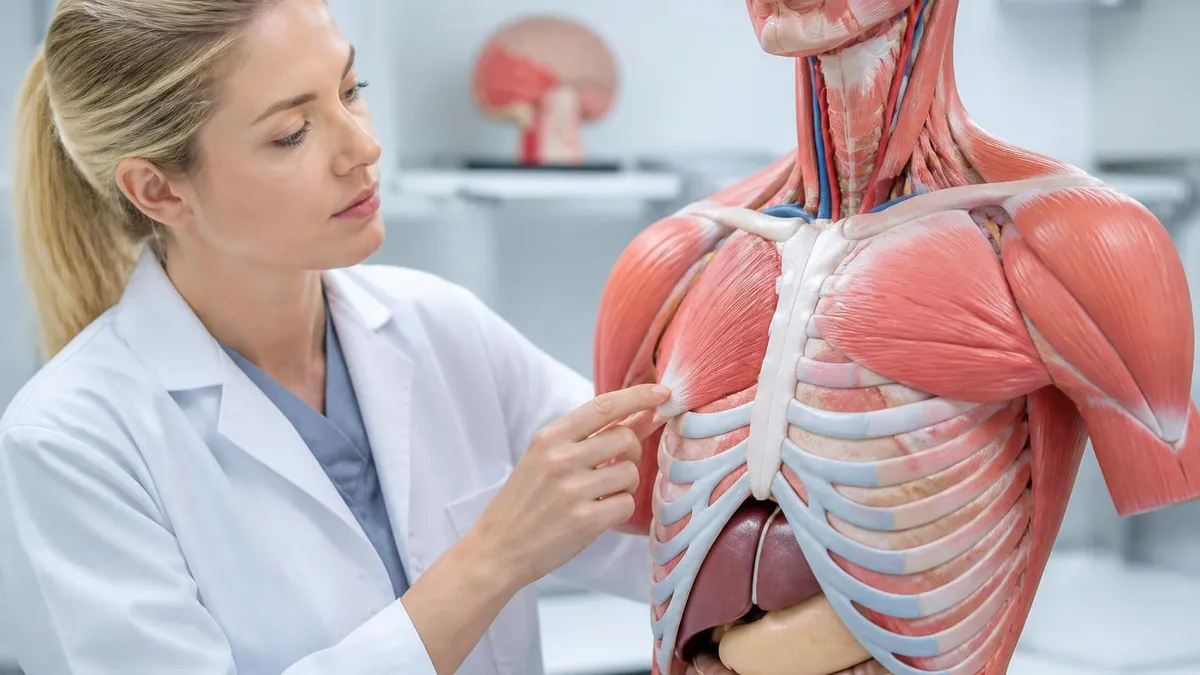
Anatomy and Physiology PDF: Complete Free Download Guide for 2026 Students
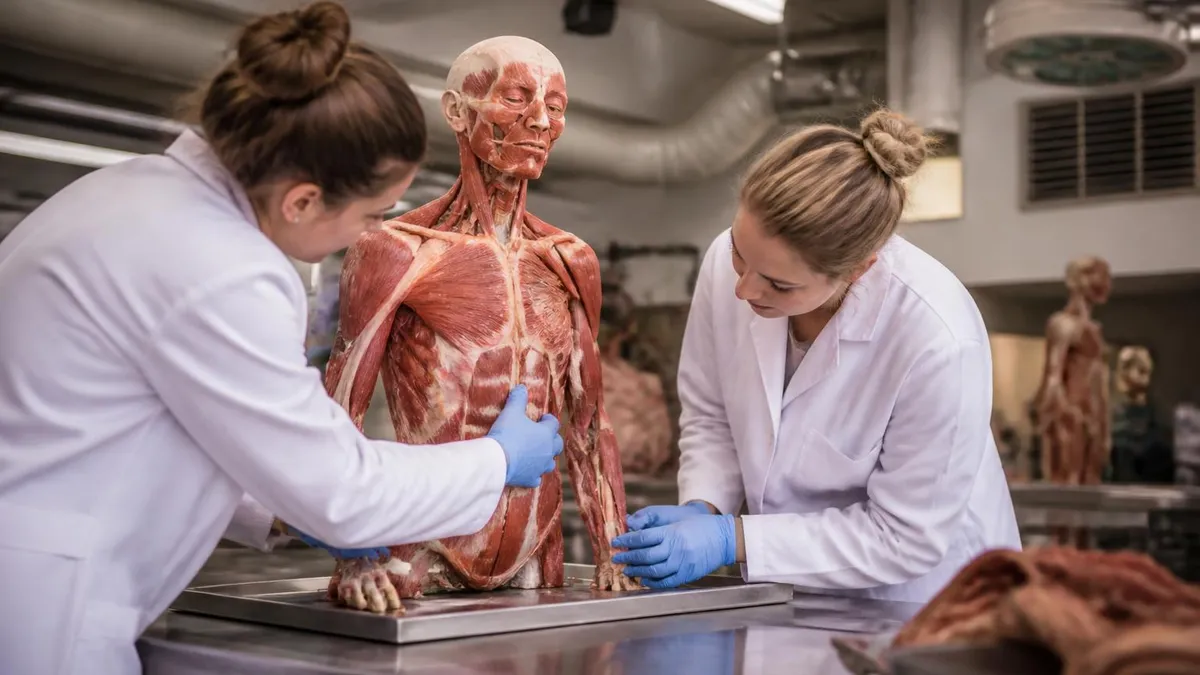
Human Anatomy and Physiology Book: The Complete Guide to Choosing, Using, and Mastering the Best Textbooks for 2026

Anatomy and Physiology Coloring Workbook Answer Key: Complete Chapter-by-Chapter Study Guide
About the Author

Educational Psychologist & Academic Test Preparation Expert
Columbia University Teachers CollegeDr. Lisa Patel holds a Doctorate in Education from Columbia University Teachers College and has spent 17 years researching standardized test design and academic assessment. She has developed preparation programs for SAT, ACT, GRE, LSAT, UCAT, and numerous professional licensing exams, helping students of all backgrounds achieve their target scores.