
ALCPT Score Interpretation — What Your Score Means 2026
Pass the ALCPT Score Interpretation exam with confidence. 🆕 Practice questions with detailed explanations and instant feedback on every answer.
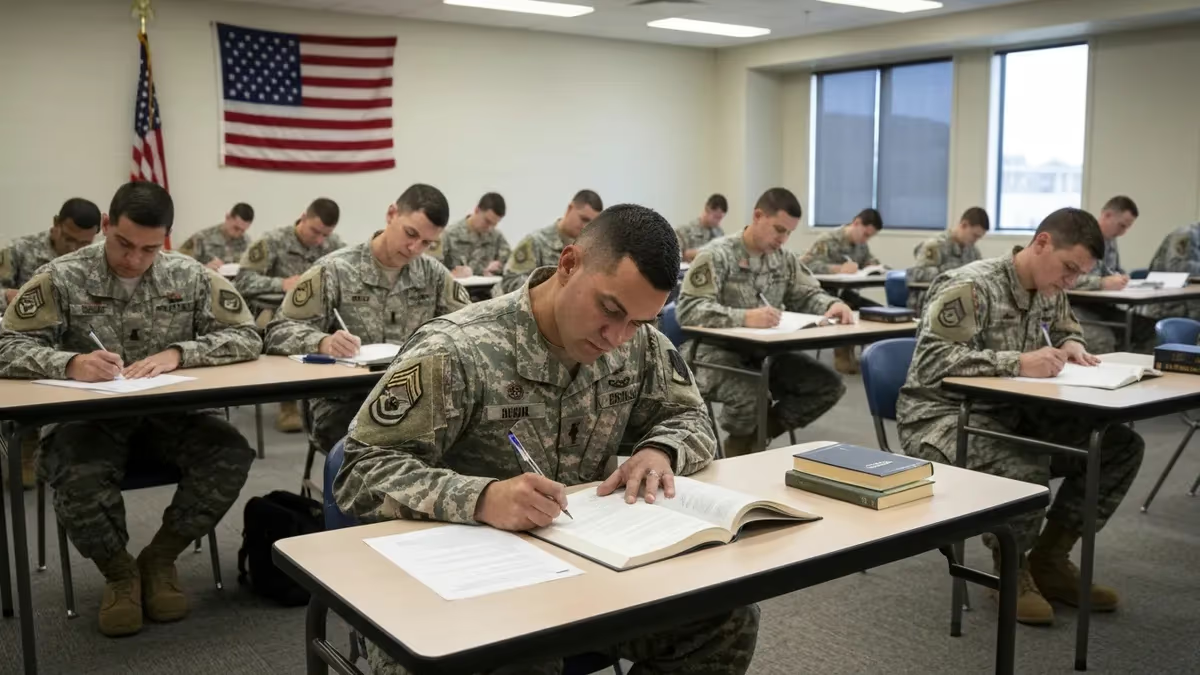
- The ALCPT contains 100 multiple-choice questions. (Defense Language Institute English Language Center)
- ALCPT forms 1–150 contain 66 listening questions. (Defense Language Institute English Language Center)
- ALCPT forms 1–150 take approximately 75 minutes including directions and materials handling. (Defense Language Institute English Language Center)
- ALCPT forms 151 and higher take approximately 70 minutes including directions and materials handling. (Defense Language Institute English Language Center)
- Students may take only one end-of-level ALCPT for each completed level. (Defense Language Institute English Language Center)
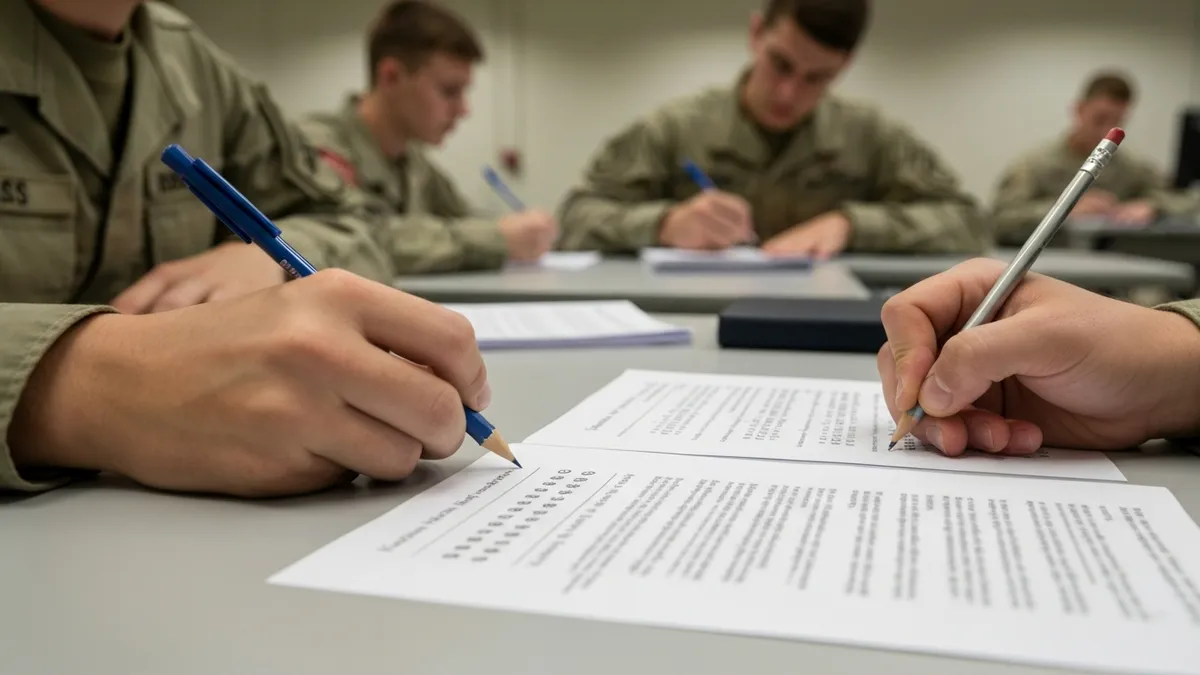
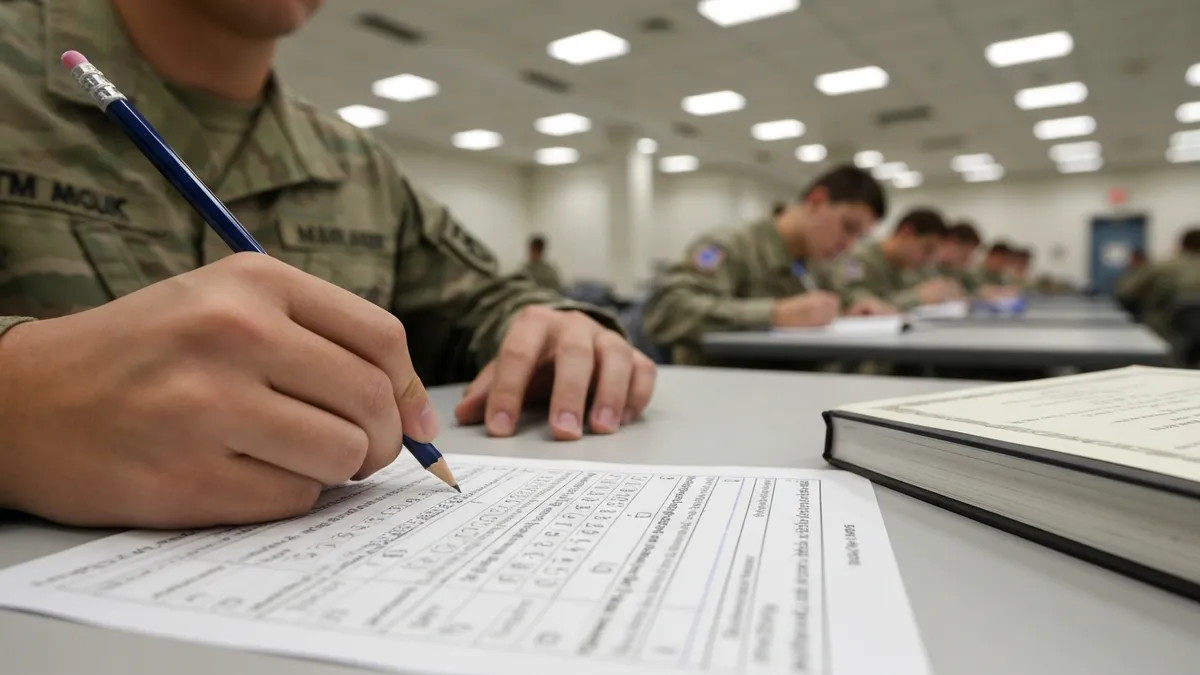
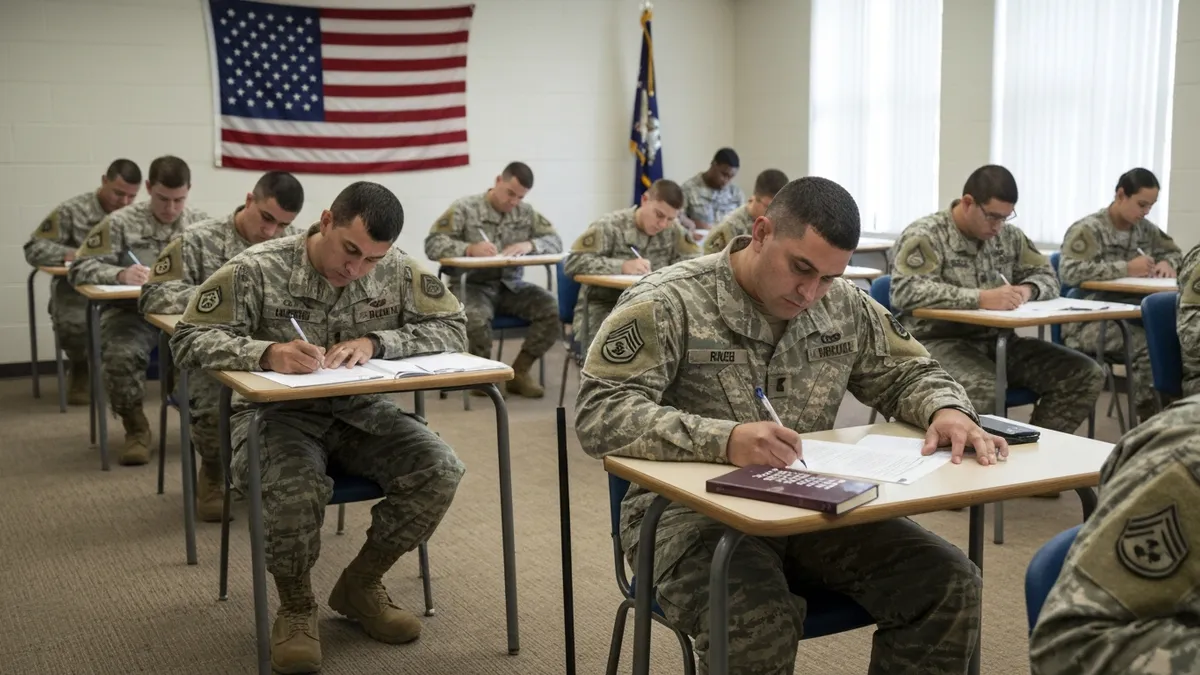
- The ALCPT is administered in a testing room using an answer sheet, pencils, and a test booklet. (Defense Language Institute English Language Center)
- The ALCPT is intended for approved military and government English language training programs worldwide. (Defense Language Institute English Language Center)
Facts verified Oct 16, 2026 against Defense Language Institute English Language Center. Dates that have passed are removed automatically.
ALCPT Exam at a Glance
| Item | Detail | Official source |
|---|---|---|
| Number of questions | 100 multiple-choice questions | Defense Language Institute English Language Center |
| Number of questions (Forms 1–150 — Listening) | 66 listening questions | Defense Language Institute English Language Center |
| Number of questions (Forms 1–150 — Reading) | 34 reading questions | Defense Language Institute English Language Center |
| Number of questions (Forms 151 and higher — Listening) | 50 listening questions | Defense Language Institute English Language Center |
| Number of questions (Forms 151 and higher — Reading) | 50 reading questions | Defense Language Institute English Language Center |
| Time limit (Forms 1–150) | Approximately 75 minutes including administration | Defense Language Institute English Language Center |
| Time limit (Forms 151 and higher) | Approximately 70 minutes including administration | Defense Language Institute English Language Center |
| Time limit (Forms 151 and higher — Reading) | 35 minutes | Defense Language Institute English Language Center |
| Retake policy | One end-of-level test per completed level | Defense Language Institute English Language Center |
| Delivery | Paper test administered in a testing room | Defense Language Institute English Language Center |
| Eligibility | Approved military and government English language programs | Defense Language Institute English Language Center |
Facts verified Oct 16, 2026 against Defense Language Institute English Language Center. Dates that have passed are removed automatically.
The ALCPT is the primary English proficiency gate for international military students participating in U.S.-sponsored training. Here is how scores are applied across different program types:
- Defense Language Institute English Language Center (DLIELC): Students must achieve a minimum ALCPT score of 85 to complete DLIELC instruction and be cleared for technical training. Lower scores result in additional ALC coursework.
- Foreign Military Sales (FMS) Programs: Minimum score requirements vary by course. General military training programs typically require a score of 60; technical and specialized programs (aviation, electronics, medical) require 70–80+.
- International Military Education and Training (IMET): IMET-sponsored students must meet country-specific ALCPT minimums set by the U.S. Embassy and DLIELC. Most IMET programs require at least a 65.
- Security Cooperation Programs: Programs under Title 10 security cooperation often use the ALCPT as a prerequisite screening tool, with cutoffs ranging from 55 to 75 depending on course length and complexity.
Score requirements are set by the receiving U.S. military service branch and are subject to change each fiscal year. Always verify the current minimum with your program sponsor or the DLIELC liaison. For vocabulary-focused preparation before your next assessment, visit our ALCPT Vocabulary Guide.
If you want more targeted practice, the alcpt test page covers the same material with additional questions and explanations.

ALCPT Checklist
- ✓Identify your target program's minimum ALCPT score requirement
- ✓Review your sub-scores: Listening vs. Reading — find the gap
- ✓Study ALC books at or just above your current level
- ✓Complete at least one full-length ALCPT practice test per week
- ✓Practice listening to English for 30+ minutes daily
- ✓Learn 10–15 new vocabulary words each day focused on military/technical topics
- ✓Simulate timed test conditions to build pacing and stamina
- ✓Verify the retake waiting period with your program sponsor
- ✓Schedule your retest as soon as you are eligible
- ✓Check your score improvement by tracking practice test results over time
ALCPT Pros and Cons
- +Published score scales and passing thresholds create transparent, predictable targets for preparation
- +Scaled scoring systems allow fair comparison of performance across different test dates with varying difficulty
- +Detailed score reports identify section-specific performance, enabling targeted remediation for retake candidates
- +Score validity periods provide candidates flexibility in application timing after passing
- +Multiple scoring components mean strong performance in some areas can compensate for weaker performance in others
- −Scaled scores can be confusing — the same raw score translates to different scaled scores across test dates
- −Passing cutoffs set by credentialing bodies may not align with what candidates expect based on content mastery
- −Score report delivery times vary — delays in receiving results can delay application or registration deadlines
- −Performance on a single test date may not accurately reflect a candidate's actual knowledge level
- −Score reports often lack granularity below the section level, making it difficult to pinpoint specific topic weaknesses
ALCPT Score Questions and Answers

How this page was made: written with AI tools and published by Nathan Beja, founder of Practice Test Geeks, who is responsible for its content. Exam facts are checked against the official sources listed below. Not reviewed by a subject-matter expert. Editorial policy
Sources & references
Exam facts on this page (fees, format, dates, passing scores) are checked against these official sources; the date is our last check. Editorial policy
- dlielc.edu — Test delivery, exam format, retake policy, time limit, eligibility · verified Oct 2026