
AHA Pre Test ACLS: Complete Practice Guide to Pass Your Advanced Cardiovascular Life Support Exam
Master the AHA pre test ACLS with free practice questions, algorithm breakdowns, and expert tips. Get certified with confidence. 🎯

The AHA pre test ACLS is the first real checkpoint on your path to Advanced Cardiovascular Life Support certification, and it reveals exactly how prepared you are before the formal evaluation begins. Published by the American Heart Association and used by training centers nationwide, this pre-course assessment covers cardiac rhythms, pharmacology, airway management, and the core resuscitation algorithms that define modern emergency care. Understanding what is on the test — and practicing under realistic conditions — is the single best predictor of passing on exam day. Practice with the free ACLS Advanced Cardiovascular Life Support Practice practice test on PracticeTestGeeks (7 questions with answer explanations).
Most candidates who struggle with ACLS certification do not fail because they lack clinical experience. They fail because the pre-course written test surfaces knowledge gaps they did not know existed: an unfamiliar drug dose, a rhythm they misidentify under pressure, or an algorithm step they routinely skip in practice. A structured acls pretest strategy addresses these gaps systematically, converting vague familiarity into exam-ready mastery before you walk into the classroom.
AHA ACLS certification is required for emergency physicians, critical care nurses, paramedics, respiratory therapists, and a growing list of specialty nurses who work in high-acuity settings. Hospitals and ambulatory surgery centers typically require renewal every two years, which means providers face this exam repeatedly throughout their careers. Building a reliable, repeatable study method pays dividends far beyond a single certification cycle.
The pre-course materials the AHA distributes — including the ACLS Provider Manual and the HeartCode online modules — are dense. A pre-course self-assessment quiz paired with targeted practice tests is the most efficient way to identify which chapters deserve the most study time. Rather than rereading the entire manual, you can focus on pharmacology if you miss medication dosing questions, or on ECG interpretation if rhythm recognition trips you up.
This guide walks through everything you need to know about the ACLS pre-course assessment: the format, the question types, the algorithms that appear most frequently, the drugs you absolutely must memorize, and the rhythm recognition skills that separate passing candidates from those who need a retest. You will also find six full free practice tests organized by topic so you can drill each domain until confidence replaces anxiety.
Scores on the AHA pre-course self-assessment are not submitted to the AHA and do not affect your certification status — their purpose is diagnostic. However, many instructors use the results during skills stations to identify which participants need additional coaching. Showing up with a strong self-assessment score signals clinical competence and keeps your instructor focused on the candidates who need the most support.
Whether you are sitting for initial ACLS certification or completing a two-year renewal, consistent practice with realistic multiple-choice questions is the most proven preparation method available. Use the free quizzes throughout this guide, review the algorithm summaries, and spend extra time on the drug reference tables. By the time you finish, the AHA pre test ACLS will feel like familiar territory rather than an obstacle.
Free ACLS Advanced Cardiovascular Life Support Practice Study Tools
Interactive ACLS Advanced Cardiovascular Life Support Practice resources on PracticeTestGeeks, free to start:
- ACLS Advanced Cardiovascular Life Support Practice flashcards — review key terms and concepts card by card
- ACLS Advanced Cardiovascular Life Support Practice study guide — topic-by-topic overview of what the exam covers
- ACLS Advanced Cardiovascular Life Support Practice cheat sheet — one-page printable summary for last-minute review
ACLS Certification by the Numbers
- To pass the AHA ACLS Provider Course Exam, students need a score of at least 84%. (American Heart Association)
- The AHA ACLS Provider Course Completion Card is valid for two years. (American Heart Association)
- Providers renewing their AHA ACLS card can take the shorter ACLS Update Course, which runs about 8.25–9.25 hours with video prework or 8.50–9.50 hours without it, breaks included. (American Heart Association)
- The AHA ACLS course is offered as instructor-led classroom training or as HeartCode blended learning, and both lead to the same AHA ACLS course completion card. (American Heart Association)
- Before attending the AHA ACLS Course, every student has to complete the online Precourse Self-Assessment with a score of at least 70%. (American Heart Association)
Facts verified Oct 15, 2026 against American Heart Association. Dates that have passed are removed automatically.
ACLS Exam at a Glance
| Item | Detail | Official source |
|---|---|---|
| Passing score | 84% minimum on the ACLS Provider Course Exam | American Heart Association |
| Validity | Valid for 2 years | American Heart Association |
| Renewal | ACLS Update Course: about 8.25–9.50 hours with breaks | American Heart Association |
| Delivery | Instructor-led classroom, or HeartCode blended learning (online + hands-on skills session) | American Heart Association |
| Eligibility | Score of at least 70% on the mandatory Precourse Self-Assessment, plus proficiency in BLS, ECGs, ACLS pharmacology and bag-mask ventilation | American Heart Association |
Facts verified Oct 15, 2026 against American Heart Association. Dates that have passed are removed automatically.
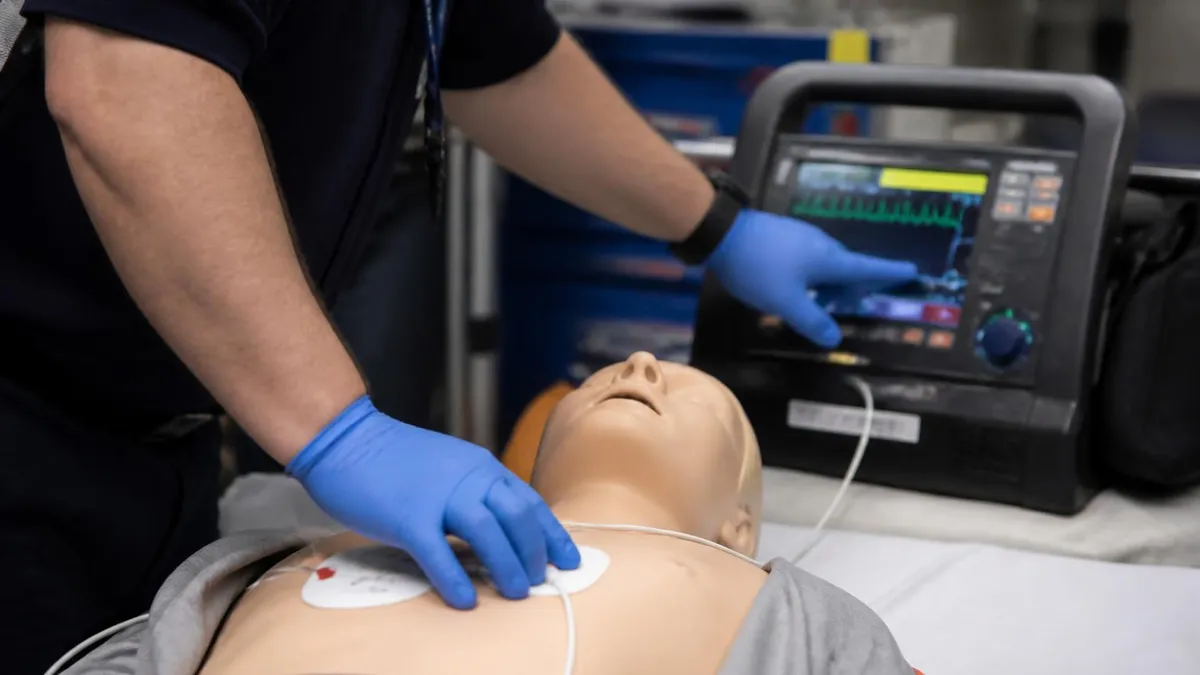
ACLS Written Exam Format & Structure
| Section | Questions | Time | Weight | Notes |
|---|---|---|---|---|
| Cardiac Rhythms & ECG Interpretation | 15 | ~13 min | 30% | Identify shockable vs. non-shockable rhythms |
| Pharmacology & Drug Dosing | 12 | ~11 min | 24% | Epinephrine, amiodarone, adenosine, atropine |
| ACLS Algorithms & Decision-Making | 13 | ~12 min | 26% | BLS survey, adult cardiac arrest, PALS overlap |
| Airway Management | 5 | ~4 min | 10% | BVM, supraglottic airways, waveform capnography |
| Post-Resuscitation Care | 5 | ~5 min | 10% | Targeted temperature management, hemodynamics |
| Total | 50 | 45 minutes | 100% |
The ACLS written exam is built around the AHA's core resuscitation algorithms, and understanding these algorithms in depth is the fastest path to a high score on the pre-course self-assessment. The cardiac arrest algorithm is the centerpiece: it splits immediately into shockable rhythms — ventricular fibrillation and pulseless ventricular tachycardia — and non-shockable rhythms — pulseless electrical activity and asystole. Every branch of this algorithm has a specific sequence of CPR, drug administration, and rhythm check that you must recall without hesitation under exam conditions.
Ventricular fibrillation accounts for the largest proportion of out-of-hospital sudden cardiac arrest, making it the most heavily tested arrest rhythm. The algorithm calls for immediate defibrillation at 200 joules biphasic, followed by two minutes of high-quality CPR before the next rhythm check. Epinephrine 1 mg IV push is given every three to five minutes, and amiodarone 300 mg IV is the first antiarrhythmic of choice after two failed shocks. Candidates who can recite these steps in sequence and explain the rationale for each consistently outperform those who rely on rote memorization alone.
The pulseless electrical activity and asystole pathway requires a different mindset because electricity is not the treatment — reversible causes are. The H's and T's mnemonic organizes the ten reversible causes into two groups: hypovolemia, hypoxia, hydrogen ion acidosis, hypo/hyperkalemia, hypothermia on the H side; tension pneumothorax, tamponade, toxins, pulmonary thrombosis, and coronary thrombosis on the T side. High-performing candidates treat this list not as trivia but as a differential diagnosis framework that drives every clinical decision during the resuscitation.
The bradycardia algorithm tests your ability to distinguish symptomatic from asymptomatic bradycardia and to select the correct initial intervention. Atropine 0.5 mg IV is the first-line drug for symptomatic bradycardia, and it can be repeated every three to five minutes to a maximum of 3 mg. Transcutaneous pacing is appropriate when atropine fails or when the patient has a high-degree atrioventricular block. Dopamine and epinephrine infusions are reserved for refractory cases and for bridging to transvenous pacing in hemodynamically unstable patients.
Tachycardia management depends on two critical assessment questions: Is the patient stable or unstable? Is the QRS narrow or wide? Unstable patients with a pulse and any tachyarrhythmia receive synchronized cardioversion regardless of rhythm type. Stable patients are stratified by QRS width and regularity. Narrow regular rhythms like supraventricular tachycardia are treated with vagal maneuvers first, then adenosine 6 mg rapid IV push. Wide complex tachycardia with a pulse should be treated as ventricular tachycardia until proven otherwise, with amiodarone 150 mg IV over ten minutes as the drug of choice.
The acute coronary syndrome algorithm tests recognition of ST-elevation MI versus non-ST-elevation ACS and the appropriate initial management steps. MONA — morphine, oxygen, nitrates, aspirin — remains a useful mnemonic for initial symptom management, although current guidelines de-emphasize routine oxygen in the absence of hypoxia. The critical exam points are the 12-lead ECG within 10 minutes of arrival, dual antiplatelet therapy with aspirin 324 mg and a P2Y12 inhibitor, and the 90-minute door-to-balloon time target for STEMI going to percutaneous coronary intervention.
Post-cardiac arrest care is a frequently underestimated exam domain. Targeted temperature management — maintaining core body temperature at 32 to 36 degrees Celsius for 24 hours — improves neurological outcomes in comatose survivors of cardiac arrest and is directly tested on the written exam. You should also know the hemodynamic targets: mean arterial pressure above 65 mmHg, oxygen saturation 94 to 99 percent, and avoidance of hyperventilation, which can cause cerebral vasoconstriction and worsen outcomes. Candidates who master this domain consistently gain the few extra points needed to push a borderline score over the 84 percent passing threshold.
ACLS Pretest Core Topic Breakdowns
ACLS pharmacology questions test drug selection, dose, route, and timing across the major resuscitation scenarios. The four drugs you absolutely must master are epinephrine 1 mg IV every 3-5 minutes for any cardiac arrest rhythm, amiodarone 300 mg IV for shock-refractory VF/pulseless VT, adenosine 6 mg rapid IV push for stable narrow SVT, and atropine 0.5 mg IV for symptomatic bradycardia. Exam questions often present a clinical vignette and ask which drug or dose is correct for the scenario described.
Secondary drugs that appear regularly on the pre-course assessment include lidocaine as an alternative antiarrhythmic when amiodarone is unavailable, magnesium sulfate 1-2 g IV for torsades de pointes, sodium bicarbonate for specific arrest causes such as hyperkalemia or tricyclic antidepressant toxicity, and calcium chloride for calcium channel blocker overdose or hyperkalemia. Knowing not just the drug but the specific indication — when to choose amiodarone over lidocaine, or why you would give calcium chloride instead of sodium bicarbonate — is the difference between a confident correct answer and a coin-flip guess.

ACLS Online Pre-Course vs. In-Person Classroom: Which Prepares You Better?
- +Self-paced online modules let you rewatch algorithm animations until the sequence is automatic
- +HeartCode BLS and ACLS online platforms include built-in knowledge checks after every section
- +Online format allows practice at peak mental alertness — no commuting fatigue affecting retention
- +Digital rhythm strip exercises with immediate feedback accelerate ECG pattern recognition
- +Online pre-course completion certificates are accepted at virtually every AHA training center
- +Lower upfront cost compared to multi-day in-person certification programs
- −No real-time instructor feedback means misconceptions about algorithm steps can go uncorrected
- −Skills stations — megacode, CPR quality, defibrillator operation — still require in-person attendance
- −Screen fatigue after several hours reduces information retention compared to hands-on learning
- −Drug dosing errors discovered during simulated megacode are harder to correct without instructor guidance
- −Self-paced learners often underestimate the pharmacology domain and underprepare for drug questions
- −Team dynamics and communication skills — critical for the megacode — cannot be practiced online alone
ACLS Pre-Test Preparation Checklist: 10 Steps Before Exam Day
- ✓Complete the AHA ACLS Provider Manual pre-course self-assessment and record your score by domain.
- ✓Drill all five core ACLS algorithms — cardiac arrest, bradycardia, tachycardia, ACS, and post-resuscitation — until you can reproduce each from memory.
- ✓Memorize epinephrine, amiodarone, adenosine, atropine, and magnesium doses, routes, and timing without reference materials.
- ✓Practice identifying VF, pulseless VT, PEA, asystole, SVT, VT with pulse, and all AV block degrees on rhythm strips.
- ✓Complete at least three full-length ACLS practice tests under timed conditions to simulate exam pressure.
- ✓Review the H's and T's for reversible causes of cardiac arrest and write a one-sentence example for each of the ten causes.
- ✓Study waveform capnography interpretation: normal ETCO2 range, what a sudden rise signals during CPR, and placement confirmation criteria.
- ✓Confirm your BLS certification is current — ACLS instructors verify this before issuing the written exam.
- ✓Review targeted temperature management parameters: temperature target, duration, and which patient populations benefit.
- ✓Arrive at your training center with the pre-course completion certificate or HeartCode access code confirmed and accessible.
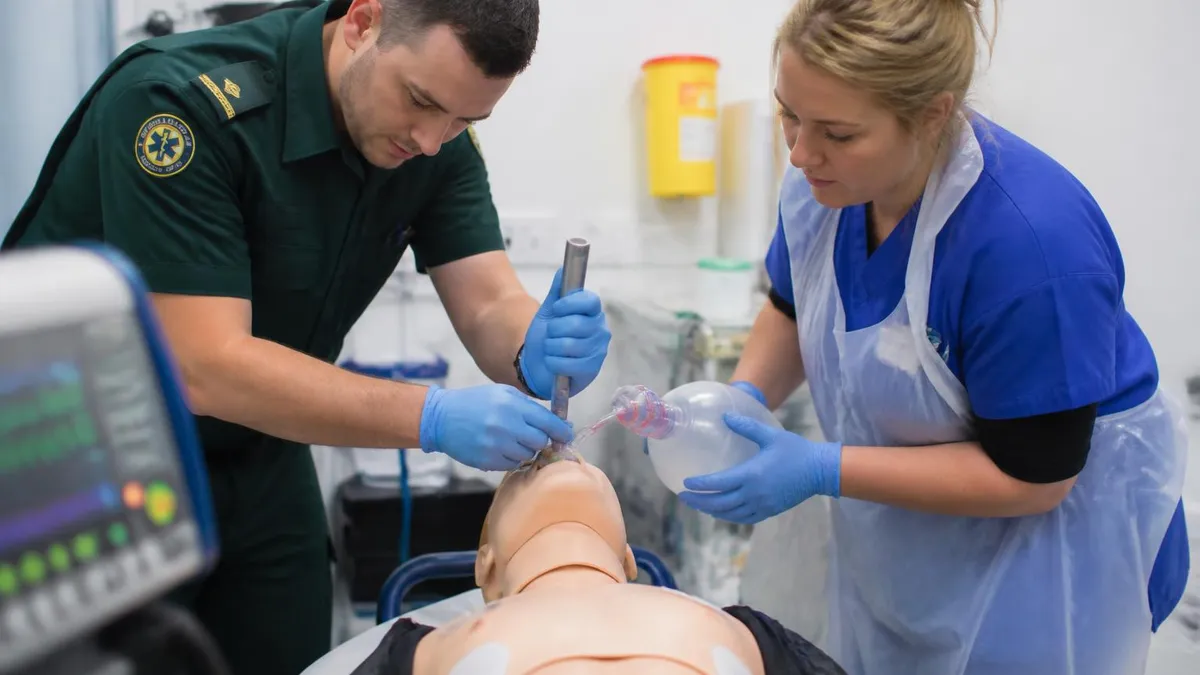
The 84% Rule — and Why Borderline Candidates Miss It
The AHA requires a minimum score of 84 percent — 42 out of 50 questions — to pass the ACLS written exam. Candidates who miss this threshold by one or two questions overwhelmingly lose points in pharmacology and rhythm recognition, not in algorithmic content. Spending 60 percent of your prep time on drug dosing and ECG drills, and only 40 percent on algorithm review, is the single most efficient allocation for borderline candidates.
Rhythm recognition is where most ACLS candidates discover their biggest knowledge gap, and it is also the domain most responsive to deliberate practice. The human brain learns to recognize cardiac rhythms the same way it learns to recognize faces — through repeated exposure to many examples until pattern matching becomes automatic and effortless. This is why drilling fifty or a hundred rhythm strips before exam day produces dramatically better results than rereading a textbook description of each rhythm type.
Ventricular fibrillation is the rhythm that demands the fastest correct response in both clinical practice and on the exam. The defining characteristics are the complete absence of organized QRS complexes and a chaotic, undulating baseline that varies in amplitude and frequency. Fine ventricular fibrillation can sometimes be confused with asystole, particularly on a monitor with a loose lead or artifact.
The clinical rule and the exam rule are identical: if you are unsure whether you are looking at fine VF or asystole, treat it as VF and defibrillate — the downside of defibrillating true asystole is minimal, while the downside of withholding a shock from VF is death.
Pulseless ventricular tachycardia presents as wide, regular complexes — QRS duration greater than 120 milliseconds — at a rate typically between 150 and 250 beats per minute. The exam frequently presents a clinical stem describing a patient who is pulseless with a wide complex tachycardia on the monitor and asks the correct immediate intervention. The answer is immediate unsynchronized defibrillation at 200 joules biphasic, identical to the VF treatment pathway. This is because pulseless VT is clinically indistinguishable from VF without a pulse check, and the treatment is the same regardless.
Supraventricular tachycardia is the rhythm most commonly confused with VT by candidates who have not drilled QRS width systematically. SVT produces narrow, regular QRS complexes — less than 120 milliseconds — at rates between 150 and 250 bpm. P waves may be buried in the T wave or invisible. The treatment for stable SVT is vagal maneuvers first, followed by adenosine 6 mg rapid IV push, then 12 mg if the first dose fails. Synchronized cardioversion is reserved for hemodynamically unstable patients. Getting the SVT versus VT distinction correct on the exam requires mastery of QRS width measurement.
AV blocks represent a distinct ECG recognition category that the pre-course assessment tests in clinical context questions. First-degree AV block — PR interval greater than 200 milliseconds with every P wave followed by a QRS — is rarely symptomatic and typically requires no treatment. Second-degree type I Wenckebach shows progressive PR prolongation until a QRS is dropped; the PR interval then resets and the cycle repeats.
Second-degree type II shows a fixed PR interval with sudden unpredictable dropped QRS complexes and carries a higher risk of progressing to complete heart block. Third-degree or complete heart block shows complete dissociation between P waves and QRS complexes with the ventricular rate typically between 20 and 40 bpm.
Atrial fibrillation and atrial flutter appear on the ACLS exam primarily in the context of tachycardia management decisions. Atrial fibrillation is identified by its irregularly irregular rhythm, absent P waves, and fibrillatory baseline. Atrial flutter classically shows sawtooth flutter waves at 300 bpm with 2:1 conduction producing a ventricular rate of 150 bpm. Both rhythms can be stable or unstable. Unstable patients with either rhythm — those with hypotension, altered mental status, signs of shock, or acute pulmonary edema — receive immediate synchronized cardioversion. Rate control with diltiazem or metoprolol is the initial strategy for stable patients.
Torsades de pointes is a polymorphic ventricular tachycardia with a distinctive ECG appearance: the QRS complexes appear to twist around the isoelectric baseline, producing a characteristic spindle pattern. It is associated with prolonged QT interval and specific triggers including hypomagnesemia, hypokalemia, and drugs that prolong repolarization. The treatment is magnesium sulfate 1 to 2 grams IV over 15 minutes, which is directly tested on the pharmacology section of the exam. Recognizing torsades and selecting the correct treatment — not amiodarone, not adenosine, but magnesium — is a high-yield exam question that catches underprepared candidates off guard.
Many readers pair this guide with the acls updates to check their readiness before exam day.
Many readers pair this guide with the acls practice test to check their readiness before exam day.
The American Heart Association requires a current, valid BLS for Healthcare Providers certification as a prerequisite for ACLS certification or renewal. Most training centers verify this before issuing the written exam. If your BLS card has expired or is within 30 days of expiration, complete your BLS renewal first — an expired BLS will disqualify you from receiving your ACLS card even if you pass every component of the ACLS course.
Developing a structured, week-by-week study plan is the most reliable way to ensure you arrive at your ACLS course date with genuine mastery rather than surface familiarity. Most candidates who work full clinical schedules need three to four weeks of preparation to feel genuinely confident across all exam domains. Spreading study across multiple sessions is more effective than cramming, because spaced repetition consolidates memory in ways that single-session review cannot replicate. Plan for five to seven study sessions of forty-five to sixty minutes each, distributed across your preparation window.
Begin your preparation with a diagnostic pass through the AHA pre-course self-assessment. Your scores by domain tell you exactly where to focus. If you miss more than two pharmacology questions, pharmacology becomes your primary study domain for the first week. If rhythm recognition scores are low, shift your first week to daily ECG strip drilling. This targeted approach prevents the common mistake of reviewing material you already know well while neglecting your actual weak points — the exact gaps that will cost you points on exam day.
The most efficient pharmacology study method is a drug reference card you create yourself. For each ACLS drug, write the drug name, the indication or scenario it addresses, the dose and route, the timing relative to CPR or other interventions, and one common exam trap associated with that drug.
For example, the adenosine trap is administration technique: it must be injected as a rapid IV push followed immediately by a 20 mL saline flush, as slow administration allows the drug to be metabolized before it reaches the heart. Creating these cards engages active recall, which is far more effective for retention than passive rereading.
Algorithm mastery requires a different technique. Rather than reading the algorithm flowcharts, cover them and attempt to reproduce them from memory on blank paper. Start with the cardiac arrest algorithm because it is the longest and most heavily tested. Time yourself: a provider who needs more than 60 seconds to reproduce the full VF pathway from memory will hesitate at critical junctures during the megacode skills station. The act of retrieving the algorithm from memory, struggling when you cannot, and then checking your accuracy produces stronger encoding than any amount of passive review.
Practice tests serve a function beyond knowledge assessment — they also build exam stamina and calibrate your time management. The ACLS written exam allows 45 minutes for 50 questions, or approximately 54 seconds per question. Most candidates have adequate time, but questions that involve reading a clinical vignette and selecting among four plausible drug or algorithm choices can take 90 seconds or more. Practicing under timed conditions reveals whether you have a pacing problem before it costs you on the actual exam.
The megacode skills station — where you serve as team leader through a simulated cardiac arrest scenario — is the component candidates most frequently underestimate. Performance in the megacode is directly linked to your written exam preparation because the verbal commands you give the team during the simulation must mirror the algorithm sequence you have studied. Providers who know the written content deeply narrate their decisions clearly, catch algorithm errors before the instructor does, and demonstrate the kind of confident, systematic leadership that evaluators are specifically assessing.
In the final 48 hours before your course, shift from active study to light review. Flip through your drug reference cards once, mentally walk through each algorithm, and review your flagged rhythm strips one final time. Heavy studying the night before an exam rarely improves performance and frequently increases anxiety, which impairs the working memory retrieval processes the exam demands. A well-rested brain with consolidated knowledge consistently outperforms an exhausted brain that crammed one more time the night before.
On the day of your ACLS course, practical preparation makes a measurable difference. Arrive fifteen minutes early to confirm your BLS card is current and accessible, locate the training room, and meet your instructor before the formal session begins. Instructors who know you took preparation seriously — because you hand them a completed pre-course self-assessment and ask a specific clinical question — tend to provide richer coaching during skills stations. This is not strategic; it is simply the natural result of showing up as an engaged, prepared learner.
During the written exam itself, answer questions in order and mark any question where you are uncertain. The exam format allows you to return to marked questions before submitting, so using the mark-and-return strategy prevents time pressure from affecting your accuracy on questions you actually know. When you encounter a question you are genuinely unsure about, use systematic elimination: rule out the answer choices that are clearly wrong first, then decide between the remaining options based on what the algorithm or drug reference card in your memory tells you.
Clinical vignette questions — the most common format on the ACLS exam — present a patient scenario followed by a question about the correct intervention. The most reliable approach is to identify the patient's rhythm first, then determine stability, then select the algorithm branch that matches. Avoid the common mistake of reading the answer choices before fully processing the clinical scenario; answer choices are designed to be plausible, and reading them first introduces anchoring bias that can override your correct first instinct.
Pharmacology questions that specify an incorrect dose as one of the answer choices are designed to catch candidates who have memorized drug names without internalizing doses. For example, a question might offer epinephrine 0.1 mg, 0.5 mg, 1 mg, and 2 mg as answer choices for the cardiac arrest dose. If you have drilled the correct dose — 1 mg IV push every 3 to 5 minutes — the question takes five seconds. If you are guessing among plausible-sounding doses, you risk a wrong answer even with clinical experience. Drug dose memorization is non-negotiable for ACLS exam success.
After passing the written exam, the skills stations begin. Team leader performance during the megacode is evaluated on several criteria: appropriate algorithm selection based on rhythm identification, timely drug orders with correct doses verbalized aloud, CPR quality monitoring and correction, clear communication of role assignments, and recognition when a provider commits an error during the simulation. Candidates who perform well on the written exam almost universally perform better on the megacode because their algorithm knowledge is procedurally encoded, not just verbally recalled.
For ACLS renewal candidates — those who hold a current card and are recertifying for the first time or the fifth time — the HeartCode online renewal pathway offers a condensed written exam combined with a skills check at a local training center. The renewal written exam covers the same content domains as the initial exam but at a slightly accelerated pace.
Renewal candidates who have not actively used ACLS skills in the past two years — those in administrative or outpatient roles, for example — should treat their renewal preparation as seriously as their initial certification and use the same domain-targeted practice test strategy.
Finally, approach your ACLS certification not as a compliance requirement but as a clinical competency. The algorithms and drugs you are studying represent the current best evidence for improving survival from cardiac arrest and other cardiovascular emergencies.
The median survival rate from in-hospital cardiac arrest in the United States is approximately 25 percent, and out-of-hospital survival for bystander-witnessed VF approaches 40 percent in systems with high-performance CPR and rapid defibrillation. Your mastery of these protocols directly influences patient outcomes, which means the preparation you invest in passing the AHA pre test ACLS translates into real lives saved across your clinical career.
ACLS Questions and Answers

ACLS Acute Coronary Syndrome Algorithm: Complete Study Guide for Certification Prep
ACLS Renewal Class: Complete 2026 Guide to Recertification Requirements, Costs, Formats & Pass Strategies
ACLS Bradycardia Algorithm: Complete 2026 Guide to Recognition, Treatment Steps & Drug Doses

ACLS CPR Certification: Complete Training Guide for Healthcare Professionals
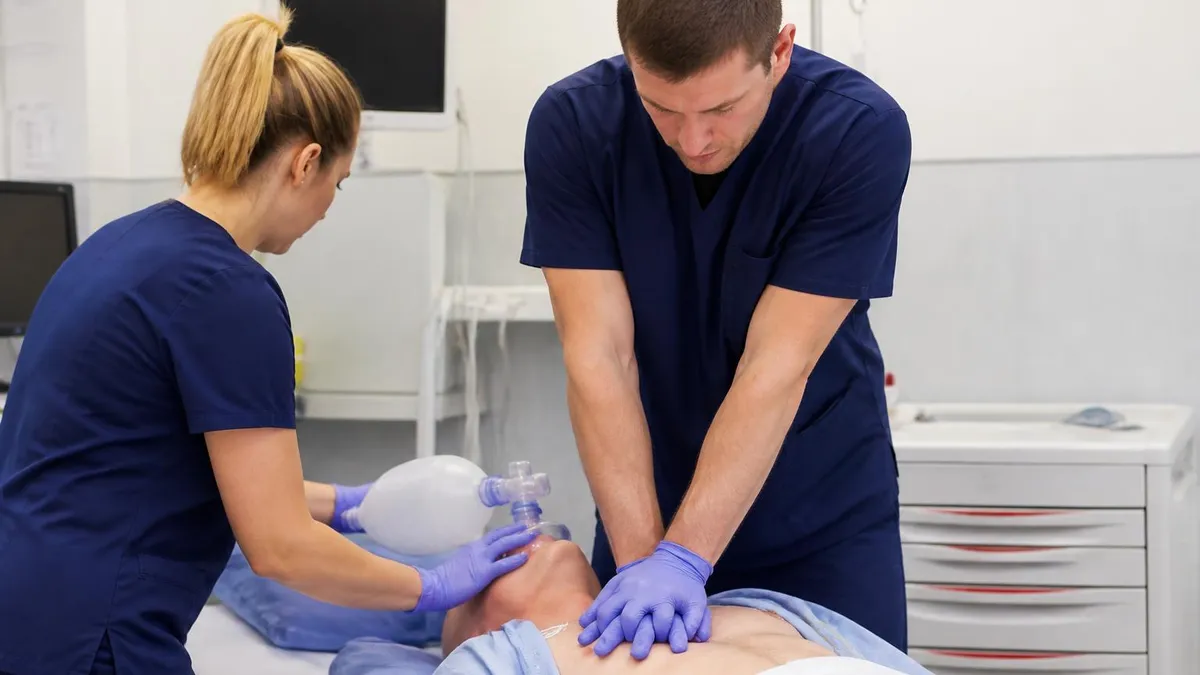
ACLS Study Guide: Complete 2026 Certification Prep with Algorithms, Drugs & Practice Tests
How this page was made: written with AI tools and published by Nathan Beja, founder of Practice Test Geeks, who is responsible for its content. Exam facts are checked against the official sources listed below. Not reviewed by a subject-matter expert. Editorial policy
Sources & references
Exam facts on this page (fees, format, dates, passing scores) are checked against these official sources; the date is our last check. Editorial policy
- cpr.heart.org — Test delivery, renewal, eligibility, score validity · verified Oct 2026
- heart.org — Passing score · verified Oct 2026