
ACLS Drugs and Dosages: Complete Guide to Dopamine, Epinephrine, Amiodarone & More
Master dopamine dose ACLS protocols & all ACLS drugs. Dosages, indications & algorithm use. ✅ Study guide for certification prep.
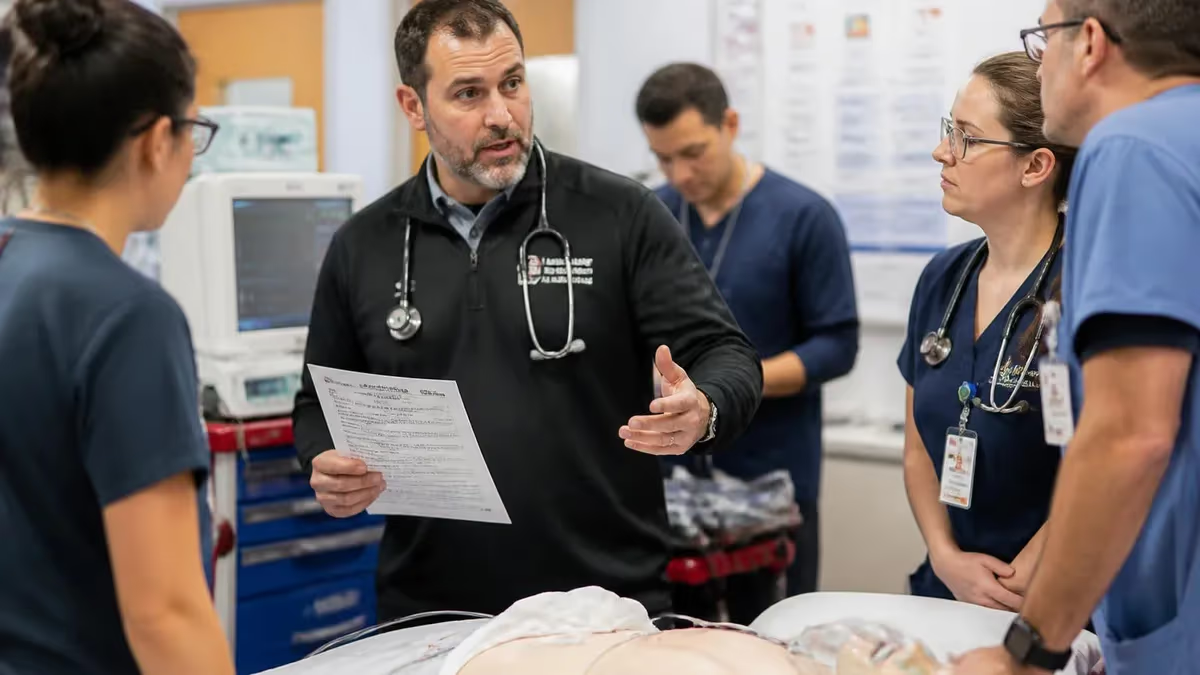
Understanding the correct dopamine dose in ACLS is one of the most critical skills a healthcare provider can master before sitting for Advanced Cardiovascular Life Support certification. Dopamine is a vasopressor and inotropic agent used most often for symptomatic bradycardia when atropine fails and transcutaneous pacing is unavailable or ineffective. The standard ACLS infusion range runs from 2 to 20 micrograms per kilogram per minute, with dosing titrated to the patient's hemodynamic response. Getting this range wrong during a megacode scenario — or in real clinical practice — can mean the difference between a stable patient and an avoidable arrest.
ACLS pharmacology spans a broad formulary, and memorizing every drug, route, and dose can feel overwhelming. The curriculum requires proficiency with vasopressors like dopamine and epinephrine, antiarrhythmics like amiodarone and lidocaine, and supportive agents like adenosine, atropine, and magnesium sulfate. Each of these medications has a specific algorithm context, a defined dose range, and important contraindications that examiners probe with scenario-based questions. Knowing when to reach for dopamine versus epinephrine — and at what dose — distinguishes a prepared candidate from one who is guessing under pressure.
This guide is designed as a comprehensive training reference for clinicians preparing for initial ACLS certification or renewal. It covers every major drug class in the AHA algorithm, explains the pharmacologic rationale behind each agent, and provides the exact doses you will be expected to recall during a skills station or written exam. Whether you are a nurse, paramedic, respiratory therapist, or physician, the information here aligns with the most current American Heart Association guidelines so you can study with confidence that the material reflects real clinical standards.
One of the most common mistakes candidates make is treating pharmacology as an isolated memorization exercise rather than connecting each drug to its algorithm context. Dopamine, for example, does not appear in a vacuum — it belongs to the bradycardia algorithm as a second-line infusion option, and understanding that context helps you remember the dose and the clinical trigger that activates it. The same principle applies to amiodarone in the VF/pVT algorithm, adenosine in the stable SVT pathway, and norepinephrine in septic shock management. Linking drug to algorithm dramatically improves retention.
Beyond the exam, mastery of acls drugs and dosages has direct patient-safety implications. Studies on resuscitation outcomes consistently show that protocol-adherent teams — those who administer the right drug at the right dose without hesitation — achieve better return of spontaneous circulation rates. A 2022 analysis published in Resuscitation found that medication errors during cardiac arrest occurred in roughly 21 percent of adult in-hospital resuscitations, with the most frequent errors involving incorrect dosing of epinephrine and amiodarone. Training rigorously on pharmacology reduces this error rate and improves outcomes.
Throughout this article you will find drug-by-drug breakdowns, algorithm placement tables, side-effect profiles, and exam-specific tips that reflect the kinds of questions appearing on ACLS written assessments. The article is structured to move from foundational concepts through each major drug class, then into clinical application, common exam traps, and finally a practical study plan for the two weeks before your exam. Use the table of contents in the sidebar to jump to any section, or read straight through for a complete review of every agent you are expected to know.
By the end of this guide you should be able to state the correct dose of dopamine, epinephrine, amiodarone, adenosine, atropine, lidocaine, and magnesium sulfate without looking them up, explain which algorithm each drug belongs to, identify key contraindications, and recognize the clinical scenarios where one vasopressor is preferred over another. That level of fluency — not just recognition but active recall — is what ACLS certification tests and what patient care demands.
ACLS Pharmacology by the Numbers
Major ACLS Drug Classes You Must Know
Epinephrine, dopamine, and norepinephrine form the vasopressor backbone of ACLS. Each agent acts on different adrenergic receptors, producing varied effects on heart rate, contractility, and vascular resistance depending on dose and clinical context.
Amiodarone, lidocaine, and adenosine are the primary rhythm-correcting agents. Amiodarone is the first-line drug for shock-refractory VF and pVT. Adenosine terminates most paroxysmal SVT. Lidocaine serves as an amiodarone alternative.
Atropine is the first-line pharmacologic treatment for symptomatic bradycardia in ACLS. The recommended dose is 0.5 mg IV, repeatable every 3–5 minutes to a maximum of 3 mg total, before escalating to dopamine or epinephrine infusion.
Magnesium sulfate 1–2 g IV is essential for torsades de pointes. Sodium bicarbonate corrects severe metabolic acidosis or hyperkalemia-associated arrest. Calcium chloride addresses hypocalcemia and calcium-channel blocker toxicity during resuscitation.
Dopamine occupies a unique pharmacologic position in the ACLS algorithm because its effects are genuinely dose-dependent, shifting from predominantly dopaminergic activity at low doses to beta-adrenergic dominance at moderate doses and alpha-adrenergic vasoconstriction at high doses. At infusion rates of 2 to 5 mcg/kg/min, dopamine acts primarily on renal and mesenteric dopamine receptors, increasing perfusion to those vascular beds. At 5 to 10 mcg/kg/min, beta-1 stimulation dominates, increasing cardiac output through positive inotropy and chronotropy — the range most relevant to the ACLS bradycardia pathway.
For exam purposes, the critical dopamine dose in ACLS is the infusion range of 2 to 20 mcg/kg/min, titrated to effect when treating unstable bradycardia that has not responded to atropine. The AHA algorithm specifies that dopamine is a Class IIb recommendation for bradycardia when the patient is hemodynamically unstable, transcutaneous pacing is being prepared, or atropine has failed. Candidates are often asked to place dopamine correctly in the algorithm sequence: atropine 0.5 mg first (up to three doses), then dopamine infusion or epinephrine infusion as parallel alternatives while preparing for definitive pacing.
Epinephrine is the most versatile agent in the ACLS formulary. During pulseless cardiac arrest, epinephrine 1 mg IV/IO is given every 3 to 5 minutes regardless of rhythm — it applies equally to VF, pVT, PEA, and asystole. Outside of arrest, epinephrine infusion at 2 to 10 mcg/min serves the same bradycardia indication as dopamine, offering a parallel option when dopamine is unavailable or when a more potent vasopressor is needed. In anaphylaxis, the route changes to intramuscular (0.3–0.5 mg of 1:1,000 concentration into the lateral thigh), a distinction that appears regularly on written ACLS assessments.
Norepinephrine, while not traditionally considered a core ACLS arrest drug, appears in post-resuscitation care protocols for managing refractory hypotension after return of spontaneous circulation. The recommended infusion rate is 0.1 to 0.5 mcg/kg/min, titrated to maintain a mean arterial pressure of at least 65 mmHg. Understanding when to transition from dopamine to norepinephrine — typically when a patient requires high-dose dopamine (greater than 15 mcg/kg/min) without adequate blood pressure response — reflects the clinical reasoning that ACLS certification increasingly tests.
Vasopressin was previously listed in ACLS guidelines as an alternative to the first or second dose of epinephrine in cardiac arrest, dosed at 40 units IV. The 2015 AHA guidelines removed vasopressin from the adult cardiac arrest algorithm, noting that evidence did not demonstrate superiority over epinephrine. Many candidates who studied older materials still encounter this drug and need to know its current status: vasopressin is no longer a recommended arrest agent in adult ACLS, though it may appear in septic shock protocols as a hormone replacement adjunct rather than a primary vasopressor.
Phenylephrine, a pure alpha-1 agonist, is occasionally discussed in ACLS contexts for managing hypotension in patients with tachyarrhythmias where the positive chronotropy of dopamine or epinephrine is undesirable. Dosed at 100 to 200 mcg IV bolus or 0.5 to 5 mcg/kg/min infusion, phenylephrine increases vascular resistance without increasing heart rate. While not a primary ACLS algorithm drug, it appears in post-arrest management questions and in scenarios involving hypertrophic obstructive cardiomyopathy or outflow-tract obstruction, where pure vasoconstriction is preferred.
Putting the vasopressors together in clinical context: for symptomatic bradycardia, start with atropine, then add dopamine or epinephrine infusion, then proceed to transcutaneous pacing. For cardiac arrest, use epinephrine 1 mg every 3–5 minutes across all rhythms. For post-ROSC hypotension, norepinephrine is the preferred first-line agent. Knowing this hierarchy — and the exact doses at each step — is the foundation of ACLS pharmacology mastery and the core of what every exam scenario will probe, whether in written questions or live megacode simulations.
ACLS Drug-by-Algorithm Reference
During cardiac arrest, the two primary pharmacologic agents are epinephrine and amiodarone. Epinephrine 1 mg IV/IO is given every 3 to 5 minutes for all pulseless rhythms — VF, pVT, PEA, and asystole alike. The rationale is alpha-adrenergic vasoconstriction, which increases aortic diastolic pressure and improves coronary perfusion pressure during CPR, making defibrillation more likely to succeed. Timing matters: epinephrine should be given as soon as IV/IO access is established, then cycled every two minutes of CPR.
Amiodarone 300 mg IV is administered for shock-refractory VF or pVT — meaning the patient has received at least one defibrillation attempt without achieving ROSC. If VF or pVT persists, a second dose of 150 mg IV may be given. Lidocaine 1–1.5 mg/kg IV is the acceptable alternative when amiodarone is unavailable or contraindicated. Both drugs work by stabilizing cardiac membranes and prolonging the refractory period, making the myocardium more responsive to the next defibrillation shock. Never delay a shock to give a drug — drugs and shocks are complementary, not sequential priorities.

Amiodarone vs. Lidocaine: Which Antiarrhythmic Is Better for ACLS?
- +Amiodarone is the AHA first-line recommendation for shock-refractory VF and pVT
- +Amiodarone works across multiple ion channels (sodium, potassium, calcium, beta), providing broader antiarrhythmic coverage
- +Multiple large trials (ARREST, ALIVE) support amiodarone's superiority over lidocaine for shock-refractory VF survival to hospital admission
- +Amiodarone has a longer duration of action, reducing the need for repeat boluses in sustained arrhythmias
- +Amiodarone can be used for both ventricular and certain supraventricular arrhythmias, increasing clinical versatility
- +Post-ROSC amiodarone infusions (1 mg/min for 6 hours, then 0.5 mg/min for 18 hours) reduce recurrent VF rates
- −Amiodarone causes hypotension during rapid IV administration, requiring careful infusion rate monitoring
- −Amiodarone has significant drug interactions, particularly with warfarin and digoxin, complicating post-arrest management
- −Lidocaine has a longer track record and is more familiar to providers trained before amiodarone became widely available
- −Lidocaine is less expensive and more available in resource-limited settings, making it a practical choice in some environments
- −Lidocaine has a faster onset of action in some tissue compartments due to its lower protein binding
- −The ALPS trial (2016) found no significant difference between amiodarone and lidocaine in survival to hospital discharge, reigniting the debate about which agent is truly superior
Pros and Cons at a Glance
| Pros | Cons |
|---|---|
| Amiodarone is the AHA first-line recommendation for shock-refractory VF and pVT | Amiodarone causes hypotension during rapid IV administration, requiring careful infusion rate monitoring |
| Amiodarone works across multiple ion channels (sodium, potassium, calcium, beta), providing broader antiarrhythmic coverage | Amiodarone has significant drug interactions, particularly with warfarin and digoxin, complicating post-arrest management |
| Multiple large trials (ARREST, ALIVE) support amiodarone's superiority over lidocaine for shock-refractory VF survival to hospital admission | Lidocaine has a longer track record and is more familiar to providers trained before amiodarone became widely available |
| Amiodarone has a longer duration of action, reducing the need for repeat boluses in sustained arrhythmias | Lidocaine is less expensive and more available in resource-limited settings, making it a practical choice in some environments |
| Amiodarone can be used for both ventricular and certain supraventricular arrhythmias, increasing clinical versatility | Lidocaine has a faster onset of action in some tissue compartments due to its lower protein binding |
ACLS Pharmacology Certification Prep Checklist
- ✓Memorize epinephrine 1 mg IV/IO every 3–5 minutes for all pulseless arrest rhythms.
- ✓Know amiodarone first dose (300 mg) and second dose (150 mg) for shock-refractory VF/pVT.
- ✓Recall dopamine infusion range (2–20 mcg/kg/min) and its place in the bradycardia algorithm after failed atropine.
- ✓State atropine dose (0.5 mg IV, max 3 mg) and recognize when it is unlikely to work (complete heart block).
- ✓Recall adenosine first dose (6 mg) and repeat doses (12 mg × 2) with proper administration technique.
- ✓Identify lidocaine as an acceptable amiodarone alternative at 1–1.5 mg/kg IV for VF/pVT.
- ✓Know magnesium sulfate 1–2 g IV for torsades de pointes and severe hypomagnesemia.
- ✓Distinguish intramuscular epinephrine (1:1,000, 0.3–0.5 mg) for anaphylaxis from IV arrest dosing.
- ✓Place each drug in its correct algorithm: arrest, bradycardia, stable tachycardia, or post-ROSC care.
- ✓Review contraindications: avoid atropine in heart transplant patients; use adenosine cautiously in wide-complex tachycardia.
The One Dopamine Rule That Saves You on Exam Day
If you remember only one thing about dopamine in ACLS, make it this: the infusion range is 2 to 20 mcg/kg/min, titrated to effect, and it is always initiated after atropine has failed and while transcutaneous pacing is being prepared — not instead of pacing. Examiners routinely write distractors where dopamine is listed as definitive therapy; it is always a bridge, never the endpoint.
Common dosing errors during ACLS scenarios fall into predictable patterns, and understanding them is as important as knowing the correct doses themselves. The most frequently cited mistake is confusing the epinephrine concentration used during cardiac arrest (1 mg of 1:10,000 solution IV) with the concentration used for anaphylaxis (0.3–0.5 mg of 1:1,000 solution IM). These are not interchangeable: giving 1:1,000 epinephrine intravenously at anaphylaxis doses can cause fatal hypertensive crisis or severe dysrhythmia. During ACLS written exams, scenario phrasing will deliberately include the route and context to test whether candidates apply concentration correctly.
A second high-yield error involves adenosine administration technique. The drug has a plasma half-life under 10 seconds, meaning it is completely metabolized before reaching central circulation if given through a distal IV site without a rapid saline flush.
The correct technique is to use the largest available peripheral IV site (antecubital preferred), administer the 6 mg rapid IV push directly into the port, and immediately follow with a 20 mL normal saline flush pushed as fast as possible. Failing to flush or using a distal hand vein essentially delivers nothing to the myocardium. Many ACLS candidates know the dose but fail scenario stations because they do not verbalize the flush step.
Amiodarone dosing errors cluster around two scenarios: giving the wrong dose for VF arrest versus the loading dose for stable arrhythmias, and forgetting the second bolus. For cardiac arrest, the sequence is 300 mg IV push, then 150 mg IV push for persistent VF/pVT. For stable VF management outside of arrest, amiodarone is dosed at 150 mg IV over 10 minutes, a much slower infusion rate.
Confusing these contexts — bolus versus slow infusion — is a real-world safety concern because rapid amiodarone infusion causes significant hypotension. The exam exploits this distinction with questions that specify whether the patient is pulseless or has a pulse.
Magnesium sulfate errors are common in torsades de pointes scenarios. The correct dose for polymorphic VT associated with a long QT interval is 1 to 2 g IV over 5 to 20 minutes. In cardiac arrest from torsades, the dose can be given as a rapid IV push. Candidates sometimes confuse magnesium with calcium chloride, which is indicated for hypocalcemia, hypermagnesemia, and calcium-channel blocker toxicity. Calcium chloride 500–1,000 mg IV (or calcium gluconate 3 g IV) is also given for hyperkalemia-induced arrest — a scenario that appears in the H's and T's differential review before pharmacologic decisions are made.
The H's and T's framework — hypovolemia, hypoxia, hydrogen ion (acidosis), hypo/hyperkalemia, hypothermia, tension pneumothorax, tamponade, toxins, thrombosis (pulmonary), thrombosis (coronary) — is not just a mnemonic for non-shockable rhythms. Each cause has a pharmacologic or procedural implication. Hyperkalemia requires calcium, bicarbonate, and glucose-insulin infusion. Toxin-related arrests (tricyclic antidepressant overdose) call for sodium bicarbonate to reverse sodium-channel blockade. Beta-blocker or calcium-channel blocker toxicity may require high-dose insulin therapy, calcium, lipid emulsion, or glucagon. Being able to match each H and T to its specific intervention demonstrates the kind of integrated pharmacologic reasoning that separates ACLS experts from rote memorizers.
Post-resuscitation pharmacology is a growing area of ACLS emphasis that many candidates underestimate. After ROSC, the goals are maintaining oxygenation with target SpO2 of 94–99%, treating hypotension (MAP goal ≥65 mmHg) with norepinephrine or dopamine infusion, controlling temperature with targeted temperature management if available, and preventing recurrent arrhythmia. Antiarrhythmic infusions — amiodarone at 1 mg/min for the first six hours, then 0.5 mg/min for 18 hours — reduce recurrent VF rates. Understanding the transition from arrest pharmacology to post-ROSC care shows evaluators that you think about the full resuscitation continuum, not just the acute arrest phase.
Vasopressin's removal from the 2015 AHA guidelines is a prime example of how ACLS pharmacology evolves with evidence. Candidates who studied using older textbooks may still list vasopressin 40 units IV as an alternative to epinephrine; that recommendation was removed because multiple randomized controlled trials failed to show any outcome benefit compared to epinephrine alone.
Similarly, the 2020 guidelines strengthened the recommendation for early epinephrine in non-shockable rhythms (PEA and asystole), noting that delays beyond 5 minutes from arrest to first epinephrine dose were associated with significantly lower survival rates. Staying current with guideline updates — not just memorizing the drug list — is essential for passing modern ACLS certification exams.
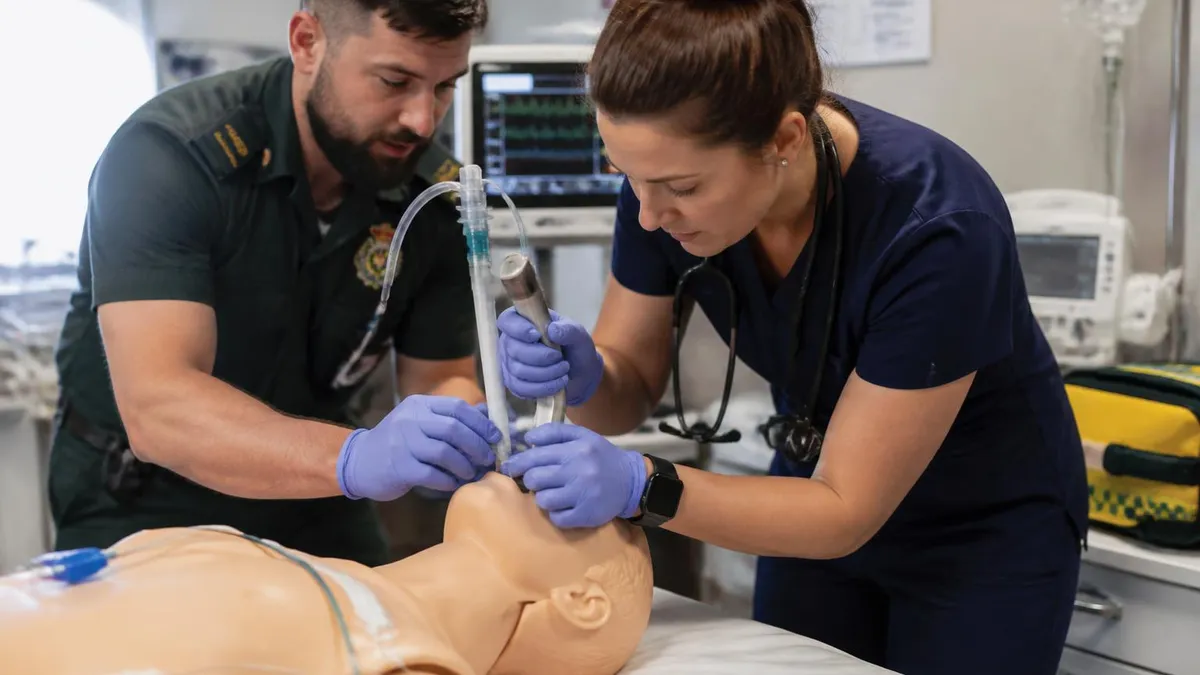
For shockable rhythms (VF and pVT), defibrillation is always the highest priority intervention. Epinephrine and amiodarone are important, but they should never delay the shock. The sequence is shock first, then resume CPR, then establish IV/IO access, then give epinephrine. Candidates who verbalize drug administration before attempting defibrillation during a megacode scenario will fail the station, regardless of correct dose recall.
Practical exam strategy for ACLS pharmacology begins with the realization that the written component tests recall under time pressure while the skills stations test recall under simulated clinical pressure. These are different cognitive demands, and preparing for only one will leave you vulnerable in the other. For the written exam, active recall techniques — flashcards with drug on one side and dose, route, indication, and contraindication on the other — are more effective than passive re-reading. For the skills stations, running through megacode scenarios aloud while a partner plays team leader helps automate the verbalization of drug selection and dosing.
The most reliable memorization framework for ACLS drugs is to organize them by algorithm rather than by drug class.
Draw out each algorithm on a blank sheet of paper from memory, filling in the pharmacologic decision points: bradycardia algorithm (atropine → dopamine/epinephrine infusion → pacing), VF/pVT algorithm (CPR → shock → epinephrine → amiodarone → shock → repeat), PEA/asystole algorithm (CPR → epinephrine → H's and T's → repeat), and stable tachycardia algorithm (adenosine for SVT, rate control for AF, cardioversion for unstable). When you can fill in all drug names, doses, and sequences without prompting, you are ready for the exam.
Spaced repetition is the gold standard for pharmacology retention over weeks of study. Apps like Anki allow you to create digital flashcards that resurface drugs and doses at scientifically optimal intervals just before you are about to forget them. A two-week ACLS study schedule might look like this: Days 1–3, learn arrest drugs (epinephrine, amiodarone, lidocaine) and run practice questions.
Days 4–6, add bradycardia drugs (atropine, dopamine, epinephrine infusion) and begin algorithm mapping. Days 7–9, cover tachycardia drugs (adenosine, diltiazem, amiodarone) and practice megacode scenarios. Days 10–12, focus on adjuncts (magnesium, bicarbonate, calcium) and post-ROSC care. Days 13–14, full-length practice tests and weak-area review.
Reviewing real ACLS case studies accelerates integration of pharmacologic knowledge. Published post-resuscitation debriefs — available in emergency medicine and critical care journals — describe actual arrest scenarios and the drug decisions made at each step. Reading these with the algorithm in hand and asking yourself at each decision point what drug you would give and why reinforces the clinical reasoning that ACLS certification is designed to assess. The AHA ACLS Provider Manual contains several case studies specifically designed for this purpose and should be worked through at least twice before the exam date.
Understanding the pharmacologic basis for each drug — not just the dose — makes it significantly easier to handle unfamiliar questions or novel scenario framings. For example, knowing that atropine works by blocking muscarinic receptors to reduce vagal tone allows you to immediately recognize why it is ineffective in complete heart block (the problem is not excessive vagal tone but failure of conduction through the AV node itself) and why it might cause paradoxical worsening in type II second-degree block. This mechanistic reasoning protects you against exam distractors that rely on surface-level memorization rather than understanding.
Group study with peers in your clinical specialty can surface knowledge gaps that solo study misses. Paramedics, nurses, and physicians each approach ACLS scenarios through slightly different lenses — paramedics focus on field drug availability and IO access, nurses emphasize titration monitoring and documentation, physicians integrate underlying pathophysiology.
Working through scenarios across specialties exposes you to questions you might not generate for yourself and builds the collaborative team dynamics that real-world ACLS requires. The AHA emphasizes team-based resuscitation for a reason: arrest outcomes improve when team members communicate clearly about drug timing, dose confirmation, and CPR quality, all of which are tested in the certification skills stations.
Finally, plan your exam day logistics carefully. ACLS certification courses typically run six to eight hours and include both written assessment and hands-on skills stations. The pharmacology written component is usually taken before the megacode stations, so mental fatigue can accumulate.
Eating a solid meal beforehand, arriving early to review key drug doses one final time, and mentally rehearsing the algorithm sequences during the drive to the testing site are small interventions that pay real dividends. Candidates who have done the preparation but rush through written questions because of time pressure make preventable errors; budget at least 45 seconds per question and flag anything you are uncertain about for review before submitting.
In the final days before your ACLS certification exam, the most valuable thing you can do is tighten your active recall on the highest-yield drugs rather than trying to learn new material. Create a one-page reference sheet listing each algorithm, the drugs in sequence, and the specific doses.
Review this sheet three times on the day before the exam and once on the morning of. Do not try to learn new concepts in the 48 hours before the exam — consolidate what you already know. The pharmacology questions on written ACLS exams are not designed to be tricky; they reward preparation, not test-taking cleverness.
During the megacode skill station, announce every drug decision aloud before acting on it. Say the drug name, the dose, the route, and why you are giving it at that moment in the algorithm. Evaluators are assessing your clinical reasoning, not just your actions.
A candidate who gives the correct drug silently receives less credit than one who says 'I am giving epinephrine 1 mg IV push because this patient is in pulseless VF, CPR is ongoing, and we have established IV access — I will repeat this dose in three to five minutes.' That verbalization demonstrates mastery and prevents the silent errors that lead to certification failures.
Know your institution's or program's specific drug formulary before the exam. Most ACLS courses use standard AHA algorithm drugs, but some programs in critical care or emergency medicine contexts may incorporate vasopressin, push-dose epinephrine at different concentrations, or bicarbonate protocols that vary from the standard algorithm. If your workplace uses any non-standard protocols, clarify with your ACLS instructor whether those will be tested or whether the course adheres strictly to the published AHA guidelines. This prevents confusion when your clinical experience differs from what the exam expects.
Practice calculating weight-based drug doses rapidly in your head, because the bradycardia algorithm uses mcg/kg/min infusion rates that require quick mental math during scenario stations. For a 70 kg patient requiring dopamine at 5 mcg/kg/min, the dose is 350 mcg/min.
For a standard concentration of 400 mg dopamine in 250 mL D5W (1,600 mcg/mL), the infusion rate would be approximately 13 mL/hr. You will not be expected to do the full IV pump calculation during a megacode, but knowing the framework prevents you from being thrown off when a scenario includes patient weight and asks you to confirm the appropriateness of a programmed infusion rate.
Post-exam, regardless of your result, review every question you were uncertain about. ACLS written exams typically allow you to flag questions for review before final submission. If you pass, reviewing your uncertain answers reinforces accurate knowledge. If you do not pass a specific section, the review identifies the specific algorithm areas where your pharmacology knowledge needs deepening.
AHA certification requires a score of at least 84 percent on the written exam, so even confident candidates should expect to encounter a few questions at the edge of their knowledge — preparation and calm review of flagged items is what pushes scores above the threshold.
Remember that ACLS certification is not the endpoint of pharmacology learning — it is a checkpoint. Clinical practice will continue to refine your drug decision-making in ways that no exam fully replicates. Debriefing after real resuscitations, reading updates in journals like Circulation and Resuscitation, and discussing complex cases with your team are the mechanisms by which certification-level knowledge matures into genuine clinical expertise.
The drugs and doses in this guide will not change dramatically between your current certification and your next renewal, but the evidence supporting when and how aggressively to use them continues to evolve with every major resuscitation trial published.
For candidates returning for ACLS renewal, the pharmacology content is broadly consistent with initial certification, but the AHA updates algorithm nuances with each guideline cycle — most recently in 2020 and with focused updates in 2023. Renewal candidates should specifically review any changes to post-ROSC management, the current status of vasopressin, updated recommendations for epinephrine timing in non-shockable rhythms, and any new evidence on amiodarone versus lidocaine. Checking the AHA supplementary materials for guideline updates before your renewal course ensures you are not caught off guard by questions that reflect evidence published after your initial certification.
ACLS Questions and Answers

ACLS Acute Coronary Syndrome Algorithm: Complete Study Guide for Certification Prep
ACLS Renewal Class: Complete 2026 Guide to Recertification Requirements, Costs, Formats & Pass Strategies

ACLS Guidelines 2026: Complete AHA Update on Algorithms, Drugs, CPR Quality & Post-Arrest Care
ACLS Bradycardia Algorithm: Complete 2026 Guide to Recognition, Treatment Steps & Drug Doses
ACLS Drugs: Complete 2026 Guide to Medications, Doses, Indications & Algorithm Use
About the Author

Registered Nurse & Healthcare Educator
Johns Hopkins University School of NursingDr. Sarah Mitchell is a board-certified registered nurse with over 15 years of clinical and academic experience. She completed her PhD in Nursing Science at Johns Hopkins University and has taught NCLEX preparation and clinical skills courses for nursing students across the United States. Her research focuses on evidence-based exam preparation strategies for healthcare certification candidates.