
2026 September ACLS Answers: Complete Practice Test Guide for Certification Success
Master 2026 September ACLS answers with free practice tests, algorithm breakdowns, and pharmacology tips. 🎯 Boost your score and pass certification confidently.
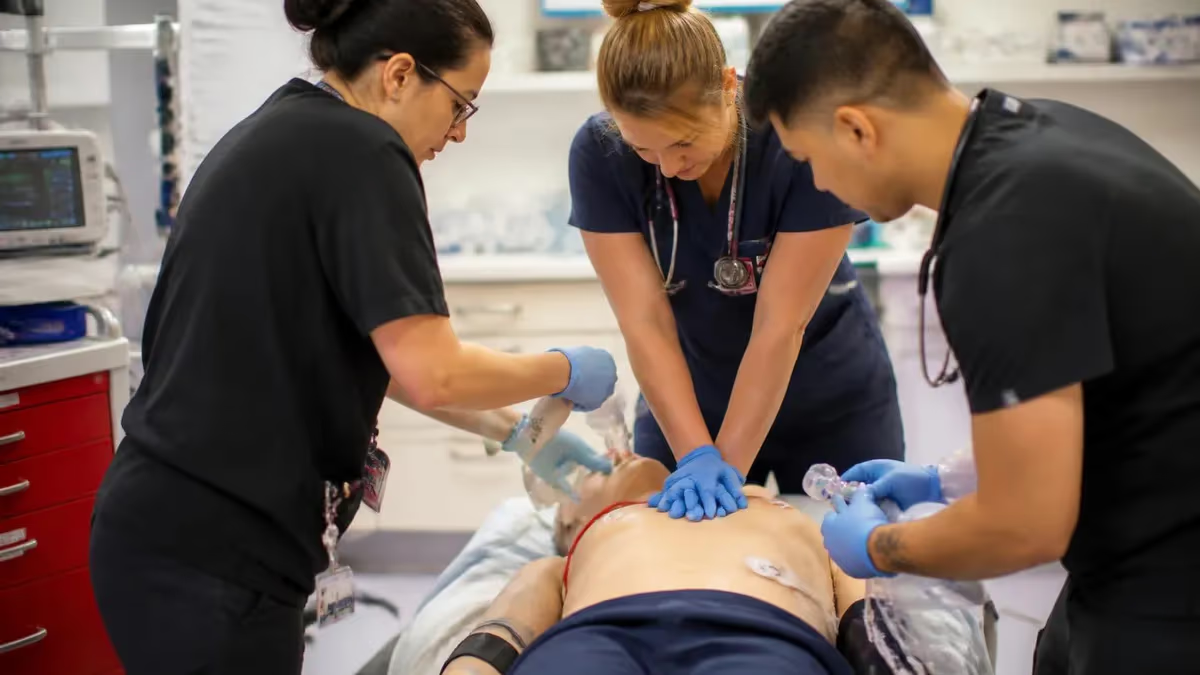
Preparing for your ACLS certification requires more than memorizing protocols — it demands deep understanding of the reasoning behind every algorithm, drug dose, and rhythm interpretation decision. The 2025 acls answers you need aren't just about selecting the right multiple-choice option; they reflect a clinical thought process that real emergencies demand. Whether you're a nurse, paramedic, physician assistant, or respiratory therapist, this guide provides the structured knowledge and practice resources to help you pass confidently and perform competently at the bedside.
The American Heart Association updates ACLS guidelines periodically, and the 2025 iteration builds on the 2020 scientific statement with refined guidance on high-quality CPR delivery, post-cardiac arrest care, and the role of specific medications during resuscitation. Understanding which changes affect practice — and which core principles remain unchanged — is a critical part of your exam prep. Candidates who assume last year's material is identical to this year's sometimes miss key nuances that appear in the written evaluation.
One of the most effective study strategies is to work through practice questions immediately after reviewing a concept section. This active recall method has been shown in cognitive science research to improve long-term retention by up to 50 percent compared to passive re-reading. Each time you encounter a question about VF management or post-ROSC care, your brain is forced to retrieve and apply the underlying protocol, strengthening that neural pathway. That's exactly the approach this guide is designed to support.
The ACLS written exam typically consists of 50 questions covering cardiac rhythms, pharmacology, airway management, and team dynamics. A passing score is generally 84 percent, meaning you can miss no more than 8 questions. With those stakes, every topic area matters. Weak spots in ECG interpretation or drug indications can easily push you below the threshold, so targeted practice in those areas is essential before your test date. Our free quizzes are organized by domain so you can pinpoint and address gaps efficiently.
Many healthcare professionals underestimate the pharmacology portion of ACLS. Drug mechanisms, contraindications, and dosing are heavily tested, and the question writers often present scenarios where two drugs seem plausible but only one is correct given the patient's rhythm or clinical context. For example, adenosine is appropriate for stable SVT, but if the same narrow-complex tachycardia is causing hemodynamic instability, synchronized cardioversion is the right answer — not more medication. These nuanced distinctions appear frequently on the exam.
Team dynamics and communication are another underappreciated component. ACLS certification isn't just a knowledge test; it's a skills validation. The written exam includes questions about closed-loop communication, team leader responsibilities, and how to handle a situation when a team member raises a concern about a proposed intervention. Understanding the human factors element of ACLS helps both with the written exam and with the skills stations, where evaluators assess how you direct and respond within a simulated resuscitation team.
For acls answers that go beyond surface-level memorization, this guide walks you through the complete exam landscape — from the H's and T's of reversible causes, to ACLS algorithm decision points, to medication administration sequences — giving you the preparation depth needed to pass your certification test in 2025 and apply that knowledge with confidence in clinical practice.
ACLS Certification by the Numbers

ACLS Exam Format & Structure
| Section | Questions | Time | Weight | Notes |
|---|---|---|---|---|
| Cardiac Rhythms & ECG Interpretation | 15 | ~27 min | 30% | Identify shockable vs. non-shockable rhythms |
| ACLS Algorithms & Protocols | 12 | ~22 min | 24% | Cardiac arrest, bradycardia, tachycardia pathways |
| Pharmacology & Medications | 12 | ~22 min | 24% | Doses, indications, contraindications |
| Airway Management & Ventilation | 6 | ~11 min | 12% | BVM, advanced airway, waveform capnography |
| Team Dynamics & Post-ROSC Care | 5 | ~8 min | 10% | Communication, targeted temperature management |
| Total | 50 | 90 minutes | 100% |
The ACLS algorithms form the backbone of both the written exam and the skills stations. At their core, these protocols are decision trees that guide providers through high-stakes resuscitation scenarios with a structured, reproducible approach. The cardiac arrest algorithm is the most tested, and understanding the bifurcation between shockable rhythms — ventricular fibrillation and pulseless ventricular tachycardia — and non-shockable rhythms — pulseless electrical activity and asystole — is the single most important conceptual split you must master before exam day.
For shockable rhythms, the algorithm prioritizes immediate defibrillation followed by two minutes of high-quality CPR, then a rhythm check. Epinephrine 1 mg IV/IO is administered every three to five minutes after the second rhythm check, and amiodarone 300 mg (or lidocaine 1–1.5 mg/kg as an alternative) is given for refractory VF/pVT after the third shock. Many candidates lose points by confusing the timing of epinephrine in shockable versus non-shockable rhythms — in VF/pVT, the first dose comes after the second shock; in PEA/asystole, epinephrine is given as soon as IV/IO access is established.
The bradycardia algorithm introduces a clinical judgment element: not all slow heart rates require treatment. If a patient has a heart rate below 50 beats per minute but is hemodynamically stable — no hypotension, altered mental status, ischemic chest pain, or acute heart failure — you monitor and observe. Treatment is initiated for symptomatic bradycardia, beginning with atropine 0.5 mg IV (max 3 mg total), then transcutaneous pacing or a dopamine or epinephrine infusion for atropine-refractory cases. High-degree AV block typically requires transcutaneous pacing as the bridge to transvenous pacing.
Tachycardia management hinges on two questions: Is the patient stable or unstable, and is the QRS narrow or wide? Unstable patients — defined by serious signs and symptoms caused by the fast rate — go directly to synchronized cardioversion regardless of the underlying rhythm. Stable patients get a more nuanced workup. Narrow-complex, regular tachycardias are often SVT, managed with vagal maneuvers first, then adenosine 6 mg IV rapid push. Wide-complex, regular tachycardias are presumed ventricular tachycardia until proven otherwise, which guides medication choices toward antiarrhythmics rather than agents like adenosine that could be harmful if the rhythm is actually VT.
Post-cardiac arrest care has become an increasingly prominent exam topic since the 2020 AHA guidelines elevated it to a formal fifth link in the chain of survival. After ROSC is achieved, providers must simultaneously manage oxygenation (target SpO₂ 92–98%), ventilation (target PaCO₂ 35–45 mmHg), hemodynamics (MAP ≥65 mmHg), and 12-lead ECG interpretation to identify STEMI requiring emergent catheterization. Targeted temperature management — maintaining a core temperature of 32–36°C for 24 hours — is recommended for comatose survivors to improve neurological outcomes.
The H's and T's framework is the ACLS tool for identifying reversible causes of cardiac arrest: Hypovolemia, Hypoxia, Hydrogen ion (acidosis), Hypo/Hyperkalemia, Hypothermia, Tension pneumothorax, Tamponade (cardiac), Toxins, Thrombosis (pulmonary), and Thrombosis (coronary). Exam questions frequently present a patient in PEA arrest and ask which reversible cause best fits the clinical picture. A patient who was in a motor vehicle accident and presents in PEA with distended neck veins and absent breath sounds on one side points strongly to tension pneumothorax, requiring needle decompression before advanced interventions can succeed.
Mastering the algorithms means understanding the flow logic, not just the steps. When exam scenarios deviate from the standard script — a patient who achieves ROSC but then re-arrests, or a pulseless patient who has a shockable rhythm but no IV access yet — you need to understand the principles well enough to navigate those variations. Reviewing each algorithm pathway until you can reproduce it from memory, then testing your knowledge with scenario-based practice questions, is the most reliable preparation method available.
ACLS Pharmacology: Drugs, Doses & Clinical Context
Epinephrine 1 mg IV/IO every three to five minutes is the vasopressor of choice in all cardiac arrest rhythms. Its primary mechanism is alpha-1 adrenergic vasoconstriction, which increases coronary and cerebral perfusion pressure during CPR. Vasopressin was previously listed as an alternative but was removed from AHA guidelines due to no demonstrated benefit over epinephrine. The timing of first-dose epinephrine differs between shockable and non-shockable rhythms — a distinction heavily tested on the written exam.
Amiodarone 300 mg IV/IO is the first antiarrhythmic for shock-refractory VF or pVT, with a second dose of 150 mg if needed. Lidocaine 1 to 1.5 mg/kg is an acceptable alternative when amiodarone is unavailable. For stable VT with a pulse, amiodarone 150 mg IV over ten minutes is the preferred agent. Candidates frequently confuse the cardiac arrest dose (300 mg bolus) with the stable tachycardia dose (150 mg infusion) — keep these distinct in your study notes.
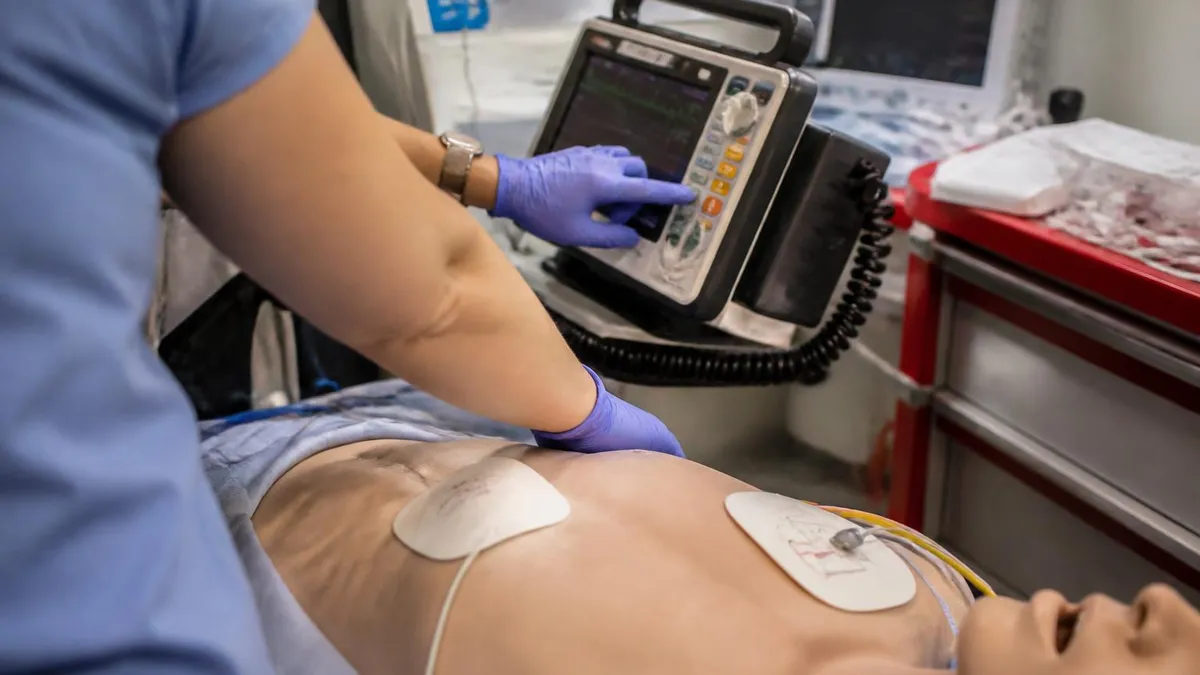
Online ACLS Practice Tests vs. Textbook-Only Study
- +Immediate feedback after each question reinforces correct reasoning and corrects misconceptions before they solidify
- +Scenario-based questions mirror the clinical presentation style used on the actual AHA written exam
- +Domain-organized quizzes let you spend more time on weak areas like pharmacology or rhythm interpretation
- +Spaced repetition through repeated quiz attempts is proven to improve long-term retention of complex protocols
- +Access from any device allows study during breaks, commutes, or between shifts — maximizing limited preparation time
- +Tracking correct and incorrect responses over multiple sessions reveals persistent gaps that need focused review
- −Online questions cannot replicate the hands-on skills station component where evaluators observe CPR quality and team leadership
- −Some third-party practice sites use outdated content that does not reflect 2025 AHA guideline updates
- −Over-reliance on question banks without reading algorithms can produce pattern-matching rather than genuine understanding
- −Screen fatigue from extended online study sessions can reduce concentration and skew self-assessment scores
- −Practice questions rarely simulate the time pressure of the actual exam, potentially leaving candidates unprepared for pacing
- −No substitute for live simulation: scenario-based skills practice with a manikin develops muscle memory that written prep cannot provide
Pre-Exam ACLS Certification Checklist
- ✓Memorize the complete cardiac arrest algorithm for both shockable and non-shockable rhythms from start to finish
- ✓Practice identifying at least 15 common ECG rhythms, including VF, VT, SVT, atrial fibrillation, and all degrees of AV block
- ✓Review the exact doses and timing for epinephrine, amiodarone, atropine, and adenosine
- ✓Study the H's and T's — be able to name all ten reversible causes and their clinical indicators
- ✓Work through at least three full 50-question practice exams under timed conditions before your test date
- ✓Review the post-ROSC care bundle: oxygenation targets, ventilation targets, hemodynamic goals, and temperature management
- ✓Understand the difference between synchronized cardioversion and defibrillation — when each is used and energy levels required
- ✓Practice the bradycardia and tachycardia algorithms by drawing the decision tree from memory without reference materials
- ✓Review team dynamics concepts: closed-loop communication, roles of team leader versus team member, and safe challenge protocols
- ✓Confirm your BLS skills are current — high-quality CPR technique is evaluated separately but must meet AHA standards

The 84% Rule: Know Your Margin
The ACLS written exam requires a minimum score of 84% to pass, meaning you must answer at least 42 of 50 questions correctly. Candidates who focus exclusively on algorithms and neglect pharmacology or team dynamics frequently fall just below this threshold. Distribute your practice time proportionally across all exam domains — not just the areas that feel most familiar from clinical experience.
Rhythm recognition is the diagnostic foundation of ACLS, and exam writers know it. Before any algorithm can guide your interventions, you must correctly identify the underlying rhythm. A systematic approach to ECG interpretation — assessing rate, regularity, P-wave morphology, PR interval, and QRS width in that order — prevents the common mistake of jumping to conclusions based on rate alone. A wide-complex tachycardia at 160 bpm could be VT, SVT with aberrancy, or a pre-excited rhythm, and each requires a different intervention pathway.
Ventricular fibrillation is characterized by chaotic, irregular waveforms with no identifiable P waves, QRS complexes, or T waves. The baseline simply oscillates without pattern. Coarse VF (larger amplitude waveforms) is generally more responsive to defibrillation than fine VF. Pulseless ventricular tachycardia presents as a regular, wide-complex rhythm at a rate typically above 150 bpm with no palpable pulse. Both VF and pVT are treated identically with immediate defibrillation — the clinical finding of no pulse is the trigger, not the morphology alone.
Third-degree (complete) AV block is one of the most important rhythms to recognize because it can present with a ventricular escape rhythm that looks relatively organized on the monitor but produces a dangerously slow heart rate. In third-degree block, P waves and QRS complexes are completely dissociated — they march through at their own independent rates with no relationship to each other. Atropine is unlikely to help infranodal blocks, so transcutaneous pacing is the priority intervention, followed by cardiology consultation for transvenous pacing.
Atrial fibrillation presents with an irregularly irregular rhythm, absence of distinct P waves replaced by fibrillatory baseline activity, and variable ventricular response rates. When a patient with AFib presents with rapid ventricular response (typically above 150 bpm) and hemodynamic instability — hypotension, altered mental status, or acute pulmonary edema — synchronized cardioversion is indicated. The initial energy for cardioversion of AFib is 120 to 200 J biphasic. Stable patients with new-onset AFib can be managed with rate control agents or rhythm conversion strategies, but ACLS protocols prioritize stabilization first.
Supraventricular tachycardia encompasses a variety of narrow-complex tachyarrhythmias that originate above the bundle of His. AV nodal re-entrant tachycardia (AVNRT) is the most common form, presenting with a heart rate typically between 150 and 250 bpm, narrow QRS, and P waves either hidden within or just after the QRS complex. The initial treatment in stable patients is vagal maneuvers — Valsalva maneuver or carotid sinus massage — which increase vagal tone and can terminate the re-entrant circuit. If vagal maneuvers fail, adenosine is the pharmacological equivalent of a vagal surge.
Torsades de Pointes is a polymorphic VT associated with a prolonged QT interval that appears to twist around the isoelectric baseline on the ECG. It can be caused by medications (antiarrhythmics, antipsychotics, antibiotics), electrolyte abnormalities (hypomagnesemia, hypokalemia), or congenital channelopathies. The treatment is magnesium sulfate 1 to 2 g IV push, along with correcting the underlying cause. Unsynchronized defibrillation is used if the patient loses their pulse. Amiodarone is avoided because it further prolongs the QT interval and could worsen Torsades.
For rhythm identification practice, nothing replaces working through high-volume strip libraries paired with immediate answer explanations. Simply seeing a strip and being told the answer is less effective than actively working through your systematic analysis before revealing the diagnosis. The ECG practice quizzes on this site present each strip without labels, require you to select the rhythm and recommended action, and then explain the reasoning — mirroring the cognitive demand of the actual exam scenario questions more accurately than passive review materials.
Synchronized cardioversion delivers a shock timed to the R wave to avoid triggering VF — it is used for patients with a pulse who have unstable tachycardia (SVT, AFib, flutter, stable VT). Defibrillation delivers an unsynchronized shock and is used only for pulseless VT and VF. Selecting the wrong mode on the defibrillator is a critical error that can be fatal — this distinction is tested on virtually every ACLS written exam.
The practical preparation for your ACLS certification test-day begins well before you enter the testing room. Candidates who perform best treat the final 72 hours before the exam as a consolidation phase, not a cramming session. By that point, new information is unlikely to stick reliably under stress, and the more productive activity is reviewing what you already know — walking through algorithms, rehearsing drug sequences, and doing short 10-question practice sets to maintain cognitive sharpness without inducing fatigue.
Sleep is a non-negotiable performance variable. Research on healthcare providers consistently shows that sleep deprivation impairs clinical decision-making to a degree comparable to moderate alcohol intoxication. If your ACLS exam falls on a day after a night shift, try to arrange your schedule to allow at least six to eight hours of sleep beforehand. The cognitive demands of the ACLS written exam — processing clinical scenarios, applying algorithms, selecting among similar-looking pharmacological options — are exactly the tasks most compromised by sleep loss.
On exam day, read each question stem carefully before looking at the answer choices. ACLS scenario questions frequently include clinical details that are designed to guide your algorithm selection — hemodynamic status, onset of symptoms, patient history. A question about a patient with rapid heart rate who is hypotensive and confused demands a different answer than one about the same arrhythmia in a patient who is alert, speaking in full sentences, and maintaining a normal blood pressure. Training yourself to extract and prioritize the critical clinical variables in each stem before evaluating answer choices significantly reduces selection errors.
When you encounter a question where two answers seem equally correct, ask yourself which choice better aligns with the primary ACLS principle at stake. In most cases, the correct answer prioritizes safety, follows the algorithm sequence precisely, or chooses the least invasive effective intervention. For example, if a patient in symptomatic bradycardia fails to respond to a first dose of atropine, the next step in the algorithm is a repeat atropine dose (up to the maximum), not immediately escalating to transcutaneous pacing — unless the patient is deteriorating rapidly. Algorithm sequence adherence is what the exam tests.
The skills station portion of ACLS certification typically includes a cardiac arrest megacode where you lead a simulated team through a resuscitation scenario, and one or two case-based stations covering bradycardia/tachycardia management. Evaluators assess not only whether you give the correct orders but whether you communicate them clearly using closed-loop technique, confirm interventions are completed, and reassess the patient after each intervention. Practice saying interventions out loud — "Team, I need epinephrine 1 milligram IV now, please confirm when given" — builds the communication muscle memory that test anxiety can otherwise suppress.
A common question among candidates is whether to study alone or in a group. The evidence favors a hybrid approach: independent study for algorithm memorization and pharmacology review, followed by group practice for megacode simulation and team dynamics. Study partners can role-play team scenarios, take turns leading resuscitations, and provide immediate feedback on protocol accuracy and communication quality that solo study simply cannot replicate. If you don't have colleagues preparing at the same time, many ACLS prep courses include simulation components with standardized patients or high-fidelity manikins.
Finally, use the full breadth of practice resources available to you, including our complete quiz library organized by ACLS domain. Each completed quiz generates immediate answer-level feedback so you understand not just what you got wrong but why the correct answer is correct in the context of the relevant algorithm or pharmacological principle.
Candidates who complete at least three full practice sets prior to their exam report significantly higher confidence levels and demonstrate meaningfully better first-attempt pass rates than those who rely on a single review session. Commit to the practice, trust the preparation, and walk into your certification exam ready to perform.
Beyond the written exam, your ACLS certification requires demonstrating clinical proficiency through hands-on skills stations. Many candidates who excel on the written portion struggle with the megacode precisely because it introduces performance pressure, team coordination demands, and the need to process evolving clinical information in real time. The best way to bridge this gap is through deliberate simulation practice — not just reviewing what to do, but actually rehearsing the doing under conditions that approximate the test environment as closely as possible.
Effective megacode preparation involves more than running through the algorithm once or twice. It means practicing with someone playing the role of evaluator watching and evaluating your every decision, deliberating managing fatigue and distraction during the simulation, and explicitly verbalizing your clinical reasoning as you go. Evaluators want to hear you identify the rhythm, state your intervention plan, delegate tasks clearly, and confirm execution — the cognitive process should be visible through your communication, not happening silently in your head while you point at the monitor.
The post-ROSC care station tests your ability to transition from resuscitation mode to stabilization mode. After achieving return of spontaneous circulation, you must systematically address oxygenation (titrate FiO₂ to maintain SpO₂ 92–98%), ventilation (target normocapnia to avoid cerebral vasoconstriction from hypocapnia), hemodynamics (vasopressor support to maintain MAP ≥65 mmHg), and cardiac evaluation (12-lead ECG to rule out STEMI requiring emergent PCI). Targeted temperature management is indicated for comatose survivors — maintaining 32–36°C for at least 24 hours to reduce neurological injury from ischemia-reperfusion damage.
Airway management questions appear in both written and skills components. The hierarchy for ACLS airway management begins with basic techniques — head-tilt chin-lift, jaw thrust for trauma — then moves to adjuncts like oropharyngeal and nasopharyngeal airways, bag-mask ventilation, and finally advanced airway placement. The AHA now places equal emphasis on supraglottic airways (King LT, LMA) and endotracheal intubation for advanced airway management in cardiac arrest, recognizing that supraglottic devices can be placed faster and by providers with less intubation experience. Waveform capnography is required to confirm and monitor all advanced airway placements.
Defibrillation energy selection is another frequently tested practical skill. For biphasic defibrillators — which represent the vast majority of devices in use today — the recommended initial energy for VF/pVT is 120 to 200 J (or the manufacturer-recommended dose). If the initial energy is unknown, use 200 J. For monophasic defibrillators (increasingly rare), 360 J is used for all shocks. Synchronized cardioversion energies are rhythm-specific: AFib requires 120 to 200 J biphasic; atrial flutter and SVT typically convert with lower energies of 50 to 100 J. Regular monomorphic VT with a pulse cardioverts at 100 J.
Team communication in ACLS is governed by specific principles from crew resource management adapted for healthcare: clear role assignment at the start of a resuscitation, use of team member names when delegating tasks, closed-loop communication where the receiving team member acknowledges the order and confirms completion, and a culture where any team member can safely raise a concern about a proposed intervention. The team leader manages the resuscitation from a position slightly removed from direct patient care — typically at the foot of the bed — to maintain situational awareness without becoming absorbed in a single task.
Staying current after certification matters as much as earning it. ACLS providers are expected to maintain proficiency between renewal cycles, not just review during the two weeks before their recertification exam.
Subscribing to AHA guideline updates, reviewing resuscitation cases from your practice setting, and participating in simulation-based training within your institution all contribute to the kind of maintained competency that ACLS certification is ultimately designed to ensure. The goal isn't a card in your wallet — it's the clinical capability to save a life at two in the morning when the algorithm is being applied to a real person who needs you to get it right.
Many readers pair this guide with the aha acls algorithms to check their readiness before exam day.
ACLS Questions and Answers

ACLS CPR Certification: Complete Training Guide for Healthcare Professionals
ACLS Study Guide: Complete 2026 Certification Prep with Algorithms, Drugs & Practice Tests

ACLS BLS Course: Complete Training Guide for Healthcare Providers

ACLS Guidelines 2026: Complete AHA Update on Algorithms, Drugs, CPR Quality & Post-Arrest Care
What Is ACLS Certification? Complete 2026 Guide to Advanced Cardiovascular Life Support Training, Requirements & Renewal
About the Author

Registered Nurse & Healthcare Educator
Johns Hopkins University School of NursingDr. Sarah Mitchell is a board-certified registered nurse with over 15 years of clinical and academic experience. She completed her PhD in Nursing Science at Johns Hopkins University and has taught NCLEX preparation and clinical skills courses for nursing students across the United States. Her research focuses on evidence-based exam preparation strategies for healthcare certification candidates.