

DCJS Practice Test
Updated October 2026Facts verified Oct 29, 2026 against Virginia Department of Criminal Justice Services (DCJS), Division of Law Enforcement, under the Criminal Justice Service
Virginia DCJS Law Enforcement Certification: A Comprehensive Guide to Becoming a Certified Law Enforcement Professional
In Virginia, law enforcement officers play a vital role in maintaining public safety and upholding the law. To ensure that officers are adequately trained and prepared for the challenges they will face in the field, the Virginia Department of Criminal Justice Services (DCJS) offers a comprehensive Law Enforcement Certification program. This certification is required for individuals seeking to work as law enforcement officers in the state, and it provides critical training in various aspects of law enforcement, including criminal law, patrol techniques, investigation skills, and physical fitness. Try our California POST practice test. Practice with the free VA DCJS Law Enforcement Certification practice test on PracticeTestGeeks (9 questions with answer explanations).
Obtaining DCJS Law Enforcement Certification demonstrates that an individual has met the necessary standards and possesses the knowledge and skills required to serve as a professional law enforcement officer in Virginia. This guide explores the certification process, requirements, benefits, and the career opportunities available to certified law enforcement professionals.
- Virginia officers must complete all compulsory minimum training, including the certification exam and field training, within 12 months of appointment, and DCJS does not grant extensions for failing training or the exam; the agency or academy sets the policy on repeating failed training within that window.[1]
- A fully certified Virginia law enforcement officer can reinstate DCJS certification by returning to law enforcement employment within 24 months and completing 40 hours of in-service training within 120 days of hire.[1]
- The Virginia law enforcement certification exam is a statewide exam that DCJS develops and administers, and DCJS may delegate its administration to an approved criminal justice training academy.[2]
- To earn Virginia DCJS law enforcement certification, an officer must complete at least 480 hours of basic training at a DCJS-certified academy and at least 100 hours of field training, and pass the law enforcement certification exam.[3]
Numbers in brackets link to the official sources listed under Sources & last verified. Dates that have passed are removed automatically.
DCJS Exam at a Glance
| Item | Detail | Source · Verified |
|---|---|---|
| Retake policy | All training, the exam and field training must be done within 12 months of hire. Failing does not qualify for an extension.[1] | Virginia Department of Criminal Justice Services (DCJS), Division of Law Enforcement, under the Criminal Justice Service · Oct 26, 2026 |
| Validity | Can be reinstated within 24 months of leaving law enforcement employment[1] | Virginia Department of Criminal Justice Services (DCJS), Division of Law Enforcement, under the Criminal Justice Service · Oct 26, 2026 |
| Delivery | Statewide exam developed by DCJS; may be administered by approved academies[2] | law.lis.virginia.gov · Oct 27, 2026 |
| Eligibility | 480+ hours of basic academy training, 100 hours of field training, and the state certification exam[3] | law.lis.virginia.gov · Oct 27, 2026 |
What changed for DCJS in 2026
- Oct 26, 2026: Eligibility changed to 480+ hours of basic academy training, 100 hours of field training, and the state certification exam (previously Entry-level officers must pass DCJS-administered exam after approved academy training).[3]
- Oct 26, 2026: Retake policy changed to All training, the exam and field training must be done within 12 months of hire. Failing does not qualify for an extension. (previously Exam and field training due within 12 months of appointment).[1]
Free VA DCJS Law Enforcement Certification Study Tools
Interactive VA DCJS Law Enforcement Certification resources on PracticeTestGeeks, free to start:
- VA DCJS Law Enforcement Certification flashcards — review key terms and concepts card by card
- VA DCJS Law Enforcement Certification study guide — topic-by-topic overview of what the exam covers
- VA DCJS Law Enforcement Certification cheat sheet — one-page printable summary for last-minute review
According to Virginia Department of Criminal Justice Services (DCJS), Division of Law Enforcement, under the Criminal Justice Service, “Successfully complete law-enforcement basic training at a certified criminal justice training academy, which includes receiving a minimum of 480 hours of department approved training in the following categories:”[3]
DCJS content outline and where to practise each area
The content areas below are copied from the official DCJS content outline published by Virginia Department of Criminal Justice Services (DCJS), Division of Law Enforcement, under the Criminal Justice Service. The right-hand column shows which of our practice sets covers it.
| Official content area | Practice on this site |
|---|---|
| Communication[4] | DCJS Community Policing and Communication Practise choosing the right way to speak and listen in calm and tense situations with the public, victims and witnesses. |
| Defensive Tactics/Use of Force[4] | DCJS Use of Force and Defensive Tactics Practise matching force to the threat in front of you and explaining why a given response is objectively reasonable. |
| Driver Training[4] | DCJS Emergency Vehicle Operations & Pursui... Practise emergency vehicle rules, when to start or end a pursuit, and how to weigh public safety against catching a suspect. |
| Investigations[4] | DCJS Criminal Investigation Procedures Practise the order of steps at a scene, from securing it and documenting it to collecting evidence and keeping the chain of custody. |
| Legal Issues[4] | DCJS Virginia Laws and Legal Procedures Practise Virginia offense classes, arrest and search rules, and the constitutional limits on stops, searches and questioning. |
| Patrol[4] | DCJS Patrol and Traffic Operations Practise traffic stops, approach positions, calls for service and the officer safety habits behind routine patrol. |
| Professionalism[4] | DCJS Professionalism and Ethical Conduct Practise ethics scenarios on gratuities, duty to intervene, honesty in reports and reporting misconduct. |
| Weapons Use[4] | DCJS Firearms Training & Use of Force Tech... Practise firearm safety rules, handling and the legal conditions for using deadly force. |
| Wellness[4] | Mixed practice tests above Review your academy material on stress, fitness, sleep and recognising burnout, because we do not have a dedicated set for this area yet. |
DCJS Practice Test Questions
Prepare for the DCJS - VA DCJS Law Enforcement Certification exam with our free practice test modules. Each quiz covers key topics to help you pass on your first try.
DCJS Community Policing & Public Relations
Free DCJS Practice Test featuring Community Policing & Public Relations. Improve your DCJS Exam score with mock test prep.
DCJS Criminal Law & Legal Procedures
DCJS Test Prep for Criminal Law & Legal Procedures. Practice DCJS Quiz questions and boost your score.
DCJS Crime Scene Management & Evidence Han...
DCJS Questions and Answers on DCJS Crime Scene Management & Evidence Handling Questions and Answers. Free DCJS practice for exam readiness.
DCJS Emergency Vehicle Operations & Pursui...
DCJS Mock Test covering DCJS Emergency Vehicle Operations & Pursuit Driving Questions and Answers. Online DCJS Test practice with instant feedback.
DCJS Firearms Training & Use of Force Tech...
Free DCJS Quiz on Firearms Training & Use of Force Techniques. DCJS Exam prep questions with detailed explanations.
DCJS Law Enforcement Ethics & Professional...
DCJS Practice Questions for Law Enforcement Ethics & Professional Conduct. Build confidence for your DCJS certification exam.
DCJS Mental Health & Crisis Intervention
DCJS Test Online for Mental Health & Crisis Intervention. Free practice with instant results and feedback.
Worked examples: how to reason through DCJS questions
These are practice questions written for this site, not questions from the real exam. Each explanation shows why the right answer is right and why the others are wrong.
Example 1
Question: What is the purpose of photographing a crime scene before collecting evidence?
- To satisfy media requests for images
- To create a permanent record of the original scene conditions
- To identify all potential suspects
- To allow evidence to be discarded after photos are taken
Answer: B. To create a permanent record of the original scene conditions
Explanation:
Correct: B. Photographs taken before anything is moved create a permanent record of the scene as officers found it. Investigators, prosecutors and juries can then see where each item was and how it related to everything else, which supports both the investigation and courtroom testimony.
A is wrong because scene photography is an investigative record, not a service to the media. C is wrong because photographs record conditions; they do not identify suspects by themselves. D is wrong and dangerous: photographs never replace physical evidence, which must still be collected, packaged and tracked through the chain of custody.
Rule to remember: document first, then collect. Once an item is moved, the original scene cannot be recreated.
Example 2
Question: When is a law enforcement officer permitted to use deadly force against a fleeing suspect in Virginia?
- Whenever a suspect flees to avoid arrest for any felony
- Only when the suspect poses an imminent threat of death or serious bodily injury to officers or the public
- Any time the officer believes the suspect committed a crime
- Only when a supervisor authorizes the use of deadly force
Answer: B. Only when the suspect poses an imminent threat of death or serious bodily injury to officers or the public
Explanation:
Correct: B. The US Supreme Court held in Tennessee v. Garner that deadly force may not be used just to stop a fleeing suspect. It is justified only when the officer has probable cause to believe the suspect poses a significant threat of death or serious bodily injury to the officer or others.
A is wrong because Garner struck down the old rule that allowed deadly force against any fleeing felon. C is wrong because believing someone committed a crime is not the same as an imminent threat. D is wrong because the legal test depends on the threat, not on a supervisor's approval.
Rule to remember: the threat justifies deadly force, not the flight. Virginia law and your agency policy can add further limits.
Example 3
Question: Under Virginia law, arson of an occupied dwelling is classified as which type of offense?
- Class 6 felony
- Class 3 felony
- Class 1 misdemeanor
- Class 4 felony
Answer: B. Class 3 felony
Explanation:
Correct: B. Virginia treats the malicious burning of an occupied dwelling as a Class 3 felony. The classification is serious because people are inside, so the risk to human life is high.
A, Class 6 felony, is too low for a fire that puts occupants at risk. Lower felony classes are generally used for less dangerous property crimes. C, Class 1 misdemeanor, is wrong because arson of any dwelling is a felony, not a misdemeanor. D, Class 4 felony, is close but still below what Virginia sets for an occupied home.
Rule to remember: in Virginia arson, whether the building is occupied raises the offense class. Learn the occupied and unoccupied versions as a pair so you can tell them apart in the answer options.
How to use these practice tests
Start with your academy materials. Since approved academies may administer the exam, your instructors and lesson plans are the closest guide to what you will see. Keep the official content area list next to you and tick off each area as you cover it in class.
Next, take a practice set for each area without notes. Use the scores to sort the areas into strong and weak, not to predict your result. For every question you miss, write the rule in your own words, then find it in your academy notes or the Virginia Code before moving on.
Spend most of your time on the weak areas. Legal Issues and Use of Force reward careful reading, so practise spotting the word in a question that changes the answer, such as occupied, imminent or fleeing. For Investigations and Patrol, say the sequence of steps out loud until the order comes automatically.
Before test day, retake each set and check that the areas you found weak have improved. Confirm the exam format, location and rules with your academy, and keep your 12-month deadline in mind. If you fail, you will not get an extension, so ask early about your academy's retake policy.
Key Takeaways
DCJS Law Enforcement Certification is a mandatory credential for individuals pursuing careers as law enforcement officers in Virginia.
The certification process includes meeting eligibility criteria, completing a formal training academy, and passing the DCJS exam.
DCJS certification ensures officers are well-versed in areas such as criminal law, defensive tactics, investigation procedures, and community policing.
Once certified, law enforcement officers must maintain their certification through continuous education and training.
Earning DCJS Law Enforcement Certification opens up various career opportunities within the law enforcement sector in Virginia, from local police departments to state agencies.
The Importance of DCJS Law Enforcement Certification
DCJS Law Enforcement Certification is the cornerstone of a successful career in law enforcement in Virginia. The certification ensures that officers are properly trained to handle a wide range of law enforcement duties and are prepared to interact with the public in a manner that promotes safety and justice.
This certification not only ensures that officers understand and can apply state and federal laws, but it also helps maintain high standards in policing. By completing the DCJS certification process, officers are trained in a variety of skills essential for their roles, including:
Criminal Law and Legal Procedures: Understanding constitutional rights, criminal statutes, and procedures for making arrests and conducting searches.
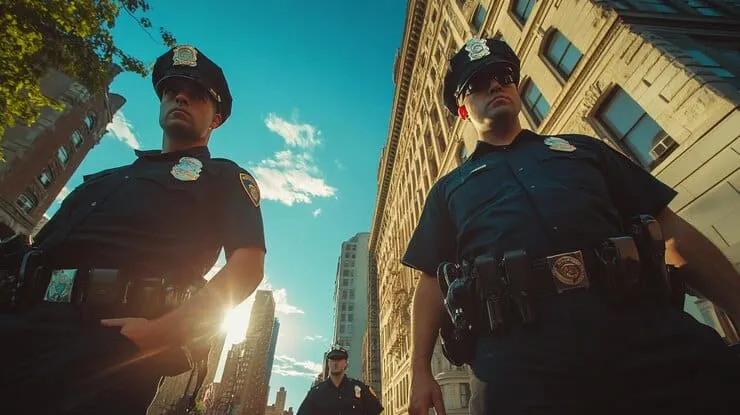
Investigation Techniques: Learning methods for collecting evidence, interviewing witnesses, and conducting investigations into criminal activities.
Defensive Tactics: Acquiring physical techniques to protect themselves and others during high-risk encounters.
Crisis Management: Training to respond effectively to emergencies and situations involving high stress or conflict.
Through DCJS certification, officers demonstrate their ability to perform their duties responsibly, effectively, and ethically, helping to build trust between law enforcement and the communities they serve.
The DCJS Law Enforcement Certification Process
The process of obtaining DCJS Law Enforcement Certification involves several key steps, ensuring that candidates are thoroughly prepared for the responsibilities of law enforcement. The steps include meeting eligibility criteria, completing a training academy, and passing the certification exam.
To apply for the DCJS Law Enforcement Certification, candidates must meet the following basic eligibility criteria:
Be at least 21 years old.
Be a U.S. citizen or legal resident of the United States.
Have no felony convictions or disqualifying misdemeanor convictions (a background check is conducted).
Possess a high school diploma or equivalent (a college degree is preferred but not required).
Be physically and mentally fit to perform the duties of a law enforcement officer.
Candidates must also be employed by a law enforcement agency in Virginia that is recognized by the DCJS. This includes local police departments, sheriff’s offices, and other law enforcement organizations.
Once eligibility is confirmed, candidates must attend a DCJS-certified law enforcement training academy. The academy provides comprehensive training in various law enforcement skills, including:
Criminal law and procedural guidelines.
Patrol techniques and vehicle stops.
Defensive tactics and hand-to-hand combat.
First aid and emergency response.
Community policing and conflict resolution.
Training programs typically last between 18 and 24 weeks, depending on the academy. The curriculum is designed to equip candidates with the practical knowledge needed to perform effectively in real-world law enforcement settings.
After completing the academy, candidates must pass the DCJS Law Enforcement Certification exam. This exam tests the knowledge and skills learned during the academy training and covers topics such as:
Criminal law and procedure
Investigation techniques
Defensive tactics
Communication and de-escalation strategies
The exam is typically a written test, though some agencies may include practical exams to assess candidates' abilities in simulated law enforcement scenarios. Candidates must pass the exam to receive their certification.
Once certified, law enforcement officers must meet ongoing education and training requirements to maintain their certification. This includes:
Completing annual in-service training on new laws, procedures, and tactics.
Participating in advanced training in areas such as specialized investigations, crisis intervention, and leadership.
The DCJS requires law enforcement officers to maintain their certification through continuous professional development to ensure they stay up-to-date with evolving legal standards and law enforcement practices.
Utah notary applicants can prepare for the required knowledge exam with our free Utah Notary Public practice test — covering acknowledgments, jurats, oaths, and Utah notary law requirements.
Michigan police officer candidates can prepare for the MCOLES Physical Agility and Reading Comprehension test with our free MCOLES Michigan law enforcement practice test — covering report writing, reading, and criminal law knowledge.
Ohio notary applicants can prepare for the required knowledge exam with our free Ohio Notary Public practice test — covering notarial acts, identification requirements, record keeping, and Ohio notary law.
CPJE California pharmacy jurisprudence candidates often also prepare with our MPJE practice test for the federal and state drug law and dispensing regulation fundamentals both pharmacy licensing exams assess.
Career Opportunities with DCJS Certification
Obtaining DCJS Law Enforcement Certification opens up a wide range of career opportunities within the field of law enforcement in Virginia. Some of the career paths available to certified officers include:
Police Officer: Serving as a uniformed officer, patrolling neighborhoods, responding to emergencies, and conducting investigations.
Detective: Investigating criminal activities, collecting evidence, and building cases for prosecution.
SWAT Officer: Specializing in high-risk operations, such as hostage rescues, counter-terrorism, and armed standoff situations.
Crime Scene Investigator (CSI): Collecting and analyzing physical evidence from crime scenes to aid in solving cases.
Community Outreach Coordinator: Working with communities to build positive relationships and develop programs aimed at preventing crime and improving safety.
State Trooper: Serving as a member of the Virginia State Police, focusing on highway safety, criminal enforcement, and statewide law enforcement initiatives.
Officers with DCJS certification also have the potential to advance to supervisory or leadership roles, such as sergeant, lieutenant, or police chief, depending on their experience and education.

Conclusions
DCJS Law Enforcement Certification is an essential qualification for those seeking to serve as law enforcement officers in Virginia. The certification process ensures that officers are well-prepared to meet the demands of the job, equipped with the knowledge and skills necessary to protect and serve their communities effectively.
By obtaining this certification, you not only enhance your job prospects in law enforcement but also gain the opportunity to make a meaningful impact on public safety and justice. With continuous professional development, DCJS-certified officers can advance in their careers, taking on new challenges and responsibilities in a rewarding field.

- +Industry-recognized credential boosts your resume
- +Higher earning potential (10-20% salary increase on average)
- +Demonstrates commitment to professional development
- +Opens doors to advanced career opportunities
- −Exam preparation requires significant time investment (4-8 weeks)
- −Certification fees can be $100-$400+
- −May require continuing education to maintain
- −Some employers may not require certification
Sample VA DCJS Law Enforcement Certification Practice Questions
Try these questions from our free VA DCJS Law Enforcement Certification practice tests. The correct answer and an explanation follow each question.
A Virginia law enforcement officer observes their partner using force that is clearly excessive on a handcuffed subject. According to Virginia law and professional standards, what is the observing officer's primary duty in this situation?
- A. To wait until the situation is over and then report it to a supervisor.
- B. To immediately and safely intervene to prevent the use of unreasonable force.
- C. To document the incident in their report but take no physical action.
- D. To support their partner's actions unconditionally to maintain a 'united front.'
Answer: B. To immediately and safely intervene to prevent the use of unreasonable force.
Professional ethics and Virginia law (which mandates agencies have a policy on the duty to intervene per § 15.2-1704.1) require an officer to intervene when they witness another officer using excessive force. This duty includes both stopping the action if it can be done safely and reporting the incident.
A law enforcement officer in Virginia initiates a vehicle pursuit. According to DCJS model policies and common Virginia agency standards, which of the following is a primary consideration for continuing or terminating the pursuit?
- A. The time of day and the shift supervisor's preference.
- B. The need to apprehend the suspect at all costs to prevent any escape.
- C. The officer's belief that they can successfully stop the vehicle within five minutes.
- D. Whether the risk to the public and officers outweighs the need for immediate apprehension.
Answer: D. Whether the risk to the public and officers outweighs the need for immediate apprehension.
The guiding principle in all vehicle pursuits is the safety of the public, the officers, and the suspect. DCJS model policies and standard law enforcement practices in Virginia emphasize that a pursuit must be terminated whenever the risks created by the pursuit become greater than the danger to the community if the suspect is not immediately apprehended.
Virginia's Comprehensive Services Act (CSA) is relevant to law enforcement because it:
- A. Authorizes officers to use force on juveniles with mental illness
- B. Coordinates community-based services for troubled youth and their families
- C. Establishes mandatory minimum sentences for mental health offenses
- D. Requires officers to administer psychiatric medication in the field
Answer: B. Coordinates community-based services for troubled youth and their families
The CSA creates a collaborative system for providing community-based services to at-risk youth and families, which officers should be aware of as a referral resource.
A Virginia law enforcement officer is pursuing a vehicle that has fled from a traffic stop for a misdemeanor offense. The driver is driving recklessly but has not yet caused any injury. According to Virginia law, when is the officer justified in discharging a firearm at the moving vehicle?
- A. When the driver's reckless driving endangers property.
- B. As soon as the vehicle's speed exceeds the posted limit by 30 MPH.
- C. Only when it is immediately necessary to protect the officer or another person from death or serious bodily injury.
- D. Never, as shooting at a moving vehicle is strictly prohibited without exception.
Answer: C. Only when it is immediately necessary to protect the officer or another person from death or serious bodily injury.
Virginia Code § 19.2-83.4 (B) explicitly prohibits the willful discharge of a firearm by a law-enforcement officer into or at a moving vehicle unless the discharge is immediately necessary to protect the officer or another person from death or serious bodily injury. [3] Fleeing from a misdemeanor or driving recklessly alone does not automatically meet this high standard.
Take the full VA DCJS Law Enforcement Certification practice test
DCJS Questions and Answers
Sources & last verified
- Virginia Department of Criminal Justice Services (DCJS), Division of Law Enforcement, under the Criminal Justice Service — retake policy, validity (official source). “Your agency and/or academy policy will determine whether or not you can repeat failed training if it can be completed within the 12 months.” Verified Oct 26, 2026 · source checked Oct 20, 2026.
- law.lis.virginia.gov — delivery (official source). “The Department may delegate administration of the examinations to an approved criminal justice training academy and may revoke such delegation at its discretion.” Verified Oct 27, 2026 · source checked Oct 27, 2026.
- law.lis.virginia.gov — eligibility (official source). “Successfully complete law-enforcement basic training at a certified criminal justice training academy, which includes receiving a minimum of 480 hours of department approved training in…” Verified Oct 27, 2026 · source checked Oct 27, 2026.
- Virginia Department of Criminal Justice Services (DCJS), Division of Law Enforcement, under the Criminal Justice Service — other (official source). “communication” Verified Oct 29, 2026.
How we verify: editorial & fact-checking policy. Report an error: contact us.
How this page was made: written with AI tools and published by Nathan Beja, founder of Practice Test Geeks, who is responsible for its content. Exam facts are checked against the official sources listed below. Not reviewed by a subject-matter expert. Editorial policy
Sources & references
Exam facts on this page (fees, format, dates, passing scores) are checked against these official sources; the date is our last check. Editorial policy
- dcjs.virginia.gov — Retake policy, score validity, exam information · verified Oct 2026
- law.lis.virginia.gov — Eligibility, test delivery · verified Oct 2026