
Umpire Assignments: How Officials Get Selected, Scheduled, and Promoted in 2026 September
Umpire assignments explained: ✍🏼 how schedulers select officials, pay rates, MLB rotation rules, and how to get more games at every level in 2026 September.
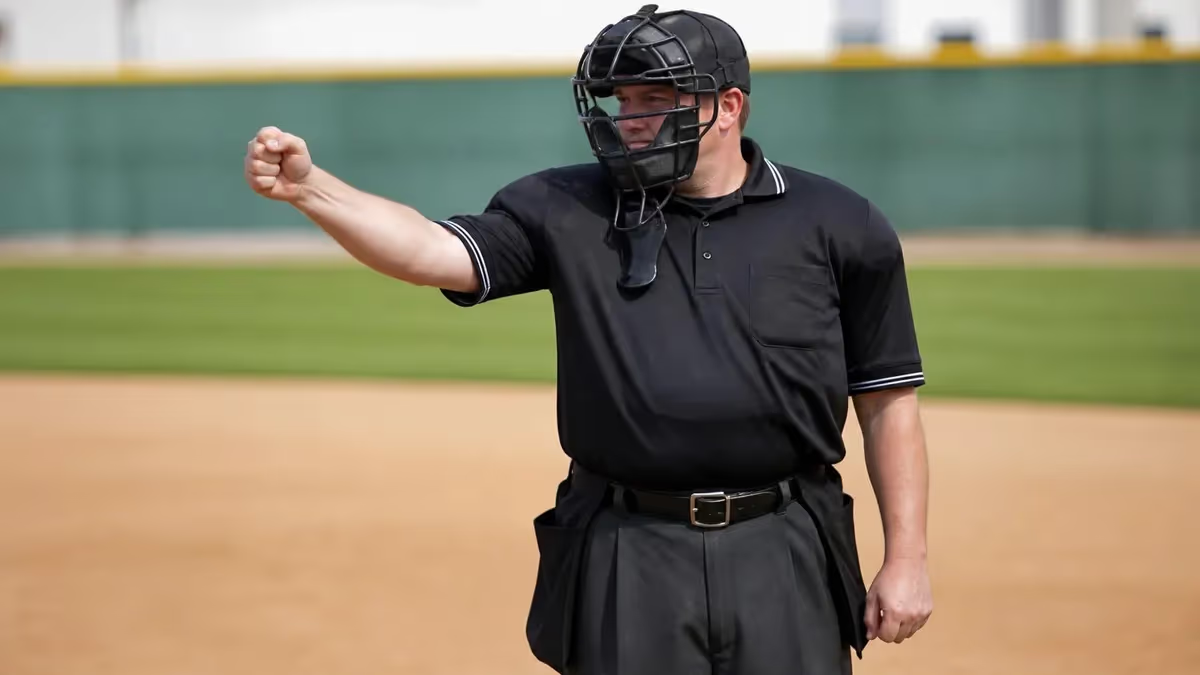
Umpire assignments are the lifeblood of an officiating career, determining how much you work, how much you earn, and how quickly you advance through the ranks. Whether you call balls and strikes at a Little League diamond or stand behind home plate at Yankee Stadium, every game you officiate originates from a structured assignment process run by a scheduler, league office, or umpire-in-chief. Understanding that process is the difference between getting two games a week and getting twenty.
The mechanics of how umpires receive games vary dramatically by level. At the youth and high school level, a local assigner uses scheduling software like ArbiterSports or Horizon Web Ref to distribute games based on availability, ranking, and proximity. At the collegiate level, conference coordinators evaluate umpires on mechanics, judgment, and rule knowledge before slotting them into series. At the professional level, Major League Baseball's umpiring department manages a rotational system that balances crew chemistry, geographic logistics, and postseason readiness across a 162-game schedule.
For umpires just starting out, the assignment process can feel opaque and political. New officials often wonder why a peer with similar experience gets twice as many games, or why their availability seems to be ignored during peak weeks. The truth is that assigners weigh a combination of objective data — ratings, attendance, certification level — and subjective factors like reliability, communication, and how an umpire handles difficult coaches. Building a strong relationship with your assigner is often more valuable than passing another rules clinic.
This guide walks through the entire ecosystem of umpire assignments from the ground up. We will cover how youth assigners build schedules, how state high school associations distribute playoff games, how NCAA coordinators select postseason crews, and how MLB's central office handles regular-season rotations and World Series picks. You will also learn what factors influence pay, how to negotiate game fees, and the unwritten rules that separate umpires who get the best assignments from those who get the leftovers.
Pay scales tied to assignments range enormously. A youth recreational game might pay $35, a high school varsity contest $75 to $110, an NCAA Division I conference game $250 to $400, and an MLB regular-season game roughly $2,800 per umpire when you average out salary across the season. Postseason bonuses can push elite professional umpires past $450,000 in total compensation. These numbers explain why competition for the best assignments is fierce at every level.
Beyond the dollars, assignments shape your developmental arc. Working a state championship at age 22 puts you on a different trajectory than working JV doubleheaders for five years. Scouts from college conferences and minor league supervisors attend showcase tournaments and evaluation camps specifically to identify umpires who deserve more visible assignments. Knowing where those events happen — and how to get invited — is essential professional knowledge for anyone serious about climbing the ladder.
By the end of this article, you will understand the assignment systems at each level, the criteria assigners use to rank umpires, the technology platforms that distribute games, and the practical steps you can take this week to earn more and better games. Whether your goal is a steady weekend schedule of high school baseball or a corner spot on an MLB crew, the path starts with mastering how assignments actually work.
Umpire Assignments by the Numbers

Assignment Levels at a Glance
Assigned by local associations through software like ArbiterSports. Pay ranges $30-$60 per game. Ideal for new umpires building reps and confidence in low-stakes environments.
State associations approve umpires through certification testing and clinic attendance. Local assigners distribute regular-season games; playoff assignments are merit-based and competitive.
Conference coordinators handle Division I, II, and III schedules. Selection requires camp invites, evaluations, and proven judgment. Postseason assignments are the holy grail.
Professional Umpire Career Course graduates are evaluated and placed in rookie or short-season leagues. Promotions through AA and AAA depend on annual supervisor reviews.
76 full-time umpires plus a call-up pool. Assignments handled by MLB's umpiring department with rotations balanced for crews, travel, and postseason eligibility.
The mechanics behind umpire assignments depend almost entirely on the level you work, but every system shares one central figure: the assigner. At the youth and high school level, this is usually a local association officer or a paid scheduler who oversees a defined territory. At the collegiate level, the assigner is the conference coordinator of umpires. At the professional level, it is the MLB Umpiring Department in New York that drives crew compositions, with input from supervisors who travel the country evaluating performance week by week.
Most modern assigners use software platforms to manage logistics. ArbiterSports dominates the youth and high school market in the United States, while Horizon Web Ref and RefScheduler are common alternatives. These tools let umpires set their availability by date, block specific schools, and rank their preferred game types. The assigner then runs the schedule against availability and applies a ranking system to fill the most competitive games with the highest-rated umpires before working down the list.
Reliability is the single most important currency you bring to an assigner. Cancellations, late arrivals, and last-minute swaps create headaches that ripple across an entire schedule. Umpires who answer the phone on a rainy Wednesday and drive an extra forty minutes to cover a missing partner become known as solvers, and solvers get rewarded with playoff games, doubleheaders, and the most lucrative tournaments. Conversely, a single no-show can erase months of goodwill and slide you to the bottom of the queue for a full season.
Ranking systems vary but typically incorporate three to five criteria: years of experience, evaluation scores, certification level, attendance at clinics, and coach feedback. Some states use a numeric ranking that determines playoff eligibility, while others rely on the subjective judgment of veteran officials who serve on selection committees. Understanding which model your area uses lets you focus your professional development on the activities that actually move your ranking, rather than wasting energy on things that look good but do not count.
Geographic logistics influence assignments more than many new umpires realize. Assigners try to keep travel manageable, so an umpire who lives in a population center may receive more games simply because they can reach more venues within an hour. Rural umpires often have to accept longer drives or commit to specific weekly nights at distant schools to secure a steady schedule. Some umpires deliberately register with multiple assigners across overlapping territories to maximize their weekly game count.
Conflict management within the assignment process is its own skill. If a coach lodges a complaint, the assigner is the first to hear about it, and how the umpire responds — taking accountability, providing context without excuses, learning from the situation — determines whether the relationship survives. The umpires who advance know that the assigner is not just a scheduler but a career gatekeeper, and they treat every interaction accordingly. A short, professional email thanking the assigner after a tough night carries surprising weight.
Finally, communication style matters. Assigners are usually juggling hundreds of games and dozens of officials, so a clear, concise availability update is gold. Umpires who write rambling messages, change their schedules repeatedly, or fail to confirm assignments quickly become administrative burdens. The simplest path to better games is being the easiest umpire on the roster to work with — and the one whose name the assigner reaches for first when a high-profile game opens up.
Umpire Practice Test Questions
Prepare for the Umpire Certification exam with our free practice test modules. Each quiz covers key topics to help you pass on your first try.
Umpire Game Management
Umpire Exam Questions covering Game Management. Master Umpire Test concepts for certification prep.
Umpire Positioning and Mechanics
Free Umpire Practice Test featuring Positioning and Mechanics. Improve your Umpire Exam score with mock test prep.
Umpire Roles and Responsibilities
Umpire Mock Exam on Roles and Responsibilities. Umpire Study Guide questions to pass on your first try.
Umpire Rules of the Game
Umpire Test Prep for Rules of the Game. Practice Umpire Quiz questions and boost your score.
Umpire Certification Code Compliance
Umpire Questions and Answers on Certification Code Compliance. Free Umpire practice for exam readiness.
Umpire Certification Environmental Standards
Umpire Mock Test covering Certification Environmental Standards. Online Umpire Test practice with instant feedback.
Umpire Certification Equipment Operation
Free Umpire Quiz on Certification Equipment Operation. Umpire Exam prep questions with detailed explanations.
Umpire Certification Maintenance Protocols
Umpire Practice Questions for Certification Maintenance Protocols. Build confidence for your Umpire certification exam.
Umpire Certification Material Selection
Umpire Test Online for Certification Material Selection. Free practice with instant results and feedback.
Umpire Certification Quality Inspection
Umpire Study Material on Certification Quality Inspection. Prepare effectively with real exam-style questions.
Umpire Assignments Across Levels
High school umpire assignments are managed at the state level by associations such as the NFHS-affiliated bodies in each state. Once you pass the certification exam, attend the required clinics, and complete a probationary period, your name enters the local assigner's pool. Most states tier umpires into ranks like Class 1 through Class 4, with the top tier eligible for varsity and postseason games while lower tiers handle JV, freshman, and middle school contests.
Regular-season game fees usually range from $65 for sub-varsity to $110 for varsity, plus mileage in some districts. Playoff assignments are awarded by a state committee that reviews evaluation forms submitted by coaches, athletic directors, and senior officials throughout the year. Earning a state finals assignment typically requires five to ten years of consistent varsity work plus strong written evaluations and demonstrated leadership in your local chapter.
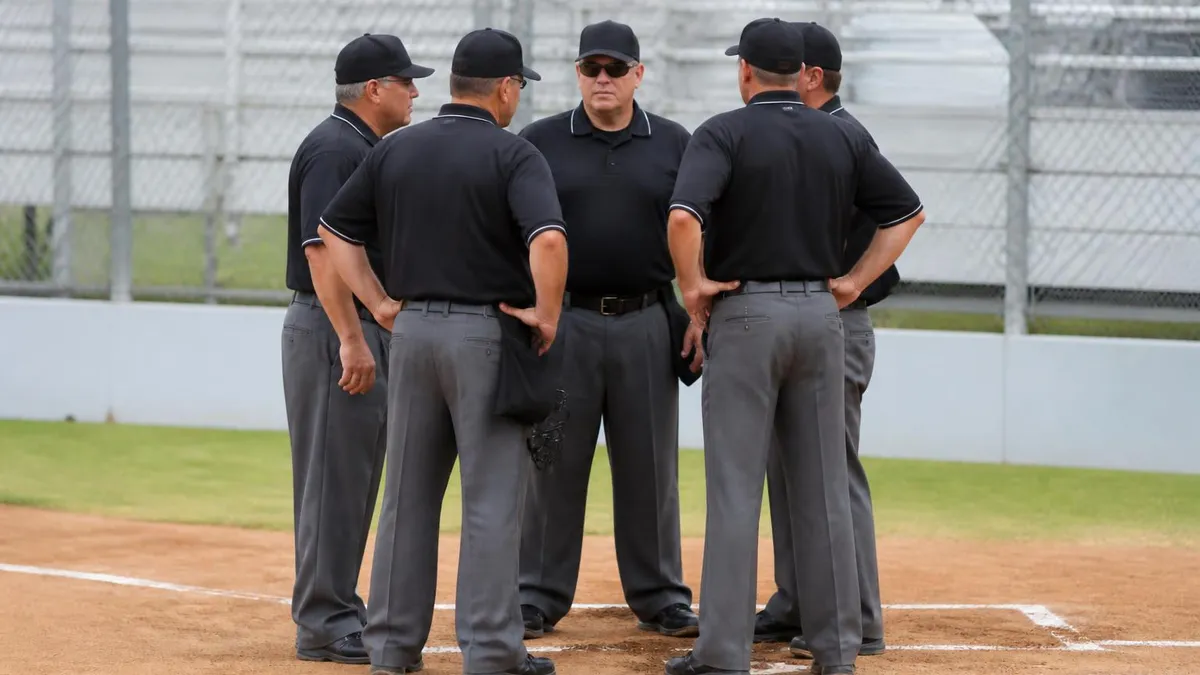
Working With a Local Assigner: Pros and Cons
- +Steady stream of games once you build trust with the assigner
- +Software platforms make availability simple to manage
- +Faster path to varsity work than freelancing across multiple territories
- +Direct feedback loop on performance through the assigner
- +Priority for tournaments and postseason if you stay reliable
- +Built-in mentorship from veteran officials in the association
- +Clear path to higher pay tiers as your ranking rises
- −Dependent on one person's preferences and availability
- −Local politics can affect playoff selection decisions
- −Cancellation policies often penalize you financially
- −Limited control over which schools or coaches you work
- −Geographic boundaries cap your earning potential
- −Some assigners play favorites with veteran officials
- −Last-minute fill-in requests can disrupt personal life
Action Steps to Earn Better Umpire Assignments
- ✓Register with every assigner in a 60-minute drive radius
- ✓Keep your ArbiterSports availability calendar updated weekly
- ✓Attend every mandatory and optional rules clinic in your state
- ✓Complete an annual evaluation camp with a recognized coordinator
- ✓Build a professional umpire profile with photo, certifications, and contact info
- ✓Respond to assignment offers within 24 hours, always
- ✓Arrive at every game 45 minutes early in full pressed uniform
- ✓Send a short thank-you message to assigners at season's end
- ✓Volunteer for tournaments, doubleheaders, and last-minute fill-ins
- ✓Pursue collegiate camp invitations once you have three varsity seasons
- ✓Maintain a personal log of every game you work for resume building
- ✓Develop one veteran mentor who advocates for you with assigners
Reliability beats talent every time
When assigners are asked what separates the umpires who get state championships from those who do not, the answer is almost never about strike zone consistency or perfect mechanics. It is about reliability — answering the phone, showing up early, never canceling, and being someone the assigner trusts on the biggest stage. Build that reputation in your first three seasons and the games will follow.
Pay structures for umpire assignments are surprisingly complex and often misunderstood by new officials. At the youth level, fees typically range from $30 to $60 per game, paid in cash by team managers or via a league check at season's end. High school varsity games pay between $65 and $110, with sub-varsity games scaling proportionally. Some states add mileage reimbursement, while others fold travel into a flat fee that disadvantages umpires covering rural schools.
Collegiate assignments command substantially higher fees. NCAA Division III conferences typically pay $150 to $200 per game, Division II runs $200 to $275, and Division I ranges from $250 to $400 per game depending on conference and crew size. Power Five conferences also cover hotel, ground transportation, and per diem during series, which can effectively double the take-home value of each assignment. Postseason regionals and super regionals add bonus stipends on top of the per-game rate.
Professional baseball pay starts modestly — rookie and short-season umpires earn around $2,800 to $3,500 per month plus per diem during a roughly three-month season. Advancement brings significant raises: Double-A umpires earn $3,500 to $4,200 per month, and Triple-A umpires can reach $4,500 to $5,500 per month plus better per diem. The financial leap to MLB is dramatic, with first-year MLB umpires earning roughly $150,000 in base salary and veteran umpires exceeding $450,000 with postseason bonuses included.
Travel logistics shape assignment desirability as much as pay. A $90 high school game forty-five minutes away may net less per hour than a $75 game ten minutes from home. Smart umpires calculate true hourly earnings — including drive time, gas, meals, and equipment wear — before accepting marginal assignments. The same calculus applies at the college level, where a low-paid mid-week game across state lines may not pencil out compared to a weekend home series at a closer school.
Tax treatment of umpire income is another financial dimension to plan for. In most states, umpires are classified as independent contractors and receive 1099 forms rather than W-2s. This means no taxes are withheld from your fees, and you are responsible for quarterly estimated payments to the IRS and your state. The good news is that legitimate business expenses — uniforms, equipment, mileage, clinic fees, association dues — are all deductible against your umpiring income.
Insurance is the often-overlooked logistic that experienced umpires take seriously. Most state associations and umpire unions include liability and accident coverage in your annual membership fee, but the limits are often modest. Carrying supplemental disability insurance is wise for full-time professional umpires whose income depends on physical health, and a separate umbrella policy can protect against the rare but serious claims arising from coach or fan altercations.
Equipment costs are a real factor in the economics of assignments. A full plate gear setup runs $700 to $1,500 for chest protector, shin guards, mask, plate shoes, and indicator. Annual replacement and laundering pushes the operating cost above $300 per year for an active umpire. Tracking these expenses meticulously and comparing them against the pay scale at each level helps you decide which assignments are actually worth pursuing and which are loss leaders for visibility.

Most assigners enforce strict cancellation penalties. Canceling a game more than seven days out is usually free, three to seven days may carry a fine, and within 72 hours often costs your full game fee plus a ranking penalty. Two cancellations in a single season can drop you from varsity to JV rotation. Always confirm your availability honestly before accepting any assignment.
Advancing from solid local assignments to premier work — state championships, college regionals, MLB call-ups — requires a deliberate strategy that goes beyond simply working more games. The umpires who break through invest in visibility, evaluation, and continuous learning at a level the average official does not match. They treat their officiating career like a profession, not a hobby, and they understand that the right people need to see them at the right moments.
Camp attendance is the single most important advancement lever for amateur umpires aspiring to college work. The MLB Umpire Camps, NCAA-sponsored regional camps, and respected private camps like Brinkman-Froemming hold sessions across the country every off-season. At these camps, evaluators watch hundreds of umpires work intrasquad games, scoring them on mechanics, plate work, and decision-making. The best performers earn recommendations that flow directly to conference coordinators and professional school admissions.
Building a mentor network multiplies your visibility. Veteran umpires who have already worked the championships and college series can put your name in front of decision-makers in ways no application can. The mentorship usually starts informally — riding to a game together, asking sharp questions in the locker room, taking feedback without defensiveness. Over time, the mentor begins to think of you as a project worth promoting, and that endorsement opens doors that would otherwise stay closed.
Recording and reviewing your own games is a professional habit that separates serious umpires from casual ones. Many states now allow you to film your plate work and share it with evaluators for written feedback. Watching yourself on tape exposes inconsistencies in stance, timing, and signal mechanics that you would never notice during a game. Twenty hours of self-review during the off-season can do more for your rating than fifty additional games. Pair this with formal study from a guide to the umpire test to round out your knowledge base.
Networking at officiating conventions is an underrated step. The annual NASO Summit, NFHS rules meetings, and regional umpire chapter banquets bring together assigners, coordinators, and supervisors who control the most coveted assignments. Showing up consistently, introducing yourself professionally, and following up with handwritten thank-you notes builds the kind of name recognition that gets you considered when openings appear. The umpires who never travel to these events almost never make the jump to the next level.
Diversifying your sport portfolio can also accelerate advancement. Many top baseball umpires also officiate basketball or football, which keeps them in front of athletic directors year-round and demonstrates the versatility that selection committees value. Multi-sport officials are often viewed as more committed to the craft and more available for last-minute assignments, both of which translate into premium games when the schedule gets crowded.
Finally, the umpires who reach the top understand that this career is a marathon, not a sprint. Most MLB umpires worked a decade or more in the minors before getting a permanent call-up. Most state finals umpires spent fifteen years building their reputation in their association. Patience, professional consistency, and a long-term mindset are the meta-skills that make every other piece of advice in this article actually work. Start the process now, stay with it through the inevitable setbacks, and the assignments will follow.
Practical preparation for assignment day is where most umpires either lock in their reputation or lose it. The night before a game, lay out your full uniform, polish your plate shoes, and pack two sets of everything — shirts, socks, undershirts — because nothing destroys assigner trust like showing up disheveled or with broken gear. Verify the start time, address, and parking instructions twice. Map out your driving route with a fifteen-minute buffer for traffic, and identify a backup route in case of accidents or construction.
Arrive on site no later than forty-five minutes before first pitch. This window allows you to meet your partner, walk the field, check ground rules with both coaches, inspect the lineup cards, and complete pre-game discussions about coverage, rotations, and fly-ball priorities. Umpires who roll in fifteen minutes early may technically be on time, but they signal disrespect to the game and to their partner, and that signal gets noticed and remembered by everyone involved.
Pre-game communication with your partner sets the tone for the entire night. Cover the basics — fly-ball coverage, tag-up responsibilities, rotation on extra-base hits, infield fly procedures — but also discuss tone and temperament. Some partners want active help on checked swings; others prefer to handle them solo. Establish hand signals, voice cues, and contingencies for ejections. A two-person crew that has talked through twenty scenarios will handle the twenty-first one cleanly, while an unprepared crew will stumble publicly and earn a complaint to the assigner.
On the field, your job is to be invisible in the easy moments and decisive in the hard ones. Strong plate stances, consistent timing, and clear mechanics on the bases build coach confidence early in the game. When a controversial call inevitably arises, your established credibility carries you through. Umpires who appear hesitant, change positions during pitches, or signal weakly invite arguments and lose the room. The best officials project calm authority from pitch one.
Managing coaches and players during games is its own discipline. Listen briefly to legitimate questions, answer factually, and move on. Never bait an argument, but never tolerate sustained dissent. When ejections become necessary, execute them with minimal drama — point, walk away, and document the situation in your post-game notes. Assigners absolutely review ejection reports, and an umpire who ejects cleanly and writes professionally about it is treated very differently than one whose reports show poor judgment or wounded pride.
Post-game habits matter as much as pre-game ones. Thank your partner specifically for one thing they did well. If the game had a notable incident, draft your report that night while details are fresh. Send a short message to the assigner confirming the game ended without major issues, especially if there was an ejection or protest. These small gestures are not bureaucratic — they are the professional courtesies that mark you as someone the assigner wants to call again for the biggest games of the year.
Finally, invest in your physical conditioning year-round. Umpiring is a physical job, and the umpires who get postseason assignments at every level are the ones who can squat for nine innings in 95-degree heat without losing focus. A baseline fitness routine of cardio, mobility, and lower-body strength training pays direct dividends on the field and signals to evaluators that you take the craft seriously. Combine that with mental preparation — rules review, video study, and stress management — and you have built the complete profile that assigners scout for.
Umpire Questions and Answers

How to Become an MLB Umpire — Complete Guide (2026)

Umpire Salary: Complete 2026 Pay Guide for Every Level of Baseball Officiating
Robot Umpire MLB: How Automated Ball-Strike Tech Is Changing Umpire Equipment and the Future of Officiating
Tarango Wife Slaps Umpire: The Infamous Tennis Umpire Incident and What It Reveals About the Job
Umpire Certification Test: Your Guide to Success
About the Author

Educational Psychologist & Academic Test Preparation Expert
Columbia University Teachers CollegeDr. Lisa Patel holds a Doctorate in Education from Columbia University Teachers College and has spent 17 years researching standardized test design and academic assessment. She has developed preparation programs for SAT, ACT, GRE, LSAT, UCAT, and numerous professional licensing exams, helping students of all backgrounds achieve their target scores.