
Robot Umpires in MLB: How ABS Works in 2026 October
Robot umpires explained: MLB's ABS challenge system, 2026 October spring training trial, Hawk-Eye tech, full-ABS variants, and what 2026 October looks like. 🎯
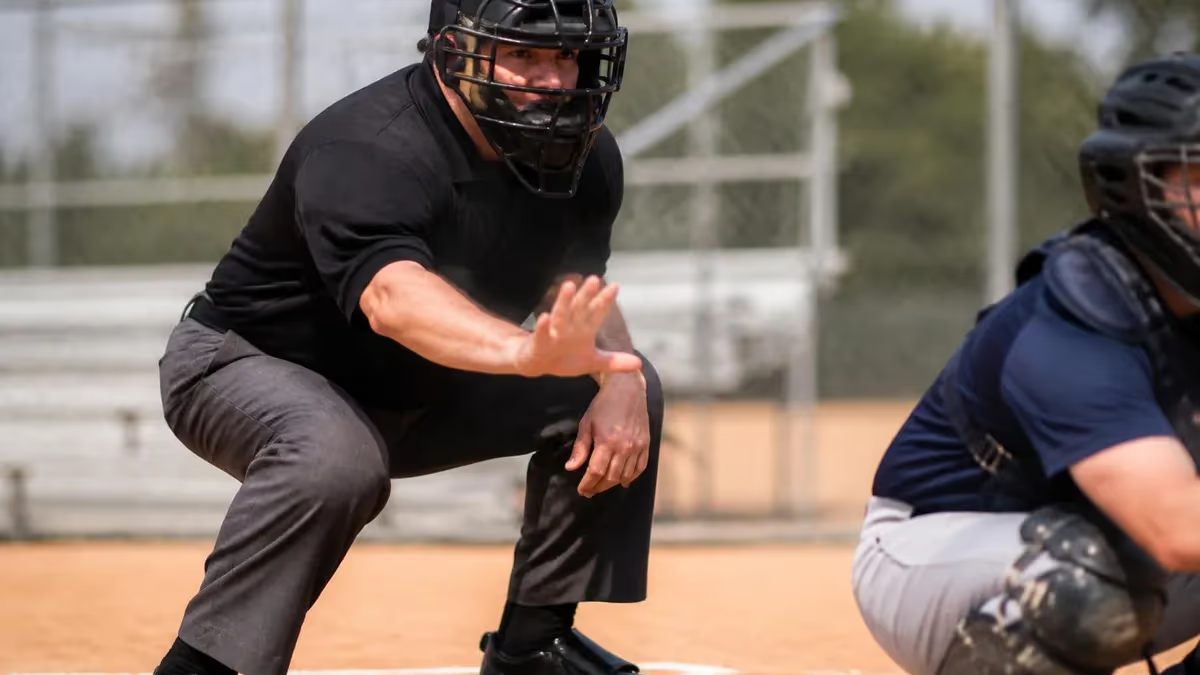
Baseball's strike zone got a new judge — sort of. The Automated Ball-Strike System, almost always shortened to ABS but called robot umpires in every headline you've ever read, finally landed at the MLB level in Spring Training 2025. Not for every pitch. Not for every game. But on enough Cactus and Grapefruit League fields, and with enough live data going back to the league office, that the experiment stopped being a Minor League curiosity and started looking like a real timeline toward regular-season use.
So what are robot umpires, really? They aren't robots. There's no humanoid figure crouched behind the plate. The home plate ump still calls the game in the dugout's view. What changes is who gets the last word on close pitches: instead of the umpire's eye, a network of Hawk-Eye cameras tracks the ball through a 3D strike zone and reports back whether a pitch caught the corner or missed by a hair.
In the robot umpires challenge format MLB rolled out, teams can dispute a few calls per game — and if Hawk-Eye disagrees with the human ump, the call flips. Instantly. On the scoreboard. No huddle, no replay booth.
This guide walks through how the system actually works, the difference between the two ABS variants tested in Triple-A and MiLB, what spring 2025 looked like for the players who lived through it, where the controversies sit, and how the role of the home plate umpire shifts when a camera owns the strike zone. Tennis fans will see familiar territory — Hawk-Eye made its name in tennis long before baseball gave it a shot — and we'll map the similarities and the things baseball does differently. The technology works. Whether the sport's ready is the more interesting question.
Free Umpire Certification Study Tools
Interactive Umpire Certification resources on PracticeTestGeeks, free to start:
- Umpire Certification flashcards — review key terms and concepts card by card
- Umpire Certification study guide — topic-by-topic overview of what the exam covers
- Umpire Certification cheat sheet — one-page printable summary for last-minute review
Robot Umpires by the Numbers
The first thing to know about MLB robot umpires: there are two flavors, and they behave very differently. The full-ABS version replaces the home plate umpire's ball-strike judgment entirely. Every pitch goes through Hawk-Eye. The catcher hears the call through an earpiece, the umpire signals it, and the human eye becomes redundant on balls and strikes.
This was the original Triple-A test, run extensively from 2022 through the 2024 season. It works — but it's controversial. Pitchers don't get a feel for the day's zone, catchers stop framing pitches (since framing doesn't matter when a camera owns the call), and the rhythm of the game shifts in ways that feel subtly off to people who've watched baseball their whole lives.
The challenge system is the version MLB actually brought to Spring Training. Umpires call balls and strikes the old way — by eye, with whatever zone they happen to be calling that day. But each team gets a small budget of challenges per game (typically two or three, plus one more if a challenge succeeds). When a hitter, pitcher, or catcher thinks the call was wrong, they tap their helmet or cap within a few seconds.
Hawk-Eye checks the pitch. If the camera disagrees with the ump, the call flips on the board within five seconds. If Hawk-Eye agrees with the ump, the team loses the challenge.
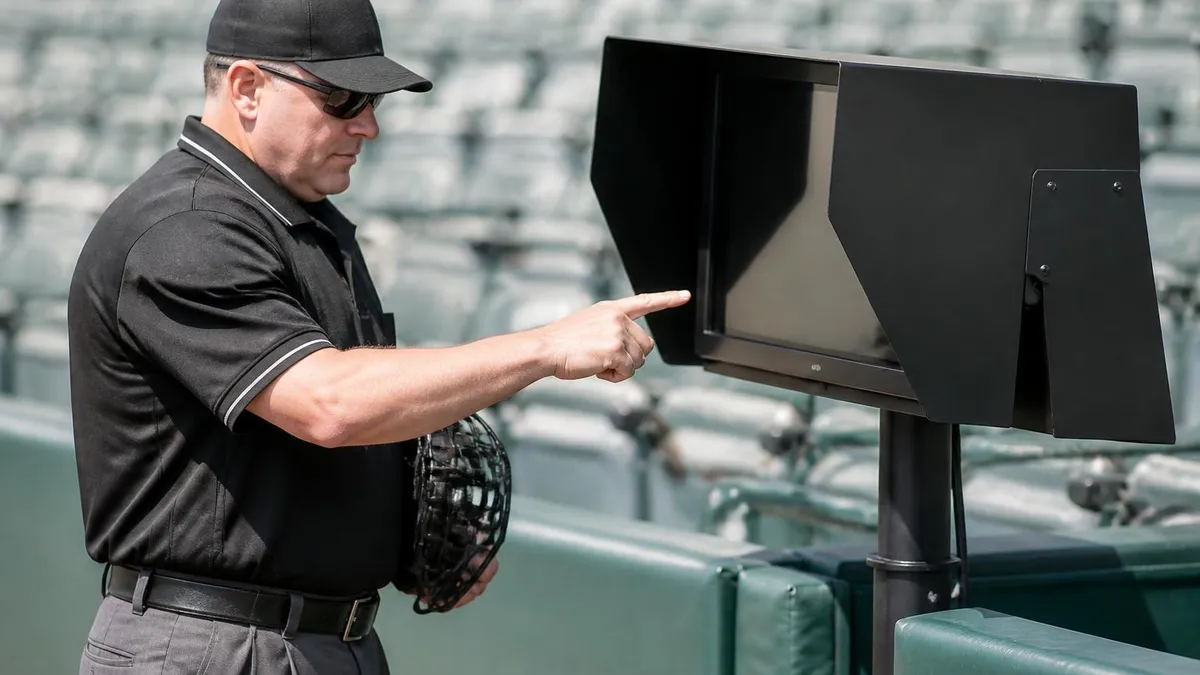
Two Flavors of Robot Umpire
Challenge system: human ump calls every pitch; each team gets 2-3 challenges per game; Hawk-Eye reviews disputed calls in under 2 seconds. Full-ABS: every pitch routed through Hawk-Eye; ump signals what the camera sees. MLB Spring 2025 used the challenge version. Full-ABS is still Triple-A only.
It's the second version — challenge — that almost everyone expects to reach the regular season first. Maybe 2026. Maybe a year later. The challenge format keeps the human umpire's authority on routine pitches while letting Hawk-Eye intervene on the calls that actually matter: full counts, runners in scoring position, two-strike pitches near the corners. Spring 2025 numbers tell the story. Roughly half the challenged calls got overturned. Pitchers used challenges most. Catchers used them second-most. Hitters, surprisingly, used them least — they often can't see whether their own check-swing or the framed corner-paint actually caught the zone.
The strike zone itself stays defined the way the rulebook describes it: the area over home plate between the hitter's shoulders and knees, adjusted for batting stance. Hawk-Eye builds that zone per hitter, frame by frame, using ten or so high-speed cameras tracking ball position and player skeleton at thousands of frames per second. The system has been calibrated in stadiums for years — the same Hawk-Eye that powers Statcast pitch tracking, the kind that tells you exit velocity and spin rate. The ball-strike call is a smaller computation than what Statcast already does in real time.
How the System Reads a Pitch
Roughly 12 high-frame-rate Hawk-Eye cameras mounted high in the stadium, tracking the ball from release through the plate.
A volume rendered over the plate — knees to letters, 17 inches wide — sized per hitter using their stance frame by frame.
Pitch position computed continuously through space; the system records where the ball entered and exited the zone volume.
Did the ball touch any part of the strike zone? If yes, strike. If no, ball. No fuzzy edges — the rulebook zone is geometric.
On challenged calls, the verdict reaches the umpire and scoreboard within 2 seconds, with a 3D replay graphic shown to fans.
Every pitch gets recorded against Hawk-Eye's call, even ones that weren't challenged — used for postgame umpire grading.
Hawk-Eye's role in baseball didn't start with ABS. The same vendor has been tracking pitches and player movement across MLB stadiums since 2020, when the league replaced its older Statcast Trackman system with Hawk-Eye's optical-camera setup. Roughly twelve cameras per stadium, mounted high above the field, capture the ball through its full trajectory — from release point to crossing the plate — at speeds high enough to resolve the seams. The same system tracks fielder positioning, baserunner leads, and catcher pop times. ABS just adds a new query: did the ball pass through the strike-zone volume on its way?
The 3D strike zone is the technical heart of the system. The rulebook describes a rectangular volume over home plate, but in practice the corners get debated more than the middle. Hawk-Eye renders the zone as a true 3D box: bounded on the bottom by the hollow of the knee, on the top by the midpoint between shoulders and belt, and across by the plate's seventeen-inch width.
The system reads the hitter's stance frame by frame and adjusts the zone vertically per batter — short hitters get a smaller zone, tall hitters get a larger one. Within that volume, the ball either touches or it doesn't. Pitches that nick the front edge of the plate count. Pitches that clip the back edge after dropping out the bottom — the classic curveball that crosses the back corner low — count too.
Latency matters more than people realize. The system has to render the call before play resumes, which on a swung-at pitch is immediate and on a take pitch is a few seconds at most. Hawk-Eye delivers calls in under two seconds in current testing.
The challenge version doesn't even need to be that fast on every pitch — only on the few that get challenged. A challenged call appears on the scoreboard with a 3D rendering of the pitch's path through the zone, showing exactly where the ball crossed. Fans see it. Players see it. The ump signals the new call and play moves on.
ABS in the Minors vs Spring Training vs MLB
Full-ABS tested across the entire Triple-A schedule. The home plate umpire received Hawk-Eye's call through an earpiece and relayed it. Pitch framing lost most of its value. Catchers, pitchers, and hitters had three full seasons to adapt. Roughly 90% of pitches were called the same as the human ump would have; the disagreements were almost entirely on rulebook-corner pitches that human umps historically miss.
Spring Training 2025 was where the casual fan met ABS for the first time. Both leagues used the challenge system across 13 spring training venues in Arizona and Florida. Roughly 60% of games featured ABS, with the league office collecting data on every challenge: who challenged, on what count, in what game situation, and whether the call flipped.
The most-cited number from the trial: about 51% of challenges succeeded, meaning Hawk-Eye disagreed with the umpire roughly half the time on close pitches that someone bothered to dispute. That's not a knock on umpires — those are the close calls by definition. It's a measure of how often the system found genuinely missed strikes or strikes-called-balls.
Players' reactions varied. Pitchers who relied on the corners — Max Scherzer, Justin Verlander, several others — were skeptical going in and warmed to the system after using it. The reason: they could appeal a missed strike call and often won. Catchers had the opposite reaction.
Years of training in pitch framing — receiving the ball quietly, presenting the corner, selling the strike — suddenly counted for less. Framers like J.T. Realmuto and Sean Murphy spoke openly about losing value if framing-detection drops below where it does today. Hitters mostly liked it. The system pulls strikes that were actually balls, which helps hitters more than pitchers in aggregate.
Across 13 spring training stadiums in Arizona and Florida, the challenge system handled thousands of disputed pitches. About 51% of challenges flipped the call, meaning Hawk-Eye and the human umpire disagreed roughly half the time on the calls someone bothered to challenge. Average review time: under two seconds. Player satisfaction: meaningfully higher than expected. MLB will use this data to finalize the rules for a regular-season rollout.
Umpires themselves have been ambivalent — diplomatic in public, more candid in interviews. The position isn't going away. Even under full-ABS, you need a home plate ump for plays at the plate, fair-foul calls, batter interference, check swings, hit-by-pitch reviews, ejections, and the dozen other judgment calls that don't involve balls and strikes. The challenge version keeps the human in charge of every pitch by default, with Hawk-Eye as a safety net. That's the role most umpires say they're comfortable with: their authority intact, with technology backing up the calls that get disputed.
The MLB Umpires Association — the union — negotiated provisions in their collective bargaining agreement specifically around ABS. The basic deal: umpires keep their jobs, keep their authority on non-ABS calls, and get formally trained on the challenge system before any regular-season rollout. There won't be a scenario where umpires lose work to a camera. The role narrows, not disappears.
Pace of play is the side concern. The challenge system adds maybe 20 seconds per game on average — quick by replay-review standards, much faster than a manager challenge in football or a tennis Hawk-Eye review (which can run 30 to 45 seconds). The pitch clock that MLB introduced in 2023 cut average game time by about 30 minutes. ABS doesn't undo that, but it does eat a small piece of the savings back. Net-net, games stay shorter than they were pre-2023 — just by a slightly smaller margin.
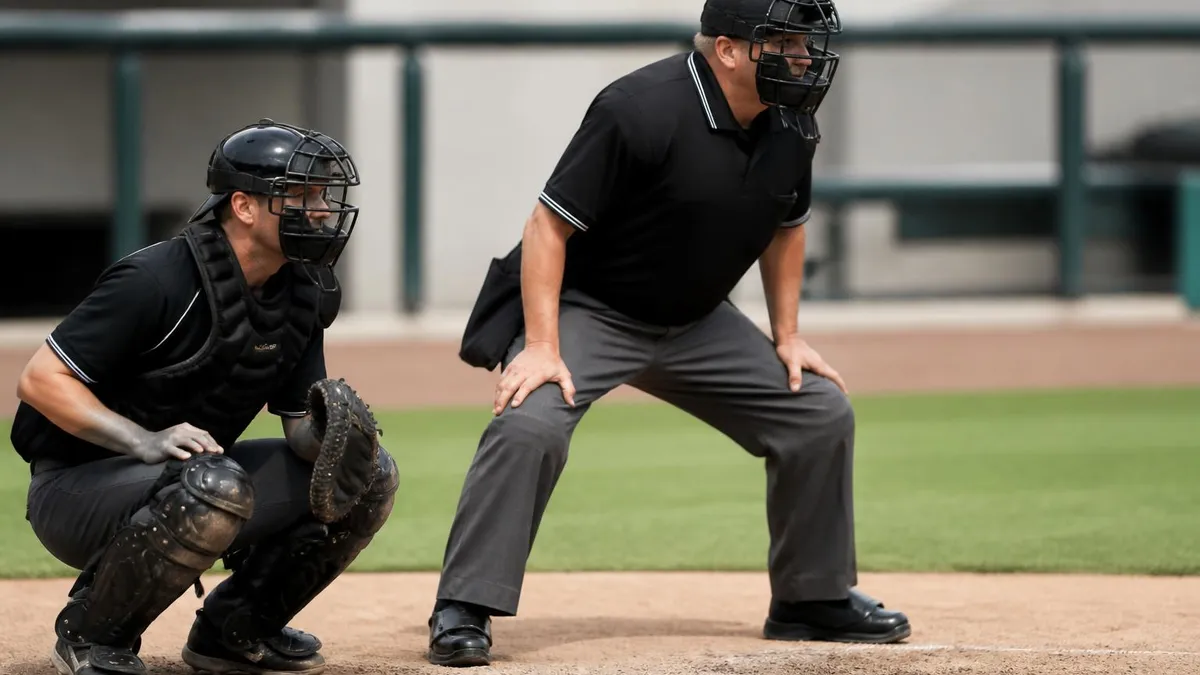
How a Challenge Plays Out in Real Time
- ✓Pitch is thrown — home plate umpire calls it ball or strike with normal mechanics
- ✓Pitcher, catcher, or hitter can dispute by tapping helmet or cap within roughly 2 seconds
- ✓Stadium scoreboard immediately freezes; Hawk-Eye runs the pitch through the 3D strike zone
- ✓Result appears on the scoreboard within 2 seconds with a 3D pitch graphic showing the trajectory
- ✓If Hawk-Eye disagrees with the ump, call flips and the team keeps their challenge for later
- ✓If Hawk-Eye agrees with the ump, the original call stands and the team loses one challenge
- ✓Umpire signals the corrected call (if any) and play resumes immediately — no booth review
- ✓Pitch gets logged in the league's audit database against Hawk-Eye's call for postgame grading
The controversies aren't really about the technology. The cameras work. The system reads pitches accurately. What's contested is whether the rulebook's strike zone is the right zone — and whether umpires should be removed from a judgment call that's been part of baseball since the 1870s. The traditional zone, as called by human umps over decades, isn't actually the rulebook zone.
It's lower on the inside corner, slightly wider on the outside, and has a softer top edge. Decades of pitch-framing data show this consistently. Hawk-Eye calls the rulebook zone. Which means under full-ABS, some pitches that have always been balls suddenly become strikes (and vice versa).
That shift matters more for some pitchers than others. Sinker pitchers — guys who live at the knees on the inside corner — gain a few inches of strike under ABS that they didn't have under traditional calling. Backdoor breaking-ball pitchers — sliders that clip the outside edge — gain similar territory.
Power pitchers who throw four-seam fastballs at the top of the zone gain too, since the top of the rulebook zone is higher than what umpires typically call. Pitchers who rely on framing — who throw to the catcher's target and trust the receiver to sell the call — lose a meaningful amount of advantage.
Robot Umpires — Pros and Cons
- +Accuracy: Hawk-Eye misses fewer close calls than human umpires (roughly 2% vs 8-10%)
- +Consistency: same rulebook strike zone in every park, every game, every umpire's crew
- +Transparency: 3D pitch graphics let fans see exactly where the ball crossed the plate
- +Speed: challenge reviews take under 2 seconds — faster than tennis Hawk-Eye or NFL replays
- +Player adaptation: Triple-A and Spring Training data show players adjust within weeks
- +Audit trail: every pitch is graded against Hawk-Eye, giving umpires objective feedback for training
- −Pitch framing loses value, which devalues catchers who built their careers on the skill
- −The rulebook strike zone differs from the zone umpires have historically called, shifting pitcher advantages
- −Human element controversy — many fans see manager arguments and umpire judgment as part of the sport
- −Pace impact: challenges add roughly 20 seconds per game on average, partially offsetting pitch-clock gains
- −Sinker and backdoor-breaking-ball pitchers gain at the expense of fastball-up pitchers used to traditional calling
- −Technology cost: Hawk-Eye installation and maintenance require investment in every stadium that doesn't yet have it
Pros and Cons at a Glance
| Pros | Cons |
|---|---|
| Consistency: same rulebook strike zone in every park, every game, every umpire's crew | Pitch framing loses value, which devalues catchers who built their careers on the skill |
| Player adaptation: Triple-A and Spring Training data show players adjust within weeks | The rulebook strike zone differs from the zone umpires have historically called, shifting pitcher advantages |
| Audit trail: every pitch is graded against Hawk-Eye, giving umpires objective feedback for training | Human element controversy — many fans see manager arguments and umpire judgment as part of the sport |
The slow rollout has its own critics. Triple-A used full-ABS for three seasons before the league brought any version to MLB. Some observers wanted full-ABS at the major league level immediately, arguing that fans deserve the same strike zone in every game. Others wanted nothing — the human element, they argue, is part of baseball's identity, and removing it changes the sport in ways the rulebook can't capture. MLB chose the challenge format as the compromise. It's slower than full-ABS, faster than nothing, and gives both sides some of what they wanted.
The accuracy debate is real but smaller than people think. Hawk-Eye's pitch-tracking error sits at roughly half an inch on average — small enough that almost every ball-strike call falls cleanly inside or outside the zone, with edge cases representing maybe 2% of pitches. Within that 2%, the system might be wrong on a small handful per game.
Human umpires miss roughly 8-10% of close calls by most public measures. So even with some Hawk-Eye error, the system is meaningfully more accurate on balls and strikes than the human umpire it backs up. Whether more accurate is automatically better is a different question — and the one the sport is still working out.
Tennis has been here. Hawk-Eye launched at Wimbledon and the US Open in 2006, after years of pressure to replace line judges on close calls. The first version was a challenge system. Sound familiar? Baseball's challenge format borrows the architecture almost directly. By 2025, every major tennis tournament uses Hawk-Eye Live — full automated line calling, no challenges needed.
Baseball's path looks similar in structure, slower in pace. Tennis took roughly fifteen years from first challenge system to full automation. If the parallel holds, full-ABS at the major league level might not arrive until the early 2030s — if it arrives at all. The bigger question isn't technology. It's culture. The challenge system manages to keep most of the human texture while fixing the worst missed calls. That's the bet MLB is making.
For umpire candidates and current minor league umps, ABS changes the job in concrete ways. You still need to know the rulebook strike zone — Hawk-Eye reads the same zone you're trained to call. The cameras don't replace your eye on check swings, fair-foul calls, plate plays, balks, or batter interference. What does change: your zone is now publicly compared to Hawk-Eye's zone, every pitch.
That visibility cuts both ways. Umpires whose zones match Hawk-Eye get publicly validated. Umps who consistently miss in specific spots have measurable evidence — useful for training, less comfortable for individual careers. The umpiring profession is still hiring, still promoting people through the minor league ranks. The job got smaller in scope but more measurable.
Crew chiefs say the challenge format has had one underrated effect: it's made catchers and hitters more strategic. Saving challenges for the eighth inning. Burning one early to test the zone. The strategy layer that ABS adds — when to challenge, how aggressively — is a small but real new dimension to in-game tactics. Tennis players developed similar instincts within the first season. Baseball is in the middle of that learning curve now.
Putting it together: robot umpires aren't taking over baseball. The home plate ump still calls the game, still handles judgment calls. What ABS adds is a precision layer underneath — a way to dispute the most consequential close calls and get a definitive answer in seconds. Spring Training 2025 proved the technology works at scale.
The unknowns aren't technical. They're about pace, drama, and tradition. How often will catchers and managers challenge? Will the regular season feel different from spring? MLB is gathering all of that now, with a likely regular-season rollout somewhere in the 2026-2027 window.
For viewers, the practical experience is small but real. A few moments per game where someone taps their helmet, the scoreboard flashes a 3D pitch graphic, and the call updates. Two seconds. Done. The strike zone, for the first time in baseball history, is something you can actually see.
Sample Umpire Certification Practice Questions
Try these questions from our free Umpire Certification practice tests. The correct answer and an explanation follow each question.
What inspection procedure is essential for maintenance protocols?
- A. Visual spot checks are sufficient
- B. Systematic inspection following established checklists and standards
- C. Inspection is only needed for final sign-off
- D. The client determines inspection requirements
Answer: B. Systematic inspection following established checklists and standards
Systematic inspections using established checklists and industry standards ensure quality and compliance at every stage.
What code compliance requirement applies to safety procedures?
- A. Codes are guidelines, not requirements
- B. All work must comply with applicable local, state, and national codes
- C. Code compliance only matters for commercial projects
- D. Follow codes only when inspectors are present
Answer: B. All work must comply with applicable local, state, and national codes
Code compliance is mandatory for all work, ensuring safety, quality, and legal adherence.
What is the most critical safety requirement in technical measurements?
- A. Speed of completion
- B. Following all applicable safety regulations and wearing required PPE
- C. Cost minimization
- D. Working alone to avoid delays
Answer: B. Following all applicable safety regulations and wearing required PPE
Safety regulations and proper PPE use are the most critical requirements in technical measurements to prevent injury and ensure compliance.
What inspection procedure is essential for code compliance?
- A. Visual spot checks are sufficient
- B. Systematic inspection following established checklists and standards
- C. Inspection is only needed for final sign-off
- D. The client determines inspection requirements
Answer: B. Systematic inspection following established checklists and standards
Systematic inspections using established checklists and industry standards ensure quality and compliance at every stage.
Umpire Questions and Answers
About the Author

Educational Psychologist & Academic Test Preparation Expert
Columbia University Teachers CollegeDr. Lisa Patel holds a Doctorate in Education from Columbia University Teachers College and has spent 17 years researching standardized test design and academic assessment. She has developed preparation programs for SAT, ACT, GRE, LSAT, UCAT, and numerous professional licensing exams, helping students of all backgrounds achieve their target scores.