
Forklift Training Melbourne: Complete TLILIC0003 Guide for Victorian Operators in 2026 August
Forklift training Melbourne guide for TLILIC0003 — courses, costs, RTOs, WorkSafe Victoria rules, exam tips, and career outcomes for 2026 August. 🟢
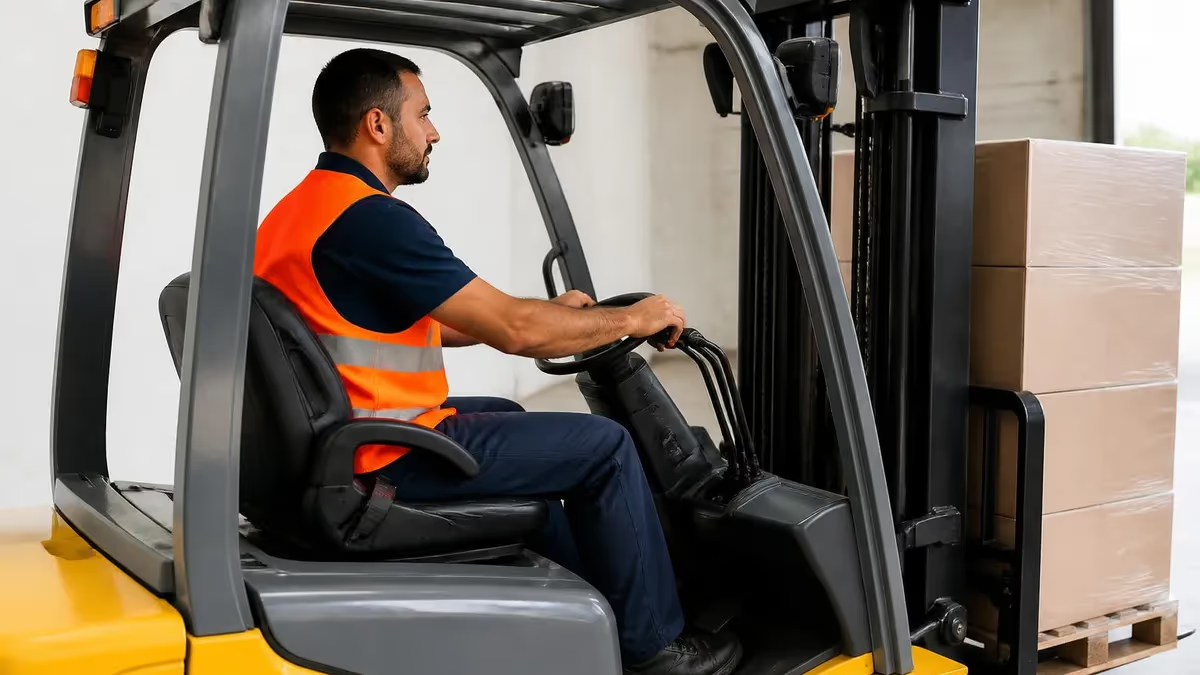
Forklift training Melbourne is the gateway to one of Victoria's most consistent blue-collar career paths, and in 2026 demand across Dandenong South, Truganina, Laverton North and the Port of Melbourne logistics belt remains exceptionally strong. The TLILIC0003 unit of competency — 'Licence to operate a forklift truck' — is the nationally recognised qualification you must hold to legally operate a counterbalance forklift on any Australian worksite. Melbourne operators face unique conditions: tight CBD loading docks, multi-shift cold storage warehouses in the western suburbs, and high-volume container yards that all demand certified skills.
Whether you are a school leaver entering warehousing, a tradesperson adding a high-risk work licence to your toolkit, or a migrant transferring overseas experience, training in Melbourne typically takes between one and five days depending on your prior exposure to materials handling. Registered Training Organisations (RTOs) across Greater Melbourne deliver TLILIC0003 under WorkSafe Victoria's regulatory framework, meaning every course must meet the same assessment standards regardless of whether you study in Sunshine, Clayton, Thomastown or Bayswater.
The cost of forklift training in Melbourne typically ranges from $350 for experienced operators doing assessment-only pathways up to $750 for full novice courses that include theory, practical instruction and the WorkSafe assessment. Pricing variation reflects factors like class size, one-on-one coaching, included refreshments, and whether the RTO charges separately for the WorkSafe Victoria licence application fee. Understanding what's included before you book prevents nasty surprises and helps you compare providers on like-for-like terms across the metropolitan area.
Before enrolling, it pays to understand the equipment you'll be operating. Reviewing the mast of forklift components — the carriage, forks, tilt cylinders, lift chains and channels — gives you a head start on the theory assessment, which heavily emphasises pre-start inspections and component identification. Melbourne assessors expect candidates to point to and name parts confidently during the practical, so this knowledge is not optional padding; it directly affects whether you pass on the day.
Eligibility is straightforward but non-negotiable: you must be at least 18 years old on the day of assessment, hold a Unique Student Identifier (USI), present 100 points of identification, and demonstrate a basic standard of English literacy and numeracy. WorkSafe Victoria does not waive the age requirement under any circumstance, and RTOs that suggest otherwise are operating outside the regulatory framework. Most reputable Melbourne providers will administer a short Language, Literacy and Numeracy (LLN) screen at enrolment to confirm you can read warning labels, complete logbooks and calculate basic load capacities.
This guide walks through every dimension of forklift training in Melbourne: the course structure under TLILIC0003, what the practical and theory assessments cover, how much to budget, which suburbs host the best-equipped training yards, what to expect on assessment day, and how to convert your training into a long-term career across Victoria's warehousing, construction and manufacturing sectors. By the end, you will have a clear roadmap from initial enquiry through to lodging your high-risk work licence application with WorkSafe Victoria.
We also cover practical realities that brochures often skip — things like why a wet weather day can delay outdoor assessments, how to negotiate workplace-based training with your employer, and what additional endorsements (LO, LF for order picking) might suit your career direction. Treat this article as a single comprehensive resource rather than a marketing pitch, and use the linked practice tests at the end to benchmark your readiness before you book a course.
Forklift Training Melbourne by the Numbers
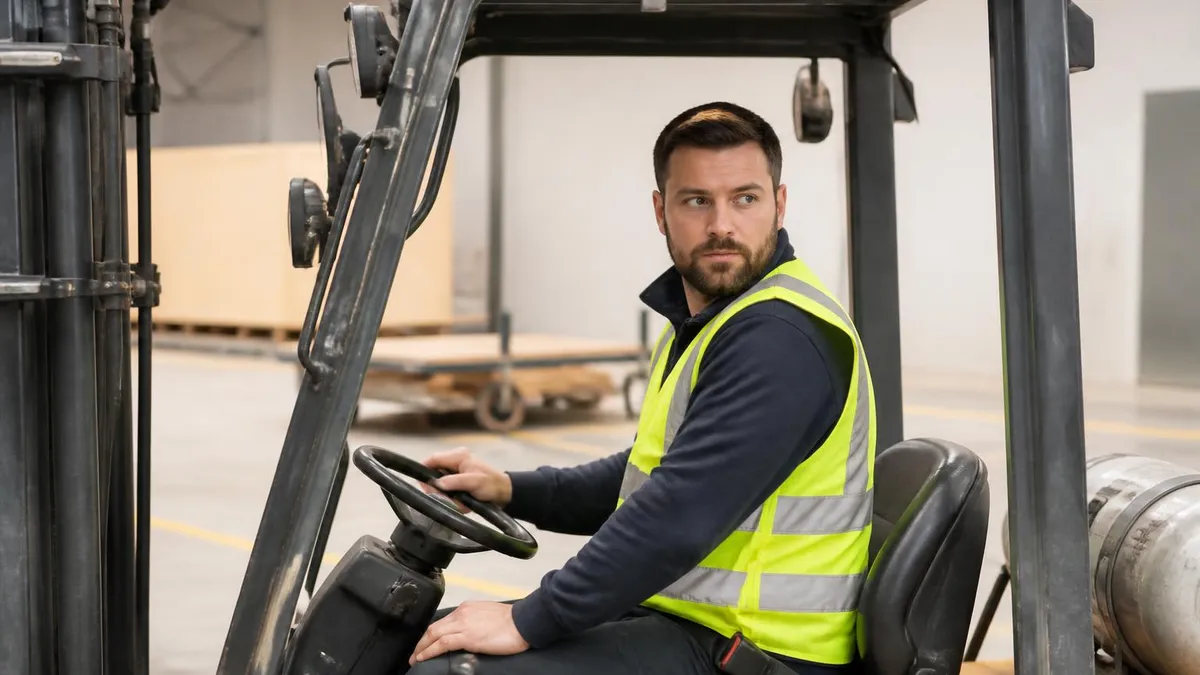
Melbourne Training Pathways Under TLILIC0003
Full theory and practical program for candidates with little or no forklift exposure. Covers safety legislation, pre-start checks, load handling, and finishes with the WorkSafe assessment on day five at the RTO yard.
Designed for operators with prior international experience or expired licences. Compresses theory revision into day one and runs assessment on day two. Popular with migrants holding non-recognised overseas tickets and warehouse workers.
One-day option for experienced operators who can demonstrate competence immediately. Requires evidence of prior workplace experience and successful completion of an LLN screen. Most cost-effective route for skilled candidates.
Mobile assessors travel to your warehouse, factory or yard and deliver training using your equipment. Ideal for employers certifying multiple staff at once and minimises productivity loss across the team.
Pair TLILIC0003 with TLILIC0004 (order-picking forklift) in a single extended program. Popular in Melbourne's high-bay distribution centres where operators move between counterbalance and order picker daily.
The TLILIC0003 unit of competency is structured around four performance criteria that every Melbourne RTO must assess: planning work, conducting routine checks, operating the forklift, and finalising operations. Within those headings sits a detailed body of knowledge covering load assessment, stability principles, communication signals, hazard identification and emergency procedures. Spending time understanding the structure of the unit makes the theory exam considerably easier because questions are mapped directly to these performance criteria rather than randomly drawn from a generic pool.
Theory content opens with workplace health and safety legislation, including the Occupational Health and Safety Act 2004 (Vic) and the supporting Occupational Health and Safety Regulations 2017. Candidates must understand the duties of employers, persons conducting a business or undertaking (PCBUs), and workers themselves. Melbourne assessors frequently quiz students on what to do when handed a load that exceeds the rated capacity — the correct answer is always to refuse and consult the supervisor, but examiners want to hear it explained in the language of risk hierarchy and reasonable care.
Load chart interpretation is the single most-failed topic in the theory exam. You must be able to read a data plate, identify the rated capacity at a given load centre, and adjust for attachments such as side shifters or extension forks that reduce capacity. Practising on real load charts before assessment day is essential. Many candidates also struggle with stability triangle questions — understanding that the forklift's centre of gravity shifts forward as the load is raised and that the triangle narrows as the steering wheels turn is fundamental to safe operation.
The practical component takes place in a yard equipped with pallets, racking, a designated stacking area and obstacles to navigate. You will complete a pre-operational inspection out loud, mount the machine using three points of contact, perform travel manoeuvres without a load, then progress to handling pallets of varying weights. Reversing into bay positions and stacking at height (typically up to four metres in Melbourne yards) are non-negotiable competencies. Assessors observe everything from your seatbelt use to your horn discipline at intersections.
Understanding equipment variation matters because Melbourne worksites use everything from 1.5-tonne electric units in retail backrooms to 16-tonne diesel container handlers at the Port of Melbourne. Studying the broader landscape of multi directional forklift trucks and other specialised configurations gives you context, even though TLILIC0003 specifically covers standard counterbalance forklifts. Familiarity with the wider family helps you transition between workplaces more smoothly once licensed.
Communication procedures receive significant assessment weight. Melbourne sites typically use a combination of horn signals, hand signals and radio calls. You'll be tested on the three-blast warning at blind corners, the single short blast when approaching pedestrians, and the recognised hand signals for spotters guiding reverse manoeuvres. Verbal radio etiquette — clear callouts, acknowledgement of instructions, and confirmation of completed tasks — is increasingly being added to RTO practical scenarios as warehouses adopt headset systems.
Finalising operations covers safe shutdown, parking in designated zones, lowering forks fully to the ground, applying the park brake, switching off the ignition, removing the key, and completing the post-operational logbook. Sloppy shutdowns are a common failure point — candidates who pass the theory and the load handling sometimes lose marks at the end by walking away with forks raised or leaving the machine in gear. Drill this sequence until it becomes muscle memory before assessment day.
TLILIC0003 Practice Test Questions
Prepare for the Forklift Licence Australia - TLILIC0003 exam with our free practice test modules. Each quiz covers key topics to help you pass on your first try.
TLILIC0003 Forklift Licence Australia Atta...
TLILIC0003 Exam Questions covering Forklift Licence Australia Attachments and Modifications. Master TLILIC0003 Test concepts for certification prep.
TLILIC0003 Forklift Licence Australia Batt...
Free TLILIC0003 Practice Test featuring Forklift Licence Australia Battery and Fuel Safety. Improve your TLILIC0003 Exam score with mock test prep.
TLILIC0003 Forklift Licence Australia Emer...
TLILIC0003 Mock Exam on Forklift Licence Australia Emergency Procedures. TLILIC0003 Study Guide questions to pass on your first try.
TLILIC0003 Forklift Licence Australia Fork...
TLILIC0003 Test Prep for Forklift Licence Australia Forklift Pre-Operational Checks. Practice TLILIC0003 Quiz questions and boost your score.
TLILIC0003 Forklift Licence Australia Haza...
TLILIC0003 Questions and Answers on Forklift Licence Australia Hazard Identification. Free TLILIC0003 practice for exam readiness.
TLILIC0003 Forklift Licence Australia Load...
TLILIC0003 Mock Test covering Forklift Licence Australia Load Centre Calculations. Online TLILIC0003 Test practice with instant feedback.
TLILIC0003 Forklift Licence Australia Load...
Free TLILIC0003 Quiz on Forklift Licence Australia Load Handling and Capacity. TLILIC0003 Exam prep questions with detailed explanations.
TLILIC0003 Forklift Licence Australia Oper...
TLILIC0003 Practice Questions for Forklift Licence Australia Operating in Different Environments. Build confidence for your TLILIC0003 certification exam.
TLILIC0003 Forklift Licence Australia Oper...
TLILIC0003 Test Online for Forklift Licence Australia Operating Techniques. Free practice with instant results and feedback.
TLILIC0003 Forklift Licence Australia Pede...
TLILIC0003 Study Material on Forklift Licence Australia Pedestrian Safety. Prepare effectively with real exam-style questions.
Choosing the Right Forklift Training Melbourne Provider
Melbourne forklift RTOs cluster around the industrial corridors — Dandenong, Hallam, Sunshine, Laverton, Campbellfield and Bayswater are the densest pockets. Choosing a yard within 30 minutes of home matters more than you might think, because most courses start at 7:00 AM to fit a full assessment into daylight hours. Public transport access varies wildly: Dandenong and Sunshine sit near train lines, but Laverton North providers typically require a car.
If you work full-time, weekend courses are available across the metro area but book out fast. Some western suburbs RTOs also run twilight assessment-only sessions for shift workers. Always confirm parking availability — several CBD-fringe yards have only street parking, which can mean an early walk in steel-cap boots carrying your lunch and high-vis gear before the day has even started properly.
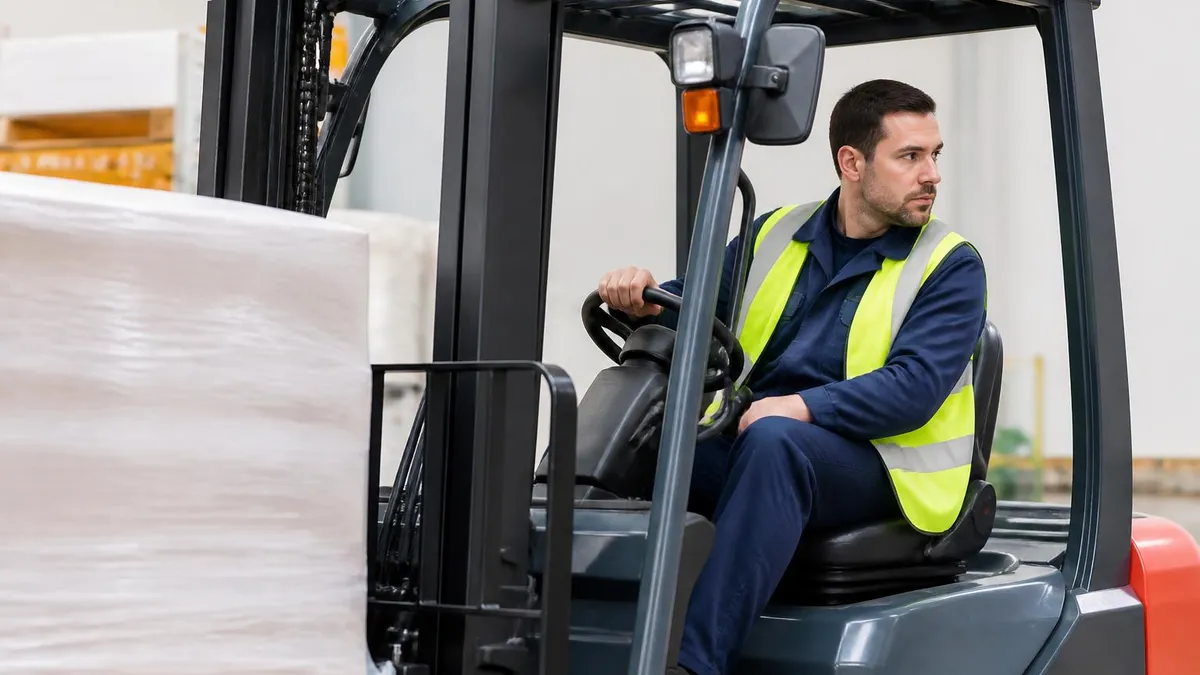
Is a Five-Day Novice Course Right for You?
- +Comprehensive coverage suits candidates with zero prior forklift exposure
- +Spaced learning across multiple days improves long-term skill retention
- +Time to absorb load chart calculations without exam-day pressure
- +More practical seat-time means greater confidence on assessment day
- +Networking with classmates who often share job leads in Melbourne warehouses
- +Builds genuine competence rather than just exam-readiness for safer work life
- −Highest cost option, typically $650-$750 in metropolitan Melbourne
- −Five consecutive days off work is unfeasible for many casual workers
- −Some content is redundant if you have already operated similar machinery
- −Group pace can feel slow if you progress faster than other candidates
- −Pay-up-front model means full fee at risk if you can't attend final day
- −Limited availability in school holiday periods due to high demand
Pre-Enrolment Checklist for Forklift Training Melbourne
- ✓Confirm you will be 18 years or older on the day of assessment
- ✓Apply for or retrieve your Unique Student Identifier (USI) from usi.gov.au
- ✓Gather 100 points of identification including photo ID and a secondary document
- ✓Verify the RTO is listed on training.gov.au and approved by WorkSafe Victoria
- ✓Ask for written confirmation of what the course fee includes and excludes
- ✓Confirm whether the WorkSafe Victoria licence application fee is separate
- ✓Book steel-capped boots, high-visibility vest and long pants ready for day one
- ✓Complete an LLN self-assessment to identify any reading or numeracy gaps early
- ✓Discuss any medical conditions that could affect operation with the RTO upfront
- ✓Review free practice quizzes to benchmark your theory readiness before paying
Book practice tests before you book the course
Candidates who score above 80% on free online practice tests before enrolling save an average of one full training day. Many Melbourne RTOs offer a discount on assessment-only pathways if you can demonstrate strong theory results in advance. Test yourself first, then choose the course tier that matches your actual readiness rather than paying for content you already know.
Assessment day in Melbourne starts early — most RTOs ask you to arrive between 7:00 and 7:30 AM so paperwork, USI verification and identity checks are complete before the assessor begins formal observation. Bring your photo ID, secondary identification documents, USI confirmation, and any pre-course paperwork the RTO requested. Forgetting documentation is the single most common reason for an assessment-day postponement, and rebooking fees in Melbourne typically run $150-$200 depending on the provider.
The theory exam is administered first, usually as a closed-book written paper of around 50 multiple-choice and short-answer questions. You have approximately 90 minutes to complete it, though most candidates finish in 45 to 60 minutes. The pass mark is 80%, meaning you can afford to miss around 10 questions across the entire paper. Topics with the highest weighting include load assessment, hazard identification, legislation responsibilities and stability principles. If your theory recall is solid, the practical component is much less stressful.
After theory comes the practical assessment, which begins with a verbalised pre-operational inspection. You walk around the forklift describing what you check and why: tyres for damage and pressure, lift chains for stretch and lubrication, forks for cracks, hydraulic lines for leaks, mast channels for debris, seatbelt function, horn operation, brake response and steering lock-to-lock. Speaking your inspection aloud is mandatory — silent inspections, even thorough ones, will be marked as incomplete by Melbourne assessors.
Once mounted, you'll perform an unladen circuit including forward travel, reverse travel, three-point turns and stopping at marked positions. The assessor evaluates posture, mirror checks, horn use at blind corners, and smooth pedal control. Jerky operation, riding the clutch on diesel units, or failure to look in the direction of travel are common deduction points. Take your time — assessors prefer slow and methodical over fast and rough.
The laden component requires you to lift, transport and place pallets of varying weights at different heights. You'll typically perform a ground-level pick-up, transport over a designated route including a turn and a narrow aisle, then place the pallet onto racking at approximately three to four metres. The reverse sequence (retrieval and ground placement) is also assessed. Tilt control during the lowering phase is critical — drop the load too fast or fail to apply forward tilt at the rack and you'll lose marks for unsafe operation.
Communication with pedestrians and spotters forms a continuous thread through the practical. Even though the yard is closed to non-essential personnel during assessment, the assessor will often instruct another trainee or staff member to walk into your path to test your response. The expected behaviour is immediate stop, horn sounded, eye contact established, and waited until the pedestrian is clearly out of the path before resuming. Failure to respond appropriately is a critical safety fail that ends the assessment immediately.
If you pass both components, the RTO issues a Statement of Attainment for TLILIC0003 on the same day or shortly after. You then have 60 days to lodge your high-risk work licence application with WorkSafe Victoria, including the Statement of Attainment, identification documents and the application fee (currently $79.10 for the standard licence). Once issued, your licence is valid Australia-wide for five years before renewal is required, although you can operate immediately under the Statement of Attainment while waiting for the physical licence card to arrive.
If you do not lodge your WorkSafe Victoria high-risk work licence application within 60 days of receiving your Statement of Attainment, your assessment expires and you must retrain and reassess. Diary the deadline immediately on completion day. Postal applications can take up to 6 weeks to process, so lodge promptly — particularly if you have a job offer contingent on holding the licence.
Costs for forklift training in Melbourne vary by training tier, but understanding the full financial picture beyond the headline course fee is essential. Beyond the RTO course charge of $350 to $750, factor in the $79.10 WorkSafe Victoria application fee, $30-$50 for the passport photo and ID-checking service required for the application, and the cost of personal protective equipment if you don't already own steel-capped boots and a hi-vis vest. The total realistic investment for a novice is closer to $850 once everything is tallied.
Funding options exist for eligible candidates. Skills First subsidies through the Victorian Government can reduce fees for unemployed jobseekers or those holding a concession card, although TLILIC0003 is not always on the subsidised list — confirm directly with the RTO. Worksafe Victoria does not subsidise the licence itself, but some employers will reimburse training costs after a probationary period of employment. JobActive providers and Workforce Australia case managers can sometimes fund training for jobseekers as part of a work placement program.
Once licensed, Melbourne's forklift operator market is robust. Award rates start around $26-$28 per hour for entry-level warehouse positions, with experienced operators in container yards or specialised industries (cold storage, hazardous materials) earning $35-$42 per hour plus overtime and shift loadings. Night-shift work at distribution centres in Truganina, Derrimut and Somerton frequently pays time-and-a-half or double-time, allowing operators to clear $80,000-$95,000 annually with consistent shift work. If proximity matters to your job search, exploring forklift licence near me options helps identify which training and employment hubs are closest to home.
Career progression beyond entry-level operator roles includes supervisor positions, dogger/rigger upgrades, EWP licensing for warehouse maintenance work, and progression into logistics coordination or yard management. Many Melbourne operators eventually move into in-house trainer roles after several years, completing the TAE40122 and returning as RTO assessors themselves. The transition from operator to trainer can boost earnings by 20-30% and provides a less physically demanding career path for older operators wanting to stay in the industry.
Renewal of your high-risk work licence happens every five years. The renewal process is administrative rather than reassessment-based — you complete a form, pay the renewal fee (currently $79.10), and submit proof of identity. There is no requirement to retake the practical or theory exam unless your licence has lapsed beyond 12 months. Many Melbourne employers do, however, conduct internal verification of competency every 12-24 months, often using their own in-house trainers or external auditors to confirm operators have not developed unsafe habits since last assessed.
Maintenance of skill is your responsibility as a licensed operator. Even though formal reassessment isn't required for five years, the industry standard is to engage in informal refresher training every 12 months. Familiarising yourself with specifications across different machines is part of staying employable — reviewing forklift clearance height data, capacity tables and safe working loads keeps your knowledge current and your decision-making sharp on the warehouse floor. Operators who treat their licence as a one-off achievement rather than an ongoing competency tend to be the ones involved in incidents.
Safety culture in Melbourne workplaces varies enormously. Tier-one logistics operators (Linfox, Toll, DHL, Australia Post) have robust induction programs, regular toolbox talks and zero-tolerance policies for unsafe operation. Smaller family-run warehouses sometimes operate with looser oversight, which can be tempting in the short term but increases your personal risk substantially. As a newly licensed operator, prioritise employers with strong safety reputations — your long-term career depends on never being the subject of a serious incident investigation.
Practical preparation in the week before your Melbourne assessment makes a measurable difference to pass rates. If you can borrow time on a friend's or family member's forklift under appropriate supervision, even 30 minutes of pedal-and-mast familiarisation pays off. If not, focus on visualisation — mentally rehearse the pre-operational inspection, the mounting sequence, the unladen circuit and the laden pallet handling. Athletes call this technique mental modelling; it works because it primes the same neural pathways used during physical performance, reducing assessment-day anxiety significantly.
Sleep is the most underrated preparation tool. Candidates who arrive at Melbourne assessment yards tired make small errors that compound across the day — missed mirror checks, jerky pedal control, forgotten verbal callouts during inspections. Aim for at least eight hours of sleep the night before, avoid caffeine after 2:00 PM the previous day, and lay out your clothing, ID and lunch before bed so the morning is logistically smooth. Showing up calm and rested is a genuine competitive advantage on assessment day.
Hydration and nutrition matter more than candidates often realise. Forklift assessments in summer can run for six to eight hours in Melbourne's outdoor yards, and dehydration impairs concentration, reaction time and decision-making — exactly the cognitive functions assessors are evaluating. Pack at least two litres of water, electrolyte tablets if you tend to sweat heavily, and a moderate lunch (avoid heavy carbohydrate loads that induce post-meal drowsiness). Most yards provide tea and coffee but rarely substantial food, so come prepared.
Clothing choices affect both safety and assessor perception. Long cotton or cotton-blend pants, a long-sleeved cotton or hi-vis shirt, broken-in steel-capped boots, safety glasses if you don't wear prescription glasses, and a hat or hard hat (the RTO usually provides hard hats) are the standard kit. Avoid loose-fitting clothing that can catch in mast components, jewellery beyond a wedding band, and any synthetic fabrics that melt rather than burn — relevant on diesel units where exhaust contact is possible. Dress like you mean it; assessors notice presentation.
Mental approach during the practical is the difference between passing and failing for borderline candidates. Treat the assessor as a colleague rather than an examiner, narrate your decisions out loud where appropriate ('I'm going to check behind me before reversing', 'I'll lower the forks to travel position before moving'), and ask clarifying questions if any instruction is unclear. Confidence without arrogance is the target — assessors are wary of overconfident candidates who skip safety steps, and equally concerned about timid candidates who hesitate at every decision point.
If you fail any component on the day, you'll typically be offered a re-sit fee of $150-$250 to return within four weeks. Don't be discouraged — first-attempt failure rates in Melbourne sit around 15% for theory and 10% for practical, and most candidates pass on their second attempt with targeted revision. Ask the assessor for specific feedback on what cost you the result, focus your re-sit preparation on those areas, and treat the experience as learning rather than failure. Some of Melbourne's most respected operators failed first time and now train others.
After passing, the temptation is to relax — resist it. The first 100 hours of operational experience after licensing is when most incidents occur, because new operators are still building muscle memory and judgement. Treat every shift as an extension of training for the first three months, ask experienced operators for tips, and never accept a load or task you're not comfortable handling. Your licence proves baseline competency, but real proficiency comes from accumulated hours under varied conditions across Melbourne's diverse warehouse landscape.
TLILIC0003 Questions and Answers
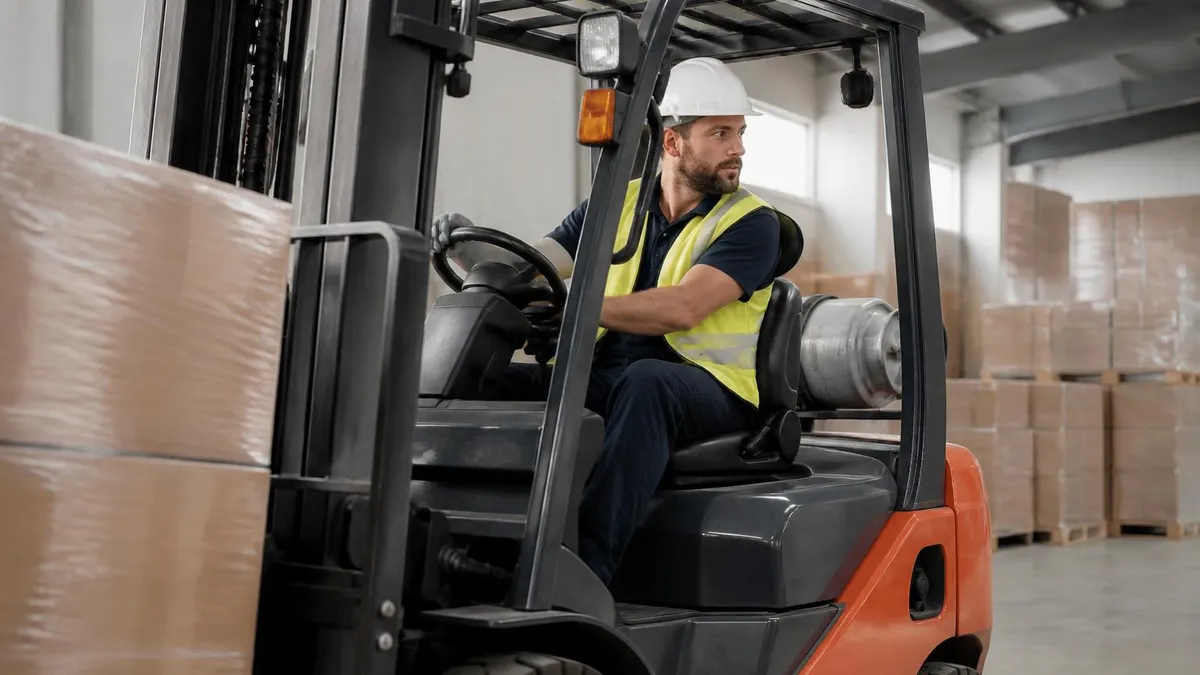
Mast of Forklift: Complete Guide to Forklift Parts for TLILIC0003 Operators in Australia
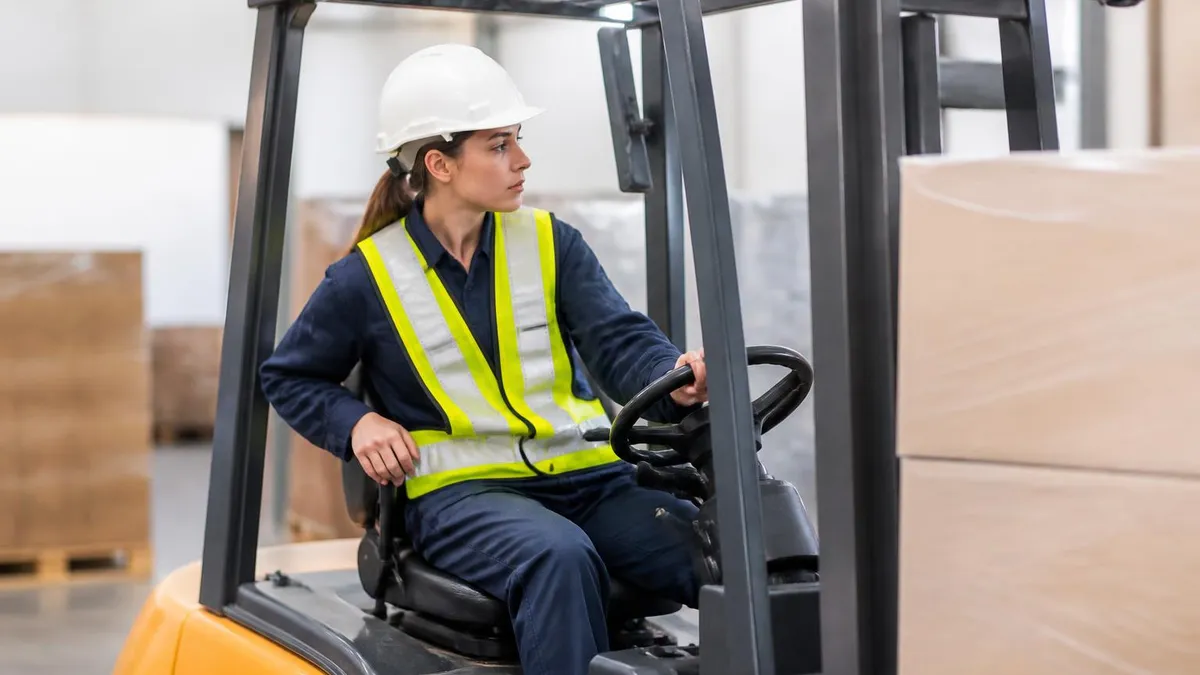
Multi Directional Forklift Trucks: Complete Guide to Forklift Types and Parts for TLILIC0003 Operators in Australia
Free Forklift Practice Test 2026 - Forklift Exam Questions
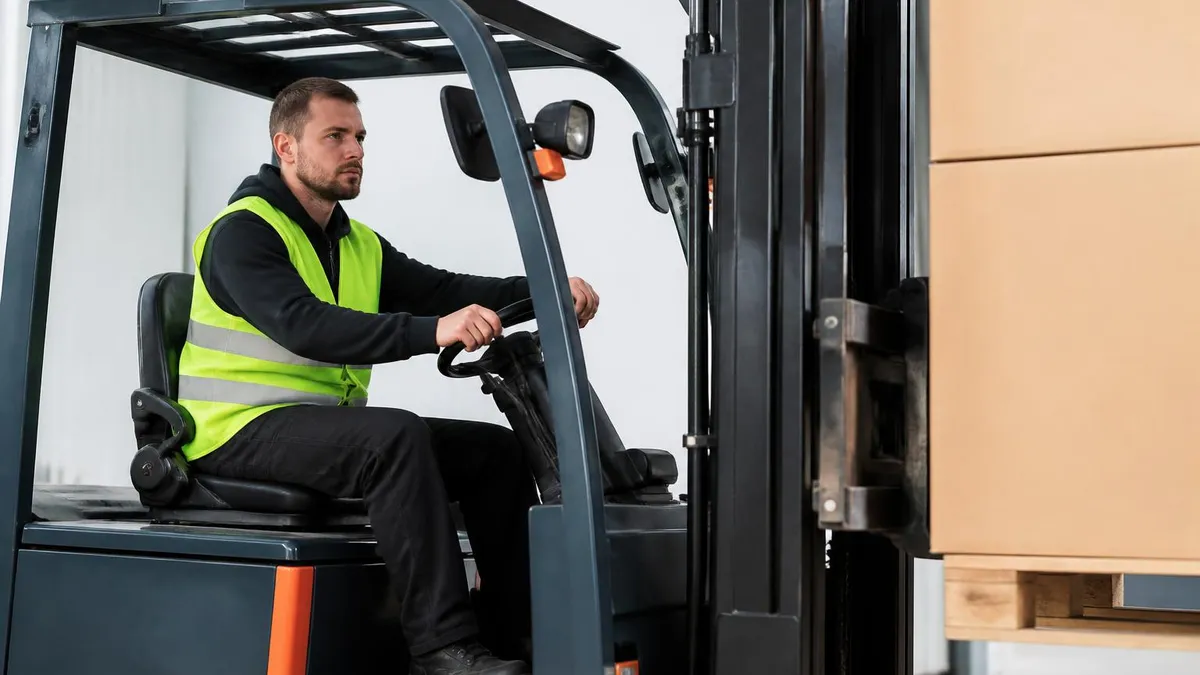
Forklift Clearance Height: Complete Guide to Forklift Specifications for TLILIC0003 Operators in Australia
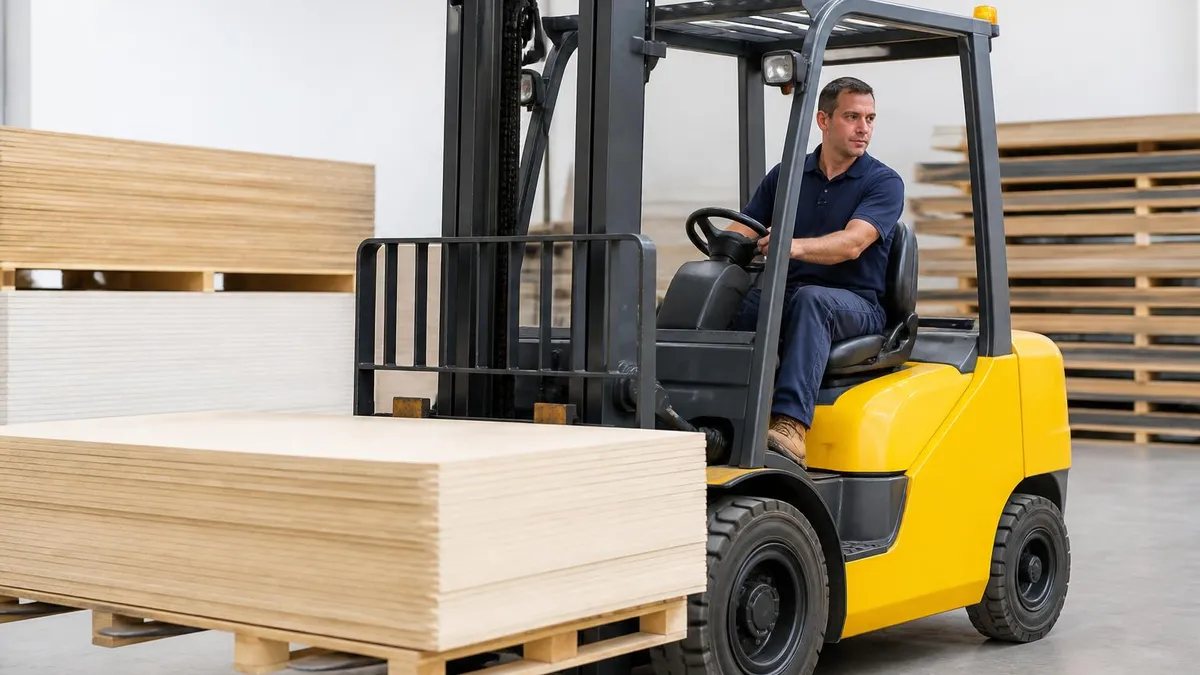
Forklift Licence Near Me: How to Find Local TLILIC0003 Training Providers in Australia
About the Author

Certified Crane Operator & Skilled Trades Exam Specialist
Ferris State UniversityRobert Martinez is a Journeyman Ironworker, NCCCO-certified crane operator, and forklift trainer with a Bachelor of Science in Construction Technology from Ferris State University. He has 21 years of ironworking, rigging, and heavy equipment operation experience across high-rise and industrial construction sites. Robert prepares candidates for crane operator, rigger, forklift, and skilled trades certification examinations.