
Forklift Training Adelaide: Complete TLILIC0003 Guide for 2026 September
Complete guide to forklift training Adelaide. TLILIC0003 requirements, costs, top RTOs & tips to pass first time. 🎯 Updated 2026 September.

Forklift training Adelaide is one of the most practical investments you can make in your trade career in South Australia. Whether you are entering the logistics sector for the first time, moving into warehousing, or upgrading existing skills, completing the nationally recognised TLILIC0003 Licence to Operate a Forklift Truck course is the legal gateway to operating a forklift on any Australian worksite. Adelaide's manufacturing and distribution hubs — from the Tonsley Innovation Precinct to the Port Adelaide cargo terminals — run on skilled forklift operators every single day.
The TLILIC0003 unit of competency is governed by the Australian Skills Quality Authority (ASQA) and sits within the TLI Transport and Logistics Training Package. It replaced the older TLILIC2001 qualification and sets a consistent national standard for theoretical knowledge and practical operating skills. Completing the course through a Registered Training Organisation (RTO) in Adelaide means your licence is valid not just in South Australia but across every state and territory, giving you maximum workforce mobility throughout your career.
Adelaide's RTO market for forklift training is competitive, which is good news for candidates — it keeps prices reasonable and scheduling flexible. Most providers offer short intensive courses running two to four days, with assessments conducted on-site using industry-standard counterbalance forklifts. Some RTOs also offer refresher training, recognition of prior learning (RPL) pathways for experienced operators, and high-risk work licence (HRW) application support through SafeWork SA, the state's workplace safety regulator.
Understanding what the training involves before you enrol saves time and money. The TLILIC0003 course covers pre-operational inspection procedures, load capacity and stability principles, travelling and manoeuvring in tight spaces, stacking and de-stacking at height, refuelling and recharging procedures, and the legislative framework that governs forklift operation under the Work Health and Safety Act 2012 (SA). The theoretical component can often be completed online or via workbook before attending practical sessions, reducing the number of days you need to take off work.
Once you successfully complete all units of competency, your RTO submits a statement of attainment to SafeWork SA on your behalf and you apply for a High Risk Work Licence in the forklift truck class (FL). This is the physical licence card you carry on-site.
The HRW licence must be renewed every five years, and SafeWork SA processes applications relatively quickly — most candidates receive their licence card within ten business days of a successful application. You can explore the range of forklift training adelaide equipment types covered under the qualification to understand which machine classes best suit your target employer.
Cost is a common concern for candidates considering forklift training in Adelaide. Prices from accredited RTOs typically range from $450 to $900 for the full TLILIC0003 course, depending on class size, included materials, and whether pre-course e-learning is bundled. The SafeWork SA High Risk Work Licence application fee adds approximately $119 on top of training costs. Some employers — particularly those in food manufacturing, retail distribution, and construction — offer to reimburse training costs as part of onboarding packages, especially in the current labour market where qualified forklift operators remain in high demand across Greater Adelaide.
This guide walks you through every stage of the process: choosing the right Adelaide RTO, understanding the assessment structure, preparing for both theory and practical components, lodging your HRW licence application, and maintaining your licence long-term. Whether you are a complete beginner or a seasoned operator seeking formal recognition of your skills, the information here will help you approach your forklift training Adelaide journey with confidence and clarity.
Forklift Training Adelaide by the Numbers
How to Get Your Forklift Licence in Adelaide: Step-by-Step
Meet Entry Requirements
Choose a SafeWork SA-Approved RTO
Complete Theory Component
Complete Practical Assessment
Receive Statement of Attainment
Apply for HRW Licence via SafeWork SA
Choosing the right RTO for your forklift training in Adelaide is one of the most important decisions you will make in this process. Not all training providers deliver the same quality of instruction, and the difference between a thorough course and a rushed one-day tick-and-flick can be significant when you are facing real-world operating conditions on a busy warehouse floor. The key criteria to evaluate when comparing Adelaide RTOs are their ASQA registration status, trainer qualifications, equipment quality, student-to-trainer ratios, and post-course HRW licence application support.
Start your search on training.gov.au, the official national register of training organisations. Every legitimate TLILIC0003 provider must be listed here with TLILIC0003 showing as a current scope of registration for their Adelaide delivery location. Providers that are not on the national register cannot issue a legally valid Statement of Attainment, which means SafeWork SA will reject your HRW licence application. Never train with a provider who cannot show you their ASQA registration confirmation and course scope documentation.
Trainer qualifications matter enormously in practical forklift training. Look for RTOs whose assessors hold a Certificate IV in Training and Assessment (TAE40116 or TAE40122) as well as current industry experience operating forklifts in real logistics or warehousing environments. A trainer who has spent years working in distribution centres understands the nuanced safety risks that purely classroom-trained instructors may gloss over. Ask the provider directly about their trainers' industry backgrounds before you commit to enrolment.
Class size directly affects the quality of practical training you receive. The TLILIC0003 unit requires hands-on time behind the controls of a real forklift, and if a trainer is supervising eight students simultaneously, your seat time will be severely limited. Industry best practice is a maximum of four to six candidates per trainer during practical assessment sessions. Larger class sizes can also create time pressure that rushes candidates through skills they have not fully consolidated, increasing the risk of a reassessment requirement and additional costs.
Equipment age and condition is another quality indicator worth investigating. Training on a well-maintained, modern counterbalance forklift that closely resembles what you will encounter in employment gives you directly transferable skills. Some budget RTOs use ageing equipment with worn controls and non-standard ergonomics that can create bad habits. The best Adelaide training providers rotate their fleet regularly and maintain machines to manufacturer specifications, so ask about the age and service history of training forklifts before you book.
Geographic convenience matters when you are taking days off work to attend training. Adelaide's northern suburbs — particularly the Wingfield, Gepps Cross, and Regency Park industrial corridors — host a concentration of RTOs close to the city's major logistics employers. Southern suburbs around Lonsdale and Seaford also have providers convenient to automotive supply chain and construction materials businesses. If you are based in the Adelaide Hills or on the Fleurieu Peninsula, check whether providers offer block scheduling that minimises your travel days.
Finally, consider what post-course support the RTO provides for your HRW licence application. The best providers pre-fill application forms, submit evidence to SafeWork SA on your behalf, and follow up on processing delays. This administrative handholding is especially valuable for first-time applicants who are unfamiliar with the SafeWork SA portal. Some RTOs also bundle the $119 SafeWork SA application fee into their course price, providing a single all-inclusive cost that simplifies your budgeting.
TLILIC0003 Theory, Practical & Assessment Breakdown
The theory component of TLILIC0003 covers Australian workplace health and safety legislation, forklift classifications and rated capacities, load centre distance calculations, stability triangle principles, pre-operational inspection requirements, and the operator's responsibilities under the Model WHS Regulations. In South Australia, this legislative context is the Work Health and Safety Act 2012 (SA) and associated regulations. Most Adelaide RTOs allow candidates to complete theory via self-paced e-learning modules or printed workbooks prior to attending practical sessions.
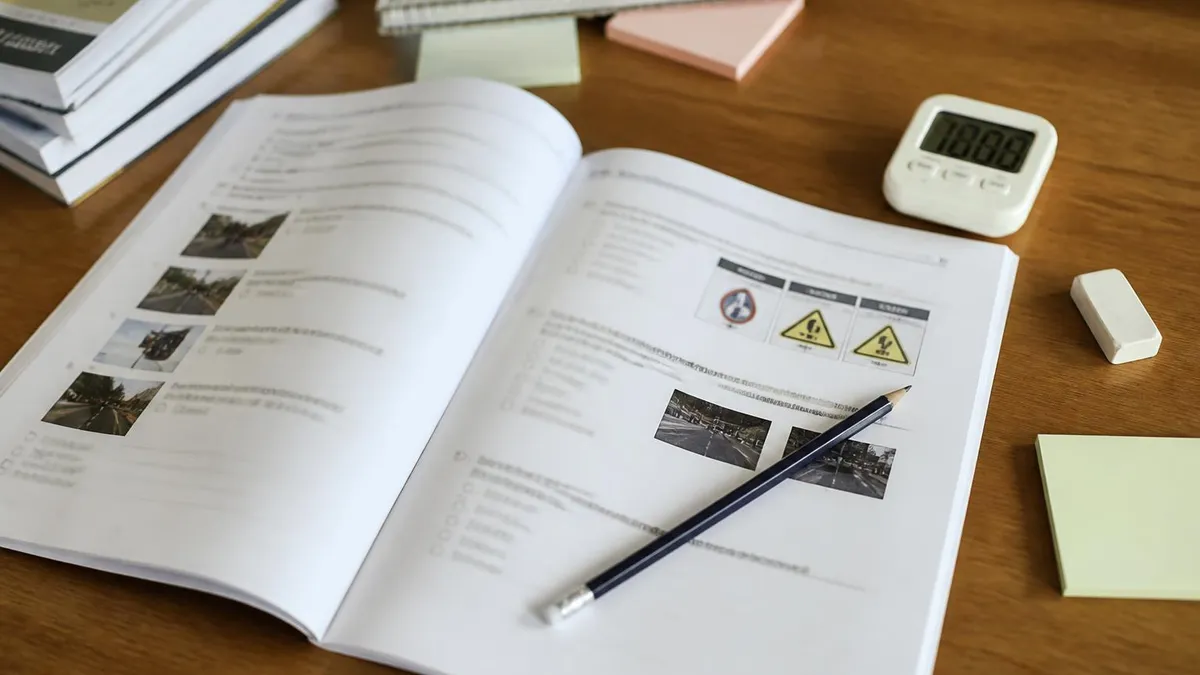
Written or verbal assessments test your recall of these concepts. Common question formats include multiple-choice scenarios about load stability, hazard identification exercises using warehouse photographs, and short-answer questions about daily inspection procedures. Candidates who spend two to three hours reviewing their workbook materials before attending the RTO consistently outperform those who arrive with no preparation. Practising with online sample questions gives you familiarity with the assessment format and builds confidence before the formal evaluation.

Forklift Training Adelaide: Pros and Cons to Consider
- +Nationally recognised TLILIC0003 qualification valid in all Australian states and territories
- +Adelaide has a competitive RTO market keeping course costs relatively affordable at $450–$900
- +Short course duration of 2–4 days minimises time away from work or other commitments
- +High employment demand for licensed forklift operators across Adelaide's logistics and manufacturing sectors
- +RPL pathway available for experienced operators to gain formal recognition at reduced cost and time
- +SafeWork SA processes HRW licence applications efficiently with most cards issued within 10 business days
- −Upfront cost of $570–$1,020 including training and HRW application fee can be a barrier for some candidates
- −Practical skills can deteriorate between training and employment if you don't operate regularly after certification
- −Not all RTOs deliver equal quality — choosing a poor provider can lead to gaps in your practical competency
- −HRW licence must be renewed every five years, creating an ongoing administrative and cost obligation
- −Theory assessments can be challenging for candidates with limited literacy or numeracy without additional support
- −Some employers require site-specific induction on top of TLILIC0003 before you can operate independently on their premises
TLILIC0003 Assessment Preparation Checklist
- ✓Verify your chosen Adelaide RTO is listed on training.gov.au with TLILIC0003 in current scope
- ✓Confirm you meet the minimum age requirement of 18 years before enrolling
- ✓Complete all pre-course theory workbooks or e-learning modules before your practical attendance day
- ✓Practise load centre distance and capacity calculation formulas until you can solve them without a reference sheet
- ✓Memorise the full pre-start inspection checklist sequence in the order your RTO teaches it
- ✓Wear appropriate PPE to training — steel-capped boots, high-visibility vest, and hard hat as directed by your RTO
- ✓Ask your trainer to clarify any assessment tasks you are unsure about before formal evaluation begins
- ✓Gather identity documents (passport or driver licence plus one supporting document) for your HRW licence application
- ✓Have a passport-quality photo taken and ready for your SafeWork SA HRW licence application
- ✓Set a calendar reminder for your licence renewal date five years from the issue date on your HRW card
Book Early — Adelaide RTOs Fill Fast in Q1 and Q4
Forklift training Adelaide course dates in January–February and October–December fill quickly as businesses onboard new staff and complete pre-Christmas warehouse rosters. If you plan to start work in a new logistics role, book your TLILIC0003 course at least four weeks in advance to secure your preferred dates and avoid being wait-listed at peak season.
Understanding the full cost structure of forklift training in Adelaide prevents budget surprises and helps you compare provider quotes on an apples-to-apples basis. The headline course fee is only part of the picture. A complete budget should include the TLILIC0003 training fee, any materials or workbook charges, the SafeWork SA High Risk Work Licence application fee, the cost of a passport-quality photo, and any travel or accommodation costs if your preferred RTO is not conveniently located relative to your home or workplace.
TLILIC0003 course fees from Adelaide RTOs in 2026 range from approximately $450 at larger volume providers running group sessions to $900 at boutique providers offering intensive one-on-one or small-group instruction. The lower end of this range typically involves completing theory independently via e-learning before attending a single intensive practical assessment day. Higher-priced courses often include two full training days with more hands-on seat time, printed materials, and bundled HRW application assistance. Be cautious of providers quoting significantly below $400, as this can signal poor equipment or inadequate supervised practice time.
The SafeWork SA HRW Licence application fee for the forklift truck class (FL) is $119 as of 2026. This is a government fee payable directly to SafeWork SA when you submit your licence application online or by post. It is separate from your training fee and is non-refundable, so submit your application only once you have received your Statement of Attainment and have all required documents ready. Some RTOs advertise all-inclusive prices that bundle this fee, which simplifies your total outlay but is worth confirming explicitly before you enrol.
For candidates who are currently unemployed or receiving Centrelink payments, the South Australian Government offers subsidised training funding through the Skills for All and Skilling South Australia programs. Eligible candidates may be able to access TLILIC0003 training at significantly reduced cost or in some cases at no out-of-pocket expense through RTOs contracted to deliver government-subsidised training. Check eligibility criteria on the TAFE SA and Skills SA websites, as subsidy availability and conditions change between funding years.
Employers in Adelaide's major logistics sectors — including food and beverage distribution, retail warehouse operations, building materials supply, and automotive manufacturing supply chains — frequently fund or reimburse TLILIC0003 training for new hires and internal candidates. If you are currently employed or have a confirmed job offer, ask your employer's HR team whether they have a training budget or preferred RTO arrangements. Many large operators have established accounts with specific providers that include negotiated rates and priority scheduling for their employees, which can cut your personal out-of-pocket costs to zero.
It is also worth factoring in the economic return on your investment. Licensed forklift operators in Adelaide earn a base rate of approximately $28–$35 per hour on standard day shift, with penalty rates for afternoon and night shift work pushing effective hourly earnings considerably higher. Operators with multiple High Risk Work Licence classes — for example, adding a Boom-type Elevating Work Platform (BT) or Vehicle Loading Crane (CV) licence to their FL class — can command premium rates and access a much broader range of job opportunities across the construction, resources, and events industries.
When budgeting for your training, also consider the opportunity cost of the two to four days you will spend attending the course. If you are taking unpaid leave from a casual role, factor that income loss into your total cost calculation. Conversely, if your current casual income is irregular, the stable employment that a forklift licence enables — many Adelaide warehousing roles offer permanent full-time positions with salary packages — represents a strong financial argument for investing in the qualification sooner rather than later.

Your Statement of Attainment from the RTO is not a licence to operate a forklift. You must hold a current, physical High Risk Work Licence card issued by SafeWork SA before you legally operate a forklift on any South Australian worksite. Operating without a valid HRW licence can result in on-the-spot fines of up to $3,600 for individuals and prosecution of both the operator and their employer under the Work Health and Safety Act 2012 (SA).
Once you hold your TLILIC0003 High Risk Work Licence, maintaining it is straightforward — but requires active attention to renewal deadlines. The HRW forklift licence is valid for five years from the date of issue printed on your licence card. SafeWork SA does not automatically send renewal reminders, so the responsibility for tracking your expiry date rests entirely with you. Operators who allow their licence to lapse — even by a single day — must stop operating and cannot resume until a renewed licence is issued, which creates immediate employment disruptions.
Renewal of your HRW forklift licence does not require you to repeat the full TLILIC0003 training course. The renewal process is primarily administrative: you submit a renewal application to SafeWork SA, provide proof of identity, pay the renewal fee (currently $119), and in some cases demonstrate that you have been actively operating a forklift during the licence period.
If you have not operated a forklift for an extended period — generally three years or more — SafeWork SA may require you to undergo a refresher assessment before granting renewal, so maintaining your practical skills is both a safety and an administrative imperative.
Career development beyond the basic TLILIC0003 licence opens significant earning and employment opportunities. Many experienced forklift operators in Adelaide progress to operating more complex plant under additional HRW licence classes. The most common additions are the Order Picking Forklift Truck (LO) class — covering high-reach order pickers used in large distribution centres — and the Reach Stacker (LS) class for container handling operations at Port Adelaide and intermodal freight terminals.
Each additional class requires its own unit of competency, practical assessment, and HRW licence class endorsement, but the incremental training investment pays off quickly in higher hourly rates and greater job security.
Supervisory and training pathways are also available to experienced operators. After several years of practical experience, many operators pursue a Certificate IV in Training and Assessment (TAE40122) to qualify as an RTO trainer and assessor in their own right. Experienced forklift trainers in Adelaide earn $70,000–$90,000 per annum working for RTOs, or operate as independent contractors delivering on-site training and assessment for large logistics companies. This pathway converts hands-on operating experience into a knowledge-sharing career with significantly improved working conditions and professional status.
Specialised industries in South Australia create additional demand for forklift operators with sector-specific knowledge. The wine industry in the Barossa Valley and McLaren Vale uses high-reach and narrow-aisle forklifts in barrel storage facilities with unique challenges around vibration-sensitive loads and ventilation-restricted spaces. The defence industry at the Osborne Naval Shipyard and Edinburgh RAAF Base requires operators with security clearances and experience handling specialist materials. Cold chain logistics — frozen and chilled food distribution — demands operators who can work effectively in sub-zero environments with appropriate PPE and reduced machine performance awareness.
Building your employability profile alongside your licence strengthens your position in the Adelaide job market considerably. Employers increasingly value forklift operators who also hold a White Card (Construction Induction Training), a current driver's licence with a clean record, and basic computer literacy for warehouse management system (WMS) data entry. Logistics companies running afternoon and night shift operations offer penalty rate loadings that can significantly boost your weekly earnings, and operators willing to work flexible rosters — particularly weekends and public holidays — are highly sought after by Adelaide's major retail and food distribution employers.
The long-term career trajectory for a qualified TLILIC0003 operator in Adelaide is genuinely positive. South Australia's economic development agenda — including the AUKUS submarine program, Hydrogen Valley hydrogen production investments, and continued growth of the Port Adelaide container terminal — is driving sustained demand for logistics and materials handling professionals across the state. Forklift operators with a strong safety record, multiple licence classes, and demonstrated reliability in shift work environments can expect consistent employment for the foreseeable future, with wages tracking above the national median for trade-certified workers.
Practical preparation for your forklift training Adelaide assessment goes well beyond reading the theory workbook. Candidates who perform best in practical assessments have typically spent time mentally rehearsing task sequences before they step onto the training floor. Visualisation is a technique used by high-performance athletes and tradespeople alike — walking yourself through the pre-start inspection sequence, the load pickup and stacking procedure, and the shutdown process in your mind builds neural pathways that translate directly into smoother physical performance under observation pressure.
Pay particular attention to the pre-operational inspection as this is the most commonly failed element of the TLILIC0003 practical assessment. The inspection is not simply a visual glance around the machine — it is a structured, systematic check of every safety-critical component conducted in a prescribed sequence.
Common items that candidates miss include checking the data plate (rated capacity and load centre), testing the horn, checking fluid levels (engine oil, hydraulic fluid, coolant, and fuel or battery charge), inspecting tyres for damage and pressure, testing the mast and carriage tilt functions, checking the fork arms for cracks and heel wear, and verifying that all warning lights and gauges are functioning before start-up.
During the practical assessment, communicate clearly with your assessor throughout each task. Before picking up a load, state aloud your intended actions: approach angle, stop position, insertion of forks under the pallet, checking load stability before lifting, and planned travel route. Assessors are evaluating not just your physical control of the machine but your decision-making process and hazard awareness. Narrating your actions demonstrates deliberate, conscious competency — the foundation of safe forklift operation — rather than muscle memory that could break down in an unfamiliar environment.
Speed is not assessed in TLILIC0003 — accuracy and safety are. Take your time, especially when approaching racking and when placing loads at elevated heights. A slow, controlled placement that positions the pallet correctly on the rack beam is worth far more to an assessor than a fast, inaccurate approach that risks toppling a load. The working speed of a competent forklift operator in a real warehouse reflects the rhythm of safe practice, not urgency — and assessors recognise and reward candidates who have internalised this principle.
Manage your stress on assessment day by arriving early, wearing appropriate PPE, and having a good breakfast. Fatigue and hunger impair concentration and fine motor control — both of which matter when you are manoeuvring 2,500 kilograms of steel and load through a rack aisle at height. If you feel anxious before the assessment, tell your trainer. Experienced assessors in Adelaide's RTO sector are professionals who want you to succeed, and many build in warm-up time precisely because they understand that performance anxiety is real and manageable with the right lead-in activities.
After completing your training and receiving your Statement of Attainment, prioritise submitting your HRW licence application to SafeWork SA immediately. The Statement of Attainment is a document confirming your competency — it is not a licence and does not authorise you to operate a forklift. The sooner you submit your application, the sooner you receive your licence card and can start pursuing employment opportunities. Keep a digital copy of your Statement of Attainment in cloud storage as a backup, as replacement copies from RTOs can take time to obtain if the original is lost or damaged.
Finally, commit to continuous skill development throughout your career as a licensed forklift operator. The safest operators in Adelaide's logistics sector are those who stay current with changes to workplace health and safety legislation, attend periodic refresher training voluntarily, and actively participate in toolbox talk discussions on their worksite. A safety-oriented mindset and a commitment to lifelong learning distinguish truly professional operators from those who view the TLILIC0003 qualification as merely a compliance hurdle — and employers across Adelaide's industrial sector consistently prefer and promote the former.
TLILIC0003 Questions and Answers
Forklift Models — Complete Guide (2026)
Forklift Licence Renewal Australia: Complete TLILIC0003 Guide (2026)
Electric 3 Wheel Forklift: Complete Guide to Electric Forklift Types for TLILIC0003 Operators in Australia
Free Forklift Practice Test 2026 - Forklift Exam Questions
Forklift Sale Brisbane: Complete TLILIC0003 Operator Guide to Buying Forklifts in Australia
About the Author

Certified Crane Operator & Skilled Trades Exam Specialist
Ferris State UniversityRobert Martinez is a Journeyman Ironworker, NCCCO-certified crane operator, and forklift trainer with a Bachelor of Science in Construction Technology from Ferris State University. He has 21 years of ironworking, rigging, and heavy equipment operation experience across high-rise and industrial construction sites. Robert prepares candidates for crane operator, rigger, forklift, and skilled trades certification examinations.