
Forklift Pre Check: Complete TLILIC0003 Study Guide to Pre-Operational Checks in Australia
🎯 Learn the forklift pre check step by step for TLILIC0003 in Australia: inspection zones, defect reporting, a study plan and free practice quizzes.

A forklift pre check is the structured inspection an operator completes before moving a single pallet, and it sits at the heart of the TLILIC0003 unit. In Australia, anyone driving a forklift for work needs a high risk work licence, and assessors expect candidates to demonstrate a methodical walk-around, a seated check and a documented sign-off. This guide explains what to inspect, why each item matters and how to prepare for assessment with confidence. Practice with the free Forklift Licence practice test on PracticeTestGeeks (300+ questions with answer explanations).
Under the Work Health and Safety Regulations, a person conducting a business or undertaking must keep plant in a safe condition, and that duty is met in part through routine inspections. Operators are the first line of defence because they notice small changes, such as a soft brake pedal or a weeping hydraulic hose, long before a scheduled service would. Skipping the check is not a shortcut; it removes the only barrier between a minor defect and a serious incident.
Most workplaces use a daily or per-shift checklist built from the manufacturer's operator manual and the guidance in the AS 2359 series of standards. The format varies between sites, yet the logic is always the same: inspect from the outside in, then from the driver's seat. Candidates who learn the reasoning behind each item, rather than memorising a list, handle unfamiliar machines far better. That matters because an assessor may ask you to check a different truck from the one you trained on.
The TLILIC0003 assessment typically combines a written or verbal knowledge component with a practical observation, and pre-operational checks feature in both. You may be asked to name the items on a checklist, explain the action required when a defect is found, or describe when a truck must be tagged out of service. In the practical, the assessor watches whether you complete the checks in a logical order and record findings accurately before starting the engine.
Equally important is knowing what to do with the result. A defect is not simply written down and forgotten. Minor issues, such as a cracked mirror cover, may be reported and monitored, while safety-critical faults, including faulty brakes, damaged forks or a leaking gas cylinder, require the truck to be isolated, tagged and reported to a supervisor at once. Understanding this decision point often separates a competent operator from one who merely ticks boxes.
This article is organised so you can move from theory to practice. You will find a four-week study schedule, a breakdown of inspection zones, a comparison of checks by power type, an action checklist and tips for assessment day. Along the way, our practice questions let you test recall under realistic conditions. For a wider view of site rules and traffic management, read our guide to forklift pre operational checks and safe operation.
Treat the pre check as a habit, not a hurdle. Operators who build a consistent routine, starting at the same point on the truck every time, rarely miss a fault, and most complete the whole inspection in about five to ten minutes. That routine is exactly what assessors want to see, and it is the same routine that protects you, your colleagues and pedestrians on a busy warehouse floor every working day of your career.
Free Forklift Licence Study Tools
Interactive Forklift Licence resources on PracticeTestGeeks, free to start:
- Forklift Licence practice test — 300+ questions with instant scoring and answer explanations
- Forklift Licence flashcards — review key terms and concepts card by card
- Forklift Licence study guide — topic-by-topic overview of what the exam covers
- Forklift Licence cheat sheet — one-page printable summary for last-minute review
Forklift Pre Checks by the Numbers
Four-Week Forklift Pre Check Study Schedule
- ▸Read the WHS duties of operators and employers
- ▸Learn the walk-around order from tyres to overhead guard
- ▸Write a personal checklist from the operator manual
- ▸Study forks, chains, mast and hydraulic faults
- ▸Learn which defects mean the truck must be tagged out
- ▸Complete the first practice quiz and review every wrong answer
- ▸Compare electric, LPG and diesel checks
- ▸Review the data plate and capacity with attachments
- ▸Practise narrating a full pre check out loud
- ▸Run a timed mock pre check on a real or photographed truck
- ▸Complete two further practice quizzes
- ▸Prepare ID, PPE and documents for assessment day
Walk-Around Inspection Zones Every Operator Must Know
Begin the walk-around with the truck switched off, the parking brake applied and the forks lowered to the ground. Look at the general condition first: missing guards, damage from earlier collisions, fresh oil on the floor beneath the machine and anything hanging loose. Check that the data plate is present and legible, because it shows rated capacity, load centre and fitted attachments. An unreadable plate means safe lifting limits cannot be confirmed, which is a reportable defect.
Next, inspect the tyres and wheels. Pneumatic tyres should show adequate tread and correct pressure with no cuts, bulges or embedded objects, while cushion and solid tyres should not be chunking, flat-spotted or separating from the rim. Check the wheel nuts for tightness and look for missing studs. Damaged tyres affect stability and braking distance, and a laden forklift has a much smaller margin for error than a car because the load shifts its centre of gravity.
Move to the mast and carriage. Look at the chains for rust, stretched links, uneven tension or dry, unlubricated sections, and confirm the anchor pins and rollers are secure. Inspect hydraulic hoses and cylinders for weeping, cracks or abrasion. The mast channels should be free of damage and the tilt cylinders should show no leaks. Chain failure can drop a load without warning, so assessors expect candidates to explain exactly what they are looking for.
The forks deserve their own careful look. Check each blade for cracks, particularly around the heel where the vertical and horizontal sections meet, and look for bent tips, uneven wear and a working fork positioning lock. Both forks should sit at matching heights and be spaced symmetrically on the carriage. The load backrest must be undamaged and secure. Wear that reduces blade thickness below the manufacturer's limit means the fork must be replaced, not simply monitored.
Now check the power source. On an electric truck, inspect the battery for secure restraints, intact cables, a correct electrolyte level where applicable and a clean, fully seated connector. For LPG machines, look at the cylinder mounting, hose condition, valve position and any smell of gas. For diesel, review fuel and coolant levels, and examine belts and the engine bay for leaks. Each power type carries its own fire and health hazards, so know them well.
Finish the outside inspection with the lights, beacon, mirrors, reverse alarm and fire extinguisher where fitted. Confirm the overhead guard is intact, with no cracks or missing bolts, because it protects you from falling objects. Make sure the operator's compartment is free from loose items, mud or oil that could slip a boot off a pedal. Each of these items is simple to verify, yet each is routinely cited in incident investigations.
Record anything unusual before you climb aboard. Note the exact location of any damage, describe it in plain words and, where your site allows, take a photograph. Specific reports help maintenance teams act quickly and protect you from being blamed for earlier damage. A vague note such as looks a bit off wastes time, whereas an entry reading left fork heel cracked, 40 mm line, leaves no room for doubt and shows an assessor real attention to detail.
Forklift Pre Check by Power Type
Electric counterbalance and reach trucks need a battery-focused inspection. Confirm the battery is properly restrained, the case and cables are undamaged, the connector is fully seated and the charge level suits the shift. Where batteries are charged on site, check that the charging area is ventilated and that eye-wash facilities and acid-resistant PPE are available, since hydrogen gas and electrolyte are both hazards.
Electric machines run quietly, so the horn, beacon and reverse alarm are especially important for pedestrian safety. Test them every time. Also check the drive and brake response, as regenerative braking can feel different from a combustion truck. Listen for contactor clicks or burning smells, and report any warm cables immediately, because an electrical fault can progress quickly to a fire.
Is a Documented Forklift Pre Check Worth the Time?
- +Finds faults before they cause load drops, tip-overs or collisions
- +Shows you have met your WHS duty of care if an incident is investigated
- +Reduces costly breakdowns by flagging small leaks and wear early
- +Builds a repeatable routine that assessors can easily observe
- +Creates a record that maintenance teams can act on quickly
- +Helps new operators learn the layout and parts of an unfamiliar truck
- −Adds five to ten minutes to the start of every shift
- −Can become a tick-and-flick exercise if operators rush it
- −Paper forms may be lost or filled out without a real inspection
- −Different sites use different formats, which confuses casual staff
- −A failed check can delay work when no spare truck is available
- −Operators may feel pressure to overlook faults during busy periods
Pros and Cons at a Glance
| Pros | Cons |
|---|---|
| Finds faults before they cause load drops, tip-overs or collisions | Adds five to ten minutes to the start of every shift |
| Shows you have met your WHS duty of care if an incident is investigated | Can become a tick-and-flick exercise if operators rush it |
| Reduces costly breakdowns by flagging small leaks and wear early | Paper forms may be lost or filled out without a real inspection |
| Builds a repeatable routine that assessors can easily observe | Different sites use different formats, which confuses casual staff |
| Creates a record that maintenance teams can act on quickly | A failed check can delay work when no spare truck is available |
| Helps new operators learn the layout and parts of an unfamiliar truck | Operators may feel pressure to overlook faults during busy periods |
Forklift Pre Check Action Checklist for TLILIC0003
- ✓Park on level ground, lower the forks and apply the parking brake.
- ✓Read the data plate and confirm capacity matches any fitted attachment.
- ✓Inspect all tyres for cuts, bulges, wear and loose wheel nuts.
- ✓Examine mast chains, rollers and hydraulic hoses for leaks or damage.
- ✓Check both fork blades for cracks, bends and heel wear.
- ✓Inspect the battery, gas cylinder or fuel and fluid levels.
- ✓Verify the overhead guard, load backrest and mirrors are intact.
- ✓Fasten the seatbelt and test the horn, lights and reverse alarm.
- ✓Test brakes, steering and all mast functions slowly with no load.
- ✓Complete the checklist and tag out any unsafe truck at once.
Reporting beats ticking boxes
Assessors are rarely impressed by a perfectly filled-out sheet. They want to see that you can find a fault, judge whether the truck is safe, and report it clearly. Practise saying out loud what you would do with a cracked fork, a soft brake or a leaking hose.
Seated Checks, Function Tests and Defect Reporting
Once the walk-around is complete, climb aboard using three points of contact and adjust the seat so your feet reach the pedals comfortably and your back is supported. Fasten the seatbelt or operator restraint before starting; many Australian sites make this mandatory, and a tip-over is survivable mainly when you stay inside the protective frame. Check the seat, backrest and operator compartment for loose items that could jam under a pedal.
With the key on but before driving, test the instruments. Gauges should read normally, warning lights should illuminate briefly during the start sequence and then go out, and the hour meter should show a plausible reading. Listen for abnormal noises when the engine or motor starts, because smoke, knocking, hissing or grinding indicates a problem. On electric machines, check that the battery indicator shows enough charge for the shift ahead.
Test the horn, lights and reverse alarm while the truck is stationary. Then test the controls: raise, lower, tilt and side-shift the forks through their full range without a load, watching for jerky movement, drift or unusual noise. Hydraulic drift, where forks slowly sink while held, signals internal leakage. Operate any attachment function too. Smooth, predictable controls are the sign of a healthy system, and anything else needs reporting.
Brakes and steering come next, and both must be tested at slow speed in a clear area. Press the service brake and confirm the pedal feels firm and the truck stops evenly. Check that the parking brake holds on a slight grade. Turn the steering lock to lock and note any excessive play or stiffness. If the truck pulls to one side under braking, do not use it; it must be tagged out and reported.
Documentation closes the loop. Complete your site's checklist honestly, signing and dating it and noting the hour-meter reading. If a defect is found, state whether the truck is fit to operate, fit with restrictions or unfit. Safety-critical items include brakes, steering, forks, chains, mast, hydraulics, seatbelt, horn and overhead guard. An unfit truck gets a danger tag, the keys are removed and a supervisor is told immediately.
Remember that reporting is a legal and cultural matter as well as a technical one. Under WHS laws, workers must take reasonable care for their own safety and that of others, and must cooperate with reasonable safety instructions. Good workplaces encourage operators to report faults without fear of blame, because a hidden defect is far more dangerous than a reported one. Learn your site's process and be ready to describe it in an assessment.
Finally, practise the full sequence out loud. Narrating each step as you complete it, for example forks inspected for cracks at the heel and both blades level, helps you remember the order and gives the assessor direct evidence of your knowledge. Many candidates who fail the practical do not lack driving skill; they rush the pre-start and forget to verbalise what they see. Slow, deliberate narration is a simple and effective fix.
Faulty brakes, steering, forks, chains, hydraulics or a missing seatbelt mean the truck must be tagged out and reported before any work begins. Driving off with a known critical fault can lead to an immediate not-yet-competent result in assessment and serious legal consequences at work.
Attachments, Modifications, Handover and Other Edge Cases
Attachments change the pre check significantly. A fork positioner, side-shifter, clamp, jib or cage alters the truck's capacity and centre of gravity, so the data plate must reflect the attachment fitted. Check that mounting hooks and locking pins are secure, hoses are routed clear of moving parts and no hydraulic fluid is leaking. If the plate is missing or out of date, the derated capacity is unknown and the truck should not lift.
Modifications require particular care. Unauthorised changes, such as adding counterweights, welding on brackets or fitting non-approved forks, can compromise structural integrity and invalidate the manufacturer's rated capacity. In Australian practice, modifications should be approved by the manufacturer or a competent engineer and recorded on an updated plate. During a pre check, compare what you see with what the plate says; any mismatch should be reported before the truck is used.
Shift handover is another edge case. When you take over a truck mid-day, do not assume the previous operator completed the checks properly. Perform your own full pre check, even if the sheet is already signed. Documented checks belong to the person who carried them out, and you are accountable for the truck while you drive it. Many workplaces require a fresh sheet at every change of operator for exactly this reason.
Environment matters too. In cold stores, check that tyres and hydraulic fluid suit low temperatures and that the lights and cabin heater work. In dusty or hazardous areas, verify the truck is rated for the zone, since ordinary electric or petrol machines can be ignition sources. Outdoors on wet or uneven yards, pay extra attention to tyres, lights and wipers before leaving the building.
Common mistakes appear again and again in assessments. Candidates rush the walk-around, ignore the data plate, forget to test the parking brake on a slope, or sign the sheet without actually looking at the forks. Others fail to say what they would do with a defect. Practise with a real or photographed truck, and ask a colleague to hide a deliberate fault so you can practise finding it.
Different truck types change what you inspect. Counterbalance trucks, reach trucks and order pickers each have unique components, such as reach carriages, scissor mechanisms or operator platforms with gates and harness anchor points. The principle is always the same: read the manual, identify the safety-critical components and test each one. Our guide to forklift types and models explains these differences if you need extra background before your practical assessment.
Finally, keep your knowledge current. Standards, site procedures and manufacturer instructions are updated from time to time, and a high risk work licence is valid for five years before renewal. Refresher training, toolbox talks and incident alerts keep your checks sharp. The best operators treat every inspection as if an auditor were watching, because one day an investigator, or a colleague relying on that truck, may effectively be doing just that.
Practical Tips and Final Prep Advice
Start your preparation by obtaining the operator manual for the type of truck you will train on, or a similar model. Read the pre-start section, highlight the safety-critical items and rewrite the checklist in your own words. Writing it out forces you to understand each entry. Then compare your list with the checks in this guide, noting differences, since sites vary in layout and terminology but not in the underlying hazards.
Use spaced practice rather than cramming. Review the checklist for ten minutes daily over two weeks instead of two hours the night before. Mix flashcards with short quizzes on defects and responses, and test yourself by listing every inspection point from memory in order. Research consistently shows that repeated retrieval beats rereading, and retrieval is exactly the skill you need when an assessor asks an unexpected question.
Visit a workplace or training facility if you can. Watching experienced operators complete a pre check is far more instructive than reading about one. Ask what they look at first, which faults they see most often and how they decide when a truck is unsafe. Most operators are happy to share tips, and their stories about real near-misses make the importance of each step far easier to remember.
On assessment day, arrive early and wear the required personal protective equipment, usually safety boots, hi-vis clothing and a hard hat where required. Bring photo identification and any documents your provider has requested. Listen carefully to instructions and ask for clarification if needed. Begin the pre check calmly, narrating each step. Do not be thrown if the assessor has placed a fault on the truck; finding and reporting it correctly is precisely the point.
If you make a mistake, say so and correct it. Assessors value honesty and self-awareness, and a candidate who notices a skipped item and goes back to check it shows the right safety mindset. However, an unsafe action, such as driving off with a known critical defect, may result in an immediate not-yet-competent outcome. Know where that line is and stay firmly on the right side of it.
Costs and timelines vary by provider and state, so confirm details before you book. A course may run from one to several days depending on your experience, and the licence is issued by your state or territory WHS regulator once you pass the assessment. Our guides on the cost of a forklift licence and Queensland requirements cover the specifics. Plan your study around the course date and leave yourself a buffer.
Finish with a final practice run. The day before, complete a mock pre check on paper, work through a practice quiz and get a full night's sleep. Confidence comes from preparation, and a smooth, practised routine will carry you through the nerves. Once licensed, keep the habit going: the same ten minutes at the start of each shift is what keeps you and your colleagues safe for years.
Sample Forklift Licence Practice Questions
Try these questions from our free Forklift Licence practice tests. The correct answer and an explanation follow each question.
What penalties apply for non-compliance with Forklift Pre-Operational Checks regulations in Australia?
- A. No penalties
- B. Significant fines (up to millions of AUD for corporations) and potential imprisonment for serious offences
- C. A verbal warning only
- D. A small administrative fee
Answer: B. Significant fines (up to millions of AUD for corporations) and potential imprisonment for serious offences
Australian WHS penalties are severe, with Category 1 offences carrying fines up to AUD 3 million and potential imprisonment.
How should Forklift Pre-Operational Checks equipment be inspected and maintained?
- A. Only when it breaks
- B. Per manufacturer specifications and relevant Australian Standards, with documented inspection and maintenance records
- C. When someone remembers
- D. Only for new equipment
Answer: B. Per manufacturer specifications and relevant Australian Standards, with documented inspection and maintenance records
Equipment must be inspected and maintained according to specifications and standards, with all records documented.
What is the first step in a Forklift Pre-Operational Checks risk assessment?
- A. Implement controls
- B. Identify all hazards associated with ${subjectName}
- C. Write the final report
- D. Buy new equipment
Answer: B. Identify all hazards associated with ${subjectName}
Hazard identification is always the first step — you cannot assess or control risks you have not identified.
What supervisory requirements exist for Forklift Pre-Operational Checks activities?
- A. No supervision needed
- B. Adequate supervision by competent persons, proportionate to the level of risk
- C. Supervision is optional
- D. Only new workers need supervision
Answer: B. Adequate supervision by competent persons, proportionate to the level of risk
The level of supervision must be proportionate to the risk level, with competent supervisors overseeing the work.
Take the full Forklift Licence practice test
TLILIC0003 Questions and Answers
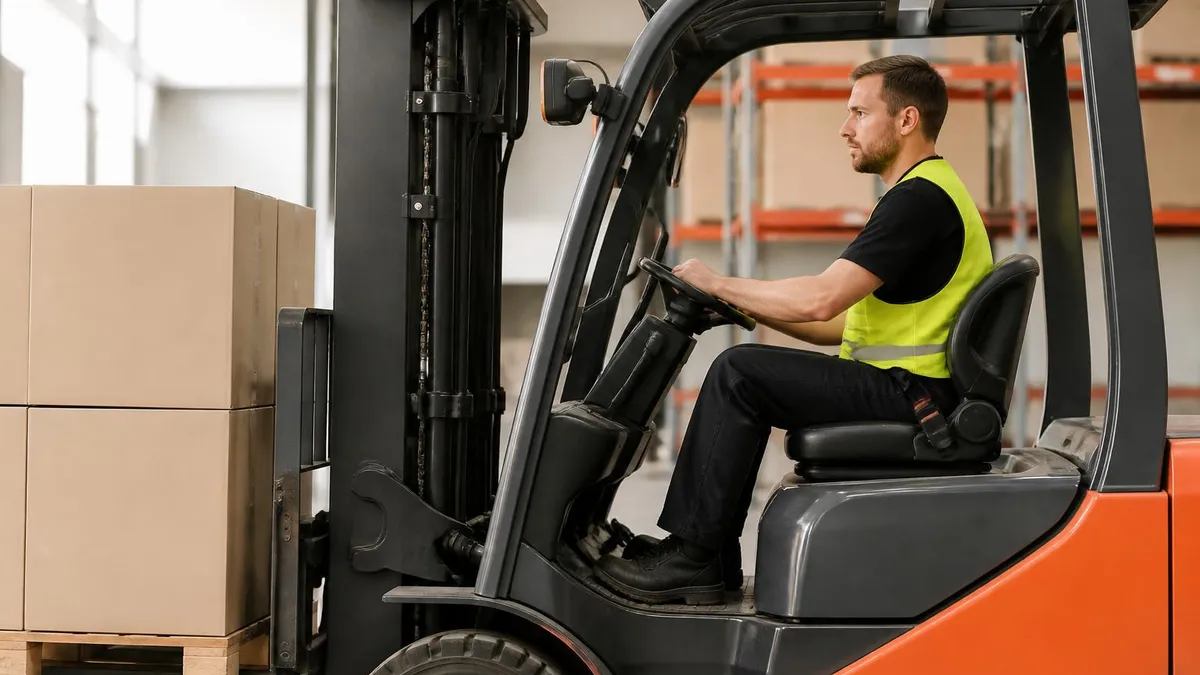
Traffic Management Plan Forklift: Complete Guide to Forklift Safety and Operations for TLILIC0003 Operators in Australia
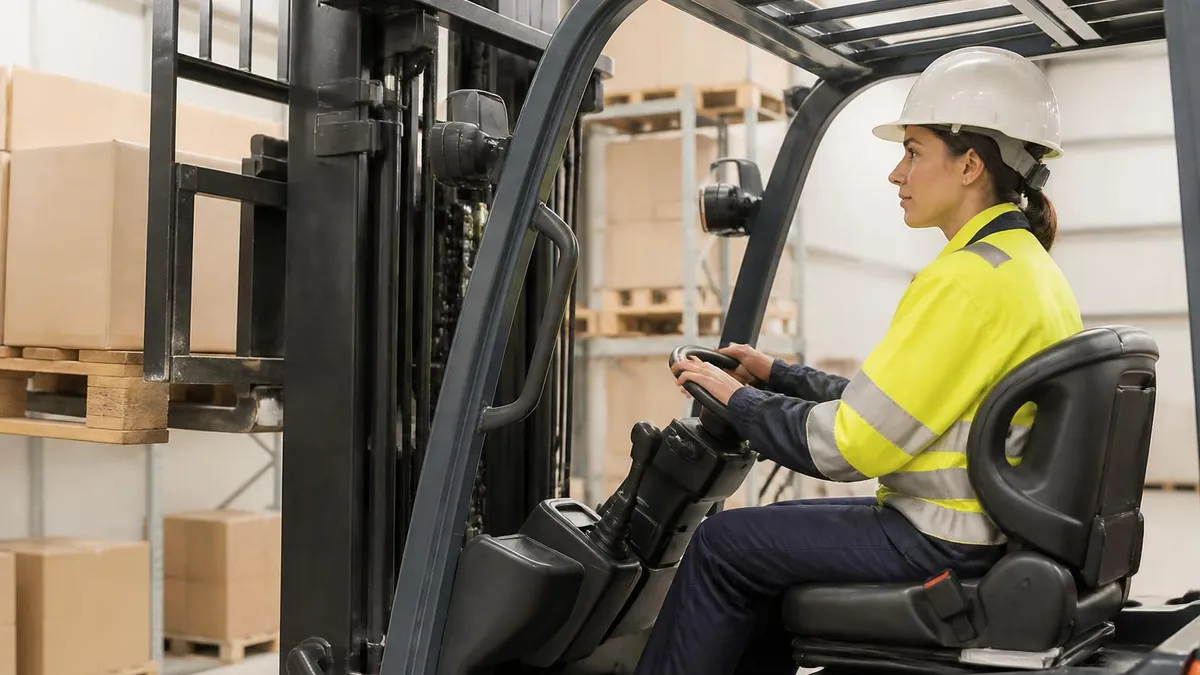
Forklift Cage Attachment Safety: Complete Guide for TLILIC0003 Operators in Australia

Forklift License Queensland: Complete TLILIC0003 Training Guide (2026)

Cost of Forklift Licence in Australia: Complete TLILIC0003 Pricing Guide

4x4 Forklift Truck Guide: Forklift Types and Models for TLILIC0003 Operators in Australia
How this page was made: written with AI tools and published by Nathan Beja, founder of Practice Test Geeks, who is responsible for its content. Exam facts are checked against the official sources listed below. Not reviewed by a subject-matter expert. Editorial policy
Sources & references
Exam facts on this page (fees, format, dates, passing scores) are checked against these official sources; the date is our last check. Editorial policy
- training.gov.au — Test delivery, exam information · verified Oct 2026
- worksafe.vic.gov.au — Fees, renewal · verified Oct 2026
- wa.gov.au — Fees, renewal · verified Oct 2026
- safework.nsw.gov.au — Fees, renewal, eligibility · verified Oct 2026
- safeworkaustralia.gov.au — Registration deadline, score validity · verified Oct 2026
- app.safework.sa.gov.au — Renewal · verified Oct 2026