
Buy Forklift Battery: Complete Guide to Forklift Parts and Maintenance for TLILIC0003 Operators in Australia
Buy forklift battery guide for TLILIC0003 operators — 🧠 parts, maintenance schedules, costs, suppliers and pre-start checks for Australian workplaces.
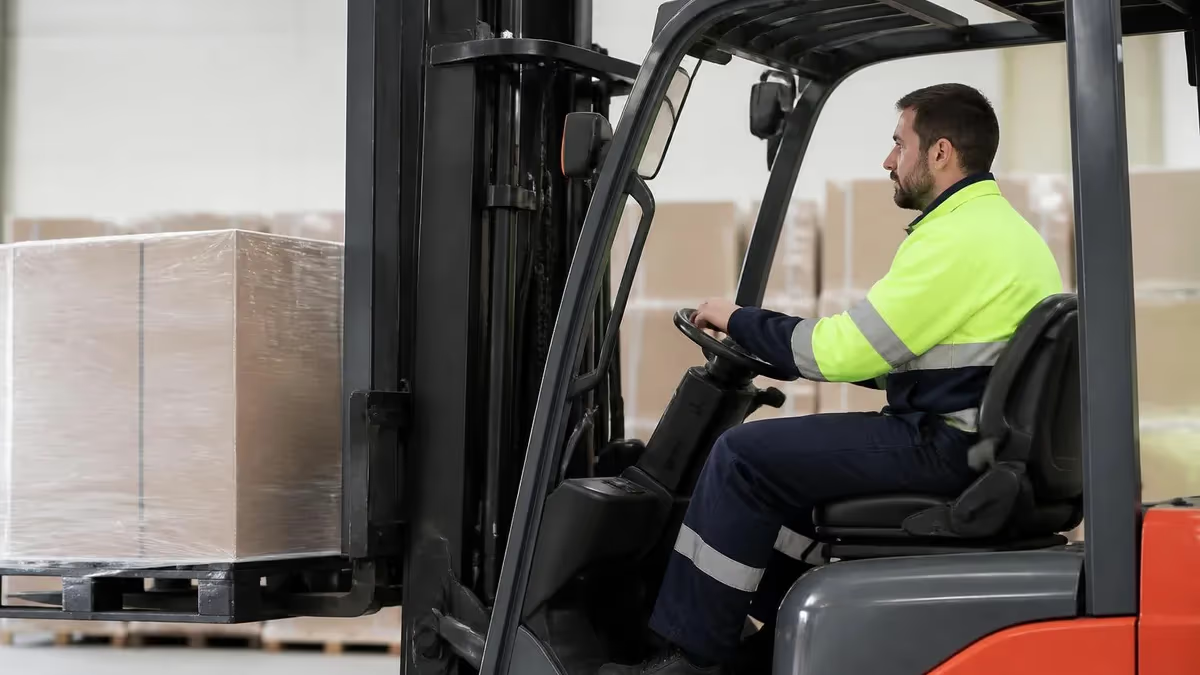
When you buy forklift battery units for an Australian warehouse, you are making one of the most expensive consumable decisions in the entire materials handling budget. A traction battery for a counterbalance electric forklift can cost between $4,500 and $12,000 depending on capacity, chemistry, and brand, and it directly affects shift productivity, charging schedules, and operator safety obligations under the TLILIC0003 unit of competency. Understanding the parts ecosystem around your forklift is just as critical as understanding how to drive it.
This guide walks Australian operators, supervisors, and small business owners through everything they need to know about forklift parts and maintenance, from batteries and hydraulic seals to tyre wear patterns and mast chain inspections. The TLILIC0003 high risk work licence assessment expects you to identify defects during pre-start checks, report faults correctly, and understand when a forklift must be tagged out. Maintenance literacy is not optional — it is a regulated competency under WHS legislation in every state and territory.
For new operators, the sheer number of components can feel overwhelming. A typical 2.5 tonne electric counterbalance forklift contains over 3,000 individual parts, ranging from the mast carriage rollers and tilt cylinders to the contactor relays inside the traction motor controller. Diesel and LPG forklifts add another layer of complexity with fuel systems, exhaust scrubbers, and cooling circuits. Knowing which parts wear quickly, which fail catastrophically, and which need scheduled replacement saves thousands of dollars per machine each year.
Maintenance also has a direct safety dimension. SafeWork Australia data shows that forklift incidents account for roughly one in five serious workplace injuries in the warehousing and logistics sector, and a meaningful portion of those incidents trace back to mechanical failures that could have been caught during a routine pre-start inspection. Worn forks, leaking hydraulic hoses, glazed brake discs, and degraded batteries all show warning signs days or weeks before they fail in service. For more on identifying these components, see our guide to the mast of forklift assemblies and other key parts.
This article also covers the procurement side. Australia has a mature aftermarket for forklift parts, with national distributors, OEM suppliers, and specialist battery rebuilders servicing every capital city and most regional centres. Knowing whether to buy genuine, OEM-equivalent, or rebuilt parts can make a significant difference to your total cost of ownership, especially for fleets of five or more units where parts spend can easily exceed $30,000 per year.
Whether you are a sole trader running a single 1.8 tonne forklift in a small workshop, a warehouse supervisor managing a mixed fleet of electric and LPG units, or a TLILIC0003 candidate preparing for your high risk work assessment, the maintenance fundamentals are the same. You need to know what each part does, how to inspect it, when to replace it, and how to document the work for compliance purposes. The following sections break this down step by step.
By the end of this guide you will understand battery types and pricing, hydraulic system basics, tyre selection, scheduled service intervals, common defect indicators, and the documentation expected by Australian regulators. You will also have a clearer picture of how to budget for parts and maintenance across the life of a forklift, which typically runs 10,000 to 20,000 operating hours before major overhaul.
Forklift Parts and Maintenance by the Numbers
Forklift Battery Buying Guide for Australian Operators
The most common chemistry in Australian warehouses. Priced between $4,500 and $9,000 for a standard 48V 600Ah unit. Requires watering, equalisation charging, and ventilated charging areas. Typical service life is 1,500 charge cycles or five years.
Premium option ranging from $9,000 to $18,000 but offering opportunity charging, no watering, and 3,000+ cycles. Ideal for multi-shift operations. Most major brands now offer drop-in replacements compatible with existing 24V to 80V trucks.
Cost-effective middle ground at $2,500 to $5,500. Reputable rebuilders replace failed cells, recondition the case, and provide 6 to 12 month warranties. Best for older trucks where full battery replacement is not economically justified.
Buying a battery without checking the charger is a common mistake. Match voltage, amp-hour rating, and connector type (SB175, SB350, Anderson). Lithium batteries require dedicated chargers — never connect a lead-acid charger to lithium cells.
Beyond the battery, the forklift contains several major subsystems that every TLILIC0003 operator should be able to identify by name and describe in functional terms. The mast assembly is the most visible and arguably the most safety-critical, comprising the inner and outer rails, the carriage that holds the forks, the lift chains, hydraulic lift cylinders, and the tilt cylinders that angle the entire assembly forward and back. Wear in any of these components compromises load stability and is a frequent failure point on older trucks.
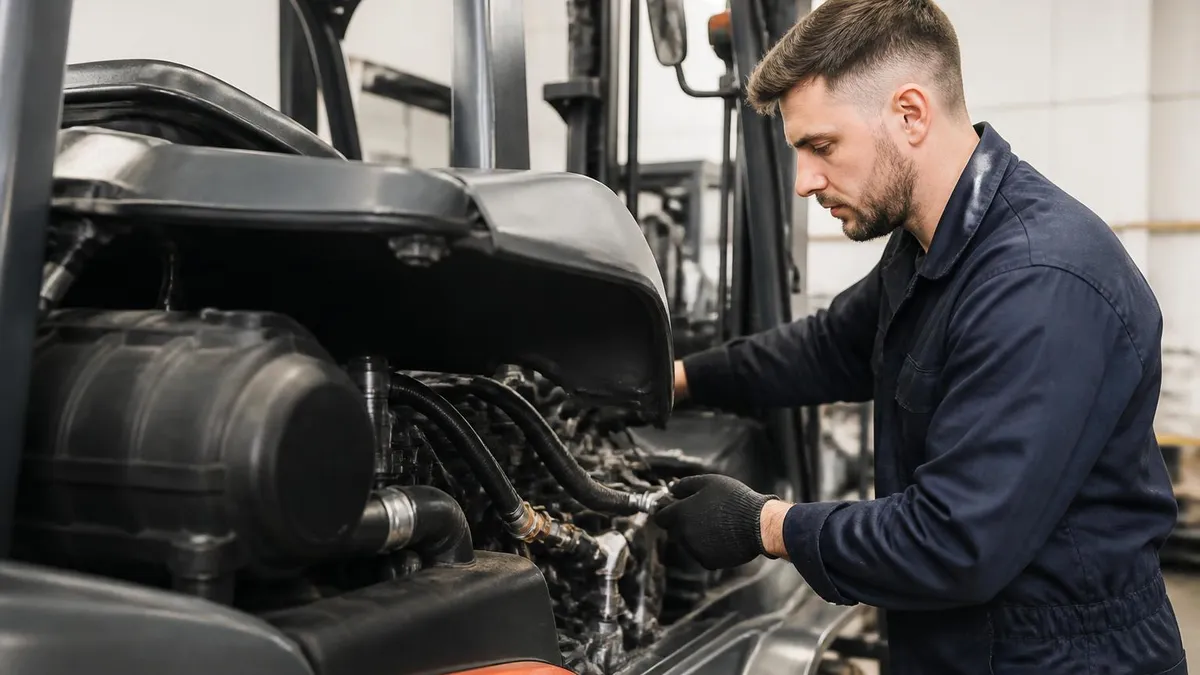
The hydraulic system is the muscle of the forklift. A typical hydraulic circuit includes a gear pump driven by the engine or traction motor, a control valve bank with separate spools for lift, tilt, and side-shift, a reservoir holding 20 to 40 litres of hydraulic oil, and a network of hoses and steel lines rated for 200 bar or more. Hydraulic leaks are the single most common defect found during pre-start checks, and they often signal failed seals, chafed hoses, or loose fittings that need immediate attention before the truck returns to service.
Tyres are another high-wear component with significant safety implications. Cushion tyres, press-on solid bands, and pneumatic tyres each suit different floor conditions, and choosing the wrong type causes premature wear, poor traction, and operator fatigue from vibration. A set of four solid pneumatic tyres for a 2.5 tonne forklift costs between $1,200 and $2,400 fitted, and most warehouses replace them every 2,000 to 4,000 hours depending on floor abrasiveness and load patterns.
The transmission and drive axle carry the truck's weight and deliver power to the wheels. Electric forklifts use a traction motor coupled to a reduction gearbox, while internal combustion units have a torque converter, a powershift transmission, and a differential. Both arrangements require periodic oil changes, with gear oil intervals typically set at every 2,000 operating hours. Listen for whining, grinding, or shuddering during direction changes — these are early warning signs of transmission wear.
Brakes on a forklift work harder than on a car because of the constant stop-start cycles and the heavy rear-end loads when carrying pallets. Most counterbalance trucks use wet disc brakes immersed in oil for cooling and longevity, with replacement intervals around 8,000 hours under normal conditions. Service brake travel, parking brake hold strength, and the absence of pulling to one side are all checks the TLILIC0003 assessor expects you to perform. For a deeper look at how parts vary across truck designs, see our guide to multi directional forklift trucks and related types.
Steering systems on most modern forklifts are hydraulically assisted, with a small orbitrol unit converting steering wheel input into hydraulic pressure that turns the rear wheels. Excessive play, hard spots, or wandering all indicate worn linkages or low fluid levels. The rear axle pivot, often overlooked, can develop dangerous play after 6,000 hours and should be inspected at every major service.
Finally, the operator compartment houses the controls, instruments, seat, and overhead guard. The overhead guard is a structural component certified to specific load-drop standards, and any modification or damage requires engineering re-certification before the truck can return to service. Seat-mounted presence switches, seatbelt interlocks, and horn buttons are all safety devices that must function correctly for the forklift to be considered roadworthy under WHS regulations.
TLILIC0003 Practice Test Questions
Prepare for the Forklift Licence Australia - TLILIC0003 exam with our free practice test modules. Each quiz covers key topics to help you pass on your first try.
TLILIC0003 Forklift Licence Australia Atta...
TLILIC0003 Exam Questions covering Forklift Licence Australia Attachments and Modifications. Master TLILIC0003 Test concepts for certification prep.
TLILIC0003 Forklift Licence Australia Batt...
Free TLILIC0003 Practice Test featuring Forklift Licence Australia Battery and Fuel Safety. Improve your TLILIC0003 Exam score with mock test prep.
TLILIC0003 Forklift Licence Australia Emer...
TLILIC0003 Mock Exam on Forklift Licence Australia Emergency Procedures. TLILIC0003 Study Guide questions to pass on your first try.
TLILIC0003 Forklift Licence Australia Fork...
TLILIC0003 Test Prep for Forklift Licence Australia Forklift Pre-Operational Checks. Practice TLILIC0003 Quiz questions and boost your score.
TLILIC0003 Forklift Licence Australia Haza...
TLILIC0003 Questions and Answers on Forklift Licence Australia Hazard Identification. Free TLILIC0003 practice for exam readiness.
TLILIC0003 Forklift Licence Australia Load...
TLILIC0003 Mock Test covering Forklift Licence Australia Load Centre Calculations. Online TLILIC0003 Test practice with instant feedback.
TLILIC0003 Forklift Licence Australia Load...
Free TLILIC0003 Quiz on Forklift Licence Australia Load Handling and Capacity. TLILIC0003 Exam prep questions with detailed explanations.
TLILIC0003 Forklift Licence Australia Oper...
TLILIC0003 Practice Questions for Forklift Licence Australia Operating in Different Environments. Build confidence for your TLILIC0003 certification exam.
TLILIC0003 Forklift Licence Australia Oper...
TLILIC0003 Test Online for Forklift Licence Australia Operating Techniques. Free practice with instant results and feedback.
TLILIC0003 Forklift Licence Australia Pede...
TLILIC0003 Study Material on Forklift Licence Australia Pedestrian Safety. Prepare effectively with real exam-style questions.
Maintenance Schedules by Forklift Type
Electric counterbalance and reach trucks dominate Australian warehouses for indoor work because they produce no emissions and run quietly. Daily checks focus on battery electrolyte levels for lead-acid units, charger plug condition, cable insulation, and the contactor relays inside the controller housing. A whining traction motor or burning smell from the controller area should immediately take the truck out of service.
Scheduled service intervals are typically 250 hours for battery watering and inspection, 500 hours for traction motor brush checks on older units, and 2,000 hours for hydraulic oil and filter changes. Modern AC motor forklifts have effectively eliminated brush wear, reducing maintenance further. Budget around $1,800 to $2,500 per year in scheduled parts and labour for a single-shift electric forklift in light to medium duty.
Buying Genuine OEM Parts vs Aftermarket Equivalents
- +Genuine OEM parts come with manufacturer warranty cover for 12 months
- +Engineering specifications guaranteed to match original design tolerances
- +Maintains forklift resale value and full service history documentation
- +Reduces liability exposure under WHS plant safety obligations
- +Often required by lease and finance contracts on newer trucks
- +Compatibility with future software and component updates is preserved
- +Direct dealer technical support available for fitment and troubleshooting
- −Premium pricing — typically 30 to 80 percent more expensive than aftermarket
- −Limited supplier choice can mean longer lead times for less common parts
- −Smaller regional dealers may not stock all OEM lines locally
- −Some OEM parts are simply rebadged aftermarket components anyway
- −Aftermarket suppliers often match or exceed OEM quality on consumables
- −Genuine batteries can be double the price of equivalent rebuilt units
- −Restricts ability to use independent service providers competitively
Pros and Cons at a Glance
| Pros | Cons |
|---|---|
| Engineering specifications guaranteed to match original design tolerances | Limited supplier choice can mean longer lead times for less common parts |
| Maintains forklift resale value and full service history documentation | Smaller regional dealers may not stock all OEM lines locally |
| Reduces liability exposure under WHS plant safety obligations | Some OEM parts are simply rebadged aftermarket components anyway |
| Often required by lease and finance contracts on newer trucks | Aftermarket suppliers often match or exceed OEM quality on consumables |
| Compatibility with future software and component updates is preserved | Genuine batteries can be double the price of equivalent rebuilt units |
| Direct dealer technical support available for fitment and troubleshooting | Restricts ability to use independent service providers competitively |
Daily Pre-Start Inspection Checklist for Forklift Operators
- ✓Walk around the forklift looking for fluid leaks, damage, or missing parts
- ✓Check battery electrolyte levels and charger plug condition on electric units
- ✓Inspect tyres for cuts, chunking, embedded objects, and tread depth
- ✓Test forks for cracks, wear, heel thickness, and locking pin engagement
- ✓Operate lift, tilt, and side-shift controls through full range with no load
- ✓Confirm service brake, parking brake, and inching pedal all function correctly
- ✓Test horn, reverse alarm, hazard lights, and headlights where fitted
- ✓Check seatbelt, seat presence switch, and overhead guard for damage
- ✓Confirm fire extinguisher is present, charged, and in date
- ✓Review previous shift's logbook entries and report any defects to supervisor
Defects must be reported in writing, not just verbally
Under WHS regulations and the TLILIC0003 unit of competency, any defect found during a pre-start inspection must be recorded in the forklift logbook and reported to the supervisor in writing. Verbal reports are not sufficient evidence of compliance if an incident later occurs. Always sign and date your inspection entry.
Forklift parts costs in Australia vary dramatically depending on whether you buy from the OEM dealer network, a national aftermarket distributor, or an online specialist. Major OEM brands such as Toyota, Crown, Hyster, Linde, and Yale operate dealer networks in every capital city, with parts pricing set centrally and typically 30 to 80 percent above equivalent aftermarket parts. For warranty work and lease-compliant fleets, OEM pricing is unavoidable, but for older trucks out of warranty, aftermarket suppliers offer meaningful savings without compromising safety.
National aftermarket distributors such as TVH, Lift Equipt, Adaptalift, and All Lift Forklifts stock thousands of part numbers covering forks, chains, hydraulic seals, filters, switches, and electrical components for nearly every brand sold in Australia. Their pricing on consumables like oil filters and brake pads is often half what OEM dealers charge, and most offer next-day shipping to metro areas. For batteries specifically, dedicated specialists like Battery Specialties, R&J Batteries, and Century operate rebuilding and supply services nationwide.
Annual parts spend per forklift varies by duty cycle. A single-shift electric forklift in light warehouse duty typically runs $1,800 to $2,500 in parts per year, while a double-shift LPG truck in a busy distribution centre can easily consume $4,000 in parts annually. Heavy-duty diesel forklifts in ports or yards push past $5,000 per year once you account for tyres, brake assemblies, and exhaust system components. Budget accordingly when calculating total cost of ownership over a typical 10-year service life.
Batteries are the single largest parts expense over a forklift's lifetime. A typical electric forklift will consume two to three lead-acid traction batteries during its working life, representing $15,000 to $30,000 in cumulative battery spend. Lithium-ion conversions reduce this by extending battery life to 8 to 10 years, but the upfront cost is roughly double. Run the numbers carefully — for single-shift operations the payback period on lithium often exceeds the useful life of the truck itself.
Tyres are the second-largest consumable spend. Solid pneumatic tyres at $300 to $600 each, replaced every 2,000 to 4,000 hours, mean a typical truck consumes $4,000 to $8,000 in tyres over its service life. Floor conditions matter enormously — abrasive concrete with kerbs and joints can halve tyre life compared to a smooth polished warehouse floor. Operator behaviour also plays a role, with aggressive turning and braking accelerating wear significantly.
Hydraulic system parts are generally inexpensive individually but add up over time. Seal kits for lift cylinders cost $150 to $400, hydraulic hoses range from $80 to $250 each, and a full hydraulic oil change including filter typically costs $300 to $500. Catastrophic pump failure, while rare, can mean a $2,500 to $4,500 replacement bill. Regular oil sampling at 1,000 hour intervals catches contamination problems early and dramatically extends pump life.
For specifications and tolerances on individual components such as fork heel thickness, chain stretch limits, and mast clearance, refer to our guide on forklift clearance height and specifications. Knowing the manufacturer's wear limits is essential when deciding whether a part needs immediate replacement or can safely continue in service until the next scheduled maintenance window.
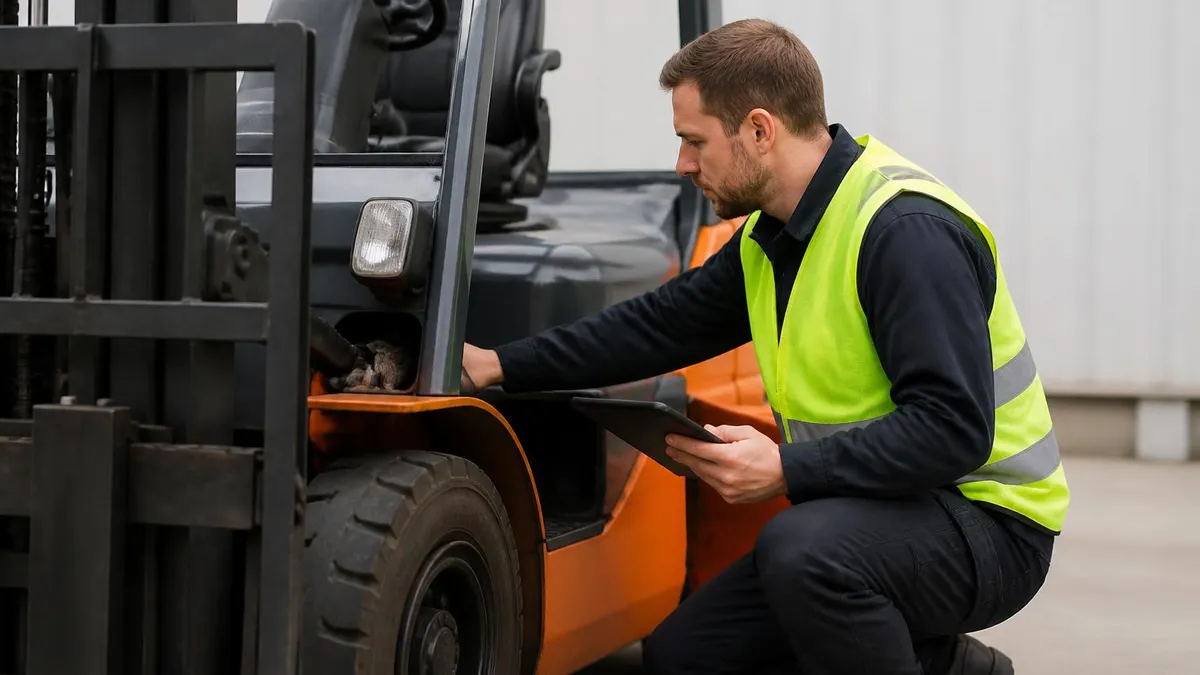
Lead-acid forklift batteries release hydrogen gas during charging, which is explosive at concentrations above 4 percent in air. Charging areas must have permanent mechanical ventilation, no ignition sources within 3 metres, and clear signage. Failure to provide compliant charging facilities is a notifiable WHS breach in every Australian state and territory.
Compliance documentation around forklift parts and maintenance is one of the most overlooked areas in Australian workplaces, yet it is the area regulators examine most closely after any incident. The TLILIC0003 unit of competency explicitly requires operators to record pre-start inspections, defect reports, and maintenance handovers in a logbook or electronic equivalent. SafeWork inspectors routinely request these records during audits, and the absence of documentation can convert a minor incident into a major prosecution.
Each forklift should have a dedicated logbook stored either in a holder on the truck itself or in a central control room accessible to all operators. Daily entries should record the operator's name, the date and time, the hour meter reading, any defects observed during pre-start inspection, and the actions taken — whether that meant tagging out the truck, reporting to maintenance, or confirming it was safe to operate. Many warehouses now use tablet-based digital logbooks that timestamp entries automatically and email defect reports to maintenance contractors in real time.
Service records held by the maintenance contractor or in-house workshop should capture every parts replacement, oil change, and major repair. These records prove that scheduled maintenance has been completed, identify recurring problems, and establish a defensible history if the truck is ever involved in an incident. Manufacturers and engineers responsible for any modifications must also provide signed certification that the change complies with AS 2359 forklift design standards.
Battery maintenance records deserve their own category because batteries represent both a major safety risk and a major capital asset. Records should include charge cycle counts, watering schedules for lead-acid units, equalisation charging dates, electrolyte specific gravity readings, and any cell replacements or rebuilds. Insurance claims for battery failure often hinge on whether maintenance records show the unit was properly cared for during its service life.
Attachment certification is another area where documentation is often missing. Side-shifters, fork positioners, rotators, slip-sheet attachments, and any non-standard fork extensions must all carry compliance plates and certification documents showing they are rated for the forklift they are fitted to. The combined rated capacity of forklift plus attachment must be calculated and displayed on a separate data plate, and operators must be trained on the specific attachment before use.
Annual inspections by a competent person are required in most states, similar to the major inspection requirement for cranes and improved work platforms. The inspection covers structural integrity of the mast and chassis, hydraulic system integrity, brake performance, steering, and operator safety devices. A signed inspection certificate must be retained for at least five years and made available on request. Many fleet managers schedule this inspection to coincide with the 2,000 hour major service to minimise downtime.
If you are still selecting your training provider for the TLILIC0003 high risk work licence, our guide on finding forklift licence training near me walks through accreditation, costs, and what to expect from a quality RTO. Choosing a provider that genuinely covers parts identification and maintenance literacy will set you up for safer operation and easier assessment.
Practical maintenance habits separate operators who pass their TLILIC0003 assessment confidently from those who struggle with the practical component. The first habit is consistency — perform the same walk-around inspection in the same sequence every shift, so that any deviation from normal jumps out immediately. Most experienced operators start at the front left tyre, work clockwise around the truck, then climb in to check controls and instruments. The whole routine takes five to seven minutes once it becomes muscle memory.
The second habit is to use your senses deliberately. Listen for new noises during the first few minutes of operation — whining gears, hissing hydraulics, clicking relays, or grinding brakes all signal problems that need investigation. Smell matters too, particularly burning insulation from overloaded electrical circuits or hot oil from a hydraulic system running over temperature. Touch the wheel hubs at the end of a shift to check for excessive heat indicating dragging brakes or bearing failure. Visual scans should sweep low and high — most leaks puddle on the floor before they show on the truck.
The third habit is logging everything, even minor observations. A small drip of hydraulic oil today often becomes a major leak in a week. Tyre cuts that look superficial can deepen quickly under load. Battery cell voltages that drift apart by 0.2 volts today will be 0.5 volts apart in a month. Trending these small data points lets maintenance staff intervene before failures cascade into expensive downtime or safety incidents.
The fourth habit is understanding when not to operate. Australian WHS law gives every worker the right to refuse work in unsafe conditions, and that includes refusing to drive a forklift with known defects. Tag-out procedures should be clear in every workplace — typically a red lockout tag attached to the steering wheel or ignition, with the truck removed to a designated holding area until repairs are complete. Never operate a tagged-out truck, even briefly, and never remove a tag placed by another operator.
The fifth habit is investing in operator-level training beyond the minimum TLILIC0003 requirement. Most RTOs offer refresher courses, attachment-specific training, and battery handling courses that go deeper than the high risk work licence curriculum. These add-on qualifications make you significantly more employable, particularly for roles in cold storage, hazardous goods, and pharmaceuticals where competency requirements are higher than general warehouse work.
The sixth habit is building a relationship with your maintenance technician. Whether they are an in-house mechanic or a contractor who visits monthly, they hold valuable knowledge about your specific trucks — which parts wear quickly, which suppliers deliver reliable replacements, which models have known weaknesses. Operators who chat with the technician during service visits learn far more about their machines than those who simply hand over the keys and walk away.
The final habit is staying current with industry information. Manufacturer service bulletins, SafeWork incident alerts, and trade publications all carry information about emerging problems, recall notices, and best practice updates. Subscribing to a few key publications and following SafeWork Australia and your state regulator on social media keeps you ahead of issues that could affect your workplace. Practice tests are also a useful way to keep your theoretical knowledge sharp between formal assessments — our free forklift practice test covers maintenance and parts topics in depth.
Sample Forklift Licence Practice Questions
Try these questions from our free Forklift Licence practice tests. The correct answer and an explanation follow each question.
How should Battery and Fuel Safety incidents be reported in an Australian workplace?
- A. Ignore minor incidents
- B. Report immediately to the supervisor, with notifiable incidents reported to the regulator
- C. Wait until the weekly meeting
- D. Post on social media
Answer: B. Report immediately to the supervisor, with notifiable incidents reported to the regulator
Incidents must be reported promptly, with notifiable incidents requiring immediate regulator notification.
What supervisory requirements exist for Battery and Fuel Safety activities?
- A. No supervision needed
- B. Adequate supervision by competent persons, proportionate to the level of risk
- C. Supervision is optional
- D. Only new workers need supervision
Answer: B. Adequate supervision by competent persons, proportionate to the level of risk
The level of supervision must be proportionate to the risk level, with competent supervisors overseeing the work.
What consultation requirements exist for Battery and Fuel Safety under WHS law?
- A. None — management decides alone
- B. Workers must be consulted on matters affecting their health and safety, with genuine opportunity to provide input
- C. Consultation is voluntary
- D. Only senior workers are consulted
Answer: B. Workers must be consulted on matters affecting their health and safety, with genuine opportunity to provide input
WHS law requires genuine consultation with workers on matters affecting their safety, including through HSRs and committees.
What is the role of a WHS inspector regarding Battery and Fuel Safety compliance?
- A. To do the work themselves
- B. To monitor compliance, investigate incidents, provide guidance, and issue improvement or prohibition notices
- C. To manage the project
- D. To provide insurance
Answer: B. To monitor compliance, investigate incidents, provide guidance, and issue improvement or prohibition notices
WHS inspectors enforce legislation through monitoring, investigation, guidance, and enforcement notices.
TLILIC0003 Questions and Answers
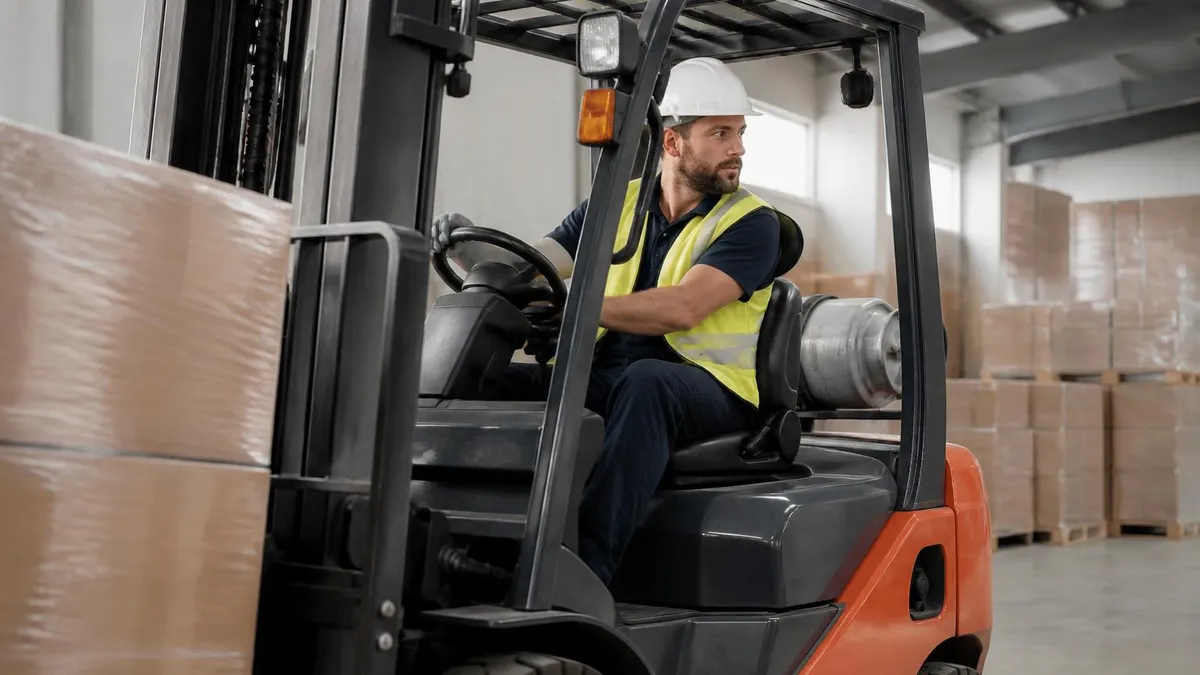
Mast of Forklift: Complete Guide to Forklift Parts for TLILIC0003 Operators in Australia
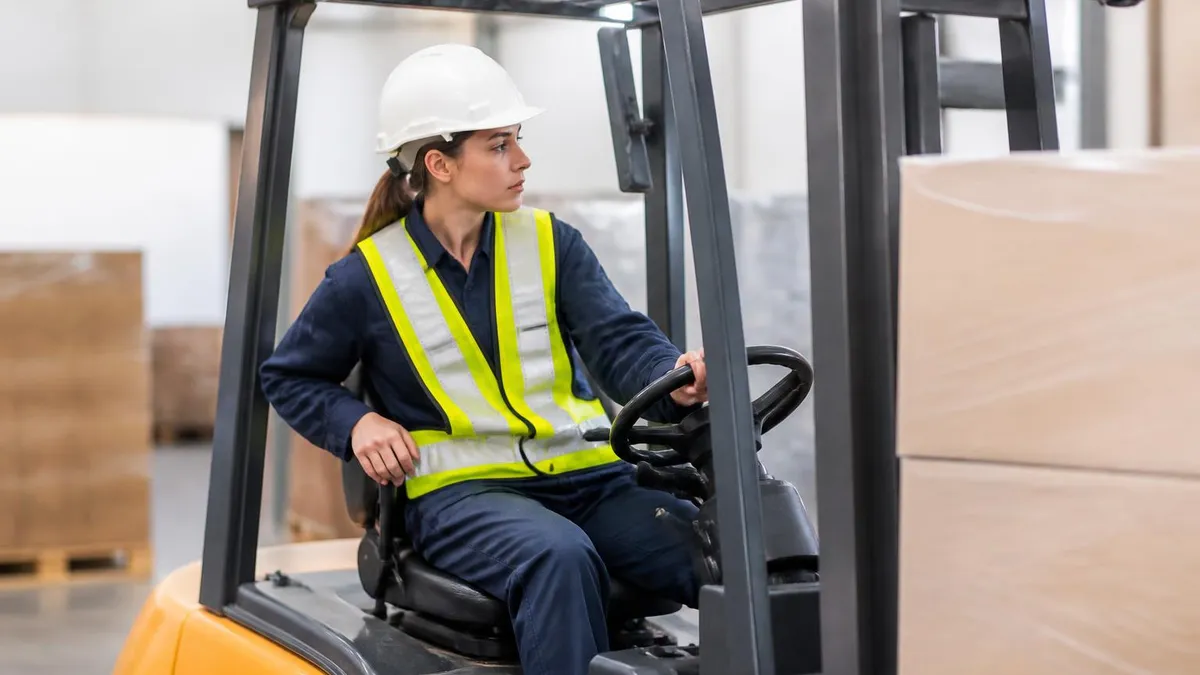
Multi Directional Forklift Trucks: Complete Guide to Forklift Types and Parts for TLILIC0003 Operators in Australia
Free Forklift Practice Test 2026 - Forklift Exam Questions
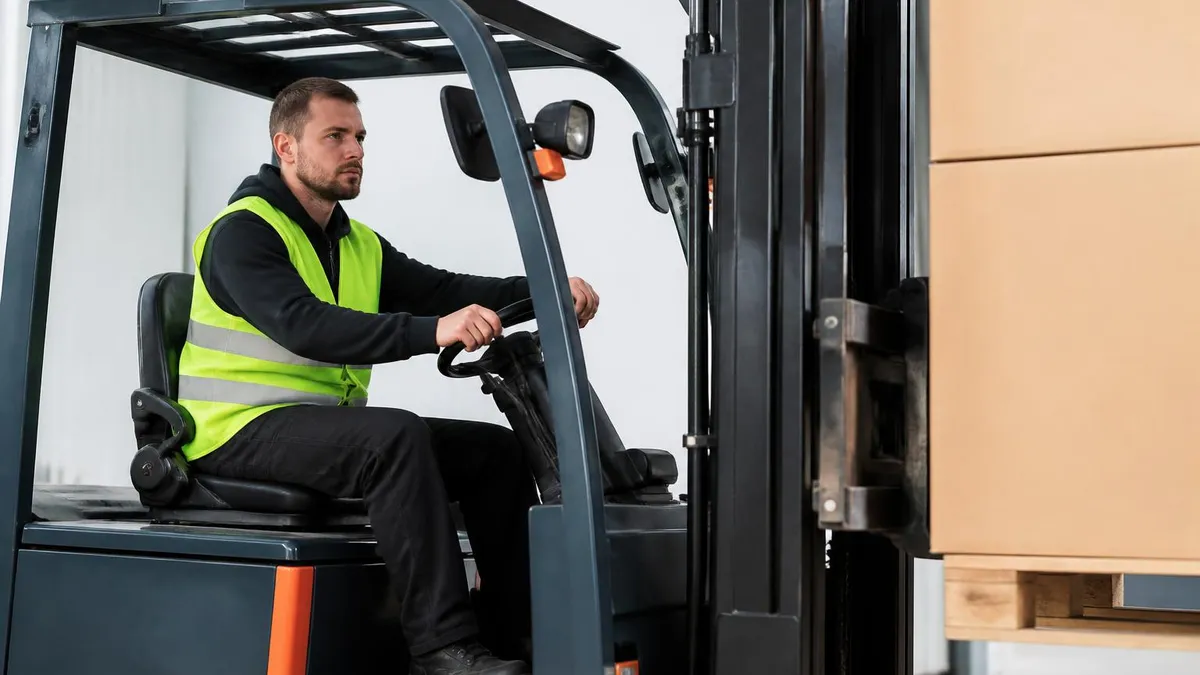
Forklift Clearance Height: Complete Guide to Forklift Specifications for TLILIC0003 Operators in Australia
Forklift Licence Near Me: How to Find Local TLILIC0003 Training Providers in Australia
About the Author

Certified Crane Operator & Skilled Trades Exam Specialist
Ferris State UniversityRobert Martinez is a Journeyman Ironworker, NCCCO-certified crane operator, and forklift trainer with a Bachelor of Science in Construction Technology from Ferris State University. He has 21 years of ironworking, rigging, and heavy equipment operation experience across high-rise and industrial construction sites. Robert prepares candidates for crane operator, rigger, forklift, and skilled trades certification examinations.