
Forklift Operator Jobs in Australia: Complete TLILIC0003 Career Guide for 2026 October
Explore forklift operator jobs in Australia — salaries, career paths, top employers, TLILIC0003 requirements, and how to land your first role in 2026 October. 📚
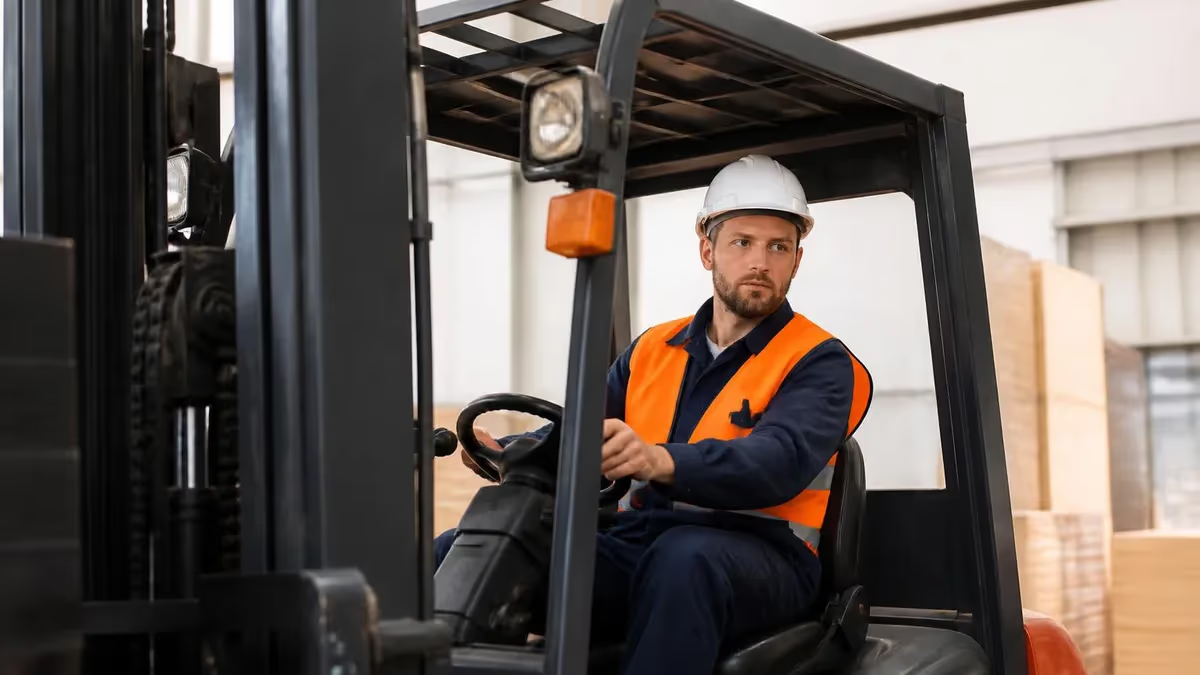
Forklift operator jobs remain one of the most accessible, well-paid entry points into Australian warehousing, logistics, manufacturing, and construction industries. With e-commerce volume surging past pre-pandemic peaks and major distribution centres opening across Sydney, Melbourne, Brisbane, and Perth, demand for ticketed forklift drivers has climbed steadily through 2024, 2025, and into 2026. Whether you are seeking a stable day-shift role, a high-paying night gig, or a stepping stone into supervision, the forklift industry consistently delivers opportunity for licensed operators.
The TLILIC0003 high-risk work licence — commonly called the LF licence — is the legal gateway to operating a counterbalance forklift in any commercial workplace in Australia. Issued by Safe Work Australia through state regulators like SafeWork NSW, WorkSafe Victoria, and WorkSafe Queensland, this nationally recognised credential signals to employers that you have completed accredited training, demonstrated practical competency, and passed both written and operational assessments under a licensed assessor.
According to SEEK and Indeed data, more than 14,000 forklift operator positions are advertised across Australia every month, with average base pay sitting between $28 and $38 per hour depending on industry, shift loading, and certifications held. Cold storage, hazardous goods, and dogman-combined roles routinely push hourly rates above $45. For more on machine knowledge that helps you stand out, review the mast of forklift components every operator should know before walking onto site.
This guide walks through the complete forklift operator career landscape: salary expectations by state and industry, the types of employers actively hiring, the certifications that boost your earning power, what a typical shift looks like, and the practical steps to go from zero experience to fully employed within six to eight weeks. We have pulled data from job boards, industry awards, the Fair Work Ombudsman, and conversations with hiring managers at companies like Toll, Linfox, Coles, Woolworths, Amazon, DHL, and Followmont.
You will also learn how to write a forklift-specific resume, what employers screen for in interviews, the difference between casual labour-hire and permanent direct-hire roles, and how to negotiate higher hourly rates once you have proven yourself on a yard or in a distribution centre. We cover the legal obligations operators carry under the Work Health and Safety Act 2011, including reportable incidents and the consequences of breaching site protocols.
Finally, we map out the longer-term progression: from solo operator to leading hand, traffic controller, warehouse supervisor, logistics coordinator, and ultimately operations manager. Many senior warehouse leaders earning $130,000+ started their careers with nothing more than a freshly printed LF licence and the willingness to show up early. If you are weighing whether forklift operation is the right career bet for you in 2026, the answer for thousands of Australians is a resounding yes — and this guide explains exactly why.
By the end of this article you will know which state pays the best forklift hourly rates, which industries reward operators with bonuses and superannuation top-ups, and how to position yourself as the candidate every recruiter wants to call back. Let's dig into the numbers, the roles, and the practical path forward.
Forklift Operator Jobs in Australia by the Numbers
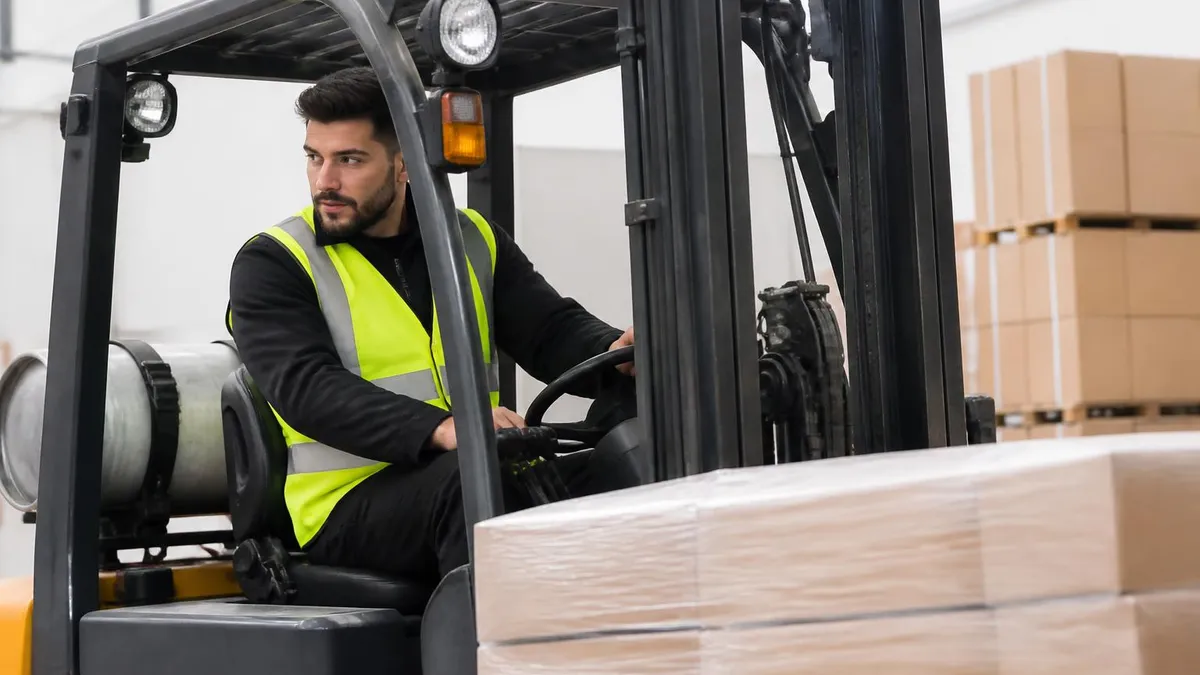
Types of Forklift Operator Jobs You Can Apply For
Indoor counterbalance and reach truck operation moving pallets in supermarket DCs, 3PL warehouses, and e-commerce fulfilment centres. Typically day or afternoon shifts with stable hours.
Yard-based work loading trucks with bricks, timber, plasterboard, and steel. Often combined with traffic control duties and dogman tasks. Higher physical demands and outdoor conditions.
Freezer operation between -25°C and -30°C in meat, dairy, and frozen food facilities. Pays premium loadings of $3-6 per hour above standard rates due to harsh working conditions.
Heavy-duty forklift work at ports, intermodal terminals, and shipping yards. Often requires LO licence as well. High pay rates ranging $40-55/hr with strong union representation.
Feeding production lines, moving raw materials, and shipping finished goods at factories. Regular hours, structured environment, and clear progression into team leader roles common.
Forklift operator pay in Australia varies dramatically based on your state, industry, shift pattern, and whether you work directly for an employer or through a labour-hire agency. As of early 2026, the national median hourly rate for a permanent forklift driver sits at approximately $33 per hour, with casual rates running about 25% higher to compensate for the absence of paid leave entitlements. That casual loading is mandated under the Storage Services and Wholesale Award 2020 and the Road Transport and Distribution Award.
Western Australia consistently pays the highest forklift rates in the country, driven by mining-adjacent logistics and resource sector demand. Operators in Perth, Port Hedland, and Karratha regularly earn $40-48 per hour for warehouse roles and significantly more for fly-in-fly-out yard work. New South Wales and Victoria sit in the middle of the pack, with Sydney's western suburbs and Melbourne's southeast offering the bulk of metropolitan opportunities at $32-38 per hour for experienced operators.
Queensland operators in Brisbane, Townsville, and Mackay typically earn $30-36 per hour, with cold storage facilities in Rocklea and Wacol offering some of the better rates. South Australia and Tasmania trail slightly at $28-34 per hour, though cost-of-living adjustments mean take-home buying power often equals interstate equivalents. ACT and Northern Territory roles are scarcer but pay competitively due to limited labour supply. Understanding the equipment you will run — particularly knowing your forklift clearance height and load chart — directly impacts whether employers slot you into entry-level or experienced pay brackets.
Industry choice matters as much as geography. The mining and resources sector pays the highest premium, with FIFO forklift operators on remote sites earning $55-75 per hour plus living-away-from-home allowances. Heavy industry, chemicals, and oil & gas come next at $42-52 per hour. General distribution and 3PL warehousing forms the bulk of the market at $30-38 per hour, while retail-adjacent and small business operations sit at the lower end around $28-32 per hour.
Shift loading adds substantial premium income for operators willing to work outside standard business hours. Afternoon shifts (typically 2pm-10pm) carry a 15% loading under most enterprise agreements. Night shifts (10pm-6am) attract a 30% loading, and weekend work pushes that to 50% on Saturdays and 100% on Sundays. Public holidays trigger 150% rates plus a day in lieu. An operator working consistent night shifts at $33 base rate effectively earns $42.90 per hour before overtime.
Overtime entitlements stack quickly. Time-and-a-half applies for the first two hours beyond your standard daily roster, then double time afterwards. Operators on a 38-hour week regularly clock 45-50 hours during peak periods like the November-December retail surge, often pushing weekly gross pay above $2,200. Salary-packaged permanent roles, while showing lower hourly rates on paper, frequently include superannuation top-ups to 12.5%, novated leases, healthcare subsidies, and annual performance bonuses worth $2,000-5,000.
For longevity in the career, target permanent direct-hire roles after twelve months of casual experience. The job security, leave accrual, redundancy protection under the National Employment Standards, and access to internal promotions far outweigh the short-term hourly premium of casual labour hire. Most senior warehouse leaders we spoke with transitioned out of casual work within their first two years on the job.
TLILIC0003 Practice Test Questions
Prepare for the Forklift Licence Australia - TLILIC0003 exam with our free practice test modules. Each quiz covers key topics to help you pass on your first try.
TLILIC0003 Forklift Licence Australia Atta...
TLILIC0003 Exam Questions covering Forklift Licence Australia Attachments and Modifications. Master TLILIC0003 Test concepts for certification prep.
TLILIC0003 Forklift Licence Australia Batt...
Free TLILIC0003 Practice Test featuring Forklift Licence Australia Battery and Fuel Safety. Improve your TLILIC0003 Exam score with mock test prep.
TLILIC0003 Forklift Licence Australia Emer...
TLILIC0003 Mock Exam on Forklift Licence Australia Emergency Procedures. TLILIC0003 Study Guide questions to pass on your first try.
TLILIC0003 Forklift Licence Australia Fork...
TLILIC0003 Test Prep for Forklift Licence Australia Forklift Pre-Operational Checks. Practice TLILIC0003 Quiz questions and boost your score.
TLILIC0003 Forklift Licence Australia Haza...
TLILIC0003 Questions and Answers on Forklift Licence Australia Hazard Identification. Free TLILIC0003 practice for exam readiness.
TLILIC0003 Forklift Licence Australia Load...
TLILIC0003 Mock Test covering Forklift Licence Australia Load Centre Calculations. Online TLILIC0003 Test practice with instant feedback.
TLILIC0003 Forklift Licence Australia Load...
Free TLILIC0003 Quiz on Forklift Licence Australia Load Handling and Capacity. TLILIC0003 Exam prep questions with detailed explanations.
TLILIC0003 Forklift Licence Australia Oper...
TLILIC0003 Practice Questions for Forklift Licence Australia Operating in Different Environments. Build confidence for your TLILIC0003 certification exam.
TLILIC0003 Forklift Licence Australia Oper...
TLILIC0003 Test Online for Forklift Licence Australia Operating Techniques. Free practice with instant results and feedback.
TLILIC0003 Forklift Licence Australia Pede...
TLILIC0003 Study Material on Forklift Licence Australia Pedestrian Safety. Prepare effectively with real exam-style questions.
Top Forklift Operator Employers Hiring in Australia
Coles, Woolworths, Aldi, Bunnings, and Kmart operate massive distribution networks spanning every state, employing thousands of forklift operators across automated and conventional warehouse sites. Coles alone runs over a dozen DCs nationally, with sites at Eastern Creek, Truganina, and Redbank actively hiring year-round. Pay rates are competitive with strong career pathways into supervision and operations management roles.
Third-party logistics giants Toll, Linfox, DHL, CEVA, and Followmont contract to the major retailers and offer enormous volumes of forklift work. Linfox's contract logistics division employs over 4,500 warehouse staff nationally. These employers value reliability, safety record, and shift flexibility above all else. Many operators rotate between sites depending on contract demand, building broad experience quickly.
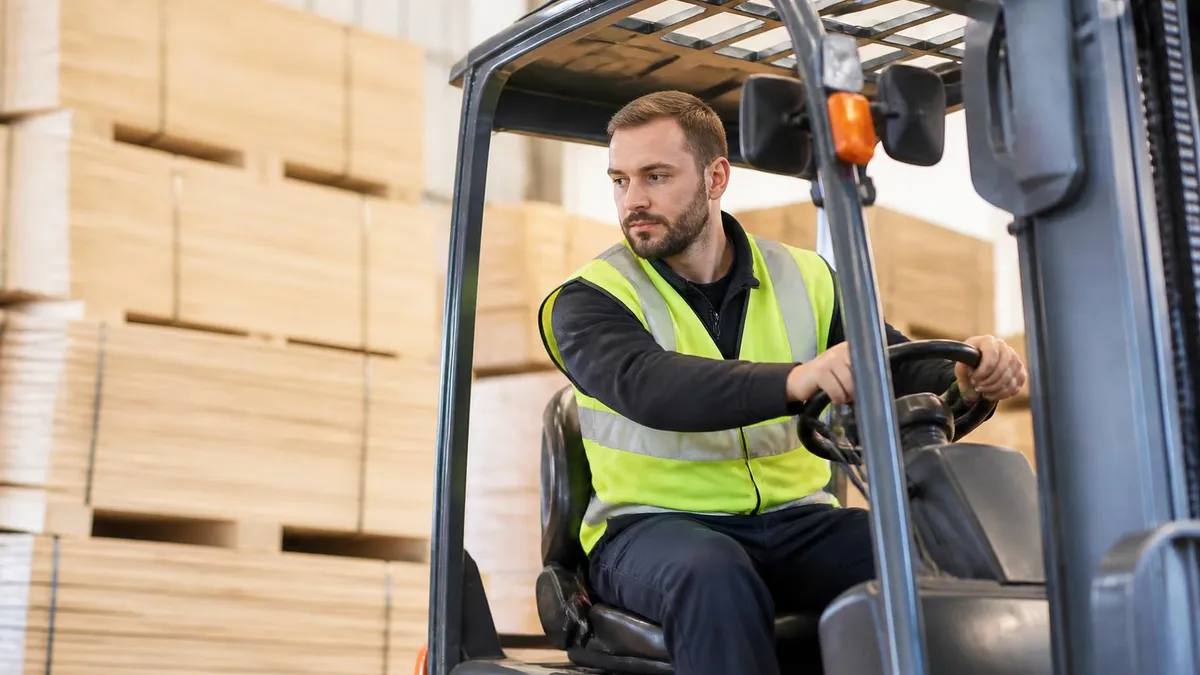
Is a Career as a Forklift Operator Worth It?
- +Strong, consistent demand across every Australian capital and most regional centres
- +Low barrier to entry — TLILIC0003 licence achievable in 3-5 days for under $700
- +Solid hourly pay with substantial shift loading and overtime upside
- +Multiple progression paths into supervision, logistics planning, and operations
- +Transferable skills across warehousing, construction, manufacturing, and ports
- +Strong union representation and award protections under Fair Work
- +Physical but not extreme work — easier on the body than trades or labouring
- −Repetitive shift work with limited variety in some warehouse environments
- −Night and weekend shifts common, especially in retail distribution
- −Concentration-heavy work — fatigue and complacency cause serious injuries
- −Cold storage and outdoor yard roles physically demanding year-round
- −Casual labour hire dominates entry-level market with reduced job security
- −Automation slowly reducing entry-level roles in newer DCs over next decade
Pros and Cons at a Glance
| Pros | Cons |
|---|---|
| Strong, consistent demand across every Australian capital and most regional centres | Repetitive shift work with limited variety in some warehouse environments |
| Solid hourly pay with substantial shift loading and overtime upside | Night and weekend shifts common, especially in retail distribution |
| Multiple progression paths into supervision, logistics planning, and operations | Concentration-heavy work — fatigue and complacency cause serious injuries |
| Transferable skills across warehousing, construction, manufacturing, and ports | Cold storage and outdoor yard roles physically demanding year-round |
| Strong union representation and award protections under Fair Work | Casual labour hire dominates entry-level market with reduced job security |
| Physical but not extreme work — easier on the body than trades or labouring | Automation slowly reducing entry-level roles in newer DCs over next decade |
How to Land Your First Forklift Operator Job
- ✓Complete TLILIC0003 training with a Registered Training Organisation in your state
- ✓Obtain your high-risk work licence card from SafeWork (typically 6-8 weeks post-assessment)
- ✓Build a one-page resume highlighting any warehouse, retail, or manual handling experience
- ✓Photograph your licence card front and back for easy attachment to job applications
- ✓Register with at least three labour-hire agencies — Programmed, Workpac, Adecco, Sidekicker, OneShift
- ✓Apply directly through SEEK, Indeed, and Jora for permanent roles with major employers
- ✓Obtain a National Police Check — many warehouses require it before site induction
- ✓Complete generic White Card construction induction if applying to building suppliers
- ✓Be available for short-notice shift offers during your first 90 days to build references
- ✓Track every shift, supervisor name, and forklift type operated to strengthen future applications
Labour-hire first, permanent second — every time.
More than 80% of permanent forklift jobs at major DCs are filled internally from the existing casual labour-hire pool. Show up early, hit pick rates, log zero incidents for 12 weeks, and you will be offered a direct-hire role with leave entitlements, super top-ups, and a clear promotion track. Skipping the casual phase rarely works for first-time operators with no warehouse references.
The forklift operator career path offers genuine upward mobility for those willing to invest in additional tickets, develop people skills, and demonstrate operational reliability over time. The most common progression begins as a casual counterbalance operator, advances to multi-equipment certified operator, then to leading hand, shift supervisor, warehouse coordinator, operations manager, and ultimately distribution centre manager — a role that pays $140,000-180,000 plus bonuses at major employers like Coles, Woolworths, and Amazon.
Stacking additional high-risk work licences accelerates your earning potential significantly. The LO licence (order-picking forklift, used in raised-pick warehouses like pharmaceutical and apparel DCs) opens up specialist roles. The DG (dogger) and RB (basic rigger) tickets make you indispensable on construction sites and in shipping yards. The CN (non-slewing crane) ticket combined with LF puts you in the top earning tier of yard operators, regularly clocking $50+ per hour in industrial supply businesses.
Within 18-24 months of consistent work, most operators are well-positioned to apply for leading hand or 2IC roles. These positions add $4-7 per hour to your base rate and typically come with permanent contracts even at labour-hire-heavy sites. Leading hands coordinate small teams of 3-8 operators, manage shift handovers, conduct toolbox talks, and serve as the first escalation point for operational issues. Strong communication and basic computer literacy matter more than additional tickets at this stage.
The next step — warehouse supervisor or shift supervisor — typically requires three to five years of operational experience, demonstrated incident-free performance, and often the completion of a Certificate IV in Warehousing Operations or Logistics. Supervisors earn $75,000-95,000 base salary plus shift allowances and bonuses, and they manage rosters, KPI reporting, safety compliance, and staff development. Many supervisors complete this transition by their early 30s, having started as 20-year-old casual operators.
Beyond supervision, the logistics and operations management track opens up rapidly. Warehouse managers, operations coordinators, and inventory planners regularly earn $100,000-130,000 in mid-size businesses and $130,000-180,000+ at major employers. The Diploma of Logistics or Diploma of Supply Chain Operations, often funded by employers, smooths this transition. Industry mentors and union training programs through TWU and SDA provide further development pathways.
Some operators pivot sideways into adjacent careers. Forklift trainers and assessors earn $40-55 per hour delivering TLILIC0003 courses through RTOs. Workplace health and safety officers, often coming from operational backgrounds, earn $90,000-120,000. Equipment service technicians who specialise in maintaining Toyota, Crown, Linde, and Hyster machines command strong rates of $45-60 per hour with company vehicles included. Each pathway leverages the foundational knowledge built during your early operating years.
Entrepreneurial operators sometimes go further still. Owner-operators with their own forklift and ute provide site-relief services, casual contract work, and short-term coverage for businesses unable to find labour-hire. Daily contract rates of $600-900 are achievable with strong client relationships and proven reliability. This path requires investment in equipment, insurance, and ABN registration but offers genuine independence for experienced operators with strong networks.
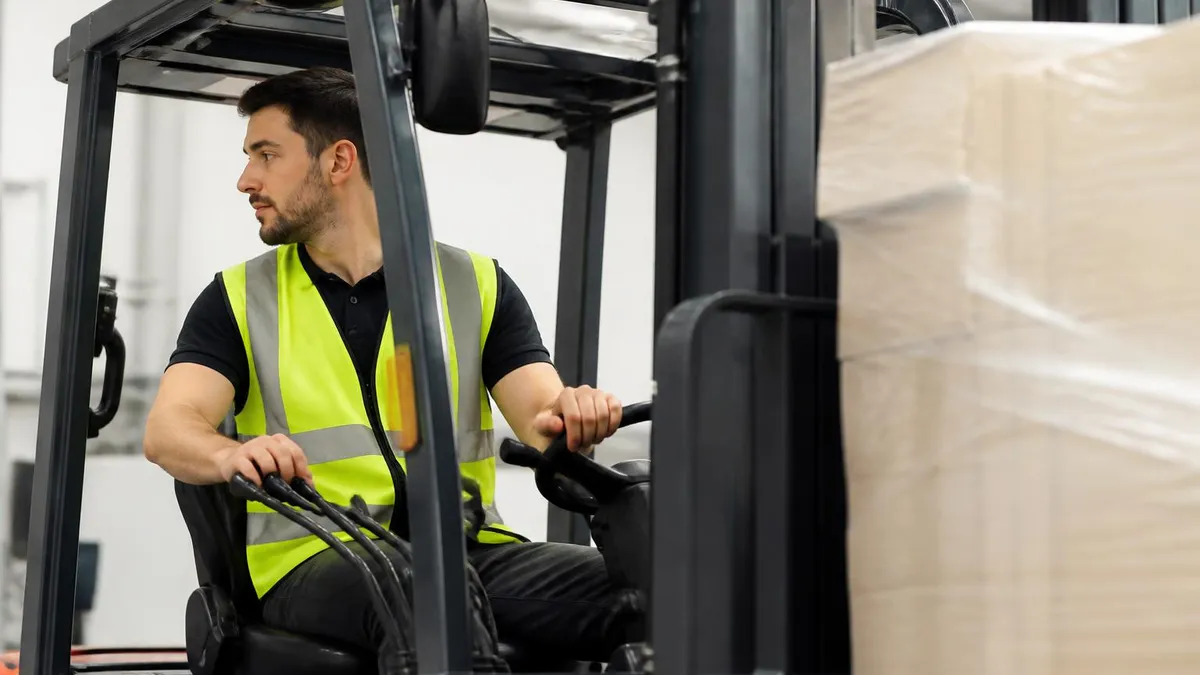
Operating a forklift without a current high-risk work licence carries individual fines up to $11,250 in NSW, $12,210 in Victoria, and similar penalties nationwide — and exposes employers to fines exceeding $66,000. Lending your licence card to another worker is a fraud offence with potential criminal conviction. Always conduct documented pre-start inspections, never exceed posted load capacities, and report all near-misses immediately. Your licence can be suspended or cancelled after a single serious breach.
Every forklift operator in Australia carries personal legal responsibilities under the Work Health and Safety Act 2011 and its state-based equivalents. These duties extend beyond simply following site rules — you are legally obligated to take reasonable care for your own safety, the safety of others affected by your work, and to comply with reasonable instructions from your PCBU (Person Conducting a Business or Undertaking). Breaches can result in personal fines, prosecution, and licence cancellation, regardless of whether your employer instructed the unsafe behaviour.
Pre-start inspections are non-negotiable and legally required at the start of every shift. A proper inspection covers tyres, forks, mast operation, hydraulic hoses, lights, horn, seatbelt, data plate legibility, and any attachments fitted. Many serious forklift incidents trace back to skipped or rushed pre-starts. Document your inspection in the site logbook or digital system — this record protects you legally if an incident occurs later. Familiarising yourself with the different multi directional forklift trucks and standard counterbalance equipment helps you tailor inspections to the specific machine you are running.
Load handling responsibilities are equally serious. Operators must verify load weight does not exceed the forklift's rated capacity at the working load centre, accounting for attachment derating where applicable. Lifting an over-capacity load — even by a few hundred kilograms — can cause catastrophic tip-overs and fatal crush injuries. The data plate on every forklift is your legal reference point. Refusing to lift unsafe loads is your right and obligation; no supervisor can lawfully direct you to operate outside the equipment's safe working load.
Pedestrian safety is the single greatest cause of forklift fatalities in Australian workplaces. Safe Work Australia data shows that over 60% of forklift-related deaths between 2015 and 2023 involved a pedestrian struck or crushed by the forklift. Operators must use horns at every corner, intersection, and blind spot, maintain situational awareness of foot traffic, and never operate where pedestrians have not been excluded by physical barriers, exclusion zones, or formal traffic management plans.
Speed limits matter enormously, even in confined warehouse environments. Most major DCs cap forklift speed at 10 km/h indoors and 15 km/h outdoors, with electronic speed governors fitted on newer fleets. Operating above posted limits, particularly with elevated loads, drastically increases tip-over risk and is one of the fastest ways to be stood down or terminated. Treat every shift as if WorkSafe inspectors are watching — because increasingly, with site CCTV and telematics, they effectively are.
Drug and alcohol policies on Australian work sites are zero-tolerance. Random testing is universal across major employers, with positive results triggering immediate stand-down, mandatory rehabilitation, and frequently termination. Operators who test positive may also have their high-risk work licence reviewed by the state regulator. Prescription medications affecting alertness — including some hayfever, codeine-based painkillers, and anxiety medications — must be disclosed to supervisors before operating. Honesty here protects your livelihood.
Reporting incidents, near-misses, and equipment defects is both a legal obligation and a culture marker. The best workplaces actively encourage near-miss reporting because each report identifies a hazard before it becomes an injury. Operators who hide damage, hope dents go unnoticed, or skip reporting because they fear blame contribute to the conditions that cause future fatalities. Reporting honestly and promptly protects you, your colleagues, and your career — every senior leader in the warehousing industry rates honesty above almost every other operator attribute.
Now that you understand the forklift operator job market, salary expectations, employer landscape, and legal responsibilities, the practical next step is to build a focused job-search routine that converts your licence into paid shifts within weeks rather than months. The operators who land roles fastest treat their search like a part-time job itself — 90 minutes per day across applications, follow-ups, and skill development consistently outperforms occasional bursts of activity spread over weeks.
Start by creating a tight one-page resume with your TLILIC0003 licence number clearly displayed at the top, alongside any other tickets, your earliest availability, and your willingness to work shifts. Hiring managers spend less than 20 seconds on initial screening, so put the most valuable information — licence, availability, location — in the first third of the page. Skip lengthy career objectives and instead list concrete competencies: forklift types operated, load weights handled, warehouse management systems used, and pick rates achieved.
Register simultaneously with multiple labour-hire agencies on day one. Different agencies hold contracts with different employers, so spreading your registration across five or six agencies meaningfully multiplies your interview opportunities. After registration, follow up with a phone call to introduce yourself — recruiters consistently prioritise candidates who actively engage over those who simply submit online forms. A short call asking about upcoming shifts and confirming your availability tells a recruiter you are reliable before they ever offer you a role.
Practise for your phone interview. Recruiters typically ask about your experience with specific forklift types, your comfort with afternoon and night shifts, your awareness of safety responsibilities, and your reliability around absenteeism. Prepare two-minute answers to these standard questions, focused on examples and outcomes rather than vague claims. Mention specific incident-free durations, pick-rate achievements, or instances where you flagged a hazard. Recruiters are looking for stories that demonstrate maturity, not generic enthusiasm.
Use your first three to six months strategically. Take every shift offered, even short or inconvenient ones, to build your reference base and demonstrate reliability. Arrive 15 minutes early, conduct visible pre-starts, ask the leading hand how you can help, and finish strong even on quiet shifts. Supervisors remember the operators who behave like permanent staff from day one — these are the names that surface in promotion conversations and direct-hire decisions six months later. To deepen your industry knowledge between shifts, browse our forklift licence near me resources for ongoing refresher content.
Continuously upskill while working. Use slow shift periods to learn additional equipment with supervisor permission — reach trucks, order pickers, walkie-stackers — even before formal training. When the next LO licence opportunity arises, you will already have informal hours logged on the equipment. Save consistently for additional tickets: LO ($600-800), DG dogger ($900-1,200), CN crane ($1,200-1,500). Each additional licence expands the roles you qualify for and pushes your hourly rate higher.
Finally, build a small professional network deliberately. Connect with leading hands, shift supervisors, and HR officers on LinkedIn — most warehouse leaders use it more than they admit. Stay in light contact every few months by liking posts and occasionally sending a short message. When permanent roles open up, decisions are frequently made on relationships and reputation before the job is ever advertised externally. The forklift industry rewards consistency, professionalism, and patience — operators who play the long game routinely earn six-figure incomes within five to seven years of obtaining their first licence.
Sample Forklift Licence Practice Questions
Try these questions from our free Forklift Licence practice tests. The correct answer and an explanation follow each question.
What penalties apply for non-compliance with WHS Legislation regulations in Australia?
- A. No penalties
- B. Significant fines (up to millions of AUD for corporations) and potential imprisonment for serious offences
- C. A verbal warning only
- D. A small administrative fee
Answer: B. Significant fines (up to millions of AUD for corporations) and potential imprisonment for serious offences
Australian WHS penalties are severe, with Category 1 offences carrying fines up to AUD 3 million and potential imprisonment.
What penalties apply for non-compliance with Hazard Identification regulations in Australia?
- A. No penalties
- B. Significant fines (up to millions of AUD for corporations) and potential imprisonment for serious offences
- C. A verbal warning only
- D. A small administrative fee
Answer: B. Significant fines (up to millions of AUD for corporations) and potential imprisonment for serious offences
Australian WHS penalties are severe, with Category 1 offences carrying fines up to AUD 3 million and potential imprisonment.
What penalties apply for non-compliance with Racking and Storage regulations in Australia?
- A. No penalties
- B. Significant fines (up to millions of AUD for corporations) and potential imprisonment for serious offences
- C. A verbal warning only
- D. A small administrative fee
Answer: B. Significant fines (up to millions of AUD for corporations) and potential imprisonment for serious offences
Australian WHS penalties are severe, with Category 1 offences carrying fines up to AUD 3 million and potential imprisonment.
What penalties apply for non-compliance with Load Handling and Capacity regulations in Australia?
- A. No penalties
- B. Significant fines (up to millions of AUD for corporations) and potential imprisonment for serious offences
- C. A verbal warning only
- D. A small administrative fee
Answer: B. Significant fines (up to millions of AUD for corporations) and potential imprisonment for serious offences
Australian WHS penalties are severe, with Category 1 offences carrying fines up to AUD 3 million and potential imprisonment.
TLILIC0003 Questions and Answers
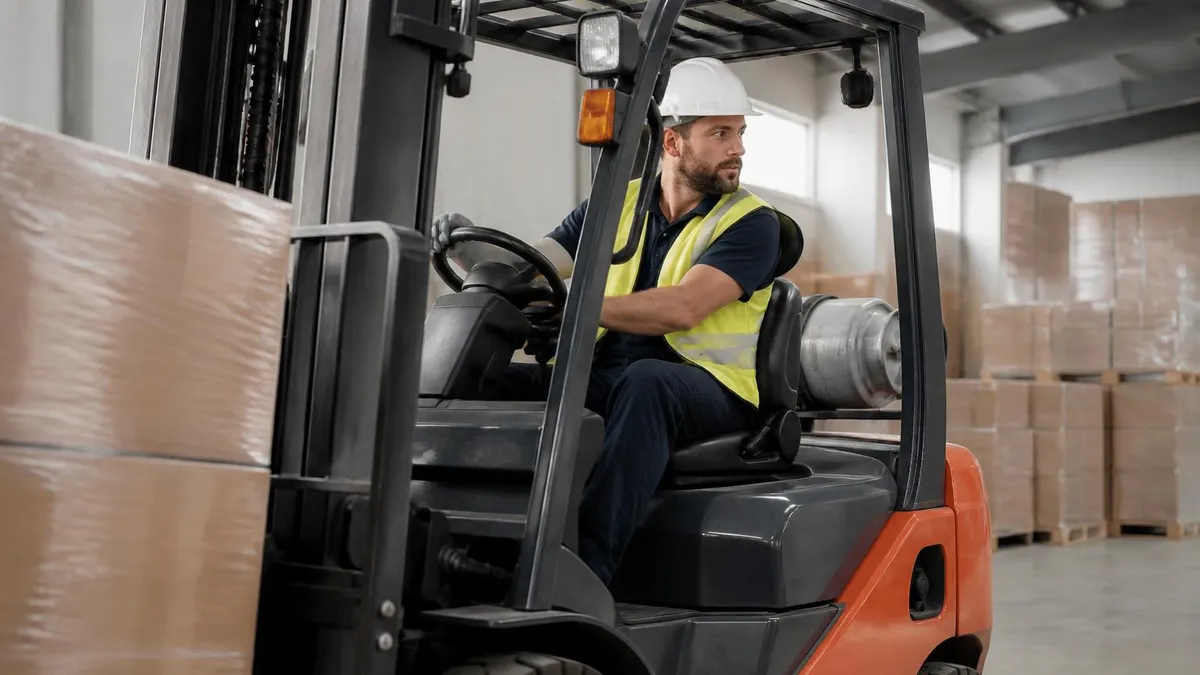
Mast of Forklift: Complete Guide to Forklift Parts for TLILIC0003 Operators in Australia
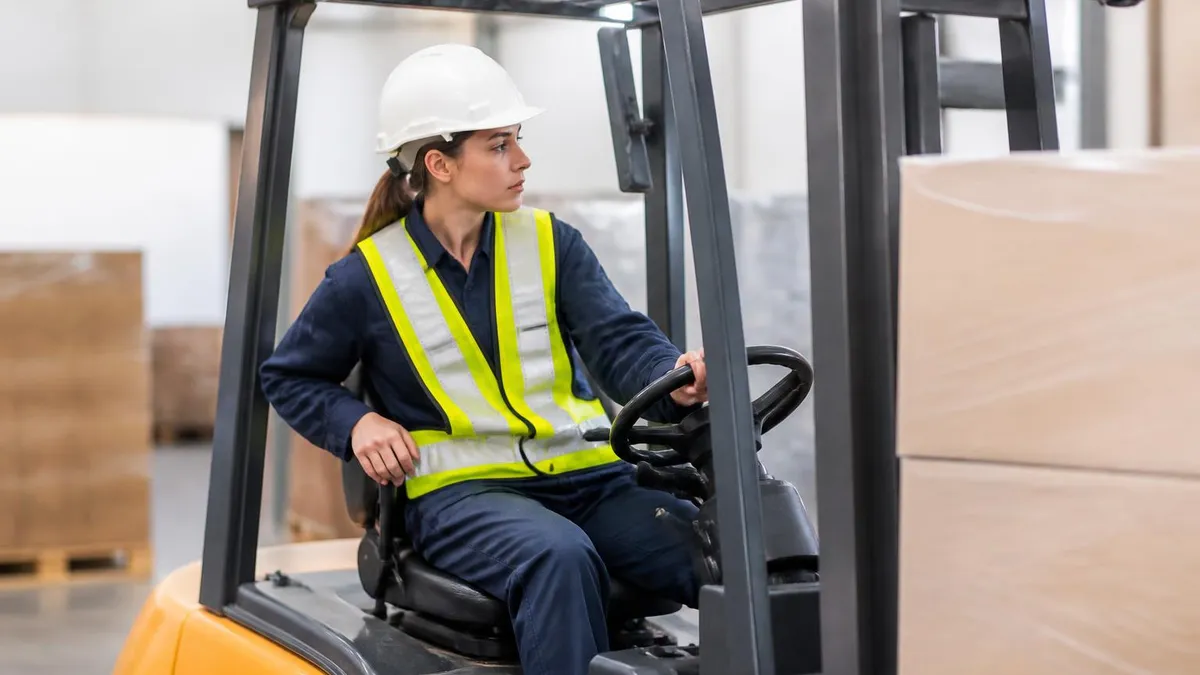
Multi Directional Forklift Trucks: Complete Guide to Forklift Types and Parts for TLILIC0003 Operators in Australia
Free Forklift Practice Test 2026 - Forklift Exam Questions
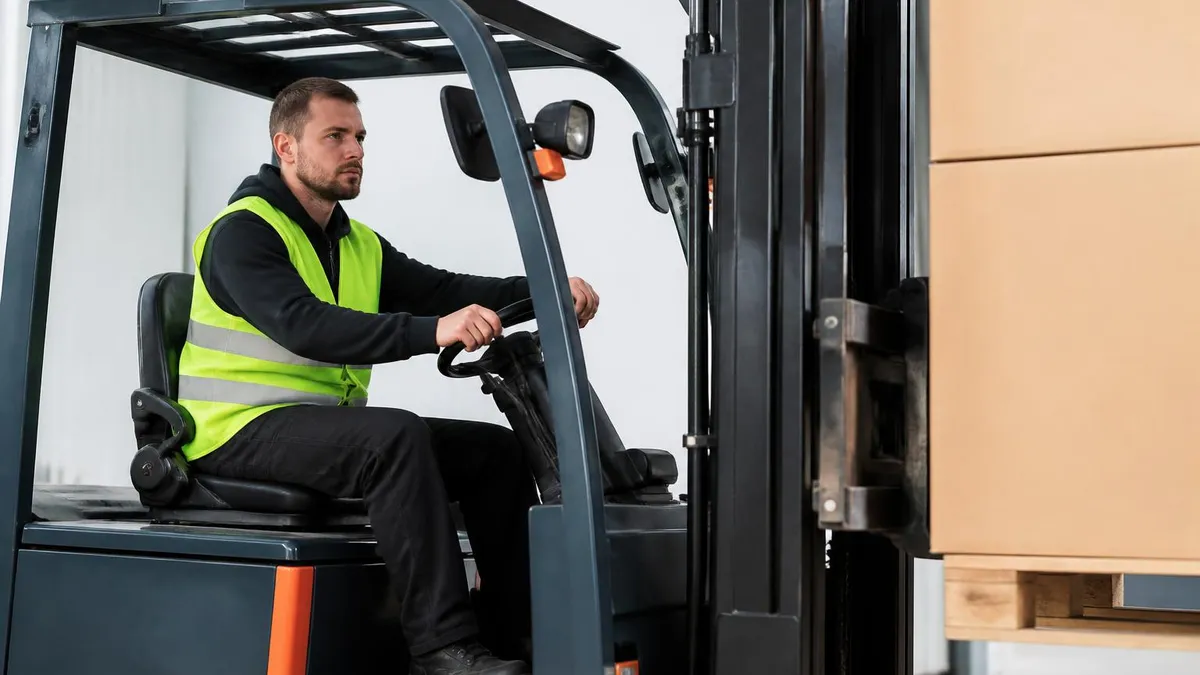
Forklift Clearance Height: Complete Guide to Forklift Specifications for TLILIC0003 Operators in Australia
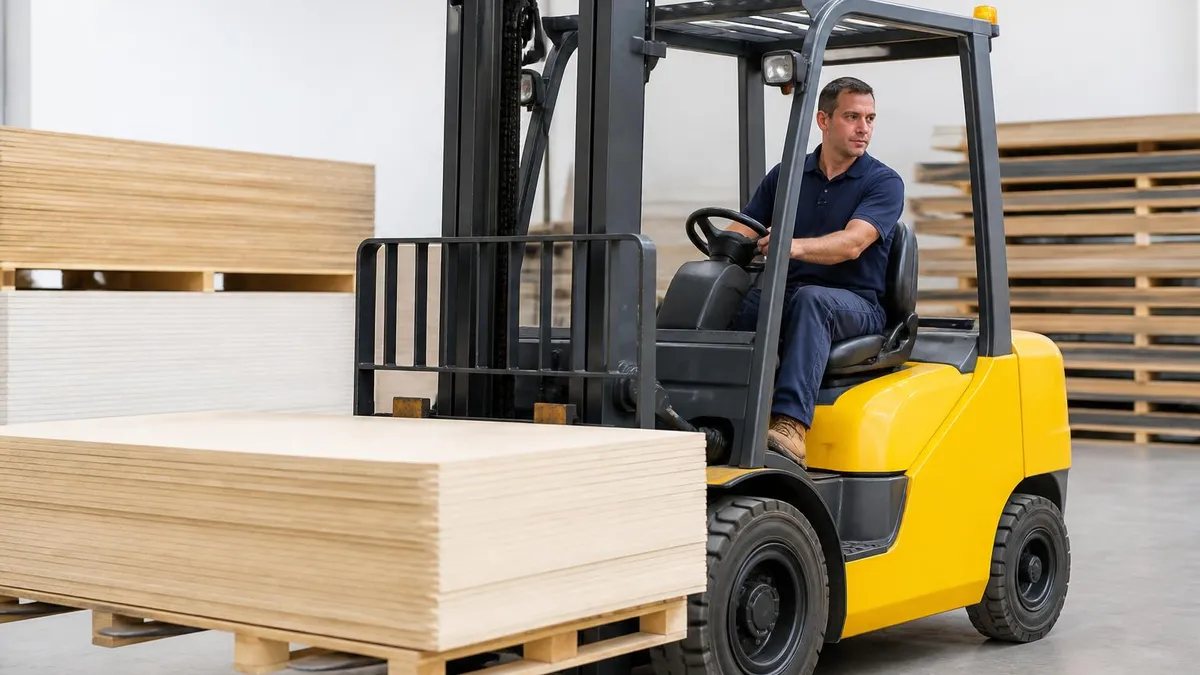
Forklift Licence Near Me: How to Find Local TLILIC0003 Training Providers in Australia
About the Author

Certified Crane Operator & Skilled Trades Exam Specialist
Ferris State UniversityRobert Martinez is a Journeyman Ironworker, NCCCO-certified crane operator, and forklift trainer with a Bachelor of Science in Construction Technology from Ferris State University. He has 21 years of ironworking, rigging, and heavy equipment operation experience across high-rise and industrial construction sites. Robert prepares candidates for crane operator, rigger, forklift, and skilled trades certification examinations.