
Forklift Licence Training Near Me: Complete TLILIC0003 Course Guide for Australian Operators
🧠 Find forklift licence training near me. Complete TLILIC0003 course guide covering costs, providers, duration, assessment and how to choose a quality
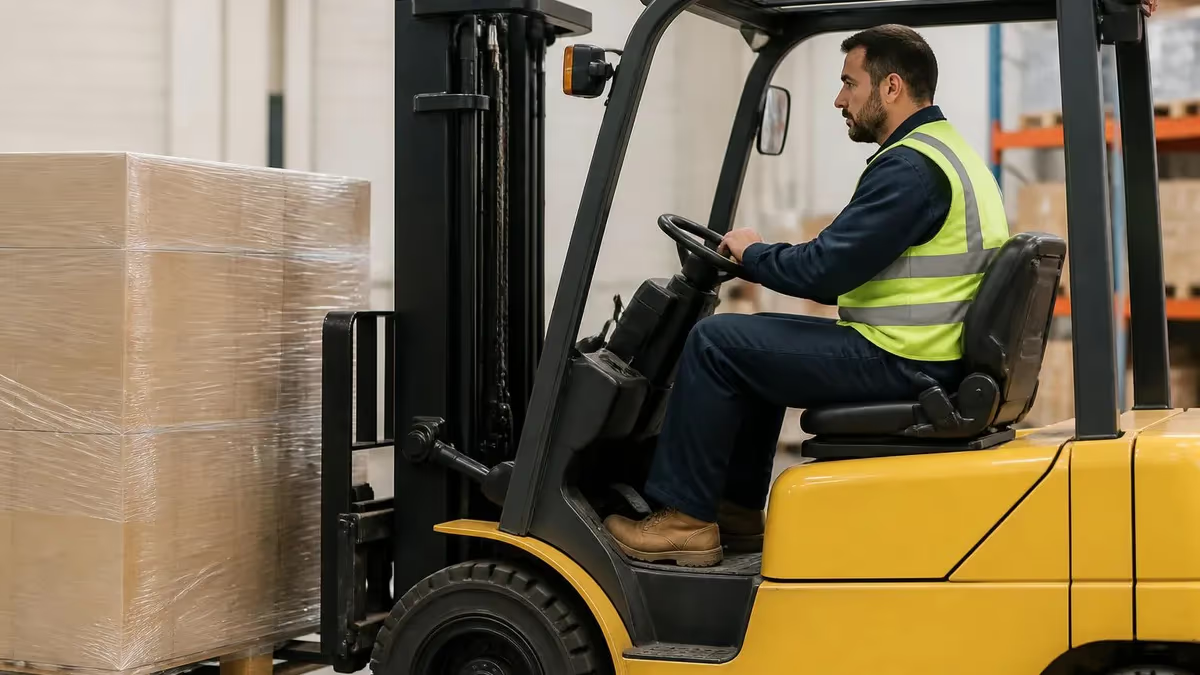
Searching for forklift licence training near me is the first step thousands of Australian workers take each year when they want to break into warehousing, logistics, construction, manufacturing or retail distribution. The nationally recognised unit of competency TLILIC0003 — Licence to operate a forklift truck — is the qualification that every employer expects to see before they will hand you the keys to a counterbalance forklift in a workplace. Knowing where to find quality local training, what the course actually covers, and how the assessment process works can save you hundreds of dollars and weeks of wasted time.
Forklift licence training in Australia is delivered exclusively by Registered Training Organisations (RTOs) that hold scope for TLILIC0003 on their training register, and the licence itself is issued by a state or territory work health and safety regulator such as SafeWork NSW, WorkSafe Victoria or Workplace Health and Safety Queensland. The training is the same nationally because it sits inside the Transport and Logistics Training Package, but pricing, course length, available dates and the quality of the equipment you train on can vary enormously between providers, even in the same suburb.
Most courses run between two and five days depending on whether you are a complete beginner or someone with existing yard experience who simply needs the licence formalised. A typical full course covers theory in a classroom, practical operation in a controlled yard environment, pre-start inspections, load handling, stacking and de-stacking, and a final written and practical assessment. Once you pass, you receive a Statement of Attainment from the RTO and a Notice of Assessment that you take to your regulator to convert into the plastic HRW (High Risk Work) licence card you carry on the job.
The phrase "near me" matters because forklift training is not something you can complete fully online. You must physically attend a yard or simulator-equipped facility for the practical component and the final assessment with an accredited assessor. That said, many RTOs now offer pre-course theory through their learning management system so you arrive on day one already familiar with terminology like data plates, load centres, residual capacity and the stability triangle. This blended approach has shortened the average classroom time considerably over the last five years.
One factor that surprises many first-time applicants is the eligibility requirement. To enrol in TLILIC0003 you must be at least 18 years of age on the day of assessment, you need a Unique Student Identifier (USI), and you must hold sufficient English language, literacy and numeracy skills to read safety signage, interpret a load chart and complete a written assessment without assistance. Some RTOs offer LLN support, but you should disclose any concerns at enrolment rather than on assessment day.
Cost is the other big question. Across Australia, expect to pay between $350 and $750 for a full TLILIC0003 course depending on your state, the RTO's facilities, whether lunch is included and whether the regulator's licence application fee is bundled into the quoted price. Government-subsidised training is available in some states for eligible job seekers, apprentices and trainees, and many employers will fully reimburse the cost once you start work. Cheaper is not always better — a $399 course on a tired 1990s diesel truck with a rushed half-day assessment will not prepare you for a fast-paced cold storage warehouse.
This guide walks you through everything you need to evaluate a local provider, including what a quality RTO looks like, the structure of the assessment, the difference between LF and LO class licences, and the practical tips that help you pass first time. If you are still researching providers in your area, the companion article on how to forklift licence near me is the next logical read after this one. Let's start with the numbers that define the Australian forklift training landscape in 2026.
Forklift Licence Training in Australia by the Numbers
Key Facts at a Glance
| Item | Value | Details |
|---|---|---|
| Typical Course Cost | $350–$750 | Varies by state and RTO |
| Minimum Age | 18+ | On day of assessment |
| Licence Validity Period | 5 years | Then renewal required |
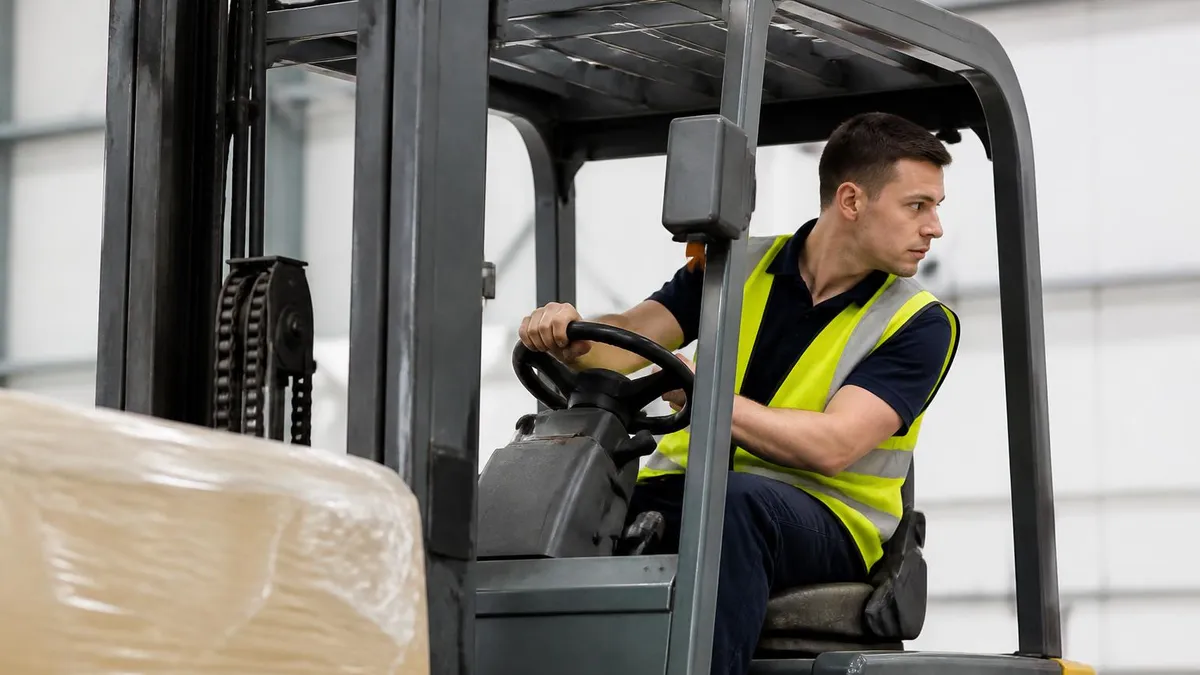
How to Find Quality Forklift Training Near You
Visit training.gov.au and search TLILIC0003. Filter by your postcode to see every RTO with current scope to deliver and assess the unit. This is the only authoritative list and confirms an RTO is genuinely accredited.
SafeWork NSW, WorkSafe Victoria and equivalents publish accredited assessor lists. Cross-reference any RTO you find through Google ads with the regulator's directory to avoid unregistered "licence mills" charging cash for fake credentials.
Warehouses, transport yards and freight terminals in your area know which local RTOs produce safe, work-ready operators. A short phone call to a hiring manager can reveal which provider trained their best operators.
Quality RTOs welcome a walk-through of their training yard before enrolment. Look at the condition of the trucks, the variety of attachments, the racking setup and whether the yard is sealed or just gravel and weeds.
A $399 quote and a $649 quote can describe the same course or completely different experiences. Always confirm whether the price includes the regulator's licence fee, photo, ID check, LLN support, lunch and re-assessment if you fail.
TLILIC0003 covers the operation of a powered industrial truck equipped with a mast and an elevating load carriage, including a forward fork on which loads are placed for lifting, transferring and stacking. In plain language, that is the standard counterbalance forklift you see at almost every warehouse. The unit does not cover order pickers or stock pickers — those sit under TLILIC0004 and require a separate LO class licence. Understanding which class you actually need is the first decision before you start ringing around for prices.
The training package breaks the unit into three broad elements. The first is planning the work, which means identifying the load, calculating its weight, checking the data plate against the load centre, planning the route, and conducting a pre-start inspection covering hydraulics, forks, mast, tyres, horn, lights, seat belt and overhead guard. Trainers spend significant time on the data plate because misreading residual capacity is the single most common cause of tip-overs in Australian workplaces. A good RTO will run you through at least three different data plates from three different machines.
The second element is conducting forklift operations, where you actually drive. You will learn to mount and dismount safely using three points of contact, start the machine, complete a yard familiarisation lap, then progress to picking pallets from floor level, ground-level stacking, and finally racked stacking up to the maximum lift height of the training truck. Reversing is treated as the default direction for laden travel down ramps, and you will be drilled on horn use at corners, pedestrian zones and blind spots until it becomes automatic.
The third element is shutdown and post-operational duties. This sounds minor but it is where many candidates lose marks on assessment day. Lowering the forks to the ground, tilting forward slightly, applying the park brake, neutralising the controls, switching off, removing the key and completing a post-operational inspection in the correct sequence is a non-negotiable habit that assessors watch for closely. Rushing the shutdown after a strong driving performance is one of the most frustrating ways to fail.
Theory content also covers Australian Standard AS 2359 on the use of powered industrial trucks, relevant state WHS regulations, manufacturer's operating instructions, the consequences of unsafe operation including suspension or cancellation of your licence, and the limits of your authority — for example, you may not modify a forklift, fit unauthorised attachments or operate a truck you have not been familiarised with even after you hold a licence. These compliance topics appear heavily in the written assessment.
Many candidates underestimate how much weight is given to communication skills. The unit explicitly requires you to demonstrate clear two-way communication with spotters, pedestrians and other operators using horn signals, hand signals and radio. During assessment, your trainer will deliberately walk into your path or stage a pedestrian-zone scenario to see whether you stop, sound the horn and re-establish eye contact before proceeding. Failing to do so is an automatic critical error in most assessment matrices.
If you want a deeper technical understanding of the machine before you enrol, the article on mast of forklift gives a complete breakdown of the components you will be assessed on during the pre-start inspection. Reading it the night before day one will put you ahead of every other candidate in the room when the trainer asks who can name the parts of a free-lift mast.
TLILIC0003 Practice Test Questions
Prepare for the Forklift Licence Australia - TLILIC0003 exam with our free practice test modules. Each quiz covers key topics to help you pass on your first try.
TLILIC0003 Forklift Licence Australia Atta...
TLILIC0003 Exam Questions covering Forklift Licence Australia Attachments and Modifications. Master TLILIC0003 Test concepts for certification prep.
TLILIC0003 Forklift Licence Australia Batt...
Free TLILIC0003 Practice Test featuring Forklift Licence Australia Battery and Fuel Safety. Improve your TLILIC0003 Exam score with mock test prep.
TLILIC0003 Forklift Licence Australia Emer...
TLILIC0003 Mock Exam on Forklift Licence Australia Emergency Procedures. TLILIC0003 Study Guide questions to pass on your first try.
TLILIC0003 Forklift Licence Australia Fork...
TLILIC0003 Test Prep for Forklift Licence Australia Forklift Pre-Operational Checks. Practice TLILIC0003 Quiz questions and boost your score.
TLILIC0003 Forklift Licence Australia Haza...
TLILIC0003 Questions and Answers on Forklift Licence Australia Hazard Identification. Free TLILIC0003 practice for exam readiness.
TLILIC0003 Forklift Licence Australia Load...
TLILIC0003 Mock Test covering Forklift Licence Australia Load Centre Calculations. Online TLILIC0003 Test practice with instant feedback.
TLILIC0003 Forklift Licence Australia Load...
Free TLILIC0003 Quiz on Forklift Licence Australia Load Handling and Capacity. TLILIC0003 Exam prep questions with detailed explanations.
TLILIC0003 Forklift Licence Australia Oper...
TLILIC0003 Practice Questions for Forklift Licence Australia Operating in Different Environments. Build confidence for your TLILIC0003 certification exam.
TLILIC0003 Forklift Licence Australia Oper...
TLILIC0003 Test Online for Forklift Licence Australia Operating Techniques. Free practice with instant results and feedback.
TLILIC0003 Forklift Licence Australia Pede...
TLILIC0003 Study Material on Forklift Licence Australia Pedestrian Safety. Prepare effectively with real exam-style questions.
Choosing the Right Forklift Training Provider Near You
The single biggest difference between a budget RTO and a premium one is the fleet you train on. Quality providers operate a mix of LPG counterbalance, electric three-wheel and diesel container-handler trucks so candidates experience different steering geometries, throttle responses and braking characteristics. Older yards often run a single tired diesel truck with worn forks and a hydraulic leak that creeps the mast — habits formed on that machine will not translate to a modern warehouse.
Ask to see the service log of the trucks. Reputable RTOs schedule daily pre-start checks documented in a logbook and have mechanical service every 250 operating hours. If the trainer hesitates when you ask about service records, treat that as a serious red flag. Training on a machine with a slow leak in the lift ram will mask faults you should be learning to detect during your own pre-start inspection routine on day one.
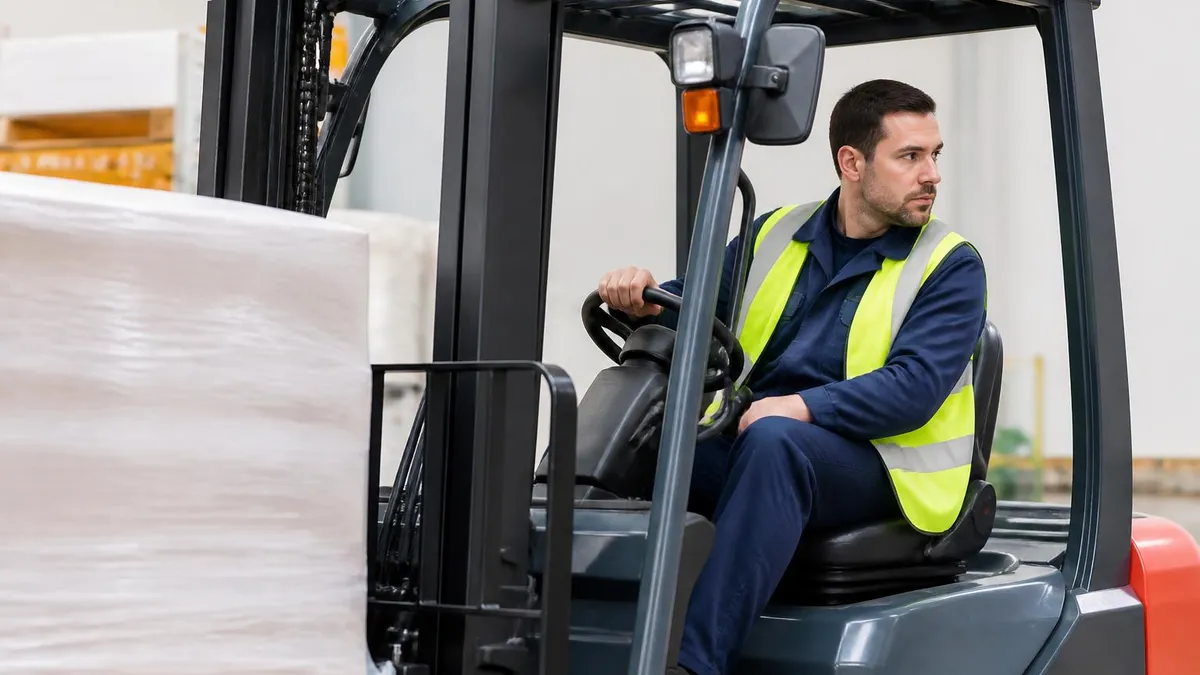
Local Training vs Distant Cheaper Providers
- +Shorter commute means more energy for practical hours
- +Easier to revisit the yard if you need re-assessment
- +Local RTOs often have direct hiring relationships with nearby warehouses
- +You build a network of local trainers and operators
- +Refresher courses and HRW upgrades stay convenient long-term
- +Familiar local conditions translate directly to local job sites
- +Faster turnaround on Statement of Attainment and licence paperwork
- −Local prices may be higher in metropolitan areas
- −Fewer course dates if only one RTO services your suburb
- −Smaller yards can limit exposure to varied scenarios
- −Equipment fleet may be older than larger regional facilities
- −Limited choice of assessors if you don't gel with the first one
- −Less likely to offer specialised attachments training
- −Group sizes may be capped tightly, pushing wait times out
Pre-Enrolment Checklist for Forklift Licence Training Near Me
- ✓Confirm you are 18 or older on the planned assessment date
- ✓Apply for a Unique Student Identifier (USI) at usi.gov.au — it is free
- ✓Gather 100 points of ID including a photo ID such as a driver licence
- ✓Verify the RTO holds current scope for TLILIC0003 on training.gov.au
- ✓Confirm the assessor is endorsed by your state regulator
- ✓Ask whether the price includes the state regulator's licence application fee
- ✓Disclose any reading, writing or numeracy support needs at enrolment
- ✓Check medical fitness — eyesight, hearing and mobility to operate safely
- ✓Arrange high-vis clothing, steel cap boots and safety glasses for the yard
- ✓Book transport so you arrive 20 minutes early on day one
Many employers reimburse the full cost of TLILIC0003
If you already have a job offer or are working casually in a warehouse, ask your employer in writing whether they will reimburse the course cost once you produce your licence. A very high percentage of Australian logistics employers fund this training because a licensed operator immediately becomes more productive and reduces their WHS exposure. Always get the agreement in writing before you book.
Assessment day is where the rubber literally meets the road. Most RTOs structure the final day as a morning written assessment followed by an afternoon practical, although larger providers may split the cohort so that practical assessments run all day in 90-minute slots. Either way, you should arrive rested, fed and hydrated. Caffeine helps focus but too much causes jittery throttle control on hydraulic levers — many experienced operators recommend one coffee at most before climbing into the seat.
The written assessment typically contains 30 to 50 multiple-choice and short-answer questions drawn from a national question bank. Topics include load centre calculations, stability triangle theory, hazard identification, communication signals, refuelling and battery-charging procedures, AS 2359 compliance and the consequences of unsafe operation. The pass mark is generally 80%, although your RTO will confirm the exact threshold. You may have one re-attempt on the same day if you narrowly miss the mark.
The practical assessment runs in a specific sequence that mirrors a real shift. You complete a logbook entry, conduct a thorough pre-start inspection out loud while the assessor watches and ticks off each item, then mount the truck using three points of contact, adjust the seat, fasten the belt, start the engine and complete a familiarisation lap. After that the assessor will set a series of tasks — pick a pallet, transport it, stack it at a nominated height, retrieve a higher load, manoeuvre through a pedestrian zone and execute a ramp travel.
Critical errors result in immediate failure. These include travelling with the load raised above 300mm, operating without a seatbelt, failing to sound the horn at a marked zone, allowing any part of your body outside the operator compartment while the truck is moving, and striking racking, pedestrians or other equipment. Non-critical errors are scored on a points system, and an accumulation of more than a defined threshold also results in a fail. Your assessor will brief you on the exact matrix before you start.
Communication is constantly assessed. Talk to your assessor. Narrate your pre-start: "checking forks for cracks and twist, both heel pins seated, mast chains tensioned evenly, hydraulic hoses no chafing, tyres no chunks or cuts." During driving, call out hazards: "pedestrian approaching from left, sounding horn, stopping." Silence is not professional — it suggests you are not actually scanning. The candidates who chatter sensibly through their drive almost always score better than the silent ones who drive technically well.
If you do not pass on the day, all is not lost. RTOs are required to offer at least one re-assessment opportunity, sometimes included in the original price and sometimes at a discounted rate. Use the gap constructively — review the elements you failed, request specific written feedback, and book additional yard hours if available. A fail is far better than a pass that came too easily and leaves you under-prepared for a real workplace where a misjudgement could kill someone.
Once you pass, the assessor signs your Notice of Assessment and the RTO issues your Statement of Attainment within days. You take the Notice of Assessment to your state regulator with payment of the licence fee, get a photo taken and within four to six weeks your plastic HRW licence card arrives in the post. In the meantime, the Notice of Assessment functions as your interim licence and you can legally start work on a forklift.
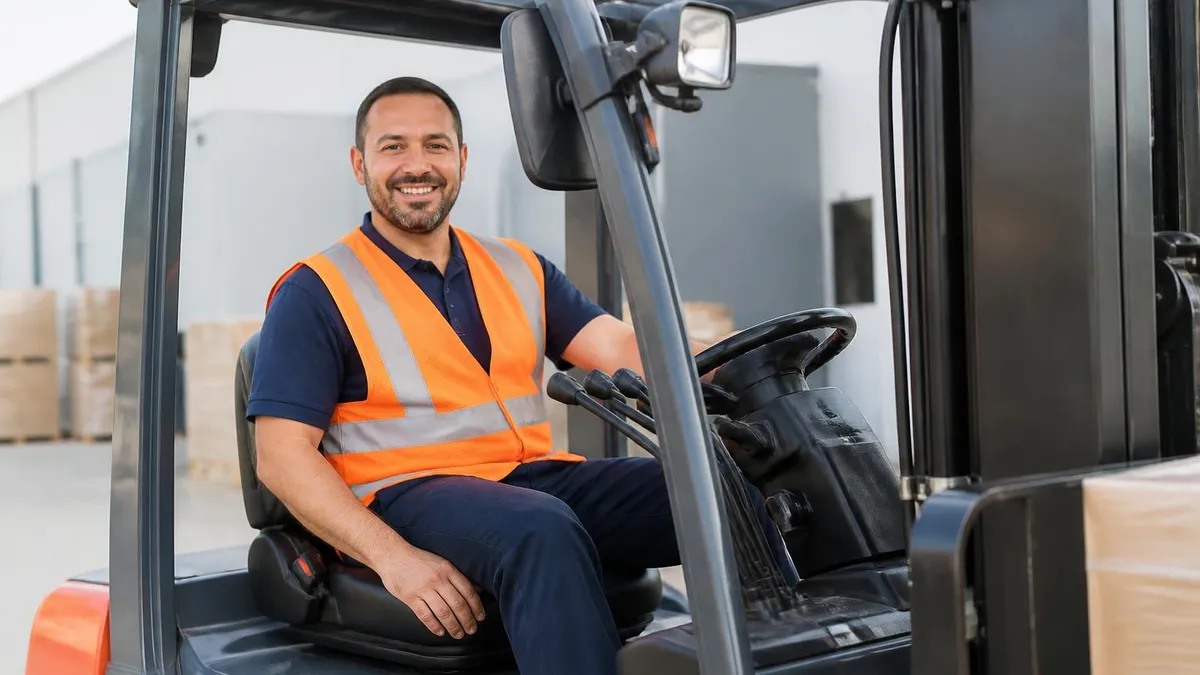
Your Notice of Assessment is valid for 60 days from the assessment date. If you do not lodge your licence application with your state regulator within that window, the notice expires and you must redo the entire assessment. Lodge within the first week — do not leave it sitting on the kitchen bench.
Passing your TLILIC0003 is just the start. Holding the licence does not, on its own, guarantee you a job, and it certainly does not make you a polished operator. Australian employers are increasingly looking for verified post-licence experience, so your first task after the licence arrives is to log hours on a real worksite as quickly as possible. Casual labour-hire agencies that specialise in warehousing are usually the fastest route in — they will often place a brand-new licence holder within a week if your interview skills and turn-up reliability are sound.
Update your resume immediately. List the licence number, expiry date, the issuing state, the RTO that delivered the training and any specific attachments you were exposed to during the course. Recruiters scan for these exact details. Add a one-line summary of what you can do — "counterbalance LPG and electric, up to 3.5T capacity, racking heights to 6m, slip-on extensions and drum clamp experience" — and your callback rate will jump noticeably.
Plan your next licence step strategically. The natural progressions from LF are LO (order picker, useful in fashion and pharmaceutical distribution), then telehandler tickets such as TLILIC0005, and eventually crane and EWP licences if you head towards construction. Each ticket you add raises your hourly rate by roughly $2 to $5 in the current market. Stacking three or four high-risk work tickets within two years is a deliberate career strategy used by ambitious operators to reach $40+ per hour.
Stay current with refresher training even though TLILIC0003 has no mandatory refresh interval. Many large employers, especially Coles, Woolworths, Toll, Linfox and the major 3PLs, require an internal verification of competency every 12 to 24 months. Voluntarily attending a half-day refresher every couple of years keeps your skills sharp and looks excellent on your record when you change jobs. It also keeps you up to date with changes to AS 2359 and regulator codes of practice.
Read widely about the equipment you operate. Understanding why a high-mast truck handles differently to a three-wheel electric, or why a side-loader has separate hydraulic circuits, is the difference between an operator and a driver. The companion article on multi directional forklift trucks explains the different chassis configurations you may encounter as you move between employers, including reach trucks, side loaders and articulated narrow-aisle machines.
Mental discipline matters more than mechanical skill in the long run. The operators who survive a 30-year career without an incident share a few habits: they never operate fatigued, they never skip a pre-start no matter how rushed the shift, they refuse to lift loads they cannot see clearly even when a supervisor pressures them, and they never let a pedestrian pass through a forklift zone without making positive eye contact. These habits are built deliberately in your first 200 hours on the truck, so be conscious of them from day one.
Finally, document everything. Keep a personal logbook of hours worked, attachments used, racking heights reached, incidents witnessed and refresher courses completed. A neat operator logbook is gold when you apply for a senior role, want to become a trainer yourself, or have to defend your record after an incident. Treat the licence not as a single qualification but as the foundation of a long, well-paid trade.
With all the strategic planning out of the way, here are the practical, on-the-day tips that consistently separate first-time passes from re-sits at every RTO in Australia. These are gathered from interviews with senior assessors, training managers at major logistics employers, and operators who have trained hundreds of apprentices. None of them are secret — but the combination, applied calmly under pressure, will materially lift your performance.
Sleep well two nights before, not just the night before. Counter-intuitively, the night-before sleep is often disrupted by nerves, so banking rest on the Wednesday before a Friday assessment is more reliable. Eat a moderate breakfast with protein and complex carbohydrates — eggs on wholegrain toast is the classic recommendation. Avoid sugary drinks because the crash three hours in coincides exactly with when assessors load up the harder racking tasks.
Wear the right gear. Steel-cap lace-up boots, long pants without dangling drawstrings, a high-visibility long-sleeve shirt, and safety glasses are the minimum. Avoid loose hair or jewellery that can catch on the steering wheel. Bring a pen, your photo ID, your USI, your enrolment receipt, and a printed copy of any pre-course theory you completed. Pack a water bottle and a snack — assessment days routinely run nine hours from sign-in to debrief.
Use the warm-up lap deliberately. Most assessors give you 10 to 15 minutes of free yard familiarisation before the formal tasks begin. Spend it scanning the entire yard, identifying every pedestrian zone, locating the rack you will stack into, checking the lighting and noticing any drainage grates or surface irregularities that could grab a tyre. This reconnaissance pays back tenfold when you are under timed pressure later.
Slow your hydraulics. The single most common cause of marks lost on the day is jerky lever operation — lifting too fast, tilting too aggressively, slamming forks into pallets. Quality operators feather the hydraulic levers with their fingertips, not their fists. Practise on day one and day two until the movements feel deliberate. Smooth hydraulic control also reduces load shift, which means safer stacks, faster cycles and visibly higher confidence to the assessor.
Verbalise everything. Even when you feel silly narrating, keep doing it. "Checking left, checking right, sounding horn, proceeding through pedestrian zone at walking pace." Assessors mark what they observe, and a silent operator forces them to assume the worst. The candidates who pass first time almost universally sound like a sports commentator describing their own driving. It feels strange for the first hour and natural by the third.
Manage your nerves with breathing, not adrenaline. When you feel a critical error approaching — a tight reverse into racking, a pallet that has shifted on the forks — stop the truck, lower the load to 300mm, breathe in for four seconds, out for six, and re-plan. Stopping is never marked against you. Pressing on through hesitation almost always is. Demonstrating calm decision-making under uncertainty is exactly what assessors are rewarding.
Sample Forklift Licence Practice Questions
Try these questions from our free Forklift Licence practice tests. The correct answer and an explanation follow each question.
What training is required before workers perform Battery and Fuel Safety activities?
- A. No training — learn on the job
- B. Appropriate training covering hazards, procedures, equipment use, and emergency response
- C. A quick verbal briefing only
- D. Self-study from a pamphlet
Answer: B. Appropriate training covering hazards, procedures, equipment use, and emergency response
Workers must receive comprehensive training appropriate to the risks before performing the activity.
What is the significance of Australian Standards for Operating Techniques?
- A. They are advisory only
- B. Many are referenced in legislation making compliance legally required, and they set minimum technical requirements
- C. They are outdated
- D. They only apply to imported products
Answer: B. Many are referenced in legislation making compliance legally required, and they set minimum technical requirements
Australian Standards referenced in WHS Regulations become legal requirements and set the minimum technical benchmarks for compliance.
How should Forklift Pre-Operational Checks incidents be reported in an Australian workplace?
- A. Ignore minor incidents
- B. Report immediately to the supervisor, with notifiable incidents reported to the regulator
- C. Wait until the weekly meeting
- D. Post on social media
Answer: B. Report immediately to the supervisor, with notifiable incidents reported to the regulator
Incidents must be reported promptly, with notifiable incidents requiring immediate regulator notification.
Under Australian regulations, who bears primary responsibility for Forklift Pre-Operational Checks compliance?
- A. Workers only
- B. The PCBU (Person Conducting a Business or Undertaking)
- C. Equipment suppliers
- D. The general public
Answer: B. The PCBU (Person Conducting a Business or Undertaking)
The PCBU has the primary duty under the WHS Act to ensure compliance with all safety requirements.
TLILIC0003 Questions and Answers
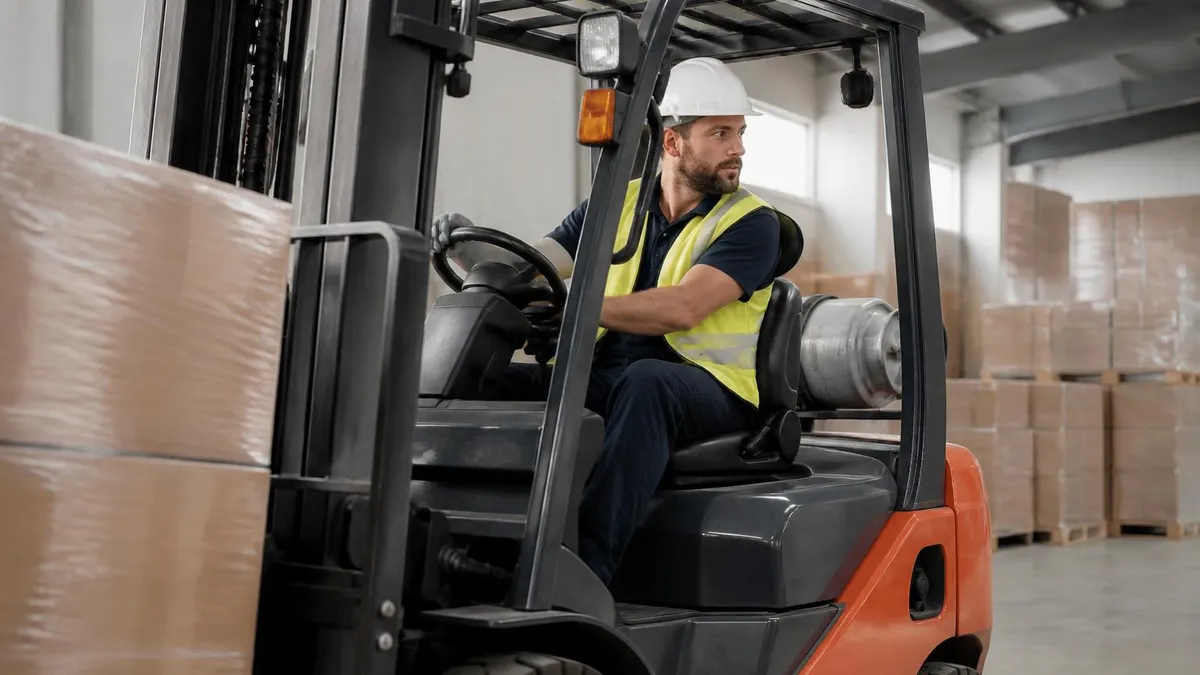
Mast of Forklift: Complete Guide to Forklift Parts for TLILIC0003 Operators in Australia
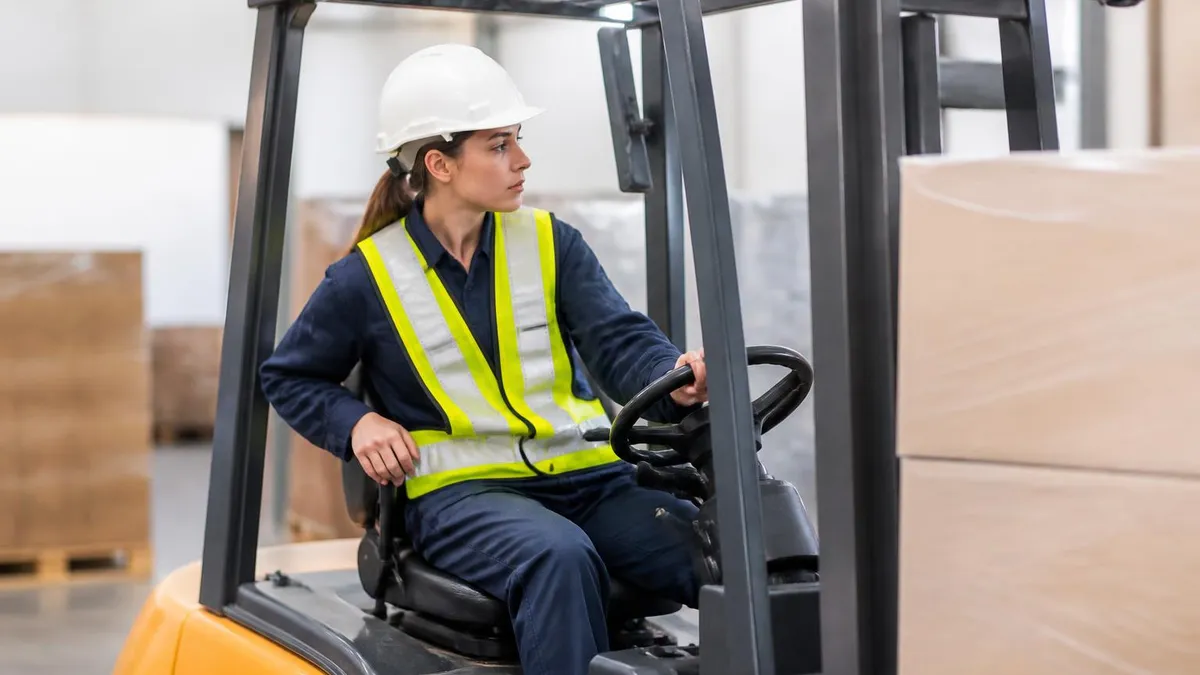
Multi Directional Forklift Trucks: Complete Guide to Forklift Types and Parts for TLILIC0003 Operators in Australia

Free Forklift Practice Test 2026 - Forklift Exam Questions
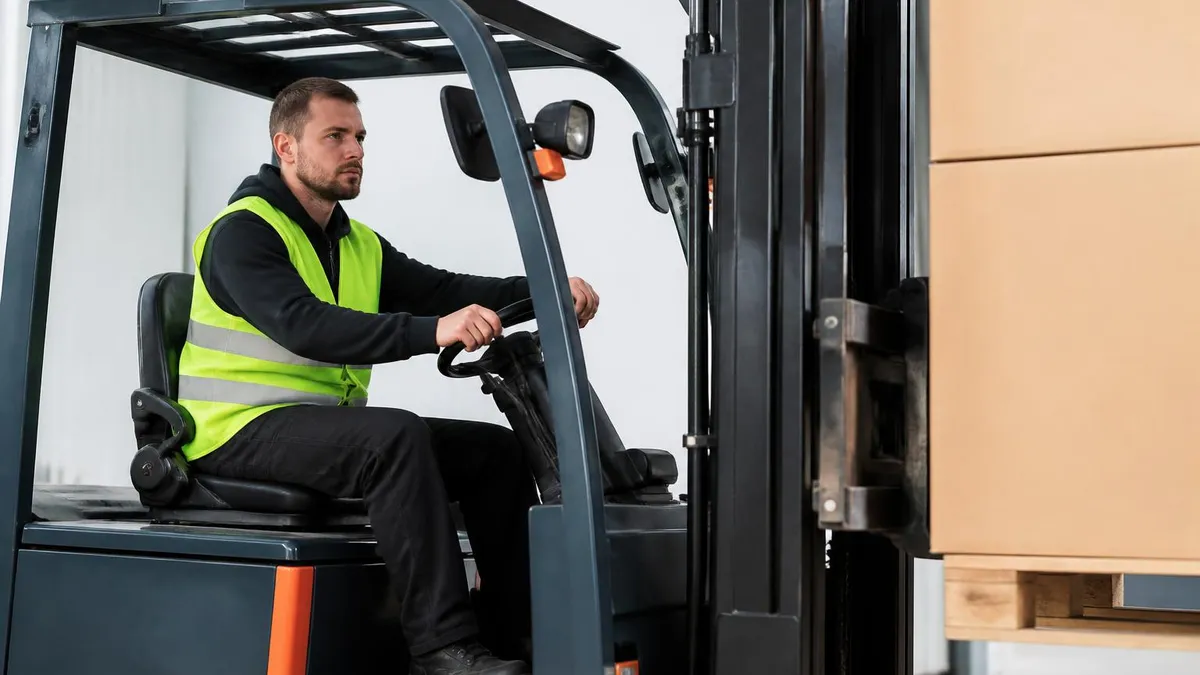
Forklift Clearance Height: Complete Guide to Forklift Specifications for TLILIC0003 Operators in Australia
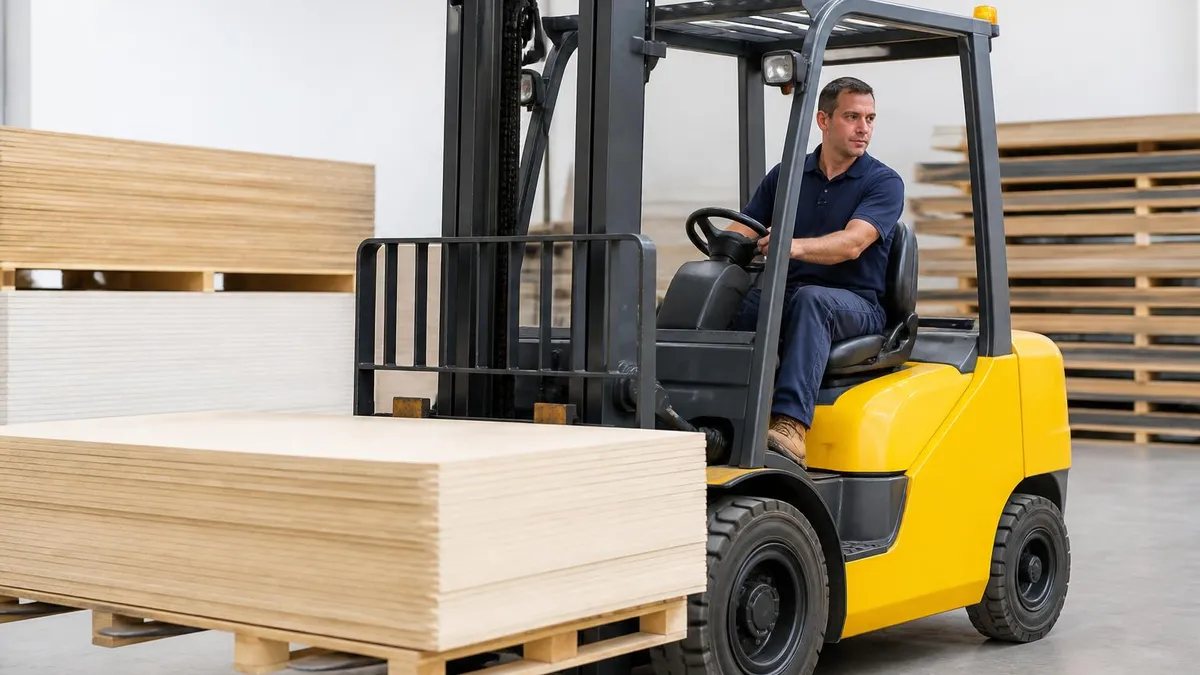
Forklift Licence Near Me: How to Find Local TLILIC0003 Training Providers in Australia
About the Author

Certified Crane Operator & Skilled Trades Exam Specialist
Ferris State UniversityRobert Martinez is a Journeyman Ironworker, NCCCO-certified crane operator, and forklift trainer with a Bachelor of Science in Construction Technology from Ferris State University. He has 21 years of ironworking, rigging, and heavy equipment operation experience across high-rise and industrial construction sites. Robert prepares candidates for crane operator, rigger, forklift, and skilled trades certification examinations.