
Forklift Licence Melbourne: The Complete TLILIC0003 Study Guide and Certification Prep Hub (2026 September)
Get your forklift licence Melbourne fast with this TLILIC0003 study guide — costs, training steps, exam format, practice tests and expert prep tips. 🧠
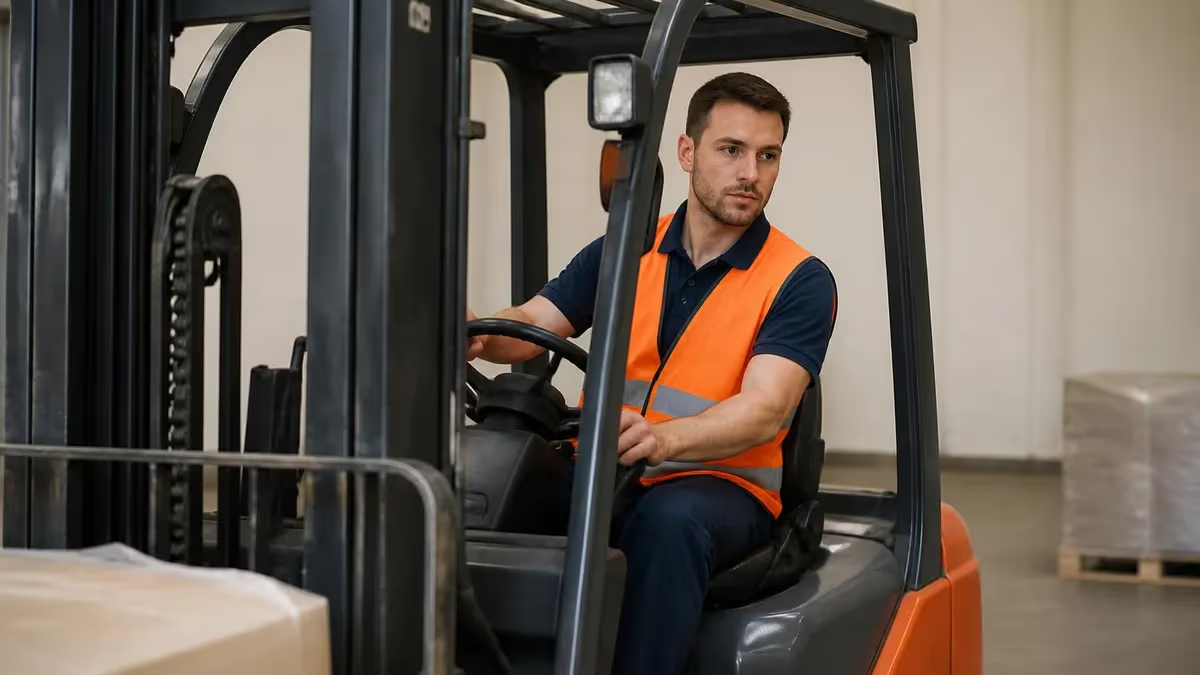
Earning a forklift licence Melbourne employers actually respect starts with one nationally recognised unit of competency: TLILIC0003 Licence to Operate an Order Picking Forklift Truck — alongside its sibling TLILIC0004 for counterbalance machines. Whether you are stacking pallets in a Laverton North distribution centre, picking stock in a Dandenong South warehouse, or loading trucks at the Port of Melbourne, a high risk work licence is a legal requirement under Victorian WorkSafe regulations. This study guide pulls everything into one certification prep hub so you walk into your assessment ready.
Melbourne is the logistics heartbeat of Australia, and demand for ticketed forklift operators across the western and south-eastern industrial corridors has stayed strong through 2026. Casual labour-hire agencies in suburbs like Truganina, Epping and Keysborough routinely list forklift roles paying $32 to $42 per hour, and almost every one of them requires a current LF or LO class licence before your first shift. Without that plastic card from WorkSafe Victoria, you simply cannot legally touch the controls of a powered industrial truck on a worksite.
The good news is that the pathway is clear and achievable in days, not months. A typical Registered Training Organisation (RTO) in Melbourne delivers TLILIC0003 over one to three days of combined theory and practical training, followed by a formal assessment conducted by an accredited assessor. You will cover pre-operational inspections, load charts, stability principles, hazard control and safe shutdown procedures. Pass the knowledge and practical components, and your RTO lodges the paperwork for your licence with the regulator.
This guide is built specifically for people preparing for that assessment. We break down the exact exam format, the realistic costs you should budget for around Melbourne, a week-by-week study schedule, and the most common reasons candidates fail on their first attempt. We also link to free practice tests modelled on the real high risk work knowledge assessment so you can rehearse the question style before the day arrives and walk in with genuine confidence.
It is worth understanding the difference between the unit codes early. TLILIC0003 covers order picking forklift trucks — the LO class, where the operator platform rises with the forks. TLILIC0004 covers the more common counterbalance forklift, the LF class. Many Melbourne candidates train for the LF licence first because it is the most widely demanded ticket across general warehousing, manufacturing and freight. Some employers want both. Knowing which class your target job requires saves you time and money.
Throughout this hub you will find study schedules, checklists, exam breakdowns and answers to the questions Melbourne candidates ask most. Treat it as your single reference point from the moment you book a course to the moment you collect your card. By the end you should know precisely what to study, how to prepare, what it costs, and how to avoid the simple mistakes that send people back for a costly re-assessment. Let us get you ticketed.
Forklift Licence Melbourne by the Numbers
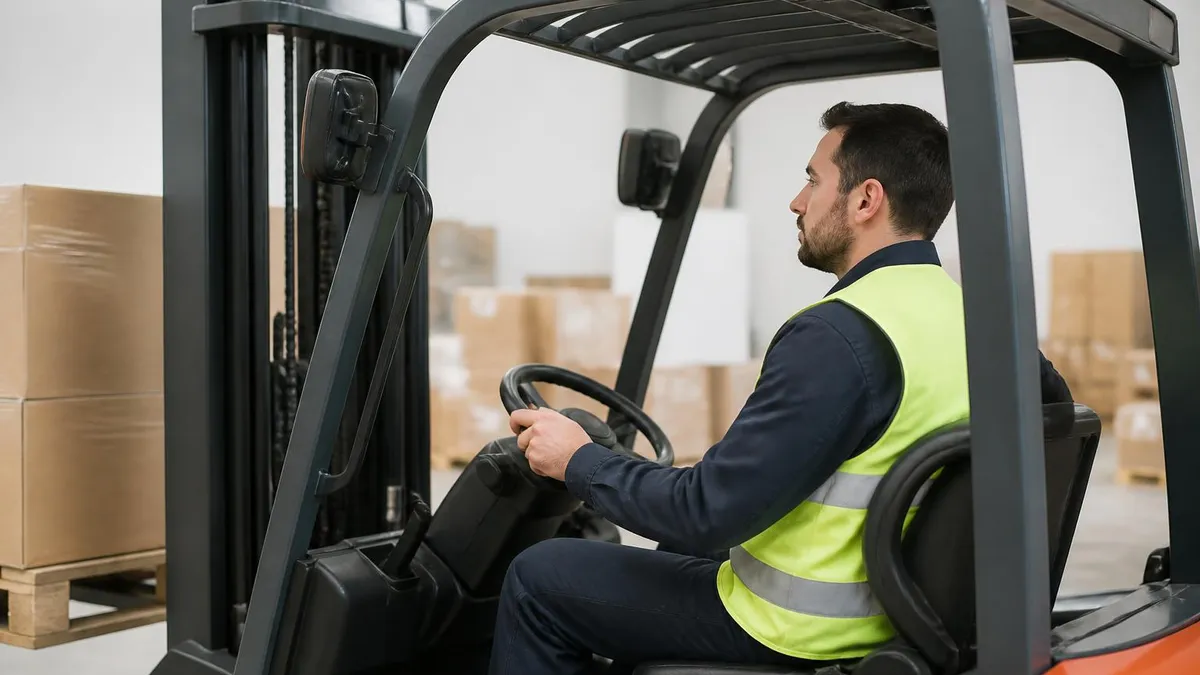
TLILIC0003 Course Structure Explained
You must be at least 18, hold a Unique Student Identifier (USI), and present photo ID. Some RTOs require a basic English literacy and numeracy level so you can read load charts and complete written assessments.
Covers legislation, the duties of an operator, pre-start inspections, load assessment, stability triangle principles, hazard identification and safe operating procedures. Delivered face-to-face in a classroom by a qualified trainer before you touch a machine.
Hands-on time on a real forklift in a controlled yard. You practise mounting, pre-operational checks, travelling, manoeuvring, stacking, de-stacking and shutdown until the procedures become second nature ahead of assessment.
A WorkSafe-accredited assessor conducts a written knowledge test, a verbal questioning component and a practical demonstration. You must satisfy all parts to be deemed competent and have your licence application lodged.
Training for your forklift licence in Melbourne follows a nationally consistent structure, but where you train and how the RTO schedules its courses can make a real difference to your experience. Most Melbourne RTOs cluster around industrial hubs — Sunshine, Tottenham, Dandenong, Campbellfield and Laverton — so you can usually find a venue within a short drive of home or work. Courses run on weekdays and many providers also offer weekend intakes to suit shift workers and people who cannot take leave from a current job.
The typical flow begins with a theory block. Your trainer works through the operator's responsibilities under Victorian work health and safety law, the anatomy of the machine, and the physics that keep a loaded forklift upright. Understanding the stability triangle — the relationship between the front axle and the single rear pivot point — is the conceptual core of the entire course. Almost every practical fault and every dangerous tip-over traces back to a load that pushed the combined centre of gravity outside that triangle.
After theory, you move to the yard for practical instruction. A good trainer will not rush this. You will repeat pre-operational inspections until checking the tynes, hydraulics, horn, tyres, data plate and seatbelt becomes automatic. You will practise travelling with the forks low and tilted back, negotiating tight aisles, and placing loads on racking at height. Repetition here is what separates a confident candidate from a nervous one. If you understand forklift parts and how each control behaves, the practical assessment feels far less intimidating.
Class sizes in Melbourne are usually small, often four to eight students per trainer, which means you get meaningful seat time on the machine rather than standing around watching others. Reputable RTOs limit numbers precisely because the regulator expects each candidate to demonstrate genuine competence, not just attendance. When comparing providers, ask how many machines they run and how many students share each one — that ratio tells you more about course quality than the headline price ever will.
One important distinction for Melbourne candidates is choosing between the LO order picker ticket under TLILIC0003 and the LF counterbalance ticket under TLILIC0004. The order picker is a specialised machine used heavily in high-bay distribution centres where operators rise with the load to pick stock from elevated racking. The counterbalance is the general-purpose workhorse you see everywhere. If a job ad simply says "forklift licence required" it almost always means the LF class, so confirm before you enrol.
Recognition of prior experience can shorten your course. If you have operated forklifts overseas or under supervision on a worksite, some RTOs will assess you faster, though you still must pass the full formal assessment. Conversely, complete beginners should choose a provider that bundles extra practical hours into the price. Do not assume the cheapest one-day intensive suits you — if you have never sat in a forklift, paying a little more for a two or three day course dramatically improves your pass chances and your real-world safety.
Finally, verify that your chosen provider is a registered RTO authorised to deliver and assess high risk work licences in Victoria. Only an accredited assessor can lodge your licence application with WorkSafe. Check the provider's RTO number on the national training register before you pay a cent. A licence issued through an unregistered operator is worthless, and unfortunately a handful of dodgy outfits still trade on candidates who do not know to check.
TLILIC0003 Practice Test Questions
Prepare for the Forklift Licence Australia - TLILIC0003 exam with our free practice test modules. Each quiz covers key topics to help you pass on your first try.
TLILIC0003 Forklift Licence Australia Atta...
TLILIC0003 Exam Questions covering Forklift Licence Australia Attachments and Modifications. Master TLILIC0003 Test concepts for certification prep.
TLILIC0003 Forklift Licence Australia Batt...
Free TLILIC0003 Practice Test featuring Forklift Licence Australia Battery and Fuel Safety. Improve your TLILIC0003 Exam score with mock test prep.
TLILIC0003 Forklift Licence Australia Emer...
TLILIC0003 Mock Exam on Forklift Licence Australia Emergency Procedures. TLILIC0003 Study Guide questions to pass on your first try.
TLILIC0003 Forklift Licence Australia Fork...
TLILIC0003 Test Prep for Forklift Licence Australia Forklift Pre-Operational Checks. Practice TLILIC0003 Quiz questions and boost your score.
TLILIC0003 Forklift Licence Australia Haza...
TLILIC0003 Questions and Answers on Forklift Licence Australia Hazard Identification. Free TLILIC0003 practice for exam readiness.
TLILIC0003 Forklift Licence Australia Load...
TLILIC0003 Mock Test covering Forklift Licence Australia Load Centre Calculations. Online TLILIC0003 Test practice with instant feedback.
TLILIC0003 Forklift Licence Australia Load...
Free TLILIC0003 Quiz on Forklift Licence Australia Load Handling and Capacity. TLILIC0003 Exam prep questions with detailed explanations.
TLILIC0003 Forklift Licence Australia Oper...
TLILIC0003 Practice Questions for Forklift Licence Australia Operating in Different Environments. Build confidence for your TLILIC0003 certification exam.
TLILIC0003 Forklift Licence Australia Oper...
TLILIC0003 Test Online for Forklift Licence Australia Operating Techniques. Free practice with instant results and feedback.
TLILIC0003 Forklift Licence Australia Pede...
TLILIC0003 Study Material on Forklift Licence Australia Pedestrian Safety. Prepare effectively with real exam-style questions.
Forklift Licence Melbourne Assessment Format
The written knowledge assessment is a mix of multiple-choice and short-answer questions drawn from the national high risk work assessment instrument. Expect questions on legislation, the stability triangle, load charts, data plates, exclusion zones, refuelling or recharging, and pre-operational inspections. You generally need to answer all questions correctly, with the assessor allowing you to revisit any you initially get wrong through verbal clarification.
Questions are scenario-based as well as factual. You might be shown a load chart and asked the maximum safe weight at a given load centre, or asked what action to take when a hydraulic leak is found during a pre-start check. Reading the question carefully matters — many candidates lose marks by rushing rather than by lacking knowledge. Practising with sample tests is the single best way to acclimatise to the wording.
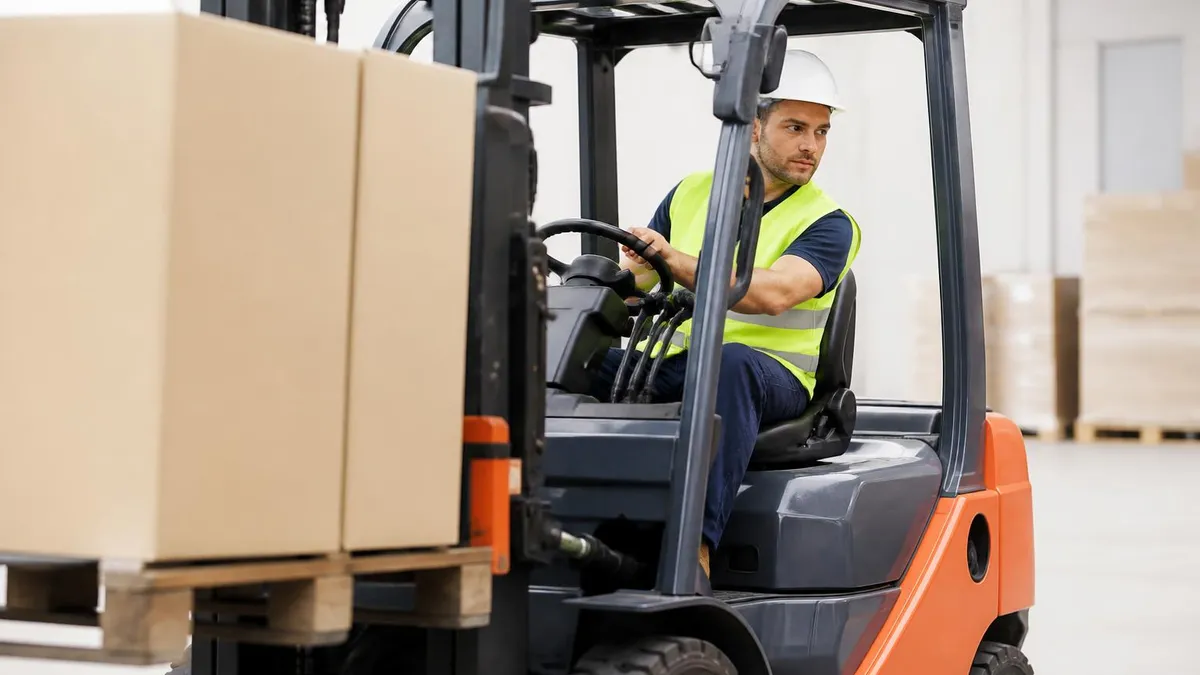
Is Getting a Forklift Licence in Melbourne Worth It?
- +Nationally recognised licence valid across every Australian state and territory
- +Strong, consistent demand across Melbourne's western and south-eastern industrial corridors
- +Quick to obtain — most candidates are ticketed within one to three days
- +Opens casual, full-time and labour-hire roles paying $32–$42 per hour
- +Relatively low course cost compared with the earning potential it unlocks
- +A stepping stone to other high risk work tickets like EWP and crane licences
- −Upfront course cost of $250–$450 must be paid before you earn anything
- −You must renew the licence every five years to keep it current
- −Failing the assessment means paying for a re-assessment to try again
- −Order picker (LO) roles are more specialised and less widely advertised than LF
- −Physically demanding shift work in warehouses and freight yards
- −Requires ongoing vigilance — operator error carries serious safety consequences
Forklift Licence Melbourne Pre-Assessment Checklist
- ✓Confirm you are at least 18 years old on the day of assessment.
- ✓Create or locate your Unique Student Identifier (USI) before enrolling.
- ✓Bring 100 points of valid photo identification to the venue.
- ✓Verify your chosen RTO is registered to deliver high risk work licences.
- ✓Confirm whether the job needs the LO order picker or LF counterbalance class.
- ✓Review the stability triangle until you can explain it in your own words.
- ✓Practise reading a load chart and data plate to find safe capacity.
- ✓Memorise the full pre-operational inspection sequence step by step.
- ✓Complete several free online practice tests before the knowledge exam.
- ✓Wear enclosed steel-cap boots and appropriate high-visibility clothing.
- ✓Get a good night's sleep and arrive at least 15 minutes early.
- ✓Bring reading glasses if you need them for load charts and the written test.
Master the stability triangle before anything else
Almost every forklift incident and most assessment failures trace back to one principle: the combined centre of gravity of the machine and its load must stay inside the triangle formed by the two front wheels and the rear pivot. If you can explain why a raised, tilted-forward, or overloaded load pushes that centre of gravity outside the triangle, you understand the heart of safe operation. Learn this first and the rest of the course makes sense.
Understanding the real cost of a forklift licence in Melbourne helps you budget sensibly and avoid both overpaying and falling for suspiciously cheap offers. In 2026, mainstream Melbourne RTOs charge between roughly $250 and $450 for a full TLILIC0003 or TLILIC0004 course including training and the formal assessment. The variation reflects course length, the number of practical hours included, the venue location, and whether the price covers the WorkSafe licence application fee, which is charged separately by the regulator.
Be cautious with bargain-basement one-day courses advertised well below $250. They typically cram theory and practical into a single rushed session with minimal seat time, which suits experienced operators refreshing a lapsed ticket but sets beginners up to fail. A failed assessment means paying for a re-assessment — often $100 to $200 — so the cheap course can end up costing more than a well-structured one. Factor in the true total cost of getting competent, not just the sticker price.
On top of the course fee, the licence itself carries a government application charge payable to WorkSafe Victoria when your RTO lodges your paperwork. This is a modest administrative fee, generally under $100, and it covers issuing your physical high risk work licence card. Always confirm with your RTO whether their quoted price is all-inclusive or whether the licence fee sits on top. Hidden fees at the end of a course are a common and avoidable frustration.
Your forklift licence is valid for five years from the date of issue. Renewal is straightforward — you apply to WorkSafe before the expiry date and pay a renewal fee, without needing to re-sit the full course, provided your licence has not lapsed. If you let it expire, you may be required to undergo re-assessment, so diarise the renewal date the moment you receive your card. Keeping the licence continuously current is far cheaper and easier than letting it lapse.
Many Melbourne employers and labour-hire agencies will reimburse or subsidise the cost of your licence once you start work, particularly for ongoing roles. It is always worth asking. Some larger logistics employers run their own in-house training pathways or have preferred RTO partners and will cover the fee for the right candidate. If you are currently job-hunting, mention that you are willing to get licensed quickly — demonstrating initiative often tips a hiring decision in your favour.
If you are weighing forklift training against other high risk work tickets, consider stacking qualifications. Operators who hold a forklift licence plus an elevating work platform (EWP) ticket or a basic ticket in another class are noticeably more employable across Melbourne's warehousing and construction sectors. Each additional ticket widens the pool of shifts you can accept. The forklift licence is usually the logical first step because demand is so broad and the entry cost is comparatively low.
Finally, treat the cost as an investment with a fast payback. At $32 to $42 per hour, a casual operator recoups a $400 course in roughly a day and a half of work. Few vocational qualifications return their cost so quickly. Combined with the consistent demand across Melbourne's logistics economy, a forklift licence remains one of the highest-value, lowest-barrier credentials you can earn in the state — provided you train properly and pass the first time.
Operating a powered industrial truck without a valid high risk work licence is illegal in Victoria and can result in significant fines for both the operator and the employer. WorkSafe inspectors do conduct site visits and check licences. If your licence has lapsed beyond its five-year validity, stop operating until you have renewed or re-assessed. Carrying your physical licence card on site is also a legal expectation.
Safety is not an abstract topic in forklift training — it is the entire reason the licence exists. Forklifts are involved in a disproportionate number of serious workplace injuries every year across Australia, including crush injuries, tip-overs and pedestrian collisions. Your TLILIC0003 assessment is fundamentally a test of whether you can operate the machine without endangering yourself or anyone around you. Internalising the safety mindset, rather than memorising rules, is what makes you both a competent candidate and a genuinely safe operator.
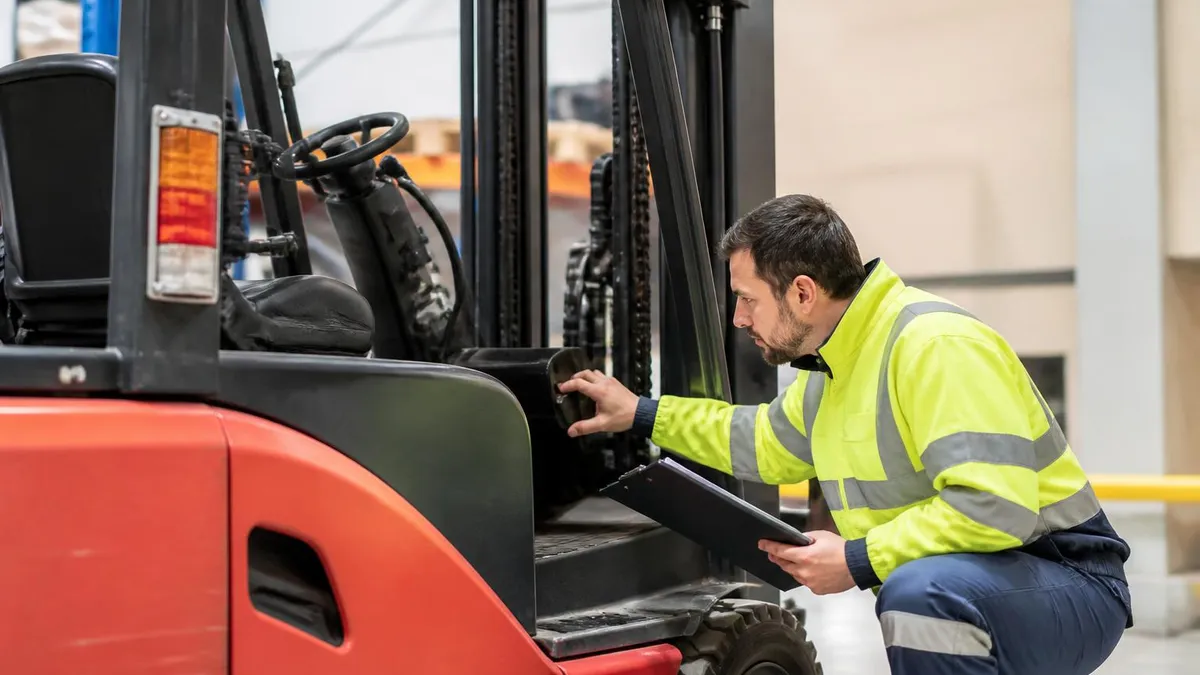
The pre-operational inspection is your first line of defence and a guaranteed focus of the practical assessment. Before each shift you check the tyres for damage and pressure, inspect the forks and carriage for cracks or distortion, test the horn, lights, brakes and steering, examine the hydraulic hoses for leaks, confirm the data plate is legible, and verify the seatbelt functions. Doing this aloud during assessment shows the assessor you treat it as routine rather than a box-ticking exercise. A missed inspection step is a frequent cause of failure.
Pedestrian safety dominates real-world incidents, so assessors watch your awareness closely. You must sound the horn at blind corners and intersections, maintain exclusion zones around the machine, travel at safe speeds, and never lift or carry people on the forks. In busy Melbourne distribution centres, separating forklift traffic from foot traffic is a constant challenge, and operators who develop disciplined habits during training carry them onto the floor where they matter most. Always assume a pedestrian could step into your path.
Load handling is where the stability triangle becomes practical. You must always check the load weight against the machine's rated capacity on the data plate, account for the load centre, and never exceed the safe working limit. Travel with the load low and the mast tilted back. Avoid sudden braking, sharp turns at speed, and travelling across slopes with a raised load. When stacking at height, approach squarely, level the forks, and place the load gently. Rushing these steps is the classic novice error that fails assessments and causes accidents.
Understanding the different forklift types and parts also sharpens your hazard awareness, because each machine handles differently. An order picker behaves nothing like a counterbalance; a reach truck stores its load differently again; and electric machines have their own recharging hazards involving battery acid and hydrogen gas. Knowing the characteristics of the specific machine you are assessed on lets you anticipate how it will respond, which is exactly the judgment an assessor is looking to confirm before signing you off.
Common mistakes that send Melbourne candidates back for re-assessment are remarkably consistent: forgetting the seatbelt, travelling with raised forks, neglecting the horn, failing to check the load chart, dismounting incorrectly, and leaving the machine without applying the park brake and lowering the forks. None of these stem from a lack of intelligence — they come from nerves and rushing. Slow, deliberate, narrated operation is the antidote. Treat the assessment exactly as you would a real shift where someone's safety depends on you.
Finally, remember that competence is ongoing. Passing the assessment is the beginning, not the end. The best operators keep refreshing their knowledge, stay alert to site-specific hazards, report faults promptly, and never become complacent. Complacency is the silent risk that grows with experience. Keep the safety principles from your course front of mind every shift, and your forklift licence becomes a genuine asset rather than just a card in your wallet that satisfies a legal requirement.
With the theory and safety principles understood, your final preparation should be focused, practical and calm. In the week before your assessment, set aside short daily sessions rather than one long cram. Review your pre-operational inspection sequence until you can recite it without prompts, run through several practice tests to lock in the question wording, and rehearse explaining the stability triangle aloud as if the assessor were sitting across from you. Active recall beats passive re-reading every single time.
On the practical side, ask your RTO whether you can book extra yard time before the assessment day if you feel under-prepared. An hour of additional seat time picking and placing loads at height is worth more than any amount of reading for the practical component. If you are training on an order picker, spend that time getting comfortable rising with the platform, because the sensation is unfamiliar and unsettles first-timers. Confidence with the controls translates directly into a smoother assessment.
Sleep and nutrition matter more than candidates expect. Forklift assessment demands sustained concentration across both written and practical tasks, often spanning several hours. Arrive well-rested, eat a proper breakfast, and stay hydrated. Nerves are normal, but fatigue compounds them and leads to the rushing that causes silly errors. Get to the venue early so you are not flustered, and use the spare minutes to settle, breathe and run through your inspection checklist one final time in your head.
During the knowledge test, read every question twice before answering. Many questions include a deliberate qualifier — a maximum, a minimum, an exclusion — that changes the correct response entirely. If a load chart is provided, work through it methodically rather than guessing. Should the assessor offer verbal clarification on a question you got wrong, treat it as a chance to demonstrate understanding rather than a failure. Calm, reasoned answers reassure the assessor far more than rapid-fire guesses ever will.
For the practical, the golden rule is to narrate your hazard awareness. Say out loud that you are checking your mirrors, sounding the horn at the corner, confirming the load weight against the data plate, and ensuring the path is clear of pedestrians. This running commentary shows the assessor your thinking and turns invisible mental checks into visible competence. Move deliberately, never rush a manoeuvre, and if you make a small error, correct it calmly rather than panicking — composure itself is a competency.
If the worst happens and you are not deemed competent on the day, do not be discouraged. Re-assessment is common and most candidates pass comfortably the second time once nerves have settled. Ask the assessor exactly which competencies you missed, drill those specific points, and rebook promptly while the training is fresh. The licence is well within reach for anyone who prepares properly. Thousands of Melburnians earn theirs every year, and with this guide and a little practice, you will join them.
Once you hold your card, keep building. Pair your forklift licence with complementary tickets, stay current with renewals, and treat every shift as a chance to reinforce safe habits. The Melbourne logistics sector rewards reliable, safety-conscious operators with steady work and rising pay. Your investment of a few days and a few hundred dollars unlocks a credential that pays dividends for years — provided you carry the discipline you learned in training onto the floor every time you climb into the seat.
TLILIC0003 Questions and Answers
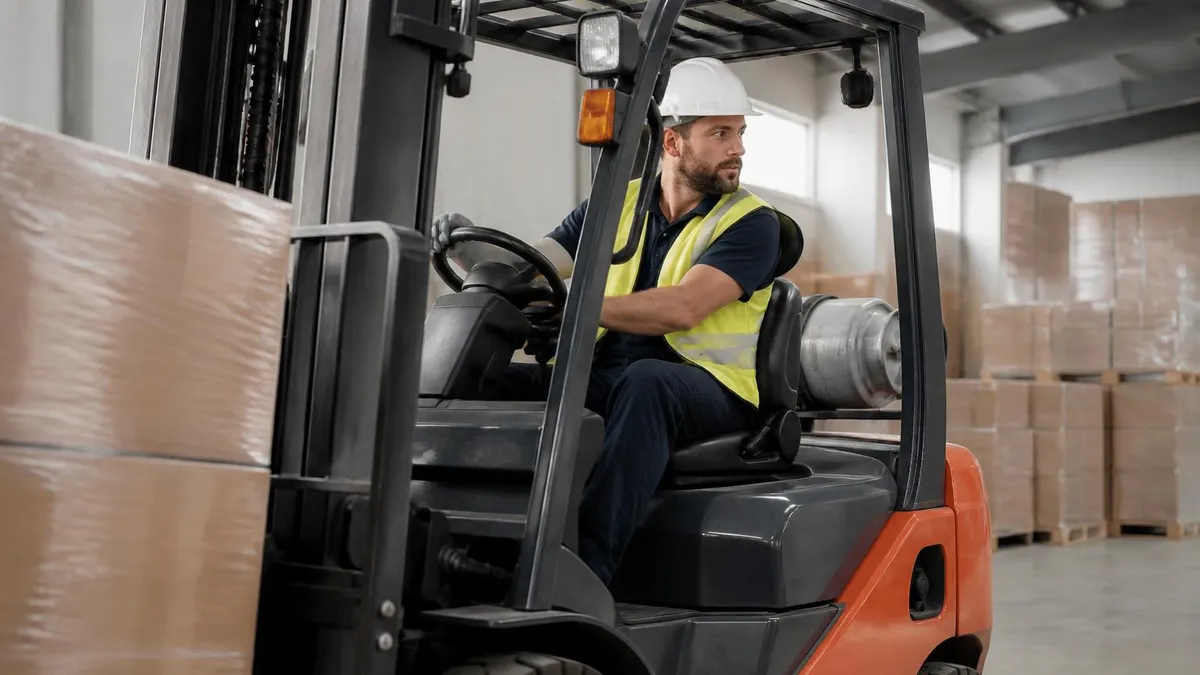
Mast of Forklift: Complete Guide to Forklift Parts for TLILIC0003 Operators in Australia
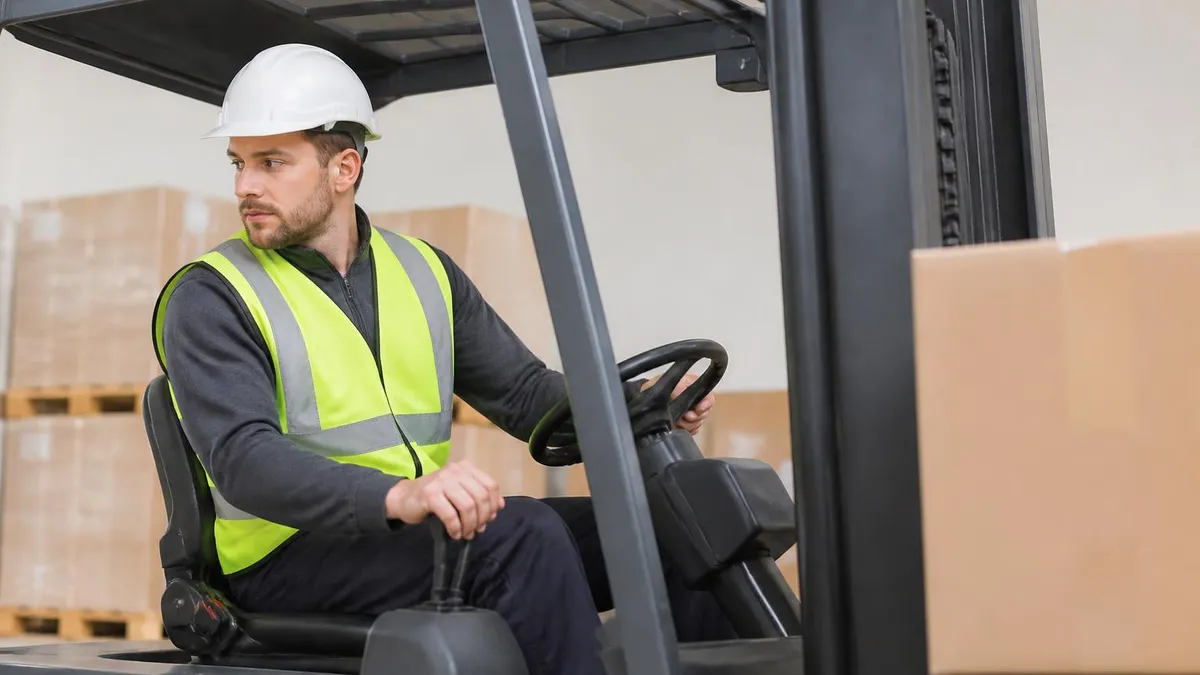
How To Get A Forklift License In Australia: Complete TLILIC0003 Step-by-Step Guide (2026)
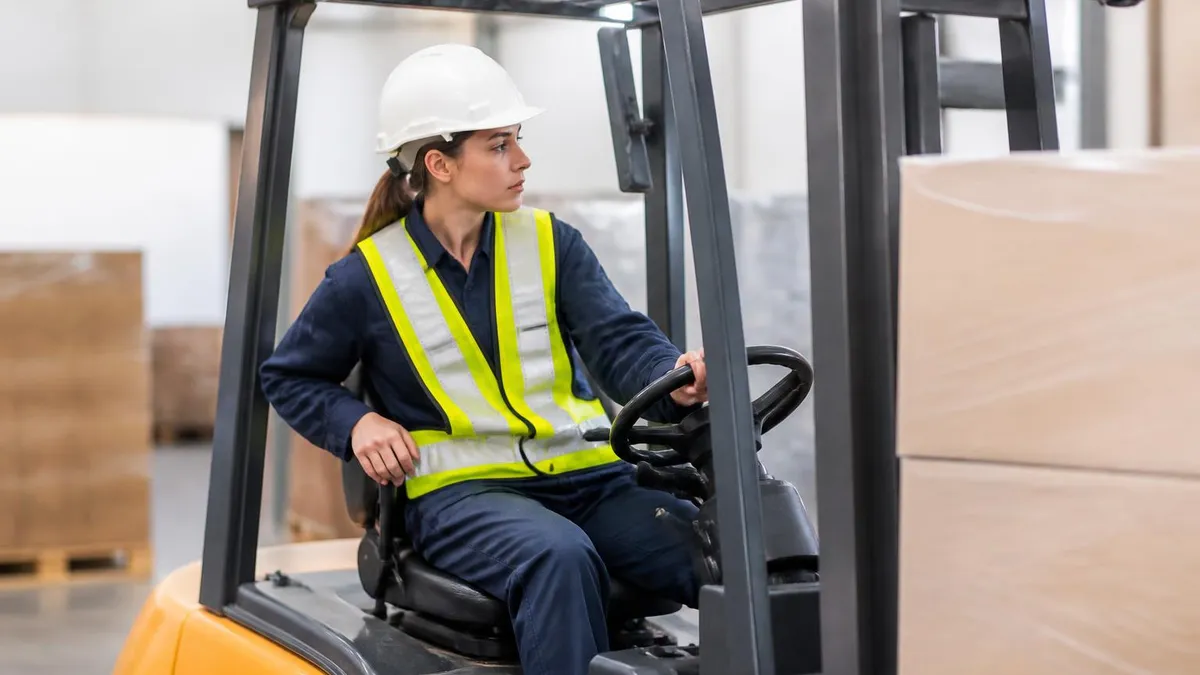
Multi Directional Forklift Trucks: Complete Guide to Forklift Types and Parts for TLILIC0003 Operators in Australia
Free Forklift Practice Test 2026 - Forklift Exam Questions
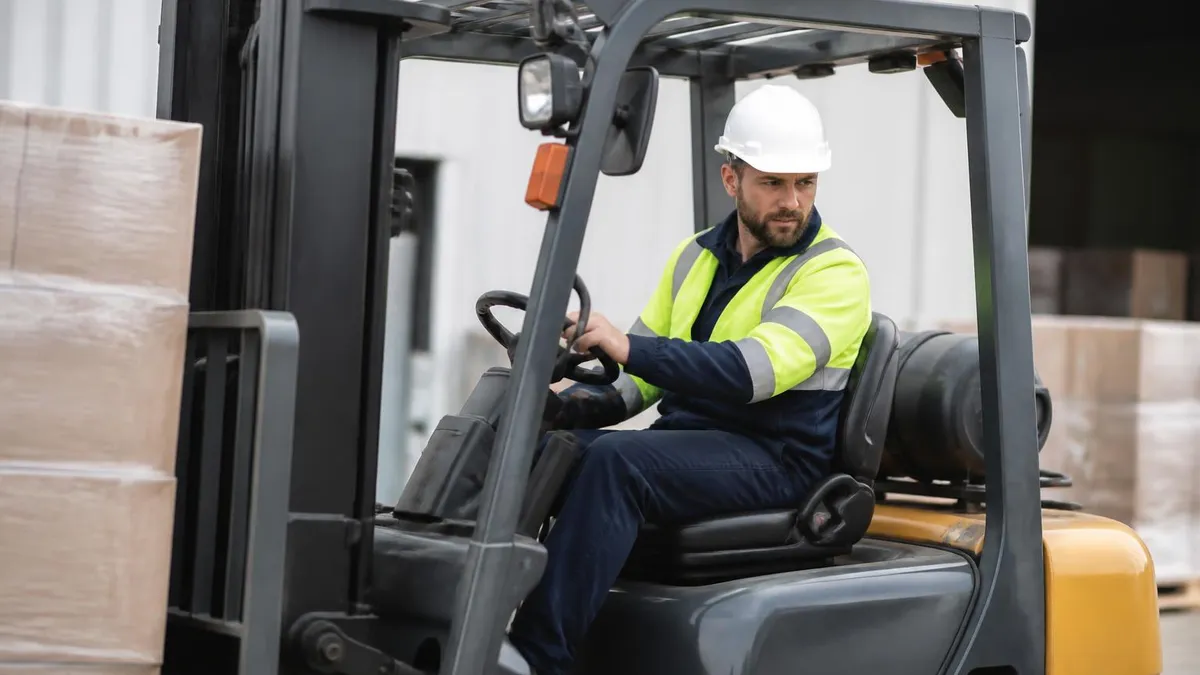
Electric 3 Wheel Forklift: Complete Guide to Electric Forklift Types for TLILIC0003 Operators in Australia
About the Author

Certified Crane Operator & Skilled Trades Exam Specialist
Ferris State UniversityRobert Martinez is a Journeyman Ironworker, NCCCO-certified crane operator, and forklift trainer with a Bachelor of Science in Construction Technology from Ferris State University. He has 21 years of ironworking, rigging, and heavy equipment operation experience across high-rise and industrial construction sites. Robert prepares candidates for crane operator, rigger, forklift, and skilled trades certification examinations.