

TCOLE Practice Test
Updated October 2026Facts verified Oct 28, 2026 against Texas Commission on Law Enforcement
- The TCOLE County Corrections licensing examination consists of 100 questions.[1]
- The TCOLE Peace Officer licensing examination consists of 250 questions.[1]
- The time limit for the TCOLE County Corrections licensing examination is 105 minutes (1 hour 45 minutes).[1]
- The time limit for the TCOLE Peace Officer licensing examination is 180 minutes (3 hours).[1]
- The passing score for TCOLE licensing examinations is 70%.[1]
- TCOLE charges a $25 fee for examination administration at the Austin headquarters office.[2]
- Applicants taking the TCOLE County Corrections examination via the TDCJ training pathway must pay a non-refundable $150 application fee, with test-site fees separate.[3]
- An examinee is allowed three attempts to pass a TCOLE licensing examination within 180 days from the completion date of the licensing course.[2]
- A TCOLE license is placed in an inactive status if an individual is not appointed within two years from the date of successfully passing the licensing exam.[2]
Numbers in brackets link to the official sources listed under Sources & last verified. Dates that have passed are removed automatically.
TCOLE Exam at a Glance
| Item | Detail | Source · Verified |
|---|---|---|
| Number of questions (County Corrections) | 100 questions[1] | Texas Commission on Law Enforcement · Oct 27, 2026 |
| Number of questions (Peace Officer) | 250 questions[1] | Texas Commission on Law Enforcement · Oct 27, 2026 |
| Number of questions (Telecommunicator) | 80 questions[1] | Texas Commission on Law Enforcement · Oct 27, 2026 |
| Time limit (County Corrections) | 105 minutes[1] | Texas Commission on Law Enforcement · Oct 27, 2026 |
| Time limit (Peace Officer) | 180 minutes[1] | Texas Commission on Law Enforcement · Oct 27, 2026 |
| Time limit (Telecommunicator) | 90 minutes[1] | Texas Commission on Law Enforcement · Oct 27, 2026 |
| Passing score | 70%[1] | Texas Commission on Law Enforcement · Oct 27, 2026 |
| Exam fee (Austin office administration) | $25 at Austin office[2] | Texas Commission on Law Enforcement · Oct 27, 2026 |
| Exam fee (County Corrections - TDCJ Training Pathway) | $150 application fee[3] | Texas Commission on Law Enforcement · Oct 28, 2026 |
| Retake policy | 3 attempts within 180 days of course completion[2] | Texas Commission on Law Enforcement · Oct 27, 2026 |
| Validity | Inactive status if not appointed within 2 years[2] | Texas Commission on Law Enforcement · Oct 27, 2026 |
| Delivery | Schedule through an authorized exam site[4] | Texas Commission on Law Enforcement · Oct 27, 2026 |
| Eligibility | Maintain minimum standards for enrollment and initial licensure[2] | Texas Commission on Law Enforcement · Oct 27, 2026 |
| Score release | Upon completion of the exam[1] | Texas Commission on Law Enforcement · Oct 27, 2026 |
What changed for TCOLE in 2026
- Oct 27, 2026: Delivery changed to Schedule through an authorized exam site (previously Schedule through an exam site).[4]
- Oct 27, 2026: Eligibility changed to Maintain minimum standards for enrollment and initial licensure (previously Maintain minimum enrollment and initial licensure standards).[2]
- Oct 27, 2026: Score release changed to Upon completion of the exam (previously Upon exam completion).[1]
- Oct 27, 2026: Retake policy changed to 3 attempts within 180 days of course completion (previously Three attempts within 180 days of course completion).[2]
- Oct 27, 2026: Validity changed to Inactive status if not appointed within 2 years (previously Inactive status without appointment within two years).[2]
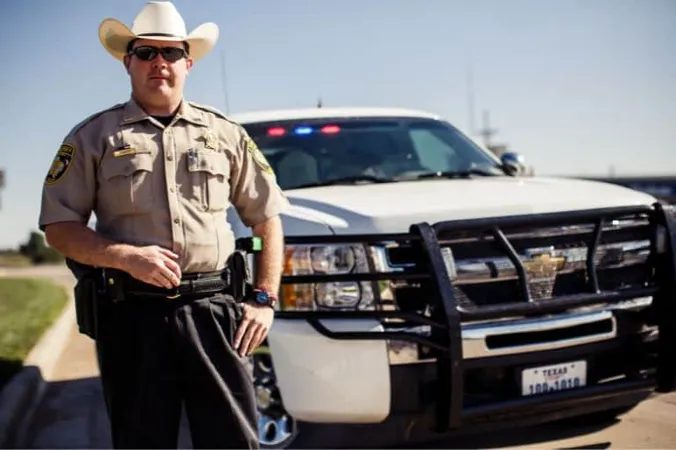
According to Texas Commission on Law Enforcement, “County Corrections Within 6 months or 180 days of completing course 100 105 minutes (1 hour 45 minutes)”[1]
TCOLE Practice Test Questions
Prepare for the TCOLE - Texas Commission on Law Enforcement exam with our free practice test modules. Each quiz covers key topics to help you pass on your first try.
TCOLE Arrest, Search, and Seizure
TCOLE Exam Questions covering Arrest, Search, and Seizure. Master TCOLE Test concepts for certification prep.
TCOLE Basic Peace Officer
Free TCOLE Practice Test featuring Basic Peace Officer. Improve your TCOLE Exam score with mock test prep.
TCOLE Code of Criminal Procedure
TCOLE Mock Exam on Code of Criminal Procedure. TCOLE Study Guide questions to pass on your first try.
TCOLE Professionalism and Ethics
TCOLE Test Prep for Professionalism and Ethics. Practice TCOLE Quiz questions and boost your score.
TCOLE Telecommunicator
TCOLE Questions and Answers on Telecommunicator. Free TCOLE practice for exam readiness.
TCOLE Texas Penal Code
TCOLE Mock Test covering Texas Penal Code. Online TCOLE Test practice with instant feedback.
TCOLE Traffic Law and Enforcement
Free TCOLE Quiz on Traffic Law and Enforcement. TCOLE Exam prep questions with detailed explanations.
Worked examples: how to reason through TCOLE questions
These are practice questions written for this site, not questions from the real exam. Each explanation shows why the right answer is right and why the others are wrong.
Example 1
Question: A person enters a neighbor's attached garage without permission to look for a tool they want to borrow. The neighbor had previously told them not to come onto their property. The person does not intend to steal anything or harm anyone. What is the most appropriate offense?
- Burglary of a Habitation
- Criminal Trespass
- Theft of Property
- No offense has been committed
Answer: B. Criminal Trespass
Explanation:
The correct answer is Criminal Trespass. The person entered a neighbor's attached garage without consent after being told not to come onto the property, and that is the core of trespass: entry without effective consent after notice that entry is forbidden.
Burglary of a Habitation is wrong because it needs intent to commit a felony, theft or assault when entering, and the person only wanted to borrow a tool. Theft of Property is wrong because nothing was taken and there was no intent to take anything permanently. 'No offense has been committed' is wrong because the earlier warning removed any consent.
Rule to remember: when you are asked to separate trespass from burglary, look for the intent at the moment of entry. No criminal intent beyond being there, plus a prior warning, points to trespass.
Example 2
Question: A controlled substance analogue under Section 481.123 is treated as:
- Legal until specifically scheduled
- A Class C offense only
- The controlled substance it is substantially similar to
- A simulated controlled substance
Answer: C. The controlled substance it is substantially similar to
Explanation:
The correct answer is that an analogue is treated as the controlled substance it is substantially similar to. The law is written so that a substance cannot escape prosecution simply because it has not been listed by name.
'Legal until specifically scheduled' is wrong because it describes the gap the analogue provision is meant to close. 'A Class C offense only' is wrong because the offense level follows the substance it resembles, not a fixed low category. 'A simulated controlled substance' is wrong because that is a separate idea: a look-alike that is not actually a controlled substance.
Rule to remember: an analogue is prosecuted by comparison. Ask which listed substance it resembles in structure or effect, and apply that substance's treatment.
Example 3
Question: Under TPC §49.04, Driving While Intoxicated (DWI) is a Class B misdemeanor with a minimum confinement of:
- No minimum
- 24 hours
- 72 hours
- 7 days
Answer: C. 72 hours
Explanation:
The correct answer is 72 hours. Under the section named in the question, DWI is a Class B misdemeanor, and the statute sets a minimum term of confinement for a basic offense.
'No minimum' is wrong because the statute does state a floor. 24 hours is wrong because it understates that floor. 7 days is wrong because it overstates it, and the question asks for the minimum, not a typical sentence.
Rule to remember: when a question asks about a minimum, look for the lowest figure the statute requires, not what is common in practice. Pair the offense class with its stated minimum and learn them together, since distractors are often close to the real number.
How to use these practice tests
Start with the official material. Read the TCOLE handbook and the proctor manual so you know the format for your license type, the passing score and the retake window. Then use the practice sets to find out where you are weak.
Take a set on a broad topic that matches your course, such as the Basic Peace Officer or Telecommunicator set. Do not worry about the score. Mark every question you missed or guessed, and write one line on why the right answer is right.
Next, move to the topic sets that cover your gaps: Texas Penal Code, Code of Criminal Procedure, Arrest, Search and Seizure, Use of Force, Traffic Law, or Family Violence. Work in short sittings and return to your missed questions a few days later without looking at your notes. If you get one wrong twice, go back to your course notes and the statute text.
Close to test day, do a longer mixed session under a timer that matches your exam format. Practise reading each question stem fully, ruling out options, and moving on when stuck. Our questions are written by us and are not real exam questions, so use them to build understanding rather than to memorize answers.

TCOLE Training
The Texas School Safety Center offers a variety of no-cost TCOLE (Texas Commission on Law Enforcement Officer Standards and Education) accredited training for school-based law enforcement officers. These trainings are designed to help school-based law enforcement officers and school personnel work together effectively. All virtual training is conducted through Zoom online meeting/webinar software. Attendance is monitored through the webcam video feed. If a portion of the training is missed, participants must make it up at a later date. Practice with the free TCOLE - Texas Commission on Law Enforcement practice test on PracticeTestGeeks (7 questions with answer explanations).
The TCOLE test is vital in becoming a police officer in Texas. It assesses a candidate’s knowledge of the procedural and practical skills taught in an academy. It’s also the final step before being allowed to take a state licensing exam.
To prepare for the TCOLE test, pay close attention to your academy classes and write down study notes. Be sure to understand the rationale behind each protocol and ethical choice. This will allow you to better answer questions on the test. Also, don’t forget to remove any limitations that might hinder your performance on the test.
Free TCOLE - Texas Commission on Law Enforcement Study Tools
Interactive TCOLE - Texas Commission on Law Enforcement resources on PracticeTestGeeks, free to start:
- TCOLE - Texas Commission on Law Enforcement flashcards — review key terms and concepts card by card
- TCOLE - Texas Commission on Law Enforcement study guide — topic-by-topic overview of what the exam covers
- TCOLE - Texas Commission on Law Enforcement cheat sheet — one-page printable summary for last-minute review

TCOLE License
The Texas Commission on Law Enforcement (TCOLE) regulates sheriffs and their deputies, constables and their deputies, police officers, marshals, county jailers, and public security officers. It also licenses dispatchers and investigates hypnotists and criminal hypnotists. Its duties are specified in Chapter 1701 of the Texas Occupations Code. TCOLE examines applicants and grants licenses if they meet minimum training and examination standards. The agency is subject to periodic review by the bipartisan, bicameral Sunset Advisory Commission, which finds ways to cut waste and inefficiency in state agencies.
Peace officers must pass a comprehensive state licensing exam, which tests their command of the procedural and practical knowledge covered in their basic peace officer training course. Candidates must have good physical and mental health to qualify for the license. Those who fail the exam must retake it after completing additional training.
ACC’s Criminal Justice Department staff will assist students in submitting the required documentation the semester before they enroll in sequence classes and sit for the licensing exams. The student must also submit proof of an endorsement from TCOLE to take the licensing exam.

TCOLE Questions and Answers
You can use the procedures below to verify the status of your Texas Commission on Law Enforcement (TCOLE) license:
- Visit the TCOLE website: Navigate to https://www.tcole.texas.gov to access the TCOLE website.
- Access the “Licensee Lookup” page as follows: On the website, look for a menu or search field that gives you access to the “Licensee Lookup” or “License Verification” page. Here is where you may learn more about a person’s TCOLE license status.
- Provide the necessary information: To check a person’s license status, you normally need to provide particular information on the Licensee Lookup page. The person’s first and last name or their TCOLE license number are typically included in these details.
- Submit the search: To start the license status search after entering the necessary information, click the search button or submit the form.
- Evaluate the findings: The licensing status of the person you were looking for should be shown in the search results. It will be clear from this whether their license is valid, past due, or suspended. You can also discover more details about the license, like its type and expiration date.
The Texas Commission on Law Enforcement (TCOLE) certification procedure is how people in Texas become certified as peace officers (TCOLE). TCOLE is in charge of establishing requirements and exercising oversight over law enforcement certification and training in the state of Texas.
The three prerequisites for licensure include passing the state licensing exam, finishing the basic licensing course satisfactorily, and being appointed by a law enforcement agency. Register for the fundamental licensing course. On the TCLEOSE website, you can download an application form that you can then fill out and submit.
The Texas Commission on Law Enforcement is known by the initials TCOLE. In Texas, it is the state agency in charge of monitoring and enforcing laws governing standards, certification, and training for law enforcement. The main goal of TCOLE is to make sure that state law enforcement personnel are competent, professional, and honest.
The length of time it takes to obtain TCOLE certification in Texas as a peace officer might vary based on a number of variables, including the particular training program, the circumstances of the applicant, and the accessibility of the necessary courses. The procedure might typically take many months to finish.
TCOLE stands for the Texas Commission on Law Enforcement.
You typically need to take the following actions in order to become a peace officer in Texas who is TCOLE certified:
- Fulfill Eligibility Requirements: Ensure that you satisfy the fundamental requirements for eligibility established by TCOLE, which typically include being a citizen of the United States, being at least 21 years old, having a high school diploma or the equivalent, and having a clear criminal history.
- Complete a Basic Peace Officer Training Course that has been approved by TCOLE: Enroll in and successfully complete a Basic Peace Officer Training Course that has been approved by TCOLE at a recognized training facility. The knowledge and abilities required to work as a peace officer are covered in this course.
- Pass the thorough TCOLE Licensing Exam: After finishing the training program, you must pass the TCOLE Licensing Exam. This test measures how well you comprehended the training’s curriculum on Texas law, criminal procedure, and other pertinent subjects.
- Expect to be the subject of a thorough background examination by the department or agency of law enforcement you plan to work for. To make sure you meet the requirements for certification, this inquiry confirms your personal, professional, and criminal histories.
- Complete Psychological and Medical Evaluations: Get ready to have your mental and physical fitness for the job of a peace officer evaluated by psychological and medical professionals. These assessments make sure you are capable of handling the demands and obligations of the position.
- Submit Certification Application: After fulfilling all conditions, send in your TCOLE certification application. In order to achieve this, you must present the required paperwork, including diplomas, training records, and other proof. Don’t forget to pay the application’s accompanying fees if they apply.
- Ongoing Education and Training: In order to keep your TCOLE certification active, you must continue your education and training. This entails finishing a predetermined number of training hours annually to stay current on legal procedures and satisfy TCOLE’s continuing education obligations.
For peace officers in Texas, a TCOLE (Texas Commission on Law Enforcement) license is normally good for four years. This indicates that a person is qualified to serve as a peace officer for that time period after receiving their TCOLE license.
The TCOLE exam, also known as the Licensing Exam, can range in complexity depending on preparation, prior knowledge, and familiarity with the material. The purpose of the exam is to gauge candidates’ knowledge of criminal justice, Texas law, and related subjects.
In Texas, you have two options for becoming a police officer: either you self-sponsor a police academy or you get employed by a law enforcement organization that sends you to their academy, where you eventually take the TCOLE test. You will receive your Texas Peace Officer License if you pass the TCOLE exam.
Each constable must complete at least 40 hours of New Constable Education at the Bill Blackwood Law Enforcement Management Institute in accordance with Section 1701.3545 of the Texas Occupations Code. After that, you must complete an additional 40 hours of constable continuing education for each full four-year training cycle.
To check your TCOLE (Texas Commission on Law Enforcement) training hours, you can visit the TCOLE website
To check the status of your TCOLE (Texas Commission on Law Enforcement) license, you can visit the TCOLE website.
To obtain a copy of your TCOLE (Texas Commission on Law Enforcement) license, you can visit the TCOLE website.
The Texas Commission on Law Enforcement (TCOLE) sets guidelines and requirements for firearms qualifications for peace officers in Texas. The specific rules on firearms qualifications can vary, but generally, TCOLE requires peace officers to meet certain standards to demonstrate their proficiency with firearms.
You can continue preparing with the my tcole, which includes answer explanations for every question.
- ✓Review the official TCOLE exam content outline
- ✓Take a diagnostic practice test to identify weak areas
- ✓Create a study schedule (4-8 weeks recommended)
- ✓Focus on your weakest domains first
- ✓Complete at least 3 full-length practice exams
- ✓Review all incorrect answers with detailed explanations
- ✓Take a final practice test 1 week before exam day
TCOLE: Pros and Cons
- +TCOLE exam preparation strengthens your knowledge across all domains
- +Passing the exam proves competency to employers and clients
- +Study materials and practice tests are widely available
- +Exam-based credentials are portable across states and employers
- +Clear exam objectives help focus your study plan effectively
- −Exam anxiety can affect performance — practice tests help reduce it
- −Registration fees are non-refundable if you miss your test date
- −Limited retake opportunities may apply with waiting periods
- −Exam content updates periodically — use current study materials
- −Testing center availability may require advance scheduling
Pros and Cons at a Glance
| Pros | Cons |
|---|---|
| TCOLE exam preparation strengthens your knowledge across all domains | Exam anxiety can affect performance — practice tests help reduce it |
| Passing the exam proves competency to employers and clients | Registration fees are non-refundable if you miss your test date |
| Study materials and practice tests are widely available | Limited retake opportunities may apply with waiting periods |
| Exam-based credentials are portable across states and employers | Exam content updates periodically — use current study materials |
| Clear exam objectives help focus your study plan effectively | Testing center availability may require advance scheduling |
Sample TCOLE - Texas Commission on Law Enforcement Practice Questions
Try these questions from our free TCOLE - Texas Commission on Law Enforcement practice tests. The correct answer and an explanation follow each question.
Which of the following conduct constitutes 'false imprisonment' under TPC §20.02?
- A. Failing to release a person from a lawful arrest after posting bail
- B. Intentionally or knowingly restraining another person without consent
- C. Detaining a shoplifting suspect for an unreasonable length of time
- D. Arresting a person without probable cause
Answer: B. Intentionally or knowingly restraining another person without consent
TPC §20.02 defines false imprisonment as intentionally or knowingly restraining another person without their consent.
An officer is lawfully present in a suspect's backyard while investigating a noise complaint. From the yard, the officer looks through an open garage door and sees what is immediately apparent to be illegal narcotics on a workbench. Under the 'Plain View Doctrine,' the officer may seize the narcotics without a warrant because:
- A. The officer had prior knowledge that the narcotics would be there.
- B. The discovery of the narcotics was inadvertent.
- C. The officer was lawfully in a position to view the item and its incriminating character was immediately apparent.
- D. The suspect has a reduced expectation of privacy in their garage.
Answer: C. The officer was lawfully in a position to view the item and its incriminating character was immediately apparent.
The Plain View Doctrine allows for the warrantless seizure of evidence when two conditions are met: the officer must be lawfully in the location from which the evidence is viewed, and the incriminating nature of the item must be immediately apparent without needing to conduct a further search.
A driver makes a left turn from a one-way street onto another one-way street in Texas. Which lane should the driver turn into?
- A. The rightmost available lane
- B. The leftmost available lane
- C. Any lane at the driver's discretion
- D. The center lane only
Answer: B. The leftmost available lane
When turning left from a one-way onto another one-way, Texas law requires the driver to enter the leftmost available lane.
In Texas, a driver convicted of DWI with a child passenger under 15 years old faces an enhanced charge of:
- A. DWI - Second Offense
- B. Intoxication Assault
- C. Child Endangerment - State Jail Felony
- D. DWI with Child Passenger - State Jail Felony
Answer: D. DWI with Child Passenger - State Jail Felony
DWI with a passenger younger than 15 is a separate offense — a state jail felony — distinct from standard DWI charges.
Take the full TCOLE - Texas Commission on Law Enforcement practice test
TCOLE Exam Flashcards
🎯 What is the passing score on the TCOLE exam?
The minimum passing score is 70% on each TCOLE licensing exam, set by 37 TAC §219.7(g). Official results come from the commission's Austin office.
START TCOLE PRACTICE TEST🔁 How many times can you take the TCOLE exam?
You get three attempts to pass. All three must be completed within 180 days of finishing your basic licensing course (37 TAC §219.1(d)).
START TCOLE PRACTICE TEST⚠️ What happens if you fail the TCOLE exam 3 times?
You must repeat the basic licensing course before testing again. The same applies if you miss the 180-day window or are dismissed for cheating.
START TCOLE PRACTICE TEST🎂 How old do you have to be to be a cop in Texas?
Peace officers must be 21, or 18 with an associate's degree, 60 college semester hours, or an honorable discharge after 2+ years of active military service.
START PEACE OFFICER PRACTICE TEST📞 What is the minimum age for a Texas jailer or telecommunicator license?
Jailers and telecommunicators must be at least 18 years old under 37 TAC §217.1. They still need a high school diploma or GED.
START TELECOMMUNICATOR PRACTICE TEST⚖️ Can you become a Texas peace officer with a misdemeanor?
Not with any conviction above a Class B misdemeanor, or a Class B within the last 10 years. Any family-violence conviction or community supervision is a permanent bar.
START PENAL CODE PRACTICE TEST🩺 What exams are required before a TCOLE license?
A physician licensed by the Texas Medical Board must declare you physically sound and drug-free, and a licensed psychologist or psychiatrist must clear your psychological health.
START TCOLE PRACTICE TEST🪪 What do you bring to the TCOLE exam?
Bring your TCOLE PID and a valid photo ID, and arrive on time. Written materials and electronic devices are prohibited in the exam room (37 TAC §219.5).
START ETHICS PRACTICE TEST⏳ How long is a TCOLE exam score valid?
A passing score expires two years after it is entered into commission records. If you are not appointed within 2 years of passing, the license goes inactive.
START TCOLE PRACTICE TEST📚 How many CE hours do Texas peace officers need?
At least 40 hours of continuing education every 2-year training unit, including the legislative update and 16 hours of ALERRT active-shooter training.
START USE OF FORCE PRACTICE TESTOfficial Resources
- Texas Commission on Law Enforcement (TCOLE) — the state agency that licenses Texas peace officers, jailers and telecommunicators and administers the licensing exams.
- Texas Occupations Code, Chapter 1701 — the state law that defines TCOLE's licensing, training and examination duties.
- Texas Secretary of State — Texas Administrative Code — the official source for TCOLE rules in Title 37, Part 7, including Chapter 219 on exam eligibility and scoring.
Sources & last verified
- Texas Commission on Law Enforcement — number of questions, time limit, passing score, score release (official source). “County Corrections Within 6 months or 180 days of completing course 100 105 minutes (1 hour 45 minutes)” Verified Oct 27, 2026.
- Texas Commission on Law Enforcement — exam fee, retake policy, validity, eligibility (official source). “All exams in Austin office $25.00” Verified Oct 27, 2026.
- Texas Commission on Law Enforcement — exam fee (official source). “Attach a certified check or money order in the amount of $150.00 (the application fee is non-refundable and is assessed to cover the cost of…” Verified Oct 28, 2026 · source checked Oct 28, 2026.
- Texas Commission on Law Enforcement — delivery (official source). “How do I schedule a licensing exam? You should call the exam site center that supports your area. For a list, go to the exam…” Verified Oct 27, 2026 · source checked Oct 20, 2026.
How we verify: editorial & fact-checking policy. Report an error: contact us.
How this page was made: written with AI tools and published by Nathan Beja, founder of Practice Test Geeks, who is responsible for its content. Exam facts are checked against the official sources listed below. Not reviewed by a subject-matter expert. Editorial policy
Sources & references
Exam facts on this page (fees, format, dates, passing scores) are checked against these official sources; the date is our last check. Editorial policy
- tcole.texas.gov — Fees, eligibility, retake policy, score validity, exam format, passing score, score release, time limit, test delivery · verified Oct 2026