
What Does STNA Stand For? A Complete Career and Duties Guide 2026
🆕 What does STNA stand for? Learn what a State Tested Nursing Assistant does, how to become one, duties, salary, and how to pass the Ohio STNA exam.

If you have been researching healthcare careers and came across this credential, you are probably asking: what does STNA stand for? STNA stands for State Tested Nursing Assistant, a professional designation used primarily in Ohio to identify nursing assistants who have completed an approved training program and passed the state competency examination. The title distinguishes credentialed aides from untrained staff and is the Ohio equivalent of what most other states call a Certified Nursing Assistant, or CNA. Understanding this distinction is the first step toward building a rewarding healthcare career. Practice with the free STNA - State Tested Nursing Assistant practice test on PracticeTestGeeks (100+ questions with answer explanations).
The STNA credential is awarded by the Ohio Department of Health after a candidate completes a minimum of 75 hours of state-approved instruction — at least 16 of which must be hands-on clinical practice — and then passes both a written knowledge test and a practical skills evaluation. Once credentialed, an STNA's name is listed on the Ohio Nurse Aide Registry, which employers are legally required to check before hiring. This registry ensures patient safety and maintains a verifiable record of every qualified nursing assistant in the state.
The role of a State Tested Nursing Assistant sits at the very heart of patient care. STNAs work under the supervision of licensed nurses (LPNs and RNs) in nursing homes, assisted living facilities, hospitals, rehabilitation centers, and private homes. Every day they provide the hands-on assistance that patients need to maintain dignity and comfort — from bathing and dressing to measuring vital signs and reporting changes in condition. Without STNAs, nursing homes and long-term care facilities simply could not function.
One reason so many people pursue the STNA credential specifically in Ohio is the relatively quick path to employment. Training programs can be completed in as little as four to six weeks at community colleges, career centers, the Red Cross, and many nursing facilities that offer employer-sponsored training. Compare that timeline to the years required for an RN or LPN license, and it becomes clear why the STNA credential is one of the most accessible entry points into a healthcare career for people of all ages and backgrounds.
The demand for STNAs is not slowing down. Ohio's aging population continues to grow, and the U.S. Bureau of Labor Statistics projects employment of nursing assistants nationwide to grow faster than the average for all occupations through 2033. Facilities across Columbus, Cleveland, Cincinnati, and smaller Ohio communities are consistently posting STNA job openings. Starting a career as a State Tested Nursing Assistant today means entering a field with genuine long-term job security and a clear ladder for advancement toward LPN, RN, or other specialized roles.
For anyone preparing for the state competency examination, it is essential to understand both the written and skills portions of the test. Many candidates underestimate the skills evaluation, which requires demonstrating specific nursing assistant procedures in front of an evaluator. Resources like the detailed explanations found when you explore what does stna stand for can help you visualize exactly what evaluators look for during the practical portion of the exam, giving you a meaningful edge on test day.
This guide covers everything you need to know about the STNA credential: what it stands for, what the job entails day to day, how to obtain it, what you can expect to earn, the pros and cons of the career, and how to prepare effectively for the state exam. Whether you are just beginning to explore healthcare or are ready to enroll in a training program this week, the information ahead will help you make an informed, confident decision about your future as a State Tested Nursing Assistant in Ohio.
STNA: upcoming dates and official changes
- Dec 1, 2025: Ohio CNA testing updates took effect December 1, 2025, in Candidate Handbook Version 27. (Ohio Department of Health (ODH); examination administered by D&S Diversified Technologies–Headmaster)
Facts verified Oct 16, 2026 against Ohio Department of Health (ODH); examination administered by D&S Diversified Technologies–Headmaster. Dates that have passed are removed automatically.
- The Ohio STNA/CNA knowledge examination contains 79 multiple-choice questions. (Ohio Department of Health (ODH); examination administered by D&S Diversified Technologies–Headmaster)
- The Ohio STNA/CNA knowledge examination allows 90 minutes. (Ohio Department of Health (ODH); examination administered by D&S Diversified Technologies–Headmaster)
- The Ohio STNA/CNA skill test allows 35 minutes. (Ohio Department of Health (ODH); examination administered by D&S Diversified Technologies–Headmaster)
- The Ohio STNA/CNA knowledge examination requires at least 70% correct answers. (codes.ohio.gov)
- The Ohio STNA/CNA skills examination requires satisfactory performance of every assigned skills evaluation task. (codes.ohio.gov)
- The Ohio STNA/CNA audio knowledge examination costs $40. (Ohio Department of Health (ODH); examination administered by D&S Diversified Technologies–Headmaster)
- The Ohio STNA/CNA knowledge examination costs $30. (Ohio Department of Health (ODH); examination administered by D&S Diversified Technologies–Headmaster)
- The Ohio STNA/CNA audio knowledge examination retake costs $40. (Ohio Department of Health (ODH); examination administered by D&S Diversified Technologies–Headmaster)
- The Ohio STNA/CNA knowledge examination retake costs $30. (Ohio Department of Health (ODH); examination administered by D&S Diversified Technologies–Headmaster)
Facts verified Oct 16, 2026 against Ohio Department of Health (ODH); examination administered by D&S Diversified Technologies–Headmaster. Dates that have passed are removed automatically.
STNA Exam at a Glance
Facts verified Oct 16, 2026 against Ohio Department of Health (ODH); examination administered by D&S Diversified Technologies–Headmaster. Dates that have passed are removed automatically.
Free STNA - State Tested Nursing Assistant Study Tools
Interactive STNA - State Tested Nursing Assistant resources on PracticeTestGeeks, free to start:
- Free STNA Basic Nursing Skills Questions and Answers — 11 questions with instant scoring and answer explanations
- STNA - State Tested Nursing Assistant flashcards — review key terms and concepts card by card
- STNA - State Tested Nursing Assistant study guide — topic-by-topic overview of what the exam covers
- STNA - State Tested Nursing Assistant cheat sheet — one-page printable summary for last-minute review
Ohio STNA by the Numbers

STNA Training and Certification Requirements
Candidates must complete a minimum of 75 hours in an Ohio Department of Health-approved program. At least 16 of those hours must be hands-on clinical practice in an actual or simulated care setting under the supervision of a licensed nurse instructor.
The state competency exam includes a multiple-choice written portion covering basic nursing skills, infection control, patient rights, communication, and safety. Candidates must achieve a passing score set by the Ohio Department of Health to earn their credential.
During the skills portion, a trained evaluator observes candidates performing five randomly selected nursing tasks. Each skill must be executed in the correct sequence and according to state-approved procedures, including proper hand-washing and infection-control protocols.
After passing both portions of the exam, the candidate's name is added to the Ohio Nurse Aide Registry. Employers are legally required to verify registry status before placing an STNA with residents. The registry also records any substantiated findings of abuse or neglect.
Ohio STNA credentials must be renewed every two years. To maintain active registry status, the aide must have worked as a nursing assistant for pay at least once during that renewal period. Some employers also require annual in-service training hours on topics like fall prevention and dementia care.
Now that you understand what STNA stands for and the basics of certification, it is worth exploring exactly what State Tested Nursing Assistants do every single day on the job. The daily responsibilities of an STNA are physically and emotionally demanding, but they are also deeply meaningful. Patients in nursing homes and long-term care facilities depend on STNAs for nearly every basic function of daily life, and the relationships that develop between aides and residents are often among the most important human connections either party experiences.
Personal care is the cornerstone of the STNA role. This includes assisting residents with bathing, shampooing hair, oral hygiene, shaving, dressing, and grooming. These tasks must be performed with both technical skill and genuine compassion, because many patients find the loss of independence in these areas emotionally difficult. A skilled STNA approaches personal care not as a clinical procedure but as an opportunity to provide dignity, respect, and a sense of normalcy to someone navigating serious illness or the challenges of aging.
Mobility assistance is another critical STNA duty. Many residents cannot move safely on their own due to weakness, neurological conditions, or recent surgery. STNAs are trained to use proper body mechanics, transfer belts, mechanical lifts, and repositioning techniques to move patients from bed to wheelchair, wheelchair to toilet, and back again. Preventing falls and pressure injuries (commonly called bedsores) is a major patient-safety concern in long-term care, and the STNA's attention during repositioning and ambulation is a primary line of defense against these serious complications.
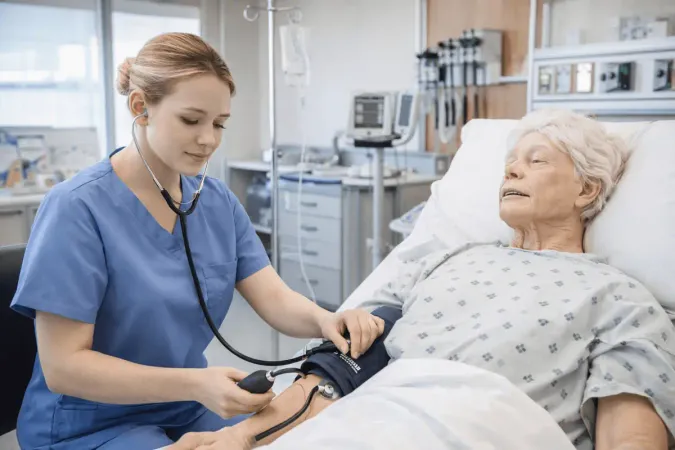
STNAs also play an essential monitoring role. Although they do not prescribe medications or diagnose conditions, they are often the first to notice changes in a patient's appearance, behavior, or vital signs. Taking and recording temperature, pulse, respiration rate, blood pressure, and weight are standard STNA tasks in most facilities.
More importantly, because STNAs spend far more time with individual residents than nurses or physicians do, they are uniquely positioned to recognize early warning signs — a subtle change in mental alertness, unusual skin coloration, decreased appetite, or new complaints of pain — and report them promptly to the supervising nurse.
Nutrition support is a daily responsibility that encompasses far more than simply delivering meal trays. STNAs assist residents who have difficulty feeding themselves due to weakness, tremors, cognitive impairment, or swallowing disorders. They record food and fluid intake, encourage adequate hydration, and report refusals or dramatically reduced intake. In facilities that serve residents with dementia, mealtime can be one of the most challenging and time-consuming parts of the STNA's shift, requiring patience, creativity, and a calm, reassuring presence.
Documentation and communication round out the core responsibilities of the role. STNAs are required to complete accurate written records of care provided, observations made, and any unusual incidents that occurred during their shift. In many modern facilities, this documentation is done through electronic health record systems on shared computers or handheld devices. Clear, timely communication with supervising nurses ensures continuity of care across shifts and is an absolute professional obligation for every State Tested Nursing Assistant in Ohio.
The environment in which STNAs work varies widely. While skilled nursing facilities and nursing homes represent the largest employer category, Ohio STNAs are also employed in hospitals (typically on medical-surgical, rehabilitation, or geriatric units), assisted living communities, adult day programs, home health agencies, and hospice organizations. Each setting has its own pace, patient population, and culture, which means that an STNA who finds one environment less suitable can often transition to another without needing additional credentials — a flexibility that makes the career genuinely sustainable over the long term.
STNA Exam, Salary, and Career Paths
The Ohio STNA competency examination is administered by Headmaster Testing Service on behalf of the Ohio Department of Health. It consists of two parts: a written multiple-choice test and a practical skills evaluation. The written portion contains approximately 70 questions covering topic areas such as basic nursing skills, personal care, restorative services, mental health, patient rights, and the role of the nurse aide. Most candidates are given up to two hours to complete the written portion.
The skills evaluation requires candidates to demonstrate five nursing tasks drawn at random from a list of approved procedures. Common tasks include hand washing, measuring blood pressure, providing mouth care, positioning a patient in bed, and assisting with ambulation. A trained evaluator scores each step using a standardized checklist. Failing either portion of the exam requires retesting only the failed section, and Ohio allows up to three attempts before additional training is required.

Is Becoming an STNA the Right Career Move?
- +Fast entry into healthcare — training takes as little as 4 to 6 weeks
- +Strong and growing job demand across all regions of Ohio
- +Meaningful, hands-on patient care that makes a daily difference
- +Clear career ladder toward LPN, RN, or specialty healthcare roles
- +Many employers offer tuition reimbursement to support further education
- +Flexible scheduling with part-time, full-time, and per-diem options available
- −Physically demanding work with risk of back and musculoskeletal injuries
- −Emotionally challenging — grief and patient loss are part of the job
- −Starting wages are modest compared to mid-level healthcare roles
- −Mandatory overtime or short-staffing situations are common in many facilities
- −Night, weekend, and holiday shifts are frequently required for entry-level hires
- −High burnout rates in some long-term care environments due to heavy caseloads
Pros and Cons at a Glance
| Pros | Cons |
|---|---|
| Strong and growing job demand across all regions of Ohio | Physically demanding work with risk of back and musculoskeletal injuries |
| Meaningful, hands-on patient care that makes a daily difference | Emotionally challenging — grief and patient loss are part of the job |
| Clear career ladder toward LPN, RN, or specialty healthcare roles | Starting wages are modest compared to mid-level healthcare roles |
| Many employers offer tuition reimbursement to support further education | Mandatory overtime or short-staffing situations are common in many facilities |
| Flexible scheduling with part-time, full-time, and per-diem options available | Night, weekend, and holiday shifts are frequently required for entry-level hires |
STNA Exam Preparation Checklist
- ✓Enroll in an Ohio Department of Health-approved STNA training program before scheduling your exam.
- ✓Complete all required classroom and clinical hours, including the minimum 16 hours of hands-on practice.
- ✓Review the Ohio Nurse Aide Competency Evaluation Program candidate handbook from Headmaster Testing.
- ✓Practice all skills on the official skills evaluation list until you can perform each one from memory.
- ✓Time yourself completing mock written tests to build exam-day pacing and reduce test anxiety.
- ✓Focus study sessions on high-yield written topics: infection control, patient rights, and safety procedures.
- ✓Schedule your exam at a Headmaster-approved testing site as soon as your training program is complete.
- ✓Bring all required identification documents to both the written and skills portions of the exam.
- ✓Arrive at least 15 minutes early to the test site to reduce stress and complete any intake paperwork.
- ✓After passing, verify your name appears correctly on the Ohio Nurse Aide Registry within 10 business days.
Most Skills Failures Are Due to Skipped Steps, Not Wrong Technique
STNA skills evaluators score each procedure step by step using a strict checklist. The most common reason candidates fail is not that they performed a skill incorrectly — it is that they skipped an early step like washing their hands, introducing themselves to the resident, or explaining the procedure before beginning. Always treat the evaluator as if they are a real patient and perform every step in sequence, no matter how obvious it seems.
Understanding the salary landscape and benefits available to Ohio STNAs is essential for anyone evaluating this career from a financial planning perspective. While the entry-level wages may seem modest compared to licensed clinical roles, the total compensation picture — especially when employer benefits are factored in — is more competitive than many candidates initially expect. And when you consider the speed of entry and the low cost of training relative to nursing school, the return on investment is genuinely strong.
Full-time STNAs working in Ohio hospitals and large health system affiliates frequently access the same benefits packages as other full-time employees, including medical, dental, and vision insurance. For workers without other access to affordable health coverage, this benefit alone can represent $5,000 to $10,000 or more in annual value. Paid time off policies typically start at two weeks per year for new hires and increase with tenure, and many systems offer eight to ten paid holidays annually on top of that base.
Shift differentials represent one of the most underappreciated components of STNA compensation. Evening shifts — typically 3:00 p.m. to 11:00 p.m. — often carry a differential of $1.00 to $2.00 per hour above base pay. Night shifts — 11:00 p.m. to 7:00 a.m. — can add $1.50 to $3.00 per hour. Weekend premiums at some facilities add another $1.00 to $2.50 per hour. An STNA willing to work consistent evenings and weekends can earn noticeably more than the base hourly rate suggests, sometimes bringing total hourly compensation to $20 or beyond at unionized facilities.
Ohio's geographic variation in STNA wages reflects the broader cost-of-living differences across the state. Columbus, the state capital and home to The Ohio State University Wexner Medical Center and Nationwide Children's Hospital, tends to offer higher wages than smaller rural communities. Cleveland's large hospital network — including Cleveland Clinic and University Hospitals — is another high-wage market. Cincinnati, anchored by UC Health and Cincinnati Children's, rounds out the top-tier markets. STNAs in rural southeastern Ohio or Appalachian communities may earn lower base wages but often face lower cost of living as an offset.
The job market outlook for Ohio STNAs through the remainder of the 2020s remains strongly positive. Ohio's population aged 65 and older is projected to grow by over 30 percent between 2020 and 2040, driven by the aging Baby Boomer generation. This demographic shift will place sustained upward pressure on demand for long-term care services and, by extension, for the STNAs who provide them. The COVID-19 pandemic also accelerated home-based care adoption, opening additional employment channels for STNAs certified through home health agencies.
For STNAs interested in part-time or flexible work, the per-diem and agency STNA markets in Ohio provide compelling alternatives to traditional full-time employment. Agency STNAs — those employed by staffing agencies and placed temporarily in facilities experiencing shortages — can command premium hourly rates, often $22 to $28 per hour or more, in exchange for schedule flexibility and the willingness to travel between facilities. This arrangement suits STNAs who are also students, parents, or simply prefer variety in their work settings over the stability of a fixed assignment.
Financial mobility through the STNA role extends beyond wages alone. Numerous Ohio-based healthcare employers — including OhioHealth, the Cleveland Clinic Health System, Premier Health, and Kettering Health — offer STNA-to-RN bridge scholarships or education reimbursement programs that can cover the full cost of LPN or RN schooling for employees who commit to a post-graduation service period. For a first-generation college student or someone returning to school after years in the workforce, these programs can transform the STNA credential from an entry-level position into a fully employer-funded pathway to a professional nursing license.

Ohio STNA credentials must be maintained through documented paid work as a nursing assistant at least once every 24 months. If your registry status becomes inactive due to non-employment, you may be required to complete a new training program and pass the competency exam again before returning to work. Always keep a record of your employment dates, and contact the Ohio Department of Health promptly if you believe your registry entry contains an error.
For STNAs who see their credential as the beginning of a longer healthcare journey rather than a final destination, Ohio offers one of the most supportive environments in the country for upward mobility. The state's network of community colleges, technical schools, and major academic medical centers creates a dense ecosystem of advancement opportunities that a motivated STNA can access without relocating or leaving the workforce entirely. Understanding these pathways — and planning for them early — can make the difference between a job and a career.
The most direct advancement route for Ohio STNAs is the Licensed Practical Nurse (LPN) credential. Ohio LPN programs are typically 12 months in length and result in an Associate of Applied Science in Practical Nursing or a diploma credential. Many programs are offered at community colleges with evening and weekend cohorts specifically designed for working healthcare employees. The clinical familiarity that STNA work provides — understanding patient care routines, reading care plans, assisting nurses, and communicating with physicians — gives STNA students a significant head start when they enter LPN coursework compared to classmates with no healthcare background.
From LPN to Registered Nurse, Ohio offers multiple bridge pathways. LPN-to-RN bridge programs at institutions such as Columbus State Community College, Sinclair Community College, and Lakeland Community College allow working LPNs to complete an Associate Degree in Nursing (ADN) in as little as 18 additional months.
ADN-prepared RNs can then pursue a Bachelor of Science in Nursing (BSN) through numerous online RN-to-BSN programs offered by Ohio universities while continuing to work full-time. Each rung of this ladder builds on the skills and knowledge of the one before it, and the STNA credential is where many Ohio nurses began their clinical lives.
Specialized STNA certifications offer lateral advancement opportunities for those who prefer to deepen their expertise within the aide role rather than pursuing licensure. The Ohio Medication Aide program, offered through approved training sites, allows STNAs employed in long-term care facilities to administer oral and topical medications under the delegation of a licensed nurse. This specialized role typically comes with a pay premium of $1.50 to $3.00 per hour and is particularly valuable in rural communities where nurse staffing is limited and medication administration needs are high.
Restorative nursing aide is another specialized STNA designation available in Ohio. Restorative aides focus specifically on helping residents maintain or regain functional abilities — mobility, self-feeding, communication — through structured activity and therapeutic exercise programs. This role requires additional training and is typically compensated at a higher rate than general STNA work. The restorative aide functions as a bridge between the nursing staff and occupational or physical therapy departments, making it a natural stepping stone for STNAs interested in eventually pursuing OT or PT credentials.
Mentorship and leadership roles within the STNA workforce are a less formal but equally real form of advancement. Many experienced STNAs take on charge aide or lead aide responsibilities — overseeing the work of newer staff, orienting newly hired aides, and serving as the primary communication link between the STNA team and the charge nurse on duty. These informal leadership positions are often stepping stones to floor supervisor or unit manager roles, particularly in smaller facilities where formal supervisory positions carry greater responsibility and salary than in large hospital systems.
Whatever path an STNA ultimately chooses, the credential itself represents something more than a job qualification — it represents a demonstrated commitment to caring for vulnerable people with skill, compassion, and accountability. Ohio's State Tested Nursing Assistant program exists because the state recognized that residents in long-term care facilities deserve care from workers who have been formally trained and evaluated to a consistent standard.
Every STNA who earns and maintains that credential honors that commitment, and the skills honed in daily practice translate into meaningful advancement — whether the next step is a nursing license, a specialty certification, or a leadership role in the facility where those skills were first earned.
Effective preparation for the Ohio STNA competency exam is a combination of content knowledge, procedural memory, and test-taking strategy. Many candidates make the mistake of focusing exclusively on the written multiple-choice portion while underestimating the practical skills evaluation — or vice versa. A balanced, deliberate study plan addresses both components systematically and includes timed practice under conditions that closely mirror the actual exam environment. Starting your preparation at least four weeks before your scheduled test date gives you the flexibility to identify weak areas and reinforce them without cramming.
For the written portion, the most productive study approach begins with a thorough review of the domains outlined in the Headmaster candidate handbook, which is available for free download from the Headmaster Testing Service website. These domains — Basic Nursing Skills, Personal Care Skills, Mental Health and Social Service Needs, Care of Cognitively Impaired Residents, Basic Restorative Services, and Residents' Rights — represent the blueprint of the exam.
Allocating dedicated study sessions to each domain and completing practice questions specifically mapped to that domain allows you to quantify your readiness before test day rather than discovering gaps during the actual exam.
Infection control deserves special emphasis in your written preparation. Questions related to hand hygiene, standard precautions, isolation procedures, and the proper use of personal protective equipment (PPE) appear frequently on the Ohio STNA written exam. These topics are also directly relevant to the skills evaluation, since proper hand washing at the beginning and end of each skill is a mandatory step that evaluators score explicitly.
Practice washing your hands using the six-step WHO technique until it becomes automatic, because forgetting this step during the skills test — even if you perform the underlying skill perfectly — will result in a failing score for that skill.
For the skills evaluation, repetitive physical practice is the single most effective preparation strategy. Identify the full list of skills in the evaluation pool and practice each one repeatedly, ideally with a partner who can observe your performance and check it against the official scoring checklist.
If you cannot find a practice partner, use a mirror or record yourself on video to self-evaluate. The goal is to be able to perform every skill from memory in the correct sequence, without hesitation, and without referring to notes — because you will not have access to any reference materials during the actual evaluation.
Mental rehearsal is an underrated preparation technique for the skills evaluation. In the days leading up to your test, spend time each evening mentally walking through the steps of commonly tested skills — especially those you find most challenging. Research in sports psychology and clinical skills training consistently shows that mental rehearsal activates the same neural pathways as physical practice, reinforcing procedural memory and reducing performance anxiety. Candidates who combine physical practice with mental rehearsal consistently outperform those who rely on physical practice alone.
Test-day logistics matter more than most candidates realize. Confirm your test site location, parking, and check-in procedures the day before your exam. Lay out your identification documents and any required materials the night before. Eat a nutritious meal before the test and arrive at least 15 minutes early to allow yourself time to settle, review your notes briefly, and approach the exam with a calm, focused mindset. Physical preparedness — adequate sleep, hydration, and nutrition — directly affects cognitive performance and fine motor control, both of which are tested by the STNA exam.
After you pass both portions of the exam, your name will be added to the Ohio Nurse Aide Registry within approximately 10 business days. You can verify your registry status at any time by searching the Ohio Department of Health's online registry tool using your name or social security number.
Before beginning your first paid position as an STNA, confirm with your employer that they have successfully verified your registry status, as Ohio law requires this verification to be completed before you provide direct resident care. Once that confirmation is in place, your career as a State Tested Nursing Assistant officially begins — and everything you have prepared for becomes the daily practice of one of healthcare's most essential and human professions.
Sample STNA - State Tested Nursing Assistant Practice Questions
Try these questions from our free STNA - State Tested Nursing Assistant practice tests. The correct answer and an explanation follow each question.
Before touching a resident who is crying to offer comfort, the nurse aide should consider:
- A. The resident's recent vital signs.
- B. The resident's cultural background.
- C. Whether the resident has been sad recently.
- D. Whether the resident has family that visits routinely.
Answer: B. The resident's cultural background.
Cultural background significantly influences how individuals express and receive comfort, especially physical touch. Before offering comfort through touch, it is crucial to consider the resident's cultural norms and personal preferences. This ensures the gesture is perceived as supportive and respectful, rather than intrusive or inappropriate.
Which of the following is true about caring for a resident who wears a hearing aid?
- A. Apply hairspray after the hearing aid is in place.
- B. Remove the hearing aid before showering.
- C. Clean the ear mold and battery case with water daily, drying completely.
- D. Replace batteries weekly.
Answer: B. Remove the hearing aid before showering.
Hearing aids are sensitive electronic devices that can be severely damaged by water. Removing them before showering, bathing, or swimming is essential to protect them from moisture. This preventative measure ensures the device's proper function and longevity, allowing the resident to continue hearing effectively.
A resident who has cancer is expected to die within the next couple of days. Nursing care for this resident should focus on:
- A. Helping the resident through the stages of grief.
- B. Providing for the resident's comfort.
- C. Keeping the resident's care routine, such as for bathing.
- D. Giving the resident a lot of quiet time and privacy.
Answer: B. Providing for the resident's comfort.
For a resident nearing the end of life, the primary focus of nursing care shifts to palliative care, which prioritizes comfort, pain management, and emotional support. Ensuring the resident's physical and emotional comfort is paramount during this sensitive time, allowing them to experience peace and dignity. While other aspects of care are important, comfort takes precedence.
Which of the following is the correct procedure for serving a meal to a client who must be fed?
- A. Serve the tray along with all the other trays, and then come back to feed the client
- B. Bring the tray to the client last; feed after you have served all other clients
- C. Bring the tray into the room when you are ready to feed the client
- D. Have the kitchen hold the tray for one hour
Answer: C. Bring the tray into the room when you are ready to feed the client
For a client who needs to be fed, bringing the tray into the room only when the nurse aide is ready to feed them ensures the food remains at the appropriate temperature and is served fresh. This practice prevents the client from waiting unnecessarily or the food getting cold, promoting a more pleasant and nutritious meal experience.
Take the full STNA - State Tested Nursing Assistant practice test
STNA Questions and Answers


How this page was made: written with AI tools. Exam facts are checked against the official sources listed below. Not reviewed by a subject-matter expert. Editorial policy
Sources & references
Exam facts on this page (fees, format, dates, passing scores) are checked against these official sources; the date is our last check. Editorial policy
- codes.ohio.gov — Passing score, test delivery, eligibility, retake policy, renewal · verified Oct 2026
- hdmaster.com — Time limit, exam format, score release, fees, retake fee, exam information · verified Oct 2026