
SIA Security Training: Complete UK Guide to Courses, Costs and Qualifications (2026 October)
SIA security training guide for 2026 October: 🧠 course types, costs, duration, exam format and tips to pass first time. Everything UK applicants need to know.

SIA security training is the mandatory licence-linked qualification every applicant must complete before working as a door supervisor, security guard, CCTV operator or close protection officer in the United Kingdom. Delivered by Ofqual-regulated awarding bodies through approved training providers, the courses combine classroom learning, role-play scenarios and end-of-unit examinations. Most candidates complete the training in four to six days, after which they sit multiple-choice papers covering legislation, conflict management, terror awareness and physical intervention where applicable to the chosen role.
For many people exploring this career, the journey begins with simple questions about cost, duration and which qualification fits their goals. A frontline security officer working static guarding will follow a different syllabus than a door supervisor in a licensed venue, and a CCTV operator will study public space surveillance modules instead. Understanding these distinctions early helps you avoid paying twice for overlapping units or enrolling on a course that does not unlock the licence you actually need.
The licence renewal sets the specifications, but training itself is delivered by private providers ranging from small local academies to national chains and online-hybrid colleges. Quality varies sharply. The best providers offer small class sizes, experienced instructors, refreshment breaks, free resit policies and post-course support with the licence application process. Cheaper providers may rush through content, skip role-play and leave learners under-prepared for the examinations, which is why peer reviews and Ofsted-style oversight matter more than headline price.
This guide walks you through every stage of SIA security training in detail: the qualifications available, what each unit covers, examination format, pass rates, costs in 2026, refresher requirements, how to choose a provider and what to expect on course day. Whether you are switching careers, returning to the industry after a licence lapse or starting fresh after college, the framework below mirrors the current SIA specifications updated in October 2021 and the top-up training rules that came into force afterwards.
It is worth noting upfront that completing training is not the same as holding a licence. After passing your qualification, you must still pass the SIA's identity checks, criminal record disclosures and the £190 application fee before the badge arrives in the post. Many applicants are surprised that training and licensing run as parallel but separate processes. For a step-by-step breakdown of the licensing side, see our companion guide on sia license which complements the training information here.
The good news is that the system, despite its bureaucracy, is well-mapped. Tens of thousands of people pass through it every year, and pass rates for first-time candidates hover comfortably above 70% when learners prepare properly. With the right course, focused revision and a willingness to engage in role-play exercises, the qualification is achievable for anyone over 18 who can demonstrate basic English comprehension and a clean enough background to satisfy the SIA's vetting standards.
By the end of this article you will know exactly which course to book, how much to budget, what to study, how the assessments work and what realistic earnings look like once your licence lands. Let us start with the headline numbers that frame the industry in 2026.
SIA Security Training by the Numbers
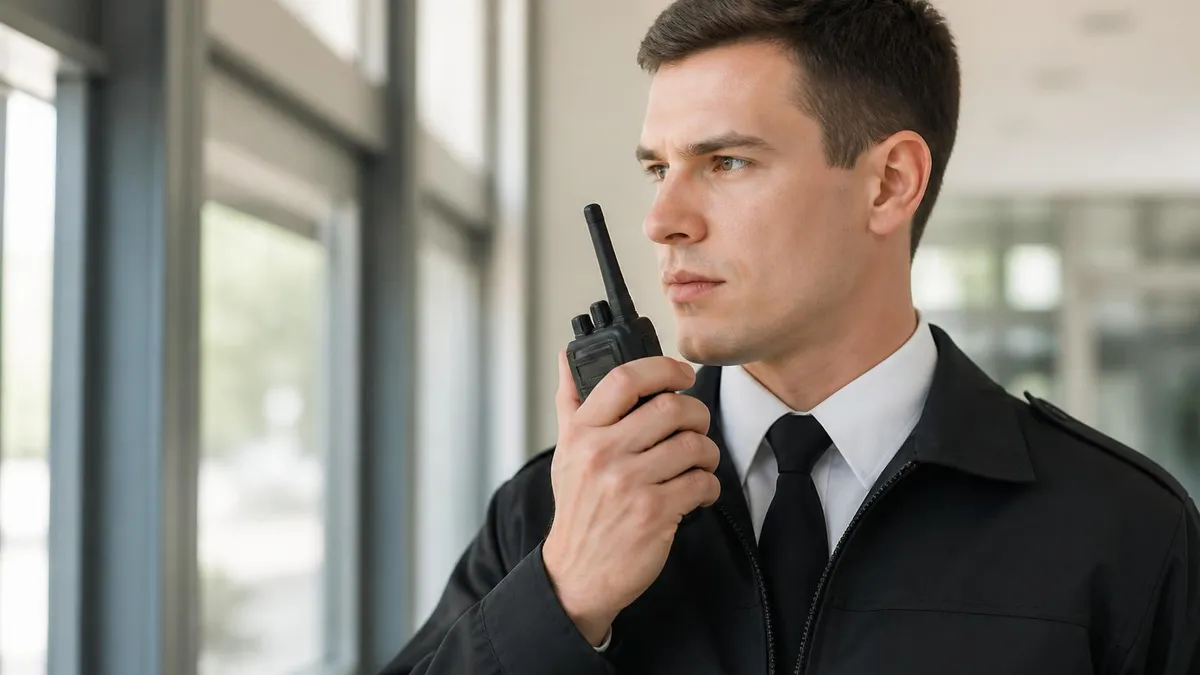
Main SIA Security Training Courses Available in 2026
The most popular qualification in the UK, covering security guarding, door supervision and physical intervention. Required for licensed premises, events and nightclubs. Typically 6 days including end-of-unit exams.
Designed for static and mobile guards working in offices, retail, warehouses and construction sites. Excludes physical intervention units, making it shorter and cheaper than the door supervisor route at around 4 days.
Level 2 qualification for control-room operators monitoring public spaces, town centres and large venues. Covers privacy law, evidence handling and surveillance procedures across approximately 3 to 4 days.
Advanced 15-day qualification for bodyguards and personal protection officers. Includes route planning, threat assessment, conflict management and operational practice. The most expensive and demanding SIA qualification.
Short courses for existing licence holders who need to add new units, refresh skills under the 2021 specifications or upgrade from security guarding to door supervisor without redoing all common units.
The substance of SIA security training is shaped by the legal and operational realities of working in the private security industry. Every course begins with common security units that cover the role of the security operative, basic legislation, communication skills, customer service, awareness of terror threats under the Protect Duty and emergency procedures. These foundational units sit beneath every licence-linked qualification and are why someone holding a door supervisor licence can transition to a guarding role without re-sitting the same materials.
From the common core, the syllabus branches into role-specific units. Door supervisors study behaviour management in licensed environments, drug and weapon awareness, queue and crowd control, age verification under the Licensing Act 2003, and physical intervention skills. Security guards instead focus on patrolling, access control, search procedures, key management and post orders. CCTV operators move into surveillance law, the Data Protection Act 2018, equipment operation and the recording of incidents for evidential use in court proceedings.
Physical intervention training is one of the most distinctive components and is delivered under strict instructor-to-learner ratios. Learners practise low-level disengagement holds, escorting techniques and team approaches to managing aggressive individuals, always with proportionality and the duty to retreat embedded in the doctrine. The unit explicitly avoids teaching strikes or pain-compliance techniques. Candidates must demonstrate competency in a practical assessment, not merely sit a written paper, which is why role-play partners and protective mats form part of every accredited course.
Conflict management is another pillar that appears across every licence-linked qualification. This unit, often the favourite for career-changers, covers de-escalation language, recognising triggers, managing dynamic risk and the post-incident support both for victims and for the operative themselves. The content draws on behavioural psychology, communication models such as POP (Position, Observe, Protect) and structured scenarios that mirror real-world incidents in pubs, shopping centres and transport hubs.
Terror awareness was strengthened significantly after the Manchester Arena attack and the subsequent introduction of Martyn's Law. Modern SIA security training now includes recognising hostile reconnaissance, responding to marauding terrorist attacks, evacuation versus invacuation decisions and basic counter-IED awareness. Trainers use case studies from past UK incidents, and learners are expected to articulate the run-hide-tell principles confidently in their exams.
Documentation and professional standards round out the syllabus. Operatives must learn how to write incident reports that hold up under cross-examination, maintain pocket-book notes, complete handover logs and operate within the SIA's published code of conduct. Many learners underestimate this unit because it sounds dry, yet it is responsible for a meaningful share of failed assessments. Practising clear, factual writing under timed conditions before exam day pays significant dividends. For a deeper look at what working life looks like once trained, see our overview of security guard salary.
Together these units form a curriculum that is practical, regulated and clearly mapped to the operational duties operatives face every shift. Reputable providers structure their timetables so that theoretical content alternates with role-play and short assessments, keeping engagement high across the multi-day delivery.
SIA Guard Practice Test Questions
Prepare for the SIA Security Guard Licence exam with our free practice test modules. Each quiz covers key topics to help you pass on your first try.
SIA Guard Access Control
SIA Guard Exam Questions covering Access Control. Master SIA Guard Test concepts for certification prep.
SIA Guard Conflict Management & Emergency ...
Free SIA Guard Practice Test featuring Conflict Management & Emergency Response. Improve your SIA Guard Exam score with mock test prep.
SIA Guard Documentation & Professional Pra...
SIA Guard Mock Exam on Documentation & Professional Practice. SIA Guard Study Guide questions to pass on your first try.
SIA Guard Fire Safety
SIA Guard Test Prep for Fire Safety. Practice SIA Guard Quiz questions and boost your score.
SIA Guard First Aid Awareness
SIA Guard Questions and Answers on First Aid Awareness. Free SIA Guard practice for exam readiness.
SIA Guard Legal Framework
SIA Guard Mock Test covering Legal Framework. Online SIA Guard Test practice with instant feedback.
SIA Guard Powers of a Security Officer
Free SIA Guard Quiz on Powers of a Security Officer. SIA Guard Exam prep questions with detailed explanations.
SIA Guard Report Writing
SIA Guard Practice Questions for Report Writing. Build confidence for your SIA Guard certification exam.
SIA Security Training Units, Modules and Assessment
Theory units form roughly two thirds of every SIA security training course. They are delivered through tutor-led classroom sessions supported by workbooks, slide decks and short video case studies. Topics include the legal framework underpinning private security, the role of the SIA itself, equality and diversity, customer service standards and health and safety obligations. Each theory unit ends with a multiple-choice examination of between 20 and 60 questions depending on the awarding body.
Pass marks vary by unit and provider but typically sit at 70%. Examinations are invigilated under controlled conditions, with photo ID required and personal devices removed. Candidates who fail can usually resit at the end of the course week or book a paid retake later. Strong providers build in formative quizzes throughout the week so learners enter the final papers already familiar with the question style and timing pressures.

Pros and Cons of Booking SIA Security Training Now
- +Recession-resilient sector with steady demand across retail, events and corporate security
- +Qualification recognised across the entire UK and portable between regions
- +Entry-level career path with no formal academic prerequisites required
- +Clear earnings progression from static guard to supervisor and management roles
- +Short training window — most learners are licence-ready within eight weeks
- +Flexible shift patterns suit students, parents and second-jobbers
- −Upfront cost of training plus £190 licence fee is a barrier for some applicants
- −Physical intervention units require reasonable fitness and a willingness to role-play
- −Background checks can disqualify applicants with unspent convictions
- −Shift work often includes nights, weekends and bank holidays
- −Quality of training providers varies — research is essential before booking
- −Refresher and top-up training required periodically to maintain a licence
Pros and Cons at a Glance
| Pros | Cons |
|---|---|
| Recession-resilient sector with steady demand across retail, events and corporate security | Physical intervention units require reasonable fitness and a willingness to role-play |
| Qualification recognised across the entire UK and portable between regions | Background checks can disqualify applicants with unspent convictions |
| Entry-level career path with no formal academic prerequisites required | Shift work often includes nights, weekends and bank holidays |
| Clear earnings progression from static guard to supervisor and management roles | Quality of training providers varies — research is essential before booking |
| Short training window — most learners are licence-ready within eight weeks | Refresher and top-up training required periodically to maintain a licence |
Choosing the Right SIA Security Training Provider
- ✓Confirm the provider is approved by an Ofqual-regulated awarding body such as Highfield, Pearson or BIIAB
- ✓Check the provider's centre number is active on the awarding body's public register
- ✓Ask for the trainer's instructor licence number and verify it on the SIA register
- ✓Read independent reviews on Trustpilot, Google and Reddit for honest learner feedback
- ✓Confirm class sizes — fewer than 16 learners per group ensures adequate practical attention
- ✓Ensure the price includes awarding body registration, certification and at least one free resit
- ✓Verify the venue has appropriate mats and space for the physical intervention component
- ✓Request the full timetable in writing before paying to avoid hidden extra days
- ✓Check refund and cancellation policies, especially for medical or work emergencies
- ✓Confirm post-course support is offered for licence application questions and queries
Cheap training can cost you twice
Budget courses that cut corners on physical intervention practice or rush conflict management role-play frequently produce learners who fail their final examinations. A £180 course with a 40% fail rate ends up more expensive than a £320 course with built-in resits and small class sizes. Always weigh first-time pass rates, instructor experience and refund policies above headline price when comparing SIA security training providers.
Cost remains the single most-asked question about SIA security training, and the honest answer is that prices vary by region, course type and provider quality. In 2026 a typical door supervisor course costs between £220 and £380 in most UK cities, with London, Manchester and Birmingham sitting at the upper end and smaller towns offering slightly lower rates. Security guarding courses are usually £40 to £80 cheaper because they omit the physical intervention component. CCTV operator courses are similar to security guarding in price, while close protection courses sit in a different league entirely at £1,500 to £2,500.
The headline figure is only part of the picture. Smart applicants build a full budget that includes the awarding body registration fee, certification, photo ID for licensing, the £190 SIA licence fee itself and any travel or accommodation if attending an out-of-town course. A realistic all-in figure for becoming a fully licensed door supervisor in 2026 sits between £450 and £600 when every cost is captured. CCTV operators typically come in around £400, while close protection candidates should budget £2,000 minimum before living costs during the training fortnight.
Funding options exist but are inconsistent. Some Jobcentre Plus offices fund SIA training for unemployed claimants through Flexible Support Fund grants, particularly when a written job offer is conditional on the licence. Adult Education Budget funding occasionally pays for door supervisor courses for residents over 19, depending on the devolved region and provider. Larger security companies sometimes sponsor recruits in exchange for a minimum-service commitment, deducting the cost from early payslips if the operative leaves prematurely.
Timing is equally important to plan around. From the moment you book a course to the day your licence arrives in the post, the typical journey takes six to ten weeks. The training itself absorbs only one week of that period, with the remainder taken up by certificate processing, the SIA application, criminal record disclosures and physical delivery of the badge. Applicants in a rush can use the SIA's premium application service to shave days off the licensing stage, but no shortcut exists for awarding body certification.
It is worth highlighting that prices reset every few years when the SIA updates its specifications. The October 2021 changes triggered a wave of top-up courses costing between £100 and £180, and a further refresh is widely expected before 2027 to accommodate the recommendations of the Manchester Arena Inquiry and the rollout of Martyn's Law. Budgeting an annual contingency of £100 for refresher training is sensible advice for long-term professionals, even if your licence does not expire for another two years.
Renewal cycles also matter. SIA licences last three years, and the renewal process itself costs another £190. While there is no mandatory refresher training tied to renewal, many employers prefer to see recent learning credits on a CV. Comparing the relative cost of a full re-train versus a targeted refresher is something every licence holder should think about every three years. Our practical guide to license renewal walks through this decision in more depth.
Across all of this, the single biggest determinant of total cost is whether you pass first time. Failed assessments mean paid resits, extended timetables and delayed earnings. Front-loading effort on revision before course day saves far more money than any provider discount you can negotiate.

The SIA does not approve training providers directly — it sets the specification, and Ofqual-regulated awarding bodies approve centres to deliver it. If a provider claims to be 'SIA approved' for training rather than for the Approved Contractor Scheme, treat that as a warning sign. Always verify centre status on the Highfield, Pearson or BIIAB public register before paying, and never pay cash to a provider without a registered business address.
Completing your SIA security training is a milestone, but it is not the finish line. The day after your final exam, your focus should switch to the licence application itself. You will need to log into the SIA online portal, create an account, complete the personal-details section, upload identity and address documents and provide a five-year history of every employer, education provider and significant gap in your record. Inaccuracies here are the single biggest cause of application delays, so spend time gathering payslips, P45s and tenancy agreements before you begin.
The criminal record disclosure is processed automatically once you submit. Most applicants have a decision within ten working days, though anything flagging an unspent conviction or a missing year in your history can trigger a manual review that takes much longer. The SIA does not automatically refuse applicants with criminal records — its decisions are guided by the published Get Licensed criteria, which assess the offence, the time elapsed and the role you intend to perform. Honesty on the form is essential because the SIA cross-checks your declaration against police data.
Once your licence is issued you can start work immediately, even before the physical badge arrives. The SIA register updates online within hours of approval, and employers can verify your status by entering your name and licence number on the public lookup. Most reputable employers will not let you start a shift until your name appears on the register, so plan around the verification delay rather than booking work for the first day after exam results.
From a career perspective, the first six months in any security role are the most formative. Static guarding shifts in retail and corporate sites are the easiest to obtain and provide steady experience while you build a CV. Door supervision roles tend to follow once a venue manager has seen you handle confrontation calmly during a quieter shift. Specialist roles in close protection, executive transport or maritime security expect at least two years of frontline experience before they consider applicants.
Refresher and top-up training is a feature of the industry that surprises new entrants. The 2021 specification changes introduced mandatory top-up units for licence holders renewing under the old syllabus, and physical intervention skills must be refreshed periodically regardless of your renewal cycle. Budget at least one weekend every two to three years for continuing professional development, and consider stacking additional qualifications such as first aid at work, fire marshalling or mental health awareness to broaden your earning potential.
Networking matters more in security than many people expect. Door supervisors who know venue managers personally tend to get the best shifts, and corporate guards who befriend control-room operators are first in line when promotions come up. Building this network starts in the training room itself. The people you sit next to during your course will be working alongside you in the industry for years, and many lifelong professional friendships begin during physical intervention role-play. For those still researching where to start, our regional overview of sia training near me is a useful first step.
The bottom line is that SIA security training is the gateway to a stable, varied and increasingly well-paid career. Treat it as an investment in a long-term profession rather than a one-week box-ticking exercise, and the doors it opens will repay the effort many times over.
Practical preparation for SIA security training pays dividends from day one of the course. The most successful learners spend the fortnight before their start date working through free practice questions, watching legal-framework explainer videos and reading the Highfield or Pearson learner workbook from cover to cover. Two hours of focused revision per evening for ten days dramatically reduces exam-day anxiety and accelerates the pace at which you absorb new material when the classroom sessions begin.
Sleep and hydration are unglamorous but genuinely important. SIA courses run for eight or nine hours a day, often in windowless rooms, and the cognitive load is higher than most learners anticipate. Arriving on day one with a full night's sleep, a packed lunch and a refillable water bottle is more useful than any last-minute cramming. Several providers report that fatigue, not lack of knowledge, accounts for a notable share of unit failures during the final examination day.
Engagement during role-play sessions is the second predictor of success. Learners who treat physical intervention practice as a serious skill-building exercise — listening to instructor corrections, repeating techniques deliberately and asking for feedback — consistently outperform peers who treat it as embarrassing or theatrical. The same principle applies to conflict management. Speaking de-escalation phrases aloud during the course feels awkward but builds the muscle memory you will rely on when faced with a real aggressor on a wet Friday night in town.
Note-taking during theory sessions should be selective rather than exhaustive. Trainers cover material at a pace optimised for assessment, and the workbook captures the detailed content. Use your notebook for personal mnemonics, instructor anecdotes that illustrate principles vividly, and any questions you want to return to during break. Reviewing these notes for fifteen minutes each evening cements the material far more effectively than re-reading the workbook chapters in full.
On examination day, read every question stem twice before considering the answer options. SIA questions are written to test application, not vocabulary, and the most common mistake is to lock onto a familiar keyword in the question and pick the corresponding option without considering the scenario. Flagging difficult questions to return to at the end, rather than agonising over them in sequence, lets you bank the easy marks first and use remaining time strategically on the harder ones.
If you do not pass a unit on first attempt, do not panic. Failure on a single unit is common and easily remedied with a paid resit within two weeks. Use the gap to identify the specific knowledge area where you struggled, work through targeted practice questions and return to the resit with a clearer plan. Learners who treat a first-attempt failure as data rather than disaster almost always pass the resit comfortably.
Finally, remember that the licence application is a separate process from the training. Have your identity documents, employer history and payment method ready on the day you receive your e-certificate, so that you can submit the SIA application within hours rather than days. Speed at this stage often determines whether you start earning by the end of the month or the end of the following one.
Sample SIA Security Guard Practice Questions
Try these questions from our free SIA Security Guard practice tests. The correct answer and an explanation follow each question.
What should a security guard do when a delivery driver arrives at a controlled access point?
- A. Wave them through immediately
- B. Verify their identity, check the delivery is expected, log their details, issue a temporary pass, and direct them to the correct delivery point
- C. Refuse all deliveries
- D. Let them find their own way around
Answer: B. Verify their identity, check the delivery is expected, log their details, issue a temporary pass, and direct them to the correct delivery point
The guard should verify the driver's identity and the delivery details, check with the relevant person that the delivery is expected, log the driver's details, issue a temporary pass, and direct them to the correct delivery area.
What does 'IIMARCH' stand for in security reporting?
- A. It is not a real acronym
- B. Information, Intention, Method, Administration, Risk assessment, Communications, Human rights
- C. Incident, Investigation, Management, Analysis, Report, Communication, Handover
- D. Initial, Immediate, Medical, Ambulance, Recovery, Check, Hospital
Answer: B. Information, Intention, Method, Administration, Risk assessment, Communications, Human rights
IIMARCH is a briefing and reporting structure: Information (what happened), Intention (what you plan to do), Method (how you will do it), Administration (logistics), Risk assessment, Communications (how to communicate), and Human rights (consider rights of those involved).
Under what circumstances can a security guard use force to protect a third party (another person) from an assault?
- A. Only to protect themselves, not a third party
- B. A security guard, like any citizen, can use reasonable force to protect a third party from an unlawful attack under the common law right of defence of others
- C. Only if specifically authorised by their employer in writing
- D. Only if the third party has given verbal consent to be defended
Answer: B. A security guard, like any citizen, can use reasonable force to protect a third party from an unlawful attack under the common law right of defence of others
The common law right of self-defence extends to the defence of others. A security guard (or any citizen) may use reasonable force to prevent an unlawful assault on a third party. The force used must be reasonable and proportionate to the threat faced by the person being defended.
What is the purpose of a 'key control register' in a security guard's documentation responsibilities?
- A. To record all keys in existence in the country
- B. To maintain a formal record of all keys issued and returned — including who received each key, when it was issued, and when it was returned — preventing unauthorised key duplication or loss
- C. To list all security guards who are authorised to carry keys
- D. To schedule when locks should be changed
Answer: B. To maintain a formal record of all keys issued and returned — including who received each key, when it was issued, and when it was returned — preventing unauthorised key duplication or loss
A key control register provides accountability for all keys. By recording who takes which key and when it is returned, it detects loss or failure to return keys, supports investigation of unauthorised access, and maintains security of locked areas.
SIA Guard Questions and Answers

SIA Training Near Me: Find Courses, Costs and Provider Comparison in the UK (2026)
Security Guard Salary UK: How Much Do SIA Guards Really Earn in 2026?

Security Training Near Me: How to Find SIA-Approved Courses, Costs and the Best Local Providers in the UK (2026)
SIA Licence: What It Is and How to Get It
SIA Licence Renewal: Complete UK Guide to Renewing Your Security Guard Licence in 2026
About the Author

Certified Protection Professional & Security Licensing Expert
John Jay College of Criminal JusticeMarcus Rivera is a Certified Protection Professional (CPP) and Physical Security Professional (PSP) with a Master of Science in Security Management from John Jay College of Criminal Justice. With 16 years of corporate security, loss prevention, and executive protection experience, he coaches security professionals through ASIS CPP, PSP, PCI, and state security guard licensing examinations.