
Security Industry Authority Renewal: Complete UK Guide to SIA Licence Renewal in 2026 October
💯 Security industry authority renewal made simple. Step-by-step 2026 October UK guide covering fees, timelines, top-up training, and avoiding lapses.

Security industry authority renewal is one of those administrative milestones that quietly defines whether you keep working or sit at home waiting for paperwork. Every three years, every front line operative in the United Kingdom has to walk through this process, and yet thousands of guards still leave it too late, fail the top-up assessment, or submit incomplete documentation. This 2026 guide walks you through every step, every fee, every training requirement, and every common mistake so your renewal goes through without drama.
The Security Industry Authority, usually called the SIA, is the regulator that issues, suspends and renews licences for the private security industry. A licence is valid for exactly three years from the date it is granted, and the renewal window opens four months before expiry. Renewing on time means uninterrupted employment, an unbroken National Insurance record, and no awkward conversations with deployment managers about why your badge has suddenly turned amber on the rota system.
If your licence has already lapsed, the news is harder. You cannot simply renew it. Once the expiry date passes you must apply for a brand new licence, complete any newly required top-up training in full, and wait six to eight weeks while the application is processed. During that gap you cannot legally work in any role where a licence is mandatory, and many employers will not even hold a vacancy open for that long. The renewal window exists for a reason, and missing it has real financial consequences.
Renewal in 2026 looks slightly different from renewal in 2021. The SIA introduced mandatory top-up training in April 2021, and a refreshed first aid component was bolted on shortly afterwards. Anyone holding a Door Supervisor or Security Guard licence issued before those changes must now complete the relevant top-up qualification before they can renew. Cashing in your old certificate is not enough, and trying to renew without the top-up will see your application rejected, your fee held, and your work paused.
The headline cost has not changed dramatically. The SIA application fee for a single licence sits at £190 in 2026, and the new Right to Work check carries a small fee of around £10 to £15 depending on the post office you visit. Top-up training varies wildly by provider, from around £120 for a streamlined classroom course to over £250 for a weekend package that includes first aid. Budget realistically and do not chase the cheapest course you can find on a discount comparison site.
Finally, the process is almost entirely online. You renew through your SIA online account, upload your training certificate, complete the identity check at a participating post office, and wait. Most renewals are processed within twenty five working days, and the SIA aims to turn straightforward cases around faster than that. The rest of this guide breaks the process into clear stages so you know exactly what to do, when to do it, and how much to pay.
Throughout this article you will find practical detail, real fee figures, and links to deeper resources, including our companion explainer on the SIA Licence Renewal: Complete UK Guide to Renewing Your Security Guard Licence in 2026 for anyone who wants the extended walkthrough with screenshots and worked examples.
SIA Renewal by the Numbers

Renewal Timeline: What Happens and When
Four Months Before Expiry
Three Months Before Expiry
Two Months Before Expiry
One Month Before Expiry
Expiry Day
The total cost of renewing your security industry authority licence in 2026 sits between £310 and £450 for most applicants, depending on the training provider you choose and whether you opt for an upgraded first aid component. The biggest single line item is the SIA application fee, fixed at £190. This fee is non-refundable once the application has been submitted, even if you later discover you are ineligible, so check your eligibility carefully before pressing the pay button.
The second major cost is top-up training. Door Supervisor top-up courses generally run between £130 and £220, while Security Guard top-up sits slightly lower at £120 to £180. Course length is typically six hours of classroom instruction plus a multiple-choice assessment. Anyone whose original licence required emergency first aid will also need to either show a valid in-date first aid certificate or take a fresh six-hour Emergency First Aid at Work course, which adds another £70 to £100.
Identity verification has been outsourced to the Post Office. You pay a small additional fee, currently around £11.50 at the counter, to have your photograph taken and your documents scanned. Bring two pieces of identification: usually a passport or driving licence plus a recent utility bill, council tax statement, or bank statement that is no more than three months old. Pay with card if you can, because some smaller branches no longer accept cash for digital identity services.
If your salary expectations have changed and you are wondering whether the cost is worthwhile, the answer in 2026 is clearly yes. Front line hourly rates have risen across most of the country, and detailed regional figures are available in our deep dive on Security Guard Salary UK: How Much Do SIA Guards Really Earn in 2026?. Even at minimum hourly rates, renewal pays for itself within the first two weeks of work.
You can also claim renewal costs against tax if you are self-employed or contracting through your own limited company. Training, examination, identity verification, and the SIA fee itself are all allowable business expenses where the licence is required for your trade. Keep every receipt, including the digital invoice from the SIA portal, because HMRC may ask for evidence during a routine compliance review. PAYE employees usually cannot claim the fee unless their employer reimburses it as a non-taxable benefit.
Be wary of cut-price training advertised at suspiciously low rates. The SIA maintains a list of approved awarding bodies, and any qualification from outside that list will not be accepted at renewal. A £60 weekend course that turns out to be unaccredited is not a bargain — it is wasted money and a missed deadline. Always cross-check your provider against the official awarding organisation list before paying a deposit.
Finally, factor in your time. Six hours of classroom training plus travel, plus identity verification at the post office, plus the online application itself adds up to a full working day. Most employers do not pay for this time, so plan it on a rest day if you can, or use leave entitlement to avoid losing earnings during what is already a moderately expensive month.
SIA Guard Practice Test Questions
Prepare for the SIA Security Guard Licence exam with our free practice test modules. Each quiz covers key topics to help you pass on your first try.
SIA Guard Access Control
SIA Guard Exam Questions covering Access Control. Master SIA Guard Test concepts for certification prep.
SIA Guard Conflict Management & Emergency ...
Free SIA Guard Practice Test featuring Conflict Management & Emergency Response. Improve your SIA Guard Exam score with mock test prep.
SIA Guard Documentation & Professional Pra...
SIA Guard Mock Exam on Documentation & Professional Practice. SIA Guard Study Guide questions to pass on your first try.
SIA Guard Fire Safety
SIA Guard Test Prep for Fire Safety. Practice SIA Guard Quiz questions and boost your score.
SIA Guard First Aid Awareness
SIA Guard Questions and Answers on First Aid Awareness. Free SIA Guard practice for exam readiness.
SIA Guard Legal Framework
SIA Guard Mock Test covering Legal Framework. Online SIA Guard Test practice with instant feedback.
SIA Guard Powers of a Security Officer
Free SIA Guard Quiz on Powers of a Security Officer. SIA Guard Exam prep questions with detailed explanations.
SIA Guard Report Writing
SIA Guard Practice Questions for Report Writing. Build confidence for your SIA Guard certification exam.
Top-Up Training for Security Industry Authority Renewal
The Door Supervisor top-up is a six-hour classroom course covering counter-terrorism awareness, terror threat response under the ACT framework, recognising and responding to vulnerability, and refreshed physical intervention theory. Most providers run the course in a single day, finishing with a thirty-question multiple-choice assessment. You need around 70% to pass, and almost all awarding bodies allow a free first resit on the same day.
You will also need to demonstrate valid emergency first aid competency. If your existing first aid certificate is still in date you can simply upload it during renewal. If not, you must complete a separate six-hour Emergency First Aid at Work course before the top-up, because most awarding bodies require evidence of first aid competence before they will issue the top-up certificate to the SIA register.

Renewing Early vs Leaving It Late: A Quick Comparison
- +Application is processed before your expiry date, guaranteeing zero work interruption
- +Top-up course slots are plentiful and cheaper four months out
- +Continuation notice protection applies if delays occur
- +Less stressful — no scramble to find weekend training
- +Easier to claim training costs in the correct tax year
- +Time to fix any documentation issues without losing income
- +Employers see you as proactive and reliable
- −Money leaves your account earlier than strictly necessary
- −Rushed applications often miss the top-up requirement entirely
- −Last-minute training is more expensive and harder to book
- −Lapsed licences require a full reapplication and six to eight weeks off work
- −No continuation notice protection if you applied outside the renewal window
- −Risk of losing your current employer if you cannot work for weeks
- −Reapplication forces a new criminal record check from scratch
Pros and Cons at a Glance
| Pros | Cons |
|---|---|
| Application is processed before your expiry date, guaranteeing zero work interruption | Money leaves your account earlier than strictly necessary |
| Top-up course slots are plentiful and cheaper four months out | Rushed applications often miss the top-up requirement entirely |
| Continuation notice protection applies if delays occur | Last-minute training is more expensive and harder to book |
| Less stressful — no scramble to find weekend training | Lapsed licences require a full reapplication and six to eight weeks off work |
| Easier to claim training costs in the correct tax year | No continuation notice protection if you applied outside the renewal window |
| Time to fix any documentation issues without losing income | Risk of losing your current employer if you cannot work for weeks |
Your Security Industry Authority Renewal Checklist
- ✓Log into your SIA online account and confirm your contact details are current
- ✓Diarise your expiry date and the four-month renewal window opening
- ✓Identify which top-up training your licence type requires
- ✓Book your top-up course with an SIA-approved awarding body provider
- ✓Renew or evidence a valid in-date Emergency First Aid at Work certificate if required
- ✓Pay the £190 SIA application fee online with a debit or credit card
- ✓Book your in-person identity check at a participating post office branch
- ✓Bring photo ID and a proof of address document no older than three months
- ✓Upload supporting documents through the online portal within five working days
- ✓Monitor your account daily for status updates and respond promptly to any queries
Your continuation notice only protects you if you renew inside the window
If you submit your renewal application before your licence expires, the SIA may issue an automatic continuation notice allowing you to keep working while processing finishes. Submit even one day late and that protection disappears entirely. Set a calendar reminder for the day your renewal window opens — four months before expiry — and treat that date as immovable.
A lapsed licence is genuinely painful, and unfortunately around 8% of front line operatives let this happen every renewal cycle. The moment your licence expires without an active renewal application in the system, the SIA closes the renewal pathway entirely. There is no grace period, no extension form, and no appeal. From that point onwards, working in any licensable activity is a criminal offence under the Private Security Industry Act 2001, punishable by up to six months in prison and an unlimited fine.
Reapplying from scratch involves all the standard cost components plus the full top-up training. The application fee remains £190, the training adds £120 to £250, and identity verification adds another £11.50. The bigger cost, however, is income. Processing a new application typically takes six to eight weeks, sometimes longer if the SIA requires additional disclosure documents or your address history is complicated. During this window you cannot legally accept any licensable shift.
Some operatives try to bridge the income gap with non-licensable work like stewarding, receptionist duties, or event hosting. This is genuinely possible but the line between licensable and non-licensable activity is narrower than most people realise. If you control access to a venue, search bags, or remove people from the premises, the role is licensable regardless of the job title on the rota. Employers caught using unlicensed staff face fines that dwarf any saving from informal arrangements.
If your reapplication has gone in but the SIA is asking for more information, respond within the timescale they specify, usually fourteen days. Failure to respond closes the application and you lose your fee. Common follow-up requests include certified passport copies, clarification of overseas residence periods, or evidence of name changes following marriage or divorce. Have these documents ready in digital form before you start the application.
You also need to think about your existing employer. Most major contractors operate a compliance dashboard that flags any operative whose licence is within thirty days of expiry. Once the licence actually expires, the operative is automatically suspended from rota, and reinstatement after a lapse is not guaranteed. Some employers treat it as a serious breach of contract, particularly in regulated environments like aviation, banking and government buildings.
The lesson is simple. Treat the renewal window as a hard professional commitment, not a soft suggestion. Block out the renewal milestones in your phone calendar before you do anything else, and let an automatic reminder fire two weeks before each one. The investment in discipline is tiny, and the cost of getting it wrong is enormous in both money and career terms.

Under the Private Security Industry Act 2001, performing licensable activity without a valid SIA licence is a criminal offence. Penalties include fines of up to £5,000 and up to six months in prison. A conviction also disqualifies you from holding a future SIA licence for a defined period, effectively ending your career in the regulated security sector.
Most renewal failures come down to a small number of repeating mistakes, and avoiding them is mostly a matter of preparation. The most common error is uploading the wrong document at the post office identity check. The SIA accepts a specific list of primary and secondary identity documents, and substituting a railcard, gym membership or bank card simply will not work. Print the SIA acceptable documents list before you go and tick off what you are taking with you.
The second most common error is failing to update your address with the SIA before renewing. Background checks rely on three or five years of address history depending on your circumstances, and a gap or mismatch triggers manual review that can add weeks. If you have moved since your last licence, update your address in your online account first, then complete the renewal application. The order matters because the application form pulls data from your account at the moment you start it.
A third common issue is mismatched names between your training certificate and your SIA account. If your awarding body has spelled your name slightly differently — perhaps without your middle name, or with an anglicised version of a non-English name — the SIA register will refuse to match the certificate. Always provide the awarding body with your name exactly as it appears on your passport, and double check the certificate before leaving the training centre.
Card payment failures cause more delays than you would expect. Some banks block payments to the SIA portal because the transaction looks unusual, particularly from accounts that rarely make non-retail card payments. If your first attempt fails, call your bank, authorise the payment, and try again within twenty four hours. Avoid restarting the entire application, because the system holds a partial record and a duplicate can cause matching errors later.
If you train and work in different parts of the UK, you may find yourself searching for SIA-approved providers in unfamiliar areas. Our practical guide to SIA Training Near Me: Find Courses, Costs and Provider Comparison in the UK (2026) lists current providers by region with realistic prices, and is updated regularly as awarding bodies revise their published rates.
Finally, do not rely on email reminders alone. The SIA does send renewal prompts but they go to whichever email address is on file, and many operatives signed up years ago with addresses they no longer check. Verify your email address in the online account every six months as a habit, and add a manual calendar reminder for both the renewal window opening date and the expiry date itself. Belt and braces beats a missed deadline every time.
One last quiet tip: take a photograph of every receipt, every certificate and every transaction reference during the process. If anything goes wrong six weeks down the line, you will have a complete digital trail to share with the SIA helpdesk, and most issues are resolved within a day or two when evidence is supplied promptly. Treat your renewal like a small project, not an afterthought, and the whole thing becomes routine.
With the formal stages covered, the final piece of preparation is practical readiness. Start by gathering every relevant document at least a week before you begin the online application. That means your existing licence card, your passport or driving licence, two proofs of address, your most recent training certificates, and your National Insurance number. Putting them in a single folder, physical or digital, removes the last-minute panic that derails so many renewals during the lunch hour rush.
If you have lived outside the UK in the last five years, prepare overseas documentation now rather than later. The SIA may request a Certificate of Good Conduct or equivalent from any country you lived in for more than six consecutive months. These certificates can take eight to twelve weeks to obtain from some jurisdictions, particularly outside Europe, so apply for them the moment you spot the requirement on the application screen. Do not wait for the SIA to ask.
Spend a couple of evenings refreshing your underlying knowledge before the top-up assessment. Awarding bodies publish learner workbooks free of charge, and most cover counter-terrorism awareness, conflict management refreshers, and recent legislative updates. Free practice questions across our quiz library mirror the format of the assessment closely, and even a single twenty-minute session per night for a week dramatically improves first-time pass rates among older candidates returning to a classroom environment.
On the day of your training, arrive at least fifteen minutes early with your photo ID, a pen, and a bottle of water. Many courses share group exercises that simulate real incident response, and you will be more confident in those exercises if you are not still hunting for a parking space. Treat the day as professional development rather than a tick-box exercise, and you will find the assessment far easier than nervous candidates around you.
For the identity check, choose a Post Office branch with capacity. The SIA website lists participating branches, and some smaller branches struggle with the document scanner during busy periods. A larger branch may have a dedicated identity verification queue and complete the entire process in under fifteen minutes. Once submitted, you will receive a confirmation reference that you should save in your renewal folder, because it is the single most useful piece of evidence if you ever need to chase progress.
If you intend to keep working in regulated environments after renewal, consider whether to add a second licence type at the same time. Holding both Door Supervisor and Security Guard, for example, opens up a much wider shift pool and only costs the difference in training rather than a second £190 fee if you apply for them together. The SIA dual-licence option saves money and administrative effort over a three-year cycle, and is well worth considering during renewal rather than separately later.
Above all, treat renewal as part of your professional identity rather than a chore. Operatives who renew on time, hold current first aid, and add additional qualifications are the ones who command higher rates, get offered weekend overtime, and progress into supervisory roles. A smooth renewal in 2026 is the foundation for everything that comes next in your security career, so invest the few hundred pounds and the single day of focus, and protect your livelihood for the next three years.
Sample SIA Security Guard Practice Questions
Try these questions from our free SIA Security Guard practice tests. The correct answer and an explanation follow each question.
What is a 'key holding' service in security?
- A. A locksmith service
- B. A service where the security company holds keys to premises and responds to alarm activations out of hours
- C. A key cutting service
- D. A service for making spare keys
Answer: B. A service where the security company holds keys to premises and responds to alarm activations out of hours
Key holding is a service where the security company securely holds keys to a client's premises and responds when alarms are activated outside business hours, including securing the premises if necessary.
Under which government campaign are members of the public and security staff encouraged to report suspicious behaviour to the police?
- A. Stop and Search
- B. See It, Say It, Sorted
- C. Operation Kratos
- D. Alert Response
Answer: B. See It, Say It, Sorted
'See It, Say It, Sorted' is the UK government's public awareness campaign urging people to report suspicious behaviour, particularly on transport networks.
What is the correct procedure for a security guard discovering a health and safety hazard?
- A. Fix it themselves regardless of qualification
- B. Make the area safe if possible, report the hazard to the site manager and log it in the incident book
- C. Ignore it — it's not their responsibility
- D. Only report it if someone gets injured
Answer: B. Make the area safe if possible, report the hazard to the site manager and log it in the incident book
The guard should take immediate steps to make the area safe (e.g., cordon off a wet floor), report the hazard to the site manager or facilities team, and document it in the incident log. Do not attempt repairs you are not qualified for.
What should a security guard do when a delivery driver arrives at a controlled access point?
- A. Wave them through immediately
- B. Verify their identity, check the delivery is expected, log their details, issue a temporary pass, and direct them to the correct delivery point
- C. Refuse all deliveries
- D. Let them find their own way around
Answer: B. Verify their identity, check the delivery is expected, log their details, issue a temporary pass, and direct them to the correct delivery point
The guard should verify the driver's identity and the delivery details, check with the relevant person that the delivery is expected, log the driver's details, issue a temporary pass, and direct them to the correct delivery area.
SIA Guard Questions and Answers

SIA Training Near Me: Find Courses, Costs and Provider Comparison in the UK (2026)
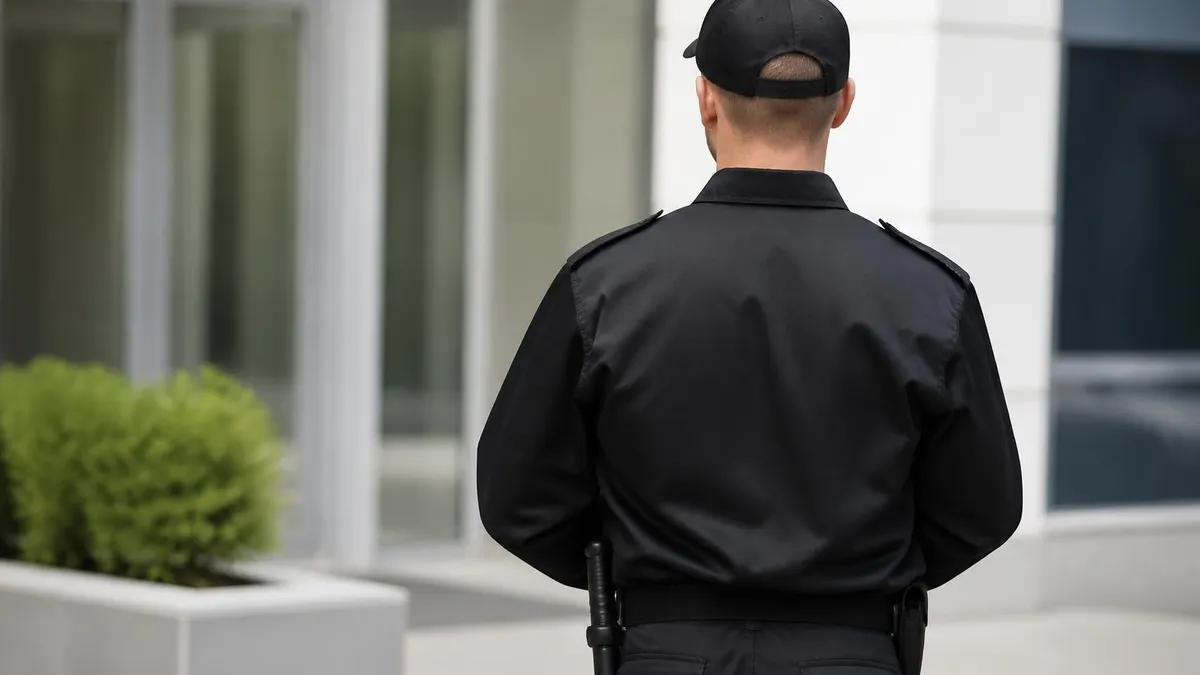
Security Guard Salary UK: How Much Do SIA Guards Really Earn in 2026?

SIA Licence: What It Is and How to Get It

SIA Licence Renewal: Complete UK Guide to Renewing Your Security Guard Licence in 2026

SIA Website: Complete Guide to Online Services and Licence Management
About the Author

Certified Protection Professional & Security Licensing Expert
John Jay College of Criminal JusticeMarcus Rivera is a Certified Protection Professional (CPP) and Physical Security Professional (PSP) with a Master of Science in Security Management from John Jay College of Criminal Justice. With 16 years of corporate security, loss prevention, and executive protection experience, he coaches security professionals through ASIS CPP, PSP, PCI, and state security guard licensing examinations.