
SIA Licence: What It Is and How to Get It 2026 October
🎯 Learn what an SIA licence is, who needs one, the application process, costs, and how to pass the required training to work legally as a security
What Is an SIA Licence?
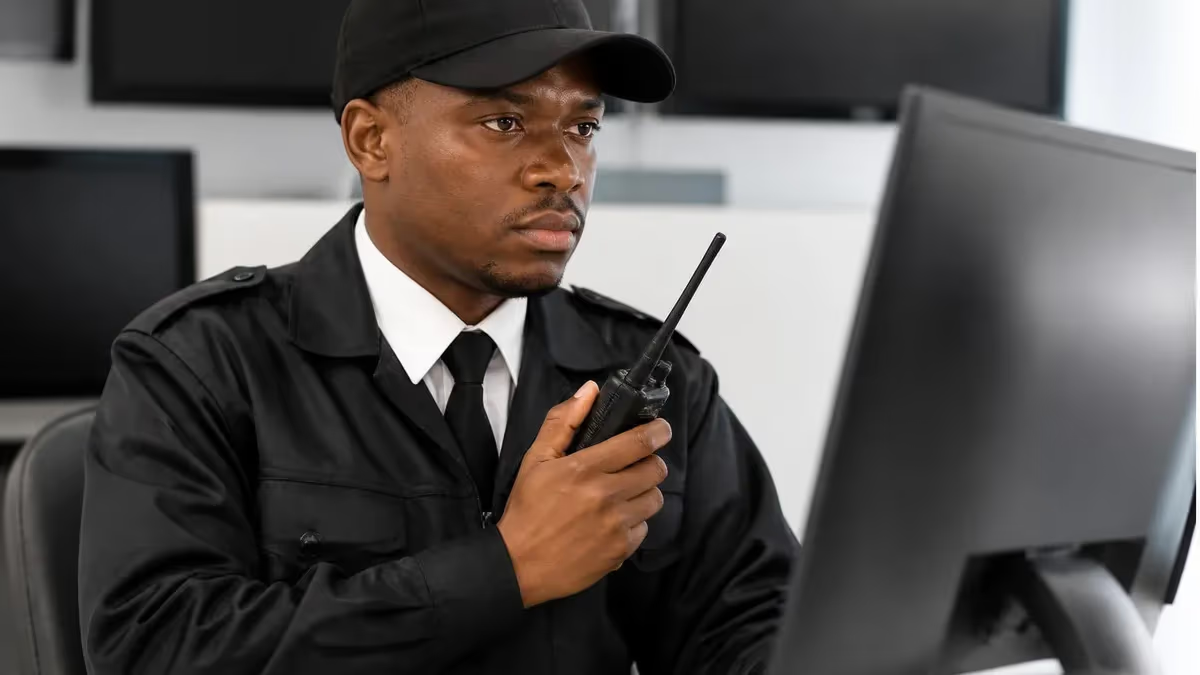
An SIA licence is a legal requirement for anyone working in the private security industry in the UK. The Security Industry Authority—known as the SIA—is the government body that issues these licences and regulates the sector. Without a valid licence, you can't legally work as a door supervisor, security guard, CCTV operator, or in several other security roles.
Think of it this way: your SIA licence is your professional ID card. It tells employers, venues, and the public that you've been trained, vetted, and approved to do the job. It's laminated, wallet-sized, and carries your photo, licence number, and expiry date. Every front-line security professional you see at a club, shopping centre, or event should be carrying one.
The SIA was established under the Private Security Industry Act 2001, and the licensing scheme became compulsory from 2003 onwards. Before that, the industry had no formal regulation—anyone could work security without checks or training. The SIA licence changed all that, bringing consistency and accountability to a sector that's grown significantly over the past two decades.
Who Needs an SIA Licence?
If you're doing licensable conduct—basically, front-line security work—you need one. The roles covered include:
- Door supervisor — working on pub, club, or venue doors
- Security guard — protecting premises, assets, or people
- CCTV operator (public space surveillance) — monitoring cameras in public areas
- Close protection officer — personal protection work (bodyguard roles)
- Cash and valuables in transit (CVIT) — moving money or valuables
- Key holding — responding to alarms and securing premises
- Vehicle immobiliser — clamping or immobilising vehicles on private land
If you're in a management role and don't do front-line work yourself, you may need an SIA Approved Contractor Scheme (ACS) accreditation instead—but most operational staff need the standard licence. Volunteers and certain exempt roles (like military or police) have different rules.
Types of SIA Licence
There isn't just one SIA licence—there are several, each tied to a specific role. The most common ones you'll encounter:
Door Supervisor Licence — the most popular. It covers venue security and includes first aid training, conflict management, and physical intervention. Many door supervisors also add the CCTV module to get a dual licence, which makes them more employable.
Security Guard Licence — covers static guarding roles. The training is shorter than door supervision and doesn't include physical intervention, so it suits roles like retail security, site guarding, and reception security.
CCTV (Public Space Surveillance) Licence — required if you're monitoring cameras in public spaces. It's worth noting that CCTV in a private shop or office doesn't need this licence—only public-facing surveillance does.
Close Protection Licence — for bodyguard work. This one has higher training requirements and is more expensive to obtain. Most close protection operatives start with a door supervisor licence first.
SIA Licence Requirements
Before you can apply for an SIA licence, you need to meet several criteria. The SIA isn't just handing these out—there's a genuine vetting process involved.
You must be 18 or over. There's no upper age limit, but you need to be at least 18 to apply.
You must have the right to work in the UK. The SIA checks your identity and immigration status. If you're applying on a limited visa, your licence will only be valid for the duration of your right to work.
You must pass a criminal record check. A basic Disclosure and Barring Service (DBS) check is mandatory. Certain criminal convictions—especially violent ones or those involving dishonesty—will lead to a refusal. Minor or spent convictions don't automatically disqualify you, but the SIA assesses each application individually.
You must complete the required training qualification. This is the big one. You can't just apply—you need a recognised qualification first. More on this below.
The Training You Need
The qualifications accepted by the SIA are at Level 2 or Level 3, depending on the role. For a security guard licence, you're looking at a Level 2 Award for Door Supervisors or, more specifically, a Level 2 Award for Security Guards. For door supervision, it's the Level 3 Award for Door Supervisors.
These qualifications are delivered by SIA-approved awarding organisations—bodies like HABC, Highfield, NOCN, and SFJ Awards. You can't just turn up and sit the exam; you need to go through a training provider that's been vetted and approved.
The training itself covers:
- Law and regulations relevant to security work
- Fire safety procedures
- Health and safety in the workplace
- Incident reporting and crime scene preservation
- Communication skills and dealing with conflict
- First aid (for door supervisors)
- Physical intervention (for door supervisors only)
The duration varies. A security guard course can typically be completed in about three to four days of intensive training plus an assessment. Door supervisor training takes longer—around 150 guided learning hours—which usually translates to two or three weeks full-time, or longer part-time.
You'll need to pass written assessments and, for door supervisors, a practical physical intervention assessment. Don't skip preparation—the first-time pass rate for some modules hovers around 60-70%, so it's worth taking the revision seriously.
How to Apply for an SIA Licence
Once you've completed your training and received your qualification certificate, here's the process:
Step 1: Get your qualification certificate. Your training provider sends this directly, usually within a few weeks of completing your course. Don't apply before you have it—the SIA will reject incomplete applications.
Step 2: Create an account on the SIA website. Go to sia.homeoffice.gov.uk and register. The application is done entirely online.
Step 3: Complete the application form. You'll need to provide your personal details, your qualification details, and your identity documents. The SIA accepts passports, biometric residence permits, and other approved ID documents.
Step 4: Pay the fee. As of 2024, the fee is £190 for a three-year licence. This is non-refundable, so make sure you meet the requirements before applying.
Step 5: Undergo the criminal record check. The SIA triggers a DBS check as part of the process. You don't need to apply for this separately—it's built into the application.
Step 6: Wait for a decision. Standard processing takes around 25 working days, though it can be faster. You can track your application online.
How Much Does an SIA Licence Cost?
The SIA application fee is £190 for a three-year licence—that's the official fee paid directly to the SIA. But that's only part of your total cost.
Training courses are additional. A security guard course from a reputable provider typically costs between £200 and £400. Door supervisor training, being longer and more involved, usually runs between £600 and £1,200 depending on the provider, location, and whether it includes resits.
So realistically, getting your SIA licence from scratch will cost you somewhere between £400 and £1,500 all in. Some employers—particularly larger security contractors—will fund the training for candidates they want to hire. It's worth asking before you sign up for a course.
First aid certificates, if not included in your training, add another £80–£150. And if you're doing close protection, expect to pay significantly more—that training alone can run to £3,000 or beyond.
Renewing Your SIA Licence
SIA licences are valid for three years. You can apply to renew up to six months before your licence expires—and you should, because if it lapses you'll need to reapply from scratch, which means the full fee again and potentially refresher training.
Renewal costs the same: £190. The process is similar to the initial application—online, through the SIA portal. The SIA will run another DBS check, so any new convictions in the three-year period will be reviewed.
You don't automatically need to redo your training qualification when renewing, unless your qualification has a specific expiry (some first aid certs need refreshing, for example). Check with your qualification awarding body to be sure.
Working Without an SIA Licence
This one's straightforward: don't do it. Working in a licensable role without a valid SIA licence is a criminal offence under the Private Security Industry Act 2001. You could face an unlimited fine or up to five years in prison. Employers who knowingly hire unlicensed staff face similar penalties.
The SIA carries out regular inspections and enforcement operations. Venues—especially nightclubs and large events—get checked. If you're found working without a licence, both you and your employer face serious consequences.
There's no grace period or informal arrangement that makes it acceptable to work without one. If your licence has expired or you're waiting for your first application to come through, you can't legally work front-line security in the meantime.
Tips for Getting Your SIA Licence Faster
A few things can help speed up the process or improve your chances of approval:
Choose an accredited training provider carefully. Not all providers are equal—some have better pass rates, more experienced trainers, and better-organised assessments. Read reviews, ask about pass rates, and check they're on the SIA's approved list before booking.
Get your paperwork ready before applying. Having your identity documents scanned and ready, your qualification certificate to hand, and your right-to-work documents in order means you can submit a clean, complete application the first time.
Don't rush the training. Even if a provider offers an unusually fast course, the guided learning hours are there for a reason. Rushing through the material increases your chance of failing assessments, which wastes time and money.
Be honest on your application. The DBS check will surface convictions—trying to hide them makes things worse. The SIA assesses applications fairly, and a minor conviction doesn't necessarily mean a refusal.
SIA Licence for International Workers
If you've moved to the UK from abroad and want to work in security, your overseas security experience counts for something—but your foreign licence doesn't. You'll need a UK SIA licence regardless of what you held in your home country.
The right to work check is particularly important for international applicants. You'll need to demonstrate your immigration status clearly. If you're on a work visa with a specific end date, your licence will mirror that expiry rather than the standard three years.
Language isn't a formal requirement listed by the SIA, but training courses are delivered in English, and you'll need to pass written assessments in English. Practical communication skills are also assessed for some modules. If English isn't your first language, factoring in some preparation time before starting the course is sensible.
Several training providers do offer support for ESOL learners, so it's worth asking when you're shopping around for courses.
Career Prospects With an SIA Licence
Getting your SIA licence opens doors—literally and professionally. The UK security industry employs around 350,000 people, and demand for licensed professionals is steady. Entry-level security guard roles typically pay between £10 and £13 per hour; door supervisors can earn £12 to £18 or more, especially in London or at busy venues.
From there, career paths branch in a few directions. Experienced operatives often move into supervisory or management roles, where you're coordinating teams rather than doing front-line work yourself. Close protection is a lucrative specialty, though it requires significant additional training and experience. Some people use their SIA licence as a stepping stone into the police service or other protective roles.
The licence you earn stays with you—it belongs to you, not your employer. That means if you change jobs, you take it with you. In a sector where many workers are on contracts or move between employers, that portability matters.
Is the SIA Licence Worth It?
If security work is what you want to do—yes, absolutely. The licence is the entry ticket to a regulated, growing industry. Without it, you're locked out of front-line work legally. With it, you have credibility, employability, and a foundation to build a career on.
The upfront cost—training plus the application fee—is real, but it's not unreasonable compared to what many other vocational qualifications cost. And unlike a lot of professional certifications, the SIA licence leads directly to paid employment fairly quickly. Many people are working within weeks of completing their training.
There's also a practical upside: because the industry is regulated, wages have improved over the past decade. Employers can't just hire anyone who turns up anymore—they need licensed staff, which gives you bargaining power.
If you're serious about a career in security, start by researching SIA-approved training providers in your area. Compare prices, check their pass rates, and look for providers that offer support beyond just sitting you in a classroom. The training is only the beginning—but getting it right sets you up for everything that follows.
About the Author

Certified Protection Professional & Security Licensing Expert
John Jay College of Criminal JusticeMarcus Rivera is a Certified Protection Professional (CPP) and Physical Security Professional (PSP) with a Master of Science in Security Management from John Jay College of Criminal Justice. With 16 years of corporate security, loss prevention, and executive protection experience, he coaches security professionals through ASIS CPP, PSP, PCI, and state security guard licensing examinations.