
CCTV Operator Jobs in the UK: Pay, Licence & How to Get Started in 2026 October
💡 CCTV operator jobs in the UK: pay (£20k-£40k), SIA Public Space Surveillance licence, training, shifts, and where to apply. 2026 October guide.

Looking for CCTV operator jobs in the UK? You're stepping into one of the steadier corners of the security industry. While door supervisors deal with rowdy queues and mobile patrols clock thousands of miles a week, CCTV operators sit in climate-controlled control rooms watching screens, spotting trouble before it escalates, and coordinating the response. The work is mentally demanding rather than physical, and the pay can climb well past £30,000 once you've got a few years and the right clearance behind you.
This guide walks you through everything: what the job actually involves day-to-day, the SIA Public Space Surveillance (CCTV) licence you'll need, where the jobs are, what they pay in 2026, the shift patterns to expect, and how to break in if you're starting from scratch. Whether you're switching careers, leaving the forces, or just curious about life in a control room, you'll get a straight answer here.
Quick facts (2026): CCTV operator jobs in the UK pay £20,000 to £40,000+ per year. You need a Public Space Surveillance (CCTV) SIA licence for most roles, which costs £190 plus training. Around 24,000 licensed CCTV operators work across council control rooms, retail, transport hubs, casinos, and critical national infrastructure sites.
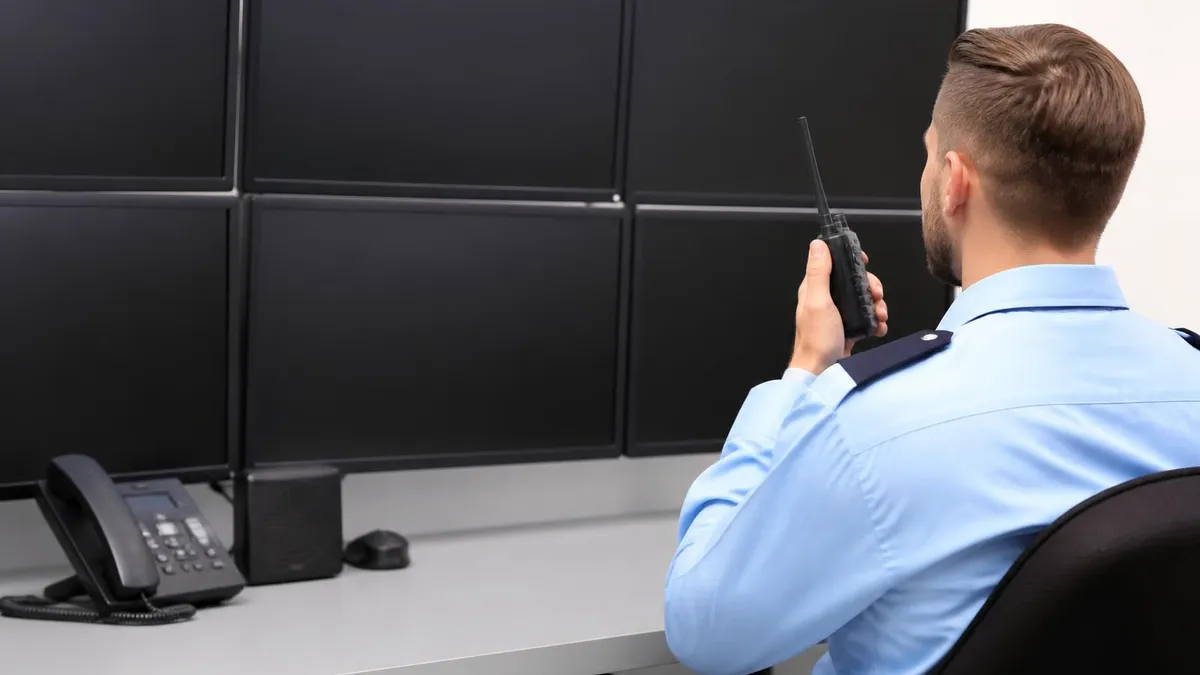
A CCTV operator (officially a Public Space Surveillance Operator, sometimes called a Control Room Operator) monitors live and recorded camera feeds to detect crime, anti-social behaviour, accidents, and security threats. You're the eyes that never blink. When something kicks off — a fight outside a pub, a shoplifter slipping merchandise into a bag, a vehicle parked suspiciously near a station — you're the one who spots it, calls it in, and tracks the suspect with PTZ cameras while officers respond.
The job is part observer, part communicator, part evidence handler. You'll talk to police on Airwave radio, brief security guards on the ground, and burn evidence DVDs for criminal prosecutions. It's not glamorous, but it matters. Every successful arrest in a town centre or every prevented incident at a transport hub usually has a CCTV operator behind it.

CCTV Operator Jobs at a Glance
Key Facts at a Glance
| Item | Value | Details |
|---|---|---|
| SIA licence fee (3 yrs) | £190 | |
| Minimum training course | 3 days | |
| SIA licence processing time | 4-6 weeks |
Where you work shapes everything — pay, shifts, the type of incidents you'll see, and the career ladder above you. A council town-centre control room feels nothing like a casino floor surveillance suite, and a Network Rail control centre is a different world again. Below are the three biggest sectors employing CCTV operators in 2026, with realistic pay and what the day-to-day actually looks like.
Where CCTV Operators Work
Council-run control rooms cover town centres, parks, transport interchanges, and CCTV-monitored public spaces. You'll work alongside police, ambulance, and council enforcement teams. Most operate 24/7 with a small team per shift (usually 2-4 operators).
Pay: £22,000-£30,000/yr on NJC pay scales. Public sector benefits include LGPS pension, sick pay, and 25-30 days holiday. London weighting adds £3,000-£5,000.
Day-to-day: monitoring 16-32 cameras, ANPR alerts, supporting police investigations, evidence retrieval requests, working with town centre wardens. Quiet stretches in the morning, busier evenings and weekends.
Now, the licence. You can't just walk into a control room and start watching screens for the public. The licence renewal (SIA) regulates this work tightly, and you need a Public Space Surveillance (CCTV) licence before you can be deployed in most paid CCTV roles that monitor the general public. The exception is some "in-house" arrangements where staff only watch their own employer's private premises — but these exemptions are narrow, so always check current SIA guidance for your specific role.
To get the licence, you have to complete an approved Level 2 Award first, then apply to the SIA with proof of training, ID, and a DBS check. The licence runs for three years and costs £190 to apply. Background checks rule out anyone with serious recent convictions. You must be 18 or over.
What You Need to Qualify
- Duration: 3 days minimum
- Cost: £200-£400
- Provider: Highfield, Pearson, BTEC-aligned
- Topics: CCTV ops, codes of practice, DPA, evidence
- Fee: £190 (2026)
- Validity: 3 years
- DBS: Basic check required
- Processing: 4-6 weeks typical
- Casino: Gambling Commission PFL
- Transport: CTC/SC clearance
- First Aid: Often preferred
- Conflict Mgmt: Useful for shared roles
The training side is straightforward but you have to do it the right way round. You take the Level 2 Award for Working as a CCTV Operator (Public Space Surveillance) within the Private Security Industry — yes, that's the full mouthful — before you apply for the licence.
Plenty of providers run the qualification: Highfield, Pearson Edexcel, and dozens of regional training centres listed on the SIA website. A good SIA licence course covers CCTV operation principles, codes of practice, the Data Protection Act 2018, communications procedures, and evidence handling. Sign up with an SIA-approved trainer or your licence won't be accepted. Always double-check the provider's accreditation before paying — there are still a few unapproved trainers running courses that won't get your application through.
Course length is usually three days (around 18-22 guided learning hours), with a written assessment at the end. Pass rates are high if you actually attend and pay attention. Some providers bundle the Level 2 Award with the licence application paperwork as a package deal — handy if you want one less thing to organise. If you're researching different SIA training courses, look for one that includes practical control room exercises, not just classroom theory.
How to Become a CCTV Operator: Step by Step
Step 1: Book Your Level 2 Award
Step 2: Apply for the SIA CCTV Licence
Step 3: Wait for Issue (4-6 Weeks)
Step 4: Apply for Jobs
Step 5: Interview & Background Checks
Step 6: Site Induction & Buddy Training
Step 7: First Independent Shift
Pay varies more than you'd think. An entry-level operator in a quiet retail park might start at £20,000 a year, while a senior operator at Heathrow on rotating shifts with SC clearance can pull £40,000+ before overtime. Council jobs sit comfortably in the middle on NJC pay bands, and they come with the LGPS pension that's increasingly rare in private security. London weighting adds another £3,000-£5,000 across the board.
If you're chasing maximum pay, look at casino floors (with the gambling licence on top), critical national infrastructure, and senior control room positions at major transport operators. Shift premiums make a real difference. Most CCTV operations run 24/7, so nights and weekends are unavoidable — but they pay better. Night-shift uplifts of 25-30% are standard, and weekend differentials of 15-25% are common. Bank holidays and Christmas Day usually attract double-time. If you can stomach a 12-hour night shift, your hourly rate effectively jumps from £10/hr to £13-£15/hr without touching the headline salary figure.
Skills Employers Look For
- ✓Active SIA Public Space Surveillance (CCTV) licence
- ✓Strong attention to detail and visual acuity
- ✓Computer literacy — comfortable with VMS software (Genetec, Milestone, Axis)
- ✓Clear written communication for incident reports
- ✓Calm under pressure when serious incidents unfold
- ✓Confident radio communication (Airwave / TETRA)
- ✓Ability to sit and concentrate for long shifts
- ✓Punctuality and reliability — control rooms can't run short-staffed
- ✓Basic customer service for visitor or telephone enquiries
- ✓Clean DBS background and willingness to undergo deeper clearance
Shift patterns are something you'll want to think about before signing on. The classic CCTV operator schedule is 4-on/4-off with 12-hour shifts — two days, two nights, four off. It sounds harsh on paper, but plenty of operators love the pattern because it gives you long blocks of time off for family, side work, or recovery. Other rotations include 2-on/2-off, three days then three nights, or fixed shifts at corporate sites that only need cover during business hours.
Day-only roles do exist, mostly in private corporate control rooms, retail loss prevention during opening hours, and some council enforcement teams. They're popular and competitive — expect to wait for one to come up, and the pay tends to be lower than 24/7 roles because there's no shift premium. If you're considering this as a long-term security guard career path, the 24/7 schedule with shift differentials usually wins on lifetime earnings.

The technology side of the job is more interesting than you might guess. Modern control rooms run Video Management Software (VMS) like Genetec Security Center, Milestone XProtect, or Axis Camera Station. You'll learn to navigate camera trees, set up bookmarks during incidents, export evidence clips with metadata intact, and operate PTZ cameras with joystick controllers to follow suspects across long distances.
Add to that ANPR (automatic number plate recognition), video analytics that flag motion in restricted zones or abandoned objects, body-worn camera review, and integration with access control and intruder alarms. Modern systems also use machine-learning analytics to surface unusual events automatically. You don't need to be a tech wizard to start, but the operators who do best are the ones who keep learning the software as it evolves.
Casino CCTV — extra requirement: If you want to work in casino surveillance (Genting, Caesars, Hippodrome, Aspers), you need a Gambling Commission Personal Functional Licence (PFL) in addition to your SIA CCTV licence. The PFL takes another 6-12 weeks to process and costs around £185. Pay is higher (£25k-£40k+) and the work is more specialised — cheat detection, card counting, money laundering surveillance — but you have to clear both regulators.
Where to actually find the jobs? Indeed.co.uk has the largest volume of CCTV operator listings in the UK, followed by Reed and Total Jobs. Council roles are often posted only on the council's own recruitment portal — search "council jobs" plus your local authority name. Civil Service Jobs lists government CCTV roles (HM Courts, prison service, MoD sites). Major SIA-approved contractors run dedicated careers pages: Mitie, OCS, Securitas, G4S, Bidvest Noonan, Wilson James, and Corps Security all hire continuously.
Specialist agencies like SecureCloud and Securipol focus on placing CCTV operators with their client base. LinkedIn is increasingly useful for senior roles (Control Room Manager, Operations Manager, Intelligence Analyst). And don't underestimate word of mouth — many control rooms recruit through informal referrals from existing staff, especially for night-shift cover. Once you're in the industry, opportunities surface faster.
Pros and Cons of CCTV Operator Work
- +Mostly indoor, climate-controlled work — no patrolling in the rain
- +Lower physical demands than door supervisor or mobile patrol roles
- +Stable shift patterns let you plan life around long blocks off
- +Career ladder into supervisor, manager, and analyst roles
- +Specialist tracks pay well: counter-terrorism, CNI, casino surveillance
- +Lower confrontation risk than front-line guard work
- +SIA licence is portable — switch employers easily across the UK
- +Pension and benefits strong in council and transport roles
- −Sedentary work can lead to back pain and eye strain
- −Night shifts disrupt sleep patterns and social life
- −You'll witness traumatic events — violence, accidents, suicides
- −Long quiet stretches require sustained mental focus
- −Repetitive at low-activity sites (gated communities, small retail)
- −Limited customer interaction — not for extroverts
- −Christmas, bank holidays, and weekends often unavoidable
- −Initial setup costs (£400-£600) before you earn a penny
Career progression is real if you want it. Most operators start as a front-line CCTV Operator on £20-£25k. After 1-3 years of clean record, good incident handling, and reliability, you'll move into Senior Operator or Lead Operator on £25-£32k. From there, Supervisor and Shift Manager roles open up at £30-£38k, and Control Room Manager or Operations Manager at £35-£50k+ depending on the size of the operation.
Some experienced operators bridge sideways into police support staff, security consultancy, intelligence analysis, training delivery, or sales for security technology vendors. Specialist tracks pay even better. Counter-terrorism (CT) operators at major transport hubs and government sites can earn £40-£55k with the right clearance. CNI (Critical National Infrastructure) operators at power stations and water treatment plants are in high demand. If you're after city-centre work specifically, security guard jobs in London include a strong pipeline of CCTV operator vacancies at Transport for London, the Met, Heathrow, and major corporate estates in the City.
Interviews for CCTV operator roles tend to be competency-based. Hiring managers want to see you can handle pressure, follow procedures, and won't crumble during a serious incident. Common questions include: "Why do you want to be a CCTV operator?", "How would you handle witnessing a serious crime?", "What do you know about the Data Protection Act and CCTV?", and "How do you stay focused for long periods?"
Prepare a few real examples from past jobs that show calm, methodical thinking — these matter more than technical knowledge for entry roles. For senior or specialist positions, expect deeper technical questions about VMS software, evidence procedures, GDPR compliance, and incident command.
Some employers run a practical test in their actual control room to see how you respond when given a live or simulated scenario. Don't fake what you don't know — operators who admit to gaps and show willingness to learn usually get further than those who bluff.
What It Costs to Qualify (2026)
- Level 2 Award: £200-£400
- SIA Licence: £190
- Basic DBS: £23
- Total: £413-£613
- Common at: Mitie, OCS, Securitas, G4S
- Catch: Sign contract first
- Council jobs: Rarely reimburse
- Always ask: At interview
- Universal Credit: Work programme schemes
- Forces: ELC (Enhanced Learning Credits)
- Finance plans: Most training providers
- Upgrade: Faster if already SIA-licensed
The total cost to qualify in 2026 sits at roughly £413-£613 if you're funding it yourself: £200-£400 for the Level 2 Award, £190 for the SIA licence, and £23 for the basic DBS check. Some employers reimburse your training and licence fees once you've signed a contract, especially the larger contractors hungry for staff. Always ask at interview, because the answer can shift £400+ either way on your real take-home in year one.
Council jobs rarely reimburse upfront, but they do offer the most stable career and the best long-term pension, so factor that in when you're comparing offers. A £25k council job with LGPS, sick pay, and 28 days holiday is often worth more across a decade than a £28k contractor role on basic terms.
Funding options include Universal Credit work programme schemes for some unemployed applicants, ELC (Enhanced Learning Credits) for serving and recently-discharged forces personnel, and finance plans offered by training providers. If you're already working in another security role and switching from door supervisor or guard, your existing SIA history makes the transition smoother — the SIA processes upgrade applications faster.
Worth flagging the duties side again, because new applicants often underestimate the variety. On any given shift you might monitor 4-32 camera feeds across multiple monitors and operate PTZ cameras to follow a person of interest from one street into another. You'll detect crimes in progress, log accidents, and communicate by encrypted radio with security guards on the ground.
You'll also liaise directly with police controllers via Airwave, write and submit incident reports, maintain CCTV equipment logs, and burn evidence DVDs or USB sticks for criminal investigations — all while staying compliant with the Data Protection Act 2018 and GDPR. The compliance side matters more than people realise.
Every camera you operate, every recording you retrieve, and every clip you export has to follow strict procedures. Mishandled evidence collapses court cases. Shared footage without authority breaches GDPR and risks the operator's licence. Good operators learn the documented procedures cold and stick to them, even on quiet nights when nobody is watching.
Settings that don't require an SIA CCTV licence are narrower than people think. The main exemption covers in-house staff at single private premises — for instance, a supermarket security team monitoring only its own store, with no contracted-out element and no monitoring of public space outside the building.
Even there, the moment cameras cover the car park or pavement, the exemption can fall away. There are also a handful of specific council and statutory exemptions, but the safest assumption is: if it's a paid CCTV monitoring role and the cameras catch the general public, you need the licence. Don't gamble on a grey area.
One last piece of advice: treat your first year as a CCTV operator as a learning period, not just a job. The operators who progress fastest are the ones who pay attention to how senior colleagues handle complex incidents, ask questions about the VMS software, study the codes of practice properly, and volunteer for the awkward shifts that nobody else wants.
Within 18 months you'll have enough experience to move to a higher-paying control room or specialist role. Within five years you can be running shifts. If you've made it this far, you're seriously considering this work — which is more than most people do before applying. Get your training booked, get your licence in motion, and start watching job boards now so you know what's typical for pay and shift patterns in your area. The control rooms are hiring, and reliable operators are always in short supply.
Set yourself a realistic three-month plan: book the course in week one, sit it in week two or three, submit your SIA application immediately after, and use the licence wait window to brush up on VMS basics, write a tailored security CV, and line up two or three job applications ready to fire the moment your card lands. That's how the people who get hired fastest actually do it.
CCTV Operator Jobs Questions and Answers
About the Author

Certified Protection Professional & Security Licensing Expert
John Jay College of Criminal JusticeMarcus Rivera is a Certified Protection Professional (CPP) and Physical Security Professional (PSP) with a Master of Science in Security Management from John Jay College of Criminal Justice. With 16 years of corporate security, loss prevention, and executive protection experience, he coaches security professionals through ASIS CPP, PSP, PCI, and state security guard licensing examinations.