
Who's Running for Sheriff? Understanding Deputy Sheriff Roles, Elections, and Careers
Who's running for sheriff in your county? 🎯 Learn deputy sheriff roles, salary, election process, and how to pass the exam.

If you have been searching for who's running for sheriff in your county, you are not alone. Sheriff elections draw significant public attention because the sheriff is one of the few law enforcement leaders directly accountable to voters. But beyond the ballot, understanding what a deputy sheriff actually does — and what it takes to become one — is just as important for anyone interested in a career in local law enforcement. Deputies form the backbone of every sheriff's office across the United States, handling everything from patrol and arrests to court security and civil process.
A deputy sheriff is a sworn law enforcement officer appointed by an elected sheriff to carry out the duties of the office. Unlike municipal police officers who work under a police chief appointed by city government, deputy sheriffs serve under a constitutionally elected official. This distinction shapes the entire culture of a sheriff's department, from hiring decisions to policy priorities. When a new sheriff wins an election, it can mean shifts in enforcement philosophy, staffing levels, and community engagement strategies — making sheriff elections deeply consequential for residents and deputies alike.
The roles that deputy sheriffs perform vary widely depending on the jurisdiction. In rural counties, a single deputy may be the only law enforcement presence across hundreds of square miles. In large urban counties like Los Angeles or Cook County, sheriff's deputies number in the thousands and are organized into specialized units covering narcotics, homicide, courts, jails, and patrol. Understanding this range helps voters and aspiring deputies appreciate how diverse and demanding the profession truly is.
For those asking about riverside county sheriff says no immigration enforcement by deputies, this reflects a broader national conversation about the boundaries of sheriff authority. Sheriffs who win elections often come in with specific policy platforms regarding immigration cooperation with federal agencies, use of force, and community policing. These platforms directly affect how deputies are trained and deployed, making the connection between sheriff elections and day-to-day deputy work incredibly direct.
The process of becoming a deputy sheriff typically begins with passing a competitive written examination, followed by physical fitness testing, background investigation, psychological evaluation, and a formal interview process. The written exam tests reading comprehension, mathematical reasoning, situational judgment, and knowledge of laws and procedures. Candidates who prepare thoroughly for this exam give themselves a significant advantage in what is often a highly competitive selection process drawing hundreds of applicants per opening.
Whether you are a voter trying to evaluate candidates for your county's top law enforcement post, a student researching career paths in criminal justice, or someone actively preparing for a deputy sheriff exam, this guide covers everything you need. From understanding the difference between a sheriff and a deputy to breaking down salary expectations and the steps toward getting hired, this article provides a comprehensive look at the world of the deputy sheriff and how it connects to the democratic process of sheriff elections.
Staying informed about local sheriff elections and the policies candidates promote helps communities hold law enforcement accountable. At the same time, those aspiring to serve as deputies should understand that their career will be shaped in part by whoever wins the election — and that preparation for the written exam is the first concrete step they can take toward putting on the badge.
Deputy Sheriff by the Numbers

Sheriff vs Deputy Sheriff vs Police Officer: Core Differences
The sheriff is a constitutionally elected official, directly accountable to voters. They set department policy, manage the budget, and oversee all deputies. Because they are elected, they answer to the public rather than a city council or mayor.
A deputy sheriff is appointed — not elected — by the sitting sheriff. Deputies carry out the sheriff's law enforcement duties including patrol, arrests, warrants, and court security. They can be hired or released at the sheriff's discretion.
Police officers work for a city or municipality under a police chief who reports to elected city officials. Their jurisdiction is typically limited to city limits, while sheriff's deputies often cover unincorporated county areas and may have broader jurisdiction.
Sheriff's offices have jurisdiction over the entire county, including cities that contract for law enforcement services. Deputies may also operate county jails, serve civil process documents, and provide security for courts — duties rarely assigned to city police.
Understanding the sheriff election process is essential for both voters and aspiring deputies. In nearly every U.S. county, the sheriff is an elected position, meaning candidates must campaign publicly, win a primary, and then face the general election. Most sheriff terms last four years, though some states have two-year terms. Candidates typically must meet baseline qualifications: a minimum age (usually 18 or 21), no felony convictions, and in many states a minimum law enforcement experience requirement. Some states mandate that candidates hold a valid peace officer certification before running.
The political nature of the sheriff's office means that election outcomes can significantly reshape a department. A new sheriff may bring in a different management team, change use-of-force policies, alter how the jail is run, or modify agreements with federal immigration agencies like ICE. For the rank-and-file deputy sheriff, these changes can affect daily operations, training requirements, and even opportunities for promotion. Career deputies learn to adapt to new administrations while maintaining professionalism and continuity of service.
Sheriff candidates typically run on platforms addressing public safety priorities specific to their county. Rural candidates may focus on drug enforcement, property crime, and response times to remote areas. Suburban candidates often emphasize community policing, school safety, and traffic enforcement. Urban candidates face pressure on issues like jail conditions, use of force accountability, and relationships with diverse communities. Understanding these platforms helps voters make informed choices and helps aspiring deputies gauge the direction of a department before applying.
Primary elections for sheriff can be contentious, particularly in counties that are heavily Democratic or Republican, where winning the primary is effectively winning the office. Incumbents running for reelection use their record on crime statistics, budget management, and notable incidents — including incidents like a Pima County sheriff's deputy shot and killed an armed man — to demonstrate their leadership. Challengers often campaign on promises of reform, better training, or improved community relations.
Once elected, the new sheriff typically has broad authority to reorganize the department. They appoint undersheriffs and command staff, set enforcement priorities, and negotiate labor contracts with the deputy sheriff association that represents rank-and-file officers. These associations play a powerful role in shaping working conditions, salaries, and disciplinary procedures. A strong association can protect deputies from arbitrary dismissal and advocate for better equipment and pay.
For those interested in sheriff deputy salary information across different counties, it is worth noting that compensation is heavily influenced by the outcomes of collective bargaining negotiations between the association and the sheriff's administration. Counties with active, well-funded deputy associations tend to offer higher salaries and better benefits packages than counties where deputies have weaker collective representation.
Voters evaluating sheriff candidates should look beyond campaign promises to examine actual track records. How did the candidate handle a crisis? What do current deputies say about the candidate's leadership? Has the candidate served in law enforcement, and if so, in what capacity? Community endorsements from neighborhood associations, faith leaders, and business groups can provide additional context for evaluating who is best suited to lead the county's most visible law enforcement agency.
Deputy Sheriff Roles: Patrol, Courts, and Corrections
Patrol deputies are the most visible face of a sheriff's office. They respond to emergency calls, conduct traffic stops, investigate suspicious activity, and make arrests. In unincorporated county areas — places outside any city's jurisdiction — patrol deputies are the primary law enforcement presence. They may cover vast geographic territories with limited backup, requiring strong independent judgment and self-reliance.
Patrol deputies also conduct proactive community policing by attending neighborhood meetings, building relationships with local businesses, and working with schools on safety programs. Many sheriff's offices require new deputies to spend several years on patrol before they can apply for specialized assignments like detective work, narcotics, or special operations teams. Strong patrol performance is the foundation of a successful deputy sheriff career.

Is a Deputy Sheriff Career Right for You? Pros and Cons
- +Competitive salary with overtime and specialty pay opportunities
- +Excellent pension and retirement benefits compared to many private sector jobs
- +Broad jurisdiction and varied daily assignments keep the work dynamic
- +Strong union and association representation for working conditions
- +Clear promotion pathways from deputy to sergeant, lieutenant, and beyond
- +Service to community with direct, meaningful public safety impact
- −Shift work including nights, weekends, and holidays is unavoidable
- −High exposure to traumatic incidents increases risk of PTSD and burnout
- −Physical demands are intense and increase injury risk over a career
- −Hiring process is lengthy — 6 to 18 months from application to badge
- −Policy and culture can shift dramatically after each sheriff election
- −Public scrutiny and accountability are intense, especially during controversies
Steps to Become a Deputy Sheriff: Complete Checklist
- ✓Verify you meet minimum age requirements — typically 18 to 21 depending on the state.
- ✓Earn at least a high school diploma or GED; many agencies prefer college coursework.
- ✓Obtain or work toward a valid driver's license with a clean driving record.
- ✓Review and correct your criminal history — any felony conviction is typically disqualifying.
- ✓Submit a complete employment application through the county sheriff's official website.
- ✓Pass the written deputy sheriff examination — prepare at least 8 to 12 weeks in advance.
- ✓Complete physical fitness testing — practice running, push-ups, sit-ups, and obstacle courses.
- ✓Clear a thorough background investigation including credit check, employment history, and references.
- ✓Pass the psychological evaluation — answer honestly and consistently throughout.
- ✓Successfully complete the oral board interview with command staff or a panel of evaluators.
- ✓Graduate from the approved law enforcement academy — typically 4 to 6 months in duration.
- ✓Complete your field training officer program before working independently as a sworn deputy.
The Written Exam Is Your First Gatekeeper
Most sheriff's offices rank applicants primarily by their written exam score before advancing them to physical and background screening. Candidates who score in the top 10% of applicants move forward fastest and have the most choice of assignment. Investing 60 to 90 days in structured exam preparation — using practice tests, timed drills, and review of relevant laws — dramatically improves your score and your chances of being hired.
The deputy sheriff salary is one of the most frequently researched topics among people considering this career, and for good reason — compensation varies dramatically by county, state, and years of experience. According to the U.S. Bureau of Labor Statistics, the median annual wage for sheriff's patrol officers and deputies is approximately $64,000 nationally.
However, this figure masks enormous range: deputies in rural Midwestern counties may start at $38,000 per year, while those in high-cost coastal counties like Los Angeles, Santa Clara, or King County in Washington can earn base salaries exceeding $90,000 — with overtime pushing total compensation well above $100,000.
Base salary is only part of the compensation picture for deputy sheriffs. Most sheriff's offices offer significant additional pay including overtime (which can add 20–40% to annual earnings), specialty pay for assignments like K-9, SWAT, or detective work, bilingual pay for officers fluent in Spanish or other languages, education incentive pay for college degrees, and longevity pay that increases automatically with years of service. These additions mean that a 10-year deputy in a mid-sized county might earn substantially more than the base salary figure suggests.
Retirement benefits are a major draw for the deputy sheriff career. Most sheriff's offices participate in defined-benefit pension plans that provide retirement income based on years of service and final salary. A typical formula might pay 3% of final salary multiplied by years of service, meaning a deputy who works 25 years and retires at a $70,000 salary would receive $52,500 per year in pension income — for life. Many plans allow early retirement at age 50 with 20 years of service, making law enforcement one of the few fields where retirement in one's early 50s is genuinely achievable.
Health insurance benefits for deputies and their families are typically robust, with the county paying a large portion or all of the premium. Dental, vision, and life insurance are standard. Many agencies also offer generous paid time off — including vacation days that increase with seniority, sick leave, and holiday pay. These comprehensive benefits packages are a significant reason why deputy sheriff positions attract thousands of applicants in competitive jurisdictions.
Geographic variation in deputy sheriff salary is significant enough that location should factor into any career decision. California consistently ranks as the highest-paying state for sheriff's deputies, with agencies in the Bay Area and Southern California offering some of the nation's highest law enforcement salaries. For specific information on la sheriff deputy salary benchmarks compared to other law enforcement roles, comparing across agencies reveals how dramatically jurisdiction size and local cost of living affect total compensation.
Beyond the financial benefits, the career satisfaction of deputy sheriff work is consistently rated highly in surveys of law enforcement professionals. Deputies often cite the variety of daily work, the sense of purpose that comes from protecting their communities, the camaraderie among colleagues, and the opportunity to make meaningful differences in people's lives as primary motivators. Many deputies who retire go on to work in private security, investigations, or consulting, finding that their skills translate well across industries.
Professional development opportunities within a sheriff's office are extensive. Deputies can pursue advanced training in areas like crisis negotiation, K-9 handling, accident reconstruction, digital forensics, and federal task force participation. Many agencies will pay for deputies to attend specialized schools through the FBI National Academy, the California POST, or regional law enforcement training centers. This commitment to ongoing education makes the deputy sheriff career one with genuine lifelong learning opportunities alongside its service mission.

Background investigations for deputy sheriff positions are among the most thorough conducted by any employer. Investigators will review your credit history, social media accounts going back years, every previous employer, and all contacts listed on your application. Issues discovered late in the process — including old unpaid debts, inconsistencies in your application, or past drug use — can disqualify you after months of investment. Start reviewing your background now and address any issues before you apply.
Preparing for the deputy sheriff written examination requires a focused and strategic approach. The exam typically covers several core subject areas: reading comprehension, written communication, mathematical reasoning, situational judgment, and sometimes memorization tasks. Each sheriff's office designs or purchases its own version of the exam, so the specific format varies — but the underlying skill areas tested are consistent across the country. Understanding what is tested and practicing in those areas is far more effective than generic test-taking books.
Reading comprehension questions on the deputy sheriff exam present passages — often about law enforcement scenarios, agency policies, or incident reports — and ask candidates to identify main ideas, draw inferences, or find specific details. Strong readers who can extract accurate information quickly score well on this section. To improve, practice reading complex nonfiction texts, summarizing paragraphs in your own words, and answering questions without going back to re-read. Speed and accuracy both matter when the clock is running.
Mathematical reasoning questions test practical math skills that deputies use on the job: calculating distances, determining times, working with percentages, interpreting basic statistics in crime reports, and performing arithmetic under pressure. Questions are usually multiple choice and range from basic arithmetic to problems involving ratios and proportions. Candidates who review fractions, decimals, percentages, and basic algebra before the exam typically outperform those who rely on general intelligence alone. Timed practice is essential because many candidates know the material but run short on time.
Situational judgment questions present realistic scenarios — a deputy encounters a domestic disturbance, discovers a colleague behaving improperly, or must choose how to respond to a call with incomplete information — and ask which response is most appropriate. These questions assess values, ethics, and practical decision-making more than pure knowledge. There are right and wrong answers, and they generally align with professional law enforcement standards: prioritizing safety, following chain of command, acting with integrity, and protecting civil rights. Reviewing the core values statements of several sheriff's offices can help candidates understand what evaluators are looking for.
Many candidates underestimate the importance of the oral board interview that follows written testing. A panel of three to five evaluators — typically a mix of command staff, human resources, and sometimes community representatives — asks structured behavioral questions designed to assess communication skills, professionalism, and alignment with departmental values.
Common questions include: describe a time you resolved a conflict, how would you handle a situation where your supervisor gave you an order you disagreed with, and what motivates you to pursue a career in law enforcement. Practicing answers out loud, with another person asking questions, is the most effective preparation.
Physical fitness standards for deputy sheriff candidates typically include a timed 1.5-mile run (most agencies require completion in under 15–17 minutes), a minimum number of push-ups and sit-ups completed in one minute each, and sometimes a shuttle run or obstacle course. Standards vary by agency and may be adjusted for age and gender. Candidates should begin cardiovascular and strength training at least 90 days before their physical test date. Passing physical fitness testing is non-negotiable — no amount of exam performance can compensate for failing the physical.
For candidates who want to learn how to become a sheriff deputy with the best possible preparation strategy, combining practice tests with physical training and background review gives the strongest overall profile. Many successful deputies report spending 45–90 minutes per day on written exam preparation during the weeks before testing, focusing on their weakest subject areas and reviewing explanations for every question they miss — not just noting the right answer but understanding why it is correct.
Academy training, which follows successful hiring, typically runs four to six months and covers defensive tactics, firearms qualification, vehicle operations, first aid and CPR, criminal law, constitutional rights, report writing, and scenario-based field exercises. Recruits who arrive physically fit and with solid foundational knowledge from their exam preparation adapt more easily to the academy's demands. Graduating from the academy and completing field training with a field training officer marks the transition to full, independent deputy status — the culmination of a process that often takes well over a year from first application.
Sheriff elections and deputy sheriff careers are intertwined in ways that everyday citizens rarely consider. When a new sheriff takes office, the priorities they campaign on become operational reality for hundreds or thousands of deputies. A sheriff who runs on aggressive drug enforcement will redirect deputy resources toward narcotics operations. A sheriff who runs on jail reform may restructure corrections deputies' duties and oversight. Understanding the sheriff election cycle helps aspiring deputies make informed choices about which agencies align with their values and career goals.
Community policing has become a central theme in modern sheriff election campaigns across the country. Candidates increasingly emphasize their plans to build relationships between deputies and the communities they serve — holding public meetings, creating citizen advisory boards, expanding school resource officer programs, and improving transparency around use-of-force incidents. Deputies who embrace community policing principles find that these skills enhance their effectiveness, reduce confrontational encounters, and build the public trust that makes every law enforcement job easier and safer.
The deputy sheriff association plays a meaningful role during election season. These associations — which function similarly to trade unions — may formally endorse candidates who they believe will be better partners in labor negotiations and will respect deputies' working conditions. Association endorsements carry weight because they signal to the rank and file how a candidate is perceived internally. Candidates who receive association backing typically have records of supporting fair pay, reasonable discipline procedures, and adequate staffing levels.
Technology is reshaping what it means to be a sheriff's deputy in the 21st century. Body cameras are now standard equipment in many jurisdictions, creating records of every interaction and increasing accountability for both deputies and members of the public. License plate readers, crime mapping software, and predictive analytics tools give deputies data-driven support for patrol decisions. Drones are increasingly deployed for search and rescue operations, crime scene documentation, and public safety monitoring. Candidates running for sheriff must demonstrate fluency with these technologies and a credible vision for their ethical use.
Mental health support for deputy sheriffs has moved from a niche concern to a mainstream policy priority. Departments across the country are investing in peer support programs, employee assistance resources, and mandatory check-ins following traumatic incidents.
The rates of PTSD, divorce, substance abuse, and suicide among law enforcement officers are significantly higher than in the general population, and progressive sheriff candidates often highlight mental health support as a key component of their staffing and retention strategies. For deputies, working in an agency that takes wellness seriously is not just a personal benefit — it affects performance, safety, and the quality of service provided to the public.
Diversity and representation within sheriff's offices have become significant campaign themes. Many communities are calling for sheriff's departments to reflect the demographic composition of the counties they serve. Female deputies, deputies of color, and LGBTQ deputies bring perspectives that can improve community relations and reduce bias in enforcement decisions. Sheriff candidates who emphasize inclusive hiring practices and cultural competency training are responding to genuine community demand for law enforcement that understands and respects the people it serves.
For anyone who is currently researching sheriff election candidates in their county, the most useful information often comes from attending public candidate forums, reviewing each candidate's endorsements, reading local news coverage of their records, and speaking with current or former deputies who have worked under their leadership. Just as voters research candidates for school board or county commissioner, investing time in understanding who is competing for sheriff — and what each candidate believes about the role of the deputy sheriff in modern society — produces better informed votes and stronger communities.
Sheriff Questions and Answers
Ace the Sheriff (Deputy Sheriff Exam): Your Guide

What Happens When a Sheriff Comes to Evict You: A Complete Guide to the Eviction Process

Deputy vs Sheriff vs Officer: Key Differences Explained

Deputy Sheriff: Roles, Elections, Salary, and Career Guide

How Does a Sheriff Serve Papers? Civil Process, Cost, and What to Expect
About the Author
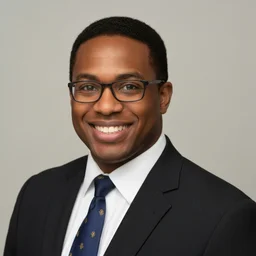
Law Enforcement Trainer & Civil Service Exam Specialist
John Jay College of Criminal JusticeMarcus B. Thompson earned his Master of Arts in Criminal Justice from John Jay College of Criminal Justice and served 12 years as a law enforcement officer before transitioning to full-time academy instruction. He is a POST-certified instructor who has prepared candidates for police entrance exams, firefighter assessments, and civil service examinations across dozens of agencies.
Join the Discussion
Connect with other students preparing for this exam. Share tips, ask questions, and get advice from people who have been there.
View discussion (7 replies)