
How Does a Sheriff Serve Papers? Civil Process, Cost, and What to Expect
How does a sheriff serve papers? Civil process explained: summons, subpoenas, evictions, fees, service hours, and what happens when service fails. ✅
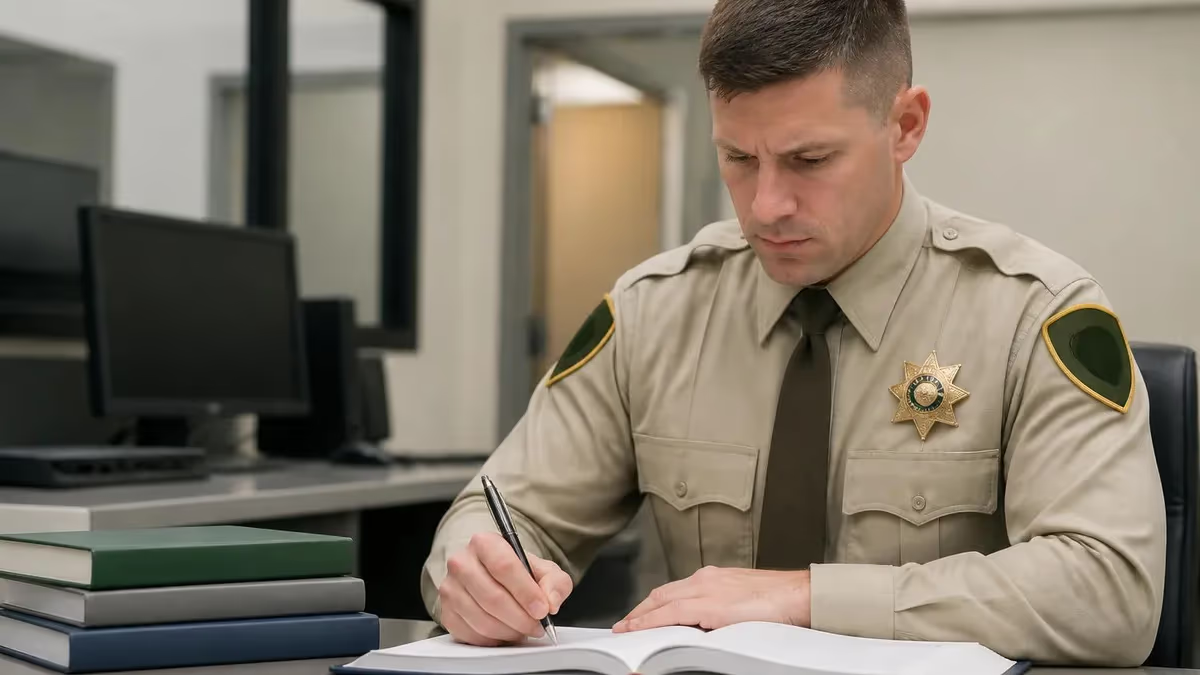
Sheriff's deputies don't just patrol roads and run jails. A big piece of the job, often handled by a dedicated civil process division, is delivering legal papers to people on behalf of the courts.
If you've ever asked yourself how does a sheriff serve papers, the short answer is: a deputy in uniform shows up at the address listed on the paperwork, hands you the documents, notes the date and time, and files a return of service with the court. The longer answer covers a maze of rules about who can be served, when, where, and what happens if you slam the door.
Civil process work matters because the U.S. legal system runs on notice. Before a judge can hear a case against you, evict you, restrict your contact with someone, or take part of your paycheck, you have to be officially told. Sheriffs are the default neutral party for that delivery in most counties. Their badge gives the service legal weight, and their training keeps things from turning into shouting matches on someone's porch. Private process servers exist, sure, but in family court, small claims, eviction, and many civil suits, the sheriff's civil division is still the go-to.
This guide walks through everything the average person actually wants to know. What kinds of papers do sheriffs serve? How do you request service if you're the one filing? How late can a deputy knock on a door, and do they work weekends? What does it cost? What happens when they can't find the person? And, on the receiving end, why would a sheriff come to your house at 8 in the morning, and what should you do when one does? Practical answers, plain language, no fluff.

Sheriff Civil Process Snapshot
Key Facts at a Glance
| Item | Value | Details |
|---|---|---|
| Typical Fee | $30-$100 | |
| Attempts | 3 | |
| Standard Hours | M-F | |
| Court Required | 100% |
Each sheriff's office runs its own civil process unit, and the rules vary state to state, but the core mechanics look similar across the country. The court issues paperwork. The party filing the case takes that paperwork to the sheriff (or has the clerk forward it) along with a service fee and a completed information sheet. A deputy in the civil division then attempts personal service at the listed address. If the person is home, papers change hands, the deputy fills out a return of service form, and that form goes back to the court as proof. Done.
What complicates things is human behavior. People dodge process. They don't answer the door. They move. They give fake addresses on old paperwork. They live with roommates who lie about whether they're home. Sheriffs have legal tools for these situations, including substitute service on a competent adult at the residence, posting on the door for certain landlord-tenant matters, and sworn affidavits supporting service by publication when nothing else works. Each tool has rules, and skipping steps can void the service entirely.
The party requesting service pays the fee upfront. In most counties this runs $30-$50 for one attempt at one address, with extra charges for additional addresses, mileage, or special handling. Low-income filers can usually ask the court for a fee waiver. If you win your case, judges often add the service fee to the costs the losing side has to repay. Deputies do not negotiate the price, and they do not refund fees just because the person being served wasn't home.
Civil papers cover an enormous range of legal documents. The most common are summonses tied to lawsuits, which formally tell someone they're being sued and give a deadline to respond. Subpoenas demand testimony or documents in connection with a case. Restraining orders, sometimes called orders of protection, restrict contact between named parties.
Eviction notices, often called writs of possession or notices to vacate, start the process of removing a tenant. Family court paperwork includes divorce petitions, custody motions, and child support orders. Wage garnishment notices tell employers to withhold money from a paycheck. Small claims papers handle disputes below a certain dollar threshold.
The deputy serving the papers does not know what's inside them, and that is on purpose. Civil process work is mechanical: deliver, document, return. Deputies don't take sides, don't comment on the case, and don't answer legal questions. If you have questions about what to do with the papers you just received, the deputy will tell you to read the cover sheet, note the deadline, and contact an attorney or the listed court clerk. That neutrality is part of what makes sheriff service legally clean compared to having an angry ex hand you the documents.
Types of Civil Papers Sheriffs Serve
Notifies a defendant of a civil lawsuit. Triggers a strict response deadline, usually 20-30 days, before default judgment can be entered.
Commands appearance at a hearing or deposition, or production of documents. Ignoring one can result in contempt of court charges.
Temporary or permanent order limiting contact between named parties. Common in domestic violence, harassment, and stalking cases.
Formal notice from a landlord, served through the court, starting the legal process to remove a tenant from a rental property.
Family court paperwork notifying a spouse that divorce proceedings have started. Sets deadlines for filing a response.
Court order to an employer requiring withholding from wages, usually for unpaid debts, child support, or tax liens.

Requesting sheriff service is straightforward once you know the path. Step one is having papers that are actually ready to serve. That means a stamped, court-issued copy of the summons, subpoena, motion, or order. Walking into the civil division with a homemade letter does not work.
Step two is filling out the service request form, also called an information sheet or process intake form in some counties. This sheet asks for the names and current addresses of the parties to be served, any phone numbers or workplace details, vehicle descriptions, photos, and warnings about pets or weapons in the home. The more accurate the address, the higher the success rate.
Step three is paying the fee, which varies by county and by the number of people you need served. Step four is waiting. Most civil divisions enter the request into a routing system, assign it to the geographic deputy who covers that zone, and attempt service within one to two weeks.
Some counties post live status on a public portal so you can check whether service has been attempted. Once service is complete or has failed after the required number of attempts, the civil division files the return with the court and mails or emails you a copy. That return is your proof, and you'll need it in court.
Civil Process Practical Details
How late can a sheriff serve papers depends on state rules and local policy. Most civil divisions limit attempts to roughly 6 a.m. through 10 p.m., with the bulk of service happening between 8 a.m. and 8 p.m. Some states explicitly bar service before sunrise or after sunset for routine civil matters. Restraining orders and emergency protective orders often get exemptions and can be served any hour. Knock-and-talk visits at midnight are not how civil service works in practice.
Service does not always succeed on the first try. Deputies typically attempt personal service at least three times, varying the day of week and time of day. If the person being served opens the door, the paper is handed over and the return shows personal service complete. If a competent adult resident, usually defined as someone living at the address and over a certain age, opens the door and the rules allow it, the deputy can leave the paperwork with that person as substitute service. The deputy still notes the name and relationship of whoever received the papers.
When nobody answers across multiple attempts, the deputy returns the papers to the court marked non-service or unable to serve. At that point, the party who filed has options. They can request a new address search and reattempt. They can move to alternate service methods, including service by certified mail with return receipt, posting on the property combined with mailing, or in rare cases service by publication in a newspaper. Each method requires court approval and an affidavit explaining what diligent efforts have already been made. Skipping straight to publication without trying personal service first will get the service rejected.
Hiding from a deputy does not make a lawsuit disappear. If the sheriff documents repeated diligent attempts and the court approves alternate service, you can be legally served by posting, mail, or publication without ever meeting the deputy. Missing the response deadline on properly served papers leads to default judgment, which can mean money owed, eviction granted, custody decided, or a restraining order entered against you, all without you ever showing up in court. The cleanest move when papers arrive is to read them, note the deadline, and call a lawyer.
Why would a sheriff come to your house? Most of the time, it's civil process. A deputy is delivering papers tied to a lawsuit, family court matter, eviction action, restraining order, or subpoena. The visit is brief, professional, and procedural.
Deputies usually arrive in a marked vehicle and uniform, knock at the door, ask for the named party by name, and confirm identity before handing over the documents. They do not enter the home without permission or a warrant. They do not arrest people for civil matters, with narrow exceptions like contempt warrants. The whole interaction is often less than five minutes.
That said, civil process is not the only reason a deputy might be on your porch. Welfare checks, follow-up visits on prior reports, neighborhood patrol contacts, and witness interviews are all routine. Civil eviction lockouts involve deputies enforcing a court order to remove tenants. Wage garnishment paperwork sometimes goes to the workplace instead of the home, but related notices may still reach the house. If you genuinely have no idea why a deputy is at your door, ask politely who they're looking for and what paperwork they're delivering. Deputies will identify the case type even if they don't discuss contents.

What to Do When You're Served
- ✓Stay calm and accept the papers without arguing with the deputy about the case or the other party.
- ✓Note the exact date and time you received the documents and write it on the cover sheet for your records.
- ✓Read the entire document carefully, including any deadlines, court dates, and response requirements buried in legal language.
- ✓Identify the response window, often 20 to 30 days for civil cases and much shorter for evictions and emergency orders.
- ✓Contact a licensed attorney or the listed court clerk if anything in the paperwork is unclear before the deadline passes.
- ✓File any required answer, response, or motion with the court before the deadline to avoid a default judgment against you.
- ✓Show up to every scheduled court date listed in the paperwork, even if you think the case has no merit.
- ✓Keep a clean copy of everything you receive and everything you file, including envelopes and return receipts.
Refusing service is a common reaction and rarely works the way people think it does. If a deputy correctly identifies you and you decline to physically take the papers, most states allow the deputy to drop them at your feet or tuck them in the doorway and note refusal on the return. That counts as good service. Walking away mid-conversation, slamming the door after identifying yourself, or shouting that you don't accept service does not undo the delivery. The court treats you as served because the deputy followed the rules. Arguing about it later, especially without a lawyer, generally fails.
What also doesn't work is sending a relative to lie about your identity. If you pretend not to be the named person and the deputy can later prove otherwise through surveillance, social media, neighbors, or workplace confirmation, the service still stands and you may face additional sanctions. Roommates who answer the door and falsely claim you don't live there create the same risk. Substitute service rules in many states allow the deputy to leave papers with any competent adult resident, so even an honest mistake by your roommate can result in valid service.
Sheriff Service vs. Private Process Server
- + —
- + —
- + —
- + —
- + —
- − —
- − —
- − —
- − —
- − —
Cross-jurisdictional service adds another layer. If you live in one county and the person you need served lives in another, your local sheriff usually forwards the papers to the destination county's civil division. That second agency then attempts service, files the return back to your originating county, and the paperwork eventually lands at your court. Out-of-state service generally requires either coordinating with the destination state's process rules or using a private process server licensed there. Federal cases sometimes use U.S. Marshals for service of certain process types, though that is far less common than state civil work.
Military service members get special protections under federal law. The Servicemembers Civil Relief Act requires extra care when serving someone on active duty, including a sworn statement of military status and potential stays of proceedings if the servicemember can't participate. Sheriffs serving papers on active-duty personnel often coordinate with the relevant base or unit. Skipping these protections can void the case and expose the filing party to penalties. If you suspect the person you need to serve is in the military, mention it to the civil division up front so they can handle it correctly.
The civil process division is one of the steadiest, least-publicized parts of sheriff's office work, and it intersects with the law enforcement career path in interesting ways. Deputies often rotate through civil for a year or two early in their career. The job teaches them how to read paperwork, navigate neighborhoods, talk to strangers calmly under stress, and document everything in a way that holds up in court. Those skills carry over directly into patrol, investigations, and corrections work. The deputies who handle eviction lockouts and protective order service well are usually the same ones who de-escalate domestic calls effectively.
From the citizen's side, the takeaway is simple. Sheriff's deputies serve a wide range of civil papers as a normal part of their job, the process is governed by clear rules in every state, and the legal weight of being served correctly is real.
Whether you're the person requesting service or the person opening the door, knowing how the civil division works saves time, money, and confusion. If you're the one filing, take the time to fill out accurate paperwork and pay the right fees. If you're the one served, read everything, hit your deadlines, and get advice. The deputy is just the messenger.
A few practical tips help on both sides. Filers should always include alternate addresses on the intake sheet. Workplaces, second residences, and known hangout spots all give deputies more shots at successful service. Photos help too, especially in cases where the named party shares a household with someone of similar age or build.
Phone numbers rarely lead to direct contact, since deputies do not call ahead, but they can support follow-up if the address turns out to be stale. Filers who treat the civil division like a partner, calling politely for updates and submitting clean paperwork, tend to get faster, smoother service than filers who show up frustrated and demand instant results.
Recipients should resist the urge to read papers and react emotionally. The cover sheet of most civil documents tells you exactly what is happening in plain language, including the case number, court address, response deadline, and contact information for the filing party's attorney if there is one. Take a breath, set the papers somewhere safe, and start a folder.
Photograph the documents in case the originals get lost. Write the response deadline on a calendar with a reminder a week in advance. Many courts have self-help centers, free legal clinics, or referral services for people who cannot afford a private attorney. Using those resources before the deadline is far cheaper than fighting a default judgment afterward.
Civil process also reveals something about how local government still works at the human level. Deputies show up at front doors every day across every county in the country, hand someone a piece of paper, write down what happened, and move on to the next stop. The system is unglamorous, occasionally tense, and quietly essential.
Studying for the deputy sheriff exam means understanding this work just as much as understanding patrol, evidence, or report writing. Civil process scenarios appear regularly on situational judgment questions and law-and-procedure sections, and candidates who can walk through service, substitute service, and non-service confidently have a real advantage on test day.
Sample Sheriff - Deputy Sheriff Exam Practice Questions
Try these questions from our free Sheriff - Deputy Sheriff Exam practice tests. The correct answer and an explanation follow each question.
What is the primary responsibility of a Deputy Sheriff Correctional Officer?
- A. Conducting criminal investigations
- B. Enforcing traffic laws
- C. Maintaining the safety and security of the correctional facility
- D. Serving civil process papers
Answer: C. Maintaining the safety and security of the correctional facility
The primary responsibility of a Deputy Sheriff Correctional Officer is to maintain the safety and security of the correctional facility. This includes supervising inmates, preventing escapes, responding to emergencies, and ensuring a secure environment for both inmates and staff. Their role is critical for the orderly operation of the detention center.
The SARA model is a problem-solving method used in community policing. What does the 'A' in SARA stand for?
- A. Action
- B. Arrest
- C. Analysis
- D. Assessment
Answer: D. Assessment
The SARA model consists of four stages: Scanning (identifying the problem), Analysis (analyzing the causes of the problem), Response (implementing a solution), and Assessment (evaluating the effectiveness of the response). Assessment is critical to determine if the solution worked.
When dealing with a domestic disturbance call, what is an important responsibility of a Deputy Sheriff?
- A. Arresting all individuals involved regardless of the situation
- B. Taking statements only from the individuals who made the call
- C. Ignoring the dispute if it seems minor
- D. Mediate the situation to ensure the safety of all parties involved
Answer: D. Mediate the situation to ensure the safety of all parties involved
When responding to a domestic disturbance, a Deputy Sheriff's important responsibility is to mediate the situation and ensure the safety of all parties involved. This involves de-escalating tensions, assessing for any immediate threats, and impartially gathering information from everyone present. The goal is to resolve the conflict peacefully and protect potential victims.
While off-duty and in plain clothes, you witness a heated argument in a parking lot that does not involve physical violence. What is the most prudent initial action?
- A. Immediately intervene, identify yourself as a deputy, and order them to stop.
- B. Ignore the argument as you are off-duty.
- C. Draw your weapon and hold it at a low-ready position in case things escalate.
- D. Observe from a safe distance and call 911 to report the incident to on-duty officers.
Answer: D. Observe from a safe distance and call 911 to report the incident to on-duty officers.
When off-duty, an officer's primary role is to be a good witness unless immediate intervention is required to prevent serious injury or death. Intervening in a non-violent situation can escalate it, especially when your status as an officer is unknown. Observing and contacting on-duty officers is the safest and most effective response.
Sheriff Questions and Answers
About the Author

Law Enforcement Trainer & Civil Service Exam Specialist
John Jay College of Criminal JusticeMarcus B. Thompson earned his Master of Arts in Criminal Justice from John Jay College of Criminal Justice and served 12 years as a law enforcement officer before transitioning to full-time academy instruction. He is a POST-certified instructor who has prepared candidates for police entrance exams, firefighter assessments, and civil service examinations across dozens of agencies.
Join the Discussion
Connect with other students preparing for this exam. Share tips, ask questions, and get advice from people who have been there.
View discussion (7 replies)