
Deputy Sheriff: Roles, Duties, Salary, and How County Sheriff Deputies Serve Communities
Learn what a deputy sheriff does, how county sheriff deputies are hired, salary ranges, and career steps. 🎯 Includes exam prep tips.

A deputy sheriff is one of the most visible and versatile law enforcement officers in the American criminal justice system. Unlike municipal police officers who serve a city, deputy sheriffs are employed by a county sheriff's office and may work across patrol, court security, civil process, and jail operations — often all within a single career. In jurisdictions such as Berkeley County, West Virginia, or Berkeley County, South Carolina, Berkeley county sheriff deputies regularly handle everything from routine traffic stops to felony investigations, making them indispensable to public safety in both rural and suburban communities.
Understanding the role begins with recognizing the constitutional foundation. In most U.S. states, the sheriff is an elected official whose authority derives directly from state law and, in many cases, from the state constitution itself. The sheriff appoints deputies to carry out that authority on a daily basis. This means that deputy vs sheriff distinctions matter in ways that go far beyond job titles — they reflect different levels of accountability, appointment processes, and jurisdictional reach that every aspiring law enforcement professional should understand.
The demand for qualified deputies has grown steadily over the past decade. The Bureau of Labor Statistics projects employment of police and detective occupations — a category that includes deputy sheriffs — to grow at roughly the same rate as the overall labor market, but many individual counties are aggressively recruiting due to retirements and expansions in county services. Competitive salaries, strong benefit packages, and diverse daily duties make the deputy sheriff career path attractive to candidates who want meaningful public service work without being confined to a single specialty.
Beyond patrol duties, county sheriff deputies are often the primary responders in unincorporated areas where no municipal police force exists. This means a deputy might respond to a domestic disturbance, serve civil papers, transport a prisoner, and testify in court — all in a single shift. That breadth of responsibility requires a well-rounded skill set encompassing communication, physical fitness, legal knowledge, and sound judgment under pressure. Candidates who prepare thoroughly for the deputy sheriff examination give themselves a significant advantage in both the hiring process and on the job.
Training standards have also risen sharply. Most states now require deputies to complete a POST-certified academy program lasting between 16 and 26 weeks, followed by a field training period that can add another 12 to 16 weeks before a new deputy works independently. Some larger sheriff's offices — such as Los Angeles County Sheriff's Department, which is one of the largest law enforcement agencies in the world — operate their own academies with highly structured curricula covering firearms, defensive tactics, emergency vehicle operations, and constitutional law.
The examination process itself is competitive, and understanding what the test covers is the first step toward passing it. Most deputy sheriff exams assess reading comprehension, written communication, basic mathematics, situational judgment, and memory and observation skills. A smaller number of agencies also test deductive and inductive reasoning or specific knowledge of laws and regulations. This article walks you through every dimension of the deputy sheriff role — from daily duties and salary benchmarks to exam preparation strategies that actually work — so you can enter the hiring process informed and confident.
Whether you are exploring law enforcement as a second career, a recent criminal justice graduate, or someone curious about how county government maintains public order, this guide provides the factual foundation you need. Read on to discover what separates a patrol deputy from a detective, how compensation varies by county and state, and how you can start preparing for the sheriff deputy examination today.
Deputy Sheriff by the Numbers

How a County Sheriff's Office Is Organized
The constitutionally or statutorily elected chief law enforcement officer of the county. Sets policy, manages the office budget, and bears ultimate legal and political accountability to county voters. Appoints all deputies and senior staff.
The second-in-command, typically appointed by the sheriff. Oversees day-to-day operations, manages division commanders, and often steps in to fulfill sheriff duties when the elected official is absent or incapacitated.
Senior officers who lead major operational divisions such as patrol, investigations, detention, and civil process. They translate the sheriff's policy priorities into operational plans for their respective units.
The frontline workforce. Patrol deputies respond to calls for service, conduct traffic enforcement, make arrests, write reports, and serve as the primary law enforcement presence in unincorporated county areas.
Experienced deputies assigned to SWAT, K-9, narcotics, homicide, or school resource officer programs. Assignment typically requires a minimum of two to five years of patrol experience plus additional specialized training.
The daily duties of county sheriff deputies vary more than those of nearly any other law enforcement officer, and that variety is precisely what draws many candidates to the profession.
On a typical patrol shift, a deputy may begin by reviewing the prior shift's incident logs, checking for outstanding warrants or persons of interest active in their beat, and then spending the next eight to twelve hours responding to a continuous stream of calls for service ranging from traffic accidents and domestic disputes to burglary reports and missing persons cases. The geographic diversity of county service areas means one call might be in a dense suburban neighborhood while the next is on a rural farm road ten miles away.
Court security is another major responsibility that distinguishes the sheriff's office from a municipal police department. In the vast majority of U.S. jurisdictions, the sheriff is statutorily responsible for courthouse security and for transporting defendants from jail to court appearances. Deputies assigned to court security screen visitors with metal detectors, maintain order during proceedings, and physically protect judges, attorneys, witnesses, and jurors. This assignment demands a calm, professional demeanor because deputies regularly interact with distressed family members and emotionally volatile defendants in a confined space.
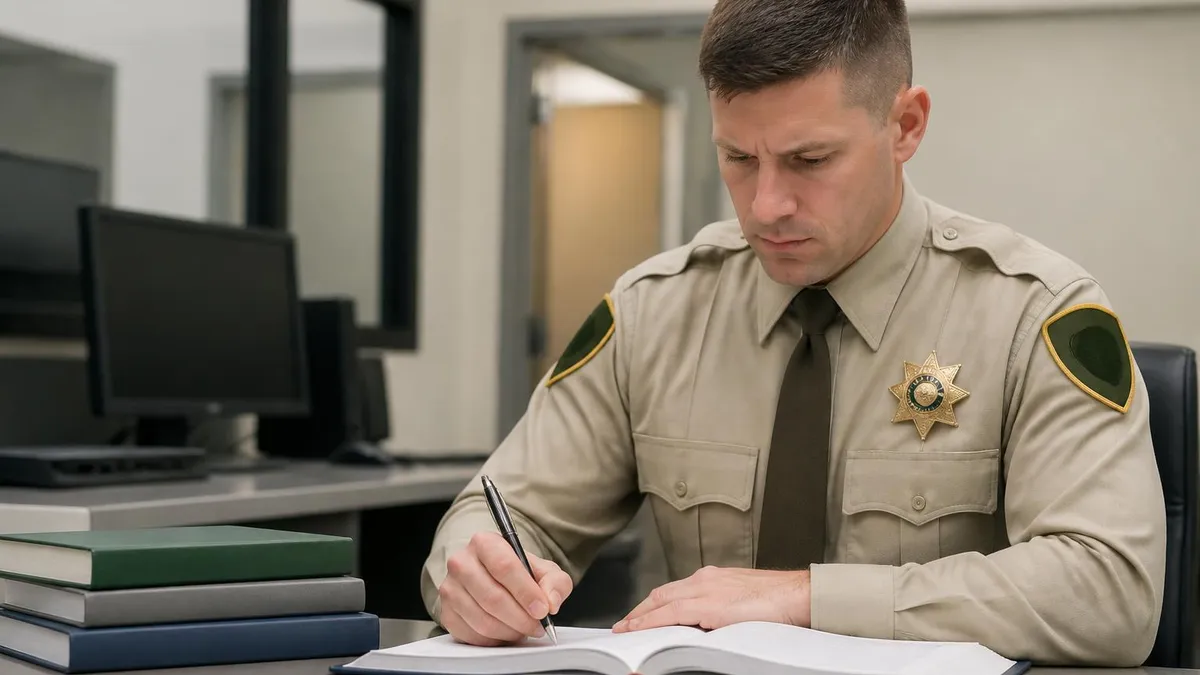
Civil process is perhaps the least glamorous but legally critical function of the deputy sheriff role. State law enables sheriff's offices to serve civil documents including summonses, subpoenas, restraining orders, and eviction notices. A deputy assigned to civil process must understand the legal requirements for valid service in their state, document service accurately to create a legally defensible record, and sometimes interact with individuals who are extremely upset about the documents being served. Poor civil process work can result in lawsuits being dismissed or protective orders being unenforceable — consequences with real safety implications.
Detention and jail operations constitute a third major area of deputy sheriff work. Many smaller and mid-size counties operate their county jail exclusively through the sheriff's office, meaning that deputies rotate through corrections assignments early in their careers. Managing a jail population requires knowledge of inmate rights under the Eighth Amendment, classification systems that separate dangerous or vulnerable inmates, use-of-force protocols specific to a custodial environment, and medication administration procedures for inmates with medical needs. Deputies who demonstrate skill in corrections often move into specialized positions such as classification officer, jail supervisor, or emergency response team member.
Investigations represent the career pinnacle for many deputies. A detective or criminal investigator in a sheriff's office typically handles felony cases including homicide, sexual assault, financial crimes, and organized drug trafficking. High-profile incidents — such as when a sheriff vs deputy jurisdictional question arises during a complex investigation — underscore why detectives must understand not only investigative techniques but also the interplay between county, municipal, state, and federal law enforcement authority. The path to detective usually requires three to seven years of patrol experience, a strong performance record, and successful completion of specialized investigative training.
Community policing programs have expanded significantly within sheriff's offices over the past two decades. Many offices now employ deputies as Community Resource Officers (CROs) who work closely with neighborhood associations, schools, faith communities, and local businesses to address quality-of-life issues before they escalate into serious crimes. Research consistently shows that community policing reduces both crime rates and the perceived fear of crime, making it a priority for sheriff's offices that want to build trust with diverse county populations. Deputies in these roles spend more time on foot or bicycle patrol and at community meetings than in a patrol vehicle.
Emergency management is an additional duty that county deputies often perform that municipal officers rarely handle. Because counties are the primary unit of government for disaster response in most states, sheriff's offices frequently serve as the coordinating law enforcement agency during hurricanes, floods, wildfires, and other large-scale emergencies. Deputies in these situations may direct evacuations, manage search-and-rescue operations, enforce curfews, and coordinate with state and federal agencies including FEMA and the National Guard. This dimension of the job requires deputies to be adaptable, physically resilient, and capable of making critical decisions with incomplete information.
Deputy Sheriff Salary: What You Can Expect to Earn
Entry-level deputy sheriff salary ranges typically fall between $42,000 and $58,000 per year, depending on the state, county size, and local cost of living. Southern and rural counties tend to offer lower starting salaries — sometimes as low as $38,000 — while California, New York, and New Jersey counties routinely offer starting pay above $60,000. Most offices include a sworn officer supplement, holiday pay, and shift differential that adds $3,000 to $7,000 to the base figure annually.
New deputies also receive a comprehensive benefits package that meaningfully increases total compensation. Defined-benefit pension plans, which have become rare in the private sector, remain standard in most sheriff's offices. Deputies typically vest after five to ten years and can retire at full or partial pension after 20 to 30 years of service. Health insurance premiums for sheriff's deputies are heavily subsidized by the county, and many offices cover family members at low or no additional cost to the deputy.
Pros and Cons of a Career as a Sheriff's Deputy
- +Strong defined-benefit pension plans provide lifelong retirement income after 20-25 years of service
- +Diverse daily duties across patrol, courts, corrections, and investigations prevent career stagnation
- +County-wide jurisdiction allows deputies to respond across unincorporated areas and assist municipalities
- +Competitive salary with overtime, specialty pay, and educational incentive supplements
- +Comprehensive health and dental insurance coverage for deputies and their families at low cost
- +Clear promotional pathway from deputy to sergeant, lieutenant, captain, and beyond
- −Rotating shift work including nights, weekends, and holidays disrupts family and social life
- −Physical and psychological demands of the job contribute to higher rates of stress and burnout
- −Starting salaries in rural counties can be modest, sometimes below $42,000 per year
- −Exposure to traumatic incidents including violent crimes, accidents, and death is frequent
- −Mandatory overtime during staffing shortages can extend shifts beyond 12 hours without notice
- −Political changes following a sheriff election can shift departmental culture and priorities rapidly
Pros and Cons at a Glance
| Pros | Cons |
|---|---|
| Diverse daily duties across patrol, courts, corrections, and investigations prevent career stagnation | Rotating shift work including nights, weekends, and holidays disrupts family and social life |
| County-wide jurisdiction allows deputies to respond across unincorporated areas and assist municipalities | Physical and psychological demands of the job contribute to higher rates of stress and burnout |
| Competitive salary with overtime, specialty pay, and educational incentive supplements | Exposure to traumatic incidents including violent crimes, accidents, and death is frequent |
| Comprehensive health and dental insurance coverage for deputies and their families at low cost | Political changes following a sheriff election can shift departmental culture and priorities rapidly |
Deputy Sheriff Exam Requirements: Complete Preparation Checklist
- ✓Confirm you meet the minimum age requirement (typically 21, some agencies accept 18 with restrictions)
- ✓Verify U.S. citizenship or permanent resident alien status as required by your target agency
- ✓Obtain or be on track to obtain a high school diploma or GED before the application deadline
- ✓Ensure your driving record meets the agency's standards (usually no DUI in the past 5-7 years)
- ✓Disclose all prior criminal history accurately on the application — omissions disqualify more applicants than records
- ✓Schedule and pass the agency's physical fitness test (sit-ups, push-ups, 1.5-mile run benchmarks vary by county)
- ✓Register for and complete a timed written examination covering reading, math, and situational judgment
- ✓Prepare a detailed background investigation packet including employment, residence, and reference history for the past 10 years
- ✓Pass a polygraph or Computer Voice Stress Analyzer (CVSA) examination if required by the agency
- ✓Successfully complete a structured oral board interview demonstrating communication and judgment skills
Written Exam Score Often Determines Your Rank on the Eligibility List
In competitive counties, candidates are ranked strictly by written examination score, and the difference between placement in the top 20 versus the top 100 can determine whether you receive a conditional job offer this hiring cycle or wait 12 to 18 months for the next one. Even small investments in targeted exam preparation — just 30 minutes of daily practice over 6 to 8 weeks — statistically improve scores by 8 to 15 percentage points in reading comprehension and mathematics sections.
Career advancement within a county sheriff's office follows a relatively predictable trajectory, but the speed of advancement depends heavily on individual performance, educational attainment, and the size of the agency. At small rural agencies with fewer than 30 deputies, promotional opportunities may arise only once every several years as retirements or expansions create openings. At large metropolitan sheriff's offices with thousands of sworn personnel, competitive promotional examinations for sergeant and lieutenant may occur annually, giving ambitious deputies more frequent opportunities to climb the rank structure.
The promotional examination process typically mirrors the initial hiring process in rigor. Candidates for sergeant must usually demonstrate at least three to five years of patrol experience, pass a written examination covering supervisory principles, departmental policy, and law, and then complete a promotional oral board where a panel of senior officers evaluates leadership potential, communication skills, and scenario-based decision-making. Some agencies also require candidates to submit a written supervisory essay or complete an assessment center that simulates real supervisory challenges.
Specialization is a parallel track to promotion that many deputies find equally rewarding. A deputy who becomes a certified forensic interviewer, accredited financial crimes investigator, or master firearms instructor develops expertise that makes them uniquely valuable to the agency and often commands additional pay without requiring movement into administration. Specialty certifications from organizations such as the International Association of Chiefs of Police (IACP), the National Sheriffs' Association (NSA), or state POST commissions carry professional weight throughout a deputy's career and look strong on promotional applications.
Educational advancement plays an increasingly important role in sheriff's office promotion decisions. Agencies that once promoted almost exclusively on seniority and examination scores now frequently assign points or preference to candidates with bachelor's or graduate degrees. Criminal justice degrees remain popular, but agencies have also shown openness to degrees in public administration, psychology, social work, and emergency management — fields that directly address the complex social and organizational challenges modern deputies face on the job every day.
Lateral transfers between agencies offer another avenue for advancement. A deputy who has built a specialty skill at a small county office — say, cybercrime investigation or human trafficking interdiction — may be able to transfer to a larger metropolitan sheriff's office at a higher rank or salary step than would have been available by waiting for internal promotion. Interstate compacts and reciprocity agreements between states' POST certification bodies have made lateral transfers easier than they were two decades ago, though significant variation remains in how readily states accept out-of-state academy credentials.
Leadership development programs within larger sheriff's offices are creating a new pathway to senior rank for high-performing deputies. Modeled on similar programs in the military and in corporate management, these initiatives identify promising deputies early in their careers and provide them with mentorship, advanced training, and rotational assignments across divisions. Graduates of such programs are statistically more likely to reach the rank of lieutenant or captain and report higher job satisfaction than peers who advanced through traditional examination-only channels.
Retirement transition is also increasingly a planned phase of a deputy sheriff's career rather than a sudden departure. Many retired deputies become contract instructors at regional law enforcement academies, work in private security management, transition to federal law enforcement positions, or run for sheriff themselves. The combination of a vested pension, retiree health insurance, and substantial transferable skills means that a retiring deputy at age 50 typically has 15 or more productive career years ahead — often in roles that use the credibility and expertise accumulated during their sworn service.

More deputy sheriff candidates are disqualified during the background investigation phase than at any other stage of the hiring process. The most common disqualifiers are not criminal records — they are omissions, misrepresentations, or failures to disclose prior drug use, financial irresponsibility, or dishonest conduct on applications. Background investigators are trained to detect inconsistencies and will interview former employers, neighbors, and associates. Always disclose fully and let the agency decide; dishonesty on the application is almost universally fatal to a candidacy.
Preparing effectively for the deputy sheriff written examination requires understanding what each section actually tests and why those skills matter on the job. Reading comprehension questions are designed to measure a candidate's ability to read a policy, statute, or report and accurately extract meaning — a skill deputies use constantly when drafting incident reports, reading court orders, or interpreting departmental directives. Candidates who struggle with reading comprehension often discover that their difficulty stems not from low intelligence but from insufficient daily reading practice and unfamiliarity with formal written language registers.
Mathematics questions on deputy sheriff exams focus on practical, applied problem-solving rather than advanced algebra or calculus. Typical problems involve calculating distances and travel times, converting units of measurement (pounds to kilograms for drug seizure reports, for example), computing percentages for statistical summaries, and basic financial arithmetic for civil process fee calculations. Candidates who review fractions, ratios, proportions, and basic algebra before the examination routinely outperform those who assume the math will be trivially easy — overconfidence is one of the most common reasons otherwise qualified candidates score below the cutoff.
Situational judgment tests (SJTs) present realistic law enforcement scenarios and ask candidates to select the best or worst response from multiple options. Research on SJTs shows that they predict on-the-job performance moderately well, and they are increasingly common in sheriff's office hiring because they assess the kind of discretionary judgment that is difficult to train after the fact. The best preparation for an SJT is to read about law enforcement ethics, community policing philosophy, and use-of-force doctrine so that the principles underlying correct answers become genuinely internalized rather than guessed at.
Memory and observation tests require candidates to study a photograph, scene description, or list of details for a fixed period and then answer questions about what they observed after the material is removed. These tests simulate the mental demands of writing an accurate incident report from memory hours after a complex event. Candidates can improve their performance through deliberate practice with timed observation exercises: study an image for 60 seconds, put it away, and write down every detail you can recall. Repeating this daily for four to six weeks produces measurable improvement in most candidates.
Some jurisdictions, including many California counties and several in the Pacific Northwest, administer a reading and writing test component that asks candidates to read a narrative of an incident and then write their own summary or report. Evaluators score these responses on accuracy, completeness, grammar, organization, and clarity. Candidates who practice writing concise, factually accurate summaries of news articles or incident narratives significantly improve their performance on this section. Riverside county sheriff says no immigration enforcement by deputies policies and similar agency-specific directives illustrate why deputies need strong reading skills to correctly interpret nuanced policy guidance.
Physical fitness preparation must run parallel to written exam preparation rather than being treated as an afterthought. The physical agility test typically measures push-up and sit-up repetitions, a 300-meter sprint, and a 1.5-mile run, with minimum thresholds that vary by age and sex.
Candidates who arrive at the physical test in below-average fitness condition often fail and must wait for the next hiring cycle — a setback that can delay a career start by 12 to 18 months. Starting a structured fitness program at least 12 weeks before the test date gives the body sufficient time to adapt and improve measurably.
The oral board interview is the final major hurdle before a conditional job offer. Panels typically include two to four senior officers who ask structured behavioral questions such as "Tell me about a time you had to make a difficult ethical decision" or situational questions like "How would you handle a domestic disturbance call where both parties are yelling at you simultaneously?" The most effective candidates use the STAR method (Situation, Task, Action, Result) to structure their answers, speak calmly and clearly, and demonstrate self-awareness about their strengths and areas for growth.
Practicing answers aloud — not just mentally rehearsing them — is the single most effective preparation technique for the oral board.
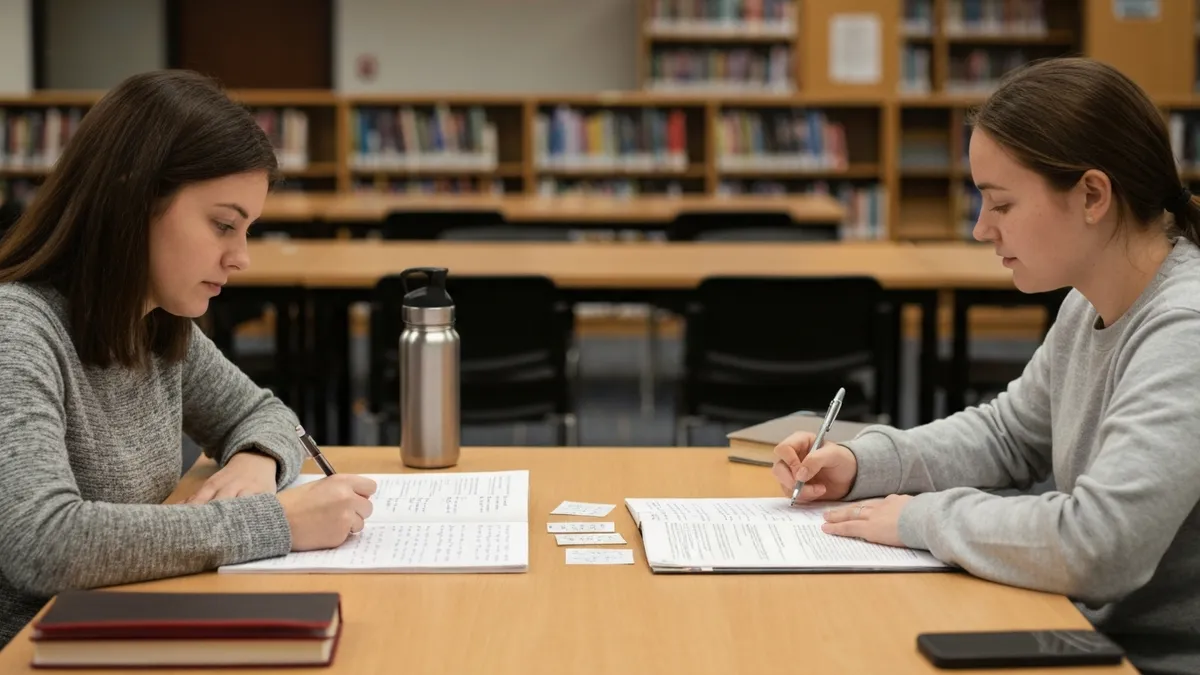
Practical preparation for the deputy sheriff career extends well beyond the examination room. One of the most effective steps a candidate can take is to schedule a ride-along with the sheriff's office before applying. Many agencies offer civilian ride-along programs that allow prospective applicants to observe patrol operations firsthand. A single ride-along shift does more to set realistic expectations about the job than any book or article, and candidates who complete ride-alongs before their oral board interview can speak authentically about what they observed — a quality that resonates strongly with interview panels made up of working deputies.
Volunteering with a sheriff's auxiliary or reserve deputy program is an even more immersive option available in many counties. Reserve deputies typically complete a condensed training curriculum, wear a uniform, and assist with patrol coverage, community events, and non-emergency calls. The time investment is significant — reserve programs usually require 16 to 24 hours per month — but the payoff is equally substantial.
Reserve service demonstrates commitment to the agency, builds familiarity with procedures and culture, and often gives candidates a meaningful advantage in competitive hiring processes. Some agencies give hiring preference to their own reserve deputies when sworn positions open up.
Networking within law enforcement is more important than many candidates realize. Joining the local chapter of a deputy sheriff association as a student or associate member — many state associations allow this — provides access to professional development events, job postings, and informal mentorship from working deputies.
The National Sheriffs' Association and state-level associations regularly publish resources about the profession, and their newsletters and conferences offer insight into emerging issues that can come up in oral board interviews. A candidate who can speak knowledgeably about current challenges facing county law enforcement will stand out from peers who prepared solely from textbooks.
Mental preparation is an aspect of deputy sheriff career readiness that is rarely discussed in application guides but is critically important for long-term success. Research consistently shows that officers who develop proactive stress management strategies early in their careers — regular exercise, strong social support networks, mindfulness practices, and willingness to seek counseling when needed — have significantly lower rates of burnout, substance abuse, and relationship problems than those who ignore psychological well-being. Many modern sheriff's offices now provide employee assistance programs (EAPs) and peer support networks, and using these resources is a sign of professional maturity, not weakness.
Candidates should also research the specific agency to which they are applying in depth before submitting an application. Each sheriff's office has a distinct culture shaped by its elected sheriff's priorities, the county's demographics and geography, and its history. An agency that emphasizes community policing and de-escalation training will look for different qualities in candidates than one that prioritizes tactical capability and rapid response. Aligning your application materials and interview answers with the specific agency's stated values and recent initiatives demonstrates genuine interest and preparation that generic answers cannot replicate.
Understanding the pierce county sheriff's deputies are searching for two shooting suspects type of high-profile incident coverage helps candidates appreciate how quickly sheriff's office operations can shift from routine patrol to major crime response. Deputies who build strong foundational skills during their first years of service — report writing, evidence collection, witness interviewing, and use-of-force documentation — are better prepared to handle these escalations professionally and to contribute meaningfully when their agency is under intense public scrutiny.
Finally, candidates should approach the entire hiring process with patience and persistence. Many successful deputies were not hired on their first attempt. They used the feedback from disqualification letters, improved their examination scores, worked on their fitness, and addressed background concerns honestly in subsequent applications. The investment of time and effort required to become a deputy sheriff is itself a signal to hiring agencies that a candidate has the discipline and determination the job demands. Every step of the preparation process, done well and done honestly, builds the qualities that make a great deputy sheriff in the field.
Sample Sheriff - Deputy Sheriff Exam Practice Questions
Try these questions from our free Sheriff - Deputy Sheriff Exam practice tests. The correct answer and an explanation follow each question.
When dealing with a domestic disturbance call, what is an important responsibility of a Deputy Sheriff?
- A. Arresting all individuals involved regardless of the situation
- B. Taking statements only from the individuals who made the call
- C. Ignoring the dispute if it seems minor
- D. Mediate the situation to ensure the safety of all parties involved
Answer: D. Mediate the situation to ensure the safety of all parties involved
When responding to a domestic disturbance, a Deputy Sheriff's important responsibility is to mediate the situation and ensure the safety of all parties involved. This involves de-escalating tensions, assessing for any immediate threats, and impartially gathering information from everyone present. The goal is to resolve the conflict peacefully and protect potential victims.
A department policy states: 'Any deputy who discharges their firearm in the line of duty must submit a use-of-force report within 24 hours.' Deputy Miller discharged her firearm during a call. Based on this policy, which of the following is a logically certain conclusion?
- A. Deputy Miller must submit a use-of-force report within 24 hours.
- B. An investigation into the incident will be launched immediately.
- C. Deputy Miller was justified in using her firearm.
- D. Deputy Miller will be placed on administrative leave.
Answer: A. Deputy Miller must submit a use-of-force report within 24 hours.
This is an example of deductive reasoning, which involves applying a general rule to a specific case. The policy is the general rule, and Deputy Miller's action is the specific case. The policy directly mandates the report, making that the only conclusion that is logically certain from the information provided.
What legal standard must a Deputy Sheriff meet to conduct a lawful arrest?
- A. Probable cause
- B. Reasonable suspicion
- C. Mere suspicion
- D. Absolute certainty
Answer: A. Probable cause
To conduct a lawful arrest, a Deputy Sheriff must meet the legal standard of probable cause. Probable cause means there are sufficient facts and circumstances to believe that a crime has been committed and that the person to be arrested committed it. This standard is higher than reasonable suspicion but less than absolute certainty.
The penal code states that for a person to be guilty of burglary, they must (1) enter a structure without permission and (2) do so with the intent to commit a crime therein. A deputy finds a suspect inside a homeowner's garage. Which of the following facts, if true, would allow the deputy to make a deductive conclusion that a burglary did *not* occur?
- A. The suspect provides definitive proof that he entered only to seek shelter from a sudden, life-threatening hailstorm.
- B. The suspect entered through an unlocked door.
- C. The homeowner did not see the suspect take anything.
- D. The suspect has no prior criminal record for theft.
Answer: A. The suspect provides definitive proof that he entered only to seek shelter from a sudden, life-threatening hailstorm.
Deductive reasoning requires applying a general rule to a specific instance. The law (general rule) requires the element of 'intent to commit a crime'. If it is definitively proven that the suspect's intent was something else (seeking shelter), then a key element of the crime is missing, and a deductive conclusion can be made that the act did not meet the legal definition of burglary. The other options do not definitively negate the element of intent.
Sheriff Questions and Answers

What Is a Sheriff Deputy? Role, Duties, Salary, and Career Overview
Ace the Sheriff (Deputy Sheriff Exam): Your Guide

What Happens When a Sheriff Comes to Evict You: A Complete Guide to the Eviction Process

Deputy Sheriff: Roles, Elections, Salary, and Career Guide
How Does a Sheriff Serve Papers? Civil Process, Cost, and What to Expect
About the Author
Law Enforcement Trainer & Civil Service Exam Specialist
John Jay College of Criminal JusticeMarcus B. Thompson earned his Master of Arts in Criminal Justice from John Jay College of Criminal Justice and served 12 years as a law enforcement officer before transitioning to full-time academy instruction. He is a POST-certified instructor who has prepared candidates for police entrance exams, firefighter assessments, and civil service examinations across dozens of agencies.
Join the Discussion
Connect with other students preparing for this exam. Share tips, ask questions, and get advice from people who have been there.
View discussion (7 replies)