
PADI Scuba Diving Course: Complete Guide to Open Water Certification & Beyond
Everything about the PADI scuba diving course — costs, steps, open water certification, and prep tips. Start your dive journey today! 🎯

The PADI scuba diving course is the world's most recognized pathway to becoming a certified diver, and for good reason. PADI — the Professional Association of Diving Instructors — has trained more than 29 million divers since 1966, establishing a global standard that is accepted at dive shops, liveaboards, and underwater destinations on every continent. Whether you're drawn to the coral reefs of the Florida Keys, the kelp forests of California, or the blue holes of the Bahamas, starting with a PADI certification opens virtually every underwater door available to recreational divers.
Before you ever strap on a tank, it helps to understand what the full PADI training system looks like and how each level builds on the previous one. The entry point for most adults and teens is the Open Water Diver course, which qualifies you to dive to 60 feet with a buddy anywhere in the world.
From there, Advanced Open Water, Rescue Diver, and Divemaster ratings progressively deepen your skills and expand your maximum depth to 130 feet. Each tier has its own knowledge development component, confined water training, and open water evaluation dives — a structured progression that prioritizes safety without slowing your momentum.
Cost is one of the first questions new divers ask, and it varies more than most people expect. A typical Open Water course in the United States runs between $350 and $700 when you include the eLearning fee, confined water pool sessions, and open water checkout dives.
Gear rental is usually bundled into that figure at most dive centers, though shops in high-tourism areas like Hawaii or the Florida Keys can push the total closer to $900. Online eLearning through PADI's platform averages $185 on its own, giving you the flexibility to complete knowledge development at home before you ever set foot in a pool.
Time commitment is another practical concern. The Open Water Diver course requires a minimum of four open water training dives spread over at least two days, plus confined water skills sessions that typically run four to six hours combined. Most students finish the entire certification in a long weekend — Friday evening for eLearning review, Saturday for pool work, and Sunday for the ocean or quarry dives. Accelerated resort courses can compress this into a single day for shallower resort certifications, though those do not carry the same worldwide recognition as a full Open Water credential.
The medical side of scuba certification is something many beginners overlook until they're standing at the dive center counter. PADI requires every student to complete a medical statement before water training begins. Conditions like asthma, heart disease, and certain medications can affect dive eligibility, and some students will need physician clearance. This is not a bureaucratic hurdle — it's a genuine safety measure, because the underwater environment places real physiological demands on your cardiovascular and respiratory systems that don't exist at the surface.
One of the most appealing aspects of the PADI system is its global portability. A certification card issued by a dive center in landlocked Colorado is just as valid as one issued in Miami. The card itself — now often digital via the PADI app — lists your certification level, your instructor's ID, and your training date, and it can be verified instantly by any PADI-affiliated dive operation worldwide. This portability matters enormously if you plan to travel for diving, since most liveaboards and remote resort dive programs require proof of certification before they'll let you in the water.
Whether you're a complete beginner researching your first course or a lapsed diver considering an open water refresher course with PADI to rebuild your skills, this guide covers everything you need to know — from the structure of each certification level to study strategies, exam preparation, and the best ways to make the most of your training investment. Read on for a comprehensive look at what PADI training actually involves and how to succeed at every stage.
PADI Scuba Diving by the Numbers
PADI Certification Levels: From Beginner to Professional
The entry-level certification that allows recreational diving to 60 feet worldwide. Requires completion of five knowledge development sections, five confined water sessions, and four open water training dives with a PADI-certified instructor.
Extends your skills across five adventure dives including mandatory deep and navigation specialties. No written exam required — learning happens in the water. Unlocks a 100-foot depth limit and is a prerequisite for Rescue Diver training.
Widely regarded as the most personally rewarding PADI rating. Teaches you to recognize and manage dive emergencies, assist stressed divers, and perform rescue scenarios. Requires current Emergency First Response (CPR/first aid) certification before enrollment.
The first professional-level rating. Divemasters guide certified divers, assist instructors, and supervise dive activities. Training typically takes 3–6 months and includes an internship component at a dive center or resort operation.
More than 70 specialty courses cover everything from underwater photography to cave diving and wreck diving. Each specialty adds a distinct credential to your certification record and can count toward the Master Scuba Diver rating.
The padi owd course — Open Water Diver — is where almost every recreational diving journey begins, and understanding its three-part structure is essential for setting realistic expectations before you enroll. The course divides into knowledge development (academic learning), confined water training (pool skills), and open water dives (real ocean or quarry checkout dives). These three components can be completed in sequence over a weekend, or you can stretch them out over several weeks if your schedule demands flexibility.
PADI's eLearning platform makes it possible to finish the academic portion entirely online before you even contact a local dive center, which dramatically reduces the classroom time required once you arrive for pool sessions.
Knowledge development covers the physics of diving, the physiology of how pressure affects your body, dive planning using tables or dive computers, underwater navigation basics, and dive equipment function. The PADI Open Water Diver manual divides this material into five chapters, each followed by a knowledge review worksheet and a section quiz.
Students who complete the full eLearning program take a final exam — 50 multiple-choice questions — at the dive center before entering open water. You need a score of 75% or higher to pass, though most motivated students score in the 85–95% range after reviewing their section quizzes carefully.
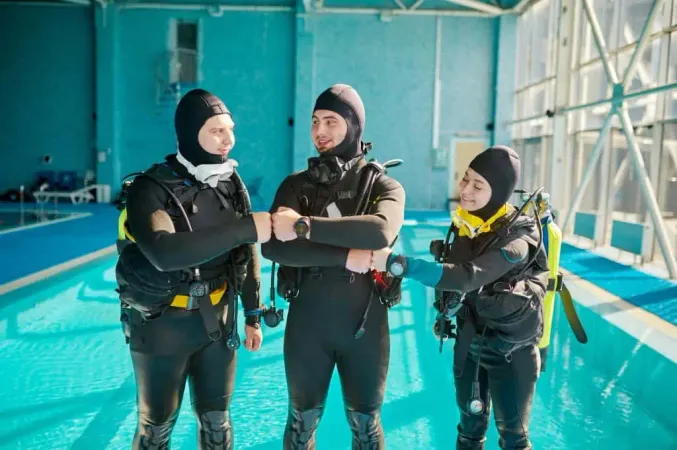
Confined water training is where the physical learning happens, and it's the component that tends to generate the most anxiety for first-time divers. Pool sessions cover mask clearing, regulator recovery, buoyancy control, weight and trim adjustment, and emergency ascents. The skill sequence builds deliberately — simpler tasks early, more demanding procedures later — so by the time you're practicing a controlled emergency swimming ascent, the foundational skills feel natural. Instructors keep student-to-instructor ratios at or below 8:1 in confined water, which means you get genuine personal feedback on your technique rather than being lost in a crowd.
Open water checkout dives are the capstone of the certification process. You complete four dives at a local ocean site or quarry, repeating a subset of the confined water skills to demonstrate competency in a real diving environment.
These dives also introduce you to elements that a pool cannot replicate: surge, current, reduced visibility, marine life encounters, and the subtle psychological shift that comes from knowing the bottom is 40 feet below you rather than 5. Most students find the open water dives to be the most memorable part of the course — anxiety gives way to awe surprisingly quickly once the underwater world becomes visible through your mask.
One logistical detail that catches many new divers off guard is the gear situation during training. Most dive centers include equipment rental in their course fee, covering wetsuit, BCD, regulator, fins, mask, and tank. However, the mask is the one piece of gear that instructors universally recommend you purchase personally before your first pool session.
A rental mask that doesn't seal correctly to your face will flood repeatedly during skills practice, turning a manageable learning experience into a frustrating one. Entry-level masks from reputable brands like Cressi, Mares, or Atomic run $40 to $120 and are worth every dollar for the comfort difference they provide.
The PADI certification card you receive after completing your Open Water course carries no expiration date — once certified, you remain certified for life. However, dive operators and liveaboards routinely ask when you last dove, and if that answer is more than 12 months ago, many will require or strongly recommend completing a refresher before your first dive of a new trip.
PADI's ReActivate program fills this role perfectly: a short online knowledge review followed by a pool skills refresher session, typically completed in two to three hours. It's a low-cost, low-pressure way to rebuild muscle memory before heading somewhere remote where instructor support might not be readily available.
Choosing the right dive center for your Open Water course matters more than many beginners realize. Look for a PADI Five Star Dive Center designation, which indicates that the operation meets PADI's highest standards for equipment quality, instructor training, and student-to-instructor ratios.
Reading reviews on Google and trip aggregators can reveal patterns in student experience — particularly around how instructors handle anxious students, whether gear is well-maintained, and whether the dive sites used for checkout dives are appropriate for beginners. A great instructor can make an uncertain beginner into a confident diver; a poor one can create anxiety that lingers for years.
PADI Open Water Certification: Skills, Exams & Training Breakdown
The academic component of the PADI Open Water Diver course covers five core knowledge areas: the underwater environment and dive planning, your equipment and how it functions, the physics and physiology of diving under pressure, problem management, and special environment considerations. Each section ends with a knowledge review that your instructor checks before you move on. The final exam consists of 50 multiple-choice questions drawn from across all five sections, and you need a minimum score of 75% to receive your certification.
Preparing effectively for the knowledge exam means engaging actively with the material rather than simply reading through it. Students who work through the knowledge review questions in writing — not just mentally — consistently outperform those who skim the text. The PADI eLearning platform includes interactive quizzes after each module that simulate the format and difficulty level of the final exam. Completing these under timed conditions gives you a realistic benchmark of your readiness and highlights specific topics, such as dive table calculations or gas laws, that may need additional review before exam day.

Is a PADI Scuba Diving Course Worth It? Honest Pros & Cons
- +Globally recognized certification accepted at virtually every dive operation in the world
- +Flexible scheduling — complete eLearning online, then pool and ocean on your timeline
- +Structured safety curriculum built on decades of incident analysis and best practices
- +Opens access to thousands of dive sites, liveaboards, and underwater experiences worldwide
- +Foundation for a lifetime sport with clear progression pathways to advanced certifications
- +Strong community — PADI network connects you to dive clubs, travel groups, and conservation projects
- −Upfront cost of $350–$700 can be a barrier for budget-conscious beginners
- −Medical restrictions may delay or prevent certification for some health conditions
- −Gear ownership costs add up quickly if you want your own equipment ($1,500–$3,000 full kit)
- −Skills can atrophy without regular diving — refreshers required after long breaks
- −Quality varies significantly across dive centers despite PADI standards enforcement
- −Open Water certification limits you to 60 feet, restricting access to deeper dive sites and wrecks
PADI Open Water Exam Prep Checklist
- ✓Complete all five eLearning chapters and score 80%+ on each section quiz before the final exam.
- ✓Write out your answers to every knowledge review worksheet by hand to reinforce retention.
- ✓Practice dive table calculations until you can solve pressure group and surface interval problems confidently.
- ✓Memorize the five key gas laws (Boyle's, Charles', Dalton's, Henry's) and one real diving application for each.
- ✓Review all equipment assembly steps — BCD, regulator, tank valve, weight system — so pool setup feels routine.
- ✓Practice mask clearing in the shower at home to reduce anxiety before your first confined water session.
- ✓Arrive at pool sessions rested and hydrated — fatigue significantly impairs skill acquisition and retention.
- ✓Ask your instructor for feedback after every confined water skill, not just the ones you feel unsure about.
- ✓Complete a full gear check with your buddy before every open water checkout dive.
- ✓Review your dive computer or table after each open water dive to understand your pressure group and surface interval.
The 75% Rule — and Why You Should Aim Much Higher
PADI requires a minimum score of 75% on the Open Water final exam, but students who aim for 90%+ build the knowledge foundation needed to pass Advanced Open Water, Rescue Diver, and Divemaster exams without having to relearn basics. Treat the Open Water exam as a baseline, not a ceiling — the same physics and physiology principles appear in every subsequent PADI course.
Understanding the full cost picture of a PADI scuba diving course requires looking beyond the headline enrollment fee. The core course fee at most US dive centers covers eLearning access, confined water instruction, and open water checkout dives — but it often excludes the PADI certification processing fee ($35–$50), any specialty equipment like an underwater compass or surface marker buoy, and transportation to open water dive sites. Some dive centers bundle everything into a single all-inclusive price; others itemize. Always ask for a complete cost breakdown before you enroll so there are no surprises on checkout day.
Gear rental is typically included in the course fee, but the quality of rental equipment varies significantly across dive centers. Higher-end operations maintain modern BCDs, well-serviced regulators, and properly sized wetsuits in multiple configurations. Budget operations may field gear that is functional but not comfortable, which can meaningfully affect your experience during skills practice and open water dives.
If you have the budget, purchasing your own mask, fins, and wetsuit before your course begins — and renting only the tank, BCD, and regulator — gives you the comfort of properly fitted equipment without the full investment of a complete gear kit.
The timeline for completing a PADI Open Water course depends significantly on your location and the availability of open water dive sites. Coastal students in Florida, California, or Hawaii can often schedule pool and ocean sessions in the same week.
Landlocked students in states like Kansas or Nebraska typically complete confined water training locally, then travel to a quarry, lake, or ocean destination for checkout dives. This travel component adds cost but also creates an opportunity to dive at genuinely beautiful locations — Blue Springs State Park in Florida, Ginnie Springs, or any of several well-regarded quarries in Pennsylvania and Tennessee.
Age requirements for PADI certification are tiered by level. The minimum age for a full Open Water Diver certification is 15 years old. Divers aged 10–14 can earn the Junior Open Water Diver certification, which carries the same skills requirements but restricts dives to 40 feet and requires a parent or PADI-certified adult to accompany them.
At 15, Junior certifications automatically convert to full adult ratings. There is no upper age limit for PADI certification — the oldest known PADI Open Water student to earn certification was 95 years old. The only requirement is physician clearance if the medical statement flags any relevant conditions.
The padi open water certification also requires proof of swimming ability, though the standard is more modest than most beginners expect. You must swim 200 meters (or 300 meters with mask, fins, and snorkel) without stopping, and float or tread water for 10 minutes. You don't need to be a competitive swimmer — just comfortable enough in water to complete those tests at a relaxed pace. If swimming is a concern, most dive centers offer the option to complete the swim test early in the enrollment process so you know where you stand before investing in course fees.
DAN — the Divers Alert Network — plays an important role in the PADI ecosystem that many beginners don't encounter until their first trip. Dan padi partnerships provide dive accident insurance and 24-hour emergency hotline access to divers who purchase DAN membership or insurance.
Given that hyperbaric (recompression) chamber treatment for decompression sickness can cost $20,000 or more, DAN coverage is widely regarded as essential for any diver who plans to dive regularly. Many dive centers recommend or include DAN student membership as part of their course enrollment package, and it remains one of the best-value safety nets available to recreational divers at any level.
Financial assistance for PADI courses is more available than most people realize. Some dive centers offer payment plans that allow students to spread course costs over two or three months.
PADI itself periodically runs promotional pricing on eLearning packages, particularly in January (as New Year's resolution marketing) and in late summer (pre-fall dive season promotions). Military personnel and veterans frequently receive discounts at PADI Five Star centers, and several nonprofit organizations specifically fund dive training for underserved youth as part of ocean conservation and STEM education initiatives. If cost is a barrier, it's worth asking your local dive center directly about available programs before assuming the full price is non-negotiable.

PADI requires all students to complete a medical statement before beginning confined water training. Conditions including asthma, heart disease, epilepsy, and certain medications may require written physician clearance before you can enroll. Attempting to dive with an undisclosed contraindicated condition puts you at genuine risk of serious injury or death — the underwater environment is unforgiving of cardiovascular and respiratory surprises. Complete the medical form honestly and obtain clearance well before your scheduled course start date.
Once you have your Open Water Diver certification in hand, the natural next question is: what's next? The PADI Advanced Open Water Diver course is the most common next step, and it's designed to be taken within six to twelve months of your Open Water certification while the foundational skills are still fresh.
Unlike the Open Water course, Advanced Open Water has no written exam — the learning is entirely experiential, taking place during five adventure dives that each focus on a different specialty area. The two mandatory dives are deep (reaching the 100-foot depth limit) and underwater navigation; the remaining three are elective and can be chosen from a list of more than 15 options including night diving, peak performance buoyancy, and underwater photography.
The Rescue Diver course is widely considered the most personally and professionally valuable PADI certification below the professional level. Where Open Water and Advanced Open Water focus primarily on self-management skills, Rescue Diver shifts the lens outward — teaching you to recognize distress signals in other divers, respond effectively to both minor and major dive emergencies, and conduct organized searches for missing divers.
The course requires a valid Emergency First Response (CPR and first aid) certification that must be within the past 24 months. Most dive centers offer EFR courses alongside Rescue Diver training, making it easy to meet this prerequisite without separate travel.
For divers who want to turn their passion into a profession or simply achieve the highest recreational rating, the path leads through Divemaster and, ultimately, PADI Instructor. Divemaster is the first professional-level certification and typically requires 40 or more logged dives before enrollment, plus demonstrated competency across a comprehensive set of skills that includes mapping a dive site, conducting search and recovery operations, and managing a dive briefing for a group of certified divers.
The Divemaster internship component — working alongside instructors at a functioning dive center — is one of the most immersive educational experiences available in any recreational sport.
Specialty courses offer a different kind of progression for divers who want depth rather than breadth. The Wreck Diver specialty teaches you to safely explore sunken vessels, including the techniques for penetrating enclosed spaces with appropriate guideline and lighting systems. The Underwater Photographer specialty covers camera settings, lighting, subject approach, and composition principles that transform vacation snapshots into compelling images. The Nitrox (Enriched Air Diver) specialty is arguably the most practically useful of all — it teaches you to dive with oxygen-enriched breathing gas that reduces nitrogen absorption, extending your allowable bottom time at popular recreational depths.
Conservation-focused certifications have grown significantly in prominence within the PADI system over the past decade. The AWARE Fish Identification course teaches you to accurately identify and record fish species for citizen science programs that feed real data to marine biologists. The Coral Reef Conservation course provides practical skills for monitoring reef health and participating in cleanup operations.
Project AWARE, PADI's associated nonprofit, coordinates dive events worldwide through which certified divers contribute to underwater debris removal and ocean health monitoring. These programs connect your recreational diving to meaningful environmental impact without requiring any additional time in the water beyond what you'd spend diving recreationally anyway.
Liveaboard diving represents the pinnacle of the recreational diving experience for many certified divers, and PADI certification is the baseline requirement for virtually every vessel. Liveaboards are dive-focused boats that carry passengers and crew on multi-day or multi-week itineraries to remote dive destinations — the Galapagos, the Coral Sea, the Red Sea, and Palau are perennial favorites among US divers.
A typical liveaboard schedule includes three to five dives per day, with night diving most evenings and surface intervals spent eating, reviewing dive logs, or sleeping. The intensity of this diving experience accelerates skill development at a rate that's impossible to match with occasional weekend dives from shore.
Returning to diving after a long break — whether a year or a decade — is easier than most lapsed divers expect, thanks in large part to PADI's ReActivate program. This structured refresher combines a short online knowledge review with a pool skills session supervised by a PADI professional, and it can typically be completed in a single afternoon.
Dive operations in popular vacation destinations have become accustomed to accommodating ReActivate participants and often schedule dedicated sessions early in the morning before the main dive day begins. If you completed your Open Water certification years ago and have been hesitant to return because your skills feel rusty, the ReActivate program eliminates that barrier with a low-pressure, judgment-free re-entry point.
Practical preparation for your PADI scuba diving course starts well before you set foot in a pool, and the divers who arrive best prepared consistently have the most positive learning experiences. The most valuable pre-course activity is simply becoming more comfortable in water.
If you haven't been swimming regularly, start a routine at your local pool two to three weeks before your course begins. You don't need to swim fast — you need to swim relaxed. Relaxation is the single most important variable in dive training: tense students breathe more air, perform skills more clumsily, and retain less of what their instructors teach them.
Breathing is another skill you can begin developing before your first confined water session. Scuba requires slow, full, diaphragmatic breaths — the opposite of the shallow chest breathing most people default to under stress. Practice breathing slowly and deeply during any relaxation exercise, yoga practice, or even during your commute. Snorkeling in a pool or open water before your course is ideal preparation: it familiarizes you with breathing through a mouthpiece, viewing the underwater environment through a mask, and kicking with fins, all without the cognitive load of managing a full scuba kit.
Understanding your dive computer before your course begins will make open water checkout dives significantly less cognitively demanding. Entry-level dive computers from Suunto, Cressi, and Garmin retail between $150 and $300 and provide real-time depth, dive time, ascent rate alerts, and no-decompression limit information.
Dive centers generally include a computer in equipment rental packages, but learning the interface of an unfamiliar computer on the first day of open water dives adds unnecessary cognitive load. If you plan to purchase a computer eventually — and most regular divers do — consider buying it before your course and familiarizing yourself with the display and button layout in advance.
Nutrition and hydration affect dive performance more than most beginners expect. Dehydration increases the risk of decompression sickness by reducing blood volume and impairing nitrogen off-gassing efficiency. Alcohol consumed within 12 hours of diving similarly impairs judgment and increases decompression risk. Dive instructors recommend arriving at pool sessions and open water dives well-hydrated, having eaten a moderate meal two to three hours prior — enough to sustain energy without causing discomfort from a full stomach underwater. Caffeine in moderate amounts is generally considered safe, but heavy coffee consumption on dive mornings can contribute to dehydration and elevated heart rate.
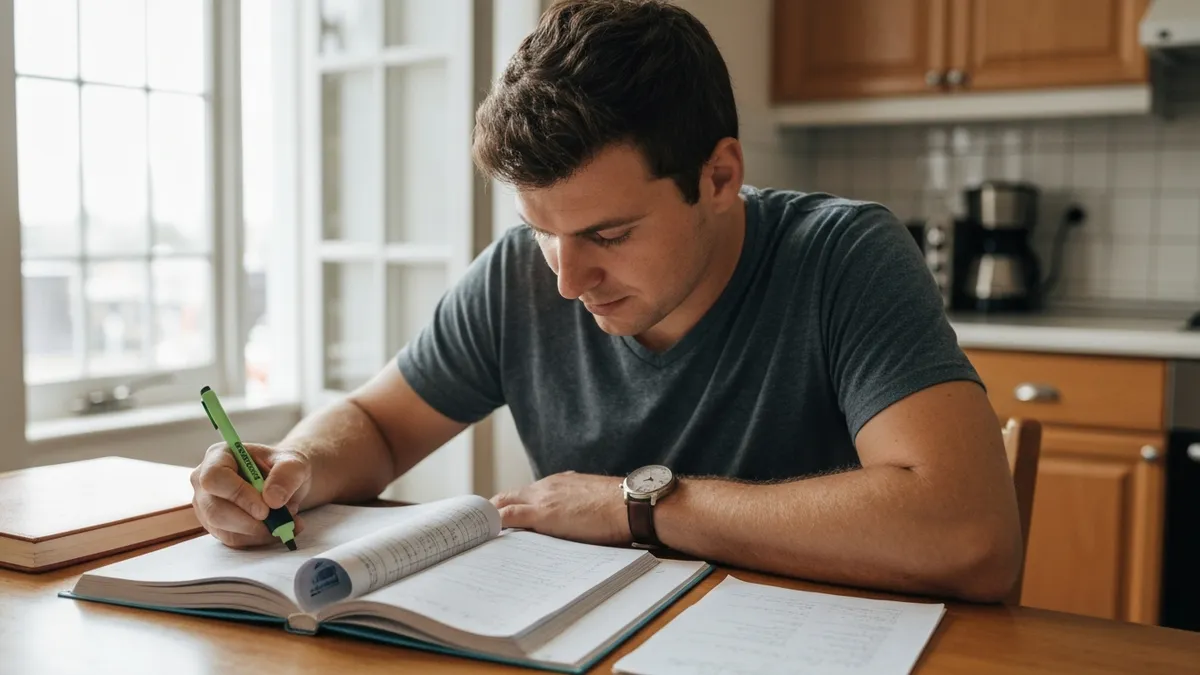
Study strategies for the PADI knowledge exam are worth thinking through before you begin the eLearning. Active recall — testing yourself with questions rather than passively re-reading text — produces dramatically better retention than reviewing the material repeatedly. After completing each eLearning chapter, close the book and write down every concept you can remember before reviewing what you missed.
This process feels harder than re-reading, which is exactly why it works: the effortful retrieval strengthens memory traces in ways that passive review cannot replicate. Practice questions — including the free quizzes available on this site — are particularly valuable because they expose the specific question formats and concept combinations that appear on the actual exam.
Mental preparation for anxiety is something most dive training literature glosses over, but it deserves direct attention. Mild anxiety during early training sessions is completely normal and expected — the underwater environment is genuinely unfamiliar, and your nervous system is calibrated to treat unfamiliar environments with caution.
The response to manage anxiety is deliberate, slow breathing: four seconds in, four seconds out, repeated until your heart rate settles. If anxiety escalates during a pool skill to the point where you feel the need to surface, signal your instructor and surface in a controlled manner. No skill demonstration is worth a panicked ascent, and experienced PADI instructors are trained to manage anxious students without judgment.
Finally, choose your first post-certification dive experience thoughtfully. The transition from supervised training dives to independent buddy diving is a significant psychological step, and your first few independent dives will shape your long-term relationship with the sport. Choose a familiar site or a guided dive at a resort that caters to new divers, where conditions are predictable and support is readily available.
Build your confidence with easy dives before pushing toward new challenges like deeper depths, stronger currents, or reduced visibility. The PADI Advanced Open Water course provides the ideal structure for this progressive challenge — each adventure dive introduces a new environment or skill set under the supervision of a professional, bridging the gap between Open Water certification and fully independent recreational diving.
PADI Questions and Answers

About the Author

Educational Psychologist & Academic Test Preparation Expert
Columbia University Teachers CollegeDr. Lisa Patel holds a Doctorate in Education from Columbia University Teachers College and has spent 17 years researching standardized test design and academic assessment. She has developed preparation programs for SAT, ACT, GRE, LSAT, UCAT, and numerous professional licensing exams, helping students of all backgrounds achieve their target scores.
Join the Discussion
Connect with other students preparing for this exam. Share tips, ask questions, and get advice from people who have been there.
View discussion (8 replies)