
PADI Freediving Course: Complete Guide to Certification, Training & What to Expect
Everything about the PADI freediving course: costs, depth limits, certification levels & training tips. Start your breath-hold journey today! 🎯
The PADI freediving course is one of the fastest-growing adventure certifications in the world, attracting athletes, ocean enthusiasts, and curious beginners who want to explore the underwater world on a single breath. Unlike scuba diving, which relies on tanks and regulators, freediving challenges you to slow your heartbeat, clear your mind, and descend in silence using only the air in your lungs. PADI has designed a structured, safety-focused curriculum that takes total beginners from zero experience to confident, certified freedivers across multiple certification levels.
What makes the PADI freediving program stand out is its emphasis on technique over raw athleticism. Many people assume that freediving requires extraordinary lung capacity or elite fitness, but that is simply not the case. A healthy adult with average lung function can complete the entry-level course and comfortably reach depths of 20 meters or more with proper training. The course blends pool sessions, open water dives, and theory lessons covering physiology, equalization, and safety protocols — giving students a complete foundation for safe breath-hold diving.
The entry-level PADI Freediver course typically runs two to three days, making it an ideal certification to earn on vacation or during a long weekend. You will spend time in confined water learning relaxation techniques, finning efficiency, and the fundamentals of static and dynamic apnea before transitioning to open water to put those skills into practice. Most dive centers around the United States and internationally offer the course year-round, and prices generally range from $250 to $450 depending on location and what equipment is included.
Safety is woven into every element of PADI's freediving curriculum. Before any deep dive, students learn the buddy system, surface protocols, and how to recognize and respond to shallow-water blackout — the single most dangerous risk in the sport. Instructors are trained to spot signs of hypoxia and intervene quickly, and the course standards require a certified instructor to be present during all water sessions. Understanding these safety rules is not optional; it is a core part of the certification exam and practical assessments.
PADI freediving certifications are recognized globally, which means your card earned in California or Florida will be accepted at dive shops in the Maldives, Indonesia, the Red Sea, and beyond. This international recognition is especially valuable for travelers who want to combine their passion for exploration with underwater adventures on every continent. Whether you plan to chase pelagic fish in open ocean, photograph coral reefs, or simply experience weightless silence 15 meters below the surface, a PADI freediver certification opens doors that a snorkeling trip simply cannot.
Beyond the recreational benefits, many people pursue freediving as a pathway to competitive apnea or professional underwater work such as underwater photography, search and rescue diving, and marine biology fieldwork. The breath-hold skills you develop in the PADI program translate directly into these fields, giving you a physical and mental toolkit that is genuinely rare. Athletes who cross-train in freediving also report significant improvements in lung capacity, stress management, and body awareness — benefits that extend well beyond the water.
This comprehensive guide covers everything you need to know before signing up for your first PADI freediving course, including certification levels, what to expect in training, costs, gear requirements, and tips for passing your assessments on the first attempt. Whether you are a complete beginner or an experienced scuba diver looking to add breath-hold skills to your repertoire, this article will give you the full picture so you can make a confident decision about your next underwater adventure.
PADI Freediving Course by the Numbers
PADI Freediving Certification Levels Explained
The entry-level certification for beginners. Students learn static apnea, dynamic apnea in a pool, and open water dives to 20 meters. Requires basic swimming ability and a medical questionnaire. Ideal for vacationers and first-timers wanting a structured introduction to breath-hold diving.
Builds on Freediver skills with deeper open water dives to 30 meters, longer breath-holds, and refined equalization techniques. Students also practice advanced rescue procedures and more complex dive planning. Prerequisite: PADI Freediver certification or equivalent from another agency.
The highest recreational freediving certification PADI offers. Targets 40-meter depths, advanced breathing techniques, extended static apnea, and peer-rescue skills. Designed for committed freedivers who want maximum depth range and the ability to assist in training junior students safely.
The professional level that allows you to teach and certify students. Requires Master Freediver status, a PADI Freedive Instructor Development Course, and passing an Instructor Examination. Opens doors to leading commercial freediving programs at dive resorts and centers worldwide.
Understanding what happens during a PADI freediving course day-by-day helps you arrive prepared and make the most of every session. Most dive centers structure the program across two full days plus an optional additional half-day for students who need extra practice. On day one, you will complete the knowledge development section — either through PADI's eLearning platform before arrival or during a morning classroom session at the dive center. This theory component covers the physiology of breath-hold diving, how pressure affects the body, mammalian dive reflex, and the causes and prevention of shallow-water blackout.
After the theory review, you will move into the confined water environment — typically a swimming pool or calm, shallow section of the ocean. The first pool session focuses on relaxation breathing, which is the foundation of everything in freediving. Your instructor will guide you through diaphragmatic breathing exercises, body scanning techniques, and the pre-dive routine that every freediver uses before slipping below the surface. Many students are surprised by how meditative this phase feels — it is quite different from the adrenaline-forward experience of their first scuba dive.
Static apnea is the next major skill in the pool phase. You will float face-down with a snorkel, relax completely, and hold your breath for as long as comfortable. PADI requires students to demonstrate a one-minute forty-five-second static apnea to pass at the Freediver level, but most students achieve two minutes or longer after just a few tries once they learn to manage the urge-to-breathe sensation. Your buddy watches the surface, counts contractions, and monitors your color — a critical safety role that you will take turns performing throughout training.
Dynamic apnea — swimming horizontally underwater on a single breath — follows static training. Students practice finning efficiency using long-blade freediving fins, minimizing energy expenditure, and maintaining neutral buoyancy across the full length of the pool. The dan padi safety framework, which PADI instructors reference throughout the course, emphasizes that dynamic apnea distances should increase gradually rather than in large jumps, allowing the body to adapt to breath-hold stress without risking hypoxic incidents. PADI Freediver candidates must complete a 25-meter dynamic apnea to earn certification.
Day two shifts to open water, and for many students this is the most exciting and memorable part of the course. Working from a buoy line anchored to a weight on the bottom, you will practice duck dives, freefall, and controlled ascents in real ocean or lake conditions.
The buoy line is your reference point, safety anchor, and depth marker all at once — you follow it down and come back up along the same line, reducing the risk of disorientation in open water. Your instructor dives with you on early attempts, positioning themselves at depth to spot you and provide feedback on your equalization and body position.
Equalization is the technical skill that trips up most new freedivers. Unlike scuba diving where you equalize occasionally during a slow descent, freediving requires rapid, continuous equalization as you drop quickly on a single breath. PADI's curriculum teaches the Frenzel technique — a tongue-pump method that works effectively at depth even when the lungs are significantly compressed. Instructors spend considerable time coaching equalization during pool sessions so that students arrive at open water already familiar with the mechanics before the added pressure of depth and breath-hold combine.
By the end of day two, most students have successfully reached 16 to 20 meters, experienced the quiet beauty of the underwater world without bubbles, and earned their PADI Freediver certification card. The card is issued digitally through PADI's system, and you can also request a physical card if your dive center provides that option. Many graduates describe their freediving certification as more personally transformative than their scuba certification — the discipline, focus, and connection with the ocean required to freedive safely produces a sense of accomplishment that stays with you long after you surface.
PADI Open Water Certification, Travel & Login — Key Resources
The padi open water certification is the world's most recognized scuba credential, but many students ask whether it is required before taking the freediving course. The answer is no — PADI's freediving program is completely independent from the scuba pathway. You do not need any prior diving experience to enroll in the PADI Freediver course. The only prerequisites are that you must be at least 15 years old, able to swim 200 meters without stopping, and cleared medically to dive via the standard PADI medical questionnaire.
That said, students who already hold a PADI Open Water Diver card often find the theory sections easier because they are already familiar with concepts like pressure, buoyancy, and the effects of depth on the body. Scuba divers typically adapt quickly to equalization and open water protocols, though they sometimes struggle with the patience and stillness that freediving demands after years of active scuba diving. Both pathways produce well-rounded underwater athletes who complement each other's skill sets beautifully.
PADI Freediving Course: Is It Worth It?
- +No bulky equipment needed — just a mask, fins, and wetsuit
- +Course completes in just 2–3 days, ideal for vacation certification
- +Globally recognized credential accepted at dive sites in 180+ countries
- +Significantly cheaper than a full scuba Open Water course
- +Develops mindfulness, breath control, and stress management skills
- +Opens access to freediving-specific travel, competitions, and underwater photography
- −Shallow-water blackout risk requires strict buddy adherence at all times
- −Equalization can be difficult for some students, requiring extra practice sessions
- −Cold water and poor visibility in some US locations can make training uncomfortable
- −Limited to recreational depths — deeper dives require Advanced or Master certification
- −Not a replacement for scuba if you want to stay underwater for extended periods
- −Some dive centers have limited availability for freediving instructors versus scuba
PADI Freediving Course Preparation Checklist
- ✓Complete PADI freediving eLearning modules before your first in-water session.
- ✓Practice diaphragmatic breathing daily for two weeks before the course.
- ✓Swim 200 meters continuously without a rest stop to meet the prerequisite.
- ✓Complete the PADI medical questionnaire honestly and consult a doctor if flagged.
- ✓Purchase or rent a freediving-specific low-volume mask before arrival.
- ✓Source long-blade freediving fins rather than using standard scuba fins.
- ✓Book a 3mm to 5mm wetsuit appropriate for your training water temperature.
- ✓Research your dive center's instructor credentials and student-to-instructor ratio.
- ✓Learn the Valsalva equalization method as a baseline before the Frenzel technique.
- ✓Arrange transportation to open water training sites on day two of the course.
The diver who relaxes longest, dives deepest.
Most new freedivers try to hold their breath by willpower. Elite freedivers hold it by relaxing so completely that their metabolic oxygen consumption drops dramatically. Practicing slow, deep breathing and progressive muscle relaxation every day for two weeks before your PADI freediving course can extend your static apnea time by 30 to 60 seconds before you ever enter the water — a meaningful head start on certification requirements.
The cost of a PADI freediving course in the United States varies considerably depending on your location, the dive center's reputation, and what is included in the package price. In coastal states like Florida, California, and Hawaii, where dedicated freediving schools operate year-round, you can expect to pay between $250 and $350 for the entry-level PADI Freediver course with all materials and instructor fees included. In landlocked states where dive shops must transport students to lakes or quarries, prices may run slightly higher due to logistics costs, typically topping out around $450.
Most course packages include the PADI Freediver eLearning access code, pool sessions, open water dives with an instructor, and the certification fee that triggers your digital C-card. Equipment rental — mask, fins, wetsuit, and weight belt — is usually offered as an add-on for $30 to $60 per day, or dive centers may bundle it into the course price. Before booking, confirm exactly what is and is not included so there are no surprises on the day. Some budget-oriented shops advertise low headline prices but charge separately for every item of gear rental.
Buying your own freediving equipment is a worthwhile investment if you plan to dive more than a few times per year. A good entry-level freediving mask like the Cressi Nano or Mares Viper retails for $50 to $100. Long-blade freediving fins in fiberglass or carbon fiber range from $150 for beginner models to over $600 for competition-grade blades.
A 3mm full wetsuit suitable for warm-water freediving costs $80 to $200, while a thicker 5mm or 7mm suit for cold Pacific or Atlantic waters runs $150 to $350. Owning your own gear also means a more comfortable, better-fitting experience compared to rental equipment that has been used by hundreds of previous students.
Finding the right dive center for your PADI freediving course is as important as any other preparation step. Look for a center where the instructor holds a PADI Freedive Instructor rating — not just a scuba instructor who teaches freediving as a side service. Dedicated freediving instructors bring a depth of personal experience and coaching nuance that makes a measurable difference in how quickly students progress. Read Google and TripAdvisor reviews specifically from freediving students, not just scuba divers, and pay attention to comments about class size, instructor patience, and the quality of the open water training site.
The padi owd course and the PADI Freediving program are occasionally offered together as bundle packages at dive resorts catering to adventure travelers who want to earn multiple certifications in a single trip. These combo deals can be excellent value, but verify that the resort genuinely has dedicated freediving infrastructure — a properly anchored buoy line, freediving-specific buoys, and instructors who specialize in breath-hold diving rather than instructors cross-teaching between both disciplines. Quality instruction matters far more than a discounted package price when safety is involved.
Seasonal timing also affects course availability and conditions in many US locations. In southern Florida and the Florida Keys, winter and spring offer the clearest water and most comfortable temperatures for freediving, typically 75 to 82 degrees Fahrenheit with visibility exceeding 50 feet. In California, late summer and early fall bring warmer surface temperatures and calmer conditions along the coast. If you are scheduling a dedicated freediving vacation rather than a local course, researching conditions at your destination in advance ensures you arrive during the best window of the year for training and exploration.
Many PADI dive centers now offer private and semi-private freediving course options in addition to standard group classes. Private instruction costs more — usually $100 to $150 extra — but delivers dramatically more personalized coaching, faster progress through skills, and greater flexibility in scheduling. For students who are nervous about performing in front of a group, who have specific equalization challenges, or who simply want to accelerate their progression toward Advanced or Master Freediver certification, private instruction is often the more efficient investment despite the higher upfront cost.
PADI certification does not grant permission to freedive solo. Shallow-water blackout can occur suddenly and without warning even in experienced divers, and an unconscious diver underwater requires immediate rescue from a trained buddy. PADI standards and international freediving safety guidelines uniformly prohibit solo freediving at any depth. Always dive with a certified buddy who knows rescue protocols — your life depends on it.
Once you hold your PADI Freediver certification, a whole new world of underwater experiences becomes accessible. The most immediate next step for many graduates is simply diving more — visiting local sites, joining freediving clubs, and accumulating depth and breath-hold time in varied conditions. Consistent practice in the weeks and months after certification is the single biggest factor in how quickly your skills improve. Freedivers who dive at least twice a month progress to Advanced certification far faster than those who dive only a few times a year.
Advanced Freediver training typically runs one to two days and requires students to reach 30 meters in open water while demonstrating refined equalization, clean freefall technique, and confident buddy rescue skills. Many students complete Advanced training within three to six months of earning their initial certification, especially if they have been diving regularly and working on equalization between courses. The jump from 20 to 30 meters is significant psychologically as well as physically — the increased pressure at that depth noticeably compresses your lungs, and learning to stay relaxed through that sensation is both challenging and deeply rewarding.
Underwater photography is one of the most popular pursuits among certified freedivers because the absence of bubbles and the quiet of breath-hold diving allows you to approach marine life far more closely than scuba diving typically permits. Fish, dolphins, whale sharks, and manta rays are notoriously bubble-shy around scuba divers but will often swim directly toward a relaxed freediver hovering silently at depth. Investing in a mirrorless camera in a housing rated for 40 meters, combined with your freediving skills, opens up opportunities for underwater images that would simply be impossible to capture with a tank on your back.
Competitive freediving is a path that some PADI graduates explore after gaining experience and confidence at depth. AIDA International and Molchanovs both offer competition frameworks that parallel the PADI certification ladder, and many freedivers cross-train across multiple agencies to access the widest range of coaching resources and competition formats. Static apnea, dynamic apnea, and constant weight disciplines each reward different physical and mental attributes, making it possible for freedivers of varying body types and fitness levels to find a discipline where they can compete effectively.
Spearfishing is another common application of freediving certification in the United States. Many coastal states regulate spearfishing access by certification level, and a PADI Freediver card satisfies the documentation requirements at most charter operations and private dive clubs. Spearfishing combines hunting skill, breath-hold endurance, and ocean awareness in a way that appeals strongly to freedivers who want a tangible purpose for their dives beyond recreation. If you pursue spearfishing, take an additional spearfishing safety course and study the specific regulations in your state carefully, as rules on legal species, size limits, and permitted equipment vary significantly.
Marine biology internships and citizen science programs increasingly accept certified freedivers as volunteers for reef monitoring, fish surveys, and coral restoration projects. Organizations like the Reef Environmental Education Foundation (REEF) and Reef Check train certified divers — both scuba and freediving — to conduct standardized fish surveys using approved methodology. Participating in these programs is a meaningful way to contribute to ocean conservation while simultaneously building your own skills, knowledge, and depth experience in real-world conditions alongside experienced marine scientists.
Whatever direction you take after earning your PADI freediving certification, the core competencies you develop — breath control, equalization, relaxation under pressure, and disciplined buddy system adherence — will serve you in every underwater environment you encounter. The freediving community in the United States is welcoming, safety-conscious, and growing rapidly as more people discover that the ocean is most beautiful when experienced in quiet, weightless silence on a single breath. Your PADI certification is not just a card; it is the beginning of a lifelong relationship with the underwater world.
Preparing thoroughly for your PADI freediving course dramatically increases your enjoyment of each session and your likelihood of passing all skills on the first attempt. The most effective preparation strategy begins with your breathing. Spend ten to fifteen minutes each morning for two weeks before your course practicing slow, diaphragmatic breathing — inhale deeply into your belly for four counts, hold lightly for two, exhale slowly for six to eight counts. This pattern trains your diaphragm, builds CO2 tolerance, and conditions the parasympathetic nervous system response that elite freedivers access on demand during dives.
Swimming fitness matters more than raw lung capacity in freediving, so prioritize pool laps over breathing exercises if you have limited preparation time. A freediver who can swim 400 meters at a comfortable pace without stopping will almost always outperform an equally strong breather who fatigues quickly in the water. Focus particularly on developing efficient flutter-kick technique with long, relaxed leg strokes — the same finning pattern you will use when wearing freediving fins during your course. Many students who struggle with dynamic apnea in training are fighting their own inefficient kick rather than losing breath-hold capacity.
Equalization practice can begin on dry land. The Frenzel technique — the gold-standard equalization method for freediving — involves moving your tongue like a piston to push air into the Eustachian tubes rather than relying on chest pressure as the Valsalva method does.
Numerous tutorial videos explain the Frenzel technique in detail, and spending twenty minutes a day for a week before your course practicing the tongue position and air movement on the surface will give you a significant head start when equalization demands increase at depth. Students who arrive at the course already Frenzel-proficient consistently reach target depths faster and with less discomfort than those learning both the technique and the depth simultaneously.
Mental preparation is equally important and often overlooked by students who focus exclusively on physical conditioning. Freediving is fundamentally a mental sport — your ability to remain calm, release muscle tension, and manage the urge to breathe determines your performance far more than cardiovascular fitness. Mindfulness meditation, progressive muscle relaxation, and visualization exercises all transfer directly to freediving performance. Spending ten minutes before sleep each night visualizing a perfect dive — slow descent, relaxed freefall, gentle equalization, controlled ascent — builds neural pathways that your body will follow instinctively during real dives.
Understanding the physiology of breath-hold diving before your course helps you interpret what your body is telling you during static and dynamic apnea. The urge to breathe that you feel after about sixty to ninety seconds of breath-hold is driven almost entirely by rising CO2 levels, not by falling oxygen — your oxygen reserves are actually still substantial when the urge begins.
Knowing this allows you to push calmly past the first contractions without panic, trusting that your body has plenty of oxygen remaining. This is one of the most powerful pieces of knowledge in freediving, and students who understand it intellectually before their first static attempt adapt to the sensation far more quickly than those encountering it by surprise.
Diet and sleep in the 24 hours before your course also affect performance meaningfully. Avoid heavy meals for at least three hours before water sessions, as a full stomach both reduces lung volume and increases the risk of regurgitation during equalization. Stay well-hydrated the day before and morning of your course — dehydration thickens the mucus in your sinuses and Eustachian tubes, making equalization significantly harder.
Get a full night of sleep before each training day, as fatigue impairs breath-hold performance, reaction time, and the calm mental state that good freediving requires. These small logistical details can mean the difference between a smooth course and one where physiological variables fight against your progress.
Finally, arrive at your course with an attitude of patience and curiosity rather than competitive drive. Freediving rewards people who observe, adjust, and build skills incrementally over those who push hard and try to out-perform peers. Every student progresses at a different pace depending on anatomy, experience, and comfort in the water, and comparing your performance to others is counterproductive. Trust the PADI curriculum, follow your instructor's guidance precisely, and celebrate incremental wins — a better equalization feel, a smoother duck dive, a few extra seconds of static time — as meaningful milestones on the path to certification and beyond.
PADI Questions and Answers
PADI OWD Course — Your Complete Open Water Diver Guide for 2026

PADI Deep Diver Course: Complete Guide to Certification, Training & What to Expect

PADI Rescue Diver Course: Complete Guide to Certification, Training & What to Expect
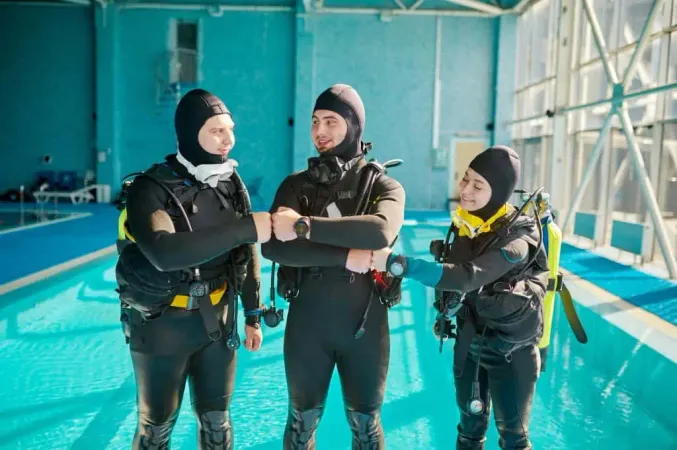
Certified Professional Association of Diving Instructors Diver: All You Need to Know

PADI Scuba Course: Complete Guide to Open Water Certification, Training & What to Expect
About the Author

Educational Psychologist & Academic Test Preparation Expert
Columbia University Teachers CollegeDr. Lisa Patel holds a Doctorate in Education from Columbia University Teachers College and has spent 17 years researching standardized test design and academic assessment. She has developed preparation programs for SAT, ACT, GRE, LSAT, UCAT, and numerous professional licensing exams, helping students of all backgrounds achieve their target scores.
Join the Discussion
Connect with other students preparing for this exam. Share tips, ask questions, and get advice from people who have been there.
View discussion (8 replies)