
Occupational Therapy Assistant Schools: Complete Guide to Programs, Requirements & Accreditation
🗨️ Find the best occupational therapy assistant schools, admission requirements, accreditation standards, and how to prepare for the NBCOT exam.

Choosing among occupational therapy assistant schools is one of the most important decisions you will make on your path to becoming a licensed OTA. The school you attend determines the quality of your clinical training, the rigor of your coursework, and ultimately your readiness for the National Board for Certification in Occupational Therapy (NBCOT) exam. With over 300 accredited programs operating across the United States, narrowing down your options requires understanding what separates a strong program from a mediocre one and knowing exactly what admission committees are looking for in applicants.
Accreditation by the Accreditation Council for Occupational Therapy Education (ACOTE) is the non-negotiable baseline for any OTA school worth considering. Only graduates of ACOTE-accredited programs are eligible to sit for the NBCOT certification exam, which is required for state licensure in all 50 states. Programs that lack this credential — or that are currently on probationary status — put your entire career trajectory at risk. Before you spend a single dollar on applications, verify ACOTE status directly through the organization's official program directory.
Most occupational therapy assistant schools award an Associate of Applied Science (AAS) degree, though a growing number of community colleges and technical institutions now offer accelerated certificate pathways for students who already hold a bachelor's degree in a related health field. Typical full-time programs span 18 to 24 months and include both didactic coursework and supervised fieldwork rotations across a variety of clinical settings. Part-time and hybrid options exist, but they generally extend the timeline to three years or more.
The competitive landscape for OTA admissions has intensified significantly over the past decade. Bureau of Labor Statistics projections place occupational therapy assistant employment growth at 25 percent through 2032 — far above the national average for all occupations — and schools have responded by expanding cohort sizes while simultaneously raising admission standards. Many programs now require prerequisite coursework in anatomy and physiology, psychology, and medical terminology before an application is even considered complete.
Fieldwork is what truly distinguishes occupational therapy assistant education from other allied health disciplines. ACOTE standards mandate a minimum of 16 weeks of Level II fieldwork, split between at least two different practice settings. Students who complete rotations in pediatric clinics, acute care hospitals, skilled nursing facilities, and community mental health centers arrive at their first professional job with a breadth of hands-on experience that employers value enormously. Schools with established relationships with diverse fieldwork sites are a significant asset when comparing programs.
Cost is a practical reality that no prospective student can ignore. Community college OTA programs typically run between $8,000 and $18,000 in total tuition, while proprietary schools and private colleges can push costs to $35,000 or higher. Factoring in books, uniforms, lab supplies, and the NBCOT application fee adds several thousand dollars more. Federal financial aid, workforce development grants, and employer tuition reimbursement programs can substantially reduce your out-of-pocket burden if you plan strategically during the application process.
This guide walks through everything you need to know about selecting, applying to, and succeeding in an OTA program — from understanding accreditation nuances to building the prerequisite academic record that opens doors at competitive schools. Whether you are a recent high school graduate, a career-changer, or a healthcare worker looking to formalize your clinical skills, the information here will help you make a confident, well-informed choice about which school is right for your goals.
OTA Schools by the Numbers

Types of Occupational Therapy Assistant School Programs
The most common and cost-effective pathway. These two-year associate degree programs are offered at over 200 community colleges nationwide, typically costing $8,000–$18,000 in total tuition. They provide strong foundational coursework and integrated Level I and Level II fieldwork rotations.
Shorter, career-focused programs that emphasize hands-on clinical training over general education requirements. Often preferred by adult learners seeking an accelerated timeline. Accreditation verification is especially important here, as not all technical schools hold ACOTE status.
Some universities offer OTA as a concentration within a broader health sciences bachelor's degree. These programs typically cost more but may offer expanded research opportunities, stronger alumni networks, and pathways to bridge into OT master's programs with advanced standing.
Lecture and theory content is delivered online while labs and fieldwork remain in-person. These models provide flexibility for working students but require self-discipline and reliable access to local clinical sites. Confirm that all in-person components meet ACOTE fieldwork standards.
Admission requirements at occupational therapy assistant schools vary by institution, but most competitive programs share a core set of expectations that applicants need to meet before their file is reviewed. A minimum cumulative GPA — typically 2.5 to 3.0 on a 4.0 scale — is the starting threshold. Programs at community colleges serving high-demand regional markets often set their effective cutoff higher because they receive more qualified applicants than seats available. Checking the reported GPA range of admitted students in recent cohorts gives you a realistic benchmark to target.
Prerequisite coursework forms the academic backbone of every OTA application. Nearly all programs require college-level Biology or Anatomy and Physiology I and II, completed with a grade of C or better. Psychology — including both General Psychology and Developmental or Lifespan Psychology — appears on prerequisite lists at roughly 85 percent of accredited programs. Medical terminology, English composition, and introductory statistics round out the most commonly required prerequisites. Some competitive programs have expanded their lists to include sociology, nutrition, or kinesiology, so confirm requirements on a program-by-program basis rather than assuming uniformity.
Observation hours in an OTA-supervised clinical setting are a differentiating factor in applications. Most programs require between 20 and 40 documented hours of observation, and some request as many as 80 hours spread across multiple settings such as a pediatric clinic, a rehab hospital, and a school-based OT environment. These hours serve a dual purpose: they demonstrate genuine commitment to the profession and they give you experiential material to draw on in personal statements and interviews. Shadowing a licensed COTA rather than just an OT is explicitly required by some programs, so clarify this distinction early.
Letters of recommendation carry significant weight in OTA admissions. A letter from a licensed OT or COTA who can speak to your clinical aptitude and interpersonal skills with patients is far more valuable than a generic academic reference. Most programs request two to three letters, and some require at least one from a healthcare professional. Build these relationships early during your observation hours rather than rushing to request letters from individuals who barely know your work. Authentic, specific endorsements from credible clinical sources consistently outperform boilerplate academic letters.
The personal statement or essay is your opportunity to explain why occupational therapy — specifically the OTA role — aligns with your strengths, values, and long-term career vision. Admissions committees read thousands of essays that open with generic statements about wanting to help people. Distinguish yours by grounding it in a specific patient interaction from your observation hours, an insight about the OT profession that surprised you, or a personal experience with disability or rehabilitation that shaped your perspective. Concrete and honest narratives outperform abstract and idealistic ones every time.
Some programs conduct formal interviews — either individual or group panel format — as the final step before admission decisions are made. Interview questions typically probe your understanding of the OTA scope of practice versus the OT's supervisory role, your ability to work collaboratively on interprofessional teams, and how you would handle challenging ethical or clinical scenarios. Practicing answers to common OTA interview questions using the STAR method (Situation, Task, Action, Result) helps you deliver structured, confident responses under pressure.
Background checks and health screenings are standard at virtually all OTA programs due to the clinical nature of fieldwork placements. Most programs require proof of current CPR certification (BLS level), a negative tuberculosis test, up-to-date immunizations including hepatitis B, and a criminal background check. Drug screening may also be required by affiliated clinical sites even if your school does not mandate it independently. Having these clearances organized well before orientation prevents last-minute complications that could delay your start date or jeopardize your fieldwork placement.
OTA School Curriculum, Fieldwork, and Online Learning Options
OTA program coursework is built around a standardized set of ACOTE competencies that every graduate must demonstrate before earning their degree. Core courses include Foundations of Occupational Therapy, Human Anatomy and Physiology, Kinesiology, Occupational Performance Across the Lifespan, Therapeutic Activities and Modalities, Mental Health Interventions, Physical Dysfunction Interventions, and Pediatric OT. Students also complete coursework in professional ethics, documentation standards, and the OTPF (Occupational Therapy Practice Framework). Theory is integrated with weekly lab sessions where students practice transfer techniques, adaptive equipment fitting, and activity analysis on peer models.
Most programs sequence coursework so that foundational science and theory courses come first, followed by condition-specific intervention modules in the second year. The final semester before graduation is typically devoted entirely to Level II fieldwork. Academic performance benchmarks — often a minimum B in core OTA courses — are enforced throughout the program, and students who fall below the threshold may be required to remediate before advancing. Understanding these progression policies before you enroll prevents surprises that could extend your timeline unexpectedly.

Community College OTA Programs vs. Private School Programs: Pros and Cons
- +Community colleges offer significantly lower tuition — often $8,000–$18,000 total versus $25,000–$45,000 at private institutions
- +ACOTE accreditation standards are identical regardless of school type, so your degree carries the same professional credential
- +Community college programs typically have strong local clinical partnerships built over many years of fieldwork coordination
- +Smaller class sizes at community colleges often mean more personalized faculty mentorship and hands-on lab time
- +Private schools may offer accelerated cohort formats, evening schedules, or year-round enrollment that suits non-traditional students
- +Four-year university programs provide a clearer pathway to OTD bridge programs for students who eventually pursue licensure as an OT
- −Community college programs often have highly competitive admission ratios — some accept fewer than 20 percent of applicants
- −Private and proprietary schools carry higher debt loads that can offset early-career salary gains
- −Limited program schedules at community colleges may conflict with work or family obligations for adult learners
- −Some private programs lack a deep bench of established fieldwork sites, placing burden on students to identify their own rotations
- −Online and hybrid cohorts at any school type sacrifice some of the hands-on peer learning that builds clinical confidence
- −Program quality varies enormously — a private school's higher price tag does not guarantee superior NBCOT pass rates or employment outcomes
How to Choose the Right OTA School: 10-Point Evaluation Checklist
- ✓Verify current ACOTE accreditation status directly through the ACOTE program directory — do not rely solely on school marketing materials.
- ✓Review the program's NBCOT first-time pass rate for the past three years and compare it to the national average (approximately 70–75 percent).
- ✓Confirm that Level II fieldwork sites include at least two distinct practice areas such as physical rehabilitation and pediatrics or mental health.
- ✓Calculate total program cost including tuition, fees, books, uniforms, and NBCOT application fees — not just the advertised per-credit tuition rate.
- ✓Check the program's attrition and graduation rate; a high dropout rate may signal inadequate student support or unrealistic academic demands.
- ✓Ask admissions staff specifically whether the program has a waitlist and what the average wait time has been over the last two years.
- ✓Evaluate the clinical faculty's credentials — a mix of practicing COTAs and licensed OTs with specialty certifications enriches both coursework and mentorship.
- ✓Confirm that prerequisite courses you have already completed will be accepted by the program without requiring retakes.
- ✓Investigate whether the program offers tutoring, academic advising, and NBCOT exam prep resources as part of its student support infrastructure.
- ✓Talk to recent graduates through alumni networks or LinkedIn to get candid perspectives on fieldwork quality, job placement support, and program rigor.
NBCOT Pass Rate Is Your Most Reliable Quality Indicator
A program's NBCOT first-time pass rate is the single most objective measure of educational quality available to prospective students. Programs with pass rates consistently above 80 percent are producing graduates who are genuinely prepared for clinical practice. Programs hovering near or below 60 percent warrant serious scrutiny — ask admissions representatives directly how the program has responded to underperformance before you commit your time and money.
The cost of attending an occupational therapy assistant school is a multidimensional figure that many applicants underestimate when they first begin researching programs. Published tuition rates are only one piece of the financial picture. At a community college, in-state tuition may run $120 to $200 per credit hour, which sounds manageable until you multiply it by the 60 to 72 credit hours required for most AAS programs. Out-of-state students face per-credit costs that are often two to three times higher, making residency establishment a financially meaningful strategy for those willing to plan ahead.
Beyond tuition, OTA students routinely spend $800 to $1,500 on required textbooks and lab manuals, $200 to $400 on uniforms and clinical attire, $150 to $300 on liability insurance required during fieldwork, and $50 to $100 on standardized assessment kits used in coursework. The NBCOT certification exam application fee is $555 for a standard window, and most students also budget $200 to $400 for a commercial exam prep course. These downstream costs are rarely highlighted in tuition comparison charts but collectively add up to $2,000 or more beyond the base academic cost.
Federal financial aid — including Pell Grants, subsidized and unsubsidized Stafford Loans, and work-study programs — is available to students enrolled in accredited OTA programs at participating institutions. Completing the FAFSA as early as possible in the application cycle maximizes your grant eligibility, particularly for need-based Pell Grants that do not require repayment. Many students leave significant grant money unclaimed simply because they file the FAFSA after institutional award deadlines have passed.
Workforce development funding through state vocational rehabilitation agencies is an underutilized resource for OTA students, particularly those who are career-changers, veterans, or individuals with disabilities. These programs can cover tuition, fees, and books in exchange for a commitment to work in specific geographic areas or underserved populations after graduation. Healthcare workforce shortage grants at the state level — funded through federal Health Resources and Services Administration (HRSA) allocations — also periodically open competitive application cycles for allied health students in fields like occupational therapy.
Employer tuition reimbursement is a particularly strategic option for current healthcare workers pursuing an OTA degree. Hospitals, long-term care facilities, and home health agencies frequently offer tuition benefits to employees in support roles such as patient care technicians, rehab aides, or unit clerks. Working in a healthcare setting while completing your prerequisites and applying to OTA programs simultaneously builds your observation hours, establishes professional references, and may unlock tuition assistance that substantially reduces your out-of-pocket cost.
The return on investment for an OTA education is strong by any reasonable measure. The Bureau of Labor Statistics reported a median annual wage of approximately $64,250 for occupational therapy assistants in 2024, with the top 10 percent of earners exceeding $87,000 annually. Settings like home health agencies, early intervention programs, and school districts often carry additional compensation incentives. Students who graduate with $15,000 in community college debt and enter a $60,000 starting salary position can fully repay their educational investment within two to three years while building equity in a high-demand career.
Scholarship opportunities specifically designated for OTA students are more numerous than most applicants realize. The American Occupational Therapy Foundation (AOTF) administers multiple scholarships annually ranging from $1,500 to $5,000, many of which are designated specifically for associate degree students. State OT associations frequently offer additional scholarships, and individual ACOTE-accredited programs maintain their own scholarship funds drawn from alumni donations and clinical partnership contributions. Investing time in scholarship applications during the summer before your program begins can yield meaningful financial relief with relatively limited competition compared to general academic scholarships.

A small number of ACOTE-accredited programs operate under probationary status at any given time, meaning they have been found deficient in one or more accreditation standards. Graduates of programs that lose accreditation before or shortly after you graduate may face eligibility complications for the NBCOT exam. Always check ACOTE's publicly available accreditation status list — not just the school's own website — before accepting admission or depositing tuition funds.
Once you have completed your OTA program and passed the NBCOT Certified Occupational Therapy Assistant (COTA) examination, the next phase of your professional development begins. State licensure is required in all 50 states, and while most states accept the NBCOT credential as the basis for licensure, each state has its own application process, fees, and continuing education requirements. Some states impose additional jurisprudence examinations that test your knowledge of state-specific practice laws and regulations. Budget two to six weeks for licensure processing after passing the NBCOT exam.
The NBCOT COTA examination consists of 170 questions — 150 scored items and 20 unscored pretest questions — administered over a three-hour window using a computer-based format at Pearson VUE testing centers nationwide. Questions are mapped across four domain areas: Evaluation and Intervention Planning, Intervention Implementation, Intervention Review, and Communication and Professional Responsibilities. The exam uses a scaled scoring system with a passing score of 450 on a 300–600 scale. First-time pass rates have historically hovered between 68 and 76 percent, making structured exam preparation an important investment for every OTA graduate regardless of academic performance.
Building your exam preparation strategy while still in school gives you a meaningful advantage. Students who begin reviewing NBCOT-style practice questions during their final semester — particularly during Level II fieldwork — retain clinical reasoning frameworks far better than those who wait until after graduation. The act of applying classroom knowledge in real fieldwork scenarios and then immediately testing yourself on similar questions in a practice exam format creates a feedback loop that accelerates mastery of complex topics like therapeutic modalities, compensatory strategies, and occupation-based intervention planning.
Commercial NBCOT prep courses from providers like TherapyEd, OT Miri, and NBCOT's own official study materials offer structured review programs that most students find valuable. These resources typically include full-length practice examinations, domain-specific question banks, skill-building videos, and detailed rationale explanations for both correct and incorrect answers. The investment in a quality prep course — typically $150 to $300 — is modest compared to the $555 re-examination fee if you need to retake the NBCOT. Using free practice resources on platforms like PracticeTestGeeks alongside commercial materials maximizes your exposure to varied question styles.
Continuing education is a lifelong professional obligation for COTAs. Most states require 12 to 24 contact hours of approved continuing education per licensure renewal cycle, which typically runs two years. AOTA members gain access to discounted continuing education through the OT Practice journal, online learning modules, and the annual AOTA conference. Specialty certifications such as the Certified Brain Injury Specialist (CBIS) or School-Based OT certificate can enhance both your clinical competence and your earning potential within specific practice areas.
Career mobility for COTAs extends beyond traditional clinical settings. Early intervention programs working with children under age three, telehealth platforms expanding OT services to rural communities, assistive technology vendors, and community mental health organizations all represent emerging employment sectors that are actively recruiting credentialed COTAs. The COTA credential also provides a recognized foundation for bridge programs that allow qualified individuals to pursue the OT master's degree with advanced standing, potentially completing their OTD in as few as 18 additional months depending on the program structure.
Networking with peers, faculty, and clinical supervisors throughout your OTA school experience pays dividends that compound over your entire career. The OTA community is smaller and more interconnected than many students realize — the clinical supervisor from your Level II fieldwork rotation may be the hiring manager for a job opening five years from now, or the connection that refers you to a niche specialty practice that perfectly matches your skills.
Joining your state OT association as a student member, attending professional development events, and maintaining relationships with your OTA program alumni network builds the social capital that accelerates career advancement in ways that credentials alone cannot replicate.
Practical success in OTA school depends on developing study habits and time management strategies that are calibrated to the specific demands of allied health education — which differs meaningfully from general academic programs. OTA coursework requires you to memorize anatomical structures, understand biomechanical principles, apply therapeutic reasoning to case studies, and demonstrate manual skills in lab settings, often within the same week. Students who try to cram for OTA exams using the same techniques that worked in general education courses consistently find that surface-level memorization breaks down when exam questions require clinical application rather than simple recall.
Active learning strategies are demonstrably more effective for OTA students than passive reviewing. Creating condition-specific flash cards that link diagnosis, common functional limitations, evidence-based interventions, and relevant adaptive equipment builds the associative knowledge networks that NBCOT-style questions test. Practicing activity analysis on real objects in your daily environment — breaking down tasks like cooking breakfast, using a smartphone, or putting on a coat into their component motor, cognitive, and sensory demands — sharpens the clinical reasoning skills that distinguish strong OTA students from average ones.
Study groups are a high-leverage resource when structured well. The most effective OTA study groups assign specific topics to each member for facilitated teaching sessions rather than simply reviewing together passively. Teaching a concept to peers forces you to identify and fill gaps in your own understanding, and the act of fielding peer questions prepares you for the exam format. Limiting group size to three to five members and setting a structured agenda before each session prevents the social drift that turns well-intentioned study groups into inefficient social gatherings.
Managing the emotional demands of clinical training is something OTA programs discuss infrequently but that significantly affects student performance and retention. Working with patients who are managing significant disability, pain, or cognitive decline can be emotionally taxing, particularly for students without prior healthcare experience. Developing a deliberate self-care practice — exercise, adequate sleep, and regular social connection outside of your program cohort — is not a luxury but a professional prerequisite. COTAs who practice occupational balance in their own lives are more effective advocates for the concept with their clients.
Time management during fieldwork is a distinct challenge from managing coursework. Level II placements are full-time, often running 8-hour clinical days followed by documentation, case study assignments, and weekly supervisor meetings. Students who fall behind on documentation during fieldwork risk negative evaluations that can delay graduation or require remediation. Building a documentation workflow in the first week of each rotation — rather than improvising — creates consistency that reduces cognitive load and improves the accuracy of clinical notes over the course of the placement.
Preparing for the NBCOT exam should begin no later than four weeks before your testing date, with eight weeks of structured preparation being the sweet spot for most students. A practical eight-week prep plan typically allocates the first four weeks to systematic domain review using a commercial prep course, weeks five and six to full-length timed practice exams under realistic testing conditions, and the final two weeks to targeted review of your weak domains identified through practice test performance.
Simulating the actual three-hour testing window — without phone, music, or breaks beyond what NBCOT allows — calibrates your exam-day stamina and reduces anxiety through familiarity.
After passing the NBCOT and obtaining state licensure, consider setting a 90-day professional development goal for your first job. Identify one clinical skill you want to build systematically, one professional relationship in your workplace worth investing in, and one continuing education topic you will pursue in your first renewal cycle.
COTAs who approach early career development with the same intentionality they brought to school selection and exam preparation build reputations as exceptional clinicians faster than those who coast on their initial credential. The habits that made you a strong OTA student are the same habits that will make you an outstanding COTA throughout your career.
OTA Questions and Answers
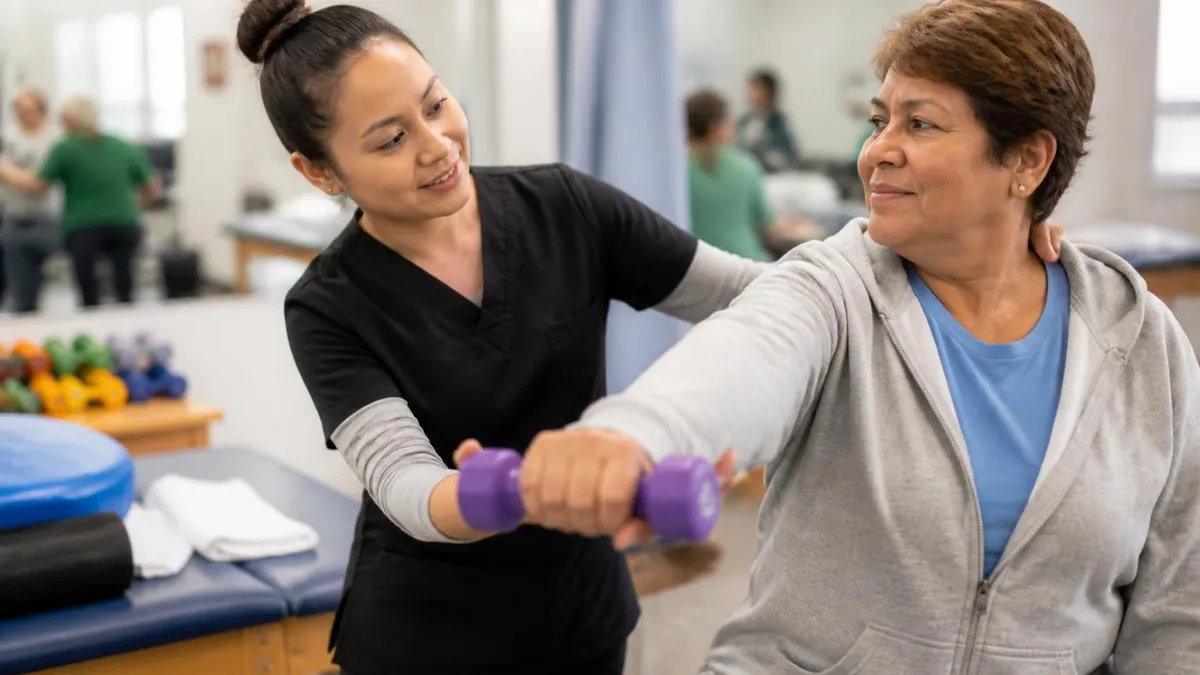
OTA Program: Complete Training Guide, Requirements & Career Path

Occupational Therapy Assistant (OTA): Role, Training & Career Guide
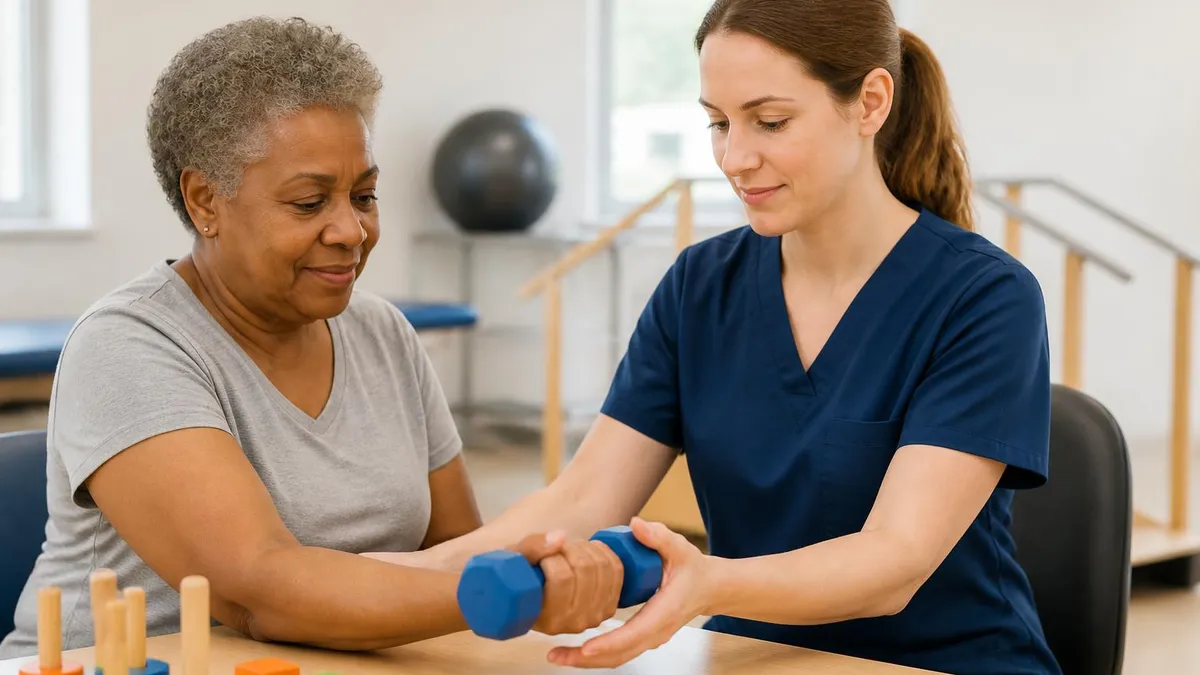
OTA Certification: Complete 2026 Requirements, Exam, and Career Guide

Occupational Therapy Assistant Programs: Accreditation, Cost, and Path

Occupational Therapy Assistant Test Practice Test PDF (Free Printable 2026)
About the Author

Physical Therapist & Allied Health Licensing Exam Expert
University of Pittsburgh School of Health and Rehabilitation SciencesDr. Michelle Park holds a Doctor of Physical Therapy and a PhD in Physical Therapy from the University of Pittsburgh, a top-ranked PT program in the nation. With 13 years of orthopedic and neurological rehabilitation experience, she coaches physical therapy and occupational therapy graduates through the NPTE, NBCOT, and state allied health licensing board examinations.
Join the Discussion
Connect with other students preparing for this exam. Share tips, ask questions, and get advice from people who have been there.
View discussion (8 replies)