
Maryland OSHA Complaint Guide: How to File and Use the OSHA Establishment Search
🔎 Learn how to file a Maryland OSHA complaint, use the OSHA establishment search, and understand MOSH deadlines, inspections, and worker protections.
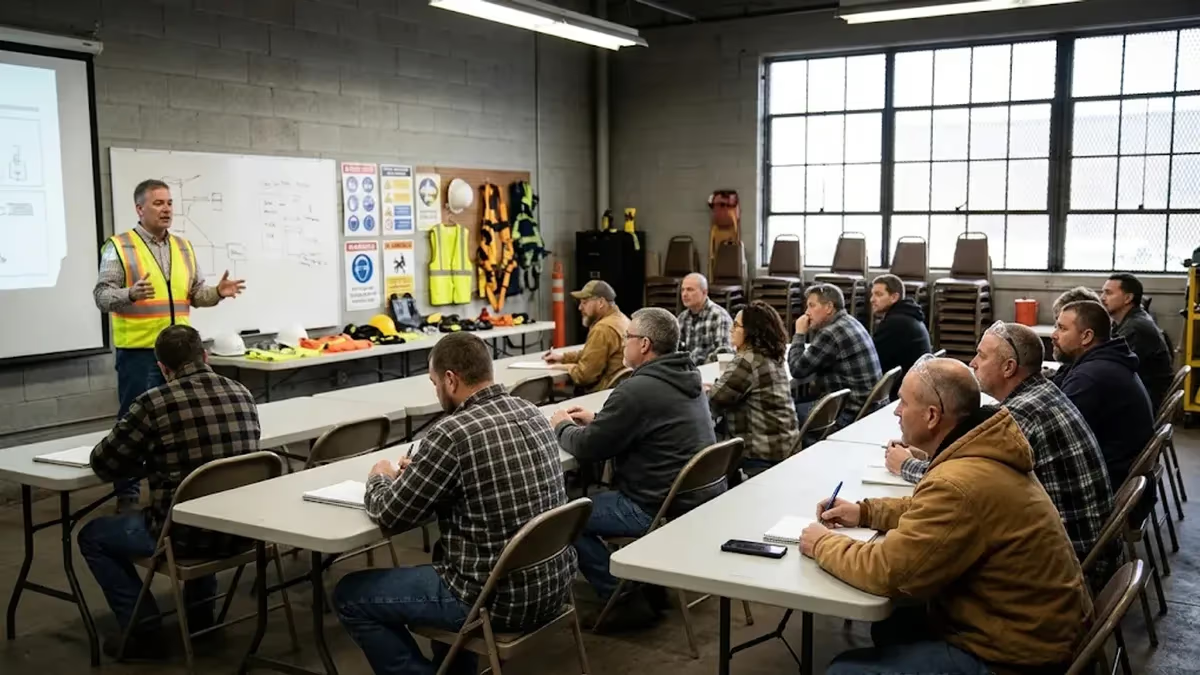
A Maryland OSHA complaint is the formal way a worker reports a hazard to the state agency that enforces workplace safety law, and the OSHA establishment search is the public database that shows what inspectors have already found at a given employer. Used together, these two tools turn a vague worry about an unsafe job site into documented, actionable information. This guide explains who handles complaints in Maryland, how to file one, what happens next, and how to research any workplace.
Maryland is a state plan state, which means federal OSHA approved the Maryland Occupational Safety and Health program, known as MOSH, to enforce standards instead of federal inspectors. MOSH sits inside the Maryland Department of Labor and covers most private employers plus state and local government workers. Because rules differ from state to state, anyone looking for reliable state osha information needs to know which agency actually has jurisdiction over their employer before filing anything.
Crane operators, riggers, and signal persons have a particular reason to care. Cranes are regulated in construction by 29 CFR 1926 Subpart CC, and mistakes involving power lines, overloaded lifts, or poor ground conditions can injure or kill several people at once. If your employer ignores inspection requirements, operator qualification rules, or rigging standards, a complaint is how the state learns about the problem before an incident does.
Many workers hesitate because they fear retaliation or assume nothing will change. The law is clearer than that fear suggests: Section 11(c) of the federal act and Maryland's own statute prohibit employers from punishing employees who raise safety concerns in good faith. You can ask that your name be withheld from the employer, and you can file by phone, mail, fax, or online. Knowing those protections up front makes the decision to act far easier.
The establishment search matters because it lets you do your homework first. Before accepting a job, bidding on a subcontract, or filing a complaint, you can look up an employer's inspection history, citations, abatement dates, and proposed penalties. A company with repeated serious citations for fall protection or crane operations presents a different risk than one with a clean record. This research also strengthens a complaint by showing a pattern rather than a single isolated incident.
This article is awareness content, not legal advice. Agency phone numbers, forms, and deadlines can change, so confirm details with the Maryland Division of Labor and Industry or federal OSHA before relying on them. Still, the overall process is stable enough to describe in plain steps, and by the end you should know where to search, who to call, what to document, and what to expect after you submit your report.
Throughout, you will find practice resources tied to crane operator safety, because the same regulations that drive complaints also appear on certification exams. Learning how enforcement works reinforces why inspection logs, load charts, and hand signals matter every day. Whether you are a worker, a supervisor, or a student preparing for a test, understanding the complaint and search process gives you practical leverage on any site where heavy equipment operates.
OSHA: upcoming dates and official changes
- Updated Nov 10, 2026: Delivery is now Written: online proctored (OPT), test center (TCT) or Event Online Testing (EOT); Practical: hands-on with a CCO Practical Proctor (previously Written: online proctored, test center, or event online testing; practical: hands-on crane exam).
- Updated Nov 10, 2026: Eligibility is now Age 18+; comply with CCO Substance Abuse Policy and Code of Ethics; pass written and practical exams (either order) (previously Age 18+; pass Core + one Specialty written and a Practical exam within 12 months).
- Updated Nov 10, 2026: Number of questions (Core written exam) is now 95 multiple-choice questions (previously 95 multiple-choice questions).
Facts verified Nov 10, 2026 against CCO. Dates that have passed are removed automatically.
- The CCO Mobile Crane Operator Core written exam has 95 multiple-choice questions. (CCO)
- The CCO Mobile Crane Operator Core written exam has a 90-minute time limit. (CCO)
- The CCO Mobile Crane Operator Core written exam costs $140. (CCO)
- The CCO Mobile Crane Operator practical exam costs $70 per exam, and the practical proctor may charge separate fees. (CCO)
- The CCO Mobile Crane Operator certification is valid for 5 years. (CCO)
- Under OSHA 29 CFR 1926.1427, a crane operator certification issued by an accredited testing organization is valid for 5 years. (osha.gov)
- Most CCO certifications are valid for five years and require a written exam to recertify, and recertification can begin up to 12 months before expiry. (CCO)
- The CCO Mobile Crane Operator written exam can be taken by online proctored testing, at a test center, or at an Event Online Testing site, and the practical exam is administered by a CCO-credentialed Practical Proctor. (CCO)
- To earn the CCO Mobile Crane Operator certification, candidates must be at least 18 years old and comply with CCO's Substance Abuse Policy and Code of Ethics. (CCO)
Facts verified Nov 10, 2026 against CCO. Dates that have passed are removed automatically.
OSHA Exam at a Glance
| Item | Detail | Official source |
|---|---|---|
| Number of questions (Core written exam) | 95 multiple-choice questions | CCO |
| Time limit (Core written exam) | 90 minutes | CCO |
| Exam fee (Core written exam) | $140 | CCO |
| Exam fee (Practical exam) | $70 per practical (proctor may charge separate fees) | CCO |
| Exam fee (Specialty written exam) | $80 per Specialty | CCO |
| Validity | 5 years | CCO |
| Validity (OSHA regulation) | OSHA: accredited-organization certification valid 5 years | osha.gov |
| Renewal | Begin recertification up to 12 months before expiry; written exam required | CCO |
| Delivery | Written: online proctored (OPT), test center (TCT) or Event Online Testing (EOT); Practical: hands-on with a CCO Practical Proctor | CCO |
| Eligibility | Age 18+; comply with CCO Substance Abuse Policy and Code of Ethics; pass written and practical exams (either order) | CCO |
| Score release | Preliminary results shown on screen immediately after finishing | CCO |
Facts verified Nov 10, 2026 against CCO. Dates that have passed are removed automatically.
State OSHA Complaints and Reporting by the Numbers
How to File a Maryland OSHA Complaint Step by Step
Gather the Facts
Confirm Jurisdiction
Choose a Filing Method
Sign and Submit
Track the Response
Protect Yourself
After you submit a Maryland OSHA complaint, MOSH sorts it into one of several tracks based on the information you supplied. A signed complaint from a current employee alleging a violation that threatens physical harm typically qualifies for an onsite inspection. An unsigned or anonymous complaint, or one that describes a lower-risk issue, is more likely to trigger a letter or phone inquiry to the employer. The track determines how fast the agency moves and how much proof the employer must provide.
When an inquiry is chosen instead of an inspection, the employer receives a description of the alleged hazards, without your name if you asked for confidentiality, and must respond in writing, usually within about five working days. The response should explain what was corrected and include supporting evidence such as photographs, invoices, or revised procedures. If the answer is inadequate, or if you tell the agency the problem persists, the case can be upgraded to a full inspection.
Situations involving imminent danger move fastest. Examples include an unbraced trench, a crane working inside the minimum clearance of an energized power line, or workers exposed to an unprotected edge with no fall protection. Federal OSHA aims to respond to imminent danger reports within 24 hours, and state plans must be at least as effective, so MOSH treats such reports as a top priority. If someone is in immediate peril, call 911 first and then the agency.
During an onsite inspection, a compliance officer typically presents credentials, holds an opening conference, walks the site with an employer representative and often an employee representative, and interviews workers privately. Officers may photograph conditions, review written programs, check crane inspection records, and take measurements. The inspection is not limited to the exact hazard you reported; if the officer sees other violations in plain view, they can be documented and cited.
A closing conference follows, where the officer explains findings and possible citations. Citations arrive in writing later, listing each alleged violation, its classification, the abatement deadline, and the proposed penalty. Classifications include other-than-serious, serious, willful, repeat, and failure to abate. Penalty ceilings are adjusted annually for inflation, and recent maximums exceed $16,000 for a serious violation and $165,000 for a willful or repeat one. Small-business and good-faith reductions can lower the final amount.
Employers generally have 15 working days from receipt of a citation to contest it or request an informal conference. If they do nothing, the citation becomes a final order. When they contest, the case may go before an independent review body, which can take months. Meanwhile, abatement obligations for uncontested items still run. As the complainant, you have limited rights in the contest process, but you may be allowed to comment on abatement periods.
Employees who filed the complaint are entitled to hear the outcome. You can ask for a copy of the citations or the employer's response, and the agency can tell you whether the case was closed. If conditions do not improve, you can file again or escalate the matter. Citations and results later show up in public records, which is exactly why the establishment search becomes valuable for tracking whether a hazard was truly fixed.
OSHA Establishment Search: Three Ways to Research a Workplace
The most common starting point is the employer name search. Open the establishment search page on osha.gov, type the company name into the establishment field, choose Maryland from the state list, and set a date range. Searching with a short root of the name, such as the first few letters of a trade name, catches spelling differences. Results list every inspection with an activity number, opening date, and standards cited.
Click an activity number to open the detail page. You will see the inspection scope, the industry codes, and whether the case was prompted by a complaint, an accident, or a planned program. Violation rows show the standard number, classification, and penalty. If you are considering a job offer or subcontract, scanning the last five years for serious, willful, or repeat items takes only a few minutes and may prevent a costly mistake.
Filing a Maryland OSHA Complaint vs. Staying Silent: Is It Worth It?
- +Hazards can be corrected before someone is injured or killed
- +Your name can be kept confidential from the employer
- +Legal protection against retaliation applies to good-faith reports
- +Filing is free and does not require an attorney
- +Inspections can uncover additional hazards that protect coworkers
- +The outcome becomes part of the public record for future workers
- −Small crews may guess who filed, even with confidentiality
- −Retaliation can still occur and must be fought through separate channels
- −Inspections and citations can take weeks or months to resolve
- −Anonymous complaints are less likely to trigger an onsite visit
- −Workplace tension may rise while the case is pending
- −Employers may contest citations, delaying visible improvements
Maryland OSHA Complaint Checklist Before You File
- ✓Confirm your employer falls under MOSH rather than federal OSHA.
- ✓Run an OSHA establishment search on your employer first.
- ✓Write down the hazard, location, date, and shift.
- ✓Count how many employees are exposed to the danger.
- ✓Take safe, date-stamped photos only where permitted.
- ✓Report the hazard to a supervisor in writing if safe.
- ✓Decide whether to request confidentiality for your name.
- ✓Choose your filing method: online, mail, fax, or phone.
- ✓Keep a copy of the complaint and note the date sent.
- ✓Save records of any discipline or schedule changes afterward.
Check the record before you file
Spend ten minutes on the OSHA establishment search before writing your complaint. If your employer was cited for the same crane, rigging, or fall protection issue before, cite the inspection number and date in your narrative. Pattern evidence makes your report harder to dismiss and can support a repeat or willful classification.
Retaliation protections are the part of the system workers most need to understand before they act. Federal law protects employees who file complaints, participate in inspections, testify, or refuse unsafe work under narrow conditions. Maryland's own program applies parallel protections to the employees it covers. Retaliation includes firing, demotion, reduced hours, denial of overtime or promotion, blacklisting, and even threats or reassignments designed to punish. The protection exists whether or not the complaint is ultimately proven.
Deadlines are the trap. A retaliation complaint generally must be filed within 30 days of the adverse action, and that clock starts when you learn of the decision, not when it takes effect. Missing it can forfeit your remedy, although limited exceptions exist. Because timelines vary by program and statute, contact the Maryland Division of Labor and Industry or federal OSHA immediately after any suspicious demotion, schedule change, or termination that followed your safety report.
Confidentiality is available but not absolute. You can ask MOSH not to disclose your name to the employer, and the agency will honor that request in the complaint paperwork. However, the details in a complaint may make the source obvious on a small crew, especially if you were the only person who raised the issue. Think about how specific you want to be, and discuss the tradeoff with a union representative or advisor before deciding.
The right to refuse dangerous work is narrower than many people assume. Generally, refusal is protected only when you reasonably believe there is an imminent danger of death or serious injury, you asked the employer to fix it, there is no time to go through normal enforcement channels, and a reasonable person would agree the danger is real. Walking off a lift because you dislike the weather is not protected, but refusing to rig under a visibly damaged sling may well be.
Documentation protects you. Keep copies of your complaint, dates of conversations with supervisors, text messages, schedules before and after your report, performance reviews, and any written warnings. Store them somewhere other than a company device. Investigators weigh timing heavily, so a clean performance history followed by discipline shortly after a safety report is persuasive evidence. Write notes the same day events happen, including names of witnesses who could confirm your account.
Employers sometimes respond with subtle pressure instead of firing. A crane operator might be moved to unwanted shifts, denied overtime, or assigned to a worse machine after raising inspection concerns. These actions may count as retaliation if they would discourage a reasonable worker from reporting. Keep a running log of changes, compare them with how coworkers are treated, and report patterns promptly. Early action is far easier to investigate than a long chain of loosely dated grievances.
Other agencies and laws can also help. Union grievance procedures, the Maryland Commission on Civil Rights, the National Labor Relations Board for concerted activity, and workers' compensation rules may all apply to the same facts. A single employer action sometimes triggers several overlapping remedies with different deadlines. Treat the OSHA complaint as one tool in the kit, and consult an employment attorney or worker advocate if your job, income, or benefits are at stake.
If a hazard could cause death or serious injury right now, call 911 first, then contact MOSH or federal OSHA at 1-800-321-6742. If you were punished for reporting a hazard, act within 30 days. Late retaliation complaints are often rejected.
The OSHA establishment search is a free tool on the federal OSHA website that lets anyone look up inspections by employer name, state, city, date range, industry code, or inspection number. Each record lists the inspection type, scope, opening date, standards cited, penalties proposed and current, and the status of any contest. State plan inspections, including those conducted by MOSH, are generally included, though there can be a lag between the inspection and the posting.
Start broad when searching by name. Companies appear under legal names, trade names, and misspellings, so try partial names and variations. Limiting results to Maryland and a date range of five years usually produces a manageable list. If an employer operates in several states, remove the state filter to see national history. Searching by NAICS code, such as 2381 for foundation, structure, and building exterior contractors, helps you compare one employer against similar firms.
Inspection types tell a story. A programmed inspection comes from targeting lists, a complaint inspection comes from a worker report, an accident inspection follows an injury or fatality, and a referral comes from another agency. A company with many accident inspections and few programmed ones may be getting attention only after harm occurs. Look for patterns across years rather than a single entry, because even careful employers sometimes receive one citation.
Pay close attention to violation classifications. Serious citations mean a substantial probability of death or serious harm was known or should have been known. Willful means the employer intentionally disregarded the law or showed plain indifference. Repeat means a substantially similar violation was previously cited. Failure to abate means a hazard was not corrected by the deadline. Willful and repeat items on crane operations, rigging, or fall protection are strong red flags for any prospective employee or subcontractor.
Compare proposed and current penalties. Penalties are often reduced through informal settlements, so the original amount does not always reflect what the employer paid. Still, a large reduction on a serious fall hazard citation says something different from an item that was fully upheld. When the record shows a contested case, the status field tells you whether it remains open. Treat settlement details as context rather than proof that the underlying hazard was minor.
Use the data to strengthen a complaint. If the employer was previously cited for crane inspection or signal person issues and the same problem appears again, say so. Cite the inspection number and date in your complaint narrative. Pattern evidence can raise the odds of an onsite inspection and may support a repeat or willful classification. Attach nothing you cannot verify, and stick to facts the public record actually shows rather than assumptions about the employer's intent.
Remember the limits of the database. It does not capture every unsafe workplace, only those that were inspected. Small employers may never have been visited, and a clean record can reflect low enforcement coverage rather than good practices. Records also do not show near misses, informal fixes, or injuries that were never investigated. Combine the search with conversations with current workers and review of the employer's own injury logs when you can obtain them.
Start preparing a complaint the day you notice a hazard, not the day you feel ready to confront anyone. Write down what you saw, where, when, and who was exposed. For crane work, include the machine type, capacity, load weight if known, and whether a qualified rigger or signal person was present. Specifics such as a boom working within ten feet of an energized line are far more actionable than a general statement that the site feels unsafe.
Photograph conditions only when it is safe and permitted. Take wide shots that show location context, then close-ups of the defect, such as a frayed wire rope, a missing outrigger pad, or an absent guardrail. Date-stamp images and note who took them. Never climb, enter restricted zones, or ignore a supervisor's lawful instruction to get a better picture. No photograph is worth an injury, and the inspector can document conditions independently once on site.
Raise the issue internally when it is safe to do so, but know that you are not required to. Telling a supervisor or safety manager, preferably in writing, can create a record and sometimes gets the hazard fixed within hours. If the response is dismissive or retaliatory, that history becomes supporting evidence. If you fear reprisal, or the danger is imminent, going straight to the agency is entirely legitimate and often the wiser choice.
Learn the rules your complaint will rest on. Crane operators should know operator qualification and certification requirements, daily and monthly inspection duties, load chart use, power line clearances, and signal person qualifications under the construction crane standard. Rigging hardware has its own inspection and removal criteria. Studying these requirements through practice questions helps you describe violations in precise terms, which investigators appreciate because it speeds their assessment of which standards apply.
Choose a filing method that fits your situation. Online forms are quick and create a timestamp, mailed or faxed forms leave a paper trail, and phone reports are good for urgent matters. Whichever route you use, keep a copy and record the date. If your first contact produces no acknowledgement within a reasonable period, follow up by phone and ask for the case or inspection number so you can track progress over the following weeks.
Prepare for the follow-up. An officer or investigator may call to clarify details, so keep your notes handy and answer plainly. Do not exaggerate; credibility matters more than drama. Be ready to name witnesses, shifts affected, and how long the condition has existed. If an onsite inspection happens, you may be interviewed privately, and you have the right to speak without a manager present. Employers cannot lawfully punish you for cooperating with an inspection.
Finally, treat this as a long game. Check the establishment search a few months after your complaint to see whether an inspection and citations appear, and revisit it before changing jobs or accepting contracts. Pair that habit with regular safety study, because informed workers spot hazards earlier and describe them better. If you are preparing for a crane operator certification, use the practice tests below to cement the regulations that make these complaints effective.
OSHA Questions and Answers

OSHA Guardrail Requirements for Construction: Complete Compliance Guide for Contractors and Workers

OSHA Scaffolding Rules: Complete Guide to Construction Site Safety Standards and Compliance
OSHA (OSHA Certified Crane Operator) Test Guide

OSHA 1910 Crane Training Requirements: Complete Guide to Certification, Qualification, and Compliance
OSHA Outdoor Lighting Requirements: Foot-Candle Rules, Night Work, and Crane Site Compliance
Written and edited by Nathan Beja, founder of Practice Test Geeks, with AI assistance. Exam facts are checked against the official sources linked below. Editorial policy
Sources & references
Exam facts on this page (fees, format, dates, passing scores) are checked against these official sources; the date is our last check. Editorial policy