
OSHA Workers Rights: What Every Employee Needs to Know 2026 October
Learn your OSHA workers rights — 💡 safe conditions, refusal of dangerous work, whistleblower protections, and how to file a complaint.

Understanding OSHA workers rights is one of the most important steps any employee can take to protect themselves on the job. The Occupational Safety and Health Administration was established in 1970 under the OSH Act precisely because Congress recognized that workers needed federal protection from unsafe employers. Every day in the United States, roughly 14 workers die on the job — a sobering number that underscores why these rights exist and why every worker in every industry should know them thoroughly.
At its core, OSHA gives workers three fundamental rights: the right to know about workplace hazards, the right to participate in safety activities, and the right to report unsafe conditions without fear of retaliation. These protections apply to most private-sector employees across all 50 states, as well as to state and local government workers in states that operate their own OSHA-approved safety programs. Federal government employees are covered under a parallel system administered by individual agencies.
Many workers are surprised to learn just how broad these protections actually are. You have the right to request an OSHA inspection of your workplace, to review records of workplace injuries and illnesses, to receive training in a language you understand, and to refuse work you genuinely believe poses an imminent danger to your life or health. These are not suggestions — they are legally enforceable entitlements backed by federal statute.
Knowing your rights in theory is one thing; exercising them in practice requires understanding the specific procedures and timelines involved. For example, if you believe your employer has violated OSHA standards, you have just 30 days from the date of the violation to file a retaliation complaint. Missing that window can mean losing your legal recourse entirely, which is why timely action matters enormously in these situations.
Employers, for their part, have corresponding obligations under the OSH Act. They must provide a workplace free from recognized hazards, follow all applicable OSHA standards, provide required personal protective equipment at no cost to workers, post the official OSHA poster in a visible location, and keep accurate records of work-related injuries and illnesses. When employers fall short of these obligations, workers have the tools to hold them accountable.
This guide walks you through every major category of OSHA worker rights — from hazard communication and the right to refuse dangerous work, to whistleblower protections and the complaint process. Whether you work in construction, manufacturing, healthcare, agriculture, or an office environment, these rights are yours. Related protections such as osha workers rights in outdoor and high-hazard environments extend these same principles to specific dangerous conditions that affect millions of workers each year.
By the end of this article, you will have a clear, actionable understanding of what OSHA guarantees you as an employee, what steps to take when those rights are threatened, and how to build a safer workplace culture starting with the knowledge you carry through the door every day you go to work.
OSHA Workers Rights by the Numbers

Your Core OSHA Rights as a Worker
Your employer must provide a work environment free from recognized hazards that cause or are likely to cause serious physical harm or death. This obligation is established under the General Duty Clause of the OSH Act and applies even when no specific OSHA standard covers the hazard.
Workers have the legal right to receive information and training about chemical and physical hazards in the workplace. OSHA's Hazard Communication Standard requires employers to maintain Safety Data Sheets and label all hazardous chemicals, ensuring you can make informed decisions about your own safety.
Any worker or worker representative can formally request that OSHA conduct a workplace inspection. You may request that your name be kept confidential during this process. OSHA prioritizes imminent danger complaints and takes all formal requests seriously, assigning them based on severity.
Federal law strictly prohibits employers from retaliating against workers who exercise their OSHA rights. Retaliation can include termination, demotion, reduction in hours, harassment, or other adverse actions. If you face retaliation, you can file a complaint with OSHA within the applicable time window.
Workers are entitled to review the OSHA 300 log of workplace injuries and illnesses, exposure records for toxic substances, and their own medical records held by the employer. Employers must provide copies within a reasonable timeframe, and many records must be provided at no cost to you.
The right to refuse dangerous work is one of the most powerful — and most misunderstood — protections that OSHA provides. Many workers believe they must simply comply with an employer's directive, even when they believe it puts their life at risk. In reality, OSHA regulations and court decisions have established clear circumstances under which an employee may legally refuse to perform a task without fear of discipline or termination. Understanding when and how to exercise this right can literally save your life.
For a work refusal to be legally protected under OSHA, four conditions generally must be met. First, you must have asked the employer to eliminate the hazard, and the employer must have failed to do so. Second, you must have a genuine belief — one that a reasonable person in your situation would share — that there is an imminent risk of death or serious physical harm.
Third, there must be insufficient time to eliminate the hazard through regular enforcement channels such as requesting an OSHA inspection. Fourth, you must remain at the worksite and be available to perform other safe work while the situation is being resolved.
It is critical to understand that simply disliking a task or finding it unpleasant does not constitute protected refusal. The danger must be real, immediate, and serious. OSHA uses the phrase "imminent danger" to describe situations where death or serious physical harm could occur immediately or before OSHA could investigate through normal channels. Examples include being ordered to enter a permit-required confined space without proper atmospheric testing, being directed to work on energized electrical equipment without lockout/tagout procedures, or being required to operate machinery with known and unguarded moving parts.
If you need to refuse unsafe work, follow a careful process to protect yourself legally. Immediately notify your supervisor in writing if possible, clearly stating the specific hazard you believe poses imminent danger. Offer to perform other available tasks while the hazardous condition is corrected. Document everything — the date, time, names of witnesses, the exact nature of the hazard, and your employer's response. This documentation becomes critical if a retaliation complaint is later necessary.
Construction workers enjoy additional protections under specific OSHA standards. For example, workers covered under the construction standards have the explicit right to stop work and report imminent danger conditions to their employer. Many large construction projects and federal contracts incorporate stop-work authority clauses that make this right even more explicit and accessible in day-to-day operations on the job site.
Healthcare workers face a particularly complex version of this issue when it comes to infectious disease exposure. OSHA's bloodborne pathogens standard and the General Duty Clause have been applied in healthcare settings to establish that hospitals and clinics must provide appropriate personal protective equipment and engineering controls. Workers who refuse assignments because adequate PPE has not been provided have, in many documented cases, successfully defended those refusals under OSHA anti-retaliation provisions.
Remember that exercising the right to refuse dangerous work is a serious action that should be taken thoughtfully and documented carefully. The goal is not to avoid legitimate work but to ensure that the work you perform does not expose you to preventable, life-threatening hazards. When this right is exercised correctly, it is one of the strongest tools available to individual workers to drive real-time safety improvements in their workplaces.
Hazard Communication, Training & Record Access Rights
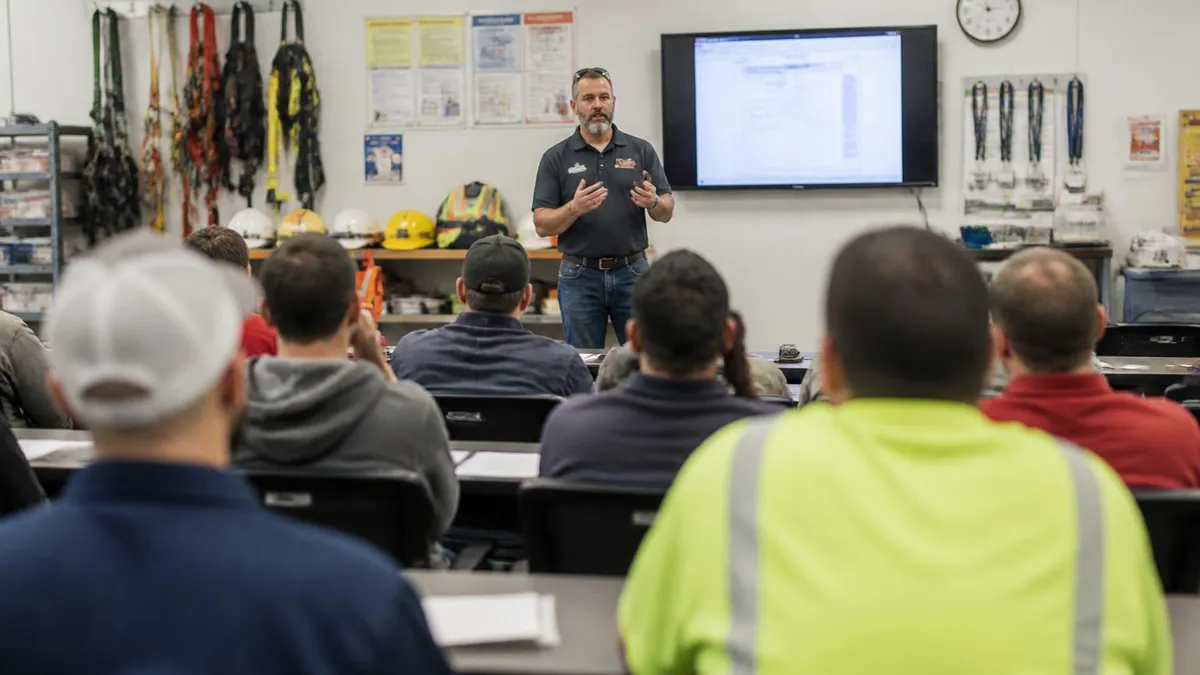
OSHA's Hazard Communication Standard — often called HazCom or the Right-to-Know rule — requires employers to identify and communicate information about all hazardous chemicals in the workplace. Every hazardous chemical must be labeled with the product identifier, signal word, hazard and precautionary statements, and supplier information. Safety Data Sheets must be readily accessible to workers at all times during each work shift, not locked away in a supervisor's office where access depends on someone else's availability.
Workers have the right to request and receive SDSs for any chemical they work with or near, and employers cannot legally deny this access. The GHS-aligned format adopted by OSHA in 2012 standardizes 16 sections of information across all SDSs, making it easier for workers to find critical data such as first-aid measures, exposure limits, and proper PPE requirements. If your employer fails to maintain current SDSs or refuses access, that is a recordable OSHA violation you can report without retaliation.
Exercising OSHA Rights: Benefits and Practical Challenges
- +Federal law prohibits retaliation, giving workers legal backing when reporting hazards
- +OSHA inspections are free to workers and can result in citations and fines against non-compliant employers
- +Whistleblower protections cover a wide range of industries and extend beyond just safety complaints
- +Workers can remain anonymous when filing complaints, reducing fear of employer identification
- +Successful retaliation complaints can result in reinstatement, back pay, and compensatory damages
- +Exercising rights collectively through a union or safety committee amplifies individual worker power
- −The 30-day window to file retaliation complaints is very short and easy to miss without awareness
- −OSHA enforcement is complaint-driven and reactive, meaning hazards may persist until reported
- −Proving retaliation can be difficult without thorough documentation of both the protected activity and the adverse action
- −Small employers and informal worksites may not follow proper procedures even when legally required
- −OSHA penalties, while significant, are sometimes viewed by large corporations as a cost of doing business
- −State OSHA programs vary in rigor, meaning protections are not entirely uniform across the country
Pros and Cons at a Glance
| Pros | Cons |
|---|---|
| Federal law prohibits retaliation, giving workers legal backing when reporting hazards | OSHA enforcement is complaint-driven and reactive, meaning hazards may persist until reported |
| OSHA inspections are free to workers and can result in citations and fines against non-compliant employers | Proving retaliation can be difficult without thorough documentation of both the protected activity and the adverse action |
| Whistleblower protections cover a wide range of industries and extend beyond just safety complaints | Small employers and informal worksites may not follow proper procedures even when legally required |
| Workers can remain anonymous when filing complaints, reducing fear of employer identification | OSHA penalties, while significant, are sometimes viewed by large corporations as a cost of doing business |
| Successful retaliation complaints can result in reinstatement, back pay, and compensatory damages | State OSHA programs vary in rigor, meaning protections are not entirely uniform across the country |
How to File an OSHA Complaint: Step-by-Step Checklist
- ✓Identify the specific OSHA standard you believe has been violated, or describe the general hazard under the General Duty Clause.
- ✓Document the hazard with dates, locations, a description of the unsafe condition, and names of any witnesses.
- ✓Report the hazard to your employer or supervisor in writing before filing externally, creating a paper trail.
- ✓Gather any employer responses, written policies, or records that are relevant to the hazard or condition.
- ✓File a formal complaint online at osha.gov, by phone at 1-800-321-OSHA, or in person at your nearest OSHA office.
- ✓Request that your name be kept confidential if you are concerned about employer retaliation during the investigation.
- ✓Keep copies of everything you submit to OSHA and note the date and method of submission for your own records.
- ✓Follow up with the OSHA area office if you have not received confirmation of your complaint within a few days.
- ✓If retaliation occurs after filing, immediately contact OSHA to file a separate whistleblower complaint within 30 days.
- ✓Contact a workers' rights attorney or your union representative if you need assistance navigating the complaint or retaliation process.
Your employer cannot legally fire, demote, or discipline you for reporting a safety hazard to OSHA.
Section 11(c) of the OSH Act explicitly prohibits retaliation against workers who exercise any right afforded by the Act, including filing complaints, participating in inspections, or refusing imminent danger work. If you face retaliation, you have 30 days from the adverse action to file a complaint — and OSHA investigates these cases at no cost to you.
Whistleblower protections under OSHA are broader and more powerful than many workers realize. While most people associate OSHA solely with physical workplace safety, the agency actually administers whistleblower protection programs under 22 separate federal statutes. These laws cover industries ranging from commercial trucking and aviation to nuclear power, food safety, consumer product manufacturing, and financial services. This means that millions of workers in industries that seem unrelated to "traditional" workplace safety are still covered by OSHA-enforced whistleblower rules.
The basic framework across all these statutes is similar: if you report a violation of the law, participate in an investigation or proceeding, or refuse to engage in conduct you reasonably believe violates the law, your employer cannot take adverse action against you. Adverse action includes not just termination, but also demotion, suspension, reduction in pay or hours, reassignment to a less desirable position, denial of promotion, threats, harassment, and blacklisting within an industry. The breadth of what qualifies as retaliation is intentionally wide to prevent employers from finding creative ways to punish workers without triggering obvious legal violations.
Filing a whistleblower complaint is initiated through OSHA's Whistleblower Protection Program. The timeline for filing varies by statute — the OSH Act gives workers 30 days, while statutes like the Surface Transportation Assistance Act allow 180 days, and others such as the Sarbanes-Oxley Act give workers 180 days as well. Knowing which statute applies to your situation and what deadline governs is essential, because courts and OSHA have consistently refused to extend these deadlines except in extraordinary circumstances such as deliberate employer concealment of the adverse action.
When OSHA investigates a whistleblower complaint, the burden-shifting framework generally works as follows: you must first show that you engaged in protected activity, that your employer knew about it, and that an adverse action followed. Once you establish those three elements, the burden shifts to the employer to prove that it would have taken the same adverse action even in the absence of your protected activity. This is called the "same-action" defense, and employers often struggle to substantiate it when the timing between the protected activity and the adverse action is suspiciously close.
Remedies available in successful whistleblower cases can be substantial. OSHA can order reinstatement to your former position, payment of back wages, restoration of benefits and seniority, and payment of legal fees and costs. In some cases under certain statutes, workers may also be entitled to compensatory damages for emotional distress, reputational harm, or other non-economic losses caused by the retaliation. The goal of these remedies is to make the worker whole — to restore them to the position they would have been in but for the illegal retaliation.
Workers who believe their complaint was improperly dismissed by OSHA can appeal to the Office of Administrative Law Judges and ultimately to federal circuit courts. Some statutes even allow workers to file directly in federal district court if OSHA fails to act within a specified timeframe. These multiple avenues for appeal and direct court access reflect Congress's intent to create strong, enforceable protections rather than just aspirational policy statements that employers can ignore with minimal consequences.
One underutilized but powerful tool is the ability to participate in OSHA enforcement actions as a worker representative. If your employer receives citations following an inspection, you have the right to participate in informal conferences between the employer and OSHA, where proposed penalties and abatement timelines are discussed. Being present at these meetings ensures that worker perspectives are heard and that employers do not negotiate settlements that gut the safety improvements the inspection was meant to achieve.
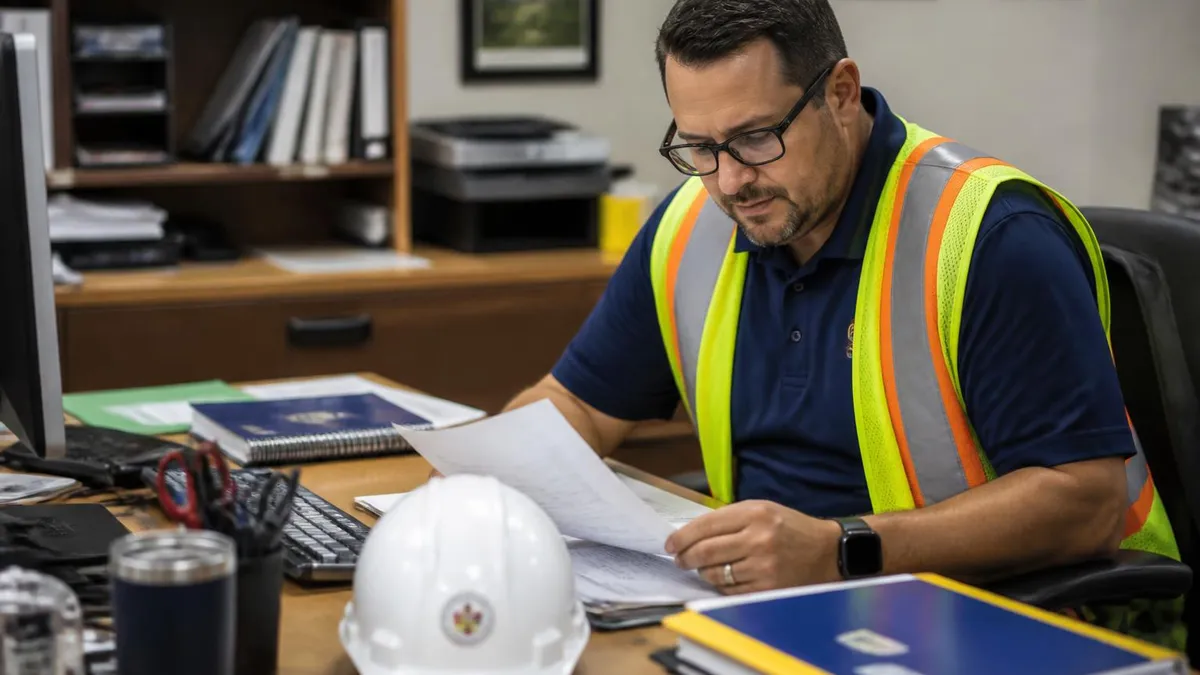
Under Section 11(c) of the OSH Act, you must file a retaliation complaint with OSHA within 30 days of the adverse action — not 30 days from when you realized it was retaliation. Courts interpret this deadline strictly. If your employer fires, demotes, or disciplines you for safety-related activity, contact OSHA immediately and document everything. Missing this window can permanently eliminate your legal recourse, even if the retaliation was blatant and well-documented.
Understanding how state OSHA plans work is essential for any worker, because in more than half the country, your primary point of contact for workplace safety enforcement is not the federal OSHA office but a state agency operating under its own approved plan. As of 2026, 26 states and territories operate OSHA-approved state plans that cover either private-sector and public-sector employees together, or public-sector employees only. These state plans must be at least as effective as federal OSHA in protecting workers, but they can and often do exceed federal standards in specific areas.
California's Division of Occupational Safety and Health — commonly known as Cal/OSHA — is one of the most well-known and rigorous state plans in the country. Cal/OSHA has adopted standards on issues like heat illness prevention, wildfire smoke exposure, and COVID-19 that go significantly beyond what federal OSHA requires. Workers in California therefore enjoy broader protections in these specific areas than their counterparts in federal OSHA states. Similarly, Washington State's Department of Labor and Industries maintains state-specific standards on certain chemical exposures that are stricter than federal minimums.
For workers in states without an approved state plan — sometimes called federal OSHA states — the federal agency has direct jurisdiction over private-sector employers. These states include major industrial and construction hubs such as Texas, Florida, Georgia, and Illinois. In these states, the federal OSHA regional and area offices handle all inspections, citations, and complaint investigations for private-sector workers. Public employees in these states are generally not covered by OSHA at all unless their specific state has enacted separate workplace safety legislation for government workers.
Agricultural workers deserve special mention because their coverage under OSHA has historically been more limited than workers in other industries. OSHA's agricultural standards cover farms with 11 or more employees, but smaller family farms are exempt from OSHA jurisdiction under a longstanding Congressional rider on OSHA's appropriations. This exemption has been the subject of ongoing advocacy by farmworker organizations, who point out that agricultural work consistently ranks among the most dangerous occupations in the United States, with high rates of heat illness, pesticide exposure, and machinery-related fatalities.
Workers in the maritime industry — including longshore workers, shipyard employees, and marine terminal workers — are covered by specialized OSHA maritime standards that address the unique hazards of working on or near water. These standards cover vessel entry, diving operations, scaffolding on ships, and dozens of other maritime-specific risks. Maritime workers should familiarize themselves with both the general OSHA maritime standards and any additional Coast Guard regulations that may apply to their specific work context.
Healthcare workers have seen significant expansion of OSHA attention in recent years, particularly following the COVID-19 pandemic. OSHA issued a temporary emergency standard for healthcare during the pandemic, and the agency has proposed a permanent infectious disease standard that would establish comprehensive requirements for hospitals, nursing homes, and other healthcare settings. Healthcare workers in these environments should monitor developments in this rulemaking process because new enforceable rights and employer obligations may emerge from it in the coming years.
No matter which state you work in or which sector employs you, the fundamental principle remains the same: you have the right to go to work and come home safely. If you are uncertain about what specific protections apply in your state or industry, OSHA's website provides a comprehensive directory of state plans, regional offices, and industry-specific compliance assistance resources.
You can also reach OSHA directly at 1-800-321-OSHA to ask questions and get guidance without needing to file a formal complaint. Understanding the full landscape of your protections — including relevant rules like those governing osha workers rights in high-hazard outdoor settings — puts you in the strongest possible position to advocate for yourself and your coworkers.
Protecting your OSHA rights in practice requires more than knowing what they are on paper — it requires building habits and relationships that make those rights real in your day-to-day work life. One of the most effective things any worker can do is get involved with their workplace safety committee or joint labor-management safety program. When workers participate actively in safety inspections, incident investigations, and program reviews, hazards get identified faster and corrected more completely than when safety is left entirely to management.
Documentation is the foundation of any successful OSHA rights exercise. Keep a personal log of safety incidents, near misses, and conversations with supervisors about hazards. Note the date, time, location, people present, and exactly what was said or observed. This kind of contemporaneous documentation is far more credible than reconstructed memories written weeks or months later, and it forms the evidentiary backbone of any complaint or legal action you might need to pursue. Store your log somewhere your employer cannot access — a personal email draft, a cloud folder, or a notebook kept at home.
Build relationships with your coworkers around safety issues. Collective action — whether through a formal union or simply through a group of coworkers speaking together to management — is consistently more effective than individual complaints. OSHA's regulations explicitly protect concerted activity by workers on safety matters, and employers who retaliate against a group of workers face more legal exposure and more public scrutiny than those who quietly push out a single employee. There is real power in solidarity when it comes to workplace safety advocacy.
Take advantage of OSHA's free compliance assistance resources. The agency's On-Site Consultation Program, available through state partners, provides free, confidential safety and health consultations to small businesses — and workers can encourage their employers to use this service. OSHA also offers Susan Harwood Training Grants to nonprofit organizations that train workers and employers in high-hazard industries, and many of these training programs are available to workers at no cost. Seek out these resources in your area before a crisis makes training feel urgent.
If your workplace has a union, your union safety representative is one of your most valuable allies. Union reps have specialized training in OSHA standards, know how to navigate the complaint process, and have collective bargaining agreement rights that often exceed what OSHA alone can provide. Even in non-union workplaces, workers can designate a worker representative to accompany OSHA inspectors during walkaround inspections — this is a right explicitly provided in OSHA regulations and it gives workers a direct voice in the inspection process.
Prepare for OSHA certification exams by building a solid understanding of the legal framework behind worker rights, not just the technical safety standards. Exam questions often test whether you understand the rights and responsibilities framework established by the OSH Act, including which parties bear which burdens, what timelines apply, and how enforcement works in practice. Knowing the law behind the rules — not just the rules themselves — makes you a more effective safety advocate and a more prepared exam candidate.
Finally, remember that OSHA worker rights are not a static set of rules — they evolve through new rulemaking, court decisions, and changes in enforcement priorities. Make it a habit to check OSHA's website periodically for updates to standards affecting your industry, new enforcement guidance, and changes to the whistleblower protection programs. Staying current with OSHA developments is not just good practice for passing certification exams — it is how you ensure that you always know the full scope of protections available to you in a world where workplace hazards themselves are constantly evolving.
OSHA Questions and Answers

OSHA Lightning Safety: Standards, Rules & Outdoor Worker Protection Guide for 2026

OSHA 510 Online Course: Construction Safety Training Requirements, Format, and Best Providers

Is OSHA a Government Agency? The Federal Body Behind US Workplace Safety

OSHA Compliance Without the Headache: Checklist, Consulting, and a 10-Step Action Plan

How to Get OSHA Certified: Complete 2026 Guide to Training, Cards & Compliance
About the Author

Certified Safety Professional & OSHA Compliance Expert
Indiana University of Pennsylvania Safety SciencesDr. William Foster holds a PhD in Safety Science from Indiana University of Pennsylvania and is a Certified Safety Professional (CSP) and Certified Hazardous Materials Manager. With 20 years of occupational health and safety management experience across construction, manufacturing, and chemical industries, he coaches safety professionals through OSHA certification, CSP, CHST, and safety management licensing programs.
Join the Discussion
Connect with other students preparing for this exam. Share tips, ask questions, and get advice from people who have been there.
View discussion (8 replies)