
OSHA Law & Regulations: A Plain-English Guide to the Rules That Protect Workers
🎓 OSHA law & regulations explained: the OSH Act, key standards, employer duties, worker rights, penalties, and how to prepare with free practice tests.
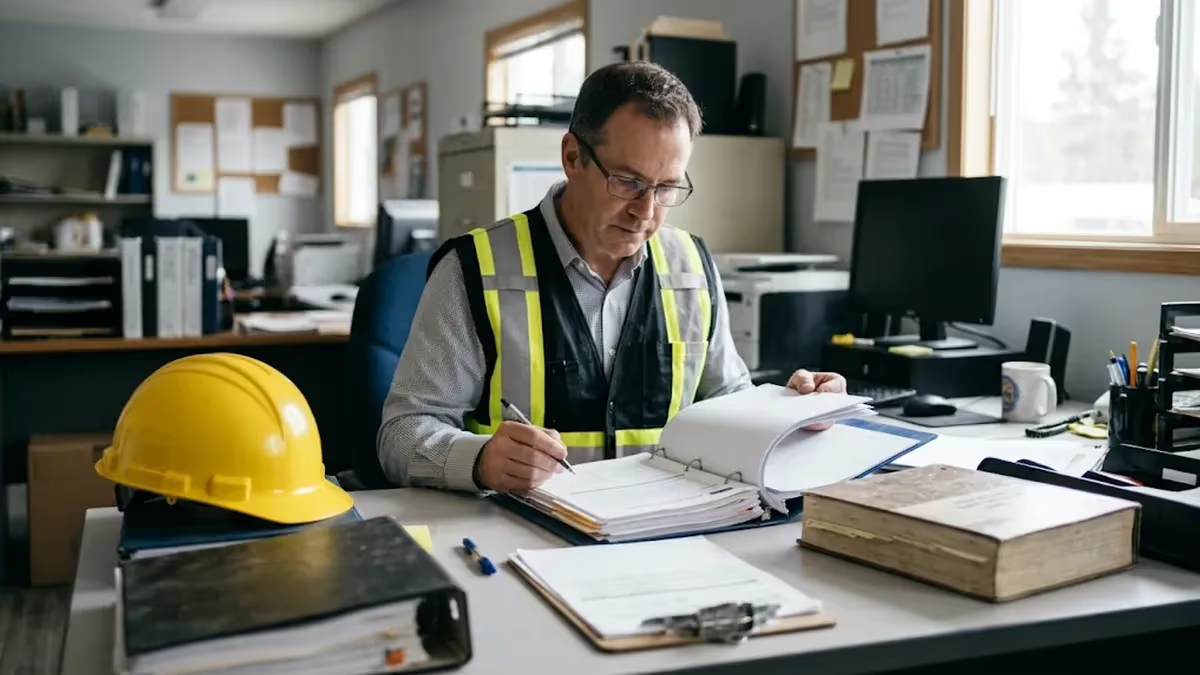
Understanding OSHA Law & Regulations
OSHA law & regulations shape almost every American workplace, yet most workers never read a word of them. The Occupational Safety and Health Act of 1970 promised every worker a job free from recognized hazards, and the rules written under it now fill thousands of pages of federal code. Whether you manage a warehouse, frame houses, or study for a safety certificate, understanding how the law works gives you a practical advantage. This guide breaks it down plainly. Practice with the free OSHA Safety Certificate practice test on PracticeTestGeeks (21 questions with answer explanations).
Start with where the law comes from. Congress passed the Occupational Safety and Health Act, and President Nixon signed it on December 29, 1970. The agency itself, the Occupational Safety and Health Administration, opened in April 1971 inside the Department of Labor. Its mission was blunt: reduce the toll of workplace deaths, injuries, and illnesses that, at the time, killed an estimated 14,000 workers every year. Today the number is far lower, though still painfully high.
The statute itself is short compared with the regulations that grew from it. The Act sets out broad duties, creates OSHA, gives it authority to write standards and inspect workplaces, and establishes penalties. Regulations, by contrast, live in Title 29 of the Code of Federal Regulations and spell out the details, such as how high a guardrail must be or how long injury records must be kept. Learning to tell the two layers apart makes every later topic easier.
Most people searching for osha laws and regulations want one of three things: a plain-English summary for their job, a way to check whether a specific practice is legal, or help preparing for a training course or exam. This article serves all three. You will see who is covered, what employers must do, what workers may demand, how inspections and penalties work, and how to turn that knowledge into a passing score on practice questions.
A quick note on scope. OSHA does not regulate everything that could hurt someone at work. It focuses on recognized hazards, meaning dangers that are known in an industry and have feasible fixes. It leaves some areas to other agencies, such as mines, aircraft in flight, and certain railroad operations. Because of those boundaries, a smart reader always asks two questions first: who is the employer, and which standard applies to this exact task?
Another point worth stating early is that compliance is not just paperwork. A written safety program that sits in a binder will not protect a worker on a ladder, and inspectors know the difference. They watch what employees actually do, ask them questions, and compare the answers with company policy. Employers who treat the rules as a daily operating habit, rather than an annual scramble, tend to face fewer citations and lower insurance costs.
Here is how the rest of the article is organized. We begin with the core parts of the law, then walk through the key standards for general industry and construction. After that, you will see employer duties, worker rights, inspection procedures, penalties, and state plans. A checklist and a set of study tips close the guide, along with free practice questions and answers to common questions. Skim the table of contents if you need a particular section quickly.
Free OSHA Safety Certificate Study Tools
Interactive OSHA Safety Certificate resources on PracticeTestGeeks, free to start:
- OSHA Respiratory Protection — 21 questions with instant scoring and answer explanations
- OSHA Safety Certificate flashcards — review key terms and concepts card by card
- OSHA Safety Certificate study guide — topic-by-topic overview of what the exam covers
- OSHA Safety Certificate cheat sheet — one-page printable summary for last-minute review
OSHA Law & Regulations by the Numbers
The Core Parts of OSHA Law
The foundational statute that created OSHA, set employer and employee duties, authorized inspections, and established penalties. It applies to most private-sector employers and gives the Secretary of Labor power to write binding safety and health standards.
Section 5(a)(1) requires employers to keep workplaces free from recognized hazards likely to cause death or serious harm, even when no specific standard exists. OSHA uses it for hazards such as workplace violence and extreme heat.
Detailed rules live in Title 29 of the Code of Federal Regulations. Part 1910 covers general industry, Part 1926 covers construction, and other parts address maritime work and agriculture. Each standard states exactly what must be done.
Part 1904 requires many employers to log work-related injuries and illnesses on Forms 300, 300A, and 301. Records must be kept five years, and certain employers must also submit data electronically to OSHA each year.
Section 11(c) bars retaliation against workers who report hazards, injuries, or take part in inspections. Workers generally have 30 days to file a retaliation complaint, so quick action matters when a worker believes they were punished.
Key OSHA Standards Every Worker Should Know
Most day-to-day compliance questions land in Title 29 of the Code of Federal Regulations. Part 1910 covers general industry, which includes factories, warehouses, hospitals, restaurants, and offices. Part 1926 covers construction, from home building to bridge work. Separate parts address shipyards (Part 1915), marine terminals (Part 1917), longshoring (Part 1918), and agriculture (Part 1928). Choosing the correct part is step one, because fall protection is handled very differently on a roof than in a distribution center.
Fall protection tops OSHA's list of most-cited standards year after year. In construction, Section 1926.501 requires protection for employees working at unprotected edges six feet or more above a lower level. In general industry, the trigger height under Section 1910.28 is four feet. Acceptable systems include guardrails, safety nets, and personal fall arrest equipment. Related violations involving ladders and scaffolds also appear near the top of the annual list, which shows how often basic height work goes wrong.
Hazard communication is the other perennial heavyweight. Section 1910.1200 requires chemical manufacturers to classify hazards and employers to maintain labels, safety data sheets, a written program, and worker training. The standard follows the Globally Harmonized System, so labels carry signal words, pictograms, and hazard statements, and safety data sheets use a consistent sixteen-section format. If a worker can handle a chemical, that worker must be able to find its sheet and understand what the label means.
Energy control and machine safety come next. The lockout/tagout standard, Section 1910.147, requires employers to isolate and de-energize equipment before servicing so that it cannot start unexpectedly. Machine guarding rules in Subpart O protect workers from rotating parts, pinch points, and flying chips. Powered industrial truck rules in Section 1910.178 require operator training and an evaluation at least every three years. Each of these standards exists because investigators kept finding the same preventable amputations and crushing injuries.
Health standards protect workers from hazards that do not announce themselves. The respiratory protection standard, Section 1910.134, requires medical evaluations, fit testing, and a written program before a worker wears a respirator on the job. The noise standard sets an action level of 85 decibels averaged over eight hours, which triggers monitoring and a hearing conservation program. Substance-specific rules for lead, asbestos, silica, and benzene add exposure limits, air monitoring, and medical surveillance for workers in affected trades.
Confined spaces deserve their own mention because mistakes there kill rescuers as often as original victims. Section 1910.146 governs permit-required confined spaces in general industry, and Subpart AA of Part 1926 covers construction. Employers must identify the spaces, test the atmosphere, assign an attendant, and prepare a rescue plan before anyone enters. A written permit documents those controls. Expect exam questions on atmospheric testing order, entrant duties, and attendant responsibilities if you take a confined space course.
Standards also rest on a hierarchy of controls that guides how employers fix hazards. Elimination and substitution come first, engineering controls such as ventilation come second, administrative controls like job rotation come third, and personal protective equipment is the last line of defense. Many exam questions test this order. Handing out gloves or respirators does not satisfy the law if a feasible engineering fix exists, because OSHA expects employers to remove the hazard before relying on equipment.
OSHA Law & Regulations by Workplace Type
General industry is the broadest category, covering manufacturing, healthcare, retail, warehousing, and most service work. Subparts under Part 1910 address walking-working surfaces, exit routes, electrical safety, machine guarding, and personal protective equipment. An employer in this category must also follow recordkeeping rules in Part 1904, post required notices, and maintain emergency action plans. Written procedures must match what employees really do on the floor.
Typical citations in this group involve blocked exit routes, missing machine guards, unlabeled chemical containers, and untrained forklift operators. A small manufacturer with twenty employees faces the same core standards as a large plant, though some paperwork duties scale with size. If you are unsure which subpart applies to a task, start with the hazard itself, then search Part 1910 for the matching section and its training requirements.
Is Strict OSHA Compliance Worth the Effort?
- +Fewer injuries, illnesses, and lost workdays across the workforce
- +Lower workers' compensation premiums over time
- +Reduced risk of citations that can exceed $16,000 per serious violation
- +Better employee morale, trust, and retention
- +Stronger bids on contracts that require clean safety records
- +Clear procedures that cut downtime, rework, and equipment damage
- −Upfront costs for training, equipment, and engineering controls
- −Recordkeeping and documentation consume staff time
- −Technical standards can be hard for small employers to interpret
- −Rules differ between federal OSHA and state-plan states
- −Requirements change, so programs need regular updates
- −Site conditions can make some controls difficult to implement
Pros and Cons at a Glance
| Pros | Cons |
|---|---|
| Fewer injuries, illnesses, and lost workdays across the workforce | Upfront costs for training, equipment, and engineering controls |
| Lower workers' compensation premiums over time | Recordkeeping and documentation consume staff time |
| Better employee morale, trust, and retention | Technical standards can be hard for small employers to interpret |
| Stronger bids on contracts that require clean safety records | Rules differ between federal OSHA and state-plan states |
| Clear procedures that cut downtime, rework, and equipment damage | Requirements change, so programs need regular updates |
OSHA Law & Regulations Compliance Checklist
- ✓Identify which OSHA standards apply to your industry and tasks.
- ✓Write and update a hazard communication program with current safety data sheets.
- ✓Train every employee on workplace hazards in language they understand.
- ✓Complete and document a workplace hazard assessment at least once a year.
- ✓Display the official OSHA poster where employees will see it.
- ✓Keep Forms 300, 300A, and 301 on file for five years.
- ✓Post the Form 300A summary from February 1 through April 30 each year.
- ✓Provide required protective equipment and train employees to use it.
- ✓Report fatalities within 8 hours and serious injuries within 24 hours.
- ✓Never retaliate against workers who raise safety concerns.
The General Duty Clause applies even without a specific standard
Many new learners assume a hazard is legal if no standard names it. That is wrong. Section 5(a)(1) of the OSH Act lets OSHA cite employers for recognized hazards likely to cause death or serious harm, so always ask whether a danger is known in your industry and whether a feasible fix exists.
Employer Duties and Worker Rights Under OSHA Law
Under Section 5 of the Act, every covered employer must furnish a workplace free from recognized hazards likely to cause death or serious physical harm, and must comply with all applicable standards. In practice that means finding hazards, fixing them, training workers, providing protective equipment, and keeping records. The duty belongs to the employer, not the employee, which is why a manager cannot lawfully shift responsibility onto a worker who was never trained properly.
Employers must also provide training in a language and vocabulary workers understand. A Spanish-speaking crew cannot be trained only in English, and a shift that begins before the trainer arrives is not covered by the training. Many standards require retraining when workers change jobs, when new hazards appear, or when an inspection reveals a gap in knowledge. Documentation matters because, in an inspection, training that was not recorded is often treated as training that never happened.
Workers have their own duties, though they are lighter. Section 5(b) says employees must comply with standards and rules that apply to their conduct, which includes wearing assigned protective equipment and following lockout procedures. Failure to do so can lead to discipline from the employer, but OSHA itself generally cites employers rather than workers. This arrangement reflects the idea that the party controlling the workplace holds the power to prevent hazards, and therefore carries the legal burden.
Worker rights are broader than many people realize. Employees may request an inspection, speak privately with an inspector, review exposure and injury records, receive information about hazardous chemicals, and see results of workplace monitoring. They can also file a complaint with OSHA and ask that their name be kept from the employer. Employers must post the official OSHA poster, which explains these rights, in a place where employees will actually see it, such as a break room.
Retaliation protection sits under Section 11(c). An employer may not fire, demote, reduce pay, or otherwise punish a worker for reporting an injury, raising a safety complaint, or taking part in an inspection. A worker who believes retaliation occurred generally has only 30 days to file a complaint with OSHA, which is a much shorter window than many other employment claims. Some other whistleblower laws enforced by OSHA allow different deadlines, so checking the specific statute is wise.
Employers also face reporting duties after serious incidents. A work-related fatality must be reported to OSHA within eight hours. An in-patient hospitalization, amputation, or loss of an eye must be reported within 24 hours. Reports can be made by phone to the nearest area office, by calling the national hotline at 1-800-321-OSHA, or through the online form. Missing these windows is itself a violation and can create penalties separate from the underlying hazard.
Recordkeeping duties scale with size and industry. Employers with ten or fewer employees at all times during the previous year, and employers in certain low-hazard industries such as many offices and retail stores, are partially exempt from routine injury logs. They must still report fatalities and serious injuries. Everyone else logs recordable cases on Form 300, summarizes them on Form 300A, and completes Form 301 incident reports, keeping all of them for five years after the end of the calendar year.
Fatalities must be reported to OSHA within 8 hours, and hospitalizations, amputations, and eye losses within 24 hours. A retaliation complaint under Section 11(c) generally must be filed within 30 days. Missing any of these windows can cost an employer money or a worker their legal protection.
OSHA Inspections, Penalties, and State Plans
OSHA can inspect most workplaces without advance notice, and inspections are prioritized by risk. Imminent danger situations come first, followed by fatalities and catastrophes, worker complaints and referrals, programmed inspections of high-hazard industries, and follow-ups. An inspection typically starts with an opening conference, continues with a walkaround where the compliance officer observes conditions and interviews workers, and ends with a closing conference that explains likely findings. Employers may accompany the inspector, and so may an employee representative.
Employers have rights during an inspection too. If the inspector arrives without a warrant, the employer may ask for one, though refusing can invite a warrant and heightened scrutiny. Many experienced safety managers prefer to cooperate politely while documenting everything the inspector photographs or samples. Designating a trained escort, preparing records in advance, and correcting minor hazards immediately all help. Employees may be interviewed privately, and employers cannot lawfully pressure them about what to say.
After the inspection, OSHA has up to six months to issue citations. Violations are classified as other-than-serious, serious, willful, repeat, or failure to abate. In recent years, serious violations carry maximum penalties above $16,000 each, while willful and repeat violations can exceed $165,000 each. Failure-to-abate penalties accrue daily. Amounts rise yearly with inflation, so verify current figures on OSHA's website, and remember that actual penalties are often reduced for small size, good faith, and history.
Employers who disagree with a citation have 15 working days from receipt to contest it. Without a contest, the citation becomes a final order. Many cases settle during an informal conference with the area director, where penalties may be reduced if the employer fixes the hazard quickly and commits to improvements. Contested cases go to the independent Occupational Safety and Health Review Commission, which operates separately from OSHA to preserve fairness in deciding disputes.
Abatement is the heart of enforcement. A citation lists the violation, the standard cited, the proposed penalty, and an abatement date. The employer must correct the hazard by that date and certify in writing that it has done so, often with supporting documentation. Citations must be posted near the place where the violation occurred for three working days or until the hazard is fixed, whichever is longer, so workers can see exactly what the inspector found.
State plans add another layer. Section 18 of the Act lets states run their own occupational safety programs if they are at least as effective as federal OSHA. Roughly two dozen states and territories operate plans covering private employers, and several cover only public employees. States such as California, Washington, and Michigan sometimes adopt stricter rules than the federal baseline. If you work in a state-plan jurisdiction, check the state agency's rules as well as Part 1910 and Part 1926.
Criminal penalties exist but are rare. Section 17(e) of the Act allows prosecution when a willful violation causes an employee's death, though the maximum penalty is a misdemeanor, which critics often call weak. Federal prosecutors sometimes turn to other statutes after fatal incidents. Employers should also know that OSHA publishes enforcement data, press releases, and inspection details online, so a serious citation can become a reputation problem long before the legal matter ends.
How to Study OSHA Laws and Regulations for a Test or Job
Begin your preparation by deciding which regulations matter for your goal. A worker taking a ten-hour outreach course for construction needs different knowledge than a warehouse supervisor aiming at a general industry card. Read the course outline, note which Subparts it names, and build a short list of standards, such as 1926.501 or 1910.147. A narrow list is far easier to master than the entire code, and it keeps your study hours focused.
Next, learn the vocabulary. Terms like competent person, qualified person, recognized hazard, imminent danger, serious violation, and permit-required confined space appear constantly in questions, and each has a legal meaning. Create flashcards that pair each term with a one-sentence definition and a real example. When you can explain a term to a coworker in your own words, you are far more likely to recognize it when a tricky multiple-choice option disguises it.
Memorize the numbers that appear repeatedly. Six feet for fall protection in construction, four feet in general industry, five feet for trench protective systems, eight hours for fatality reports, 24 hours for hospitalization reports, 15 working days to contest a citation, 30 days for a Section 11(c) complaint, and five years for recordkeeping. A one-page list of these figures, reviewed each morning for a week, can earn several points on a practice test.
Practice questions are the fastest way to find gaps. Take one set untimed, read every explanation, and write down the standard behind each miss. Then retake a different set a few days later. The free quizzes on this site cover basic OSHA concepts and confined space entry, and they mirror the style of real course tests. Aim for at least 80 percent on two consecutive attempts before treating a topic as finished.
Connect the rules to real jobs. Walk through your workplace and spot where a standard applies: the ladder in the stockroom, the label on a cleaning bottle, the guard on a saw, the exit sign over a door. Ask yourself what the regulation would require and whether the setup complies. This habit turns abstract code into pattern recognition, which is what inspectors use, and it helps you speak up confidently when something looks wrong.
Use primary sources when a question is unclear. OSHA's website publishes the full text of every standard, interpretation letters that explain how the agency applies them, fact sheets, and quick cards in plain language. Interpretation letters are especially useful for gray areas. Just remember that online summaries, including this article, can lag behind amendments, so before relying on a number for a legal decision, check the current regulation or ask a qualified safety professional.
Finally, plan the last week deliberately. Spend the first three days on weak topics, the next two on mixed practice sets, and the final days on light review and sleep. Bring identification and any required course materials to the exam or class. After you finish, keep your card or certificate somewhere safe and note when refresher training is due, because a credential is only valuable if the knowledge behind it stays fresh.
Sample OSHA Safety Certificate Practice Questions
Try these questions from our free OSHA Safety Certificate practice tests. The correct answer and an explanation follow each question.
A GFCI protects workers primarily by detecting what condition?
- A. Excessive heat in the wire
- B. An imbalance between hot and neutral current (ground fault)
- C. Low battery voltage
- D. Loose terminal screws
Answer: B. An imbalance between hot and neutral current (ground fault)
A GFCI trips when current leaking to ground creates an imbalance between the hot and neutral conductors.
A maintenance worker needs to access a fixed ladder that extends 30 feet above the lower level. What is required on this ladder according to the final rule on Walking-Working Surfaces?
- A. A cage or well is sufficient for compliance.
- B. A personal fall arrest system or a ladder safety system.
- C. Rest platforms every 15 feet.
- D. The ladder must be inspected monthly by a qualified person.
Answer: B. A personal fall arrest system or a ladder safety system.
For fixed ladders that extend more than 24 feet above a lower level, OSHA's final rule requires employers to install a personal fall arrest system or a ladder safety system.
What must an employer do if a fixed guard cannot be used to protect workers from a machine's point of operation?
- A. Shut down the machine permanently
- B. Post a warning sign and continue operations
- C. Use an alternative safeguarding device such as a light curtain or pressure-sensitive mat
- D. Assign only senior employees to operate the machine
Answer: C. Use an alternative safeguarding device such as a light curtain or pressure-sensitive mat
When fixed guards are not feasible, OSHA requires employers to use alternative safeguarding devices like light curtains, pressure mats, or other presence-sensing technology.
At what height must an employer provide fall protection for workers on walking-working surfaces with unprotected sides or edges?
- A. 4 feet
- B. 6 feet
- C. 8 feet
- D. 10 feet
Answer: A. 4 feet
OSHA requires fall protection at 4 feet in general industry under 29 CFR 1910.28.
Take the full OSHA Safety Certificate practice test
OSHA Questions and Answers
OSHA Safety Certificate Practice Test and Study Guide

OSHA Toolbox Talks: A Complete Guide to Safety Meetings That Actually Work

OSHA Stickers: Complete Guide to Workplace Safety Labels, Compliance, and Hazard Communication
OSHA 100 Employees Vaccine Rule: What Employers and Workers Need to Know
OSHA Haz Com: The Hazard Communication Standard Explained for Workers and Employers
Written and edited by Nathan Beja, founder of Practice Test Geeks, with AI assistance. Exam facts are checked against the official sources linked below. Editorial policy
Sources & references
Exam facts on this page (fees, format, dates, passing scores) are checked against these official sources; the date is our last check. Editorial policy
- osha.gov — Score validity, test delivery, eligibility, passing score, renewal, retake policy, score release · verified Nov 2026