
OSHA AC and General Standards: What Workers and Employers Need to Know 2026
🎓 OSHA AC explained: what general standards say about air conditioning, heat, worker rights, penalties, plus free practice questions to test yourself.

If you typed osha ac into a search bar, you are probably trying to answer a practical question: what does OSHA actually require when it comes to air conditioning, indoor temperature, and everyday workplace safety? The honest answer is that the Occupational Safety and Health Administration does not publish one tidy air conditioning rule. Instead, it relies on a framework of broad duties and specific standards that together shape how employers keep workers safe, comfortable, and free from recognized hazards.
That framework starts with the OSH Act of 1970, which created OSHA and gave it authority to set and enforce workplace standards. Today those rules fall into four families: general industry (29 CFR 1910), construction (29 CFR 1926), maritime, and agriculture. Most office, warehouse, retail, and manufacturing employees are covered by the general industry rules. Understanding which family applies to your job is the first step toward knowing which requirements, from exit routes to electrical safety, matter to you every day.
Air conditioning enters the picture through two doors. The first is the General Duty Clause, Section 5(a)(1), which requires employers to provide a workplace free from recognized hazards likely to cause death or serious harm. Extreme heat qualifies. The second is a set of specific standards covering ventilation, sanitation, and confined spaces, where temperature and airflow directly affect safety. Neither door sets a magic number, but both give inspectors a legal basis to cite employers who ignore dangerous conditions in practice.
For comfort in offices, OSHA offers guidance rather than a mandate. Its Technical Manual suggests keeping indoor temperatures between 68 and 76 degrees Fahrenheit and humidity between 20 and 60 percent. Those figures are recommendations, not enforceable limits, yet they are widely used by facility managers and safety committees as a benchmark. When complaints arise, inspectors often compare actual conditions against that range to decide whether a deeper investigation is warranted or whether the issue is simply a comfort concern.
This distinction between comfort and hazard matters. A stuffy conference room is unpleasant but rarely a violation. A sheet metal shop reaching 105 degrees with no water, rest breaks, or acclimatization plan is a very different story, and OSHA has cited employers under the General Duty Clause for exactly that kind of situation. Knowing where the line sits helps workers raise concerns effectively and helps employers decide when a cooling investment is a legal safeguard rather than a perk.
This guide is awareness content designed to orient you, not replace the regulations themselves. You will find an overview of how the osha general standards are organized, how heat and ventilation are treated, what rights workers hold, and how employers build compliance programs. Throughout, you will also find links to free practice questions so you can test your recall as you read. Always confirm current requirements with OSHA.gov and your state plan, since rules and penalty amounts change.
If you are studying for an OSHA 10-hour or 30-hour card, this topic appears constantly. Trainers use heat illness, ventilation, and the General Duty Clause as teaching examples because they connect abstract legal language to everyday jobs. By the end of this article, you should be able to explain who OSHA covers, which standards apply, what rights you hold, and how to respond when a workplace condition, including a broken air conditioner, becomes a genuine safety problem.
OSHA General Standards by the Numbers
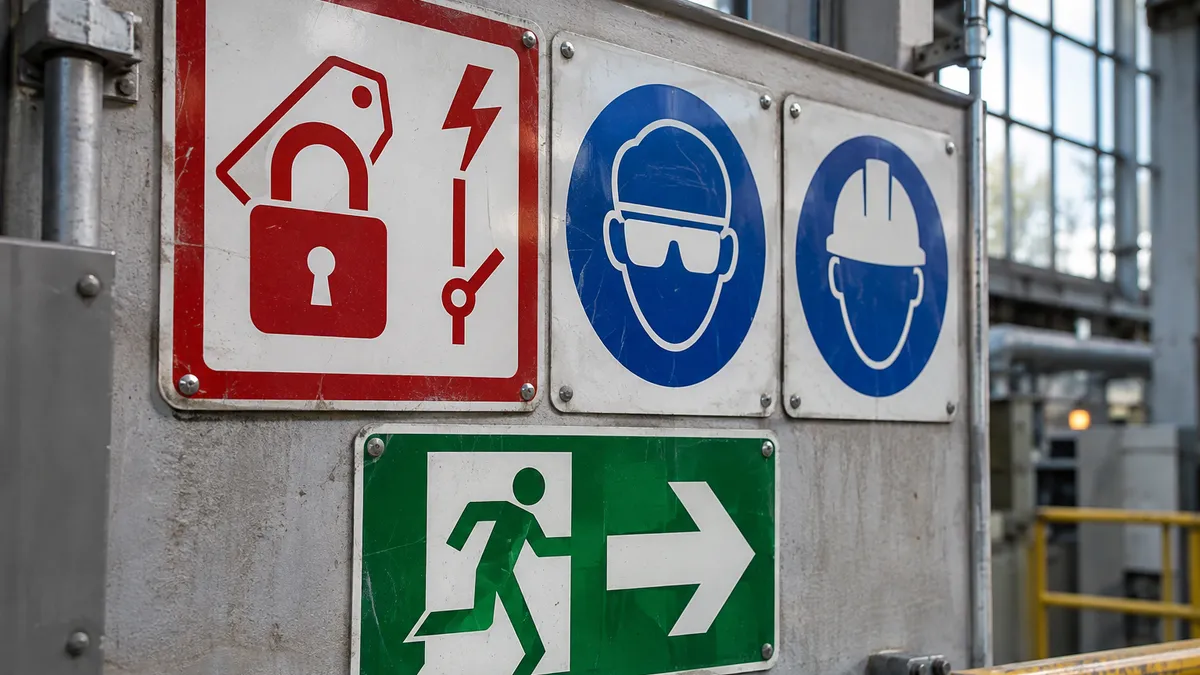
How OSHA General Standards Are Organized
The broadest set of rules, covering most private workplaces such as offices, factories, warehouses, hospitals, and retail stores. Subparts address exit routes, machine guarding, electrical safety, PPE, hazard communication, and toxic substances. If you do not work in construction, maritime, or agriculture, these standards shape your daily safety obligations.
Written for building sites, these rules cover fall protection, scaffolding, excavation, cranes, and electrical hazards. Construction has its own heavily cited standards, such as 1926.501 for fall protection. Workers who split time between shops and job sites may fall under both parts, so knowing which applies at a given moment is essential.
Section 5(a)(1) fills gaps where no specific standard exists. It requires employers to keep workplaces free of recognized hazards likely to cause death or serious harm. Heat illness, workplace violence, and ergonomic injuries have been cited under this clause, which is why cooling and air conditioning questions often trace back to it.
More than two dozen states and territories run OSHA-approved programs that must be at least as effective as the federal rules, and many are stricter. California, Washington, and Oregon, for example, have specific heat standards. Always check your state's requirements, because they may add obligations, higher penalties, or different reporting deadlines.
What OSHA Requires for Heat, Ventilation, and Air Conditioning
There is no federal OSHA standard that sets a maximum or minimum workplace temperature. Many readers searching osha ac are surprised by this. Instead, enforcement of heat hazards has relied on the General Duty Clause, supported by guidance, consensus standards, and a National Emphasis Program on heat launched in 2022. Inspectors look at whether an employer recognized the hazard, whether it was likely to cause serious harm, and whether a feasible method of reducing it, such as cooling, existed.
In August 2024, OSHA proposed a dedicated rule on heat injury and illness prevention for indoor and outdoor work. The proposal would require employers to develop heat plans, monitor conditions, and provide water, rest breaks, and shade or cooling once certain heat index thresholds are reached. Rulemaking takes years and outcomes can change, so check OSHA.gov for its current status before assuming any requirement exists. Meanwhile, several states, including California and Washington, already enforce their own heat rules.
Heat risk is not measured by air temperature alone. Humidity, radiant heat from furnaces or sun, air movement, workload, and clothing all matter. OSHA uses the heat index to guide employers: below 91 degrees is lower risk, 91 to 103 is moderate, 103 to 115 is high, and above 115 is very high to extreme. A humid 92-degree day can be dangerous during heavy labor, while a dry 92-degree day in a shaded, well-ventilated area may be manageable.
Ventilation is more directly regulated than comfort cooling. Standard 1910.94 addresses ventilation for operations such as grinding, polishing, spray finishing, and abrasive blasting, while 1910.1000 sets permissible exposure limits for airborne contaminants. Confined space rules under 1910.146 require atmospheric testing and ventilation before entry. In each case, moving air is not about comfort; it controls toxic dust, fumes, or oxygen deficiency that can kill within minutes, which is why these rules appear on every general industry exam.
Indoor air quality has no dedicated OSHA standard either, but employers are expected to maintain ventilation systems so contaminants do not build up. Building codes and ASHRAE Standard 62.1 usually define outdoor air requirements. Complaints about mold, odors, or stale air often start as air conditioning problems, such as clogged filters, standing water in drip pans, or blocked vents. OSHA recommends routine HVAC inspection and maintenance, and cooling towers should be managed to limit Legionella growth.
Servicing air conditioning equipment creates its own hazards. Technicians face electrical shock, refrigerant exposure, falls from rooftops, and unexpected startup of fans and compressors. Lockout/tagout under 1910.147 requires de-energizing and locking equipment before maintenance, while electrical rules in Subpart S govern wiring and panels. Refrigerant handling falls under EPA Section 608 certification. A maintenance worker who skips lockout to fix a rooftop unit quickly is exactly the scenario OSHA instructors use to illustrate preventable injuries.
For employers, the practical takeaway is simple: treat cooling as part of hazard control. Provide cool drinking water, shaded or air-conditioned rest areas, acclimatization for new workers, and training that teaches supervisors to spot heat illness. OSHA suggests new workers start at 20 percent of a normal heat exposure on day one, increasing gradually. Document your plan, because a written, followed procedure is the strongest evidence of good faith if an inspector ever arrives after a complaint or a heat-related illness.
How OSHA AC and Temperature Rules Apply by Workplace
In offices and retail stores, OSHA's temperature guidance is the main reference. The Technical Manual suggests 68 to 76 degrees Fahrenheit with 20 to 60 percent humidity, but these numbers are not enforceable limits. A broken air conditioner on a hot afternoon usually becomes an OSHA matter only if conditions grow severe enough to threaten health, for example when indoor temperatures climb into the 90s and employees show signs of heat stress or are denied water and breaks.
Practical steps matter more than legal labels here. Employers should respond quickly to HVAC outages, allow fans and flexible schedules, keep drinking water available, and communicate repair timelines. Employees should report problems in writing and note the temperature, time, and symptoms. Office complaints also frequently involve air quality, so filters, vents, and moisture control deserve regular inspection. Documented maintenance logs protect the employer and show workers that concerns are taken seriously.

Should Workplace Temperature Have a Strict Federal Standard?
- +Clear, enforceable limits would remove guesswork for employers and inspectors
- +Heat illness and heat-related deaths could fall with mandatory water, rest, and cooling
- +Every employer would follow the same baseline, which levels the playing field
- +Workers could prove violations more easily than under the General Duty Clause
- +Employers would have stronger reasons to invest in cooling and ventilation
- +Written heat plans would improve training and supervisor awareness
- −Climates and job types vary so widely that one number is hard to set fairly
- −Small businesses may face significant cooling and monitoring costs
- −Added paperwork could burden employers without improving real safety
- −Federal rulemaking takes years, leaving workers without protection in the meantime
- −One-size-fits-all rules may ignore humidity, workload, and clothing
- −Limited inspector numbers could make enforcement uneven
OSHA AC and General Standards Compliance Checklist
- ✓Identify whether general industry, construction, maritime, or agriculture rules apply to your site.
- ✓Post the OSHA Job Safety and Health: It's the Law poster where workers can see it.
- ✓Write and review a heat illness prevention plan before summer begins.
- ✓Inspect and service air conditioning and ventilation equipment on a set schedule.
- ✓Provide cool drinking water, shaded or cooled rest areas, and scheduled breaks.
- ✓Train workers on hazard recognition in a language they understand.
- ✓Apply lockout/tagout procedures before servicing any HVAC equipment.
- ✓Keep Form 300, 300A, and 301 records and post summaries from February 1 to April 30.
- ✓Memorize the 8-hour and 24-hour reporting deadlines for severe incidents.
- ✓Document every hazard report, corrective action, and completion date.
There is no OSHA thermostat rule, but there is a duty to prevent heat harm
The 68 to 76 degree guidance is a comfort benchmark, not a legal limit. What triggers citations is a recognized heat hazard with no reasonable controls. Employers who document cooling, water, rest, and training are far better protected than those who simply say no rule applies.
Worker Rights and Employer Responsibilities Under OSHA
The OSH Act gives workers enforceable rights, and many people never learn them. You have the right to a workplace free from serious recognized hazards, to receive safety training in a language you understand, to see records of work-related injuries, and to request an OSHA inspection without fear of retaliation. These rights apply whether you work in a cooled office or a sweltering foundry, and employers cannot waive them through contracts or handbooks.
Employers carry the corresponding duties. They must comply with all applicable standards, correct hazards, provide required protective equipment at no cost in most cases, train workers, and keep required records. Employers with more than ten employees in most industries must maintain injury and illness logs, with Form 300A summaries posted from February 1 through April 30 each year. Records are kept for five years, and workers or their representatives may request copies at any time.
Reporting rules are strict. Every employer must notify OSHA within 8 hours of a work-related fatality and within 24 hours of an inpatient hospitalization, amputation, or loss of an eye. Reports can be made by phone, through the online form, or at a local area office. Late reporting is itself a citable violation, and it often draws more scrutiny than the underlying incident, so supervisors should know the deadlines before an emergency happens.
Workers who raise concerns are protected by Section 11(c) of the OSH Act. Retaliation includes firing, demotion, reduced hours, or reassignment because you reported a hazard or injury, filed a complaint, or took part in an inspection. The filing window is short: generally 30 days from the retaliatory act. Some other whistleblower statutes allow longer periods, so anyone who suspects retaliation should contact OSHA promptly rather than wait to see whether things improve.
Consider a realistic example. A warehouse worker notices the building's air conditioning has failed, indoor temperatures are near 98 degrees, and two colleagues have felt dizzy. A smart first step is to tell a supervisor in writing, ask for water and breaks, and note times and conditions. If nothing changes, the worker can file a complaint with OSHA online, by phone, or by mail, and may request that their name be kept confidential.
In rare cases, workers may refuse dangerous work, but the conditions are narrow. The danger must be imminent, meaning death or serious injury is likely right now; the worker must have asked the employer to fix it where possible; there must be no time for an inspection; and a reasonable person would agree the danger exists. Because the bar is high and legal consequences are real, refusal should be a last resort after documenting the problem.
Employers who want to avoid these conflicts should build a culture where reporting is easy. Hold regular toolbox talks, respond quickly to complaints, and track corrective actions to completion. Joint safety committees help because they give workers a formal voice. Small businesses can also use OSHA's free On-site Consultation Program, which provides confidential help finding hazards without citations or penalties. Many companies find that fixing a cooling problem costs far less than managing one heat-related emergency.

If you work in a state-plan state, your state's rules may be stricter than federal OSHA, including specific heat standards, shorter deadlines, and higher penalties. Penalty figures also change every January. Confirm current numbers and requirements on OSHA.gov and your state agency's website.
OSHA Inspections, Citations, and Penalties Explained
OSHA inspections are triggered by several events: imminent danger situations, fatalities and catastrophes, worker complaints, referrals, and programmed inspections targeting high-hazard industries. Inspectors, formally called compliance safety and health officers, usually arrive without notice. They present credentials, hold an opening conference, walk through the site with an employer representative and often a worker representative, and then hold a closing conference. Employers may require a warrant, although refusing can delay and complicate the process.
During the walkaround, the officer observes conditions, takes photographs or measurements, reviews written programs and injury logs, and interviews employees privately. For heat complaints, that could include temperature and humidity readings, water availability, training records, and the written plan. Cooperation helps, yet employers should avoid guessing or volunteering unrelated information. Designating a knowledgeable safety contact before an inspection prevents confusion and ensures documents can be produced quickly and accurately when requested.
Citations are classified by seriousness. Other-than-serious violations relate directly to safety but are unlikely to cause death or serious harm. Serious violations involve a substantial probability of death or serious physical harm that the employer knew, or should have known, about. Willful violations show intentional disregard or plain indifference to the law, and repeat violations involve the same or similar issues found previously. Failure-to-abate penalties accrue daily after the correction deadline passes without action.
Penalty amounts are adjusted annually for inflation. In 2025, the maximum for a serious or other-than-serious violation was $16,550 per violation, and willful or repeat violations could reach $165,514. Actual proposed penalties are usually lower, because OSHA adjusts for employer size, good faith, and history. Small businesses may qualify for reductions. Check the current schedule on OSHA.gov, since the figures change each January and your course materials may reference a specific year.
After receiving a citation, employers have 15 working days to contest it, request an informal conference with the area director, or accept it and pay. Missing that window makes the citation a final order. A contest sends the case to the independent Occupational Safety and Health Review Commission. Many cases settle through informal agreements that reclassify violations or reduce penalties in exchange for faster abatement and documented corrective measures by the employer.
The most frequently cited standards each year tell you where to focus. Fall protection in construction consistently ranks first, followed by hazard communication, ladders, lockout/tagout, respiratory protection, scaffolding, powered industrial trucks, and machine guarding. Nearly all appear in 10-hour and 30-hour course outlines. Heat-related citations rarely top this list because they fall under the General Duty Clause, yet they are growing as the emphasis program expands and as summers set new temperature records.
For individuals, the lesson is that standards are written in hard experience: most rules exist because someone was injured or killed. Learning to read a citation, tie it to a standard number, and describe the abatement helps in exams and on the job. Practice by taking a standard such as 1910.147, listing its main requirements, and imagining how an inspector would verify each one. That habit builds both confidence and genuine safety judgment over time.
Practical Tips for Mastering OSHA General Standards
Start with structure rather than memorization. Learn how 29 CFR 1910 is divided into subparts: walking-working surfaces, exit routes, occupational health and environmental control, personal protective equipment, materials handling, machine guarding, electrical, and toxic and hazardous substances. Once you can place a topic in its subpart, details become easier to recall. A one-page map with subpart letters, standard numbers, and a five-word summary of each makes an excellent first study tool.
Next, pair each standard with a story. Instead of memorizing that lockout/tagout is 1910.147, remember a maintenance worker whose coworker restarted a conveyor while a hand was inside. Stories attach emotion and consequence to the rule, which improves retention and helps you answer scenario questions. Do the same for heat: picture a roofer on day one of a July job, then recall acclimatization, a cup of water every 15 to 20 minutes, and shaded rest.
Use active recall instead of rereading. Close the book and write down the employer duties after a fatality, the reporting deadlines, the penalty categories, and the key elements of a hazard communication program. Then check your answers. Short, daily sessions of twenty minutes beat one long weekend cram, because spacing forces your brain to retrieve information repeatedly. Free practice questions are ideal for this because they show immediately which topics need another pass.
Learn the vocabulary precisely, because exam questions often hinge on single words. Know the difference between hazard and risk, engineering controls and administrative controls, PEL and TLV, serious and willful, citation and abatement. Remember the hierarchy of controls: elimination, substitution, engineering controls, administrative controls, then personal protective equipment. Cooling is a good example: air conditioning is an engineering control, work-rest schedules are administrative, and cooling vests are PPE.
Build a small set of numbers you must know cold. These include 8 hours for fatality reporting, 24 hours for hospitalization, amputation, or eye loss, 30 days for an 11(c) complaint, 15 working days to contest a citation, five-year record retention, and the posting window of February 1 through April 30. Write them on flashcards and review them daily. Numbers are the easiest points to win and the easiest to lose under exam pressure.
If you work in a specific industry, spend extra time on its top hazards. Construction learners should drill the focus four: falls, struck-by, caught-in or between, and electrocution. Warehouse workers should emphasize powered industrial trucks, ergonomics, and heat. Office staff should master exit routes, fire extinguishers, electrical safety, and indoor air complaints. Tailoring your study makes the content relevant, which is the best motivator, and it prepares you to spot real hazards on your first day.
Finally, treat the course card as a beginning. OSHA 10 and 30 cards show that you completed training from an authorized provider; they are not licenses, and some states or employers require them for certain jobs. Keep learning through toolbox talks, near-miss reviews, and updates on OSHA.gov. Take timed practice tests a few days before your course exam, review every wrong answer, and walk in knowing that safety knowledge protects you long after the test ends.
OSHA Questions and Answers
OSHA Safety Certificate Practice Test and Study Guide

OSHA Toolbox Talks: A Complete Guide to Safety Meetings That Actually Work

OSHA Stickers: Complete Guide to Workplace Safety Labels, Compliance, and Hazard Communication
OSHA 100 Employees Vaccine Rule: What Employers and Workers Need to Know
OSHA Haz Com: The Hazard Communication Standard Explained for Workers and Employers
How this page was made: written with AI tools and published by Nathan Beja, founder of Practice Test Geeks, who is responsible for its content. Exam facts are checked against the official sources listed below. Not reviewed by a subject-matter expert. Editorial policy
Sources & references
Exam facts on this page (fees, format, dates, passing scores) are checked against these official sources; the date is our last check. Editorial policy
- osha.gov — Score validity, test delivery, eligibility, passing score, renewal, retake policy, score release · verified Nov 2026