
When Stacking Blank Interlocking Rows OSHA Requirements: Complete Guide to General Compliance, Material Storage Safety, and Crane Operator Stacking Standards
When stacking blank interlocking rows OSHA compliance guide: 🧠 rules, heights, crane operator duties, inspections, and storage safety for general industry.

When stacking blank interlocking rows OSHA regulations require workers to follow strict material handling, height, and stability rules that protect crews from crushing injuries, struck-by hazards, and collapsing storage piles. The Occupational Safety and Health Administration treats stacked materials as a primary source of preventable workplace deaths, and crane operators, riggers, and warehouse staff all share responsibility for compliance. Whether the load consists of bricks, lumber, masonry block, drums, or palletized goods, the same general principles apply: interlock the rows, limit the height, and keep aisles clear.
General compliance under 29 CFR 1910.176 and 1926.250 governs how materials must be stacked, blocked, interlocked, and limited in height to prevent sliding or collapse. These rules apply across nearly every industry sector that handles bulk inventory, raw materials, or finished goods. Employers must train workers on safe stacking procedures, provide proper equipment, and document inspections. OSHA inspectors routinely cite violations involving unstable stacks, blocked exits, and inadequate worker training during routine and targeted enforcement visits.
The phrase "interlocking rows" refers to a stacking pattern in which each row is offset from the one below, much like bricks in a wall. This staggered arrangement prevents vertical seams that would otherwise create weak collapse planes. For blank or uniform materials such as concrete blocks, cinder bricks, or palletized cartons, interlocking is the only acceptable method above a certain row count. Failure to interlock is among the most common citations issued during construction and warehouse inspections nationwide.
Crane operators play a critical role because they place loads at height and influence how stable the resulting stack becomes. A poorly set bundle, an unleveled pallet, or a load dropped onto an uneven base can compromise the entire pile. OSHA-certified operators must understand load placement, ground conditions, and the interaction between rigging and storage geometry. Knowing the stacking rules is not optional knowledge for operators — it directly affects whether a crane lift ends safely or in a recordable incident.
This complete guide explains the federal requirements, height limits, inspection duties, and training expectations tied to safe stacking. We cover the precise standards governing brick, block, lumber, bagged materials, and drums; how crane operators integrate stacking rules into lift planning; and how supervisors document compliance for OSHA recordkeeping. You will also find a checklist, FAQ, and practice quiz links so you can test your understanding before sitting for certification exams. Refer to OSHA 30 Courses for deeper training on these compliance topics.
By the end of this article you will understand exactly when interlocking is required, how to taper stacks, what triggers a citation, and how crane operators contribute to safe storage outcomes. The goal is not just passing an inspection but preventing the kind of fatal struck-by incidents that OSHA records year after year. Stacked materials kill workers when shortcuts replace standards, and this resource gives you the standards in plain language.
Read straight through for a complete overview, or jump to a specific section using the table of contents below. Every section ties back to real federal regulations and gives practical guidance you can apply on a job site or in a warehouse the same day you read it.
OSHA Stacking Compliance by the Numbers

OSHA Stacking Standards Overview
General industry standard covering material handling and storage. Requires secure storage, clear aisles, and stacks limited to safe heights that prevent sliding or collapse during normal operations.
Construction industry standard for material storage. Specifies brick, block, lumber, and bagged material stacking rules including interlocking, tapering, and exact maximum heights by material type.
Bricks must be tapered back 2 inches per foot above 4 feet. Masonry blocks must be tapered above 6 feet. Lumber piles must be stable, level, and self-supporting with cross-tier blocking.
Employers must train all workers who handle stored materials. Crane operators, riggers, and forklift operators need documented instruction on stacking patterns, height limits, and stability inspections.
Competent persons must inspect stacks daily and after any disturbance. Records of corrective action, near-misses, and stack reconfiguration are part of OSHA recordkeeping requirements.
Interlocking rows are the structural backbone of safe material storage, and OSHA's specific stacking requirements exist because uniform blank materials behave like loose blocks when stacked in straight vertical columns. A stack of identical bricks placed directly on top of one another creates continuous vertical joints that allow the entire pile to shift in unison if a single course is bumped or settles unevenly. Interlocking breaks those joints by offsetting each row, distributing lateral forces across the pile, and creating a self-supporting structure that resists tipping.
For brick stacks under 29 CFR 1926.250(b)(6), OSHA requires that any brick pile over 4 feet tall be tapered back 2 inches for every foot of height above the 4-foot mark. This taper requirement applies only to non-self-supporting brick stacks. The interlocking pattern must continue throughout the taper. When operators load palletized brick from a delivery truck, they should set bundles with interlock in mind, alternating orientations row by row so the finished stack remains stable.
Masonry blocks follow a similar but distinct rule. Under 1926.250(b)(7), masonry block stacks higher than 6 feet must be tapered back one-half block per tier above the 6-foot height. Blank, uniform blocks are the easiest to interlock because their dimensions are consistent, but they are also the most dangerous when stacked vertically without offset because their weight concentrates the collapse force. A toppling masonry block stack can cause fatal crush injuries within seconds.
Lumber stacking requirements appear in 1926.250(b)(8). Used lumber must have all nails withdrawn before stacking. Lumber piles must be stable and self-supporting, with cross-tier blocking inserted at regular intervals to lock the courses together. Manually handled lumber piles cannot exceed 16 feet, and lumber handled by forklifts is limited to 20 feet in height. Interlocking the layers prevents board slip, which is the primary mechanism of lumber stack collapse on construction sites.
Bagged materials such as cement, sand, lime, or grout follow specific stepping rules. Bags must be stacked, blocked, and cross-keyed at least every 10 bags high. The cross-keying functions as interlocking — each row's bag orientation is rotated so that no continuous vertical seam exists. Bags stored against walls must be stepped back so that the top course is at least 3 feet inside the bottom course's footprint when stacks exceed 5 bags in height.
For drums and barrels, OSHA requires firm foundations and blocking to prevent rolling. When drums are stacked more than one tier high, the lower tier must be chocked or interlocked using boards between courses. Crane operators handling drum loads should always verify that the receiving stack is properly chocked before releasing the lift. Pallets of drums introduce additional collapse risk because the pallet itself can shift if not interlocked into the base layer.
The common thread across all interlocking requirements is predictability. OSHA inspectors look for visible pattern offset, proper taper above the threshold height, blocking between courses where required, and a competent person's documented inspection. Operators and supervisors who internalize these patterns prevent the majority of stacking-related citations and injuries. To go deeper into training requirements that cover storage rules in detail, see 360 OSHA Training for complete certification options.
OSHA Practice Test Questions
Prepare for the OSHA - OSHA Certified Crane Operator exam with our free practice test modules. Each quiz covers key topics to help you pass on your first try.
OSHA Crane Operation Controls & Signal Com...
OSHA Exam Questions covering Crane Operation Controls & Signal Communication. Master OSHA Test concepts for certification prep.
OSHA Crane Safety Procedures & Hazard Prev...
Free OSHA Practice Test featuring Crane Safety Procedures & Hazard Prevention. Improve your OSHA Exam score with mock test prep.
OSHA Load Handling & Rigging Techniques
OSHA Mock Exam on Load Handling & Rigging Techniques. OSHA Study Guide questions to pass on your first try.
OSHA Regulations & Equipment Inspection St...
OSHA Test Prep for Regulations & Equipment Inspection Standards. Practice OSHA Quiz questions and boost your score.
OSHA Code Compliance
OSHA Questions and Answers on Code Compliance. Free OSHA practice for exam readiness.
OSHA Crane Operator Certification & Qualif...
OSHA Mock Test covering Crane Operator Certification & Qualification Requirements. Online OSHA Test practice with instant feedback.
OSHA Environmental Standards
Free OSHA Quiz on Environmental Standards. OSHA Exam prep questions with detailed explanations.
OSHA Equipment Operation
OSHA Practice Questions for Equipment Operation. Build confidence for your OSHA certification exam.
OSHA Maintenance Protocols
OSHA Test Online for Maintenance Protocols. Free practice with instant results and feedback.
OSHA Material Selection
OSHA Study Material on Material Selection. Prepare effectively with real exam-style questions.
OSHA Pre-Lift Planning & Load Chart Interp...
Free OSHA Test covering Pre-Lift Planning & Load Chart Interpretation. Practice and track your OSHA exam readiness.
OSHA Quality Inspection
OSHA Exam Questions covering Quality Inspection. Master OSHA Test concepts for certification prep.
Material-Specific Stacking Rules Under OSHA
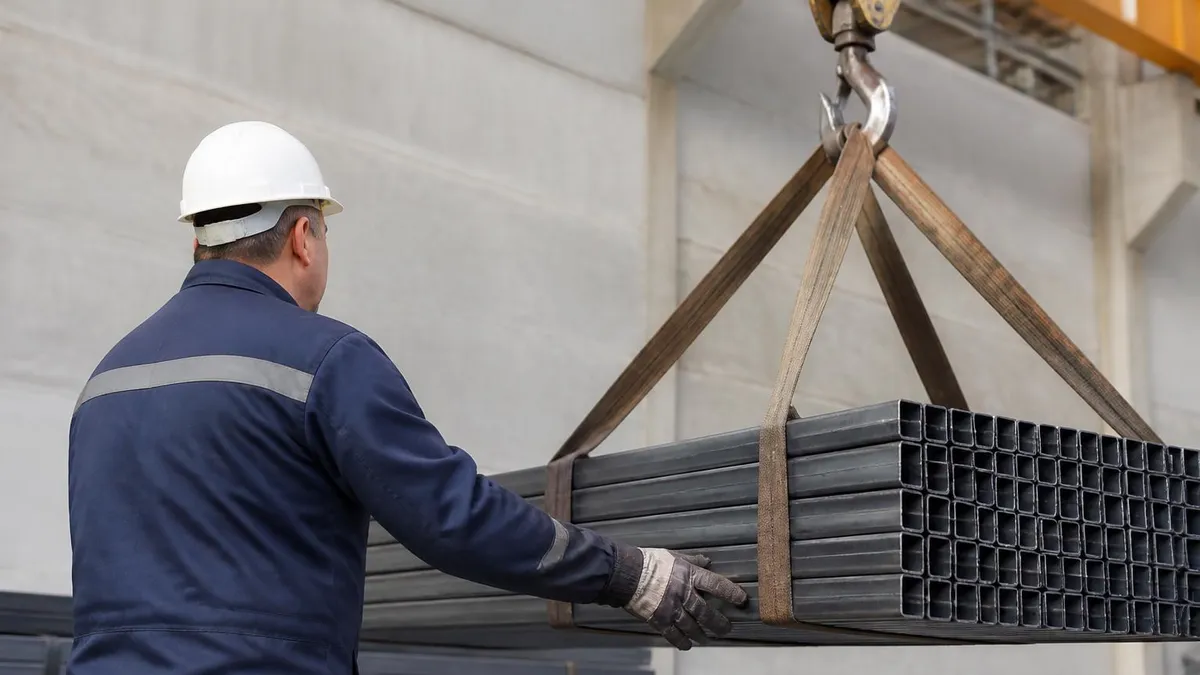
Brick stacks over 4 feet tall must taper back 2 inches per foot of additional height, while masonry blocks taller than 6 feet require a half-block taper per course above that mark. Both materials must be interlocked row by row so that no continuous vertical seam exists across the height of the stack. The base must rest on level, well-drained ground with sufficient bearing capacity to support the full pile weight without settling.
Crane operators delivering brick or block bundles should coordinate with the ground crew to identify the correct landing zone before the lift begins. Drop zones must be cleared of debris and marked. Bundles should be set in the same orientation as the existing pile to preserve interlocking. Operators should never stack bundles in unstable locations such as soft fill, slopes, or near excavation edges where lateral movement can destabilize the base layer.
Pros and Cons of Strict OSHA Stacking Compliance
- +Prevents fatal struck-by and crushing injuries from collapsing stacks
- +Reduces property damage and insurance claims from material loss
- +Creates predictable, organized storage that speeds inventory operations
- +Lowers OSHA citation exposure and federal penalty risk
- +Improves crane operator efficiency through clear landing zones
- +Documents employer safety culture for client and contract bidding
- −Requires additional training time and ongoing supervision
- −May reduce maximum storage density in tight warehouse spaces
- −Slows initial material placement when crews are unfamiliar with rules
- −Demands periodic re-inspection and recordkeeping overhead
- −Requires investment in dunnage, chocks, and cross-tier blocking materials
- −Can require redesign of existing storage layouts to meet aisle clearance
Pros and Cons at a Glance
| Pros | Cons |
|---|---|
| Prevents fatal struck-by and crushing injuries from collapsing stacks | Requires additional training time and ongoing supervision |
| Reduces property damage and insurance claims from material loss | May reduce maximum storage density in tight warehouse spaces |
| Creates predictable, organized storage that speeds inventory operations | Slows initial material placement when crews are unfamiliar with rules |
| Lowers OSHA citation exposure and federal penalty risk | Demands periodic re-inspection and recordkeeping overhead |
| Improves crane operator efficiency through clear landing zones | Requires investment in dunnage, chocks, and cross-tier blocking materials |
| Documents employer safety culture for client and contract bidding | Can require redesign of existing storage layouts to meet aisle clearance |
OSHA Stacking Compliance Checklist
- ✓Confirm storage area has level, well-drained ground with adequate bearing capacity
- ✓Verify aisles and passageways meet minimum width and remain clear of stored materials
- ✓Interlock all rows of blank materials such as bricks, blocks, and palletized goods
- ✓Taper brick stacks 2 inches per foot above 4 feet of stack height
- ✓Taper masonry block stacks one-half block per tier above 6 feet of height
- ✓Limit manually handled lumber to 16 feet and mechanically handled lumber to 20 feet
- ✓Cross-key bagged materials every 10 bags and step back upper courses
- ✓Chock or interlock drums on every tier above the ground level
- ✓Document daily competent-person inspections and corrective actions taken
- ✓Train all material handlers, crane operators, and riggers on stacking standards
Interlocking is not optional above the threshold height.
OSHA citations for stacking violations average more than $10,000 per serious infraction, and repeat violations can reach six figures. More importantly, collapsing stacks killed dozens of workers in the past decade. Interlocking blank rows costs nothing — it is a pattern choice — but it is the single most effective collapse prevention measure available on any job site.
Crane operators occupy a unique position in the stacking compliance chain because they place loads at height and influence whether a stack remains stable for the next lift or collapses under its own weight. An OSHA-certified crane operator must understand stacking standards not as a side topic but as a core operational competency. Every lift either reinforces or undermines the integrity of the receiving pile, and operators who treat placement as an afterthought cause some of the worst stacking-related incidents on record.
Pre-lift planning begins with the landing zone. Operators should walk or visually survey the destination before the lift to confirm that the ground is level, that the existing stack is interlocked properly, and that no workers occupy the strike zone. If the landing surface shows signs of settling, cracking, or contamination by oil or ice, the operator should refuse the lift until conditions are corrected. Documentation of these refusals protects the operator and creates a safety record for the employer.
Rigging selection matters because the angle and tension of the slings determine how the load enters the stack. A bundle of bricks lifted with chokers will hang differently than one lifted with a basket hitch, and the operator must coordinate with the rigger to ensure the bundle lands flat and square. Tilted bundles cannot interlock with the existing rows. If the load shifts mid-lift, the operator should set it down at a safe alternate location rather than force a placement that compromises the stack.
Signal communication is the third pillar of operator responsibility. The signalperson controls placement precision, and clear communication between operator and signalperson keeps the load on its planned path. OSHA requires standardized hand signals, radio protocols, or other approved methods. When a stack is being built layer by layer, the signalperson directs each placement to maintain the interlocking pattern. Misunderstanding a signal during the final inches of placement can offset the row enough to break the pattern.
Operators must also account for environmental conditions. Wind speed affects load swing, and a swinging brick bundle cannot be set with the precision required for interlocking. OSHA standards require operators to halt operations when wind, lightning, or visibility conditions exceed manufacturer or site limits. Cold weather, ice, and frozen ground introduce additional risks because frozen materials may shift when thawed. Operators should reference site-specific weather thresholds before each shift.
Recordkeeping is the operator's final compliance duty. After a lift, the operator confirms placement quality with the supervisor or competent person. Any issue — a tilted bundle, a shifted bottom row, a damaged pallet — must be reported and corrected before the next lift continues the stack upward. These reports become part of the project's safety documentation and are reviewed during OSHA inspections.
Operators preparing for certification or recertification should study stacking standards alongside lift planning, rigging, and signal communication. Mastery of these topics not only prepares operators for written and practical exams but also creates a safer career-long approach to material handling. The investment pays off in fewer incidents, lower insurance costs, and stronger employer references.

OSHA inspectors most commonly cite employers for blocked aisles, missing taper above 4 feet, and untrained workers handling stored materials. All three violations are easy to prevent with daily walk-throughs and basic crew training. Do not wait for an inspector to find what your competent person should catch first.
OSHA inspection and enforcement of stacking standards occurs through both programmed inspections — those triggered by industry-specific emphasis programs — and unprogrammed inspections that result from complaints, accidents, or referrals. Construction sites and warehouses with high storage densities are frequent targets. When an inspector arrives, stacking conditions are among the first observations made because they signal the overall safety culture of the operation and are visible from a distance without entering active work zones.
The inspection process typically follows a defined sequence: opening conference, walk-around, employee interviews, and closing conference. During the walk-around, the inspector documents stack heights, taper angles, aisle widths, and interlocking patterns. Photographs become evidence. If violations are observed, the inspector may issue citations under either the general duty clause or specific stacking standards in 1910.176 or 1926.250. Penalties scale with severity, repeat history, and good-faith demonstrations by the employer.
Serious violations — those with substantial probability of death or serious physical harm — carry maximum penalties of $16,131 in 2024. Willful or repeat violations can exceed $161,323 per instance. Employers facing citations may contest them through the Occupational Safety and Health Review Commission, but contest does not pause the requirement to abate the underlying hazard. Abatement deadlines are firm, and failure to abate triggers additional daily penalties.
Recordkeeping plays a major role during inspection. Employers must produce training records, daily inspection logs, incident reports, and competent-person designations on request. Crane operators should keep personal certification cards available, and stacking inspections should be logged with date, inspector name, and corrective actions. Missing records often convert a marginal violation into a citation because they indicate that compliance was not systematically maintained.
Worker interviews during inspections cover training adequacy, knowledge of stacking standards, and freedom to report hazards without retaliation. Workers who cannot describe interlocking requirements or who report pressure to skip safety steps create significant employer exposure. Training programs should include scenario-based practice — not just classroom slides — so that workers can articulate the standards and apply them in real conditions.
Multi-employer worksites add complexity because OSHA can cite the controlling employer, the creating employer, the exposing employer, and the correcting employer simultaneously for the same hazard. Crane companies that bring operators onto a construction site share responsibility with the site's general contractor for the safe stacking of materials placed by their lifts. Coordination meetings and shared safety documents reduce this overlapping risk.
For workers and employers who need to reach OSHA with questions or report unsafe stacking conditions, the agency maintains a directory of regional offices and a toll-free reporting line. Information on contacting OSHA appears in OSHA Contact Number, which lists every regional and area office along with hours and complaint procedures. Reporting protections under the OSH Act prohibit retaliation against workers who file complaints in good faith.
Practical implementation of OSHA stacking standards starts with simple habits that, repeated daily, prevent the most common incidents. Every shift should begin with a walk-through of storage areas, checking that overnight settling, weather, or wildlife has not disturbed the stacks. A flashlight inspection takes five minutes and catches problems before they become violations. Workers should be empowered to halt material placement if they observe a stability issue, and supervisors should reinforce that authority rather than override it for production pressure.
Training programs work best when they combine classroom instruction with hands-on demonstrations. New hires should observe an experienced worker building an interlocked stack from the ground up, then build one themselves under supervision. Use scrap materials for practice rather than risking damage to inventory. Document the training with sign-in sheets, photos, and short written quizzes. These records satisfy OSHA documentation requirements and create a defensible audit trail if questions arise later.
Site supervisors should map the storage layout before the first delivery arrives. Plans should mark aisle widths, height limits by zone, designated forklift lanes, and emergency egress paths. When a crane operator arrives with a load, both the operator and the ground crew should already know exactly where the lift terminates. This planning prevents the on-the-fly decisions that lead to mistakes and reduces the time each lift takes to complete.
Communication tools matter more than most teams realize. Two-way radios with clear channel assignments, standardized hand signals reviewed at the morning briefing, and visible high-visibility clothing for signalpersons all contribute to safer placements. Crane operators should never accept a signal from anyone other than the designated signalperson, and signalpersons should never give instructions outside their assigned zone. These boundaries prevent confusion during complex multi-crew operations.
Periodic re-inspection of completed stacks is essential because materials settle, weather shifts, and adjacent operations can introduce vibration. A stack that was interlocked correctly on Monday may show shifted bottom courses by Friday. Competent persons should schedule mid-week inspections of all permanent storage areas and immediate post-event inspections after any vehicle impact, seismic activity, or severe weather. Findings should be logged and corrected before normal work resumes.
Restaurants, retail backrooms, and other non-construction storage environments fall under similar general industry rules. The principles of interlocking, height limits, and aisle clearance apply to canned goods, boxed inventory, and bulk product stacks. For sector-specific guidance, see OSHA Restaurant Safety, which addresses food service storage and compliance basics for general industry environments.
Continuous improvement requires reviewing incident reports — including near-misses — and updating procedures based on what the data reveals. If the same stack fails repeatedly, the root cause is likely a layout problem rather than worker behavior. If the same worker generates multiple incidents, retraining is needed. Either way, the data points to a fix. Companies that treat stacking compliance as a living program rather than a one-time checklist consistently outperform peers on both safety metrics and operational efficiency.
Sample OSHA - OSHA Certified Crane Operator Practice Questions
Try these questions from our free OSHA - OSHA Certified Crane Operator practice tests. The correct answer and an explanation follow each question.
Which device can be installed on a crane to warn the operator when the equipment is approaching an energized power line?
- A. Anti-two-block device
- B. Load moment indicator
- C. Proximity alarm (warning device)
- D. Rated capacity indicator
Answer: C. Proximity alarm (warning device)
A proximity alarm (also called a proximity warning device) alerts the operator with an audible or visual signal when the crane is nearing the power line danger zone.
When a crane must operate within a power line's danger zone, OSHA requires that a dedicated spotter be assigned to watch for what?
- A. Load swing and rigging condition
- B. The crane's proximity to the energized power lines at all times
- C. Ground crew positioning and foot traffic only
- D. Wind speed and weather changes
Answer: B. The crane's proximity to the energized power lines at all times
OSHA requires a dedicated spotter whose sole responsibility is monitoring the distance between the crane and energized power lines during all movements in the danger zone.
When must a crane operator refuse to make a lift?
- A. When the load is above 50% of rated capacity
- B. When the load weight is unknown or exceeds rated capacity
- C. When the lift requires a tagline
- D. When the lift takes longer than 30 minutes
Answer: B. When the load weight is unknown or exceeds rated capacity
OSHA requires operators to refuse any lift where the load weight is unknown or where the load would exceed the crane's rated capacity.
If a crane boom accidentally contacts an energized overhead power line, what should the crane operator do immediately?
- A. Exit the cab as quickly as possible
- B. Stay in the cab and call for emergency help
- C. Ask ground workers to push the boom away
- D. Lower the load to the ground and then exit
Answer: B. Stay in the cab and call for emergency help
The crane cab acts as a Faraday cage; exiting creates a path for current through the operator's body to ground, so staying inside is safer until power is deenergized.
Take the full OSHA - OSHA Certified Crane Operator practice test
OSHA Questions and Answers

OSHA 500 Course Online: Complete Guide to Trainer Certification for Construction Industry Outreach

360 OSHA Training: Complete Guide to Online OSHA 10 & 30 Certification Courses for Construction and General Industry Workers
OSHA 30 Courses: Complete Guide to OSHA 30-Hour Training, Certification, Course Options, Costs, and What You'll Learn in Construction and General Industry Programs

OSHA Restaurant Safety: Complete Guide to Workplace Compliance, Hazard Prevention, and Employee Training for Food Service Operations
OSHA Contact Number: Complete Directory of Phone Numbers, Regional Offices, and How to Reach OSHA for Questions, Complaints, and Emergencies
About the Author

Certified Safety Professional & OSHA Compliance Expert
Indiana University of Pennsylvania Safety SciencesDr. William Foster holds a PhD in Safety Science from Indiana University of Pennsylvania and is a Certified Safety Professional (CSP) and Certified Hazardous Materials Manager. With 20 years of occupational health and safety management experience across construction, manufacturing, and chemical industries, he coaches safety professionals through OSHA certification, CSP, CHST, and safety management licensing programs.
Join the Discussion
Connect with other students preparing for this exam. Share tips, ask questions, and get advice from people who have been there.
View discussion (8 replies)