
OSHA Epoxy Safety News: 2026 October Chemical Hazard Updates, Standards & Worker Protection Guide
🏆 Latest OSHA epoxy safety news, chemical hazard standards, PPE requirements, exposure limits & worker protection updates for 2026 October compliance.

The latest osha epoxy safety news for 2026 has placed renewed attention on chemical exposure standards, dermal sensitization risks, and proper ventilation requirements across construction, manufacturing, and marine industries. Epoxy resins have become one of the most widely used industrial materials in America, yet they remain among the most underestimated chemical hazards on the job site. OSHA continues to issue updated guidance, citations, and educational materials targeting employers who fail to address bisphenol A exposure, isocyanate cross-reactivity, and the growing problem of occupational contact dermatitis.
Epoxy systems contain two main components: a resin (typically bisphenol A or bisphenol F) and a hardener (often an amine compound). When these mix, they undergo an exothermic reaction that releases heat, vapors, and reactive intermediates. Workers handling uncured epoxy face significant risk of skin sensitization, respiratory irritation, and chronic asthma. OSHA's hazard osha hazcom (29 CFR 1910.1200) requires every employer to maintain safety data sheets, label containers, and train employees on these specific risks before any exposure occurs.
In recent inspection cycles, OSHA citations involving epoxy and chemical safety violations have increased significantly, particularly in shipbuilding, wind turbine manufacturing, flooring installation, and aerospace composite shops. The agency has emphasized that small businesses face the same compliance obligations as Fortune 500 manufacturers, and ignorance of safety data sheet requirements is not a defense during an inspection. Employers must demonstrate documented training, accessible written programs, and consistent enforcement of personal protective equipment policies across every shift and every location.
The American Conference of Governmental Industrial Hygienists has lowered recommended exposure thresholds for several amine hardeners commonly found in marine and wind energy epoxy systems. While OSHA permissible exposure limits have not been formally updated to match these stricter thresholds, agency compliance officers now reference the lower ACGIH values when evaluating engineering controls under the osha general duty clause. This regulatory gap creates compliance complexity for safety managers who must balance current legal minimums against emerging best practices being adopted by industry leaders.
Workers seeking to understand their rights under OSHA's chemical safety framework should know that they can request safety data sheets at any time, refuse work they reasonably believe poses imminent danger, and file confidential complaints without retaliation. Employers, in turn, must establish written hazard communication programs, conduct exposure monitoring when warranted, and provide medical surveillance for workers exposed to certain sensitizing chemicals. This guide explores all of these requirements through the lens of current 2026 enforcement priorities.
Whether you manage a fabrication shop, supervise composite layup technicians, or work directly with two-part epoxy adhesives, understanding the latest OSHA news, citation trends, and standard interpretations is essential to protecting your team and avoiding six-figure penalties. The following sections break down statistics, regulatory updates, PPE requirements, training obligations, and practical implementation strategies for building a compliant chemical safety program in 2026.
This comprehensive resource also covers the intersection osha vs other agencies's hazard communication standard and emerging EPA chemical reporting rules under the Toxic Substances Control Act. Many epoxy components are now subject to enhanced reporting obligations, and safety professionals must track regulatory developments across multiple federal agencies to maintain full compliance and avoid duplicative documentation failures during routine inspections.
OSHA Chemical Safety by the Numbers
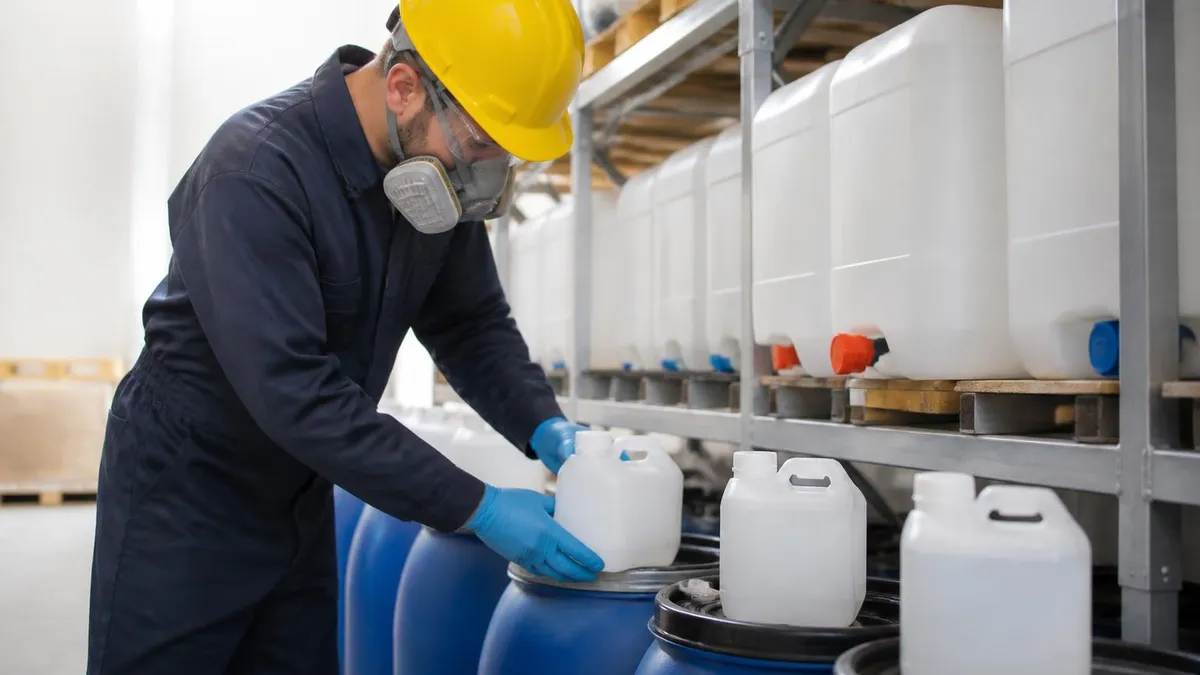
Key 2026 OSHA Standards for Chemical & Epoxy Safety
The hazard communication standard requires safety data sheets, container labeling, written programs, and worker training on every chemical including epoxy resins and hardeners used in the workplace.
General PPE standard mandates hazard assessment, employee training, and provision of protective gloves, eyewear, and respiratory equipment when engineering controls cannot reduce exposure below permissible limits.
When epoxy vapors or sanding dust exceed permissible exposure limits, employers must implement a complete respiratory protection program including fit testing, medical evaluation, and cartridge change schedules.
Laboratories using epoxy and other hazardous chemicals must maintain a Chemical Hygiene Plan, designate a Chemical Hygiene Officer, and conduct exposure monitoring when reasonable indicators exist.
Construction-sector hazard communication mirrors general industry but adds project-specific written program requirements for multi-employer worksites where epoxy contractors interact with other trades.
Chemical hazards in epoxy systems extend far beyond what most workers assume from reading a product label. The resin component typically contains bisphenol A diglycidyl ether (BADGE) or bisphenol F diglycidyl ether (BFDGE), both of which are skin sensitizers that can trigger lifelong allergic contact dermatitis after only brief unprotected exposure. The hardener component is even more dangerous, containing reactive amines that combine corrosive properties with severe sensitization potential, capable of causing chemical burns and occupational asthma within weeks of repeated contact.
OSHA's permissible exposure limits for many epoxy components were established decades ago and have not kept pace with modern toxicology research. For example, the PEL for diethylenetriamine, a common epoxy hardener, has not been updated since the original 1971 adoption of consensus standards from the American National Standards Institute. Industrial hygienists frequently report that compliant workplaces under current PELs still experience sensitization clusters, suggesting current legal limits provide inadequate protection against the most serious chronic health outcomes.
The latest osha epoxy safety news in 2026 highlights a growing emphasis on dermal exposure rather than airborne concentration alone. Traditional industrial hygiene focused heavily on inhalation hazards, but epoxy sensitization typically occurs through skin contact during mixing, application, and accidental splashes. OSHA compliance officers are increasingly evaluating glove selection, change-out schedules, and skin protection programs as primary controls, treating respiratory protection as a secondary backup when surface contact cannot be fully eliminated through engineering design.
Vapors released during epoxy curing also pose under-recognized risks. The exothermic reaction generates heat that volatilizes amines and other reactive species, particularly during large pours or in heated curing chambers. Workers performing composite layup in confined spaces, such as wind turbine blade interiors or boat hulls, face concentrated vapor exposure that can exceed PELs even with general ventilation. Local exhaust ventilation with proper capture velocities is essential for these operations, and many citations stem from inadequate ventilation engineering rather than worker error.
Sanding cured epoxy creates additional hazards through generation of respirable dust containing unreacted resin fragments. Even fully cured epoxy can release sensitizing particles during grinding, sanding, or machining operations. Many workers mistakenly believe cured epoxy is inert, but OSHA enforcement actions have repeatedly cited employers for failing to provide dust collection, respiratory protection, and medical surveillance for composite fabrication and repair operations involving extensive sanding work performed without adequate engineering controls.
Cross-reactivity between different epoxy systems compounds these risks. A worker sensitized to one amine hardener may react to chemically similar compounds in other products from different manufacturers. This means simply switching suppliers does not eliminate exposure risk for already-sensitized employees. OSHA recommends comprehensive medical surveillance programs including baseline skin testing, periodic respiratory evaluations, and documented work restrictions for sensitized workers to prevent progression to disabling occupational disease.
Employers should also review applicable osha standards for first aid kits for industry-specific epoxy applications, since construction, maritime, and general industry each impose slightly different documentation and training obligations. Understanding which regulatory framework applies to your operation is the foundation for building a defensible compliance program that protects workers and withstands inspection scrutiny.
OSHA Practice Test Questions
Prepare for the OSHA - Safety Certificate exam with our free practice test modules. Each quiz covers key topics to help you pass on your first try.
OSHA Basic OSHA Practice
OSHA Exam Questions covering Basic OSHA Practice. Master OSHA Test concepts for certification prep.
OSHA Confined Space Entry
Free OSHA Practice Test featuring Confined Space Entry. Improve your OSHA Exam score with mock test prep.
OSHA Fall Protection
OSHA Mock Exam on Fall Protection. OSHA Study Guide questions to pass on your first try.
OSHA - Safety Certificate Electrical Safet...
Free OSHA Quiz on OSHA - Safety Certificate Electrical Safety Standards Questions and Answers. OSHA Exam prep questions with detailed explanations.
OSHA - Safety Certificate Emergency Action...
OSHA Practice Questions for OSHA - Safety Certificate Emergency Action and Fire Plans Questions and Answers. Build confidence for your OSHA certification exam.
OSHA - Safety Certificate Hazard Communica...
OSHA Test Online for OSHA - Safety Certificate Hazard Communication Standard Questions and Answers. Free practice with instant results and feedback.
OSHA - Safety Certificate Introduction to ...
OSHA Study Material on OSHA - Safety Certificate Introduction to OSHA Questions and Answers. Prepare effectively with real exam-style questions.
OSHA - Safety Certificate Lockout/Tagout P...
Free OSHA Test covering OSHA - Safety Certificate Lockout/Tagout Procedures Questions and Answers. Practice and track your OSHA exam readiness.
OSHA - Safety Certificate Machine Guarding...
OSHA Exam Questions covering OSHA - Safety Certificate Machine Guarding Requirements Questions and Answers. Master OSHA Test concepts for certification prep.
OSHA - Safety Certificate OSHA Recordkeepi...
Free OSHA Practice Test featuring OSHA - Safety Certificate OSHA Recordkeeping and Reporting Questions and Answers. Improve your OSHA Exam score with mock test prep.
OSHA - Safety Certificate Personal Protect...
OSHA Mock Exam on OSHA - Safety Certificate Personal Protective Equipment (PPE) Questions and Answers. OSHA Study Guide questions to pass on your first try.
OSHA - Safety Certificate Walking and Work...
OSHA Test Prep for OSHA - Safety Certificate Walking and Working Surfaces Questions and Answers. Practice OSHA Quiz questions and boost your score.
OSHA - Safety Certificate Electrical Safet...
OSHA Mock Test covering - Safety Certificate Electrical Safety Standards. Online OSHA Test practice with instant feedback.
OSHA - Safety Certificate Emergency Action...
Free OSHA Quiz on - Safety Certificate Emergency Action and Fire Plans. OSHA Exam prep questions with detailed explanations.
OSHA - Safety Certificate Hazard Communica...
OSHA Practice Questions for - Safety Certificate Hazard Communication Standard. Build confidence for your OSHA certification exam.
OSHA - Safety Certificate Introduction to ...
OSHA Test Online for - Safety Certificate Introduction to OSHA. Free practice with instant results and feedback.
OSHA - Safety Certificate Lockout/Tagout P...
OSHA Study Material on - Safety Certificate Lockout/Tagout Procedures. Prepare effectively with real exam-style questions.
OSHA - Safety Certificate Machine Guarding...
Free OSHA Test covering - Safety Certificate Machine Guarding Requirements. Practice and track your OSHA exam readiness.
OSHA - Safety Certificate OSHA Recordkeepi...
OSHA Exam Questions covering - Safety Certificate OSHA Recordkeeping and Reporting. Master OSHA Test concepts for certification prep.
OSHA Chemical Safety: Required Controls & PPE
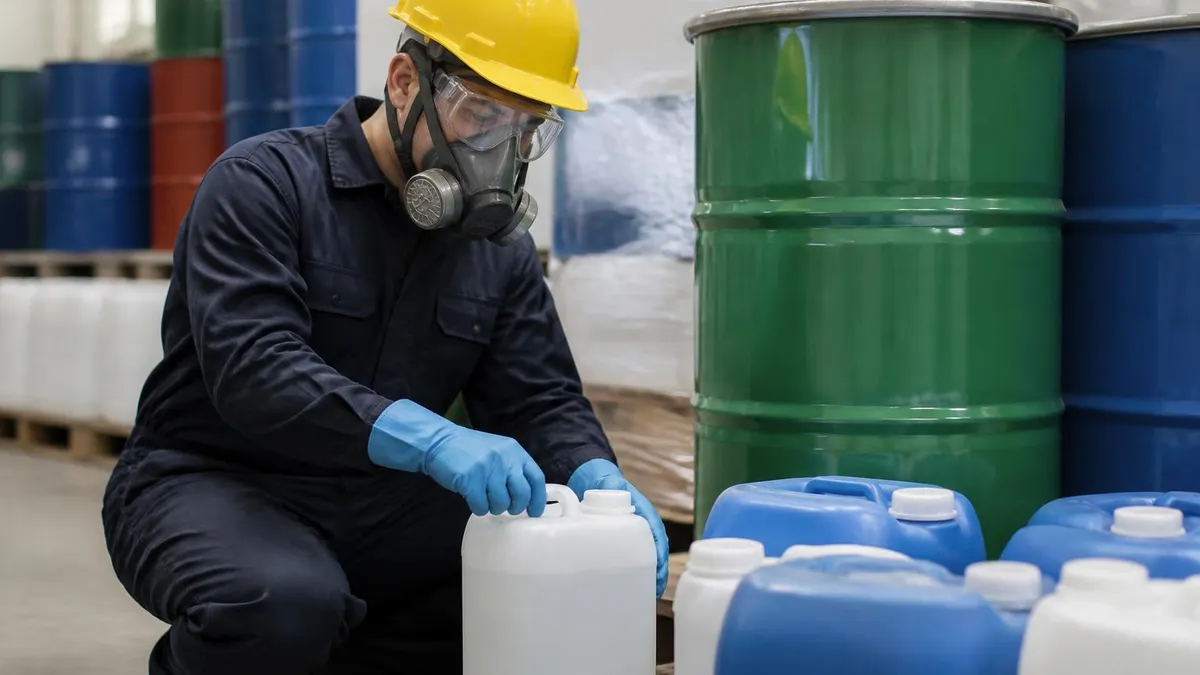
Engineering controls form the foundation of chemical safety under OSHA's hierarchy of controls. For epoxy operations, this means local exhaust ventilation positioned at vapor generation points, enclosed mixing systems for large batches, and isolated curing rooms with dedicated HVAC exhaust. Proper capture velocities range from 50 to 200 feet per minute depending on the operation, and ventilation systems must be tested annually to confirm continued effectiveness against drift, blockage, and motor degradation over time.
Substitution is another powerful engineering control that OSHA increasingly recognizes during inspections. Switching from solvent-based amine hardeners to lower-emission cycloaliphatic alternatives can dramatically reduce vapor exposure without requiring complex ventilation upgrades. Many facilities have also adopted automated dispensing equipment that eliminates manual mixing, removing the highest-exposure task from worker contact entirely. These investments often pay back within two years through reduced PPE costs, fewer workers' compensation claims, and improved productivity from healthier teams.
Modern OSHA Chemical Safety Programs: Strengths & Limitations
- +Comprehensive coverage under 29 CFR 1910.1200 hazard communication standard
- +Globally Harmonized System provides consistent labels and SDS formats
- +Worker rights to information cannot be waived by employers
- +Strong enforcement through inspections and significant financial penalties
- +Free OSHA consultation programs available for small businesses
- +Whistleblower protections shield workers who report safety concerns
- +Online safety data sheets accessible through manufacturer websites instantly
- −Many PELs based on 1970s science and no longer protective
- −Enforcement resources limited relative to total US workforce size
- −Sensitization disease often appears years after initial exposure
- −Small employers may lack expertise to implement complex programs
- −Cross-jurisdictional gaps between OSHA, EPA, and state agencies
- −Medical surveillance requirements unclear for many chemical categories
- −Multi-employer worksites create coordination challenges and documentation gaps
Pros and Cons at a Glance
| Pros | Cons |
|---|---|
| Globally Harmonized System provides consistent labels and SDS formats | Enforcement resources limited relative to total US workforce size |
| Worker rights to information cannot be waived by employers | Sensitization disease often appears years after initial exposure |
| Strong enforcement through inspections and significant financial penalties | Small employers may lack expertise to implement complex programs |
| Free OSHA consultation programs available for small businesses | Cross-jurisdictional gaps between OSHA, EPA, and state agencies |
| Whistleblower protections shield workers who report safety concerns | Medical surveillance requirements unclear for many chemical categories |
| Online safety data sheets accessible through manufacturer websites instantly | Multi-employer worksites create coordination challenges and documentation gaps |
OSHA Epoxy & Chemical Safety Compliance Checklist
- ✓Maintain current written hazard communication program available to all employees
- ✓Collect safety data sheets for every chemical product including all epoxy components
- ✓Label all secondary containers with product identifier and hazard warnings
- ✓Conduct initial and annual hazard communication training for all exposed workers
- ✓Perform documented PPE hazard assessment for each job involving chemical exposure
- ✓Provide chemical-resistant gloves selected for specific epoxy formulations in use
- ✓Install local exhaust ventilation at mixing stations and curing areas
- ✓Implement written respiratory protection program if exposures exceed action levels
- ✓Schedule annual fit testing for all respirator users with medical evaluations
- ✓Document training records with employee names, dates, topics, and instructor signatures
- ✓Conduct exposure monitoring when reasonable belief of overexposure exists
- ✓Establish medical surveillance program for workers with sensitization risk factors
Documentation is Your First Line of Defense
OSHA inspectors evaluate compliance through documentation as much as observation. A facility with perfect PPE practices but missing written programs will still receive citations. Maintain digital and physical records of training, SDS updates, exposure monitoring, and PPE assessments for at least five years to demonstrate good-faith compliance during inspections and to support any defense against alleged violations.
osha citations trends for chemical and epoxy safety violations reveal consistent enforcement patterns that safety managers should study carefully. The hazard communication standard remains one of the most frequently cited regulations year after year, ranking in OSHA's top five violations for nearly two decades. In 2025, hazard communication violations totaled over 15,800 citations nationally, with average penalties exceeding eight thousand dollars per serious violation and willful violations reaching the statutory maximum of $161,323 per instance.
The most common citation involves missing or inadequate written programs. Many small employers maintain safety data sheets and conduct verbal training but never produce the formal written document required by 1910.1200(e). OSHA inspectors specifically request this document during opening conferences, and its absence almost guarantees a serious citation regardless of other compliance efforts. Templates are freely available from OSHA, state consultation programs, and industry associations, making this an entirely preventable category of violation with minimal investment of management time.
Container labeling violations follow closely behind missing written programs in citation frequency. Workers frequently transfer epoxy components into squeeze bottles, spray containers, or work cups without labeling, creating compliance failures that inspectors document immediately. OSHA requires every secondary container to display the product identifier and appropriate hazard warnings unless the worker who filled it uses the entire contents during their own shift. Pre-printed adhesive labels solve this problem at minimal cost and protect against significant penalty exposure during routine compliance inspections.
Training violations represent another major citation category, particularly for temporary workers and recent hires. OSHA requires hazard communication training before initial assignment to work involving hazardous chemicals, not after probationary periods or during scheduled annual sessions. Multi-employer worksites compound this challenge because host employers must verify that contractor employees have received appropriate training before they begin work with epoxy or other chemicals on the property. Documentation gaps in this area frequently produce citations during incident investigations.
Respiratory protection citations have increased substantially as OSHA emphasizes proper program implementation rather than just respirator provision. Employers who issue half-face respirators without conducting fit testing, medical evaluation, and written program development face citations even when workers voluntarily use the equipment. The voluntary use provisions of 1910.134 require employers to provide a copy of Appendix D to workers and ensure the respirators do not create new hazards, obligations many employers overlook entirely when implementing partial respiratory protection programs.
Recent enforcement initiatives have specifically targeted wind turbine blade manufacturers, composite repair shops, and marine industry epoxy applicators. OSHA's regional emphasis programs allow inspectors to conduct programmed inspections without specific complaints, increasing inspection frequency in high-risk industries. Facilities in these sectors should expect more frequent OSHA visits and prepare comprehensive compliance documentation accordingly. Working with industry trade associations and qualified safety consultants can identify gaps before inspectors arrive and document them.
Penalty amounts have also increased annually due to inflation adjustments mandated by federal law. The 2026 maximum penalty for a serious violation reached $16,131, while willful and repeat violations can exceed $161,323 per instance. These figures represent significant exposure for small employers, and OSHA increasingly uses penalty calculations to drive systemic compliance improvements rather than simply punishing individual incidents. Settlement negotiations often include comprehensive compliance commitments extending well beyond the specific citations.

Epoxy sensitization is permanent. Once a worker develops allergic contact dermatitis or occupational asthma from amine hardeners, they cannot safely return to epoxy work even with enhanced PPE. Prevention through proper engineering controls and skin protection is the only effective strategy. Sensitized workers may require permanent job reassignment, creating workers' compensation liability and disability costs that far exceed the cost of preventive controls.
Effective training and documentation form the backbone of every defensible chemical safety program. OSHA's training requirements under 29 CFR 1910.1200(h) specify both initial training before exposure and additional training whenever new chemicals are introduced or new hazards become known. Training must cover the requirements of the standard itself, operations where chemicals are present, locations of the written program and safety data sheets, methods for detecting releases, and protective measures workers can take to safeguard themselves.
Documentation requirements extend beyond simply recording attendance at safety meetings. Effective training records include the date, instructor name and qualifications, specific topics covered, materials used, attendee names with signatures, and any assessment results demonstrating comprehension. OSHA inspectors frequently challenge the adequacy of training when records lack detail, even if the training itself was comprehensive. Investing in proper documentation templates protects employers from citations stemming from administrative gaps rather than substantive training failures during the actual instructional sessions.
Hands-on demonstration components significantly improve training effectiveness for chemical safety. Workers learn proper glove donning, PPE inspection, spill response, and emergency procedures more effectively through guided practice than through lectures or videos alone. Many leading employers now require new hires to demonstrate competency in chemical handling tasks before unsupervised work assignment, documenting these demonstrations through skills checklists signed by both the trainee and the qualified evaluator who observed the demonstration during the orientation process.
Refresher training intervals depend on workplace conditions and worker performance, but most safety professionals recommend annual hazard communication refreshers at minimum. High-turnover workplaces, facilities with frequent chemical changes, or operations involving particularly hazardous substances may warrant semi-annual or quarterly refresher sessions. OSHA does not specify rigid refresher intervals, instead requiring training whenever new hazards are introduced, providing flexibility but also creating ambiguity that defensible programs address through documented internal policies and consistent implementation across all departments.
Multilingual training presents particular challenges for chemical safety. OSHA requires training to be presented in a language and at a literacy level workers can understand, which means Spanish-language materials are essential for many American workplaces. Simply translating English documents is insufficient; effective programs use culturally appropriate examples, bilingual instructors, and verification methods confirming comprehension regardless of native language. Translation services and bilingual safety professionals have become essential resources for compliance in diverse workforces across construction and manufacturing industries.
Safety data sheets must be readily accessible to workers during all work shifts, including evening and weekend operations. Electronic SDS systems are acceptable provided workers have reliable access through computers, tablets, or smartphones at all times. Backup systems for power outages or network failures are essential because workers must be able to retrieve critical health and safety information during emergencies when primary systems may be unavailable. Many employers maintain printed binders as redundant backups for their primary electronic systems.
For workers seeking foundational credentials in this area, the osha 10 hour training provides essential coverage of hazard communication, PPE requirements, and chemical safety basics. This DOL-recognized program is increasingly required by contractors, manufacturers, and state licensing boards as evidence of baseline safety competency for new workers entering industries with significant chemical exposure potential.
Practical implementation of OSHA chemical safety requirements begins with a comprehensive workplace inventory of all chemical products. Walk through every storage area, work zone, and equipment cabinet to identify products containing epoxy resins, hardeners, solvents, cleaners, and lubricants. Many facilities discover dozens of forgotten chemicals during this exercise, including discontinued products, sample quantities, and personal items brought from home. Disposal of unused chemicals through licensed waste contractors eliminates compliance obligations and reduces fire load throughout the facility.
Once the inventory is complete, organize safety data sheets in a logical system accessible to all workers. Alphabetical organization by product name works for small inventories, while larger facilities benefit from electronic systems with search capabilities, regular update notifications, and audit trails documenting when sheets were obtained, reviewed, and replaced. Major chemical suppliers offer free electronic SDS management platforms as customer services, providing professional-grade systems without subscription costs for most small to medium manufacturing operations.
Personal protective equipment selection should involve workers directly through hands-on trials of multiple options. Comfort, dexterity, and durability vary significantly between glove brands, respirator models, and protective clothing manufacturers. Workers who participate in selection are more likely to wear equipment consistently and report problems quickly when defects appear. Document the selection process through written PPE assessments, including specific products selected for each task and the rationale supporting those selections based on chemical compatibility data from manufacturer recommendations.
Spill response capability requires both equipment and training. Stock appropriate absorbent materials, neutralizers, and disposal containers near work areas where chemical releases are most likely. Train designated response personnel through documented exercises that simulate realistic spill scenarios, including small leaks, broken containers, and equipment failures. Emergency contact information for poison control, occupational medicine clinics, and corporate environmental health resources should be posted prominently and updated whenever organizational changes affect the response team or available external resources.
Medical surveillance programs require coordination with qualified occupational medicine providers. Baseline evaluations document worker health before exposure begins, providing critical comparison data if symptoms develop later. Periodic re-evaluations identify early signs of sensitization, respiratory impairment, or other chemical-related health effects when intervention can still prevent permanent disability. Working with providers experienced in industrial hygiene improves the quality of evaluations and ensures appropriate questions are asked during worker examinations regarding exposure history and symptom development patterns.
Continuous improvement through near-miss reporting transforms safety culture over time. Encourage workers to report spills, splashes, equipment failures, and unsafe conditions without fear of discipline, treating these reports as learning opportunities rather than personnel problems. Track trends across departments and shifts to identify systemic issues requiring engineering or administrative solutions. Many serious incidents reveal earlier warning signs that were observed but not communicated, making confidential reporting systems essential investments in long-term injury and cal osha iipp across the organization.
Finally, stay current on regulatory developments through OSHA's email alert systems, industry trade publications, and professional safety associations. Chemical regulations evolve continuously as new health data emerges and political priorities shift between administrations. Annual review of your written programs against current standards prevents compliance drift and demonstrates good-faith effort during inspections. Investing time in regulatory monitoring today prevents expensive remediation projects when standards change and your existing programs no longer meet updated requirements imposed through formal rulemaking processes.
Sample OSHA Safety Certificate Practice Questions
Try these questions from our free OSHA Safety Certificate practice tests. The correct answer and an explanation follow each question.
A manufacturing facility introduces a new chemical solvent into its production line. According to the Hazard Communication Standard, when must employees receive training on the hazards of this new chemical?
- A. During their next annual performance review.
- B. Within 90 days of the chemical's introduction.
- C. Only if an incident involving the chemical occurs.
- D. Before their initial assignment to work with the new chemical.
Answer: D. Before their initial assignment to work with the new chemical.
The Hazard Communication Standard at 29 CFR 1910.1200(h)(1) requires employers to provide employees with effective information and training on hazardous chemicals in their work area at the time of their initial assignment, and whenever a new chemical hazard the employees have not previously been trained about is introduced into their work area.
Which of the following is a physical hazard rather than a health hazard under HazCom?
- A. Flammability
- B. Carcinogenicity
- C. Skin corrosion
- D. Respiratory sensitization
Answer: A. Flammability
Flammability is a physical hazard, while the others describe health hazards.
What is the first step in the hazard control hierarchy recommended by OSHA?
- A. Elimination of the hazard
- B. Personal protective equipment
- C. Administrative controls
- D. Engineering controls
Answer: A. Elimination of the hazard
Elimination removes the hazard entirely and sits at the top of the hierarchy of controls.
Which eye protection is best when a splash of corrosive chemical is possible?
- A. Standard safety glasses
- B. Goggles or a face shield
- C. Sunglasses
- D. Contact lenses
Answer: B. Goggles or a face shield
Chemical splash goggles or face shields provide sealed protection against liquid splashes.
OSHA Questions and Answers

OSHA Training Near Me: How to Find Classes, Online Courses & DOL Cards in 2026

OSHA 10-Hour Training: Online Course, DOL Card & 2026 Guide

OSHA 30 Answers: Complete Study Guide & Test Preparation for 2026

OSHA Standards: Where to Find & How to Apply

Bloodborne Pathogens Standard: OSHA's 1910.1030 Rule Explained
About the Author

Certified Safety Professional & OSHA Compliance Expert
Indiana University of Pennsylvania Safety SciencesDr. William Foster holds a PhD in Safety Science from Indiana University of Pennsylvania and is a Certified Safety Professional (CSP) and Certified Hazardous Materials Manager. With 20 years of occupational health and safety management experience across construction, manufacturing, and chemical industries, he coaches safety professionals through OSHA certification, CSP, CHST, and safety management licensing programs.
Join the Discussion
Connect with other students preparing for this exam. Share tips, ask questions, and get advice from people who have been there.
View discussion (8 replies)