
OSHA 1910.269: Complete Guide to Electric Power Generation, Transmission, and Distribution Safety Standards
Master osha 1910.269 electric power standards. ✅ Coverage, key requirements, compliance tips, and crane operator safety rules explained.

OSHA 1910.269 is the federal standard that governs occupational safety and health requirements for electric power generation, transmission, and distribution work. Published under Title 29 of the Code of Federal Regulations, this regulation applies to utilities, contractors, and employees who install, operate, maintain, or repair electrical power systems. Whether you are a crane operator working near energized lines or a lineman climbing a transmission tower, understanding osha 1910.269 is foundational to staying alive on the job.
The standard was substantially revised in 2014, with OSHA finalizing updates to align general industry requirements with the construction sector rule found at 29 CFR 1926 Subpart V. These revisions clarified minimum approach distances, arc-flash protection requirements, host-employer and contract-employer coordination duties, and qualification standards for employees performing electrical work. The 2014 rule also strengthened requirements for protective equipment, de-energizing procedures, and grounding protocols that affect crane operators working in electrical utility environments.
For crane operators, 1910.269 is especially critical because cranes and derricks frequently work in proximity to overhead power lines, substation equipment, and energized conductors. The standard establishes specific minimum clearance distances, communication protocols, and employer responsibilities that must be followed before a crane boom, load line, or load can approach energized electrical infrastructure. Violations of these provisions are among the most frequently cited OSHA findings in construction and utility work and can lead to electrocution, arc flash, or fatal equipment failures.
Beyond the minimum approach distance rules, 1910.269 establishes comprehensive training requirements for qualified electrical workers. Employees must demonstrate knowledge of electrical hazards, lockout/tagout procedures, personal protective equipment selection, and emergency response. Employers must verify competency through written tests, job performance evaluations, or both. These training obligations overlap with the broader OSHA crane operator certification requirements and ensure that workers operating heavy equipment near energized systems have the knowledge to recognize and mitigate electrical hazards.
The scope of 1910.269 extends to generation facilities including fossil fuel, nuclear, and hydroelectric plants; high-voltage transmission lines; distribution substations; and customer service connections. Notably, the standard does not apply to electrical work covered by 1910 Subpart S general electrical standards when performed by non-utility workers on customer premises — that distinction matters for employers who need to determine which OSHA rule governs a particular task. Understanding where 1910.269 begins and other standards end is itself a compliance skill.
This article provides a comprehensive overview of OSHA 1910.269 designed to help crane operators, electricians, utility workers, and safety professionals understand the standard's core provisions, compliance demands, and practical application on the job site. We cover the regulation's structure, key requirements for line clearance, protective equipment, training qualifications, emergency planning, and the specific obligations that apply when cranes work near electric power infrastructure. Whether you are preparing for an OSHA certification exam or auditing your employer's safety program, the guidance here will help you navigate one of OSHA's most technically demanding standards.
Preparing for your OSHA certified crane operator exam means going beyond memorizing rules — it means understanding the engineering logic behind regulations like 1910.269. This article breaks down each major provision so you can answer exam questions confidently and, more importantly, apply these rules correctly when your life and the lives of your crew depend on it. Read on for a complete walkthrough of every major section of the standard.
OSHA 1910.269 by the Numbers
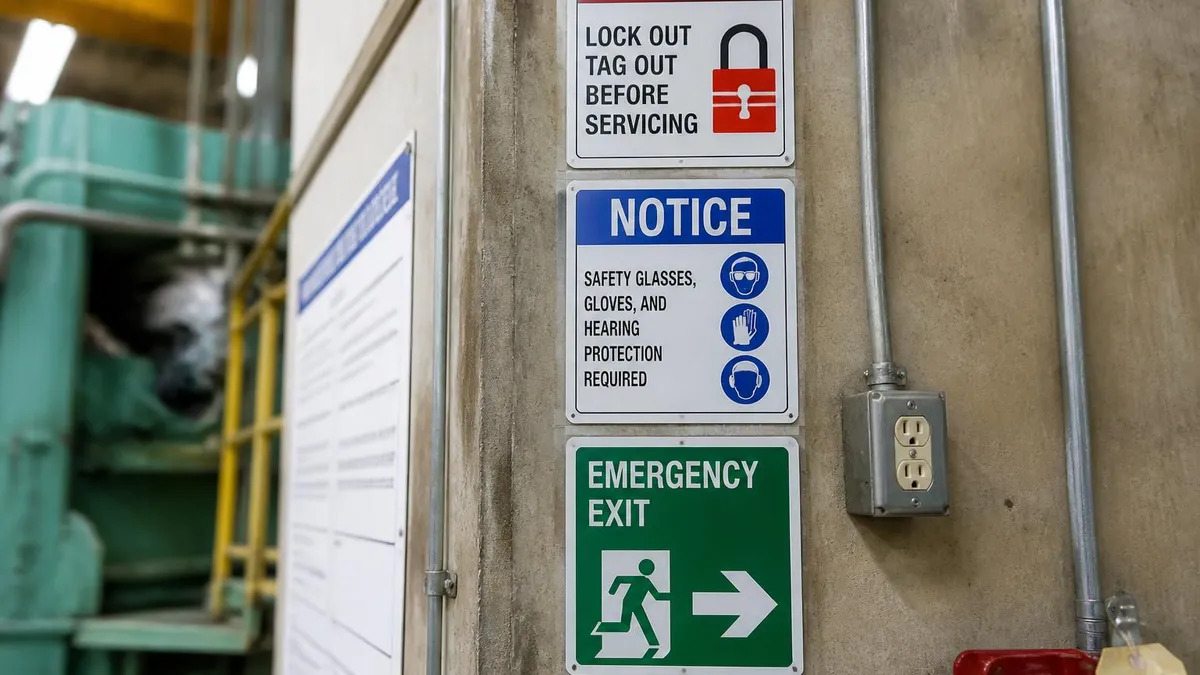
Scope and Coverage of OSHA 1910.269
Covers all facilities that generate electricity from fossil fuels, nuclear, hydro, and renewable sources. Includes turbine halls, generator floors, switchyards, and all associated equipment operated by utility and contract employees.
Governs high-voltage transmission corridors from 69 kV to 765 kV and above. Applies to tower climbing, conductor stringing, insulator replacement, and any work where employees may contact or approach energized high-voltage components.
Applies to medium-voltage distribution lines, transformers, switchgear, and metering equipment serving residential and commercial customers. Line crews, metering technicians, and substation operators all fall under this scope.
Both host employers and contracted utility workers must coordinate safety responsibilities. Host employers must inform contractors of known hazards, and contractors must ensure their employees meet 1910.269 qualification and training standards.
Cranes, digger-derricks, aerial lifts, and material handling equipment operating within minimum approach distances of energized conductors fall under 1910.269 requirements including clearance distances, insulation, and communication protocols.
The core safety requirements of OSHA 1910.269 are organized around controlling electrical energy hazards, and they touch everything from how work sites are planned to how individual employees wear their protective gear.
One of the most important sections for crane operators is the minimum approach distance (MAD) table, which specifies how close any uninsulated object — including crane booms, load lines, and taglines — can come to energized conductors. For voltages up to 50 kV, the minimum approach distance is 10 feet. For voltages above 50 kV, the distance increases using a phase-to-ground voltage formula published in Table R-6 of the standard.
De-energizing and grounding requirements are another pillar of 1910.269 compliance. Whenever possible, work on electrical equipment must be performed with the equipment de-energized and locked or tagged out following the procedures in 1910.269(d). This includes verifying the absence of voltage with an approved voltage detector, applying protective grounds at both sides of the work location, and treating conductors as energized until grounds are installed and voltage absence is confirmed. The standard requires employers to establish written procedures for these processes and to train employees on each step before they perform the work.
Personal protective equipment requirements under 1910.269 are extensive and performance-based rather than prescriptive. Employers must conduct a hazard assessment to determine arc flash energy levels using IEEE 1584 or NFPA 70E methods, and then provide employees with flame-resistant (FR) clothing, face shields, insulated gloves, and dielectric footwear rated for the hazard level identified. The 2014 revision significantly expanded arc-flash protection requirements, requiring FR clothing as base layers and eliminating synthetic fabrics that can melt and worsen burn injuries.
Work positioning and fall protection requirements apply to employees working on structures such as poles, towers, and substation equipment. The standard requires that employees use fall arrest systems, work positioning devices, or fall restraint systems whenever they are exposed to a fall of four feet or more. Pole-top rescue training is also required so that employees can perform emergency descent procedures if a coworker becomes incapacitated aloft. These requirements interact with the broader 1910.269 emergency response provisions, which mandate that a trained first-aid responder be present whenever workers may be exposed to electrical hazards.
Housekeeping and conductor condition requirements ensure that work areas near energized systems are kept clear of debris, vegetation, and materials that could contact conductors or create slip-and-fall hazards. Vegetation management is specifically addressed for transmission right-of-way work, and the standard requires that brush clearing, tree trimming, and herbicide application near energized lines be performed using minimum approach distance protocols. Crane operators who work in transmission corridor clearing projects must understand these vegetation management rules as well as the general equipment clearance requirements.
Emergency response planning under 1910.269(b) requires employers to develop written procedures for responding to accidents involving electrical injuries, electrical fires, and equipment failures. These plans must address how employees will contact emergency medical services, how to safely approach and remove an electrocuted victim without creating additional casualties, and how to shut down electrical equipment in an emergency. Employers with ten or more employees must have written emergency action plans that meet the requirements of 1910.38, and 1910.269 adds additional specifics for the electrical power environment including communication with system operators and dispatch centers.
Insulation requirements for tools, equipment, and protective devices used under 1910.269 must meet ASTM or equivalent standards appropriate for the voltage level encountered. Rubber insulating gloves must be tested every six months; insulating sleeves, blankets, and line hose must be tested every twelve months or immediately after any suspected damage. Inspection before each use is also mandatory, and any equipment with visible defects must be removed from service immediately. These maintenance and testing requirements apply to all insulated tools used within the minimum approach distance, not just hand tools but also hot sticks, telescoping tools, and clampstick devices.
OSHA 1910.269 Training and Qualification Requirements
Under 1910.269, a "qualified employee" is one who has training or experience in electrical work and who is familiar with the construction and operation of the equipment involved and the hazards associated with it. Qualification is task-specific — an employee qualified to work on distribution lines may not be considered qualified for high-voltage transmission work unless they have received specific training and demonstrated competency for that voltage level. Employers must document each employee's qualifications and maintain training records that can be produced during OSHA inspections.
The standard requires that qualified employees be retrained whenever a periodic inspection reveals deficiencies in their safe work practices or when the employer has reason to believe they are not following safe work practices. There is no fixed retraining interval specified in 1910.269, but best practice and many employer programs schedule annual refresher training. Initial qualification typically involves both classroom instruction covering electrical theory, OSHA rules, and emergency procedures, plus field evaluation under the supervision of an experienced qualified worker before independent work is authorized.

Compliance with 1910.269: Benefits and Challenges
- +Dramatically reduces risk of electrocution and arc-flash injuries for all workers on site
- +Clear minimum approach distances give crane operators definitive safe zones around energized lines
- +Standardized PPE testing intervals ensure protective equipment is always inspection-ready
- +Host-contractor coordination requirements reduce gaps in multi-employer site safety programs
- +Grounding and lockout/tagout procedures eliminate stored energy hazards before work begins
- +Qualification documentation creates a verified competency trail for every electrical worker
- −Technical complexity of the standard requires significant employer investment in training programs
- −Arc-flash hazard assessments require engineering analysis that small contractors may find costly
- −Minimum approach distance calculations for voltages above 50 kV involve complex formulas
- −PPE testing and replacement costs for rubber insulating equipment are ongoing and substantial
- −Frequent standard revisions require continuous program updates to stay current
- −Multi-employer coordination duties create administrative burden for both host and contract employers
Pros and Cons at a Glance
| Pros | Cons |
|---|---|
| Dramatically reduces risk of electrocution and arc-flash injuries for all workers on site | Technical complexity of the standard requires significant employer investment in training programs |
| Clear minimum approach distances give crane operators definitive safe zones around energized lines | Arc-flash hazard assessments require engineering analysis that small contractors may find costly |
| Standardized PPE testing intervals ensure protective equipment is always inspection-ready | PPE testing and replacement costs for rubber insulating equipment are ongoing and substantial |
| Host-contractor coordination requirements reduce gaps in multi-employer site safety programs | Frequent standard revisions require continuous program updates to stay current |
| Grounding and lockout/tagout procedures eliminate stored energy hazards before work begins | Multi-employer coordination duties create administrative burden for both host and contract employers |
OSHA 1910.269 Compliance Checklist for Crane Operators
- ✓Identify all overhead power lines and energized equipment within 300 feet of the planned lift zone before beginning work.
- ✓Determine the voltage of nearby power lines by contacting the utility or host employer before approaching with any equipment.
- ✓Verify minimum approach distances using Table R-6 of 1910.269 for the specific voltage level present at the site.
- ✓Obtain written authorization from the utility before operating any crane within the established minimum approach distance.
- ✓Install insulating link on the load line or use a non-conductive tagline whenever lifting within electrical hazard zones.
- ✓Confirm that a trained signal person is stationed to maintain continuous visual contact with the crane boom and all conductors.
- ✓Verify that all crew members have received awareness-level electrical hazard training before beginning operations near energized systems.
- ✓Inspect all rubber insulating gloves and other PPE for visible damage, ozone damage, or embedded contaminants before each shift.
- ✓Ensure emergency response procedures are posted and that at least one trained first-aid/CPR responder is present on site.
- ✓Document the pre-lift safety briefing, approach distance verification, and utility coordination in the daily crane operation log.
The 10-Foot Rule Is the Absolute Minimum — Not the Target
Many crane operators treat the 10-foot minimum approach distance as a comfortable working clearance, but OSHA intends it as an absolute lower limit below which no uninsulated equipment may come. Best practice is to establish a 20-foot working envelope around distribution lines and only approach the legal minimum with a spotter in place, utility authorization obtained, and written documentation completed. A 10-foot clearance violation at 12.5 kV can produce a lethal arc flash with zero warning.
Crane operators working near electric power infrastructure face a unique set of obligations under OSHA 1910.269 that go beyond the standard requirements for crane operation under 29 CFR 1926.1400. When a crane is used to lift loads near energized conductors — whether at a substation, along a transmission right-of-way, or on a distribution line construction project — the operator must understand the specific electrical hazards that apply to their equipment and implement the controls required by the standard before any lifting begins. Failure to do so is not just an OSHA violation; it is a life-threatening oversight.
The most important concept for crane operators under 1910.269 is the distinction between the minimum approach distance for equipment and the minimum approach distance for employees. Equipment like crane booms, load lines, and outrigger pads must maintain clearance from energized conductors based on Table R-6, while the distances for employees working near the crane in an unqualified capacity may differ. The crane operator in the cab is considered an unqualified employee for electrical purposes unless they hold separate electrical qualifications, which means additional distance requirements may apply to the cab itself under some conditions.
Before a crane can operate within the minimum approach distance — even with utility authorization — specific engineering controls must be in place. These typically include an insulated link installed between the load line and the load, non-conductive taglines, barriers or barricades preventing ground crew from entering the approach zone, and a dedicated spotter assigned solely to watch the clearance between the boom tip and conductors.
The spotter must have unobstructed sight lines and must be in constant communication with the crane operator. Many OSHA enforcement cases have involved cranes that operated near lines without these controls despite having obtained the required utility notification.
Ground gradient is a hazard that crane operators and riggers near energized systems must understand thoroughly. If an energized conductor contacts a crane or its load, dangerous voltages can appear at ground level around the crane's outrigger pads and across the area the crane's grounding system occupies.
Personnel on the ground must not touch the crane, its load, or the load line until the electrical contact has been cleared and qualified personnel have verified that the equipment is no longer energized. Victims of electrical contact with equipment are frequently people who touch the equipment after contact is made, not the person in the cab or the person who triggered the contact.
Communication between the crane operator and the utility system operator is a procedural requirement under 1910.269 that is often overlooked in the field. When work is planned within the minimum approach distance, the employer must notify the utility and obtain written approval before commencing.
The utility may choose to de-energize the line, install protective insulating cover-up, increase clearance by temporarily raising the conductor, or provide a monitor to observe the work. The specific protective measure selected by the utility must be implemented before the crane begins operations. This coordination process typically takes several business days, so planning ahead is essential to project timelines.
Arc-flash hazard assessment requirements under 1910.269 apply to electrical workers performing hands-on tasks, but crane operators near substations should also be aware that arc flash incidents can project lethal energy outward for significant distances. A fault at a distribution substation can produce an arc flash incident energy exceeding 40 cal/cm² at the equipment, with measurable energy levels extending outward to 15 feet or more depending on the system configuration. Crane operators working inside substation fences should confirm with the host employer what arc-flash boundaries apply to their work area and what PPE is required for unqualified employees in that zone.
Pre-lift meeting requirements under the crane standard at 1926.1431 and the electrical requirements of 1910.269 overlap for cranes working near energized lines. Best practice is to hold a combined pre-lift and electrical safety briefing that covers the crane lift plan, the utility coordination documentation, the approach distance verification, the PPE requirements, the emergency response plan, and the role of each crew member. Documenting this briefing with signatures from all crew members creates an important record of safety planning that can protect both the employer and the employees if an incident occurs and OSHA conducts a post-incident inspection.

Under OSHA 1910.269, all electrical conductors must be treated as energized until a qualified employee has verified with an approved voltage-testing device that no voltage is present AND protective grounds have been installed. Visual inspection, verbal assurances from utility personnel, or the absence of visible warning signs are not sufficient to establish that a line is safe to approach. Overhead lines that appear de-energized can be back-fed through customer generation, automatic reclosers, or system switching without advance notice to field crews.
Preparing for the OSHA certified crane operator exam requires a solid understanding of OSHA 1910.269 because questions about electrical hazards, minimum approach distances, and crane operation near power lines appear regularly on the practical and written portions of certification assessments. The National Commission for the Certification of Crane Operators (NCCCO) tests candidates on their ability to identify electrical hazards, apply correct approach distances, and describe the steps required to safely operate near energized systems. Candidates who lack this knowledge frequently fail the specialty modules or the practical evaluation components of the exam.
Study strategy for 1910.269 exam topics should begin with the standard itself, specifically Tables R-6 and R-8, which establish minimum approach distances for both qualified workers and equipment. Memorizing the baseline 10-foot rule for voltages up to 50 kV and understanding that the distance increases for higher voltages is essential. You should also know the employer's duty to obtain utility authorization, the conditions under which work within the MAD is permitted, and the specific controls required when working within the distance. These are high-frequency exam topics that appear across multiple OSHA certification programs.
Practice tests are the most efficient way to identify gaps in your 1910.269 knowledge before exam day. Working through scenario-based questions — such as a question describing a crane working 8 feet from a 34.5 kV distribution line — helps you apply the standard's rules under exam time pressure. Many candidates who have read the standard thoroughly still miss practice test questions because they have not practiced translating abstract rules into specific job-site decisions. Timed practice under exam conditions builds both knowledge retention and test-taking speed.
The OSHA 1910.269 content on certification exams is not limited to distance rules. Expect questions about protective grounding procedures, the definition of a qualified employee, host-employer and contractor responsibilities, emergency response planning, PPE inspection intervals, and the conditions that trigger the requirement to de-energize a line before work. Some exam formats also test knowledge of related standards like 1910.146 for confined space entry in electrical vaults, 1910.147 for lockout/tagout, and 1926 Subpart V for construction-side electrical work. Understanding how these related standards interact with 1910.269 is a mark of advanced exam readiness.
One frequently tested area is the distinction between different types of electrical workers and the rules that apply to each. The exam may present scenarios involving qualified employees, unqualified employees, or apprentices under direct supervision and ask you to identify which approach distance applies, what PPE is required, and what authorizations must be obtained before work begins. Mastering these distinctions requires more than reading the definitions — it requires working through enough practice scenarios that the correct answer becomes reflexive rather than calculated during the exam.
Beyond exam preparation, a deep understanding of 1910.269 has direct value in daily crane operations. Operators who know the standard can conduct more effective pre-lift safety planning, communicate more authoritatively with utility coordinators, and identify hazards that less-trained operators would miss. The investment in learning 1910.269 thoroughly pays dividends not just on certification day but throughout a career. Employers increasingly value crane operators who can self-direct electrical hazard assessments rather than relying entirely on safety supervisors to identify and control every hazard on a complex utility construction project.
The exam study resources available on PracticeTestGeeks.com are specifically designed to help candidates master the OSHA regulatory content that appears most frequently on certification assessments. The practice quizzes below cover crane operation controls, signal communication, safety procedures, hazard prevention, load handling, and regulatory compliance — all domains that intersect with 1910.269 electrical safety requirements. Use these resources alongside your reading of the standard itself for the most comprehensive exam preparation approach available to crane operator candidates today.
Practical application of OSHA 1910.269 on active job sites requires both technical knowledge and good situational awareness. The most effective crane operators develop a mental checklist that they run through automatically every time they approach a new work site near electrical infrastructure.
This checklist starts with a site survey — walking the area before bringing the crane in to identify all overhead lines, buried cable markers, substation boundaries, and any other electrical hazards that might not be visible from the cab. Site surveys take less than 30 minutes but can prevent catastrophic mistakes that occur when operators discover hazards only after they have already positioned the crane.
Communication with utility companies must begin days or weeks before a lift near energized lines, not on the morning of the work. Most utilities require 48 to 72 hours notice before they can arrange line de-energization, protective cover-up installation, or monitoring services. Some large utilities and transmission operators require written requests submitted through formal project coordination portals, and approvals may take longer during storm restoration periods or planned maintenance outages.
Operators and project managers who treat utility coordination as a last-minute administrative task frequently create schedule delays and may be tempted to proceed without required authorizations — a decision that creates both OSHA exposure and genuine safety risk.
On days when crane operations will occur near power lines, establish a clear no-go zone around the minimum approach distance and mark it visibly with cones, barriers, or flagging tape before any crew members begin work in the area. Post the utility authorization and the documented minimum approach distance at the crane and at the safety briefing area so all crew members can see the specific voltage and distance constraints that apply to that particular job. This visible posting reinforces the briefing content and gives crew members a reference they can consult if a question arises during operations.
If the crane makes electrical contact with a conductor during operations, the operator must remain in the cab, warn all ground personnel to stay back, and attempt to move the crane away from the conductor if doing so will not worsen the contact. If the crane cannot be moved, the operator must remain in the cab until the utility has de-energized the line and confirmed it is safe to exit.
Ground personnel must be instructed in advance that they must never touch the crane, load line, load, or any conductive object connected to the crane during an electrical contact event. This instruction must be part of every pre-lift safety briefing conducted near energized lines, not an afterthought saved for post-incident investigations.
Regular equipment inspections for cranes working in electrical environments should include specific attention to insulating components. The insulating link on the load line must be tested and rated for the voltage exposure it may encounter. Non-conductive taglines should be inspected for embedded conductive materials such as wire splices, metal ferrules, or wet sections that could reduce their insulating properties.
The crane operator should inspect these components at the start of each shift and after any weather event that could compromise insulating materials. Manufacturers of crane insulating links publish specific inspection criteria and replacement intervals that must be followed to maintain the link's rated insulating capacity.
Personal protective equipment for crane operators working near power lines extends beyond the rubber insulating gloves required for electrical workers. At a minimum, operators in the cab should wear FR-rated clothing as a base layer when working near distribution voltages, since an arc flash event near the cab can project radiant energy through open windows.
Dielectric footwear is advisable when exiting the crane cab near energized equipment. Hard hats rated for electrical protection (Class E) must be worn by all ground crew within the electrical approach zone and are a best practice for the crane operator as well. Review the host employer's site-specific PPE requirements before starting each new project.
Finally, continuous self-assessment is the trait that distinguishes the most safety-conscious crane operators from those who merely comply with minimum requirements. After every lift near electrical infrastructure, take a few minutes to review what went well, what could have been planned better, and whether any hazards were identified that were not anticipated in the pre-lift planning process.
Over a career of hundreds of such lifts, this habit of reflective practice builds a depth of situational awareness that no training course can replicate. The operators with the best safety records are not those who have never made mistakes — they are those who continuously learn from every close call and every successful lift, refining their practice one job at a time.
OSHA Questions and Answers

OSHA Railing Requirements: Complete Guide to Guardrail Standards, Heights, Loads, and Fall Protection Compliance for Construction and General Industry
OSHA (OSHA Certified Crane Operator) Test Guide

Can OSHA Enter Your Workplace? Complete Guide to General OSHA Questions, Inspections, Rights, and Compliance for Crane Operators and Construction Workers

OSHA Restaurant Safety: Complete Guide to Workplace Compliance, Hazard Prevention, and Employee Training for Food Service Operations

Confined Space Definition OSHA: Complete Guide to Permit-Required Spaces, Entry Procedures, Hazard Identification, and Crane Operator Safety Requirements Under 29 CFR 1910.146 and 1926 Subpart AA
About the Author

Certified Safety Professional & OSHA Compliance Expert
Indiana University of Pennsylvania Safety SciencesDr. William Foster holds a PhD in Safety Science from Indiana University of Pennsylvania and is a Certified Safety Professional (CSP) and Certified Hazardous Materials Manager. With 20 years of occupational health and safety management experience across construction, manufacturing, and chemical industries, he coaches safety professionals through OSHA certification, CSP, CHST, and safety management licensing programs.
Join the Discussion
Connect with other students preparing for this exam. Share tips, ask questions, and get advice from people who have been there.
View discussion (8 replies)