
Oet on Computer Sample Test: Format, Free Practice and Scoring Guide 2026
🎯 Oet on computer sample test: OET on Computer is taken at a venue, with results in as little as 48 hours. See format, free practice and booking tips.
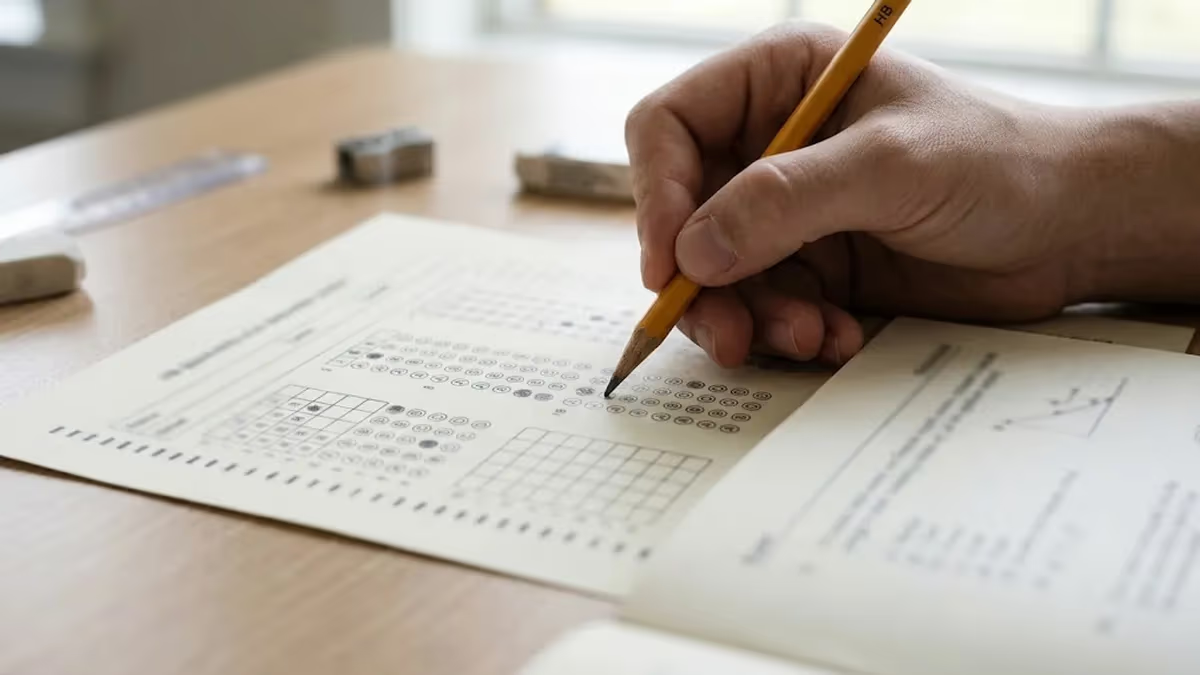
An oet on computer sample test is a free practice version of OET on Computer, the format you take on a screen at a test venue. It mirrors the four sub-tests: Listening, Reading, Writing and Speaking. Practise with a timer, typing your Writing answer and clicking Reading and Listening answers, so that test day feels familiar.
Oet on Computer Sample Test: Key Facts (Updated November 2026)
| Fact | Details | Source |
|---|---|---|
| Delivery options | OET is offered on paper, on computer at a venue, and through OET@Home. | Cambridge English OET test overview |
| Booking deadline (computer and OET@Home) | Bookings close seven days before the test date. | Cambridge English OET |
| Booking deadline (paper) | Bookings for OET on Paper close 24 days before the test date. | Cambridge English OET |
| Results on computer | Results can be released as little as 48 hours after all four sub-tests are completed, with 95% released within six calendar days. | OET Support |
| Results on paper | Released from 13 days after the test outside India and the Philippines. | OET Support |
| Speaking length | The Speaking sub-test lasts approximately 20 minutes. | Cambridge English OET test overview |
| Passing score | There is no universal passing score; you must meet the requirements of your recognising board or council. | Cambridge English OET results |
| Identification | The ID recorded in your booking account must match the ID you present on test day. | OET Support |
The Occupational English Test, usually shortened to OET, is an English language test for healthcare professionals such as nurses, doctors, dentists and pharmacists. It is not the same thing as the abbreviation you may meet in organic chemistry, which is why searches for what is OET often return mixed results. Here, OET always means the healthcare English exam, and every sample and tip in this guide relates to it.
OET on Computer is one of three ways to sit the exam. The other two are OET on Paper and OET@Home, which you take on your own device from home. At a venue, you complete the test on a provided computer, reading texts on screen, listening through headphones and typing your letter. A sample test on computer helps you rehearse that exact workflow, including scrolling long reading texts and managing a running countdown clock.
Many candidates assume every computer test works like a generic CBT mock exam, but OET is built around healthcare workplace tasks. You will not meet spreadsheet simulators or general computing questions here. Instead, you hear consultations, skim clinical texts, write a referral or discharge letter, and role-play a patient conversation. Good computer practice therefore combines realistic content with realistic timing, so you build speed and accuracy with the screen layout and not just general English ability.
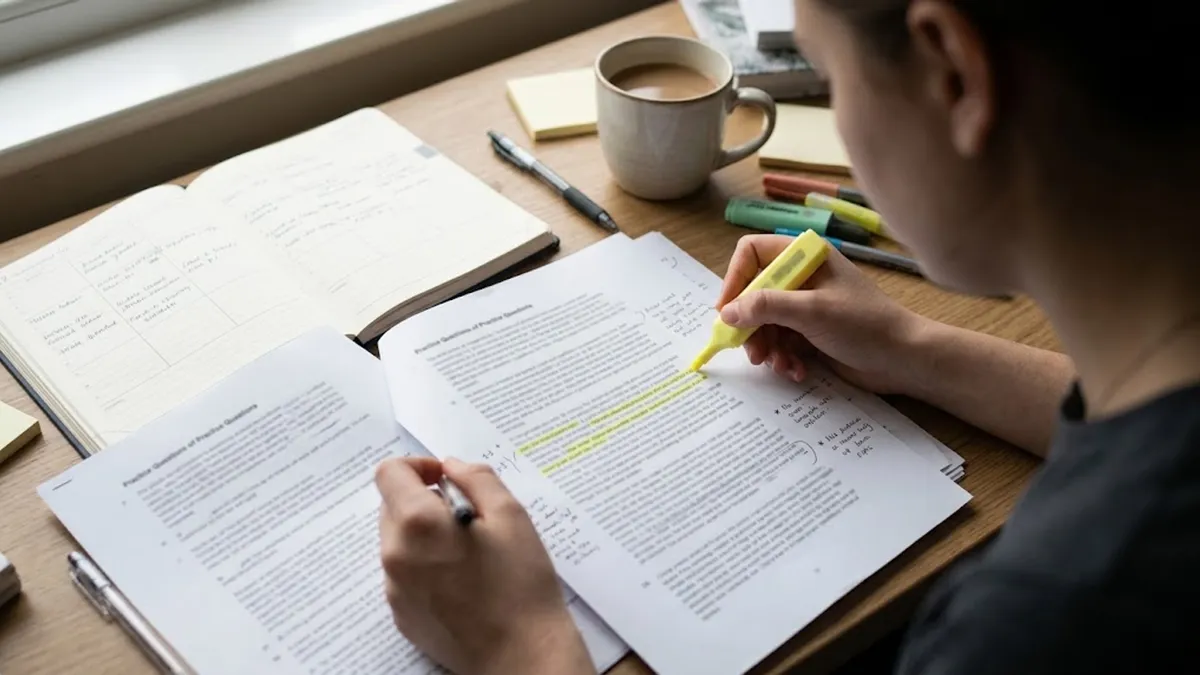
Practising on a screen matters because your habits change when you type. Handwriting a letter encourages slow, careful sentences, while typing tempts you to write quickly and skip proofreading. On a computer sample test, you can practise a disciplined structure: spend the first minutes planning, write the letter in focused paragraphs, and keep two minutes at the end for checking spelling and relevance. Those routines are easy to build in free practice and hard to invent under exam pressure.
Start with the Listening and Reading parts, because these are the easiest to simulate with free questions. Use headphones, play the audio once only, and answer within the time limit. After each set, review every mistake and note whether it came from vocabulary, speed or careless reading. Then move on to timed Writing and Speaking rehearsals. Treat the free quizzes linked on this page as a warm-up, and follow them with full-length mock papers before you book a date.
This page was last reviewed in November 2026, and the key facts table above reflects current official information. Test rules can change, so always confirm booking deadlines, identification requirements and recognition rules with the official OET website and your regulator before you commit to a date. If you want to see how sub-test results are reported, use this oet english test sample scoring guide alongside your practice, and compare each mock result with the grades your regulator requires.
How Long Does OET on Computer Take and When Are Results Out?
What Is the OET on Computer Format?
| Section | Questions | Time | Weight | Notes |
|---|---|---|---|---|
| Listening | 42 | About 45 min | Graded 0-500 | Three parts: consultation notes, workplace extracts, longer talks |
| Reading | 42 | 60 min | Graded 0-500 | Part A 15 min, Parts B and C 45 min |
| Writing | 1 | 45 min | Graded 0-500 | Profession-specific letter, 5 min reading plus 40 min writing |
| Speaking | 2 | About 20 min | Graded 0-500 | Two role-plays with an interlocutor |
| Total | 87 | About 2 hours 50 minutes | 100% |
What Does an OET Sample Test on Computer Look Like?
An OET sample test on computer looks like a four-part exam on screen: Listening, Reading, Writing and Speaking, each with its own timer and task instructions. You read and listen on screen, answer by clicking or typing, and write the Writing letter in a text box. The Speaking sub-test is a conversation with an interlocutor and lasts approximately 20 minutes. Knowing this structure before you open any practice material saves time and reduces test-day surprises.
Listening is split into three parts and uses recordings of consultations and short presentations. Part A has you complete notes while listening to a consultation, Part B uses short workplace extracts, and Part C covers longer talks or interviews. The audio plays once, so you must read the question stems during the pauses. In a computer sample, practise typing short answers quickly and spelling medical terms correctly, because a misspelled word can cost the mark.
Reading has three parts too. Part A is a quick skimming task with four short texts, where you find specific details under a tight 15-minute limit. Parts B and C then give you longer healthcare texts, including policies, guidelines and articles, with multiple-choice questions over the remaining 45 minutes. On screen, you scroll rather than flip pages, so practise locating information fast without losing your place in the passage or forgetting which question you were answering.
Writing is profession-specific, so a nurse writes a different letter from a doctor or a pharmacist. You get case notes, then about five minutes to read and 40 minutes to write, typically a referral, discharge or transfer letter of roughly 180 to 200 words. The computer format lets you edit and rearrange sentences easily, but planning still matters. Practise selecting only the relevant case-note details, because including everything is one of the most common mistakes.
Speaking uses two role-plays based on your profession. You play the healthcare professional, and the interlocutor plays a patient, client or caregiver. Before each role-play you get a short preparation time to read your role card. Performance is judged on linguistic criteria such as intelligibility and fluency, and on clinical communication criteria such as relationship building and information giving. A sample speaking task is easiest to practise with a study partner who plays the patient and reacts naturally.
To build a realistic routine, schedule practice in the same order as the real exam and sit at a desk with a keyboard and headphones. Try one full Listening and Reading block, then a separate Writing session, and a Speaking rehearsal on another day. Mark yourself honestly and keep a log of recurring errors. Once your scores look steady, read our booking guide, which includes an oet practice test readiness check before you pick a date.
For free material, our oet on computer sample test hub collects practice sets for all sub-tests, and the quizzes below let you try Listening questions straight away. Official sample materials from OET are also available through the test overview, so combine both sources. Use free quizzes for quick checks, and official samples to confirm that your timing and answer style match what examiners expect from a strong candidate.
How Do You Use an OET English Test Sample for Each Sub-Test?
Begin with Listening and Reading because they are scored objectively and give quick feedback. Open the answer key only after finishing the full set under timed conditions. For Listening, play each recording once, write answers while listening, and use the pauses to preview the next questions. For Reading, spend exactly 15 minutes on Part A, then move on even if one item is unresolved, since Parts B and C need the remaining time.
After scoring, sort every error into a category: missed detail, misunderstood paraphrase, spelling, or time pressure. A pattern usually appears within three practice sets. If you keep losing marks in Reading Part A, practise skimming headings and numbers first. If Listening Part C is weak, practise predicting the speaker's attitude. Repeat the same type of set a week later to check whether the correction held, using new questions each round.
Is a Computer-Based OET Mock Test Better Than Paper Practice?
- +Matches the venue format, so screen layout and timers feel familiar
- +Typing practice builds speed for the Writing letter
- +Answer keys for Listening and Reading give fast feedback
- +Short sessions are easy to repeat on any device
- +Editing and restructuring a letter is easier than on paper
- +Fits the faster results timeline of the computer format
- −Home screens and headsets differ from venue equipment
- −Speaking cannot be marked automatically
- −Self-marked Writing may be scored too generously
- −Free samples vary in quality and may not match the current format
- −Screen fatigue can build up over a long session
- −Technical glitches can interrupt timed practice
How Do You Prepare for an OET Computer Sample Test?
- ✓Sit one full sample under timed conditions to set a baseline.
- ✓Use wired or reliable headphones for every Listening set.
- ✓Practise typing a 180 to 200 word letter without looking at the keys.
- ✓Play each Listening recording once, exactly as in the exam.
- ✓Limit Reading Part A to 15 minutes, then move on.
- ✓Record every Speaking role-play and listen back for jargon.
- ✓Log each mistake by type: detail, paraphrase, spelling or timing.
- ✓Choose Writing and Speaking samples that match your profession.
- ✓Write your regulator's required grades on your study notes.
- ✓Confirm your booking ID matches your identification before test day.
Bookings close seven days before the test date
Bookings for OET on Computer at a venue and for OET@Home close seven days before the test date, while paper bookings close 24 days ahead. Do not leave your sample-test practice until the final week, because popular venues fill up and a missed deadline can push your plans back by weeks.
Is an OET Mock Test for Nurses Different From Other Professions?
Yes, an OET mock test for nurses differs from other professions in the Writing and Speaking sub-tests, while Listening and Reading are identical for everyone. OET offers profession-specific content for twelve healthcare professions, including nursing, medicine, dentistry, pharmacy and physiotherapy. A nurse's Writing task usually asks for a referral or handover letter based on patient case notes, and the Speaking role-plays reflect ward, clinic or community nursing situations.
Because Listening and Reading are shared, nurses can use any general OET Listening or Reading sample, but should still choose nursing-focused Writing and Speaking material. A doctor's letter often emphasises diagnosis and investigations, whereas a nurse's letter tends to prioritise care needs, mobility, medication management and discharge arrangements. Using the wrong profession's sample teaches the wrong emphasis, so check that the case notes and role cards match your registration before you start timing yourself.
Doctors preparing for the exam face a different mix. Their letters often involve clinical reasoning and diagnostic summaries, and their role-plays may include breaking bad news or explaining a treatment plan. If you work in medicine, compare your practice with our oet sample test for doctors guide, which covers the format, free practice and scoring for that profession in more detail than a general computer sample can.
Whatever your profession, the computer format adds its own checks. Test your headset before you start, close other windows, and practise in full-screen mode so notifications do not distract you. At a real venue, you use the provided equipment, so familiarity with ordinary keyboard layouts also helps. Ask yourself whether you can type a 180 to 200 word letter of clear prose without hunting for keys, because lost seconds in typing become lost minutes in planning.
Plan a weekly rhythm of practice rather than one long cramming session. A sample week might include two Listening sets, two Reading sets, one Writing letter and one Speaking role-play, with a short review after each. Over four weeks, that adds up to eight Listening sets, eight Reading sets, four letters and four role-plays, which gives you enough data to see whether your weakest skill is improving or stuck at the same level.
Peer feedback is valuable for nurses because workplace English differs from textbook English. Ask a colleague who has passed OET to read your letter, or join a study group that exchanges role-play recordings. Focus feedback on clarity, tone and relevance rather than grammar alone. A letter with perfect grammar can still fall short if it includes the wrong details or lacks a clear request to the reader, and a peer will catch that quickly.
Finally, keep your target in mind. Each regulator or employer sets its own required grades, so a practice result only matters relative to your own goal. Write the required grade for each sub-test on the first page of your study notebook, and compare every mock result with it. That habit turns scattered practice into a measurable plan and shows exactly how many points you still need to gain in each skill.
OET requires the identification recorded in your booking account to match the identification you present on test day. Check the spelling of your name against your passport or accepted ID before you book, and correct any difference through OET support well before the exam.
How Is the OET on Computer Test Scored and When Are Results Out?
OET on Computer results can be released as little as 48 hours after you complete all four sub-tests, and 95% are released within six calendar days. That is much faster than OET on Paper, where results are released from 13 days after the test outside India and the Philippines. Fast turnaround is a major reason candidates choose the computer format when they face an application, employer or visa deadline.
Each sub-test is reported separately on a scale of 0 to 500, with grades from A to E. OET has no universal passing score, so there is no single number to chase. Instead, each recognising board, council or employer sets its own requirements, and they often differ by sub-test. A candidate may need a particular grade in every sub-test, while another body accepts a different mix. Always confirm the requirement that applies to you first.
Practice scores are only a rough guide, because sample tests are marked by you or by an answer key rather than by trained OET assessors. Listening and Reading are the easiest to compare, since answers are objective. Writing and Speaking are judged on criteria, so a self-marked mock may be generous. When you review any oet writing sample against your own letter, remember that official grades arrive only through your OET account; see our guide to checking results for the steps.
Acceptance is the next question. Many US licensing bodies, state boards of nursing and credentialing organisations recognise OET for certain professions, but policies change and vary by state and profession. If you are researching is oet accepted in usa for nurses, read our nurse-focused guide, then confirm the current rule with your state board and employer before you book, since the receiving authority makes the final decision.
The authority that receives your results also decides how long it treats them as valid. OET does not set a universal validity period, so check the recipient's rules before you plan a retake. If you need to retake part of the exam, OET permits individual paper sub-test bookings after a previous full OET test, subject to venue availability and acceptance of partial results by the receiving organisation. Computer candidates should check their own options carefully.
Identification is another point where bookings and results meet. The ID recorded in your booking account must match the ID you present on test day, including the spelling of your name. A mismatch can prevent you from sitting the test, regardless of how well you have prepared. Check your booking details, compare them with your passport or other accepted ID, and fix any error through OET support well before the exam date.
OET also stopped issuing digital badges on 1 September 2026, so do not plan to share a badge with an employer or regulator. Instead, rely on the official results channels your recipient accepts, and confirm with the organisation which format it needs. Small administrative details like these are easy to miss, and they can delay an application by days or weeks if you only discover them after the exam.
How Do You Pass the OET Sample Test on Computer?
You can prepare for OET on computer in four weeks if you already have a working level of healthcare English, by building a repeating routine of timed practice, review and targeted drills. Week one is diagnostic: sit one full sample under exam conditions and record your scores. Weeks two and three focus on your weakest sub-test, and week four is for full mocks and rest. Adjust the plan if your real exam is closer or further away.
Book a quiet slot each day, even if it is only 45 minutes. Short, regular sessions beat one weekend marathon because language skills need repetition. On weekdays, do one sub-test or part; on weekends, do a full mock. Keep a simple log with date, task, time taken and score. After two weeks, the log will show which tasks consume most time and which errors recur, and you can adjust your priorities accordingly.
Use a mix of free and official material. Free quizzes are ideal for quick Listening and Reading checks, while an official-style paper gives you the real layout and timing. Nurses can read the oet exam practice test guide, which explains format and scoring in profession-specific detail. Whichever source you choose, always mark Writing against the assessment criteria rather than simply comparing your letter with a model answer.
For Speaking, search for an oet speaking sample role card for your profession, then rehearse it aloud. Record yourself, listen back and note filler words, long pauses and jargon. Ask a friend to play a worried patient and respond naturally. Strong speaking performances combine accuracy with warmth, so practise empathy statements, such as acknowledging fear or confusion, before moving to explanations. Do this at least three times a week in the final fortnight.
On test day, arrive early, bring the exact ID recorded in your booking, and expect security checks if you are at a venue. Use any break to rest your eyes and drink water rather than reviewing notes. During the exam, read instructions carefully, even if they look familiar, because small changes in task wording can change what is required. If a question stumps you, move on and return only if time allows.
Avoid the most common preparation mistakes. Do not memorise model letters word for word, do not ignore Speaking because it feels informal, and do not rely only on Listening practice at double speed. Also avoid last-minute changes to your typing setup or headset habits. Anything that feels unfamiliar on the day costs attention, and attention is the scarcest resource in a four-skill exam that runs for nearly three hours.
Finally, trust your data. If your last three mock tests are stable at your target level in Listening and Reading, and your Writing and Speaking feedback is positive, you are ready. If not, consider moving the date rather than rushing, after checking the rescheduling rules and deadlines. A calm, prepared attempt is cheaper than a repeated one. Use the free quizzes below for a last confidence check, then book with confidence.
OET Questions and Answers

OET Sample Test 2026: What to Expect and How to Stay Calm

OET Practice Tests: Free Sample Tests for All Sub-Tests
OET Sample Test for Doctors: Format, Free Practice and Scoring Guide

What Is OET for Nurses? Format, Scoring, Sample Tests and Where It Is Accepted
How to Calculate OET Score: Sub-Test Grades, Raw Marks and Board Requirements

How to Schedule OET Exam: Booking Steps, Deadlines and Rescheduling
How to Check OET Result: Online Steps, Release Dates and What Your Scores Mean
When Does OET Results Come Out? Release Dates by Test Format
How this page was made: written with AI tools and published by Nathan Beja, founder of Practice Test Geeks, who is responsible for its content. Exam facts are checked against the official sources listed below. Not reviewed by a subject-matter expert. Editorial policy
Sources & references
Exam facts on this page (fees, format, dates, passing scores) are checked against these official sources; the date is our last check. Editorial policy
- cambridgeenglish.org — Time limit, passing score, score validity, test delivery · verified Oct 2026
- support.oet.com — Score release, eligibility, retake policy, registration deadline, exam information · verified Oct 2026