
OET Sample Test for Doctors: Format, Free Practice and Scoring Guide 2026
🎯 An OET sample test for doctors has four sub-tests: Listening, Reading, Writing and Speaking. See the format, scoring, free practice and prep tips.
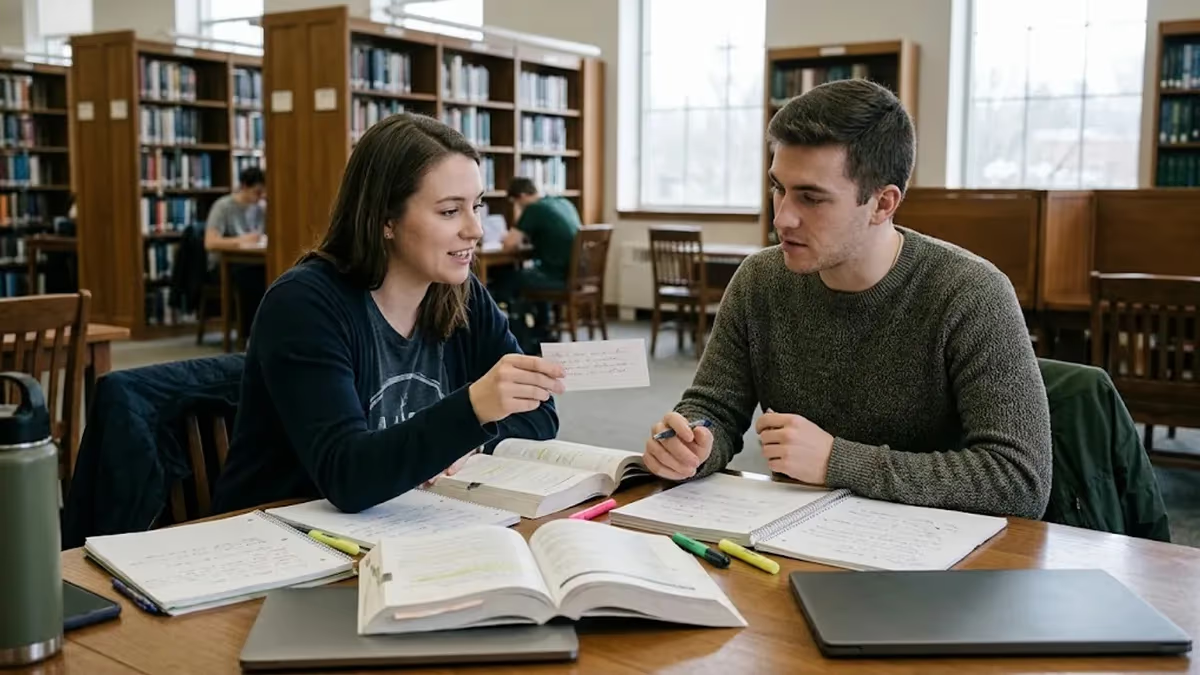
An OET sample test for doctors is a practice version of OET Medicine, the English exam for physicians, with four sub-tests: Listening, Reading, Writing (a referral letter) and Speaking (two role-plays). Working through one sample of each shows you the format, timing and 0 to 500 scoring before you book the real test.
Oet Sample Test for Doctors: Key Facts (Updated October 2026)
| Fact | Details | Source |
|---|---|---|
| Sub-tests | Listening, Reading, Writing and Speaking; Writing and Speaking are profession-specific, so doctors sit Medicine tasks | Cambridge English OET test overview |
| Delivery | OET on Paper, OET on Computer at a venue, or OET@Home | Cambridge English OET |
| Speaking length | Approximately 20 minutes | Cambridge English OET test overview |
| Passing score | No universal pass mark; you must meet the requirements of your recognising board or council | Cambridge English OET results |
| Booking deadline | Computer and OET@Home close seven days before the test date; Paper closes 24 days before | OET support |
| Results release | Computer: from 48 hours, 95% within six calendar days. Paper: from 13 days outside India and the Philippines | OET support |
| ID rule | The ID in your booking account must match the ID you present on test day | OET support |
| Digital badges | OET stopped issuing digital badges on 1 September 2026 | OET support |
This page focuses on physicians. If you want the general overview of exam day, including nerves, check-in and what the room feels like, read our oet sample test hub first and then return here. The hub covers every profession, while this guide zooms in on OET Medicine: the clinical scenarios, the referral letter, the doctor-patient role-plays, and the practical ways a busy doctor can fit realistic practice around shifts, call and family life.
Doctors searching for an oet english test sample usually want three things: proof that the exam matches real clinical work, a way to judge their current level, and a plan for closing gaps. The materials for medicine are built around ward rounds, outpatient consultations, handovers and referral letters, so the language you practise is the language you will use after registration. That relevance is the main reason many physicians prefer it to general English exams.
What is OET? The Occupational English Test is an English language exam for healthcare professionals who want to register or work in an English-speaking setting. Twelve professions sit it, including medicine, nursing, dentistry, pharmacy and physiotherapy. Doctors take the Medicine version, in which every task uses medical content. Unlike a generic exam, you will not describe a holiday or debate a social issue; you will take a history, explain a diagnosis and write to a colleague.
A quick clarification helps searchers. Queries such as what is oet in organic chemistry point to an unrelated abbreviation used in chemistry, not to this exam. Here, OET always means the Occupational English Test. For US readers, the exam matters in two ways: international medical graduates should check whether their pathway accepts OET Medicine, and US-trained doctors planning to practise in the UK, Ireland, Australia or New Zealand often need OET to register.
A sensible way to use any sample is to treat it as a diagnostic, not a lesson. Sit one full sub-test under exam conditions, mark it honestly against the official criteria, and note the exact reason for every lost mark: vocabulary, timing, a misread question or weak structure. Repeat the process a week later. Doctors who log errors by category usually find that two or three recurring habits explain most of their lost marks, which makes the next study block far more efficient.
Be realistic about what a sample can do. Official samples and free quizzes show format and difficulty, but they cannot replicate the full range of topics you may meet on test day, and unofficial materials vary in quality. Use them to learn the structure, then widen your reading and listening with real clinical sources such as guidelines, podcasts and case reports. The sections below walk through each sub-test, scoring, booking rules and a preparation routine you can adapt to your own timetable.
What Are the OET Medicine Sample Test Numbers?

What Does the OET Sample Test for Doctors Include?
| Section | Questions | Time | Weight | Notes |
|---|---|---|---|---|
| Listening | 42 | About 40 min | Scored 0-500 | Audio plays once; same test for all professions |
| Reading | 42 | 60 min | Scored 0-500 | Part A is 15 minutes; same test for all professions |
| Writing | 1 | 45 min | Scored 0-500 | Referral letter from case notes; includes 5 minutes reading time |
| Speaking | 2 | About 20 min | Scored 0-500 | Two role-plays with an interlocutor |
| Total | 84 | About 2 hours 45 minutes | 100% |
What Does the OET Reading Sample Test for Doctors Look Like?
The OET reading sample test for doctors lasts 60 minutes and has 42 questions across three parts. Part A is a 15-minute skimming task: four short texts on one clinical topic, such as hypertension guidelines, a drug monograph, a case summary and a journal abstract, with 20 questions that ask you to locate facts quickly. It is strictly timed, and the booklet is collected after 15 minutes, so speed matters more than depth here.
Part B contains six short workplace extracts, such as a hospital policy email, a rota notice or a clinical guideline excerpt. Each has one three-option multiple-choice question testing gist, purpose or detail. Part C gives two longer texts, usually around 800 words each, drawn from medical journals or health-policy commentary, with eight multiple-choice questions each. Together Parts B and C make 22 questions, and they reward careful inferential reading rather than simple keyword matching.
To practise efficiently, time every part separately. Give yourself exactly 15 minutes for Part A, then 45 minutes for Parts B and C together. Many doctors read Part C too slowly because they treat it like a journal club paper. Instead, read the question stem first, find the paragraph it targets, and test each option against the text. If you cannot decide within ninety seconds, mark it, move on and return later.
How Does the OET Listening Sample Work for Medicine?
Listening takes roughly 40 minutes and has 42 questions in three parts. In Part A you hear two consultations between a doctor and a patient and complete a note with 12 gaps for each. Part B has six short workplace extracts, such as a handover between colleagues, each with one multiple-choice question. Part C features two longer recordings, such as a presentation or interview, with six questions each. The audio plays once only, which is why practice under test conditions is essential.
Doctors often underestimate that single-play rule. A useful routine is to preview the question paper during the pause, predict the kind of word that fits each gap, and write only what you hear rather than what you expect. Our guide to building an oet exam practice test routine explains how to turn each attempt into feedback. Replay the recording afterwards with the transcript, marking every phrase you missed and why.
Listening and Reading are the same for every profession, which means a nurse's or pharmacist's sample is valid practice for these two sub-tests. Newcomers sometimes get confused by terminology, so if you arrived here searching what is oet chem, the certification overview explains how the exam and its certificate fit together. After that, return to the audio, because listening skills improve only through repeated, active, timed exposure to accented clinical speech.
Watch for the most common errors in the note-completion task. Spelling mistakes cost marks even when you heard the word correctly, so practise medical terms such as dyspnoea, oedema and haemoglobin, noting that British spellings are acceptable alongside American ones. Write numbers and units exactly, copy the grammar of the surrounding sentence, and never leave a gap blank, because a reasoned guess has a chance of scoring and an empty space has none.
How Do the OET Writing Sample and OET Speaking Sample Work for Doctors?
The OET Writing sub-test for doctors lasts 45 minutes, including five minutes of reading time. You receive case notes about a patient and write a letter, most often a referral to a specialist or GP, of about 180 to 200 words in the body. A strong sample opens with the reason for writing, summarises only relevant history, states the current problem and ends with a clear request. Irrelevant details, such as an unrelated social history, are deliberately included to test your selection.
Assessors score six criteria: purpose, content, conciseness and clarity, genre and style, organisation and layout, and language. Third-party sample letters, such as an e2language oet writing sample shared online, can show layout and tone, but treat them as illustrations, not model answers. Compare any sample with the official criteria, then write your own version from the same case notes and ask a qualified tutor to mark it against the rubric.
Are Free OET Sample Tests Enough for Doctors?
- +Free samples reveal the exact format and timing before you pay for the real test
- +They cost nothing, so you can repeat them as often as your schedule allows
- +Listening and Reading samples give instant, objective scores against an answer key
- +Sample letters and role-play cards show the clinical style examiners expect
- +You can fit short sessions around shifts, on-call duties and family commitments
- +Early attempts show which sub-test needs the most study time
- −Free materials cover a limited range of topics and may repeat quickly
- −Writing and Speaking samples rarely come with expert marking
- −Unofficial samples can differ from the real exam in difficulty or style
- −A sample score cannot guarantee the same result on test day
- −Free tools seldom replicate the pressure of a full-length computer or venue test
- −Without feedback, you may repeat the same mistakes unnoticed
How Should Doctors Use an OET Practice Test Step by Step?
- ✓Sit one full diagnostic across all four sub-tests within a single weekend.
- ✓Time every part exactly as the real exam does, with no pauses.
- ✓Play Listening audio only once, just as on test day.
- ✓Mark Reading and Listening against the answer key the same day.
- ✓Score your Writing letter against the six official criteria.
- ✓Record your Speaking role-plays and play them back the next morning.
- ✓Log each lost mark in an error sheet by cause, not just by question.
- ✓Ask a qualified tutor or colleague to review one letter and one role-play weekly.
- ✓Repeat a full mock every two weeks and compare scores by sub-test.
- ✓Book the real test only when practice scores sit comfortably at your target grade.
Keep an error log, not just a score log
Doctors who record why each mark was lost, whether timing, spelling, selection or structure, improve faster than those who only track totals. Review the log before every session and aim to remove one repeated error per week.
What Score Do Doctors Need to Pass the OET?
There is no single OET pass mark. Each sub-test is scored from 0 to 500, and the result is reported as a grade from A to E, but the receiving organisation decides what counts as acceptable. Grade B, which covers scores of 350 to 450, is the level most medical regulators ask for. Always read your target board's wording closely, because some require B in every sub-test in a single sitting while others may allow results from different sittings within a set window.
Why does the same grade feel so different across sub-tests? Listening and Reading are marked against fixed answer keys, so a score is predictable once you know your accuracy on practice papers. Writing and Speaking are marked by trained assessors against published criteria, so improvement depends on technique as much as English. Doctors commonly reach Grade B in Reading first and struggle longest with Writing, where concise selection of case notes is the real challenge.
Consider a practical example. A doctor scores 380 in Listening, 400 in Reading, 340 in Writing and 360 in Speaking. Three sub-tests meet Grade B but Writing is 10 points short, so a board demanding B in every sub-test would not accept the result. The fix is targeted: more referral letters, assessed feedback and timed drafting, rather than another round of general English study. This is why separate sub-test scores matter more than an overall average.
How Long Does It Take to Get OET Results?
Results timing depends on format. OET on Computer results can be released as little as 48 hours after all four sub-tests are completed, with 95 percent released within six calendar days. OET on Paper results are released from 13 days after the test outside India and the Philippines. If your licensing deadline is tight, those differences can decide which format you book, so plan backwards from the date your application must be lodged.
People who search what is oet chemistry are often really asking how the exam is scored and reported, and our results timing guide breaks down release dates by format. Once results are released, you view them through your online account. Keep the report safe, because your board may ask for it in a particular form, and you will want to compare each sub-test score with the grade your board requires.
How long are results valid? OET itself does not set a universal expiry; the authority receiving your results determines how long it recognises them. Some boards apply a two-year window, but this varies, so confirm before you book. Also note that OET stopped issuing digital badges on 1 September 2026, so do not plan to share scores through a badge. Follow the process your receiving body specifies, and ask them directly if their instructions are unclear.
If you fall short on one sub-test, you may not need to repeat everything. OET permits individual paper sub-test bookings after a previous full OET Test, subject to venue availability and acceptance of partial results by the receiving organisation. That makes it vital to ask your board whether it accepts combined results before paying for a partial retake. Keep every score report, because the combination rules of your board, not OET, decide whether results can be added together.
Bookings for OET on Computer and OET@Home close seven days before the test date, and OET on Paper bookings close 24 days before. The ID in your booking account must match the ID you present on test day, so fix any name differences early.
Is the OET Easier Than IELTS for Doctors?
For most doctors, yes, because the content is familiar. OET Medicine uses clinical scenarios you handle daily, so you spend your effort on English rather than on decoding unfamiliar topics. IELTS asks you to discuss general subjects such as urban planning or museum funding, which can feel arbitrary after years of clinical training. Compare the tasks side by side and the gap is obvious. A typical oet writing sample for doctors is a referral letter built from case notes, while IELTS asks for an opinion essay.
However, easier does not mean easy. OET Writing punishes doctors who copy every case note into the letter, because assessors reward selection and relevance. Speaking looks for patient-centred communication, such as checking understanding and responding to emotion, which some doctors have never been trained to do explicitly. A fluent speaker can still lose marks on structure. Treat the exam as a communication test with a clinical wrapper, and your preparation will be pointed in the right direction.
What Is the Occupational English Test and Who Recognises It?
If you want a fuller definition, our guide on what is occupational english test explains the profession list, sub-test design and recognition. In short, the Occupational English Test is accepted by medical councils, nursing boards and immigration authorities in several countries, including the UK, Ireland, Australia and New Zealand, and by some US bodies. Recognition varies by profession and organisation, so a doctor must check the council or board, not just the test provider.
How Do Paper, Computer and OET@Home Compare?
OET is offered on paper, on computer at a venue, and through OET@Home. Content and scoring are the same; the difference is the experience. Computer-based formats let you type Writing, which suits doctors used to electronic records, and they release results faster. Paper suits candidates who think best with a pen. OET@Home removes travel but needs a stable connection, a quiet room and equipment that passes the technical checks. Choose the format you will practise in, not the one that sounds modern.
Booking windows also differ. Bookings for OET on Computer at a venue and OET@Home close seven days before the test date, while OET on Paper bookings close 24 days before. The identification recorded in your booking account must match the identification you present on test day, so correct any spelling or name-order differences early. A mismatch can put your attendance at risk on the day, which is a painful way to lose weeks of preparation.
Budget for more than the fee. Many doctors forget travel, accommodation for a venue test, time away from clinic and the cost of preparation materials or tutor feedback on Writing and Speaking. Add the cost of a possible retake to your plan, not as pessimism but as realistic risk management. Check the official fee page for your country and test format, because prices differ by location and currency, and never rely on figures quoted in forum posts.
Finally, work backwards from your application deadline. Allow time for booking, the test, results release and any board processing, then add a buffer of at least a month for a retake. For example, if your board needs results by 1 March, a paper test must be booked weeks in advance and may leave little room for error, whereas a computer test could fit a single retake. Planning like this removes stress from the final weeks.
How Can Doctors Prepare for the OET in Eight Weeks?
Eight weeks is realistic for a doctor who already scores near Grade B on a diagnostic. Begin by sitting one complete oet practice test across all four sub-tests within a weekend, then use the results, and your understanding of how scores are reported, to decide where your hours go. If every sub-test is more than 40 points below your target, extend the plan to twelve weeks rather than compressing it.
Weeks one and two are for foundations. Learn the structure of each sub-test, read the official assessment criteria for Writing and Speaking, and build a personal error log. Spend roughly eight to ten hours a week: three on Listening, three on Reading, two on Writing and two on Speaking. Short daily sessions of 45 minutes beat one exhausting weekend, because language skills consolidate with spacing, and you can fit a session before or after a clinical shift.
Weeks three to five are for skill building. In Listening, practise Part A note completion with consultation audio, then replay with the transcript. In Reading, drill Part A in exactly 15 minutes until you finish with time to spare. In Writing, produce two referral letters a week from fresh case notes, spending five minutes planning what to include and what to drop. Compare each letter with the criteria, not with a model answer.
Speaking deserves deliberate rehearsal because it is the sub-test most doctors practise least. Ask a colleague or tutor to play the patient, use role-play cards, and give yourself three minutes of preparation before each five-minute scenario. Open with a greeting and a clear purpose, use open questions, summarise what you heard, explain in plain language, and check understanding. Record each session and listen for jargon, long monologues and missed emotional cues, then fix one of those per week.
Weeks six and seven are for full mocks under real conditions. Sit a complete test at the same time of day as your booked slot, use the same format you will face, and mark it strictly. Nursing or other-profession mocks are fine for Listening and Reading, but use medicine-specific material for Writing and Speaking. If a sub-test score drops, resist the urge to add new materials; instead, revisit your error log and repair the recurring weakness.
In the final week, protect your energy. Confirm the venue or technical requirements, check that your ID matches your booking account exactly, and plan travel with a buffer. Skim your error log rather than starting new materials, and do one light session per sub-test. Sleep matters more than a last-minute cram, because Listening and Speaking depend on alert processing. If your board allows retakes of individual sub-tests, knowing this can reduce pressure on the day.
On test day, treat each sub-test as separate. A weak moment in Listening does not predict your Reading score, so reset and move on. In Writing, spend the first five minutes planning; in Speaking, listen to the cue card twice. Afterwards, wait for your official results before drawing conclusions. If you fall short, compare each sub-test with your board's requirement, then target only the gap, which is usually smaller and more fixable than it first feels.
OET Questions and Answers

OET Sample Test 2026: What to Expect and How to Stay Calm

OET Certificate: Complete Certification Guide for Healthcare Professionals

When Does OET Results Come Out? Release Dates by Test Format

OET Subject Knowledge: What the Occupational English Test Covers

OET Score: Tips to Reach Grade B in Every Sub-Test

How to Check OET Result: Online Steps, Release Dates and What Your Scores Mean

Is OET Easier Than IELTS? An Honest Comparison for Healthcare Professionals
Is OET Accepted in Ireland? Boards, Grades and How to Prepare
How this page was made: written with AI tools and published by Nathan Beja, founder of Practice Test Geeks, who is responsible for its content. Exam facts are checked against the official sources listed below. Not reviewed by a subject-matter expert. Editorial policy
Sources & references
Exam facts on this page (fees, format, dates, passing scores) are checked against these official sources; the date is our last check. Editorial policy
- cambridgeenglish.org — Time limit, passing score, score validity, test delivery · verified Oct 2026
- support.oet.com — Score release, eligibility, retake policy, registration deadline, exam information · verified Oct 2026