
Nursing Accelerated Program: 12-Month ABSN Path to RN 2026 October
Nursing accelerated program guide 2026 October: 🟢 12-month ABSN routes, NYC/Texas/California schools, ADN comparison, costs, NCLEX prep.

Nursing Accelerated Program by the Numbers
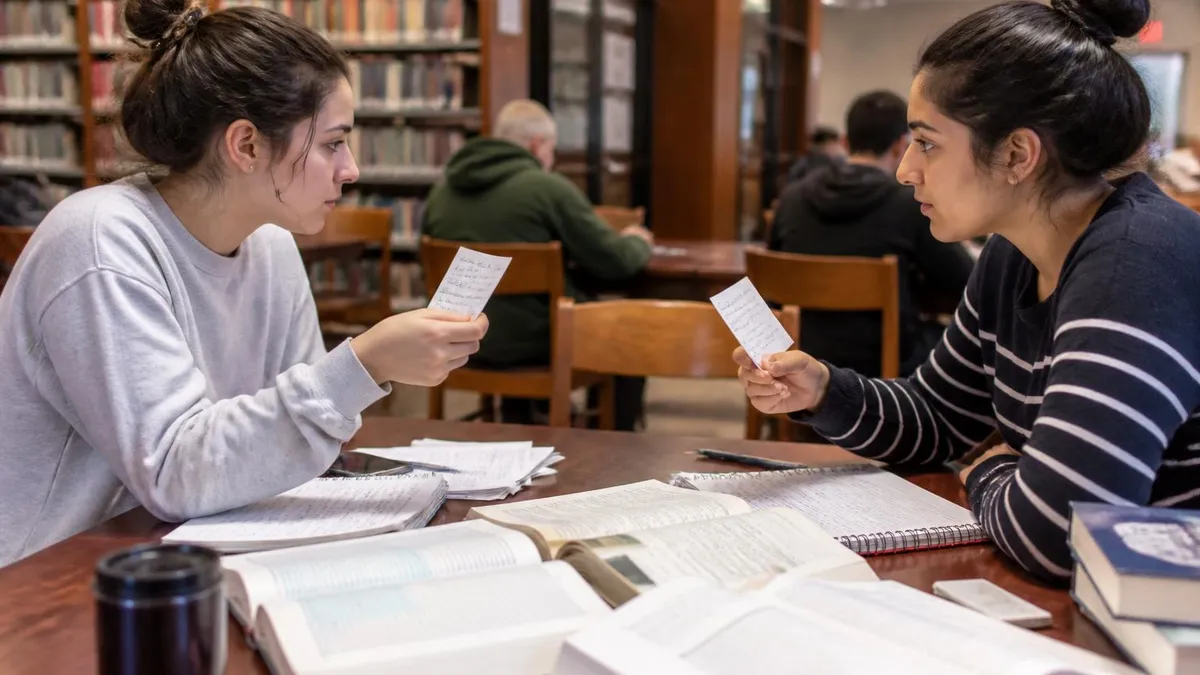
Nursing Accelerated Program: 12-Month Path from Bachelor's to RN
You finished a degree in something else — psychology, biology, finance, anything. Now you want to be a nurse. A nursing accelerated program is the fastest legal route. The Accelerated Bachelor of Science in Nursing (ABSN) takes your existing bachelor's, adds the missing science prerequisites, then crams the clinical and didactic content of a traditional four-year BSN into 12 to 18 months of full-time study.
Here's the catch: it's brutal. Most schools warn you not to work during the program. You'll log 700 to 900 clinical hours in hospitals, write care plans on weekends, and sit for the NCLEX-RN within months of graduation. Yet the numbers keep climbing. Enrollment in accelerated BSN programs grew 31% between 2018 and 2024, according to the American Association of Colleges of Nursing (AACN).
Why so popular? Three reasons. Second-degree students bring maturity and study discipline. Hospitals pay better than most first careers. And the RN shortage isn't slowing — the Bureau of Labor Statistics projects 195,400 RN openings every year through 2032.
Not every ABSN is created equal. Tuition swings from $19,000 at a public school to $98,000 at a private one. Cohorts run anywhere from 24 students (intimate) to 220 (factory). NCLEX pass rates at Vanderbilt's School of Nursing hit 96%; some for-profit programs barely clear 70%. Pick wrong and you'll graduate $80K in debt with a license you can't pass. That's the worst case nobody warns you about.
Quick Answer: What's a Nursing Accelerated Program?
An ABSN (Accelerated Bachelor of Science in Nursing) is a 12-to-18-month full-time program for adults who already hold a non-nursing bachelor's degree. It awards a full BSN and qualifies graduates to sit for the NCLEX-RN. Median tuition is around $42,000; clinical hours range from 700 to 900; first-time NCLEX pass rates average 88% at CCNE-accredited schools.
12-Month Accelerated Nursing Programs: How They Compress 4 Years
The math sounds impossible. Cover four years of nursing content in twelve months? Yet that's exactly what 12-month accelerated nursing programs deliver. The trick: you skip everything a traditional BSN student takes in years one and two — English, history, electives — because you finished them in your first degree.
What's left? Pure nursing. Pathophysiology, pharmacology, med-surg, mental health, OB, pediatrics, community health, leadership. Plus clinicals. Schools pack this into three back-to-back semesters with no summer break. You'll be on campus or in clinical 40 to 60 hours a week. No exaggeration.
Programs that genuinely finish in 12 months: Concordia University (16 months for some cohorts, 12 for others), Marquette University Direct Entry, Northeastern University Accelerated, and University of Rochester. Anything advertised as "12 months" that turns out to be 15 — read the fine print. Some schools count the prerequisite term separately.
The prerequisite list is the gatekeeper. Most programs want anatomy, physiology, microbiology, chemistry, statistics, developmental psychology, and nutrition — eight courses, all with C-or-better grades, most completed within the last five years. If you majored in English, expect 14 to 18 months of prereqs before you can even apply. Knock these out at a community college for $1,200 to $3,000 total. Way cheaper than retaking them at your ABSN school.
Nursing Accelerated Program Timeline: Application to RN License
Months -18 to -6: Complete Prerequisites
Months -8 to -4: Submit Applications
Months 1-4: Semester 1 — Fundamentals
Months 5-8: Semester 2 — Med-Surg + Specialties
Months 9-12: Semester 3 — Capstone
Months 13-15: NCLEX-RN + Licensure
Accelerated Nursing Program NYC: Top Schools and ABSN Tracks
New York City has 11 accredited ABSN tracks within the five boroughs. The accelerated nursing program nyc applicants love most: NYU Rory Meyers College of Nursing — 15 months, 95% NCLEX pass rate, around $90,000 total. Hunter-Bellevue School of Nursing runs a 16-month CUNY-funded option closer to $30,000 for New York residents. Pace University offers a 12-month track in Pleasantville plus a separate NYC campus cohort.
The grind is real in NYC. Clinical placements rotate through Mount Sinai, NYU Langone, Bellevue, Montefiore, and NewYork-Presbyterian — world-class hospitals but cutthroat schedules. Most students commute by subway for 5:30 AM rotations. Housing isn't included anywhere, and Manhattan rent for a tiny studio runs $2,800 to $3,800 a month.
The accelerated nursing program in nyc at Columbia University Mailman doesn't exist as a true second-degree ABSN; Columbia's Master's Direct Entry is the second-degree route there — 15 months, leads to an MSN. Different credential, longer pathway, but it ends at the same NCLEX-RN. Don't conflate the two when you're researching. Also worth checking: RN to BSN programs if you already hold an associate's and just need the bachelor's upgrade.
NYC clinical placements give you something most U.S. programs can't: the volume. A trauma rotation at Bellevue's emergency department sees more gunshot wounds in a month than some suburban hospitals see in a year. That's why NYC-trained ABSN grads land jobs nationally — they're battle-tested.
Worth knowing: Houston is the dark horse of accelerated nursing. The Texas Medical Center — the largest medical complex on the planet — sits right in Houston's center. ABSN students get clinical placements at MD Anderson, Houston Methodist, Memorial Hermann, and Texas Children's. Admission odds at UT Health Cizik run around 9:1. Baylor partner programs sit closer to 12:1.
What you save in Houston: rent. A one-bedroom near the medical center runs $1,400 — half what you'd pay in NYC. Tuition for Texas residents at public schools beats every coastal state hands down. The downside? Summer clinicals in 100-degree heat. Traffic that adds an hour each way. And a job market saturated with new grads from the eight nursing schools in the Houston metro. If a slower path appeals, an CNA to RN bridge program lets you work while completing prereqs.

Accelerated Nursing Programs Houston and Texas: Top Tracks
15-month ABSN. Top NCLEX pass rate in Texas (94%). In-state $24,000, out-of-state $58,000.
- Duration: 15 months
- Tuition: $24K resident
- NCLEX Pass: 94%
12-month ABSN at the new Houston campus. Cohort capped at 80. Heavy emphasis on rural and underserved populations.
- Duration: 12 months
- Cohort Size: 80
- Focus: Rural health
Online-hybrid ABSN. Didactic online, clinicals locally arranged in Texas. Three start dates per year.
- Format: Hybrid
- Starts: 3/year
- Tuition: $36K
12-month ABSN in Dallas. Christian mission-focused, 96% NCLEX pass rate, private tuition around $76,000.
- Duration: 12 months
- NCLEX Pass: 96%
- Tuition: $76K
Nursing Accelerated Program Application Checklist
- ✓Bachelor's degree from a regionally accredited U.S. university (any major)
- ✓All 8 prerequisites complete: anatomy, physiology, microbiology, chemistry, stats, developmental psych, nutrition, lifespan growth
- ✓Cumulative GPA 3.0 minimum (3.5+ for competitive programs like NYU, Vanderbilt, Penn)
- ✓TEAS or HESI A2 entrance exam — see TEAS test scores guide for target scores
- ✓Two academic and one professional reference letter
- ✓Personal statement (500-1000 words) explaining career change
- ✓Current CPR/BLS certification (American Heart Association version)
- ✓Background check, drug screen, immunization records, TB test, flu shot
- ✓Health insurance for clinical rotations (most schools require proof)
- ✓Application fee $50-$150 per school
Accelerated Nursing Programs California, NYC, and Texas: Cost Breakdown
12-Month Accelerated Nursing Programs Online: Hybrid ABSN Routes
Pure online nursing programs don't exist for RN licensure. Period. The Board of Nursing in every state mandates supervised clinical hours — you cannot become an RN without 600 to 900 hours of in-person patient care. What does exist: 12-month accelerated nursing programs online that deliver lectures, simulations, and exams digitally, with clinicals arranged locally near your home.
The legitimate hybrid options: Western Governors University's Prelicensure BSN (no Accelerated track yet, but the standard track moves at your pace and many finish in 18 months), Concordia University Texas (16 months, classroom on campus 3 days a month plus clinicals near you), and University of Arizona's College of Nursing Hybrid ABSN (15 months, immersion weekends in Tucson).
Beware the for-profit pitches. If a program promises 100% online RN licensure with "virtual clinicals," walk away. State boards reject those graduates at the licensure stage — you'll have a useless BSN and $60K in debt. Always verify CCNE or ACEN accreditation and check your target state's Board of Nursing approved-program list before paying a deposit.
Hybrid grads tell the same story: discipline is everything. Without classmates in the same room, motivation has to come from inside. Set a schedule, find a study group on Discord or Zoom, and treat your at-home class time like a job. Students who treat hybrid like a TV show fail out. Students who treat it like an office job pass NCLEX on the first try. If self-paced study isn't your strength, you'll need an NCLEX-RN review course in your final semester to plug content gaps.
One more region to flag: California. The state has 23 accredited ABSN tracks — the deepest bench in the country — but also the longest waitlists. Demand exceeds supply by roughly 4:1. Top names include Azusa Pacific, Loma Linda, Samuel Merritt in Oakland, and Mount Saint Mary's. California RN median pay is $133,340 according to BLS — the highest in the U.S. Even at $80,000 tuition debt, most grads clear it in three years.
California adds a twist: passing the NCLEX-RN isn't enough. You also need a Board of Registered Nursing (BRN) license, which means fingerprinting and a separate background check. Plan for 8 to 14 weeks between NCLEX pass and your physical license arriving in the mail. Job offers usually have a contingency window that covers this gap — most California hospitals are used to it.

Accelerated Nursing Program by Region: Quick Comparison
Top schools: NYU Rory Meyers, Hunter-Bellevue, Pace University.
Duration: 12-16 months.
Total cost (tuition + living): $115K-$140K private, $55K-$75K CUNY.
Clinical sites: Mount Sinai, NYU Langone, NewYork-Presbyterian, Bellevue.
RN salary after grad: $98K-$120K starting in metro NYC hospitals.
Associate Degree Nursing Programs vs Accelerated BSN: Which Path Wins?
The cheapest and shortest route to RN licensure isn't always an ABSN. Associate degree nursing programs — usually called ADN or ASN — take two years at a community college, cost $6,000 to $20,000 total, and end with the exact same NCLEX-RN exam. Graduates walk out as licensed RNs, same as BSN grads.
So why pay $80K for an ABSN when an ADN costs $12K? Two reasons. First, more than 70% of U.S. hospitals now require or strongly prefer a BSN for new hires — the IOM 80% BSN-by-2020 push reshaped hiring. Second, every promotion above bedside (charge nurse, nurse manager, NP track) requires a BSN minimum, often an MSN. ADN grads often end up doing an ADN to BSN online bridge anyway, adding 12-18 months and another $10K-$20K. Total: still cheaper than ABSN, but slower.
The ABSN wins if you already have a bachelor's. It's literally designed for you — credit your prior degree, skip prereq-adjacent coursework, finish in a year. An ADN doesn't credit your prior bachelor's at all. You'd retake general education, waste your time, and still need the bridge after.
The ADN wins if you don't have a bachelor's and want the cheapest path to RN. Finish ADN, pass NCLEX, work as an RN earning $70K+ while doing your RN to BSN program online for $8K-$15K. Total cash out: under $30K. Total time: 4-5 years including bridge. That's the smart hack for people without bachelor's degrees.
There's a third quiet path nobody talks about. LVN to BSN bridge programs exist in California, Texas, and a handful of other states. You finish your LVN in 12 months, work as a vocational nurse for $54K, then bridge to BSN over 18-24 months. Total time about 3 years. Total tuition under $25K. Hospitals love LVN-to-BSN candidates because you arrive with two years of real bedside experience instead of just clinical hours. The catch: not every state recognizes LVNs, and the bridge programs are competitive.
Financial aid is the other rarely-discussed lever. Federal grants alone won't cover an ABSN — Pell maxes at around $7,400 a year and most ABSNs are private. But check the HRSA Nurse Corps Scholarship Program. It pays full tuition, fees, and a monthly stipend in exchange for 2-3 years of post-graduation service in a designated nursing shortage area. Roughly 250 awards each year. Apply in March; awards announced in September. It's the cleanest way to make an ABSN financially neutral, especially if rural or underserved work appeals to you.
Nursing Accelerated Program: Honest Pros and Cons
- +Fastest legal route to RN — 12-18 months vs. 2-4 years
- +Credits your existing bachelor's — no wasted prerequisites
- +Higher starting pay than ADN at most hospital systems
- +BSN qualifies you for charge nurse and management tracks
- +Better clinical placements — top hospitals partner with ABSN schools
- +Eligible for federal loan forgiveness in shortage areas
- +Direct path into MSN, NP, or CRNA without bridge programs
- −Expensive — $40K-$98K tuition plus living costs
- −Brutally intense — most schools forbid working part-time
- −Prerequisites add 6-18 months before you can apply
- −Burnout is real — 8-12% drop-out rate at top programs
- −No summer break — three back-to-back semesters
- −Limited federal aid available — most loans are unsubsidized
- −Waitlists can be 12-18 months at competitive schools
Pros and Cons at a Glance
| Pros | Cons |
|---|---|
| Credits your existing bachelor's — no wasted prerequisites | Brutally intense — most schools forbid working part-time |
| Higher starting pay than ADN at most hospital systems | No summer break — three back-to-back semesters |
| BSN qualifies you for charge nurse and management tracks | Limited federal aid available — most loans are unsubsidized |
Associates in Nursing Programs as an Alternative Route
Associates in nursing programs remain the most popular entry point to RN licensure in the U.S. — roughly 53% of new RNs each year start with an ADN, according to NCSBN data. The path is community-college-based, regionally accessible, and significantly cheaper than any BSN route. For someone without a prior bachelor's degree, it's the rational starting move.
Top ADN options vary by state but share core features: 60-72 credit hours, four to six semesters, NCLEX-RN eligibility on completion. Community colleges in Florida, Texas, California, and Arizona consistently graduate large ADN cohorts at $4,000-$12,000 total tuition. Some states (notably North Dakota) cap clinical seats by hospital agreements, so waitlists exist. Other states (Texas, Florida) have surplus capacity and accept applicants every term.
For second-degree career changers, though, ADN almost never makes sense. You already have a bachelor's. ABSN treats that as an asset; ADN ignores it. The only ADN scenario for a career-changer: rural living with no ABSN within 200 miles, plus no online ABSN appetite. Even then, an accelerated BSN online program is usually a better fit than driving 4 hours weekly to a community college.
If you're comparing options seriously, build a spreadsheet. Three columns: tuition + living costs, total months to first RN paycheck, total months to BSN. ABSN almost always wins column 2 and 3. ADN wins column 1. Pick the column that matters most to your finances and life situation. There's no universally correct answer.
Fair warning on program scams. Walk away from any school promising RN licensure with zero in-person clinicals — state boards reject those grads at the licensure stage. Skip schools without CCNE or ACEN accreditation. Avoid "guaranteed admission" pitches with no GPA or prerequisite requirements. Watch NCLEX pass rates: anything below 75% means your state may pull program approval mid-cohort. Tuition payable only in lump sum, no Title IV federal aid accepted? That's a red flag.
Aggressive enrollment counselors using high-pressure tactics? Run. Real accredited accelerated BSN online programs have selective admissions and don't need to chase students. Always verify on the AACN or your state Board of Nursing approved-school list before paying any deposit. The investment is too big to gamble — $60,000 is real money and 18 months of your life isn't refundable.
One last angle: the second-degree premium. ABSN graduates with strong prior careers (engineering, finance, military, teaching) often land in nursing leadership faster than traditional BSN grads. Hospital administrators value second careers. Your old PowerPoint skills become QI committee work. Your project-management background becomes charge nurse. Your military service becomes ICU resilience. That prior degree is not wasted — it's use. ABSN admissions essays love this story, so write yours that way.
What's the realistic timeline from "I want to be a nurse" to first paycheck? Eighteen months minimum: 6 months of prereqs at community college, 12 months of ABSN, 4-6 weeks waiting for the NCLEX ATT, plus 2-4 weeks for license processing. So roughly 20 months end-to-end if everything clicks. Most second-career nurses report 24-30 months. Plan for the longer number. LPN to RN bridge is faster if you already hold an LPN — see that guide for the alternate route.
Sample Nursing School Practice Questions
Try these questions from our free Nursing School practice tests. The correct answer and an explanation follow each question.
A nurse is preparing to perform hand hygiene. According to the CDC, how long should hands be scrubbed with soap and water?
- A. 5 seconds
- B. 10 seconds
- C. At least 20 seconds
- D. 60 seconds
Answer: C. At least 20 seconds
The CDC recommends scrubbing hands with soap and water for at least 20 seconds to effectively reduce microbial load.
When documenting in a patient's medical record, which principle is most important?
- A. Use abbreviations to save time
- B. Document only at the end of each shift
- C. Record entries that are accurate, timely, and objective
- D. Write in pencil so corrections can be made
Answer: C. Record entries that are accurate, timely, and objective
Accurate, timely, and objective documentation is the legal and professional standard for medical recordkeeping.
A patient is placed in Fowler's position. At what angle is the head of the bed elevated?
- A. 15–30 degrees
- B. 30–45 degrees
- C. 45–60 degrees
- D. 60–90 degrees
Answer: C. 45–60 degrees
Fowler's position elevates the head of the bed to 45–60 degrees, which is the standard angle for this semi-upright position.
A nurse is caring for a patient with a nasogastric (NG) tube. Before administering tube feeding, what is the first action?
- A. Flush the tube with 50 mL of water
- B. Check residual gastric volume
- C. Elevate the head of bed to at least 30 degrees
- D. Verify tube placement by checking pH or x-ray confirmation
Answer: D. Verify tube placement by checking pH or x-ray confirmation
Verifying NG tube placement before each feeding is the priority to prevent aspiration pneumonia from inadvertent pulmonary feeding.
Nursing Questions and Answers
Related Nursing School Articles
Nursing Schools That Don't Require TEAS: 40+ Programs 2026

ADN Programs in Houston 2026: Cost, NCLEX Pass Rates & Top Community Colleges
Top Ten Nursing Schools in Georgia 2026: Rankings & NCLEX Pass Rates
Online Nursing School in Florida 2026: Accredited BSN & MSN Programs

Online RN to BSN Nursing Programs 2026: Cost, Length & Top Schools
About the Author

Registered Nurse & Healthcare Educator
Johns Hopkins University School of NursingDr. Sarah Mitchell is a board-certified registered nurse with over 15 years of clinical and academic experience. She completed her PhD in Nursing Science at Johns Hopkins University and has taught NCLEX preparation and clinical skills courses for nursing students across the United States. Her research focuses on evidence-based exam preparation strategies for healthcare certification candidates.
Join the Discussion
Connect with other students preparing for this exam. Share tips, ask questions, and get advice from people who have been there.
View discussion (8 replies)