
Accelerated BSN Programs Online: 12-Month Routes for Non-Nurses 2026 September
🎓 Accelerated BSN programs online let second-degree students earn an RN in 12-18 months. Costs, top schools, prereqs, NCLEX pass rates — full guide.

You already finished a bachelor's. Maybe it was psych, finance, English, or something you cared about at 19 and don't anymore. Now you want to be a nurse. Fast. Not "go back to school for four years and rack up another mountain of debt" fast — actually fast. That's where accelerated BSN programs online step in.
The deal is straightforward. You hold a non-nursing bachelor's. A school takes the general-education credits you already earned and lets you skip them. What's left? The nursing core — pharmacology, med-surg, OB, peds, psych, community health, leadership — plus clinicals. Squeeze that into 12 to 18 months and you've got an accelerated BSN. The "online" piece refers to the didactic side: lectures, simulations, case studies, exams. Clinicals, however, remain in person. We'll explain why in a minute.
This guide unpacks what's real and what's marketing. Which schools actually run a legitimate hybrid program. How much it costs (more than you hope, less than a second four-year degree). Whether you can keep a job. What the NCLEX-RN looks like after the dust settles. And the part nobody tells you upfront — accelerated nursing school is brutal. Doable. But brutal.
Why second-degree students keep choosing this route
The math is simple. A traditional BSN takes four years from scratch. An accelerated track for someone with a bachelor's? Twelve to eighteen months on average. That's the entire selling point — and it's not hype, it's how credit transfer works when your gen-ed boxes are already checked.
Career switchers from teaching, hospitality, retail management, the military, and corporate burnout pipelines flood these programs every cohort. Hospitals love them too. A 30-year-old with a finance degree who chose nursing on purpose tends to stick around longer than a 21-year-old who picked the major because Mom said so. Retention data backs this up across multiple AACN reports.
One more thing. The nursing shortage isn't ending. The U.S. Bureau of Labor Statistics keeps projecting RN demand above the national job-growth average through 2032, and hospitals are throwing sign-on bonuses, relocation packages, and tuition payback at new grads. If you can survive the program, the job market on the other side is friendlier than almost any other profession's right now.

Online Doesn't Mean No Clinicals
Every accredited accelerated BSN program — regardless of how heavily it markets the word online — requires in-person clinical rotations. State boards of nursing mandate supervised hours at real hospitals and clinics. If a program promises a 100% online pre-licensure BSN with zero in-person component, walk away. It either isn't a real pre-licensure program or isn't legitimately accredited.
How the hybrid online model actually works
"Online accelerated BSN" doesn't mean you'll graduate as a nurse without ever touching a patient. It can't. State boards of nursing require supervised clinical hours — hundreds of them — at real hospitals, clinics, long-term-care facilities, and community-health sites. Every legit program in this country splits the work the same way.
Online piece (the didactic core):
- Recorded and live-streamed lectures in pharmacology, pathophysiology, nursing theory, ethics, and population health
- Asynchronous discussions, quizzes, and case-study modules through Canvas, Blackboard, or proprietary LMS platforms
- Virtual simulation tools — Shadow Health, vSim, ATI — where you assess "patients" before you assess real ones
- Group projects done over Zoom, async forums, and shared documents
In-person piece (non-negotiable):
- Skills lab intensives — usually a few days at a campus or partner facility every semester to practice IV starts, foley insertions, sterile dressing changes, NG tubes, the works
- Clinical rotations at hospitals and clinics in your local area, arranged either by the school or by you with school approval
- A final preceptorship or capstone — typically 120 to 200+ hours one-on-one with a working RN
So when a school markets itself as a "100% online BSN" without an asterisk, raise an eyebrow. They might mean post-licensure RN-to-BSN (a different animal). Or the asterisk is buried in a PDF somewhere. For a pre-licensure ABSN, expect a clinical placement requirement. Always.
Top Accelerated BSN Programs Worth a Closer Look
Competency-based hybrid model with rolling start dates. Strong fit for self-directed learners who want to test out of material they already know.
11-month ACE (Accelerated Career Entry) BSN, heavy clinical placement support in the Philadelphia healthcare market. Highly competitive admissions.
Online didactic plus clinicals arranged in your home state. One of the few programs with strong nationwide clinical-placement infrastructure.
16-month hybrid ABSN, lower in-state tuition and respected Big-Ten branding. Cohorts kept small for faculty access.
Online-Plus accelerated nursing pathway delivered through ASU Online with regional clinical partnerships. Flexible start terms.
Boston-based program affiliated with Mass General Hospital. Top-tier clinical placements but pricier and academically intense.
Hybrid ABSN with integrative-health electives. Smaller school feel and faculty mentorship that bigger programs can't always offer.
Three-year B.S.N. with accelerated track options at multiple campuses nationwide. Largest nursing school in the U.S. by enrollment.
Top accredited programs worth your attention
The schools below all hold CCNE or ACEN accreditation — which is the floor, not the ceiling. You want accreditation; otherwise your degree won't qualify you to sit for the NCLEX-RN in most states and won't transfer if you later pursue a master's. Always verify accreditation status directly on the program's site (it changes) and your state board of nursing's approved-programs list.
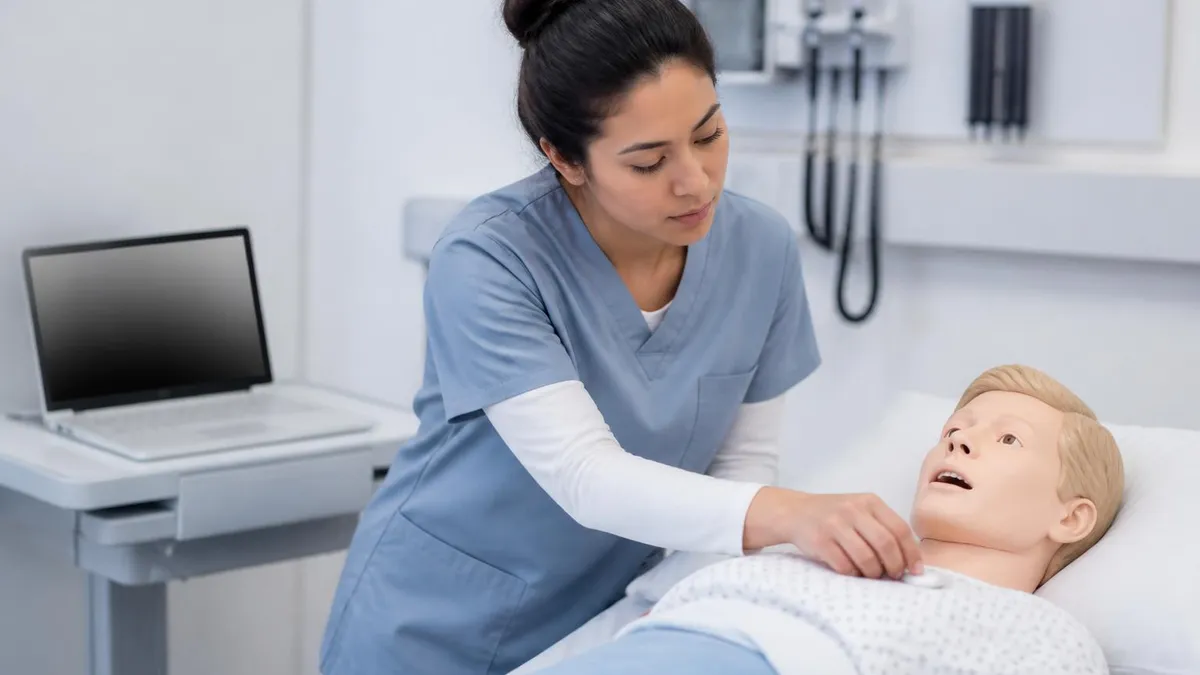
Foundations of nursing, health assessment, pharmacology I, pathophysiology, and your first clinical rotation on a med-surg floor. The hardest term for most students — you're learning a new language. Expect 20+ hours a week on flashcards and case studies before the rhythm clicks around week six.
Prerequisites — the hidden timeline you can't skip
Here's the part where "12-month accelerated program" gets honest. Before you start the actual program, you need prerequisites. Schools won't even review your application without them, and most non-nursing bachelor's degrees don't include them by default. Plan for an extra 6 to 18 months of prereq coursework if you're starting from a humanities or business background.
The standard list looks something like this — though every school tweaks it:
- Anatomy & Physiology I + II (with labs) — the heaviest hitters, usually 8 credits total
- Microbiology with lab — 4 credits
- General chemistry or intro to chemistry — 3–4 credits
- Statistics — 3 credits
- Developmental or lifespan psychology — 3 credits
- Nutrition — 2–3 credits
- English composition (often already satisfied from your first degree)
- Sociology or anthropology (sometimes)
Most schools require a minimum grade of C+ or B in each prereq, and some demand they be completed within the last five to seven years. If your old A&P from undergrad is 12 years old, you're retaking it. Community colleges are the cheapest place to knock these out — Sophia Learning, StraighterLine, and Portage Learning offer some online options for non-lab classes, though many programs require labs done in person.
Programs lose accreditation. New programs gain it. Always check the program's current status directly on the CCNE (Commission on Collegiate Nursing Education) or ACEN (Accreditation Commission for Education in Nursing) websites — not just the school's marketing pages. Also check your state board of nursing's approved-programs list. Without accreditation and state approval, you may be ineligible to sit for the NCLEX-RN, and your degree won't transfer.
Application timeline, prep, and what schools actually want
Accelerated BSN admission is competitive. Top programs admit 20–30% of applicants. Even mid-tier schools turn down half of everyone who applies. So treat this like a job application — not an afterthought.
Most programs want:
- A 3.0+ cumulative GPA from your first bachelor's (3.3+ for competitive schools, 3.5+ for the elite tier)
- Strong prereq GPA — many programs weight this more heavily than your undergrad GPA
- A passing score on the TEAS, HESI A2, or Kaplan nursing entrance exam
- Two to three professional or academic recommendations
- A personal statement that doesn't say "I want to help people"
- Healthcare experience — CNA, EMT, medical scribe, hospice volunteer, or paid caregiving. This isn't always required, but applicants who have it are far more likely to get in
Start prepping for the TEAS or HESI early. Both are timed and dense. Plenty of free resources exist, but most successful applicants also work through a paid prep platform. Knock out a few full-length practice tests and aim well above the program minimum — admissions committees use entrance-exam scores as a quick filter.
- ✓Confirm your first bachelor's transcripts are accessible and ready to send
- ✓Complete all required prerequisites with a B average or higher
- ✓Schedule and prep for the TEAS, HESI A2, or Kaplan entrance exam
- ✓Draft a personal statement that names the specific moment you chose nursing
- ✓Line up two to three strong recommendations from professors or healthcare supervisors
- ✓Log healthcare experience — CNA, EMT, scribe, hospice volunteer — and document hours
- ✓Run a CCNE/ACEN check on every program you're applying to
- ✓Verify state-board approval if you plan to test for the NCLEX in a specific state
- ✓Build a financial-aid plan including FAFSA, scholarships, and hospital tuition reimbursement
- ✓Apply to 3-5 programs to hedge against rejections
Cost and financial aid — the part nobody loves discussing
Accelerated BSN tuition lives in a wide range. Public in-state programs can run $20,000–$35,000 total. Private programs and out-of-state public seats land $40,000–$80,000+. Add prereqs, books, clinical supplies (stethoscope, scrubs, shoes, watch, drug-reference apps), background checks, drug screens, immunizations, NCLEX prep courses, and the test itself — figure another $3,000–$6,000 on top of tuition.
Funding sources you should be using:
- Federal student loans — fill out the FAFSA every year. Direct Unsubsidized loans cap at $20,500/year for graduate-equivalent ABSN students at some schools
- Nurse Faculty Loan Program, HRSA Nurse Corps — partial-to-full loan forgiveness for working in critical-shortage facilities
- Hospital tuition reimbursement and bridge-to-RN programs — sign with a hospital system before graduation and they'll pay back $10K–$30K over a 2-3 year work commitment
- Military programs — Army/Navy/Air Force ROTC scholarships, the Nurse Candidate Program, and VA benefits
- State workforce grants — many states fund nursing students directly through workforce-development boards
- Private scholarships — AACN, Tylenol Future Care, NSNA, Foundation of the National Student Nurses' Association, plus a dozen niche scholarships for second-degree students specifically
Daily life inside an accelerated BSN — the unfiltered version
Plan on 50 to 70 hours a week. Total. Lectures, reading, simulation prep, group work, clinicals, exam prep, and the slow grind of building care plans and reflection papers nobody warns you about.
Working a full-time job during an ABSN is — and we'll be blunt — almost impossible. Some students manage 10–15 hours a week of part-time work. A few iron-willed humans pull off more. Most burn out and have to walk away from one or the other. Programs aren't shy about saying this in their welcome packets, and they mean it.
The first 4–6 weeks are the worst. You're learning to read scientific writing again, building flashcards, drowning in pharm acronyms, and trying to pass your first med-surg exam. Then something clicks. By month three or four, the rhythm is set and you start to see the finish line. By the time you hit your final preceptorship, you'll feel like a baby nurse — exhausted but functional.
- +Earn an RN-eligible degree in 12-18 months instead of four years
- +Online didactic schedule lets you study from anywhere with reliable internet
- +Hospitals actively recruit second-degree career switchers and offer sign-on bonuses
- +Existing bachelor's credits transfer, so you skip general-education courses
- +Career path opens doors to MSN, NP, CRNA, informatics, and leadership tracks
- +First-time NCLEX pass rates for ABSN grads typically beat the national average
- −Workload of 50-70 hours per week makes full-time employment nearly impossible
- −In-person clinicals and skills labs are non-negotiable — pure online isn't an option
- −Total cost can hit $80,000+ at private programs once supplies and exams are added
- −Prerequisites add 6-18 months before the program even starts for most applicants
- −Burnout and dropout rates are higher than traditional four-year tracks
- −Limited specialty clinical exposure compared to longer, slower programs
Pros and Cons at a Glance
| Pros | Cons |
|---|---|
| Online didactic schedule lets you study from anywhere with reliable internet | In-person clinicals and skills labs are non-negotiable — pure online isn't an option |
| Hospitals actively recruit second-degree career switchers and offer sign-on bonuses | Burnout and dropout rates are higher than traditional four-year tracks |
| Existing bachelor's credits transfer, so you skip general-education courses | Limited specialty clinical exposure compared to longer, slower programs |
Common pitfalls and the students who flame out
Most ABSN dropouts share the same handful of mistakes. We're not naming names but you'll recognize them.
- Underestimating the prereq grind and starting the program with a weak A&P or pharm foundation
- Trying to work 30+ hours a week through the program
- Skipping clinical-skills practice because "I'll figure it out on the floor"
- Ignoring mental health — these programs cause anxiety spikes, sleep loss, and relationship strain. Have a therapist on speed dial before week one
- Treating online lectures like background noise — you can't fake clinical reasoning on exam day
- Choosing a program based purely on cost or marketing instead of NCLEX pass rate, accreditation, and clinical-placement support
The students who finish strong tend to do three things: build a study group within the first two weeks, lock in a sustainable sleep schedule, and ruthlessly cut social commitments for the duration of the program. It's a year. You can rebuild your social life on the other side.
After graduation — jobs, salary, and what comes next
Brand-new BSN grads start somewhere between $65,000 and $95,000 depending on city, specialty, and shift differential. California, Hawaii, Massachusetts, Oregon, and metro New York pay highest. Rural Midwest and the Deep South pay lowest but have a much cheaper cost of living, so net is closer than headline numbers suggest.
Most ABSN grads start on a med-surg, ICU step-down, or emergency-department floor. Some go straight into ICU through nurse-residency programs. Specialties like L&D, NICU, and OR usually want 1–2 years of bedside experience first, though residency tracks for new grads exist if you ask around.
Long-term, the BSN is a launchpad — not a ceiling. Within 3–5 years you can pursue a Master of Science in Nursing (MSN), Nurse Practitioner (NP) tracks, CRNA school (the highest-paying nursing route, often six figures plus), nurse-educator paths, informatics, public-health leadership, or healthcare administration. You're not stuck at the bedside unless you want to be.
NCLEX-RN — the final boss
Finishing the program doesn't make you a nurse. Passing the NCLEX-RN does. The exam is computer-adaptive, between 75 and 150 questions, and tests clinical judgment using the NCSBN clinical judgment measurement model — Next Gen NCLEX format went live in April 2023 and changed how case studies and bowtie items work.
National first-time pass rates for ABSN grads sit comfortably above the traditional-BSN average — usually 88–94% depending on the program. The schools listed earlier publish their pass rates publicly. You should look at three years of data, not just one, before you enroll. If a program's pass rate is below 85% two years running, ask hard questions.
Most graduates spend 4–8 weeks after graduation studying full-time for the NCLEX. Use UWorld, Archer Review, Kaplan, Mark Klimek videos, or a combination. Take it within 45 days of graduation if you can — the content is freshest then.
Choosing the right accelerated BSN for you
Don't pick the cheapest. Don't pick the most prestigious. Pick the one that actually fits your life and gets you licensed.
Run every program you're considering through this filter:
- CCNE or ACEN accredited — non-negotiable
- Approved by your state board of nursing
- NCLEX pass rate above 85% for the past three years
- Clear, honest answer about clinical-placement support (do they place you, or do you place yourself?)
- Transparent total cost — not "starting at $X" marketing
- Cohort size that doesn't drown out faculty access (most strong programs cap cohorts at 30–60)
- A start date and pace that matches the life you'll actually be living for the next 12–18 months
Apply to three to five programs. Don't bet everything on one acceptance — these are competitive and rejection isn't personal. Once you have offers, call current students (most programs will connect you on request) and ask the questions admissions reps won't fully answer. You'll learn more in one honest 20-minute phone call than from ten campus tours.
What current students wish they'd known sooner
Three patterns show up over and over in surveys of recent ABSN graduates. First, the cohort matters as much as the curriculum. The peers you study with become your support system, your study group, and — five years later — your professional network. Visit campus or attend a live virtual open house before you commit. The energy in the room (or the Zoom) is a real signal.
Second, location-independent programs sound great until clinical-placement season arrives. If your school is in Boston and you live in Tucson, who is calling Tucson hospitals to set up your med-surg rotation? Some online ABSN programs handle this brilliantly. Others quietly hand you a list of facilities and a clipboard and wish you luck. Ask the question before deposit day.
Third, support services matter more than rankings. Tutoring, mental-health resources, NCLEX prep included in tuition, and a dedicated student-success coach can be the difference between graduating on time and pushing your start date back twice. Look at what's bundled in — not just what's on the brochure.
Twelve to eighteen months from now, you can be sitting for the NCLEX. The path is real. It's hard. But thousands of second-degree students walk it every single year, and the profession is waiting for you on the other side.
BSN Questions and Answers
About the Author

Registered Nurse & Healthcare Educator
Johns Hopkins University School of NursingDr. Sarah Mitchell is a board-certified registered nurse with over 15 years of clinical and academic experience. She completed her PhD in Nursing Science at Johns Hopkins University and has taught NCLEX preparation and clinical skills courses for nursing students across the United States. Her research focuses on evidence-based exam preparation strategies for healthcare certification candidates.