
What Does NRP Stand For? Understanding the Neonatal Resuscitation Program
What does NRP stand for? Learn what the Neonatal Resuscitation Program is, 🏆 who needs it, and how to prepare for NRP certification in 2026 September.

If you have ever seen the abbreviation on a hospital badge requirement or a job posting and wondered what does NRP stand for, the answer is the Neonatal Resuscitation Program. NRP is a standardized, evidence-based training curriculum jointly developed by the American Academy of Pediatrics (AAP) and the American Heart Association (AHA) to equip healthcare providers with the skills they need to stabilize and resuscitate newborns at the moment of birth. Every year, roughly 10 percent of newborns require some form of assistance breathing after delivery, making NRP one of the most critical continuing education programs in perinatal medicine.
The NRP curriculum has been updated through seven editions since its inception in 1987, with the most recent iteration placing heavy emphasis on simulation-based learning, performance-based testing, and real-time clinical judgment. Rather than relying solely on didactic lectures, providers now complete online learning modules before attending a hands-on simulation session where they demonstrate competency in airway management, chest compressions, medication administration, and team communication. This blended format ensures that knowledge transfers directly to bedside performance when seconds matter most.
Healthcare professionals who deliver or stabilize newborns in any setting are expected to hold a current NRP provider credential. This includes labor and delivery nurses, neonatologists, neonatal nurse practitioners, respiratory therapists, pediatricians, family medicine physicians, certified nurse midwives, and emergency department staff who may encounter unexpected deliveries. Some facilities also require NRP certification for transport team members, surgical staff in operating rooms where cesarean deliveries occur, and paramedics who work in regions with long transport times to tertiary care centers.
NRP certification is not a one-time achievement. The AAP recommends renewal every two years to ensure providers remain current with evolving resuscitation guidelines based on the latest International Liaison Committee on Resuscitation (ILCOR) evidence reviews. Facilities accredited by The Joint Commission, Magnet-designated nursing programs, and state-licensed birthing centers frequently require proof of active NRP certification as a condition of employment and ongoing clinical privileges. Lapses in certification can affect staffing ratios and place facilities at regulatory risk during accreditation surveys.
Understanding the full scope of what NRP entails helps providers approach their certification preparation with the right mindset. The program is not simply a checklist of procedures; it is a systematic framework built around the NRP Algorithm, which guides providers through a logical decision tree starting with initial assessment and progressing through escalating interventions when a newborn does not respond adequately to earlier steps. Mastery of this algorithm — including knowing when to initiate positive-pressure ventilation, when to call for additional help, and when to transition to cardiac compression — is the core competency the program evaluates.
For nurses and physicians entering neonatal care for the first time, NRP can feel overwhelming because it integrates anatomy, pharmacology, teamwork principles, and hands-on procedural skills into a compressed certification process. However, systematic preparation using practice tests, simulation drills, and careful review of the NRP Textbook and eSim modules significantly improves both first-time pass rates and long-term retention. Providers who invest time in structured study consistently report greater confidence during real deliveries, particularly in high-acuity situations involving preterm infants, meconium-stained amniotic fluid, or congenital anomalies.
This article provides a comprehensive career and credential overview of NRP — what it stands for, who needs it, how the program is structured, what the certification process involves, and how to prepare effectively for the performance-based evaluation. Whether you are a student nurse about to take your first NRP course, an experienced clinician preparing for renewal, or a program coordinator evaluating training logistics, the information below will give you a thorough understanding of one of the most important certification programs in newborn care.
NRP Certification by the Numbers

How the NRP Program Is Structured
Before attending any in-person session, providers complete self-paced online modules covering the NRP Algorithm, airway physiology, ventilation techniques, medications, and ethical considerations. Learners must pass online assessments with a score of 80 percent or higher to qualify for the simulation day.
The simulation component takes place at an AAP-authorized NRP training center. Providers work through realistic newborn resuscitation scenarios using high-fidelity mannequins, demonstrating skills such as bag-mask ventilation, endotracheal intubation, laryngeal mask placement, and umbilical catheter insertion.
Skills stations allow providers to practice individual technical tasks — including T-piece resuscitator use, chest compression coordination, and epinephrine administration — under instructor observation before attempting full-scenario simulations. Competency must be verified at each station.
A structured debriefing session follows each simulation scenario. Instructors use a plus/delta format to highlight effective behaviors and identify areas for improvement. Research shows that quality debriefing is the single most powerful driver of skill retention after simulation training.
Successful NRP completion requires demonstrating technical and behavioral competencies rather than simply passing a written exam. Providers must show they can manage a full resuscitation sequence, communicate effectively with team members, and make correct decisions at each algorithm decision point.
Understanding who needs NRP certification is essential for healthcare administrators, clinical educators, and individual providers planning their professional development. The AAP's position is clear: any healthcare provider who may be called upon to resuscitate or stabilize a newborn in the delivery room, operating room, emergency department, or neonatal intensive care unit should hold a valid NRP provider credential. This broad mandate reflects the reality that unexpected deliveries and neonatal deterioration can occur in settings far removed from a dedicated neonatal unit.
In labor and delivery environments, NRP certification is virtually universal. Registered nurses assigned to the obstetric unit, certified registered nurse anesthetists managing epidural analgesia and airway support, obstetricians and maternal-fetal medicine specialists, and midwives who attend deliveries all require current NRP provider status. Many Level II and Level III nurseries further require that charge nurses and advanced practice nurses obtain NRP instructor certification so they can conduct in-house refresher training and maintain institutional competency records.
Pediatricians and family medicine physicians who attend deliveries in community hospitals often have NRP as a condition of medical staff privileges. Even if a given physician has not personally performed an intubation in years, hospital credentialing committees expect providers who are listed on the delivery room call schedule to demonstrate current NRP competency. Failure to maintain certification can result in restrictions on delivery room attendance and, in some states, affects malpractice insurance coverage for perinatal events.
Respiratory therapists represent another large segment of NRP-certified providers. In most hospital systems, respiratory therapy staff are primary responders for neonatal resuscitation events, responsible for establishing and managing the airway, operating ventilators and T-piece resuscitators, and confirming correct endotracheal tube placement via waveform capnography. Many respiratory therapy programs now incorporate NRP content directly into their entry-level curriculum, meaning new graduates arrive at the bedside with foundational NRP knowledge already in place before their first formal certification course.
Emergency medicine providers occupy a unique position in the NRP ecosystem. While emergency departments are not designed for obstetric deliveries, they do receive patients in active labor who did not make it to the birthing unit in time. Emergency physicians, emergency nurses, and paramedics working in advanced life support settings may encounter a precipitous delivery with no neonatology backup available. NRP certification gives these providers a structured protocol to follow and the hands-on skills to keep a compromised neonate alive until a specialized team arrives or transport is arranged.
Transport medicine is another specialty area where NRP certification carries particular weight. Neonatal transport nurses and paramedics who move critically ill infants between facilities must be capable of managing ongoing resuscitation in the confined space of a transport isolette, often without immediate physician backup. Their NRP training must therefore go beyond basic provider competency to include advanced airway management, interpretation of blood gas values in the context of resuscitation targets, and independent decision-making skills that are tested during specialized transport simulations.
Even providers who work primarily with older pediatric populations may require NRP under certain facility policies. Pediatric intensive care units that occasionally receive newborn transfers, surgical services that perform procedures on neonates under three months of age, and cardiac catheterization labs where congenital heart disease patients are treated sometimes mandate NRP for all staff as a risk management measure. In these contexts, NRP functions less as a primary competency and more as a safety net skill that ensures every provider on a given unit can respond effectively if a neonate deteriorates unexpectedly.
NRP Core Topic Areas Every Provider Must Master
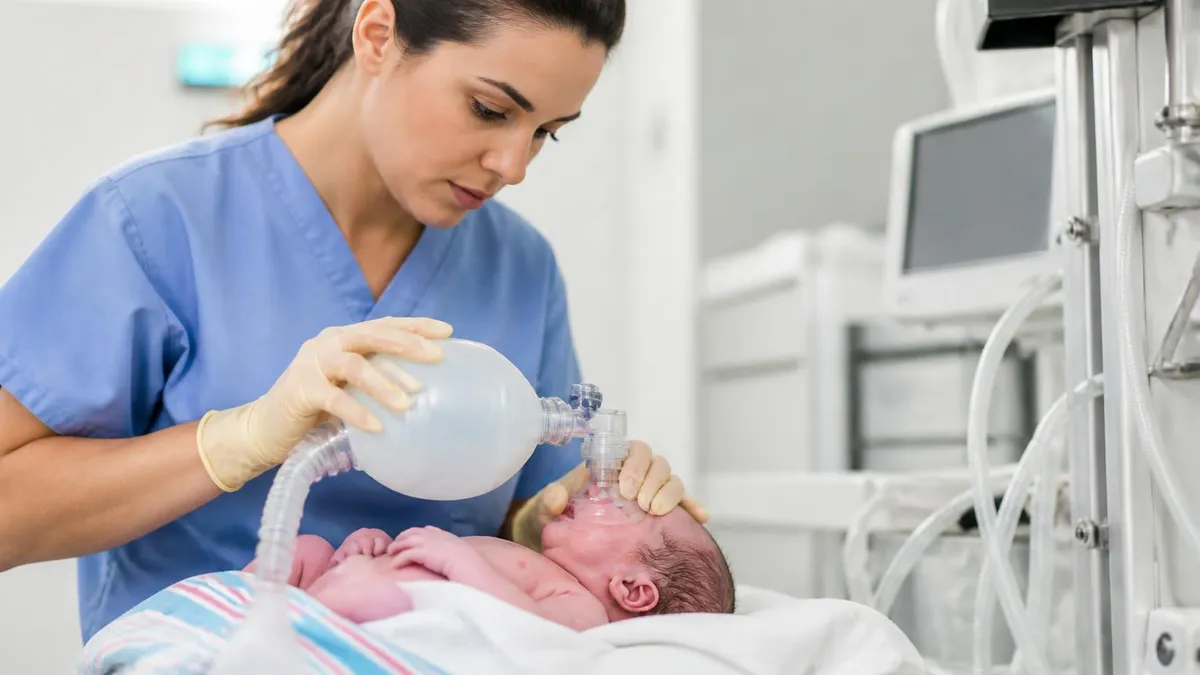
Positive-pressure ventilation is the cornerstone of neonatal resuscitation, and NRP dedicates substantial curriculum time to ensuring providers can deliver effective breaths using a flow-inflating bag, self-inflating bag, or T-piece resuscitator. Correct mask seal, appropriate ventilation rate of 40 to 60 breaths per minute, and recognition of chest rise are all evaluated during the simulation. Providers must also demonstrate the MR SOPA corrective ventilation steps — Mask adjustment, Reposition airway, Suction mouth and nose, Open mouth, Pressure increase, and Airway alternative — when initial ventilation fails to produce adequate chest movement.
Advanced airway skills, including endotracheal intubation and laryngeal mask airway placement, are tested at skills stations during the simulation day. While not every provider needs to achieve intubation competency, all participants must understand the indications for each airway device, recognize the signs of correct placement, and know when to call for a team member with advanced airway skills. The 7th edition of NRP places increased emphasis on laryngeal mask airways as an alternative to intubation when endotracheal tube placement is not immediately successful.

Advantages and Challenges of NRP Certification
- +Provides a standardized, evidence-based framework for newborn resuscitation used in every U.S. hospital
- +Improves clinical confidence and reduces hesitation during high-stress delivery room emergencies
- +Blended online plus simulation format allows flexible scheduling around clinical shift work
- +Satisfies Joint Commission, Magnet, and state licensing requirements for perinatal staff
- +Regular two-year renewal ensures providers stay current with the latest ILCOR resuscitation science
- +Team-based simulation components strengthen interprofessional communication and role clarity in the delivery room
- −Time commitment for online modules plus simulation day can be difficult to schedule for busy clinicians
- −Simulation day costs vary widely by training center, ranging from $75 to over $300 per provider
- −High-stakes performance-based testing creates anxiety for some learners, particularly those uncomfortable with simulation
- −Skills can deteriorate quickly without regular practice, meaning biennial renewal may not be sufficient for low-volume providers
- −Not all NRP instructors have equivalent simulation facilitation skills, leading to variable training quality across institutions
- −Online module content is static between editions, and providers who completed modules near a guideline update may receive outdated content
NRP Certification Preparation Checklist
- ✓Purchase or access the current 7th Edition NRP Textbook through the AAP online store or your institution's library.
- ✓Register for online NRP eLearning modules through the AAP NRP Learning Management System before your scheduled simulation date.
- ✓Complete all online modules and pass the knowledge assessments with a minimum score of 80 percent.
- ✓Review the complete NRP Algorithm flowchart and practice reciting each decision branch from memory.
- ✓Study epinephrine dosing for neonatal resuscitation, including route of administration and concentration used.
- ✓Practice the MR SOPA ventilation corrective steps in sequence until you can recall them without prompting.
- ✓Schedule a practice simulation or skills drill with a colleague before your official course date.
- ✓Review ethical considerations content, including gestational age thresholds for resuscitation and discontinuation criteria.
- ✓Bring your completed online module certificate to the simulation day as proof of eLearning completion.
- ✓After certification, schedule your next renewal date two years out and set a calendar reminder six months in advance.
Ventilation Before Compression — The Most Tested NRP Decision Point
The single most commonly failed NRP simulation scenario involves initiating chest compressions before establishing effective ventilation. NRP protocol requires 30 seconds of adequate positive-pressure ventilation before compressions begin. Candidates who skip or rush through ventilation assessment and move directly to compressions will not pass the performance evaluation. Drill this sequence until it is automatic: assess, ventilate, evaluate heart rate, then — and only then — compress if HR remains below 60 bpm.
The roles and responsibilities of NRP-certified providers extend well beyond the technical procedures listed in the algorithm. Effective neonatal resuscitation is fundamentally a team sport, and the behavioral skills component of NRP — sometimes called the Neonatal Resuscitation Program's Team Communication and Leadership curriculum — addresses how providers assign roles, communicate critical information, call for help, and share mental models during a rapidly evolving resuscitation scenario. These skills are just as rigorously evaluated during simulation as airway management or medication administration.
In a well-functioning NRP team, one provider takes the role of team leader and maintains situational awareness across the entire resuscitation, directing interventions without becoming fixated on a single procedure. Other team members perform specific tasks — one manages the airway, one monitors heart rate and pulse oximetry, one prepares medications and documents the resuscitation timeline. Clear, closed-loop communication ensures that every directive is heard, acknowledged, and confirmed. For example, when the team leader calls for epinephrine, the medication nurse reads back the dose, the route, and the concentration before administration to prevent errors under pressure.
The team leader role is frequently rotated among experienced staff in teaching institutions, and NRP simulation scenarios are deliberately designed to create situations where communication breaks down so that providers can practice recovering team function in a controlled environment. Common scenarios include situations where a team member performs an incorrect action without being corrected, where critical information such as the gestational age of the infant is not communicated before delivery, or where a procedure takes longer than expected and the team must adapt the resuscitation plan in real time without losing track of elapsed time or medication intervals.
Documentation is another responsibility that NRP-trained providers must take seriously. During an actual resuscitation, a designated scribe records the timeline of interventions, the heart rate at each evaluation point, the dose and route of medications given, and the infant's response to each intervention. This documentation is not merely a regulatory requirement — it is a clinical safety tool that allows the team to track intervals between epinephrine doses, identify when the thirty-second ventilation window has elapsed, and reconstruct the resuscitation sequence accurately for debriefing, quality improvement, and medicolegal purposes.
For advanced practice nurses and physicians who serve as NRP instructors, the responsibilities extend to designing and facilitating simulation scenarios that accurately reflect the patient population and clinical environment of their institution. A Level IV NICU at a major academic medical center will run very different scenarios than a community hospital with a Level II special care nursery, and instructors must tailor their simulations accordingly. The AAP provides an instructor course that covers adult learning theory, debriefing methodology, scenario design, and performance assessment, culminating in an instructor credential that must also be renewed periodically.
Quality improvement is increasingly integrated into NRP at the institutional level. Many hospitals use video recording of actual deliveries — with appropriate consent and privacy protections — to conduct systematic review of resuscitation performance against NRP benchmarks. Teams that regularly review their own performance data identify recurring gaps such as prolonged delays in initiating positive-pressure ventilation, inconsistent use of pulse oximetry, or failure to establish umbilical access within the recommended time window. These data-driven insights then feed back into the simulation training curriculum, creating a continuous improvement cycle that progressively raises the standard of neonatal care.
Mentorship plays a vital role in building NRP competency among new providers. Experienced nurses and physicians who model calm, systematic behavior during resuscitations provide an invaluable learning opportunity for students and new graduates. The NRP curriculum explicitly encourages institutions to pair novice providers with experienced mentors during the first several deliveries after initial certification, ensuring that newly credentialed staff can integrate classroom knowledge with the pace and complexity of actual clinical events before functioning fully independently in the delivery room.

NRP certifications that lapse — even by a few days — can trigger suspension of delivery room clinical privileges at Joint Commission-accredited facilities. Do not wait until the expiration date to register for renewal. Schedule your simulation day at least 60 days before your certification expires to allow time for rescheduling if the course is cancelled or if you need to repeat a skills station. Your employer's credentialing office tracks these dates independently and may restrict your assignment before you receive a personal reminder.
Preparing for NRP success requires a structured approach that addresses both knowledge acquisition and procedural skill development simultaneously. Unlike written board exams where reading and memorization alone can produce a passing score, NRP's performance-based evaluation demands that providers demonstrate correct technique under realistic time pressure with an evaluator actively watching. This means that passive review of the textbook, while necessary, is not sufficient — providers must translate their knowledge into smooth, confident physical actions that can be replicated reliably during a simulation scenario.
The most effective preparation strategy begins four to six weeks before the simulation date and follows a progressive learning model. In the first two weeks, focus on completing the online eLearning modules carefully rather than rushing through them to hit the minimum assessment scores. Read the supporting content thoroughly, watch the embedded video demonstrations multiple times, and use the knowledge checks as formative assessments to identify gaps before they become simulation-day surprises. The algorithm flowcharts within the online modules should be printed or saved and reviewed daily until the decision tree is fully internalized.
In weeks three and four, shift emphasis toward hands-on practice. If your institution has a simulation lab, schedule practice time with a neonatal mannequin and a bag-mask device to rehearse your ventilation technique, mask seal, and assessment of chest rise. Practice the two-thumb chest compression technique on a mannequin torso, focusing on correct hand position and compression depth. Rehearse the sequence of steps you will follow from the moment the infant is placed on the warmer — dry, stimulate, position, assess — so that the opening moments of a resuscitation scenario feel natural rather than hurried.
Practice tests are an indispensable preparation tool for the knowledge component of NRP. Online NRP practice questions that mirror the content domains of the eLearning assessments — airway management, chest compressions, cardiac medications, special circumstances, and ethical considerations — allow providers to identify weak areas and focus their remaining study time efficiently.
Candidates who complete 200 or more practice questions before their simulation day consistently report higher confidence and better performance on the actual assessment compared to those who rely solely on textbook reading. Use practice tests not just to check answers but to understand the reasoning behind each correct response, since NRP questions often test the application of principles rather than simple recall of facts.
Special circumstances chapters in the NRP curriculum deserve dedicated study time because they cover scenarios that occur less frequently but carry disproportionately high risk — infants with meconium-stained amniotic fluid, preterm infants less than 35 weeks gestation, infants with known or suspected congenital diaphragmatic hernia, hydrops fetalis, and resuscitation following maternal anesthesia complications. These topics appear regularly in NRP simulation scenarios precisely because they represent high-acuity situations where provider hesitation or protocol confusion can have catastrophic consequences. Reviewing these chapters multiple times and discussing them with experienced colleagues or preceptors builds the clinical reasoning framework needed to manage them confidently.
On the day of your simulation, arrive early, bring your online module completion certificate, and mentally rehearse the algorithm one more time before the session begins. During the simulation itself, narrate your thinking aloud — state the heart rate assessment, announce what intervention you are initiating, and confirm team role assignments verbally. NRP instructors are not trying to trick you; they are evaluating whether you follow the algorithm systematically and communicate clearly. Providers who speak their decision-making process aloud make it easy for instructors to award credit for correct reasoning even if a technical step is slightly imperfect.
After successful certification, the learning does not stop. Attend every in-situ simulation drill your unit conducts, participate actively in post-resuscitation debriefings after actual deliveries, and review the NRP newsletter updates that the AAP distributes periodically between textbook editions. Providers who engage with NRP as an ongoing professional practice rather than a biennial box to check maintain higher skill levels, respond more effectively during actual emergencies, and consistently model the standard of care that protects newborns at their most vulnerable moment.
The practical realities of NRP preparation involve navigating several logistical challenges that providers frequently underestimate. One of the most common obstacles is simply finding an available simulation date that fits a rotating clinical schedule. NRP training centers at large academic hospitals may run courses weekly, but community hospitals and outpatient birthing centers may offer only monthly or quarterly simulation days. Providers who wait until the last minute to schedule renewal often find themselves scrambling to find an available seat, potentially traveling to an unfamiliar training center or taking an online-only course that may not satisfy their employer's hands-on competency requirement.
Cost is another practical consideration that varies significantly by training model. Some large health systems cover all NRP training costs as a mandatory employment requirement, including textbook purchase, eLearning module fees, and simulation day registration. Others require providers to self-fund initial certification or pay a co-pay for renewal.
The AAP NRP eLearning modules cost approximately $30 to $75 depending on provider type, and simulation day registration at independent training centers typically ranges from $100 to $250. For nurses and allied health professionals who hold multiple certifications — BLS, ACLS, PALS, NRP, and specialty credentials — the cumulative cost of maintaining active status across all programs can represent a significant annual professional expense.
International providers seeking NRP certification for U.S. employment should be aware that the program is specifically designed around AAP and AHA guidelines, which may differ from the resuscitation protocols taught in other countries. The WHO Helping Babies Breathe program, for example, uses a simplified algorithm designed for low-resource settings that shares some principles with NRP but differs in important procedural and pharmacological details. Healthcare professionals trained under international protocols will need to study the U.S. NRP curriculum carefully and should not assume that their existing competencies translate directly without review of the specific AAP guidelines.
For nursing students and medical residents approaching NRP certification for the first time, the transition from classroom knowledge to simulation performance is one of the most instructive professional experiences of early training. Simulation creates a unique learning environment where mistakes have no consequences for actual patients but still generate the physiological stress response — elevated heart rate, tunnel vision, difficulty recalling memorized sequences — that accompanies real emergencies.
Learning to manage that stress response, maintain algorithmic thinking under pressure, and communicate clearly with a team while manually performing procedures simultaneously builds a neural pathway that carries directly to the actual delivery room. This is why simulation-based training consistently outperforms lecture-only formats in skill retention studies.
Technology is also reshaping how NRP training is delivered and assessed. Some institutions have moved to fully integrated simulation environments that use electronic medical record interfaces, realistic monitoring displays, and manikins with sophisticated physiological responses to track provider performance objectively. Video review systems allow instructors to replay resuscitation sequences frame by frame, measure ventilation rate against the 40 to 60 breath per minute target with precision, and document the exact interval between the initiation of compressions and the first dose of epinephrine. These data points support both individual performance feedback and systemic quality improvement analysis at the program level.
The growing use of debriefing software and structured evaluation tools has also made NRP instructor training more standardized. The AAP NRP Instructor Essentials curriculum provides a common language for debriefing across institutions, using frameworks such as the diamond debriefing model and advocacy-inquiry questioning to help providers understand not just what they did incorrectly but why the correct approach is physiologically and algorithmically sound. Instructors who complete this training become more effective facilitators, which in turn improves the quality of simulation learning for every provider who passes through their program.
Looking ahead, the neonatal resuscitation landscape will continue to evolve as new evidence from multicenter trials, registry data, and international ILCOR reviews informs future editions of the NRP curriculum. Emerging topics such as physiological cord clamping, the use of respiratory function monitors to guide ventilation adjustments in real time, and targeted temperature management in infants with hypoxic-ischemic encephalopathy are already influencing clinical practice and will likely be incorporated more formally into future NRP editions.
Providers who maintain active engagement with the literature and participate in ongoing simulation training will be best positioned to adapt to these changes and continue delivering the highest standard of newborn resuscitation care.
NRP Questions and Answers




About the Author

Educational Psychologist & Academic Test Preparation Expert
Columbia University Teachers CollegeDr. Lisa Patel holds a Doctorate in Education from Columbia University Teachers College and has spent 17 years researching standardized test design and academic assessment. She has developed preparation programs for SAT, ACT, GRE, LSAT, UCAT, and numerous professional licensing exams, helping students of all backgrounds achieve their target scores.