
National Police Officer Selection Test (NPOST): Complete Guide to Acing Your Police Test in 2026 October
💡 Master the national police officer selection test with our complete NPOST police test guide. Free practice questions, study tips, and scoring breakdowns.

The police test is the single most important hurdle standing between aspiring officers and their badge, and for thousands of recruits across the United States, that test is the National Police Officer Selection Test, commonly abbreviated as NPOST or POST. Administered by Stanard & Associates, this standardized exam evaluates the foundational reading, writing, math, and reasoning skills every entry-level officer needs to succeed in the academy and on patrol. Departments from coast to coast rely on it because it predicts who can handle reports, statutes, and citizen interactions under pressure.
Unlike a high school placement quiz or a basic civil service exam, the national police officer selection test is engineered specifically around tasks officers perform daily. Expect grammar questions tied to incident report writing, math problems involving distances and time, and reading passages drawn from policy manuals and statutes. Candidates who underestimate it routinely fail, even when they have college degrees, because the format rewards procedural reading speed more than raw intelligence.
The current 2026 NPOST consists of four timed sections: Mathematics, Reading Comprehension, Grammar, and Incident Report Writing. Most departments require a passing score of 70 percent or higher, although competitive agencies in cities like Dallas, Phoenix, and Atlanta routinely set the cutoff at 80 percent or above. Your composite score frequently determines your rank-order on the eligibility list, which directly impacts whether you receive an interview within weeks or wait months for another testing cycle.
Test sites are typically hosted at police academies, community colleges, or department headquarters. You will be supervised by a proctor, given strict time limits per section, and prohibited from using calculators, dictionaries, or scratch paper beyond what is provided. The atmosphere mirrors a real promotional exam, which catches first-time candidates off guard. Many recruits report that the time pressure, not the content difficulty, is what cost them their seat in the academy.
What makes the police test particularly stressful is its irreversibility for many candidates. Most departments allow you to retake the exam only once or twice within a 12-month window, and some force you to wait 90 to 180 days between attempts. This means preparation is not optional. A structured study plan that mirrors the actual exam blueprint can lift scores by 15 to 25 points, transforming a borderline candidate into a top-of-list applicant.
Throughout this guide, we walk through every section of the NPOST in detail, share proven study techniques, break down scoring expectations for top departments, and link to free practice quizzes calibrated to the actual exam. Whether you are a first-time applicant testing in two weeks or a returning candidate hoping to improve your score, this article gives you the framework, drills, and confidence to walk into the testing room ready to dominate every section.
By the end of this guide you will know exactly what to study, how to pace yourself, where most candidates lose points, and which free resources mirror the actual exam most accurately. Bookmark this page, work through every practice link, and treat the next two to eight weeks as the most important preparation of your law enforcement career so far.
The NPOST Police Test by the Numbers
Key Facts at a Glance
| Item | Value | Details |
|---|---|---|
| Total Exam Time | 75 min | Four timed sections |
| Total Questions | 108 | Plus 1 writing sample |
| Standard Passing Score | 70% | Higher in competitive cities |

NPOST Exam Format at a Glance
| Section | Questions | Time | Weight | Notes |
|---|---|---|---|---|
| Mathematics | 20 | 15 min | 25% | Basic operations, fractions, percentages, word problems |
| Reading Comprehension | 25 | 25 min | 25% | Police-related passages |
| Grammar | 23 | 15 min | 25% | Mechanics, usage, and clarity |
| Incident Report Writing | 20 | 20 min | 25% | Identify errors in narratives |
| Total | 108 | 75 minutes | 100% |
The national police officer selection test post covers four distinct skill areas, and understanding what is actually tested in each section is the foundation of any serious prep plan. The mathematics section focuses on arithmetic operations you would actually use as a patrol officer: calculating distance and speed, converting between metric and standard measurements, computing the value of recovered property, and performing percentage calculations for blood alcohol estimates and field sobriety contexts. Calculators are strictly prohibited, so mental math fluency is essential.
Reading comprehension passages are pulled from materials officers encounter every day. You might read a paragraph from a department policy on use-of-force, a section of a state statute defining burglary, or an excerpt from a roll-call briefing. Questions test literal comprehension, inferential reasoning, and the ability to apply information to new scenarios. The passages are dense, the vocabulary is technical, and the questions often hinge on a single qualifier word like only, except, or unless.
The grammar section is where candidates with strong verbal SAT scores often stumble, because the NPOST does not test fancy literary devices. Instead, it focuses on the specific mechanical errors that plague police reports: subject-verb agreement across long clauses, pronoun reference confusion, misplaced modifiers, run-on sentences, and incorrect verb tense in narrative writing. The fixes are not always grammatically the most elegant choice; they are the choice that produces the clearest, most professionally written report.
Incident report writing is arguably the most unique section. You will read a short narrative, often three to five paragraphs long, that describes an event such as a traffic stop, a domestic disturbance, or a shoplifting call. Then you must identify factual contradictions, missing information, grammatical errors, and clarity problems within the narrative. The skill being tested is editing under pressure, which is exactly what real officers do when supervisors return draft reports for revision.
Importantly, the NPOST does not test legal knowledge, criminal procedure, firearms safety, or physical fitness directly. Those competencies are evaluated during the academy and through separate physical agility tests. The police test is a pure cognitive screening tool designed to ensure recruits can read at roughly a 12th-grade level, perform basic math without aids, and write at a level that will hold up in court documents and supervisor review.
Many candidates make the mistake of studying generic civil service prep books that lump dozens of unrelated exams together. The NPOST is its own beast, and using non-targeted materials means you waste time on map-reading, spatial reasoning, and personality inventory questions that never appear on this test. Targeted prep yields dramatically better results because every hour you study reinforces a skill you will actually be tested on next month.
One final feature worth knowing: the NPOST is administered in a strict no-talk, no-electronics environment. Phones are collected at check-in, smartwatches are banned, and bathroom breaks during timed sections are typically prohibited. The proctor reads scripted instructions and starts each section on the clock. Treat your practice sessions the same way at home, and exam day will feel like just another rehearsal.
NPOST Practice Test Questions
Prepare for the NPOST - Police Test exam with our free practice test modules. Each quiz covers key topics to help you pass on your first try.
NPOST Police Math
NPOST Exam Questions covering Police Math. Master NPOST Test concepts for certification prep.
NPOST Police Reading & Grammar
Free NPOST Practice Test featuring Police Reading & Grammar. Improve your NPOST Exam score with mock test prep.
NPOST Police Test Law and Legal Concepts
NPOST Mock Exam on NPOST Police Test Law and Legal Concepts. NPOST Study Guide questions to pass on your first try.
NPOST Police Test Observation and Memory S...
NPOST Test Prep for NPOST Police Test Observation and Memory Skills. Practice NPOST Quiz questions and boost your score.
NPOST Police Test Grammar and Punctuation
NPOST Mock Test covering Police Test Grammar and Punctuation. Online NPOST Test practice with instant feedback.
NPOST Police Test Grammar and Spelling
Free NPOST Quiz on Police Test Grammar and Spelling. NPOST Exam prep questions with detailed explanations.
NPOST Police Test Incident Report Writing
NPOST Practice Questions for Police Test Incident Report Writing. Build confidence for your NPOST certification exam.
NPOST Police Test Logical Reasoning and Ju...
NPOST Test Online for Police Test Logical Reasoning and Judgment. Free practice with instant results and feedback.
NPOST Police Test Mathematics and Arithmetic
NPOST Study Material on Police Test Mathematics and Arithmetic. Prepare effectively with real exam-style questions.
NPOST Police Test Police Arithmetic Skills
Free NPOST Test covering Police Test Police Arithmetic Skills. Practice and track your NPOST exam readiness.
NPOST Police Test Police Report Writing
NPOST Exam Questions covering Police Test Police Report Writing. Master NPOST Test concepts for certification prep.
NPOST Police Test Police Vocabulary and Te...
Free NPOST Practice Test featuring Police Test Police Vocabulary and Terminology. Improve your NPOST Exam score with mock test prep.
NPOST Police Test Problem-Solving Scenarios
NPOST Mock Exam on Police Test Problem-Solving Scenarios. NPOST Study Guide questions to pass on your first try.
The National Police Officer Selection Test Section Breakdown
The mathematics portion of the national police officer selection test contains 20 questions to be answered in 15 minutes, giving you approximately 45 seconds per problem. Topics include addition, subtraction, multiplication, division of whole numbers and decimals, fractions, percentages, ratios, and simple word problems. Expect questions about calculating evidence weights, estimating speeds during pursuits, and dividing recovered cash among multiple suspects.
Successful candidates drill mental math nightly for at least three weeks before the exam. Memorize multiplication tables through 15, common fraction-to-decimal conversions, and percentage shortcuts. Avoid the temptation to over-prepare with algebra or geometry, which are not assessed. Focus instead on speed and accuracy on the kinds of routine arithmetic dispatchers and field officers compute daily without electronic aids.

Is the NPOST the Right Police Exam for You?
- +Widely accepted by hundreds of departments across the United States
- +Tests practical skills directly relevant to real police work
- +Same test format used nationally allows scores to transfer between agencies
- +Heavily focused on coachable skills like grammar and arithmetic
- +Free and low-cost practice materials are abundant online
- +Results typically available within days, accelerating the hiring timeline
- +Lower cost than many state-specific certification exams
- −Time pressure is intense and trips up otherwise strong candidates
- −Retake policies vary widely between departments and can stall careers
- −Some departments set very high cutoff scores, making 70% insufficient
- −No calculators allowed creates anxiety for math-shy applicants
- −Report writing section is unfamiliar to most first-time test takers
- −Generic prep books waste time on irrelevant content not on the NPOST
National Police Officer Selection Test Practice Checklist
- ✓Take a full-length diagnostic practice test before any studying begins
- ✓Identify your weakest section based on raw percentage scored
- ✓Build a written 8-week study calendar with daily 60-minute blocks
- ✓Drill mental math for 15 minutes every morning without a calculator
- ✓Read at least one police policy document or statute excerpt daily
- ✓Complete one timed practice section every weekday evening
- ✓Review every missed question and write down why you missed it
- ✓Take a full-length timed mock exam every Saturday morning
- ✓Eliminate phones, music, and distractions during all practice sessions
- ✓Sleep 8 hours the night before the exam and eat a protein breakfast
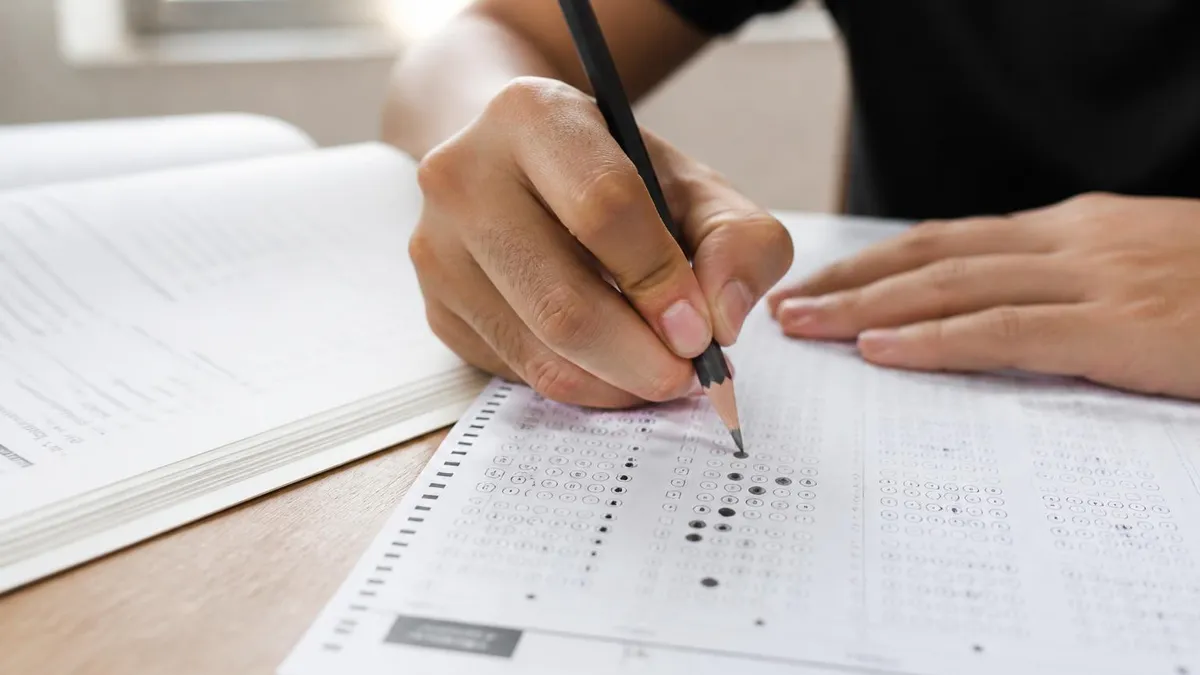
Speed beats perfection on this exam.
Most candidates who fail the NPOST do not fail because of difficulty; they fail because they run out of time. Train under strict time pressure from day one of your preparation, and accept that guessing on a few questions to finish a section is better than leaving the last 10 questions blank.
Understanding how the national police officer selection test post study guide framework translates to actual departmental scoring is critical for setting realistic goals. Stanard & Associates reports raw scores as percentages for each of the four sections, plus a composite score. Most agencies use the composite, but a growing number weight the report writing and reading comprehension sections more heavily because those skills correlate most strongly with academy success and field performance.
The standard nationwide passing score is 70 percent across all four sections combined, but this minimum is increasingly considered the floor rather than a competitive benchmark. In high-application markets like Houston, Las Vegas, and Charlotte, eligibility lists are ranked by score, and candidates scoring below 85 percent often never receive an interview before the list expires. Treat 80 percent as your minimum target and 90 percent as the goal that virtually guarantees movement up the list.
Some departments separately require a minimum percentage on each section, meaning that an 85 percent composite will still disqualify you if your math score falls below 70. Always check your target department's specific cut scores before testing. This information is usually available in the recruitment brochure or by direct call to the department's hiring unit, and it should drive how you allocate your study hours.
The NPOST score is also frequently combined with other components in a weighted formula. A typical hiring algorithm might assign 40 percent to the written exam, 25 percent to the oral interview, 20 percent to the physical agility test, and 15 percent to background-related veteran preference points. Strong NPOST scores create cushion in the formula, allowing a weaker interview or fitness test to still produce a competitive overall ranking on the eligibility roster.
Score validity periods matter too. Most departments accept NPOST scores for 12 to 24 months from the test date, and some accept transferred scores from other agencies that used Stanard & Associates testing. This portability is one of the great advantages of the NPOST: a single strong score can power multiple simultaneous applications to different departments without retesting at each one.
If your initial score falls short, the retake policy depends entirely on the department, not on Stanard. Some agencies allow a retake after 30 days; others impose a 6-month or 12-month wait. A few departments will only let you test twice total per hiring cycle. Plan accordingly, and never walk in unprepared with the assumption that you can simply try again next month. Every attempt should be your best attempt.
Finally, understand that NPOST scores are not the only thing departments consider, but they are often the gating filter. A poor score knocks you out before any human reads your application. A great score puts you on a shortlist, where your interview, background, and polygraph performance determine the final outcome. Treat the exam as the most controllable variable in the entire process, because that is precisely what it is.
Read the instructions for each section twice. Every year, candidates lose entire sections because they misread answer-sheet bubbling instructions or skipped a line. The proctor cannot help you mid-exam, and graders do not provide partial credit for marking errors. Slow down for instructions even when the clock is ticking.
Mastering the national police officer selection test requires more than knowing the content; it requires a tested approach to test-day execution. Arrive at the testing site at least 30 minutes early, bring two valid forms of identification, and dress in comfortable layers because testing rooms vary wildly in temperature. Bring a water bottle and a granola bar for between-section breaks if allowed by your specific proctor.
Pacing strategy is everything. For each section, calculate the per-question time budget before the clock starts. Mathematics gives you 45 seconds per problem; reading comprehension gives you 60 seconds per question including time to skim the passage. If a question is consuming more than double its budget, mark your best guess, circle the question number on your scratch sheet, and move on. You can return if time permits, but never leave answers blank at the end.
Use process of elimination aggressively. On a four-option multiple choice question, eliminating just one obviously wrong answer raises your guess probability from 25 to 33 percent. Eliminating two raises it to 50 percent. Across an entire 108-question exam, disciplined elimination on uncertain questions can add 5 to 8 percentage points to your composite score, often the difference between passing and not.
For grammar and report writing, the most reliable technique is the read-aloud test performed silently in your head. If a sentence sounds awkward when read at normal speaking pace, it almost certainly contains the error. Trust your ear, especially for native English speakers, because the NPOST is calibrated to the standard professional written English used in police reports rather than literary or academic prose.
For reading comprehension, train yourself to read the question stems first, then the passage. Knowing what you are looking for transforms passive reading into active hunting. Underline names, dates, statute numbers, and qualifying words as you encounter them. When the question asks about an exception or limitation, look for the words except, unless, only, must, and shall in the passage. These signal words usually contain the answer.
For mathematics, the most common pitfall is over-thinking. NPOST math questions are not trick questions. If a problem looks like it should be solved with simple subtraction, it almost certainly is. Avoid the urge to apply algebraic manipulation or formulas to problems that yield to plain arithmetic. Time wasted setting up elaborate solutions is time stolen from later, easier questions you would otherwise nail.
Finally, manage your psychological state. The five minutes between sections is for resetting, not reviewing. Do not dwell on questions you may have missed. Close your eyes, breathe slowly for 60 seconds, and walk into the next section as if it is the first. Officers who succeed on the NPOST treat each section as an independent event, which is precisely how scorers evaluate it.
The final two weeks before your NPOST exam should look very different from the previous six. By this point, content acquisition is essentially over, and your focus must shift entirely to simulation, refinement, and recovery. Complete one full-length timed mock exam every other day during the final 14 days. Score yourself harshly, log every error, and analyze patterns: are you missing more questions at the start because of nerves, or at the end because of fatigue?
Sleep emerges as the single most underrated performance variable. Cognitive testing research consistently shows that scoring drops 10 to 15 percent after a night of less than six hours of sleep, regardless of how well-prepared the test-taker is. Begin a strict 10pm bedtime two weeks before the exam, and protect the night before testing with no caffeine after noon, no screens after 9pm, and no last-minute cramming sessions.
Nutrition the morning of the exam should mirror what works during your practice mocks. Avoid experimentation. A modest portion of complex carbohydrates and protein, such as oatmeal with eggs or whole-grain toast with peanut butter, sustains glucose levels for the full 75-minute exam. Skip high-sugar breakfast foods that produce energy crashes 45 minutes into the test, which is often right in the middle of the reading comprehension section.
Have your testing materials ready 24 hours in advance: photo identification, confirmation email or letter, two sharpened number 2 pencils even if the testing center provides them, and a clear-faced analog wristwatch if permitted. Knowing exactly where you are going and how long it takes to get there eliminates morning-of stress that bleeds cognitive energy. Drive the route once during the prior week if you have never been to the location.
During the exam, treat each section transition as a fresh start. If section one went poorly, refuse to carry that emotional weight into section two. The composite score smooths out single-section dips, and the next section is your chance to recover. Many candidates report that their highest section was the one immediately following their worst section, simply because they channeled frustration into focused execution.
After the exam, resist the urge to dissect every question with other candidates in the parking lot. This rarely produces useful information and often inflates anxiety while you wait for results. Instead, immediately submit any pending applications to other departments that accept NPOST scores, so your score can work in parallel across multiple hiring tracks. A single strong score deployed to five departments is far more efficient than five separate test sittings.
If results come back below your target, do not panic. Schedule a debrief with yourself within one week to identify your weakest section, then build a 30-day improvement plan targeting that section specifically. Most candidates who retake the NPOST with focused targeted prep improve their composite by 8 to 15 points. The exam is highly coachable, and disciplined improvement between attempts is the rule rather than the exception for those who eventually earn their badges.
Sample NPOST Police Test Practice Questions
Try these questions from our free NPOST Police Test practice tests. The correct answer and an explanation follow each question.
An officer drives east, then makes a U-turn. Which way is the officer now facing?
- A. West
- B. North
- C. South
- D. East
Answer: A. West
A U-turn reverses direction, so eastbound becomes westbound.
An officer on patrol is concluding a non-injury traffic stop when dispatch issues three new calls simultaneously: a silent burglar alarm at a downtown jewelry store, a report of two men shouting at each other in a public park, and a noise complaint about a loud party in a residential area. Which call should the officer prioritize responding to next?
- A. The noise complaint at the residential party.
- B. The two men shouting in the public park.
- C. The silent burglar alarm at the jewelry store.
- D. Wait for a supervisor to assign a priority call.
Answer: C. The silent burglar alarm at the jewelry store.
The silent burglar alarm represents the highest potential threat to life and property. A burglary in progress is a felony and requires an immediate response to potentially apprehend suspects and prevent significant loss. The shouting match is a lower priority but could escalate, while the noise complaint is the lowest priority of the three.
An officer receives an anonymous tip that a resident at 123 Maple Street is growing marijuana in their basement. The tip provides no other specific details. What is the legally required next step for the officer to pursue the investigation?
- A. Immediately obtain a search warrant based on the anonymous tip.
- B. Conduct independent police work to find evidence that corroborates the tip.
- C. Go to 123 Maple Street and demand to be let in to search the basement.
- D. Dismiss the tip entirely because anonymous sources are not credible.
Answer: B. Conduct independent police work to find evidence that corroborates the tip.
An anonymous tip, by itself, is not sufficient to establish the probable cause required for a search warrant. The officer must first conduct an investigation to corroborate the information provided in the tip. This could involve surveillance, checking utility records, or looking for other signs of criminal activity. Demanding entry is illegal, and dismissing the tip ignores a potential crime.
An officer drives 18 miles to a location at an average speed of 45 mph. On the return trip, heavy traffic reduces the average speed to 30 mph. What was the officer's average speed for the entire round trip?
- A. 37.5 mph
- B. 36 mph
- C. 35 mph
- D. 40 mph
Answer: B. 36 mph
To find the average speed, you must divide the total distance by the total time. First, calculate the time for each leg of the trip. Time = Distance / Speed. Trip 1: 18 miles / 45 mph = 0.4 hours. Trip 2: 18 miles / 30 mph = 0.6 hours. Total distance is 18 + 18 = 36 miles. Total time is 0.4 + 0.6 = 1.0 hour. Average speed = 36 miles / 1.0 hour = 36 mph.
NPOST Questions and Answers
NPOST Police Test Video Answers

Police Practice Test: Complete NPOST Prep Guide with Free Questions and Answer Keys for 2026
NPOST - Police Test: Complete Study Guide 2026
NPOST - Police Test: Career Paths, Salary, and Requirements 2026

Police Hiring Process: Complete Guide to NPOST, Background Checks, and Polygraph Requirements 2026
About the Author

Educational Psychologist & Academic Test Preparation Expert
Columbia University Teachers CollegeDr. Lisa Patel holds a Doctorate in Education from Columbia University Teachers College and has spent 17 years researching standardized test design and academic assessment. She has developed preparation programs for SAT, ACT, GRE, LSAT, UCAT, and numerous professional licensing exams, helping students of all backgrounds achieve their target scores.
Join the Discussion
Connect with other students preparing for this exam. Share tips, ask questions, and get advice from people who have been there.
View discussion (8 replies)