
Police Academy PT Test: Complete Guide to the National Police Officer Selection Test in 2026 October
Master the national police officer selection test with our complete guide. Practice questions, study tips, and passing scores. ✅ Start prep today!

The national police officer selection test, commonly known as the NPOST, is one of the most widely administered law enforcement entry exams in the United States. If you are preparing for the police academy pt test, understanding exactly what this examination covers — and how departments use your score — will determine whether your application moves forward or stalls at the first hurdle. Thousands of candidates sit for this exam every year, and those who prepare systematically consistently outperform those who rely on general knowledge alone.
Law enforcement agencies in more than 1,200 jurisdictions across the country use the NPOST as a standardized benchmark for cognitive ability, reading comprehension, grammar, mathematics, and incident report writing. Because policing demands quick, accurate decision-making under pressure, the exam is specifically designed to evaluate whether a candidate possesses the foundational academic skills required to succeed at the police academy and beyond. Failing to meet the minimum passing score disqualifies you from the hiring process entirely, regardless of your physical fitness results or interview performance.
The structure of the police academy pt test may seem intimidating at first glance, but the content itself is drawn from high-school-level academic material. What trips most candidates up is not the difficulty of the underlying concepts but rather the time pressure, unfamiliar question formats, and the high stakes of the testing environment. This guide will walk you through every section of the NPOST, explain scoring thresholds, outline the most effective preparation strategies, and point you toward the best practice resources available online today.
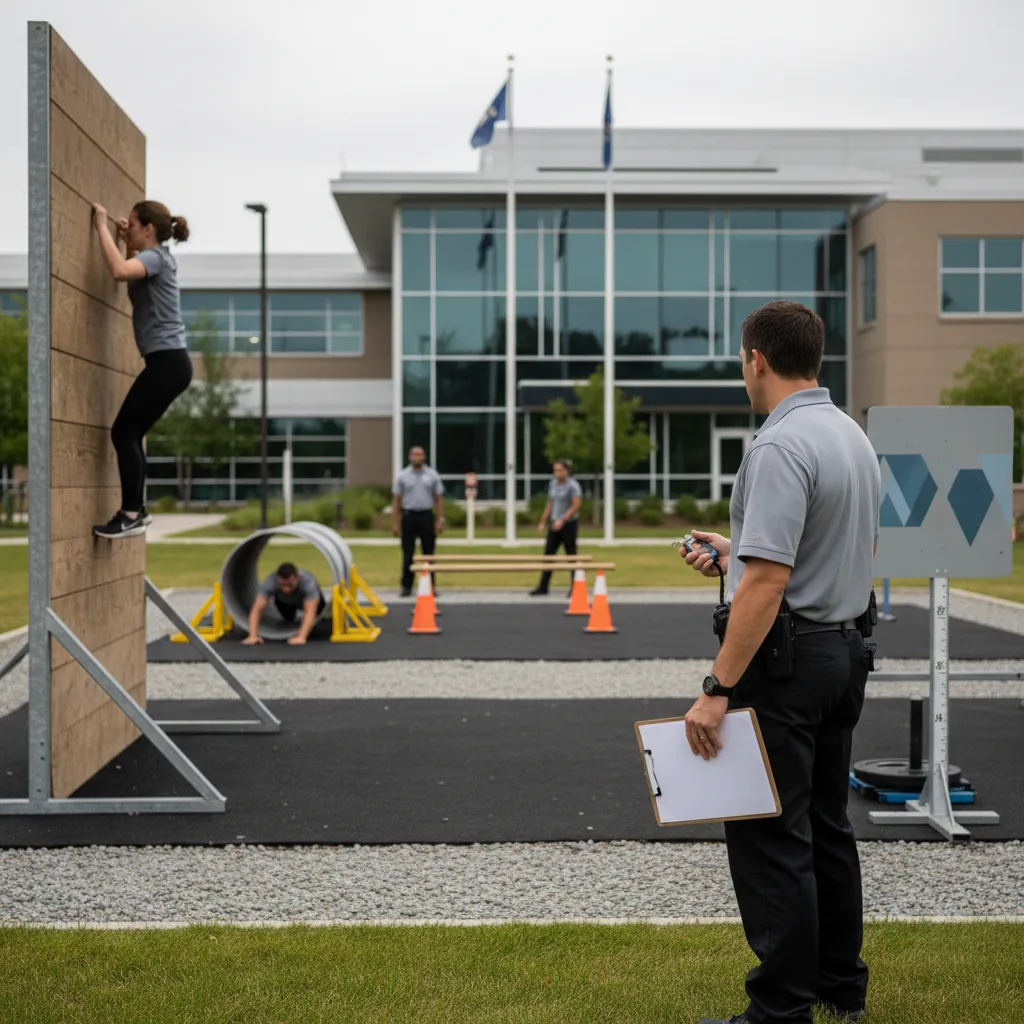
One important distinction worth making early: the term "police academy pt test" sometimes refers colloquially to the physical fitness or physical training component of academy entry requirements, but in the context of written law enforcement testing, PT stands for practice test or pre-employment test. This article focuses on the written cognitive examination — the NPOST — that nearly all sworn officer candidates must pass before they ever set foot in a police academy classroom. Physical fitness standards are a separate component evaluated through an obstacle course or standardized fitness battery.
Agencies choose the NPOST because it has been validated by the testing research firm Stanard & Associates and meets federal employment guidelines under the Uniform Guidelines on Employee Selection Procedures. This legal defensibility is critical for departments that need to demonstrate their hiring processes are job-related and non-discriminatory. For candidates, the validation means the exam has a proven, research-backed relationship to actual on-the-job performance as a police officer — studying for it genuinely makes you better prepared for the career itself.
For a deep dive into every aspect of the written exam, including scoring breakdowns, section-by-section strategies, and department-specific passing requirements, check out the national police officer selection test post study guide available on this site. That resource covers the cognitive exam in granular detail and pairs perfectly with the practice questions and preparation advice you will find throughout this article. Combined, these resources give you a comprehensive preparation roadmap that takes the guesswork out of exam day.
Whether you are just beginning to research law enforcement careers or you have already submitted your application and have a test date scheduled, the information in this guide will help you calibrate your preparation, avoid the most common mistakes, and walk into the testing center with genuine confidence. Read every section carefully, use the practice quizzes embedded throughout the page, and commit to a structured study schedule — those three habits separate passing candidates from those who have to retest.
NPOST by the Numbers

NPOST Exam Format & Sections
| Section | Questions | Time | Weight | Notes |
|---|---|---|---|---|
| Reading Comprehension | 20 | 25 min | 19% | Passages drawn from police reports and laws |
| Mathematics | 20 | 25 min | 19% | Arithmetic, percentages, basic algebra |
| Grammar & Vocabulary | 20 | 20 min | 19% | Sentence construction and word usage |
| Incident Report Writing | 45 | 60 min | 43% | Largest section; tests logical sequencing |
| Total | 105 | 2 hours 30 minutes | 100% |
Building an effective study plan for the NPOST starts with an honest self-assessment. Before you open a single study guide, take a timed diagnostic practice test under realistic conditions — no phone, no interruptions, and a proper timer running. Your diagnostic score will reveal which sections need the most attention and help you allocate your preparation hours intelligently rather than spreading effort evenly across areas where you are already strong. Most candidates who fail the NPOST spend too much time reviewing comfortable material and not enough time attacking genuine weak spots.
Reading comprehension is the section most candidates underestimate. Police-specific reading passages are dense, formal, and filled with procedural language that differs significantly from everyday reading. The questions test whether you can extract factual information accurately, identify the main idea of a passage, draw logical inferences, and distinguish between what is stated and what is merely implied. The best way to build this skill is to read police reports, state statutes, and department policy documents regularly in the weeks leading up to your test date. Unfamiliar vocabulary will drop, and your ability to process dense text quickly will improve noticeably.
The mathematics section of the NPOST covers arithmetic operations, fractions, decimals, percentages, ratios, and basic geometry. Candidates who struggled in high school math often panic at this section, but the reality is that the concepts tested are all taught before ninth grade. The challenge is executing calculations quickly and accurately under time pressure without a calculator. Practice timed drills using police-relevant scenarios — calculating patrol coverage areas, drug weight conversions, and crime rate percentages — so the material feels familiar and purposeful rather than abstract.
Grammar and vocabulary questions evaluate your ability to identify correct sentence structure, choose the right word for a context, spot grammatical errors, and understand the meaning of law enforcement terminology. Officers write reports every single day, and a poorly constructed report can jeopardize a prosecution. Studying grammar rules systematically — subject-verb agreement, pronoun reference, parallel structure, and comma placement — pays dividends both on the exam and throughout your career. Flashcards for vocabulary and daily grammar exercises are the two most efficient tools for this section.
The incident report writing section is the most heavily weighted part of the NPOST, accounting for 43 percent of your total score. You will be given a scenario — typically a description of an incident involving multiple witnesses, vehicles, times, and locations — and asked to arrange scrambled sentences into a logical, accurate report sequence. This section tests your ability to organize information chronologically, identify the most relevant details, and construct a coherent narrative. Officers who cannot write clear reports create legal liabilities for their agencies, so the exam places enormous emphasis on this skill.
A structured weekly study schedule makes a substantial difference in final outcomes. Candidates who study for four to six weeks before their test date, dedicating eight to twelve hours per week to focused practice, consistently achieve higher scores than those who cram in the final days before the exam. Divide your weekly sessions by subject: two sessions on reading comprehension, two on mathematics, one on grammar, and two on incident report writing.
Review your mistakes after every practice session and understand why each wrong answer was incorrect before moving on. For structured preparation resources, the national police officer selection test study guide on this site provides a week-by-week plan tailored specifically to the NPOST format.
Sleep, nutrition, and stress management are preparation factors that candidates routinely overlook. Cognitive performance on standardized tests drops measurably with sleep deprivation — studies consistently show that candidates who sleep fewer than seven hours the night before a high-stakes exam score significantly lower than their rested peers.
Build a pre-exam routine that includes a consistent sleep schedule for at least a week before the test, a balanced breakfast on test morning, and a brief period of low-intensity physical activity to reduce cortisol. Arriving at the testing center calm, rested, and confident is itself a form of preparation that no amount of last-minute cramming can replicate.
National Police Officer Selection Test: Subject-by-Subject Strategy
Reading comprehension questions on the NPOST are drawn from passages that mimic actual police reports, criminal codes, and department policy documents. To maximize your score in this section, practice active reading: underline the subject and main verb of each sentence as you read, note any dates or numerical values, and identify the author's intent before looking at the answer choices. Time yourself strictly — you have approximately 75 seconds per reading question, and spending too long on one passage will force you to rush through others.
Grammar questions test knowledge of standard written English conventions that apply directly to police report writing. The most frequently tested rules include subject-verb agreement with collective nouns, correct use of who versus whom, proper placement of modifying phrases, and correct punctuation in compound sentences. Create a one-page grammar reference sheet summarizing the ten most commonly tested rules and review it daily for two weeks before your exam. This habit alone can add several correct answers to your grammar section score without requiring hours of additional study.

NPOST Preparation: Structured Study vs. Winging It
- +Structured study plans produce measurably higher scores compared to unguided review
- +Targeted practice on weak sections maximizes score improvement per hour of study
- +Timed practice drills build the pace and accuracy required under real exam pressure
- +Understanding the exam format in advance eliminates day-of surprises that cost points
- +Regular vocabulary and grammar review improves both the exam score and long-term report writing quality
- +Access to authentic practice tests closely mirrors actual NPOST question types and difficulty
- −Effective preparation requires a four-to-six week commitment of eight or more hours per week
- −High-quality study materials and practice tests can cost money if purchased individually
- −Candidates who over-study comfortable material may neglect genuinely weak sections
- −Test anxiety can undermine even well-prepared candidates who lack stress management strategies
- −Memorizing grammar rules without applying them in writing practice produces limited score gains
- −Cramming in the final 48 hours before the exam often increases anxiety without improving performance
NPOST Pre-Exam Preparation Checklist
- ✓Complete a full-length diagnostic NPOST practice test under timed conditions before beginning your study plan
- ✓Identify your two lowest-scoring sections and allocate at least 40 percent of total study time to those areas
- ✓Review all four NPOST subject areas — reading comprehension, mathematics, grammar, and incident report writing — every week
- ✓Complete at least three full-length timed practice tests in the two weeks immediately before your exam date
- ✓Build a one-page grammar reference sheet covering the ten most commonly tested rules and review it daily
- ✓Practice solving math problems without a calculator and track your average time per problem across three sessions
- ✓Read at least one police report or criminal statute per day for three weeks before your exam to acclimate to formal law enforcement language
- ✓Practice the incident report writing section by arranging scrambled narrative paragraphs in chronological order daily
- ✓Confirm your test date, testing center location, and acceptable identification requirements at least one week in advance
- ✓Establish a consistent sleep schedule for the seven nights before your exam and target at least seven to eight hours each night

The Incident Report Writing Section Is Worth Nearly Half Your Total Score
Most candidates spend the majority of their preparation time on mathematics and reading comprehension because those sections feel familiar from standardized tests taken in school. However, the incident report writing section accounts for 43 percent of the total NPOST score — more than any other single section. Candidates who systematically practice chronological sequencing and narrative organization gain the largest score increases per hour of study invested. Do not treat report writing as an afterthought; treat it as your primary competitive advantage.
Understanding how the NPOST is scored gives you a strategic advantage most candidates never bother to seek. The exam uses a raw score system in which each correct answer adds one point and incorrect answers carry no penalty — there is no deduction for guessing wrong. This means you should never leave any question blank on the NPOST.
If you are running short on time, fill in a response for every unanswered question before time is called. Statistically, random guessing on multiple-choice questions gives you a 25 percent chance of a correct answer, which is infinitely better than the guaranteed zero you receive for a blank.
Passing score thresholds vary by agency. The minimum score required to advance in the hiring process is set independently by each law enforcement department, not by Stanard & Associates, the company that administers the NPOST.
Most agencies require a minimum scaled score somewhere between 70 and 75 out of 100, but some competitive urban departments set the bar higher — occasionally at 80 or above — because they receive hundreds of applications for a limited number of positions. Before your test date, contact your recruiting officer or check the department's official website to confirm the minimum passing score you need to hit.
Raw scores on the NPOST are converted to scaled scores through a statistical process that accounts for variation across different test versions. This means that a perfect raw score does not necessarily translate to a scaled score of 100, and the conversion formula is not publicly disclosed. What you can control is maximizing correct answers across all four sections.
Candidates who score significantly above the minimum threshold gain an additional advantage: in competitive hiring cycles, departments frequently rank eligible candidates by test score when they have more applicants than open positions, making every extra correct answer potentially meaningful for your hiring priority.
Retesting policies differ significantly across agencies and are worth researching early in your application process. Some departments allow candidates who do not meet the minimum passing score to retest after a waiting period ranging from 30 days to 12 months. Other agencies impose a maximum number of attempts — typically two or three — before permanently disqualifying a candidate from that department.
A few agencies accept NPOST scores from other jurisdictions, which means a high score earned during a prior application process may be transferable. Always clarify the retesting and score portability policies with your specific agency before submitting your application.
The pass rate for the NPOST nationally hovers around 54 percent on first attempt, according to data aggregated from agencies using the exam. That number has important implications for how you approach preparation: roughly half of all test-takers do not pass on their first try, which means walking into the exam without systematic preparation puts you in a statistical coin-flip situation. Candidates who complete at least four weeks of structured preparation with regular timed practice tests consistently outperform the national average, with prepared candidates passing at rates above 75 percent based on test preparation platform outcome data.
One area where candidates often lose avoidable points is misreading the question stem. On time-pressured exams, it is common to skim the question rather than reading it carefully, which leads to selecting a technically correct answer that does not actually respond to what was asked.
A simple technique for avoiding this error is to cover the answer choices with your hand or pencil while you read the question, formulate your own answer in your head, and then look for that answer among the options. This two-step approach eliminates the optical illusion effect where a wrong but plausible answer catches your eye before you have fully processed the question.
Section-level time management is equally critical to maximizing your NPOST score. Divide the total available time for each section by the number of questions in that section to determine your per-question budget, then hold yourself accountable during practice.
If you reach the midpoint of a section and have used more than half the allotted time, accelerate your pace on the remaining questions. Flag any question that is taking too long, move on, and return to it only if time allows. This discipline prevents a single difficult question from consuming time that could have been used to answer three easier ones correctly.
Some law enforcement agencies permanently disqualify candidates who fail the NPOST more than two or three times. Before submitting your application and scheduling your test, contact the agency's recruiting division to confirm the maximum number of allowed attempts and the required waiting period between tests. Applying before you are fully prepared and failing twice at a competitive agency can close that door permanently — a few extra weeks of preparation is a far better investment than risking your eligibility.
Choosing the right practice resources is one of the most consequential decisions you will make during NPOST preparation. The internet is flooded with generic police exam study guides and practice tests that were not designed specifically for the NPOST format and may include question types, scoring structures, or content areas that do not reflect what you will actually encounter on test day. Using the wrong practice materials is not just inefficient — it can actively mislead you about your readiness and create false confidence that collapses when you see authentic NPOST questions for the first time.
The gold standard for NPOST preparation is practicing with questions that have been specifically written to mirror the format, difficulty level, and content weighting of the actual exam. This means reading comprehension passages that use formal law enforcement language, mathematics problems that present police-relevant scenarios, grammar questions that test the specific rules officers need for report writing, and incident report writing exercises that use the exact scrambled-sentence format you will face on test day. Generic SAT or ACT practice does improve general cognitive skills, but it does not replicate the specific demands of the NPOST with sufficient precision.
For candidates preparing for the national police officer selection test, it is also worth understanding that many agencies administer the cognitive exam and the psychological evaluation on different dates and through different vendors. The NPOST specifically measures academic cognitive ability — reading, math, grammar, and writing — and does not include any psychological or personality inventory components. If your agency has told you that you will complete both a written test and a psychological evaluation, these are two separate assessments, and this guide focuses exclusively on preparing for the cognitive written examination.
Online practice platforms offer significant advantages over printed study guides for NPOST preparation. Digital practice tests can be timed automatically, track your performance by section and question type over multiple attempts, and highlight patterns in the types of errors you make most frequently.
This data-driven feedback loop accelerates improvement far more efficiently than self-grading a paper test and manually tallying your errors. When evaluating online platforms, look for ones that offer full-length timed practice tests, provide detailed answer explanations for every question (not just the correct answer), and cover all four NPOST sections with approximately the right number of questions per section.
Study groups and peer accountability partners can also dramatically improve preparation outcomes for candidates who struggle with self-discipline or who learn better through discussion. Explaining why a particular grammar rule applies, or walking through the logic of an incident report sequence with a study partner, forces you to articulate your reasoning in a way that deepens understanding and reveals gaps that solo studying often misses. If you can find two or three other NPOST candidates in your area or online community, a structured weekly study group session focused on reviewing practice test results can supplement individual practice with meaningful effect.
The national police officer selection practice test resources available on this site are calibrated specifically to the NPOST content areas and question formats, making them a reliable foundation for your preparation. Work through the available practice quizzes systematically, review every answer explanation regardless of whether you answered correctly, and track your progress across multiple sessions to measure your improvement over time. The combination of targeted practice, answer analysis, and progress tracking is the preparation system that consistently produces the strongest NPOST scores among first-time test-takers.
Finally, do not neglect the administrative side of test preparation. Confirm your registration, testing location, and required identification documents at least two weeks before your scheduled exam date. Arrive at the testing center 15 to 20 minutes early so you have time to complete any sign-in procedures, settle into your seat, and calm any pre-test nerves before the clock starts. Bring sharpened pencils if the exam is paper-based, or confirm whether you will be using a computer terminal. These logistical details feel minor compared to studying content, but fumbling them on exam day creates stress that directly impairs cognitive performance.
In the final two weeks before your NPOST exam date, your preparation strategy should shift from learning new material to consolidating and sharpening what you have already studied. Stop introducing unfamiliar concepts or tackling practice problems in content areas you have not yet reviewed — the cognitive cost of learning new material in the final stretch outweighs the marginal benefit. Instead, focus entirely on full-length timed practice tests, thorough review of your errors, and reinforcing the specific grammar rules and math formulas that you most frequently get wrong.
Simulate exam conditions as precisely as possible during your final practice sessions. Use a quiet room, set a timer for the exact duration of each section, use only the tools you will have at the actual testing center (typically just pencils and scratch paper), and resist all temptation to pause the timer when you encounter a difficult question. The more closely your practice environment matches the real testing environment, the less cognitive energy you will spend on adaptation during your actual exam, leaving more mental bandwidth available for answering questions correctly.
Review your error log from every practice test you have taken during preparation, and look for patterns rather than isolated mistakes. If you consistently miss questions involving pronoun reference in the grammar section, that is a signal to spend 20 minutes reviewing the specific rules governing pronoun reference before your exam. If you consistently misread the question in mathematics problems involving percentages, the fix is a deliberate habit of underlining what the question is asking before solving. Pattern-based error analysis turns a pile of wrong answers into a targeted action plan for the days immediately before your test.
On the morning of your exam, give yourself at least 90 minutes between waking up and arriving at the testing center. Eat a balanced breakfast that includes protein and complex carbohydrates — eggs, whole-grain toast, and fruit are ideal — and avoid heavy or unfamiliar foods that could cause digestive discomfort during a two-and-a-half-hour exam. Limit caffeine to your normal daily amount; dramatically increasing caffeine intake on exam day to stay alert typically increases anxiety and impairs concentration more than it helps. Your goal is to arrive physically comfortable, mentally clear, and emotionally steady.
During the exam itself, manage your time aggressively from the first question. Glance at the clock at regular intervals — roughly every 10 questions — to verify that your pace is on track. If you are behind, accelerate slightly and make quick decisions on questions you would normally deliberate over. If you are ahead, use the extra time to re-read questions you flagged as uncertain. The worst outcome on any timed exam is having unanswered questions remaining when time is called, so pace awareness is a core performance skill that separates polished test-takers from reactive ones.
After the exam, regardless of how you feel about your performance, resist the temptation to immediately rehash every question you are uncertain about. Post-exam rumination does not change your score, and it tends to generate disproportionate anxiety about questions that you likely answered correctly.
If you do not pass on your first attempt, request a score report from the agency if available, identify the sections where you lost the most points, and build a targeted re-preparation plan that addresses those specific weaknesses. A failed first attempt, while disappointing, provides more actionable diagnostic information than any practice test you took during preparation.
The most important mindset shift you can make as you approach the NPOST is to view the exam not as an arbitrary gatekeeping hurdle but as a meaningful measure of skills you will actually use every day as a police officer. Officers who can read complex documents accurately, write clear and organized reports, perform quick calculations, and communicate with grammatical precision are better officers, better partners, and better advocates for the communities they serve.
Approaching your preparation with that perspective — studying because these skills matter, not just because the exam requires them — consistently produces both higher scores and stronger long-term performance in the field.
NPOST Questions and Answers

National Police Officer Selection Test (NPOST): Complete Guide to Acing Your Police Test in 2026

Police Officer Psychological Test: What to Expect on the National Police Officer Selection Test in 2026
NPOST - Police Test: Complete Study Guide 2026

Police Hiring Process: Complete Guide to NPOST, Background Checks, and Polygraph Requirements 2026

Police Exam Practice Test: Free Questions, Study Guide & Pass Tips
About the Author

Educational Psychologist & Academic Test Preparation Expert
Columbia University Teachers CollegeDr. Lisa Patel holds a Doctorate in Education from Columbia University Teachers College and has spent 17 years researching standardized test design and academic assessment. She has developed preparation programs for SAT, ACT, GRE, LSAT, UCAT, and numerous professional licensing exams, helping students of all backgrounds achieve their target scores.
Join the Discussion
Connect with other students preparing for this exam. Share tips, ask questions, and get advice from people who have been there.
View discussion (8 replies)