
Walden University Psychiatric Nurse Practitioner Program: Requirements, Clinical Hours, Costs, and Certification Guide
🎓 Walden University psychiatric nurse practitioner program guide: PMHNP admission requirements, clinical hours, costs, certification, and tips to succeed.

Is the Walden University Psychiatric Nurse Practitioner Program Right for You?
The walden university psychiatric nurse practitioner program is one of the most searched online routes into mental health prescribing, and for good reason. Walden, a fully online university founded in 1970, offers a Master of Science in Nursing with a Psychiatric-Mental Health Nurse Practitioner specialization, plus post-master's and doctoral options. This guide explains admission requirements, coursework, clinical hours, costs, and certification so you can decide whether the program fits your goals. Practice with the free NP - Nurse Practitioner practice test on PracticeTestGeeks (7 questions with answer explanations).
Psychiatric-mental health nurse practitioners, or PMHNPs, evaluate, diagnose, and treat people across the lifespan, from children with ADHD to older adults with dementia-related behaviors. They prescribe medication, provide psychotherapy, and coordinate care with primary care and community agencies. Demand is high because many counties lack enough psychiatrists, and nurse practitioners fill that gap in clinics, hospitals, telehealth companies, and private practice. Walden's program targets working registered nurses who need an online format rather than a campus schedule.
Before comparing schools, understand what you are actually buying. A nurse practitioner program is more than courses; it is a structured path to licensure eligibility, supervised clinical hours, and a national board exam. Walden delivers coursework online and asks students to complete practicum experiences in approved clinical sites near home. That arrangement offers flexibility, yet it also puts real responsibility on you to plan placements early, communicate with faculty, and protect time for demanding evaluation and prescribing practice.
Typical applicants hold an active, unencumbered registered nurse license and a bachelor's degree in nursing for the MSN route, while post-master's applicants already hold an MSN or higher. Some pathways accept nurses with a non-nursing bachelor's degree after bridge coursework. Requirements change between start terms, so treat any summary, including this one, as a starting point. Confirm current prerequisites, minimum GPA expectations, and any required nursing experience directly with a Walden enrollment advisor before spending money on transcripts.
This article is built as a training guide and requirements checklist. You will find the admission steps, curriculum themes, clinical hour expectations, cost planning ideas, certification details, and a candid look at strengths and drawbacks. Along the way, you will also see how practice questions fit into your preparation, because the ANCC certification exam rewards steady review long before graduation. Use the table of contents to jump ahead, but read the clinical and licensure sections carefully, because that is where students most often stumble.
A word on expectations: no online program makes the work easy. PMHNP training demands extensive reading in psychopharmacology, diagnostic criteria, therapy models, and ethics, plus real patient encounters. Students who succeed usually block study time every week, build a support network of classmates, and treat practicum as a long job interview. If you can commit roughly fifteen to twenty hours weekly alongside work, an online format becomes realistic; if not, a slower part-time pace may suit you better.
Finally, remember that state rules decide what you can do after graduating. Some states grant full practice authority, while others require collaborative agreements with physicians. Controlled-substance prescribing, telehealth, and licensure rules vary too. Research your target state's board of nursing early, and confirm that Walden's PMHNP curriculum satisfies that board's educational requirements for licensure. Doing this homework first prevents expensive surprises and helps you choose the right start date and practicum location.
Free NP - Nurse Practitioner Study Tools
Interactive NP - Nurse Practitioner resources on PracticeTestGeeks, free to start:
- Free Pediatric Nurse Practitioner Questions and Answers — 7 questions with answer explanations
- NP - Nurse Practitioner flashcards — review key terms and concepts card by card
- NP - Nurse Practitioner study guide — topic-by-topic overview of what the exam covers
- NP - Nurse Practitioner cheat sheet — one-page printable summary for last-minute review
Psychiatric Nurse Practitioner Training by the Numbers
NP: upcoming dates and official changes
- Updated Oct 26, 2026: Validity (NPCB FNP (FNP-C)) is now 5 years (previously 5 years).
- Updated Oct 26, 2026: Delivery (NPCB FNP (FNP-C)) is now Computer-based at Prometric test centers (previously Computer-based at Prometric test centers).
- Updated Oct 26, 2026: Eligibility (ANCC FNP-BC) is now Active RN license + FNP master's/PGC/DNP from a CCNE/ACEN/CNEA-accredited program with 500+ faculty-supervised clinical hours (previously Active RN license + CCNE/ACEN/CNEA-accredited FNP program with 500 clinical hours).
Facts verified Oct 26, 2026 against American Nurses Credentialing Center (ANCC) — FNP-BC; AANP Certification Board (NPCB) — FNP certification. Dates that have passed are removed automatically.
- The ANCC FNP-BC exam has 175 questions: 150 scored and 25 unscored pretest questions. (American Nurses Credentialing Center (ANCC) — FNP-BC; AANP Certification Board (NPCB) — FNP certification)
- The NPCB FNP exam has 150 multiple-choice questions, of which 135 are scored and 15 are unscored pretest questions. (aanpcert.org)
- Candidates get 3 hours to complete the NPCB FNP certification exam. (aanpcert.org)
- ANCC FNP-BC exam results are reported as pass or fail, and failing candidates get diagnostic feedback for each content area. (American Nurses Credentialing Center (ANCC) — FNP-BC; AANP Certification Board (NPCB) — FNP certification)
- The NPCB FNP exam's passing score is set with a recognized standard-setting method and is not reported as a percentage correct. (aanpcert.org)
- Retaking the NPCB FNP exam costs $315 for non-members and $240 for AANP or AAENP members. (aanpcert.org)
- ANCC FNP-BC candidates who fail may retest after 60 calendar days and may test no more than three times in any 12-month period. (American Nurses Credentialing Center (ANCC) — FNP-BC; AANP Certification Board (NPCB) — FNP certification)
- NPCB FNP candidates may take the exam up to three times per calendar year (January 1 to December 31) and must submit a re-examination application for each retake. (aanpcert.org)
- The ANCC FNP-BC credential is valid for 5 years. (American Nurses Credentialing Center (ANCC) — FNP-BC; AANP Certification Board (NPCB) — FNP certification)
Facts verified Oct 26, 2026 against American Nurses Credentialing Center (ANCC) — FNP-BC; AANP Certification Board (NPCB) — FNP certification. Dates that have passed are removed automatically.
NP Exam at a Glance
| Item | Detail | Official source |
|---|---|---|
| Number of questions (ANCC FNP-BC) | 175 questions (150 scored, 25 pretest) | American Nurses Credentialing Center (ANCC) — FNP-BC; AANP Certification Board (NPCB) — FNP certification |
| Number of questions (NPCB FNP (FNP-C)) | 150 multiple-choice questions (135 scored, 15 pretest) | aanpcert.org |
| Time limit (NPCB FNP (FNP-C)) | 3 hours | aanpcert.org |
| Passing score (ANCC FNP-BC) | Pass/fail | American Nurses Credentialing Center (ANCC) — FNP-BC; AANP Certification Board (NPCB) — FNP certification |
| Passing score (NPCB FNP (FNP-C)) | Standard-setting cut score, not a percentage | aanpcert.org |
| Retake fee (NPCB FNP (FNP-C)) | $315 non-member / $240 member per retake | aanpcert.org |
| Retake policy (ANCC FNP-BC) | Wait 60 days; max 3 attempts in 12 months | American Nurses Credentialing Center (ANCC) — FNP-BC; AANP Certification Board (NPCB) — FNP certification |
| Retake policy (NPCB FNP (FNP-C)) | Up to 3 attempts per calendar year | aanpcert.org |
| Validity (ANCC FNP-BC) | 5 years | American Nurses Credentialing Center (ANCC) — FNP-BC; AANP Certification Board (NPCB) — FNP certification |
| Validity (NPCB FNP (FNP-C)) | 5 years | aanpcert.org |
| Delivery (ANCC FNP-BC) | Computer-based, scheduled through Prometric | American Nurses Credentialing Center (ANCC) — FNP-BC; AANP Certification Board (NPCB) — FNP certification |
| Delivery (NPCB FNP (FNP-C)) | Computer-based at Prometric test centers | aanpcert.org |
| Eligibility (ANCC FNP-BC) | Active RN license + FNP master's/PGC/DNP from a CCNE/ACEN/CNEA-accredited program with 500+ faculty-supervised clinical hours | American Nurses Credentialing Center (ANCC) — FNP-BC; AANP Certification Board (NPCB) — FNP certification |
| Eligibility (NPCB FNP (FNP-C)) | Accredited graduate FNP program with 500+ supervised clinical hours; active US RN license | aanpcert.org |
| Score release (NPCB FNP (FNP-C)) | Preliminary pass/fail immediately; official results after NPCB review | aanpcert.org |
| Testing window (ANCC FNP-BC) | Apply year-round; 120-day testing window | American Nurses Credentialing Center (ANCC) — FNP-BC; AANP Certification Board (NPCB) — FNP certification |
| Testing window (NPCB FNP (FNP-C)) | 120-day testing window | aanpcert.org |
Facts verified Oct 26, 2026 against American Nurses Credentialing Center (ANCC) — FNP-BC; AANP Certification Board (NPCB) — FNP certification. Dates that have passed are removed automatically.
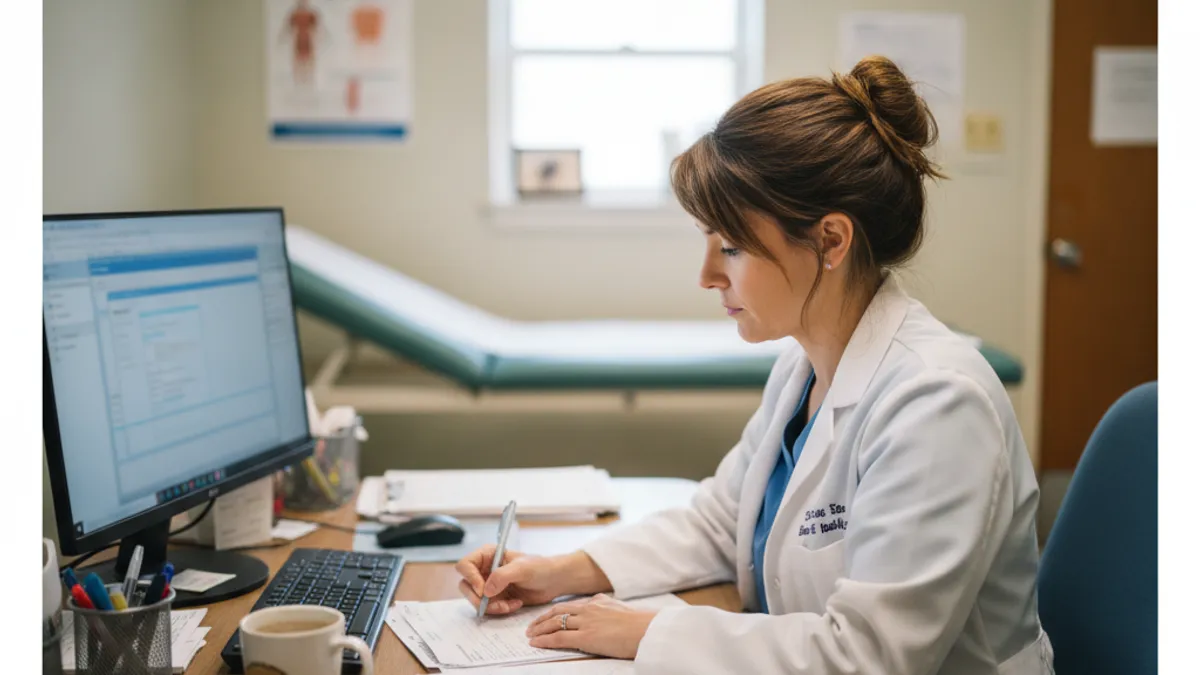
Walden University Psychiatric Nurse Practitioner Program Requirements at a Glance
Applicants generally need an active, unencumbered RN license and a bachelor's degree for the MSN track, or an MSN for the post-master's certificate. Some students must also meet state-specific rules for practicum, so confirm eligibility for your home state early.
Core classes cover advanced pathophysiology, pharmacology, health assessment, psychopharmacology, diagnosis, and psychotherapy models. Courses run online with discussions, case studies, and assignments, which means you must manage deadlines independently and communicate proactively with instructors.
Students complete supervised clinical hours with approved preceptors in mental health settings. Hours must cover children, adults, and older adults. Start the site search early, because qualified psychiatric preceptors are limited in many regions.
Graduates become eligible to sit for the ANCC Psychiatric-Mental Health Nurse Practitioner board certification. Passing the exam, then applying for state licensure and prescriptive authority, completes the path to independent practice as a PMHNP.
Admission and Application Steps for the Walden PMHNP Track
Applying to Walden is simpler than applying to many campus programs, but it still rewards careful preparation. Start by speaking with an enrollment advisor who can explain current start dates, transfer credit rules, and document checklists. Ask for the program's plan of study in writing, including the number of credits, the practicum sequence, and expected completion time. Written details protect you if requirements shift later and help you compare Walden fairly against other online PMHNP options.
Gather official transcripts from every college you attended, since evaluators review prior coursework when determining credit and GPA. If you earned your nursing degree years ago, request transcripts early because registrars can take weeks to respond. Prepare a current resume that highlights acute, community, or behavioral health experience. Psychiatric nursing experience is not always mandatory, yet applicants with inpatient mental health, crisis, or substance use exposure often feel more confident in clinical courses.
Your RN license is the centerpiece of the application. It must be active and in good standing, and you should be ready to explain any disciplinary action honestly. Boards and preceptor sites also check licensure, so surprises cause delays. If you live in a state that participates in the Nurse Licensure Compact, confirm how that affects practicum placement. Walden students typically need licensure in the state where they complete clinical hours, which can matter if you plan to relocate.
Expect to write or answer a short statement of purpose, and take it seriously. Admissions reviewers want to see why you chose psychiatric care, how you have served mental health patients, and what you plan to do after graduation. Specific stories beat generic enthusiasm. Mention a patient interaction, a system problem you noticed, or a community need you hope to address. Keep the tone professional, concise, and honest rather than dramatic.
Financial planning belongs in the application phase, not after acceptance. Complete the FAFSA, ask about employer tuition assistance, and research nurse-focused scholarships and loan repayment programs such as the NURSE Corps. Many health systems fund graduate nursing education in exchange for a work commitment. Compare that benefit with the cost of borrowing. A clear funding plan reduces stress when practicum courses demand more hours and you may need to reduce your paid work schedule.
After acceptance, complete onboarding tasks immediately: background checks, immunization records, CPR certification, malpractice insurance details, and technology setup. Practicum sites often require these documents before students can see patients, and missing paperwork is a common cause of delayed starts. Create a digital folder with scanned copies, expiration dates, and contact information for references. Treat this folder as your professional portfolio, because you will reuse it for licensure, credentialing, and job applications.
Finally, orient yourself to Walden's learning platform before classes begin. Explore the library, writing center, and academic advising resources, and learn how to submit assignments and reach instructors. Online learners who connect with support services early tend to avoid avoidable mistakes such as citation errors or missed discussion posts. Schedule recurring study blocks, tell family and coworkers about your commitments, and set a weekly checkpoint to review upcoming deadlines so nothing arrives as a surprise.
Walden University PMHNP Program Formats: MSN, Post-Master's, and DNP
The MSN with a Psychiatric-Mental Health Nurse Practitioner specialization is the most common entry point for registered nurses holding a bachelor's degree. Coursework blends advanced practice core classes with psychiatric content such as psychopharmacology, diagnostic assessment, and individual, group, and family therapy. Students progress through sequenced online terms, then move into supervised practicum courses that apply classroom knowledge with real patients.
Pacing depends on how many courses you take each term. Full-time schedules finish sooner but leave little room for work, while part-time plans stretch the timeline and reduce weekly pressure. Ask your advisor to map every term, including practicum blocks, because some clinical courses cannot be combined with other classes. Build a realistic calendar around your job, childcare, and holidays before committing to a start date.

Is Walden University's Psychiatric NP Program Worth It? Pros and Cons
- +Fully online coursework fits around full-time nursing schedules
- +Multiple entry points: MSN, post-master's certificate, and doctoral study
- +Established online university with decades of distance-education experience
- +Flexible start dates reduce waiting for a traditional fall cohort
- +Preparation aligns with ANCC PMHNP board certification eligibility
- +Strong demand for PMHNPs supports job prospects after graduation
- −Students often must locate and secure their own practicum preceptors
- −Tuition can reach tens of thousands of dollars, so borrowing may be required
- −Online format requires strong self-discipline and time management
- −Clinical hours are demanding and may force reduced work schedules
- −Some states or employers prefer graduates of specific program types
- −Limited in-person networking compared with campus-based cohorts
Walden University Psychiatric Nurse Practitioner Program Readiness Checklist
- ✓Verify your RN license is active and unencumbered.
- ✓Request official transcripts from every college attended.
- ✓Schedule a call with a Walden enrollment advisor.
- ✓Get the plan of study and practicum sequence in writing.
- ✓Check your state board's rules for online NP programs.
- ✓Update your resume with behavioral health experience.
- ✓Draft a specific, honest statement of purpose.
- ✓Complete the FAFSA and ask about employer tuition aid.
- ✓Identify possible preceptors and clinics near your home.
- ✓Block weekly study time on your calendar before term one.
Clinical placement is the step that delays most students
Begin identifying psychiatric preceptors and clinics months before your first practicum course. Reach out to colleagues, community mental health centers, and telepsychiatry groups, and keep a log of every contact. Early outreach gives sites time to complete agreements and credentialing, which protects your graduation timeline.
Clinical Hours, Practicum Placement, and PMHNP Certification
Clinical practicum is where the Walden university psychiatric nurse practitioner program becomes real. National certification standards require a minimum of 500 supervised clinical hours, and many programs require more to cover multiple populations and settings. Your plan of study will state the exact total, so confirm it. Hours must be directly supervised by qualified preceptors, such as psychiatric nurse practitioners, psychiatrists, or other approved clinicians, and should include assessment, diagnosis, medication management, and therapy.
Variety matters as much as quantity. Because the credential covers the lifespan, you need exposure to children and adolescents, adults, and older adults, as well as conditions such as depression, anxiety, bipolar disorder, schizophrenia, trauma, and substance use disorders. If your only site is an adult outpatient clinic, you may need a second placement for youth. Discuss population requirements with faculty before accepting a site, so none of your hours are rejected.
Finding a preceptor can feel like a part-time job. Start with your current employer, since behavioral health units and affiliated clinics may welcome you. Then contact community mental health centers, private practices, correctional health programs, school-based clinics, and telehealth companies. Send a concise email with your resume, program requirements, and proposed schedule. Offer flexibility, and follow up politely after a week. Many clinicians say yes when the request is organized and respectful of their time.
Once placed, treat every shift as both training and evaluation. Arrive prepared with patient histories, medication references, and questions. Practice presenting cases in a structured format: chief complaint, history, mental status exam, differential diagnosis, and plan. Track your hours in Walden's required system the same day, and ask your preceptor to verify entries regularly. Accurate documentation is essential because licensing boards and certifying bodies may request proof years later.
After graduation, you apply to sit for the ANCC Psychiatric-Mental Health Nurse Practitioner board certification, abbreviated PMHNP-BC. The exam includes 175 questions, of which 150 are scored, over about three and a half hours. Content spans scientific foundation, advanced practice skills, diagnosis and treatment, and professional role. Begin reviewing during your final terms rather than waiting, because psychopharmacology and diagnostic criteria require repeated practice to retain.
Certification is not the final step. You must also apply for state licensure as an advanced practice registered nurse, obtain a national provider identifier, and, if you will prescribe controlled substances, register with the DEA and satisfy state prescribing rules. Some states add continuing education requirements for opioid prescribing. Processing times vary from weeks to months, so submit applications as soon as you are eligible, and plan your job start date accordingly.
Finally, think about credentialing and malpractice coverage. Employers and insurance panels verify education, certification, licensure, and references before allowing you to bill. Keep digital copies of your diploma, transcripts, exam results, and clinical logs. If you intend to open a private practice, learn how payer enrollment works and how long it takes. Strong paperwork habits formed during practicum will make the transition from student to practicing PMHNP far smoother.
Online nursing programs must meet each state's board of nursing requirements, and rules for practicum in your state can change. Confirm in writing that the program is approved for licensure where you plan to practice. Do this before paying tuition or scheduling clinical sites.
Costs, Timeline, and Career Outcomes After Graduation
Cost is a central question for anyone researching a graduate nursing program. Walden charges tuition by credit, and total price depends on the number of credits, any transfer credit, and your pace. Specialty tracks with practicum courses typically cost more than non-clinical degrees. Request a current, itemized estimate that includes tuition, technology fees, practicum fees, and books. Prices change, so rely on the official estimate instead of figures you read in forums.
Beyond tuition, budget for hidden expenses. Students often pay for background checks, immunizations, liability insurance, travel to clinical sites, diagnostic software, exam fees, and licensing applications. The ANCC exam fee is several hundred dollars, and state APRN licensure and DEA registration add more. If you cut back at work during practicum, lost income can exceed tuition in a given term. Create a month-by-month budget before the first practicum course begins.
Timeline varies. Many students finish an MSN specialty track in roughly two to three years part-time, depending on credits and any gaps between practicum courses. Post-master's certificates can be shorter when prior coursework transfers. Delays usually come from placement difficulties, course failures, or life events rather than the curriculum itself. Build a buffer of one or two terms into your plan, and tell your employer early if you need schedule flexibility.
Financial aid options include federal loans, scholarships, employer tuition assistance, and service-based repayment programs. Federal graduate borrowing has changed in recent years, so check current limits on the Department of Education site. Some hospitals will reimburse tuition annually and require you to stay two or three years after graduation. Read those agreements carefully, including what happens if you leave early, because repayment clauses can be costly.
Career outcomes are encouraging. The Bureau of Labor Statistics reports a median nurse practitioner salary near $129,000 and projects growth far faster than the average occupation. PMHNPs often earn at or above that median, with pay depending on region, setting, and whether you work in telehealth or private practice. Reading about roles, settings, and compensation can help you set goals, and our guide to psychiatric nurse practitioner jobs covers them in more detail.
Work settings are diverse. PMHNPs practice in outpatient clinics, inpatient psychiatric units, emergency departments, correctional facilities, schools, veterans' health systems, substance use programs, and telepsychiatry platforms. Some combine part-time employment with a small private practice. Choose early experiences that build breadth, such as medication management and therapy, because they make you more marketable. Many new graduates find the first year demanding, so seek employers who provide mentoring and reasonable patient panels.
Long-term growth comes from continuing education and specialization. You might pursue addiction treatment credentials, child and adolescent focus, geriatric psychiatry, or leadership training. Conferences and CE courses help you stay current as treatments and regulations evolve. Recertification through ANCC occurs every five years and requires practice hours and professional development. Treating learning as an ongoing habit keeps your skills sharp and positions you for advancement, whether clinical, academic, or administrative.
Practical Tips to Succeed in an Online Psychiatric NP Program
Success in an online graduate nursing program starts with structure. Choose fixed study times each week, such as two weeknight evenings and one weekend morning, and protect them like work shifts. Use a calendar that shows every assignment, discussion post, and practicum deadline for the whole term. Students who plan weekly rarely panic at the end of a course. Share your schedule with family so they understand when you are unavailable.
Master psychopharmacology early because it underpins almost every psychiatric visit. Build flashcards for drug classes, mechanisms, common side effects, black box warnings, interactions, and monitoring labs. Review them daily for ten minutes rather than cramming. Pay special attention to lithium levels, clozapine monitoring, serotonin syndrome, QT prolongation, and antidepressant warnings in young adults. These topics appear in coursework, practicum conversations, and the certification exam alike.
Practice the mental status exam until it feels natural. Record yourself, or role-play with a classmate, describing appearance, behavior, speech, mood, affect, thought process, thought content, perception, cognition, insight, and judgment. Pair that skill with validated screening tools such as the PHQ-9, GAD-7, and Columbia Suicide Severity Rating Scale. Fluency with structured assessment makes you faster and safer in clinic, and it impresses preceptors who evaluate your readiness.
Treat your preceptor as a mentor. Ask for feedback after each shift, request chances to lead interviews, and propose treatment plans before hearing theirs. Send a thank-you note at the end of the rotation, and keep in touch because preceptors often become references and sometimes employers. Be reliable, prepared, and humble. Mental health patients often share painful stories, so practice therapeutic communication, boundaries, and self-care to avoid burnout during intense placements.
Use practice questions throughout the program, not only at the end. Short daily sets reveal weak areas while you still have time to repair them. Mix topics, then review explanations for both correct and incorrect choices. Free question banks help you build stamina for the 175-question ANCC exam. Track your scores by domain, and schedule extra review for diagnosis and treatment, which usually carries the largest share of exam content.
Build community deliberately. Join discussion boards, form a virtual study group, and connect with alumni on professional networks. Share templates, preceptor leads, and study resources. Peers can warn you about tricky assignments and encourage you when practicum feels overwhelming. Consider joining a professional organization such as the American Psychiatric Nurses Association, which offers education, networking, and job resources that become valuable once you graduate.
Finally, protect your own mental health. Graduate school, clinical work, and family responsibilities can lead to exhaustion. Sleep, exercise, and regular breaks are not luxuries; they improve memory and judgment. Seek counseling if you need it, and talk with faculty early if a crisis threatens your progress. Programs often offer extensions or support when students communicate promptly. Finishing healthy and prepared matters more than finishing quickly.
Sample NP - Nurse Practitioner Practice Questions
Try these questions from our free NP - Nurse Practitioner practice tests. The correct answer and an explanation follow each question.
An NP is reviewing a patient's wearable device data showing 14 consecutive nights of average sleep duration of 4.5 hours. Which action BEST integrates this digital health data into clinical care?
- A. Dismiss it as consumer-grade data not suitable for clinical decision-making
- B. Incorporate the data into the clinical assessment, discuss sleep hygiene, screen for underlying conditions, and document the findings
- C. Prescribe a sedative-hypnotic based solely on the wearable data
- D. Ask the patient to stop using the device to reduce health anxiety
Answer: B. Incorporate the data into the clinical assessment, discuss sleep hygiene, screen for underlying conditions, and document the findings
Wearable data should be contextually integrated into clinical assessment, used to guide conversation and screening, and documented as part of the patient's health record.
Which continuing competency mechanism MOST directly demonstrates an NP's ongoing clinical competence for recertification purposes?
- A. Maintaining active malpractice insurance
- B. Accruing continuing education credits in pharmacology and pathophysiology
- C. Completing peer chart reviews annually
- D. Holding an active DEA registration
Answer: B. Accruing continuing education credits in pharmacology and pathophysiology
National certifying bodies require continuing education in clinical areas such as pharmacology as a primary mechanism to demonstrate ongoing competency for recertification.
A patient portal message arrives after hours with a question about a new symptom. What is the MOST appropriate management of this electronic communication?
- A. Ignore it until regular business hours and respond within the standard 2-business-day window
- B. Triage the message, respond within the practice's established timeframe, and document the exchange in the EHR
- C. Call 911 on behalf of the patient without reading the full message
- D. Forward to the front desk to handle without provider review
Answer: B. Triage the message, respond within the practice's established timeframe, and document the exchange in the EHR
Patient portal messages require clinical triage, timely response per practice policy, and documentation to maintain care continuity and liability protection.
A nurse practitioner receives an alert from the clinical decision support system (CDSS) warning of a potential drug-drug interaction. What is the MOST appropriate next step?
- A. Dismiss the alert and proceed with the original order
- B. Review the alert, assess clinical context, and document the rationale for any override
- C. Automatically switch to an alternative medication without patient consultation
- D. Contact the pharmacy to disable future alerts for this medication pair
Answer: B. Review the alert, assess clinical context, and document the rationale for any override
Clinicians must review CDSS alerts in clinical context and document reasoning if overriding, as alert fatigue from dismissing without review is a patient safety hazard.
Take the full NP - Nurse Practitioner practice test
NP Questions and Answers



How this page was made: written with AI tools and published by Nathan Beja, founder of Practice Test Geeks, who is responsible for its content. Exam facts are checked against the official sources listed below. Not reviewed by a subject-matter expert. Editorial policy
Sources & references
Exam facts on this page (fees, format, dates, passing scores) are checked against these official sources; the date is our last check. Editorial policy
- nursingworld.org — Test delivery, eligibility, exam format, test dates, score validity, passing score, retake policy, exam information · verified Oct 2026
- aanpcert.org — Eligibility, exam format, passing score, retake policy, score release, test dates, time limit, score validity, retake fee, test delivery · verified Oct 2026