
Nurse Practitioner Degree Online: BSN and MSN Programs, Specialties, Costs, and Career Path for Aspiring NPs
Online nurse practitioner degree guide: ✅ BSN to MSN programs, specialty tracks (FNP, AGPCNP, PMHNP), accreditation, costs, clinical hours
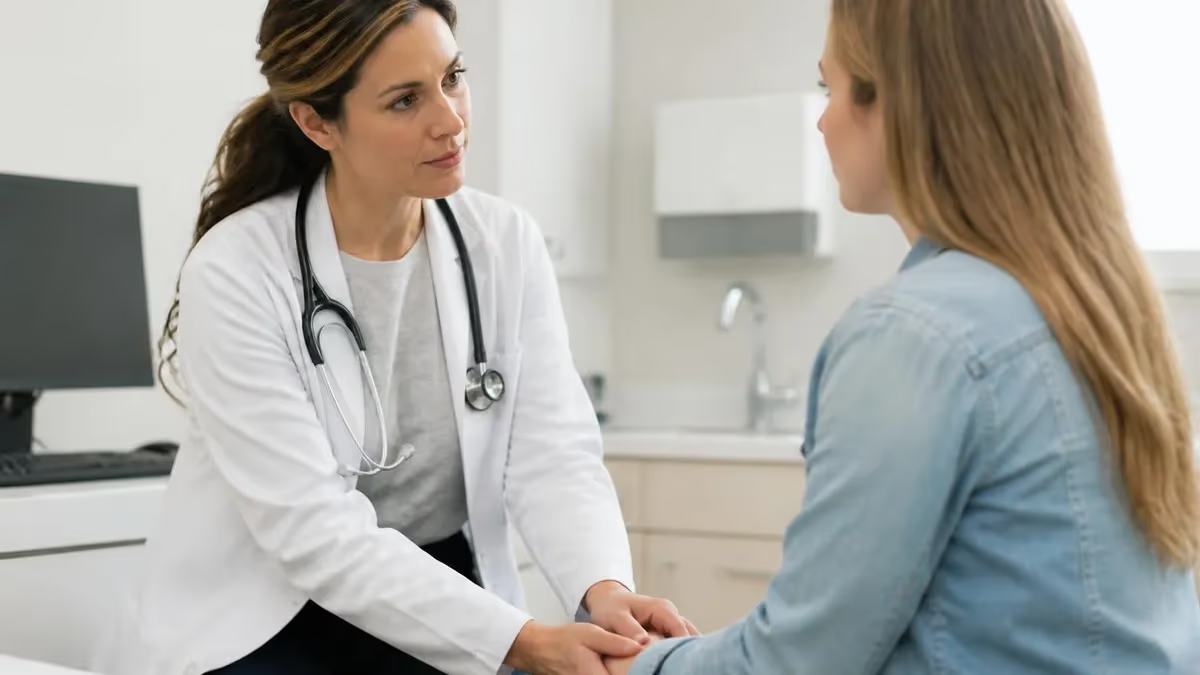
The Nurse Practitioner (NP) is one of the most in-demand nurse practitioner and physician assistant in the United States. NPs provide patient-centered primary care, often serving as primary care providers in their own right with prescriptive authority and the ability to diagnose, treat, and manage patient conditions. As the U.S. healthcare system continues to face physician shortages, NP roles have expanded substantially. Becoming an NP requires substantial education — typically a Bachelor of Science in Nursing (BSN) followed by a Master of Science in Nursing (MSN), or the newer Doctor of Nursing Practice (DNP) pathway.
The online nurse practitioner school nurse p pathway has become increasingly popular as accredited universities offer flexible programs for working nurses. Most online NP programs are MSN-NP programs that accept candidates with a BSN and active RN license. Some programs offer 'bridge' pathways for those with ADN (Associate Degree in Nursing) who haven't completed a BSN. Direct-entry MSN programs exist for those with a non-nursing bachelor's degree.
Specialty tracks within NP education include: Family Nurse Practitioner (FNP) — most popular, providing primary care across all ages; Adult-Gerontology Primary Care NP (AGPCNP) — focused on adult and geriatric care; Pediatric NP (PNP) — focused on children; Psychiatric-Mental Health NP (PMHNP) — focused on mental health; Acute Care NP (ACNP) — focused on hospital and acute care settings; Women's Health NP (WHNP) — focused on women's reproductive and primary care. Each specialty requires specialty-specific coursework and clinical hours.
Online MSN-NP programs typically take 2-3 years to complete for full-time students. Part-time options extend the timeline to 3-5 years. Students complete coursework online while completing clinical hours at approved sites in their local communities. Programs typically require 500-600 hours of supervised nurse p across specialty areas.
Costs for online MSN-NP programs vary widely. State public universities offer programs at $400-700 per credit hour ($24,000-42,000 total for 60 credits). Private universities range $700-1,200 per credit ($42,000-72,000 total). Top-ranked programs at major universities can cost $100,000+. Financial aid, employer reimbursement, and federal student loans are common funding sources.
Accreditation is critical when choosing a program. Look for programs accredited by the Commission on Collegiate Nursing Education (CCNE) or the Accreditation Commission for Education in Nursing (ACEN). State approval is also required. Unaccredited programs may not qualify graduates for state NP licensure.
After completing an MSN-NP program, graduates take a national certification exam administered by either the American Academy of Nurse Practitioners Certification Board (AANPCB) or the American Nurses Credentialing Center (ANCC). Pass rates are typically 85-95% for graduates of accredited programs. Successful certification is required for state NP licensure.
This guide covers the nurse practitioner program nurse p pathway in detail — types of programs, specialty options, admission requirements, costs, clinical components, certification, and post-graduation career paths. It's intended for current nurses considering NP education, prospective nurses planning their long-term career, and those exploring whether NP is the right path.
Key Online NP Program Information
- Typical pathway: BSN → MSN-NP (or BSN → DNP)
- Online MSN-NP duration: 2-3 years full-time
- Online MSN-NP cost: $24K-72K total typical
- Required clinical hours: 500-600+ supervised practice
- Most popular specialty: Family Nurse Practitioner (FNP)
- Accreditation: CCNE or ACEN required for licensure
- Certification: AANPCB or ANCC after graduation
- Pass rate: 85-95% for accredited program graduates
- Starting NP salary: $90,000-110,000
- Average NP salary: $110,000-130,000
- Job outlook: 38% growth projected through 2032
Education pathways to become a Nurse Practitioner. Multiple routes exist depending on your starting point.
Path 1: BSN → MSN-NP. Most common pathway. Earn a Bachelor of Science in Nursing (BSN), gain RN licensure, then enter an MSN-NP program. The MSN takes 2-3 years full-time. Total time from high school to NP: 6-8 years.
Path 2: ADN → BSN → MSN-NP. Start with Associate Degree in Nursing (ADN, 2 years), gain RN licensure, work as RN while completing RN-to-BSN program (1-2 years), then MSN-NP (2-3 years). Total time: 5-7 years.
Path 3: BSN → DNP. Doctor of Nursing Practice pathway, increasingly preferred. DNP-NP programs take 3-4 years post-BSN. Total time: 7-9 years.
Path 4: Direct-entry MSN (non-nursing bachelor's). For those with bachelor's in another field. Direct-entry MSN programs combine accelerated nursing prerequisites with MSN coursework. 3-4 years total.
Path 5: Post-graduate certificate (for current MSN holders). If you already have an MSN in a different specialty and want to add NP credentials, post-graduate certificate programs (1-2 years) provide the additional coursework and clinical hours.
RN experience requirement: Most MSN-NP programs require 1-2 years of RN work experience before admission. Some allow direct progression from BSN to MSN-NP. Verify with specific programs.
For working nurses, online programs offer significant advantages: continue working as RN while studying, flexibility to complete coursework around shifts, no relocation needed, clinical rotations at approved sites near home. Most online MSN-NP students are working full-time as RNs while in school.
For BSN to MSN-NP students, the curriculum typically includes: Advanced pathophysiology, Advanced pharmacology, Advanced health assessment, Specialty-specific coursework (FNP, PNP, etc.), Clinical rotations in primary care and specialty settings, Capstone or clinical scholarly project.
For DNP students, additional coursework: Evidence-based practice, Healthcare policy, Quality improvement methods, Leadership and management, More extensive clinical project work.
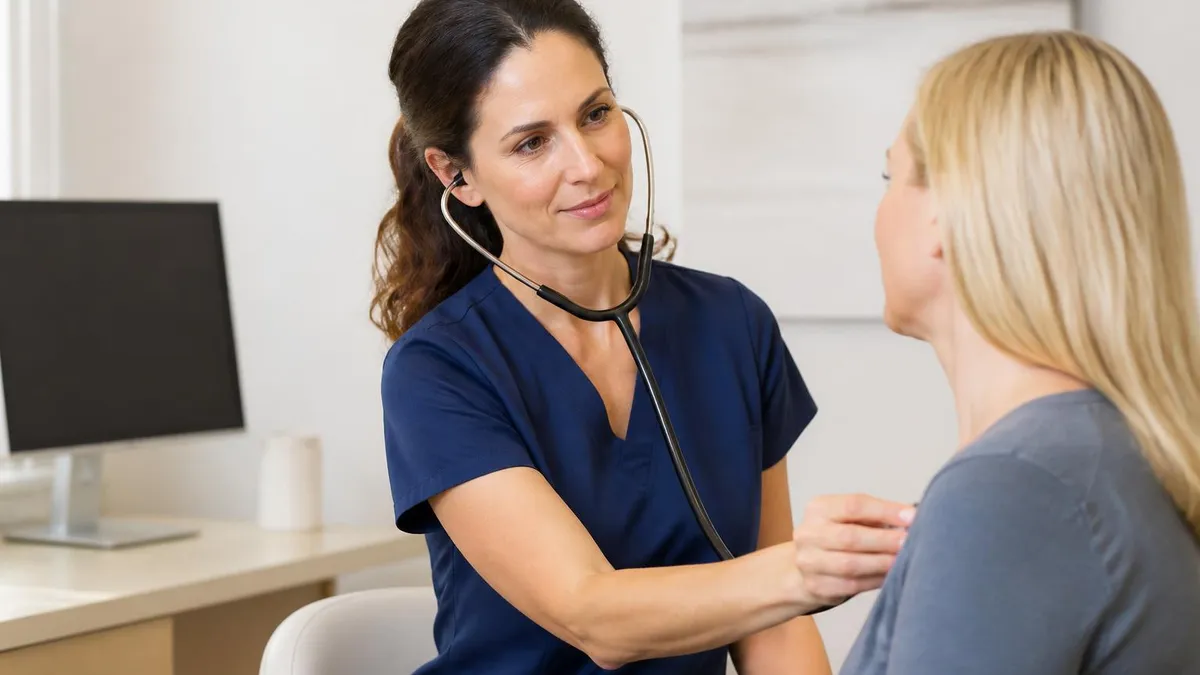
NP Education Pathways
Most common. 2-3 yrs after BSN. Total 6-8 years from start. $24K-72K cost typical.
For ADN holders. 5-7 years total. Work as RN during BSN bridge.
Doctoral path. 3-4 years after BSN. Total 7-9 years. Higher pay and standing.
Non-nursing bachelor's. 3-4 years accelerated. For career-changers.
Existing MSN, add NP. 1-2 years for additional coursework and clinical hours.
Online coursework + local clinical hours. Most online programs use this model.
NP specialty tracks. Choosing your specialty determines your patient population, work setting, and salary potential.
Family Nurse Practitioner (FNP). The most popular specialty, accounting for approximately 60% of NPs. Provides primary care across all ages — pediatric, adult, geriatric. Common settings: family practice clinics, urgent care, community health centers, retail clinics. Salary: $95,000-120,000 typical. Strong job demand in nearly all geographic markets.
Adult-Gerontology Primary Care NP (AGPCNP). Focuses on adults and geriatric patients (age 13+). Common settings: internal medicine, geriatrics, family practice. Salary: $90,000-115,000. Strong demand particularly in aging populations.
Adult-nurse p NP (AGACNP). Focuses on adult and geriatric patients in acute/hospital settings — ICU, emergency department, hospital medicine. Salary: $110,000-140,000. Hospital-based employment, often shift work.
Pediatric NP (PNP). Two pathways: PNP-Primary Care (pediatric primary care, ages birth-21) and PNP-Acute Care (hospitalized children). Common settings: pediatric clinics, children's hospitals. Salary: $90,000-115,000.
Psychiatric-Mental Health NP (PMHNP). Provides mental health care, including diagnosis, therapy, and medication management. Common settings: outpatient mental health clinics, hospitals, telehealth platforms, addiction treatment. Salary: $110,000-160,000. One of highest-paying NP specialties due to physician shortage in psychiatry.
Women's Health NP (WHNP). Focuses on women's reproductive and primary care across the lifespan. Common settings: OB/GYN clinics, women's health centers, community clinics. Salary: $95,000-120,000.
Neonatal NP (NNP). Focuses on newborns and infants, particularly in neonatal intensive care units. Common setting: NICU in hospitals. Salary: $110,000-150,000. High specialization; fewer total NPs.
Emergency NP. Newer specialty for emergency medicine settings. Often dual certification (acute care + family or pediatric). Salary: $110,000-140,000.
Specialty selection considerations: Career goals (primary vs acute care), Patient population preference, hazmat cdl jobs Geographic market demand for specialty, Personal interest in the patient population. FNP has the broadest demand and most flexibility; specialty NPs may have higher salaries but more limited job geography.
NP Specialty Stats
Choosing an accredited online MSN-NP program. Accreditation is essential — graduates of unaccredited programs may not qualify for state NP licensure.
Accreditation bodies: Commission on Collegiate Nursing Education (CCNE) — Accredits MSN and DNP programs at most universities. Most online MSN-NP programs hold CCNE accreditation. Accreditation Commission for Education in Nursing (ACEN) — Alternative accrediting body; some online programs hold ACEN accreditation. Both are recognized by state nursing boards for NP licensure.
What accreditation means: Programs meet established academic standards. Curriculum covers required content for NP practice. Clinical hours and supervision meet standards. Faculty are qualified. Graduates eligible for national certification exams.
How to verify accreditation: Visit CCNE (https://www.aacnnursing.org/CCNE-Accreditation) or ACEN (https://www.acenursing.org) websites. Search for the specific program by university name. Verify the program (MSN-NP specifically) is currently accredited, not just the university.
State approval: In addition to national accreditation, state nursing boards must approve programs. State approval may vary; some programs are approved in all states, others have specific state limitations. Verify state approval for your specific state.
Specialty accreditation: Some specialty tracks have additional certification body requirements. For example, ANCC (American Nurses Credentialing Center) accredits programs for many NP specialty certifications.
Top-ranked accredited online MSN-NP programs (examples — verify current rankings): University of Pennsylvania (Penn Nursing) — Top-tier private program. Vanderbilt University — Strong reputation in NP education. Duke University — Online MSN-NP program. University of South Florida — Public university with strong online program. Georgetown University — Online MSN-NP. University of Texas at Arlington — Public university with online options. Many state universities offer accredited online programs at lower cost than private.
What to consider when comparing programs: Accreditation status (essential), Specialty options offered, Program length and pace, Cost per credit and total cost, Clinical placement support, Reputation and graduate outcomes, Faculty qualifications, Student support services for online learners.
Accreditation and Program Quality
CCNE or ACEN accreditation is essential. Graduates of unaccredited programs cannot become licensed NPs. Verify accreditation on the specific accrediting body's website for the specific program (not just the university overall).
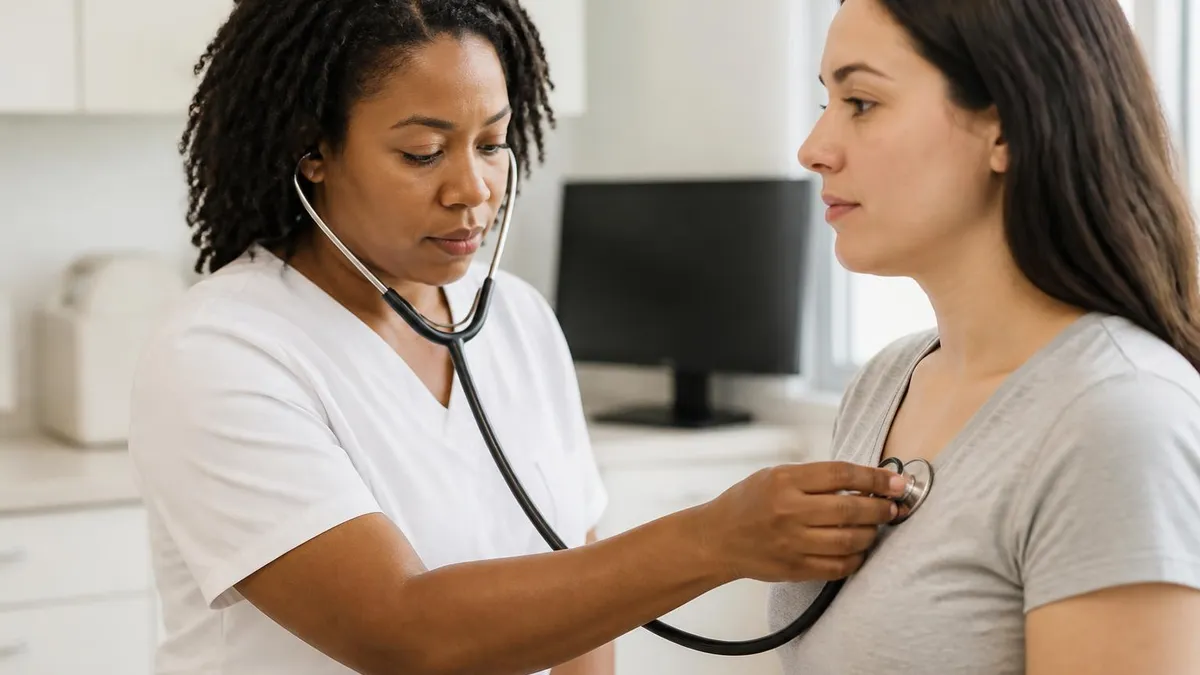
Admission requirements for online MSN-NP programs. Most programs share similar core requirements with variations.
Educational requirements: BSN from an accredited institution (most common requirement). Some programs accept ADN with bridge coursework. Direct-entry programs accept bachelor's in non-nursing fields. GPA minimum typically 3.0 (4.0 scale). Some programs require 3.5+ for competitive admission.
RN License: Current, unrestricted Registered Nurse license in your state. Some programs require multistate licensure (eNLC compact license).
Work experience: Most programs require 1-2 years of RN experience. Some require 2+ years in specific specialty (acute care for AGACNP, pediatrics for PNP). Other programs allow direct progression from BSN.
References: Typically 2-3 professional references (current or recent supervisors, professors, mentors). References speak to your clinical skills, character, and readiness for NP education.
Personal statement / essay: Most programs require 1-3 page personal statement covering: Why NP career, Why this specific specialty, Why this specific program, Career goals and how the program supports them.
Resume / CV: Educational and work history. Volunteer experience. Professional memberships and certifications.
Standardized tests: Some programs require GRE; others have eliminated this requirement. Verify with specific programs.
Prerequisite courses: Typical prerequisites include: undergraduate statistics, research methods, health assessment. Some programs require completion before application; others allow concurrent enrollment.
Personal interview: Many programs require an interview as part of admission. Often virtual for online programs. Tests communication skills, motivation, and professional readiness.
Application fees: $50-150 typical. Application materials processed during admission cycle (usually fall for spring/summer admission).
Application timeline: Apply 6-12 months before intended start date. Most programs have specific application deadlines (e.g., March for fall admission). Rolling admissions in some programs.
MSN-NP Admission Requirements
Most programs require BSN with 3.0+ GPA. Some accept ADN with bridge.
Active, unrestricted RN license in your state. Some require compact license.
1-2 years typical. Some specialty programs require specialty experience (acute care, peds, etc.).
2-3 professional references. Supervisors, professors, mentors who can speak to readiness.
1-3 pages explaining motivation, specialty choice, program fit, and career goals.
Many programs require interview (typically virtual). Tests communication and motivation.
Cost analysis for online MSN-NP programs. Investment varies substantially by program type and location.
Public university (in-state): Typically $300-500 per credit. Total for 60-credit MSN-NP: $18,000-30,000. Lower-cost option for state residents. Many state universities offer competitive online programs.
Public university (out-of-state): Typically $500-800 per credit. Total: $30,000-48,000. More expensive than in-state but often less than private universities.
Private university: Typically $700-1,200 per credit. Total: $42,000-72,000. Wider range — some private universities are extremely expensive (up to $1,500+ per credit at top schools).
For-profit online universities: Typically $500-800 per credit. Variable quality; verify accreditation carefully. Some are good; others have lower graduation rates and lower NP certification pass rates.
Additional costs beyond tuition: Books and course materials ($1,000-3,000 over program), Clinical supplies (stethoscope, lab coat, equipment — $500-1,500), Background check and immunizations for clinical sites ($200-500), Liability insurance ($150-300/year while in clinical), National certification exam after graduation ($200-300), State licensing fees ($100-500), Living expenses if working less due to school demands.
Total cost including ancillary expenses: $30,000-80,000 for most online MSN-NP programs.
Funding sources: Federal Direct Unsubsidized Loans (up to $20,500/year for graduate students). Graduate PLUS loans (up to remaining cost of attendance). Employer reimbursement (many hospitals reimburse for NP education). Federal scholarships and grants (NHSC, Indian Health Service). Private scholarships. Personal savings. Family support.
Loan considerations: NP graduates typically have $50,000-100,000 in student loan debt. Loan repayment programs exist for working in underserved areas (NHSC offers up to $50,000 loan repayment). Public Service Loan Forgiveness for those working in non-profit healthcare or government for 10 years with qualifying payments.
Return on investment: NP salaries ($110K-130K average) provide good ROI for the education investment. Most graduates can repay loans within 5-10 years while maintaining good lifestyle. The lifetime earning differential between RN and NP is substantial — well over $1 million across a career.
MSN-NP Cost Breakdown
Clinical hour requirements and how online programs handle them. Despite being mostly online, NP programs require substantial supervised clinical practice.
Required clinical hours: National standards require minimum 500-600 hours of supervised clinical practice for MSN-NP graduates. Some specialties require more. DNP programs typically require 1,000+ hours.
Clinical site requirements: Clinical hours must be supervised by qualified preceptors (typically physicians, NPs, or PAs) at approved clinical sites. Sites must be in the student's area of specialty (primary care for FNP, pediatrics for PNP, etc.).
How online programs handle clinical: Students complete coursework online. Programs typically help students find local clinical placements. Some programs require students to identify their own preceptors (this can be challenging). Strong programs have established relationships with clinical sites in many states.
Preceptor relationship: Your preceptor mentors your clinical experience. They observe your patient interactions, provide feedback, and verify hours. Strong preceptor relationships substantially improve learning. Poor or absent preceptor support handicaps the experience.
Clinical placement challenges: Some students struggle to find adequate clinical placements. Strong demand for NP students means established sites are often booked. Rural and remote students may face limited options. Some programs have stronger placement support than others.
Timing of clinical hours: Clinical hours typically begin in the 2nd or 3rd semester. Students complete clinical hours alongside coursework. Programs require demonstrating competence in core areas (history, physical exam, diagnosis, treatment planning).
Clinical evaluation: Preceptors evaluate students using standardized assessments. Clinical journals or logs document patient encounters. Comprehensive clinical exams sometimes administered at program completion. Many programs require a clinical scholarly project or capstone.
Tips for successful clinical experience: Establish relationships with potential preceptors early (during application or first semester). Network with practicing NPs in your area. Maintain professional behavior throughout — preceptors talk to each other. Document encounters thoroughly. Ask for feedback regularly. Take initiative within scope. Build your professional reputation during clinical hours.

The clinical hour requirement (500-600+ supervised hours) is the most challenging aspect of online MSN-NP programs for many students. Some programs have stronger placement support than others. Before enrolling, ask the program directly: 'How do you help students find clinical placements? What happens if I can't find a placement?' Strong programs have established networks. Weaker programs leave students to find their own preceptors — and many quickly discover that established NPs are in high demand and may not have capacity for students. Choose your program with placement support as a key criterion, particularly if you're in a market without strong NP communities.
National certification and state licensure after graduation. Required for NP practice.
National certification options: AANPCB (American Academy of Nurse Practitioners Certification Board) — Certifies FNP, AGPCNP, PNP, ENP. Computer-based exam, ~150 questions, 3 hours. Pass rate: 85-90% for accredited program graduates. Fee: $315 (members) or $415 (non-members).
ANCC (American Nurses Credentialing Center) — Certifies FNP, AGPCNP, PNP, PMHNP, ACNPC-AG, others. Computer-based exam, ~175 questions, 3.5 hours. Pass rate: 80-85% for accredited program graduates. Fee: $295 (members) or $395 (non-members).
Both certifications are widely accepted; choice depends on your specialty and preference. Some specialties are only offered by one body (PMHNP only through ANCC, for example).
Exam preparation: Most graduates spend 3-6 weeks preparing intensively. Resources include: Barron's NP review books ($30-50), Hollier review course ($200-400), Fitzgerald review course ($500-700), Apex Education NP review ($300-500), Online practice questions ($100-300).
What to expect on the exam: Multiple choice format. Tests integration of pathophysiology, pharmacology, health assessment, and clinical decision-making. Questions cover the specialty's scope of practice.
After passing certification: Apply for state NP licensure. Each state has specific requirements: National certification, application fee ($75-200), background check, transcripts, sometimes additional state-specific exam, sometimes proof of liability insurance.
State practice authority: Full Practice Authority states (26): NPs can practice independently, no physician supervision required. Examples: Washington, Oregon, Arizona, Colorado, Vermont, New Hampshire, Maine, others. Reduced Practice states: Some physician oversight required. Restricted Practice states: Significant physician collaboration required for prescribing. Most NP practice opportunities depend on state authority — full practice authority states offer more independent practice options.
DEA registration: NPs who prescribe controlled substances need DEA registration. Application is straightforward; fee is approximately $750 for 3 years.
NPI number: National Provider Identifier needed for billing. Free to obtain via CMS website.
Post-Graduation Timeline
Month 1: Graduation
Months 1-2: Cert Exam Prep
Month 2-3: Take Cert Exam
Month 3: State Licensure
Month 4-5: DEA + NPI
Month 4-6: Job Search
Month 6-9: Start NP Position
Year 1+ Career
For prospective nurse practitioners, the online MSN-NP pathway offers flexibility to advance your career while continuing to work as an RN. The investment of 2-3 years and $30,000-80,000 leads to a profession with strong job demand, competitive compensation ($110,000-130,000 average), and meaningful patient care responsibilities. With careful program selection — emphasizing accreditation, clinical placement support, and specialty fit — most committed students successfully complete the program and pass certification.
For currently practicing nurses considering this path, the recommended approach is: identify your target specialty (FNP for maximum flexibility, others for higher salary or specific patient populations); research accredited programs with strong clinical placement support; budget for the total investment including ancillary costs; plan for the time commitment (substantial study, clinical hours, and time away from family); and prepare for certification immediately after graduation. With this structured approach, the path from RN to NP becomes a manageable 3-4 year project that fundamentally upgrades your career and earning potential for the rest of your professional life.
BSN Pros and Cons
- +BSN has a publicly available content blueprint — you know exactly what to prepare for
- +Multiple preparation pathways accommodate different schedules and budgets
- +Clear score reporting shows specific strengths and weaknesses
- +Study communities share current insights from recent test-takers
- +Retake policies allow recovery from a difficult first attempt
- −Tested content scope requires substantial preparation time
- −No single resource covers everything optimally
- −Exam-day performance can differ from practice test performance
- −Registration, prep, and retake costs accumulate significantly
- −Content changes between versions can make older materials less reliable
Pros and Cons at a Glance
| Pros | Cons |
|---|---|
| BSN has a publicly available content blueprint — you know exactly what to prepare for | Tested content scope requires substantial preparation time |
| Multiple preparation pathways accommodate different schedules and budgets | No single resource covers everything optimally |
| Clear score reporting shows specific strengths and weaknesses | Exam-day performance can differ from practice test performance |
| Study communities share current insights from recent test-takers | Registration, prep, and retake costs accumulate significantly |
| Retake policies allow recovery from a difficult first attempt | Content changes between versions can make older materials less reliable |
Sample NP - Nurse Practitioner Practice Questions
Try these questions from our free NP - Nurse Practitioner practice tests. The correct answer and an explanation follow each question.
Which organization accredits nurse practitioner educational programs in the United States?
- A. American Nurses Credentialing Center (ANCC)
- B. Commission on Collegiate Nursing Education (CCNE)
- C. National Council of State Boards of Nursing (NCSBN)
- D. American Association of Nurse Practitioners (AANP)
Answer: B. Commission on Collegiate Nursing Education (CCNE)
The Commission on Collegiate Nursing Education (CCNE) and ACEN are the primary accrediting bodies for NP educational programs.
A state's Nurse Practice Act (NPA) is BEST described as:
- A. Federal legislation defining NP prescriptive authority nationally
- B. State legislation that defines the scope of nursing practice and establishes the state board of nursing
- C. A voluntary set of guidelines published by the AANP
- D. Hospital bylaws that govern NP privileges at a specific institution
Answer: B. State legislation that defines the scope of nursing practice and establishes the state board of nursing
Each state's Nurse Practice Act is state-level legislation that defines the legal scope of nursing practice, establishes licensure requirements, and creates the regulatory authority of the state board of nursing.
The pediatric nurse should hold and move a piece of yarn when conducting the Denver II assessment of the child's capacity to follow an object with the eyes to and past midline:
- A. 8 inches above the child’s face
- B. 18 inches above the child’s face
- C. 4 inches above the child’s face
- D. 12 inches above the child’s face
Answer: A. 8 inches above the child’s face
For the Denver II assessment, when evaluating a child's ability to follow an object with their eyes, the object (like a piece of yarn) should be held approximately 8 inches above the child's face. This specific distance allows for optimal visual tracking and assessment of eye movement across the midline without straining the child's eyes or causing discomfort, ensuring an accurate evaluation.
When a pediatric nurse conducts continuing nursing education on child safety and fall prevention for other nurses, she is acting in the capacity of:
- A. mentor
- B. clinical content expert
- C. preceptor
- D. change agent
Answer: B. clinical content expert
When a nurse conducts continuing nursing education on a specific topic like child safety and fall prevention, they are sharing specialized knowledge and expertise in that clinical area. This role identifies them as a clinical content expert, responsible for educating peers and enhancing their professional practice by disseminating evidence-based information.
NP Questions and Answers
The online NP degree pathway has become a viable, accessible route for working nurses to advance into the Nurse Practitioner role. The combination of online coursework flexibility and local clinical placements allows continued employment as an RN while completing the MSN. With accreditation, careful program selection, and commitment to clinical excellence, online NP graduates achieve the same outcomes as in-person graduates — competitive certification pass rates, state licensure, and successful NP careers.
The investment is substantial but the career rewards — both financial and professional — substantially exceed the cost over a career. For working nurses ready to take the next step, online MSN-NP programs offer one of the highest-ROI educational investments available in healthcare.
About the Author

Registered Nurse & Healthcare Educator
Johns Hopkins University School of NursingDr. Sarah Mitchell is a board-certified registered nurse with over 15 years of clinical and academic experience. She completed her PhD in Nursing Science at Johns Hopkins University and has taught NCLEX preparation and clinical skills courses for nursing students across the United States. Her research focuses on evidence-based exam preparation strategies for healthcare certification candidates.