
Nurse Practitioner Schools Houston Texas: 2026 Guide to Programs, Admission, Costs, and Certification
🎓 Compare nurse practitioner schools Houston Texas: program types, admission, clinical hours, costs, and certification steps to pick the right NP path.
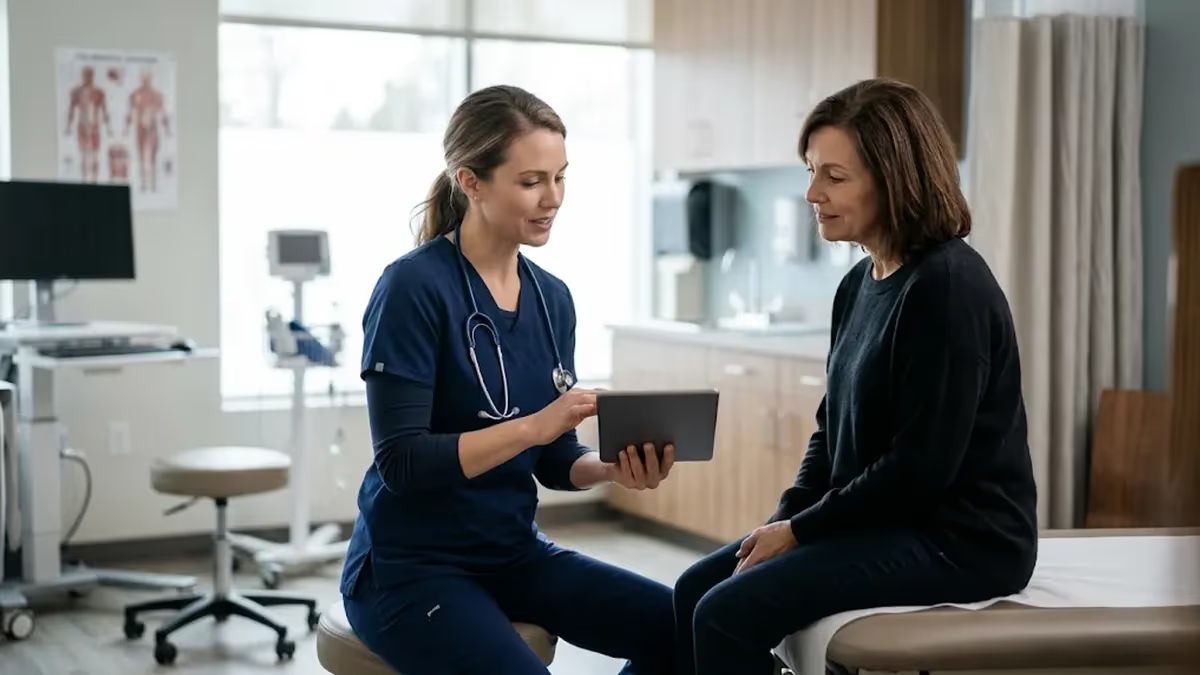
Choosing among nurse practitioner schools Houston Texas nurses can attend is one of the biggest career decisions a registered nurse in Southeast Texas will make. Houston is home to the Texas Medical Center, one of the largest medical complexes in the world, and that concentration of hospitals, clinics, and research institutions shapes everything about NP training here. It affects how many programs exist, how clinical placements work, and how competitive admission feels. This guide walks you through each stage, from choosing a specialty to earning certification. Practice with the free NP - Nurse Practitioner practice test on PracticeTestGeeks (7 questions with answer explanations).
Most readers start with a simple question: which school is best? The honest answer depends on your goals, budget, schedule, and chosen population focus. A bedside nurse working three twelve-hour shifts needs a very different program from a full-time student with savings. Some Houston programs are hybrid with periodic campus intensives, while others are mostly online with local clinical rotations. Comparing format, accreditation, placement support, and outcomes matters far more than any single ranking list.
This article also fits into a larger planning picture. If you are comparing nurse practitioner schools by city across the country, you will notice that the basic requirements repeat everywhere: an active RN license, a bachelor's or higher nursing degree, a graduate program accredited by CCNE or ACEN, supervised clinical hours, and national certification. What changes from city to city is cost, clinical access, and state practice rules. Houston adds Texas-specific rules every applicant should understand.
Texas is a restricted practice state for nurse practitioners. That means NPs are licensed by the Texas Board of Nursing as advanced practice registered nurses but need a prescriptive authority agreement with a physician to prescribe medications. This does not stop graduates from building rewarding careers, and Houston employers hire NPs in large numbers. However, it is one more reason to choose a program with strong local clinical partnerships, because relationships formed during clinicals often lead directly to job offers.
Demand is the other half of the story. The Bureau of Labor Statistics reported a median annual wage of about $129,210 for nurse practitioners in 2024 and projects employment growth of roughly 40 percent through 2034, among the fastest of any occupation. Houston's size, growing population, and shortage of primary care providers in many neighborhoods keep local demand high. Graduates in family, adult-gerontology, pediatric, psychiatric-mental health, and women's health roles all find openings across the metro area.
Before you apply, understand the pathway. Most students earn a Master of Science in Nursing or a Doctor of Nursing Practice, complete 500 or more supervised clinical hours, graduate from an accredited program, and then sit for a national certification exam through the ANCC or AANP. After passing, you apply to the Texas Board of Nursing for APRN recognition. Each step has deadlines and fees, and missing one can delay your start date by months.
Use the sections below as a working roadmap. You will find a snapshot of key numbers, a breakdown of program types, a look at how admission works, a comparison of school categories, an application checklist, and final preparation advice for certification. Along the way, try the free practice questions linked throughout the page to see how your knowledge compares with what national exams expect from new nurse practitioners.
NP: upcoming dates and official changes
- Oct 30, 2026: ANCC is updating the FNP exam's Test Content Outline and Reference List effective October 30, 2026, with a 12-business-day testing suspension beforehand; candidates can test before October 18 or after October 30. (American Nurses Credentialing Center (ANCC) — FNP-BC; AANP Certification Board (NPCB) — FNP certification)
- Updated Oct 26, 2026: Eligibility (NPCB FNP (FNP-C)) is now Accredited graduate FNP program with 500+ supervised clinical hours; active US RN license (previously Graduate FNP program, 500 supervised clinical hours, active US RN license).
- Updated Oct 26, 2026: Retake fee (NPCB FNP (FNP-C)) is now $315 non-member / $240 member per retake (previously $315 non-member / $240 member per retake).
- Updated Oct 26, 2026: Number of questions (ANCC FNP-BC) is now 175 questions (150 scored, 25 pretest) (previously 175 questions (150 scored, 25 pretest)).
Facts verified Nov 9, 2026 against American Nurses Credentialing Center (ANCC) — FNP-BC; AANP Certification Board (NPCB) — FNP certification. Dates that have passed are removed automatically.
- The ANCC FNP-BC exam has 175 questions: 150 scored and 25 unscored pretest questions. (American Nurses Credentialing Center (ANCC) — FNP-BC; AANP Certification Board (NPCB) — FNP certification)
- The NPCB FNP exam has 150 multiple-choice questions, of which 135 are scored and 15 are unscored pretest questions. (aanpcert.org)
- Candidates get 3 hours to complete the NPCB FNP certification exam. (aanpcert.org)
- ANCC FNP-BC exam results are reported as pass or fail, and failing candidates get diagnostic feedback for each content area. (American Nurses Credentialing Center (ANCC) — FNP-BC; AANP Certification Board (NPCB) — FNP certification)
- The NPCB FNP exam's passing score is set with a recognized standard-setting method and is not reported as a percentage correct. (aanpcert.org)
- Retaking the NPCB FNP exam costs $315 for non-members and $240 for AANP or AAENP members. (aanpcert.org)
- ANCC FNP-BC candidates who fail may retest after 60 calendar days and may test no more than three times in any 12-month period. (American Nurses Credentialing Center (ANCC) — FNP-BC; AANP Certification Board (NPCB) — FNP certification)
- NPCB FNP candidates may take the exam up to three times per calendar year (January 1 to December 31) and must submit a re-examination application for each retake. (aanpcert.org)
- The ANCC FNP-BC credential is valid for 5 years. (American Nurses Credentialing Center (ANCC) — FNP-BC; AANP Certification Board (NPCB) — FNP certification)
Facts verified Nov 9, 2026 against American Nurses Credentialing Center (ANCC) — FNP-BC; AANP Certification Board (NPCB) — FNP certification. Dates that have passed are removed automatically.
NP Exam at a Glance
| Item | Detail | Official source |
|---|---|---|
| Number of questions (ANCC FNP-BC) | 175 questions (150 scored, 25 pretest) | American Nurses Credentialing Center (ANCC) — FNP-BC; AANP Certification Board (NPCB) — FNP certification |
| Number of questions (NPCB FNP (FNP-C)) | 150 multiple-choice questions (135 scored, 15 pretest) | aanpcert.org |
| Time limit (NPCB FNP (FNP-C)) | 3 hours | aanpcert.org |
| Passing score (ANCC FNP-BC) | Pass/fail | American Nurses Credentialing Center (ANCC) — FNP-BC; AANP Certification Board (NPCB) — FNP certification |
| Passing score (NPCB FNP (FNP-C)) | Standard-setting cut score, not a percentage | aanpcert.org |
| Retake fee (NPCB FNP (FNP-C)) | $315 non-member / $240 member per retake | aanpcert.org |
| Retake policy (ANCC FNP-BC) | Wait 60 days; max 3 attempts in 12 months | American Nurses Credentialing Center (ANCC) — FNP-BC; AANP Certification Board (NPCB) — FNP certification |
| Retake policy (NPCB FNP (FNP-C)) | Up to 3 attempts per calendar year | aanpcert.org |
| Validity (ANCC FNP-BC) | 5 years | American Nurses Credentialing Center (ANCC) — FNP-BC; AANP Certification Board (NPCB) — FNP certification |
| Validity (NPCB FNP (FNP-C)) | 5 years | aanpcert.org |
| Delivery (ANCC FNP-BC) | Computer-based, scheduled through Prometric | American Nurses Credentialing Center (ANCC) — FNP-BC; AANP Certification Board (NPCB) — FNP certification |
| Delivery (NPCB FNP (FNP-C)) | Computer-based at Prometric test centers | aanpcert.org |
| Eligibility (ANCC FNP-BC) | Active RN license + FNP master's/PGC/DNP from a CCNE/ACEN/CNEA-accredited program with 500+ faculty-supervised clinical hours | American Nurses Credentialing Center (ANCC) — FNP-BC; AANP Certification Board (NPCB) — FNP certification |
| Eligibility (NPCB FNP (FNP-C)) | Accredited graduate FNP program with 500+ supervised clinical hours; active US RN license | aanpcert.org |
| Score release (NPCB FNP (FNP-C)) | Preliminary pass/fail immediately; official results after NPCB review | aanpcert.org |
| Testing window (ANCC FNP-BC) | Apply year-round; 120-day testing window | American Nurses Credentialing Center (ANCC) — FNP-BC; AANP Certification Board (NPCB) — FNP certification |
| Testing window (NPCB FNP (FNP-C)) | 120-day testing window | aanpcert.org |
Facts verified Nov 9, 2026 against American Nurses Credentialing Center (ANCC) — FNP-BC; AANP Certification Board (NPCB) — FNP certification. Dates that have passed are removed automatically.
Free NP - Nurse Practitioner Study Tools
Interactive NP - Nurse Practitioner resources on PracticeTestGeeks, free to start:
- NP - Nurse Practitioner flashcards — review key terms and concepts card by card
- NP - Nurse Practitioner study guide — topic-by-topic overview of what the exam covers
- NP - Nurse Practitioner cheat sheet — one-page printable summary for last-minute review
Houston NP Education by the Numbers

NP Program Types Available in Houston
The most common route. Typically two to three years part-time, with core graduate courses, advanced pharmacology, pathophysiology, and assessment, followed by specialty coursework and supervised clinical rotations that prepare you for national certification and Texas APRN recognition.
A practice doctorate that adds leadership, quality improvement, and evidence-based practice to clinical training. Post-baccalaureate DNP tracks usually require at least 1,000 practice hours and a scholarly project, and they suit nurses seeking senior clinical or administrative roles.
Designed for nurses who already hold an MSN or DNP and want a new population focus, such as moving from family to psychiatric-mental health. Coursework is shorter, but you still complete the clinical hours required for the new certification.
These routes serve associate-degree nurses by combining missing bachelor's-level coursework with graduate study. They save time compared with earning a BSN first, though the workload is demanding, and each school sets its own admission and sequencing rules.
Admission to Houston NP programs usually starts with a handful of core requirements. You will need an unencumbered RN license, a BSN from an accredited institution for most MSN tracks, and a minimum GPA, often 3.0 on a 4.0 scale, though competitive cohorts frequently admit applicants well above that. Many programs also ask for one to two years of clinical nursing experience, and acute care tracks may require critical care experience specifically. Always verify current requirements directly with each admissions office.
Applications typically include official transcripts, a personal statement, a current resume or CV, and two to three professional references. Some schools add an interview, a writing sample, or a short video response. Your statement should explain why you want to be an NP, why you chose that specific population focus, and how your nursing experience prepared you. Specific stories about patients you have cared for are far more persuasive than general claims about compassion or leadership.
Deadlines matter more than many applicants realize. Several Houston programs admit students only once or twice a year, and fall cohorts may close applications many months ahead. Start planning at least twelve months before your intended start date. Request transcripts early, because older records from community colleges can take weeks. If you are applying to several schools, build a spreadsheet with deadlines, fees, required documents, and recommender status so nothing slips through during a busy work schedule.
Prerequisite coursework is another common hurdle. Graduate programs often expect a statistics course and sometimes require undergraduate health assessment, pathophysiology, or research courses completed within a set number of years. RN-to-MSN bridge pathways exist for nurses with an associate degree, adding foundation coursework before graduate classes begin. If you hold a non-nursing bachelor's degree, look at direct-entry or accelerated programs, which first prepare you for RN licensure and then continue into advanced practice courses.
Accreditation deserves special attention. Graduate nursing programs should be accredited by the Commission on Collegiate Nursing Education or the Accreditation Commission for Education in Nursing. Certification bodies and the Texas Board of Nursing rely on educational preparation, so graduating from an unaccredited program can block you from sitting for the national exam. Check each school's accreditation page, confirm the specific NP track is covered, and note the date of the next accreditation review.
Clinical placement policies vary dramatically and should influence your decision. Some Houston programs find preceptors and sites for you, while others expect students to secure their own. Self-placement can be stressful in a market where many students compete for the same family medicine and pediatric clinics. Ask admissions staff what percentage of students are placed by the school, how far you may need to travel, and what happens if a placement falls through mid-semester.
Finally, consider the human side of admission. Attend virtual information sessions, speak with current students, and ask recent graduates about faculty support, exam pass rates, and job outcomes. Admissions counselors can tell you about scholarships, employer tuition benefits, and loan repayment options such as the NURSE Corps program or Texas-based incentives. A short conversation can reveal details no website lists, and it demonstrates the initiative that faculty look for in future advanced practice nurses.
Nurse Practitioner Schools Houston Texas: Comparing Your Options
Public universities in the Houston area, including the University of Texas Health Science Center at Houston, Texas Woman's University with its Houston campus, and Prairie View A&M University's nursing campus in the Texas Medical Center, tend to offer lower in-state tuition and strong ties to major hospital systems. They often provide several NP tracks, research opportunities, and faculty who maintain clinical practices.
Public schools generally publish clear tuition schedules, outcomes data, and accreditation details, which makes comparison easier. Ask about residency rules, since out-of-state students may pay considerably more, and about class size and clinical placement support. Because specific tracks and delivery formats change from year to year, always confirm which NP specialties each school currently admits before building your application timeline around one campus.

Is Studying to Become an NP in Houston Worth It?
- +Access to the Texas Medical Center and its enormous variety of clinical sites
- +Strong local job market across hospitals, clinics, and specialty practices
- +Multiple public and private programs, plus online and hybrid formats
- +Diverse patient population that builds broad clinical experience
- +Employer tuition reimbursement is common among large health systems
- +Networking opportunities with experienced NPs, physicians, and faculty
- −Texas restricts NP practice and requires a prescriptive authority agreement
- −Competition for preceptors can be intense in popular specialties
- −Traffic and long commutes make clinical site travel stressful
- −Admission to public programs can be highly competitive
- −Tuition and fees add up quickly, especially at private schools
- −Balancing full-time work, family, and clinicals demands careful planning
Pros and Cons at a Glance
| Pros | Cons |
|---|---|
| Access to the Texas Medical Center and its enormous variety of clinical sites | Texas restricts NP practice and requires a prescriptive authority agreement |
| Strong local job market across hospitals, clinics, and specialty practices | Competition for preceptors can be intense in popular specialties |
| Multiple public and private programs, plus online and hybrid formats | Traffic and long commutes make clinical site travel stressful |
| Diverse patient population that builds broad clinical experience | Admission to public programs can be highly competitive |
| Employer tuition reimbursement is common among large health systems | Tuition and fees add up quickly, especially at private schools |
| Networking opportunities with experienced NPs, physicians, and faculty | Balancing full-time work, family, and clinicals demands careful planning |
Nurse Practitioner Schools Houston Texas Application Checklist
- ✓Confirm your RN license is active and unencumbered.
- ✓Choose your population focus before comparing schools.
- ✓Verify CCNE or ACEN accreditation for the exact NP track.
- ✓Request official transcripts from every college you attended.
- ✓Check minimum GPA and nursing experience requirements.
- ✓Ask each program how clinical placements are arranged.
- ✓Secure two or three strong professional references early.
- ✓Draft a specific, story-driven personal statement.
- ✓Estimate total cost of attendance and apply for aid.
- ✓Calendar every deadline and submit a week early.
Clinical Placement Support Can Matter More Than Tuition
A cheaper program that leaves you searching for preceptors can delay graduation by a semester or more, costing lost wages and extra fees. Before you commit, ask what share of students are placed by the school and how far sites typically are from your home.
Clinical training is where Houston's location becomes a real advantage. National standards call for at least 500 supervised direct patient care hours, and many programs require 600 to more than 1,000 depending on the track and degree. Doctor of Nursing Practice students typically complete at least 1,000 post-baccalaureate practice hours in total. Houston's hospitals, community health centers, school clinics, and specialty practices offer an unusually wide range of settings, from busy urban emergency departments to quiet neighborhood primary care offices.
Your specialty determines both your coursework and your clinical sites. Family nurse practitioner students care for patients across the lifespan and rotate through primary care, pediatrics, women's health, and sometimes urgent care. Adult-gerontology acute care students work in intensive care units, step-down units, and inpatient specialty services. Pediatric students split time between primary and acute settings, while psychiatric-mental health students focus on assessment, psychotherapy, and medication management in outpatient and inpatient behavioral settings.
Choosing between primary and acute care is a major fork in the road. Primary care roles emphasize prevention, chronic disease management, and long-term relationships. Acute care roles emphasize stabilizing complex patients, interpreting rapidly changing data, and performing procedures. Houston's large hospital systems hire both kinds, but acute care positions are concentrated in the Medical Center and major community hospitals. Shadow an NP in each setting before committing, because daily rhythms differ more than job titles suggest.
Understand how preceptor relationships work. A preceptor is a licensed provider, often a nurse practitioner or physician, who supervises you during clinical rotations and evaluates your performance. Strong preceptors teach clinical reasoning, not just procedures. They ask you to explain your differential diagnoses, justify your treatment plans, and defend your documentation. Treat every rotation like a months-long job interview: arrive prepared, ask thoughtful questions, and send a sincere thank-you note when the rotation ends.
Expect a heavy schedule. A part-time student might complete about twelve to sixteen hours of weekly clinical time during a semester, while full-time students may spend two or three full days per week at sites. Few employers allow nurses to shorten their workweek easily, so plan conversations with your manager early. Some students move to per-diem status, switch to night shifts, or save money for a semester of reduced hours during the most demanding rotations.
Simulation and procedural labs supplement real patient encounters. Houston programs often use high-fidelity mannequins, standardized patients, and telehealth practice to teach skills such as suturing, joint injection, pelvic examination, and difficult conversations. Simulation hours may count toward some requirements but rarely replace direct patient care hours entirely. Ask each program how simulation is used, whether it counts toward your total, and whether skills intensives require travel or overnight stays on campus.
Finally, think about certification alignment. Your program prepares you for a specific national exam, such as the ANCC or AANP family nurse practitioner exam, the AGACNP certification, or the PNCB pediatric primary care exam. Choose a track that matches the population you actually want to serve, because switching later usually means completing a post-master's certificate with additional clinical hours. Confirm that the school publishes first-time certification pass rates and graduate employment data.

Program offerings, tracks, tuition, and deadlines change frequently. Confirm CCNE or ACEN accreditation for your specific NP track and check current requirements with the school and the Texas Board of Nursing. An unaccredited program can make you ineligible for national certification.
After graduation, your first official task is passing a national certification exam. The ANCC and AANP Certification Board both offer exams for family and adult-gerontology roles, while pediatric and other specialties use organizations such as the PNCB or NCC. Registration usually requires your school to verify graduation, so confirm early how quickly the registrar sends final transcripts. Many graduates schedule the exam within one to three months of finishing while content is still fresh.
Next comes Texas licensure. The Texas Board of Nursing grants APRN recognition to nurses who hold an active RN license or multistate privilege, a graduate degree from an accredited program, and national certification in a role and population focus. You submit an application, pay fees, and complete any required background check. Processing times vary, so start the paperwork as soon as you receive certification results, and do not practice as an APRN until you hold written authorization.
Prescriptive authority is a separate step in Texas. Nurse practitioners generally need a prescriptive authority agreement with a delegating physician, which spells out how prescribing, quality assurance, and chart review will occur. Controlled substance prescribing is subject to additional rules, including Drug Enforcement Administration registration and Texas prescription monitoring requirements. Many employers handle the agreement for new hires, but you should read it carefully and understand which medications and patient populations it covers.
Now consider cost. Tuition at Houston programs varies widely by school type, residency status, and degree. Public university MSN programs may total roughly $20,000 to $45,000, while private institutions and some DNP programs can reach $60,000 to $100,000 or more. Add fees, books, equipment, certification exams, licensing applications, and travel to clinical sites. Request a complete cost-of-attendance estimate from each school rather than comparing per-credit prices alone, since credit totals differ substantially between programs.
Financing options go beyond student loans. Many Houston hospital systems offer tuition reimbursement in exchange for a service commitment, and federal programs such as the NURSE Corps Scholarship and loan repayment support nurses who work in high-need areas. Texas also supports nursing education through state grants and loan repayment for certain providers. Apply for scholarships from professional organizations, and complete the FAFSA early, because some institutional aid is awarded on a first-come basis.
Return on investment is typically strong. With a median national NP wage above $129,000, many graduates recover their tuition within a few years, especially if they stay with an employer that offers sign-on bonuses or loan assistance. Pay in Houston varies by specialty, setting, and experience, with psychiatric, acute care, and specialty clinic roles often paying more than some primary care positions. Compare benefits, malpractice coverage, and continuing education allowances alongside salary.
Plan for renewal as well. APRN recognition in Texas must be renewed along with your RN license, and national certification has its own renewal cycle with continuing education or practice-hour requirements. Keep documentation in one digital folder, including certificates, hour logs, and agreements. Setting calendar reminders ninety days ahead of every expiration date prevents lapses that could interrupt your ability to work, and it is a habit that serves you for your entire career.
Practical preparation starts long before your first class. Spend the months before admission strengthening the skills graduate faculty value: physical assessment, pharmacology, and clinical reasoning. Review common lab values, major drug classes, and the pathophysiology behind the conditions you see at work. Even twenty minutes a day builds an enormous advantage once graduate coursework accelerates and you are expected to learn new material while also working shifts.
Build a study system that fits your actual life. Block out recurring study sessions on your calendar, keep a running list of topics you struggle with, and use spaced repetition for pharmacology and guidelines. Study groups are useful in advanced practice programs because explaining a concept aloud reveals gaps instantly. Houston's coffee shops, libraries, and Medical Center study spaces make it easy to find a consistent location away from household distractions.
Practice questions are the most direct preparation for certification. Case-based questions force you to choose among plausible answers, which mirrors how national exams test clinical judgment. Start with untimed sets to learn the reasoning, then move to timed blocks that simulate exam pressure. After every set, read the rationales for questions you got right as well as wrong, since a correct guess hides a knowledge gap that could cost you points later.
Track your results by domain. Note whether you miss questions about assessment, diagnosis, treatment, pharmacology, or professional issues, then target those weak areas in your next week of study. Pay attention to patterns such as misreading the question stem, ignoring age or pregnancy status, or choosing a treatment before confirming a diagnosis. These test-taking habits are fixable, and correcting them can raise your score without learning a single new fact.
Protect your wellbeing during school. Burnout is common in graduate nursing students who combine full-time work, family responsibilities, and clinical rotations. Schedule sleep, meals, and at least one non-negotiable break each week. Tell your family and coworkers about your timeline so they can support you. If your program offers counseling, writing support, or tutoring, use it early rather than waiting for a crisis, because early help is faster and easier to access.
Network deliberately. Join professional organizations such as the American Association of Nurse Practitioners or the Texas Nurse Practitioners, attend local chapter meetings, and connect with alumni from your school. Many Houston NP jobs are filled through referrals before they are posted publicly. Keep your resume current, and as you approach graduation, organize it in a strong curriculum vitae format that highlights clinical hours, populations served, procedures, and leadership activities.
Finally, take action this week. Pick two or three programs, request information, and book at least one advising conversation. Decide on a specialty, estimate your budget, and map a timeline backward from your target start date. Then try the free practice questions below to gauge your starting point. A realistic plan, steady preparation, and the right Houston program can turn the goal of becoming a nurse practitioner into a concrete, achievable career.
Sample NP - Nurse Practitioner Practice Questions
Try these questions from our free NP - Nurse Practitioner practice tests. The correct answer and an explanation follow each question.
A 6-year-old child is brought in for enuresis. He was previously dry at night but began wetting the bed 3 months ago after starting school. This is best classified as:
- A. Primary nocturnal enuresis
- B. Secondary nocturnal enuresis
- C. Diurnal enuresis
- D. Neurogenic bladder
Answer: B. Secondary nocturnal enuresis
Secondary enuresis refers to bedwetting that recurs after a dry period of at least 6 months, often triggered by psychosocial stressors like starting school.
When an NP participates in a Prescription Drug Monitoring Program (PDMP), the PRIMARY regulatory purpose is to:
- A. Reduce NP prescribing authority for controlled substances
- B. Identify and prevent drug diversion, doctor shopping, and opioid misuse
- C. Report prescribers with high controlled substance volumes to the DEA
- D. Increase reimbursement rates for controlled substance prescriptions
Answer: B. Identify and prevent drug diversion, doctor shopping, and opioid misuse
PDMPs are state-run electronic databases designed to track controlled substance prescriptions to identify patterns of misuse, diversion, or doctor shopping.
Which federal program specifically provides health coverage for low-income adults, children, pregnant women, elderly adults, and people with disabilities?
- A. Medicare
- B. TRICARE
- C. Medicaid
- D. CHIP only
Answer: C. Medicaid
Medicaid is a joint federal-state program providing health coverage to low-income individuals across multiple eligibility categories, while Medicare primarily serves those 65+ or with certain disabilities.
Which organization accredits nurse practitioner educational programs in the United States?
- A. American Nurses Credentialing Center (ANCC)
- B. Commission on Collegiate Nursing Education (CCNE)
- C. National Council of State Boards of Nursing (NCSBN)
- D. American Association of Nurse Practitioners (AANP)
Answer: B. Commission on Collegiate Nursing Education (CCNE)
The Commission on Collegiate Nursing Education (CCNE) and ACEN are the primary accrediting bodies for NP educational programs.
Take the full NP - Nurse Practitioner practice test
NP Questions and Answers

Nurse Practitioner Qualifications: Complete 2026 Guide to Education, Certification, and Licensure Requirements
Nurse Practitioner Programs in Arkansas: 2026 Guide to Admission, Licensure, Costs, and Choosing the Right School

History of Nurse Practitioners: From 1965 to Today's Advanced Practice

Nurse Practitioner Side Hustle: 10+ Ways NPs Earn Extra Income in 2026

Nurse Practitioner CV Examples: How to Build a Standout NP Curriculum Vitae in 2026
Written and edited by Nathan Beja, founder of Practice Test Geeks, with AI assistance. Exam facts are checked against the official sources linked below. Editorial policy
Sources & references
Exam facts on this page (fees, format, dates, passing scores) are checked against these official sources; the date is our last check. Editorial policy
- aanpcert.org — Eligibility, exam format, passing score, retake policy, score release, test dates, time limit, score validity, retake fee, test delivery · verified Nov 2026
- nursingworld.org — Test delivery, eligibility, exam format, test dates, score validity, passing score, retake policy, exam information · verified Oct 2026