
Nurse Practitioner Near Me: How to Find, Choose, and Book the Right NP for Your Care
Searching for a nurse practitioner near me? Learn how to find, vet, and book an NP for primary care, urgent visits, mental health, and chronic conditions. ✏️

Typing "nurse practitioner near me" into a search bar usually means one of three things: your primary care doctor is booked out for weeks, you need a new provider after moving or switching insurance, or you finally want a clinician who has time to actually listen. Nurse practitioners (NPs) have quietly become the backbone of American outpatient care, staffing retail clinics, family practices, mental health groups, and rural health centers across all 50 states. Knowing how to evaluate one is now a basic adult skill.
An NP is a registered nurse with a master's or doctoral degree, national board certification, and state licensure to assess, diagnose, treat, and in most states prescribe medication. In 27 states plus Washington D.C., NPs hold nurse p meaning they can operate independently without physician supervision. In reduced or restricted practice states, they collaborate with a physician but still manage the bulk of your visit, your prescriptions, and your follow-up care.
For most everyday concerns, the experience is nearly identical to seeing a doctor. NPs handle annual physicals, sick visits, birth control, blood pressure management, diabetes follow-ups, anxiety and depression treatment, sports physicals, school forms, and routine labs. Many people who switch from an MD to an NP report longer appointment slots, fewer rushed conversations, and more emphasis on lifestyle counseling. That nursing-trained whole-person lens is part of what makes the model so popular with patients.
This guide walks through exactly how to find a qualified NP near you, what questions to ask before booking, how to verify credentials and state licensure, what to expect at the first visit, and how to know when an NP is the right fit versus when you should escalate to a physician specialist. We will also cover insurance, cash-pay pricing, telehealth options, and the specific NP specialties you may not know exist in your zip code.
If you are weighing an NP because of access, cost, or chronic frustration with the traditional MD funnel, the information below will help you make a confident choice. Healthcare in the U.S. is fragmented and confusing on purpose; the goal here is to flatten that complexity into a practical checklist you can use today. By the end, you should be able to open Google, run a smart search, and book a visit with the right clinician for your situation.
One last note before we dig in: the NP profession is regulated state by state, which means scope of practice, prescribing authority, and even the title displayed on the door can vary. A family nurse practitioner in Arizona has different legal independence than one in Texas or Georgia. We will flag those differences throughout so you understand what your local NP can and cannot do for you.
Whether you are looking for a same-day urgent care visit, a long-term primary care relationship, or a specialist for women's health, pediatrics, or psychiatry, the right nurse practitioner is almost certainly within ten miles of your home. Let's find them.
Nurse Practitioners in the U.S. by the Numbers

What a Nurse Practitioner Near You Can Treat
Annual physicals, well-woman exams, vaccinations, sports physicals, cancer screenings, lab work review, and lifestyle counseling for diet, sleep, and stress management.
Sinus infections, UTIs, strep throat, pink eye, minor lacerations, rashes, ear infections, sprains, and most non-emergency same-day complaints that would otherwise send you to an ER.
Hypertension, type 2 diabetes, high cholesterol, asthma, hypothyroidism, GERD, and ongoing medication titration with quarterly labs and refills handled directly through the office.
Depression and anxiety screening, SSRI prescribing, ADHD evaluation in many states, smoking cessation, and referrals to therapy. Psychiatric NPs handle more complex medication regimens.
Birth control prescriptions and IUD placement, Pap smears, pregnancy testing, STI screening, menopause management, and basic infertility workup before specialist referral.
The first instinct when you need care is to open Google Maps and search the literal phrase "nurse practitioner near me." That works, but it surfaces a noisy mix of urgent care chains, hospital-affiliated clinics, independent practices, and aesthetic medspas that happen to employ an NP. To get a more useful list, refine your search with one of these qualifiers: "family nurse practitioner near me," "psychiatric NP near me," "women's health NP near me," or "NP accepting new patients [zip code]." Each pulls a meaningfully different result set.
The next tool to know is the AANP Find an NP directory at npfinder.com. It is free, searchable by zip code, specialty, and accepted insurance, and every clinician in it is a verified American Association of Nurse Practitioners member. Cross-reference any name you find on Google or Yelp against this directory to confirm the person actually holds active NP credentials and not just a similar-sounding nursing title. State board lookups, covered later in this article, are the gold standard for license verification.
Insurance company directories are the third pillar. Log into your member portal at UnitedHealthcare, Aetna, BCBS, Cigna, Humana, or Kaiser and filter providers by "nurse practitioner" or "nurse p nurse." These lists are usually outdated by 10 to 20 percent, but they tell you who is contracted and what your copay will be. Call the office directly to confirm the NP is still on staff and still accepting your plan before you build expectations around an appointment.
Do not overlook federally qualified health centers (FQHCs) and rural health clinics. These sliding-scale facilities are staffed heavily by NPs, accept Medicaid and uninsured patients, and exist in almost every county in the country. The HRSA Find a Health Center tool at findahealthcenter.hrsa.gov maps every FQHC nationwide. For many cash-pay or under-insured patients, an NP at an FQHC is the highest-value primary care option available.
Telehealth has changed what "near me" means. Several national platforms — including Hims, Hers, Sesame, K Health, Plushcare, and Talkiatry — connect you to NPs licensed in your state for same-day video visits, often for prescriptions, mental health follow-ups, or chronic condition refills. They are not a replacement for an in-person physical, but they handle a surprising share of routine care. If you live in a healthcare desert or work hours that conflict with clinic schedules, this category alone can solve your access problem.
Finally, ask humans. Post a vetted question in your local subreddit, neighborhood Facebook group, or workplace Slack. Real patient experiences surface clinicians who are kind, on time, and good at listening — qualities that never show up on a search results page. If you want to dive deeper into the broader profession before booking, the Nurse Practitioner Degree Online: BSN and MSN Programs, Specialties, Costs, and Career Path for Aspiring NPs guide explains exactly what training stands behind every NP you will meet.
The combination of a refined Google search, the AANP directory, your insurance portal, FQHC mapping, telehealth options, and word-of-mouth referrals will produce a shortlist of three to five strong candidates within 30 minutes. From there, your job is to vet, call, and book — covered in detail in the sections ahead.
NP Practice Test Questions
Prepare for the NP - Nurse Practitioner exam with our free practice test modules. Each quiz covers key topics to help you pass on your first try.
NP Adult-Gerontology Acute Care Nurse Prac...
NP Exam Questions covering Adult-Gerontology Acute Care Nurse Practitioner. Master NP Test concepts for certification prep.
NP Family Nurse Practitioner
Free NP Practice Test featuring Family Nurse Practitioner. Improve your NP Exam score with mock test prep.
NP Pediatric Nurse Practitioner
NP Mock Exam on Pediatric Nurse Practitioner. NP Study Guide questions to pass on your first try.
NP Case Studies & Practical Application
NP Test Prep for Case Studies & Practical Application. Practice NP Quiz questions and boost your score.
NP Communication & Stakeholder Relations
NP Questions and Answers on Communication & Stakeholder Relations. Free NP practice for exam readiness.
NP Diagnosis & Clinical Decision-Making
NP Mock Test covering NP Diagnosis & Clinical Decision-Making. Online NP Test practice with instant feedback.
NP Patient Education & Health Promotion
Free NP Quiz on NP Patient Education & Health Promotion. NP Exam prep questions with detailed explanations.
NP Pharmacology & Prescribing
NP Practice Questions for NP Pharmacology & Prescribing. Build confidence for your NP certification exam.
NP Professional Standards & Competencies
NP Test Online for Professional Standards & Competencies. Free practice with instant results and feedback.
NP Quality Control & Assurance
NP Study Material on Quality Control & Assurance. Prepare effectively with real exam-style questions.
NP Regulatory Frameworks & Compliance
Free NP Test covering Regulatory Frameworks & Compliance. Practice and track your NP exam readiness.
NP Research & Evidence-Based Practice
NP Exam Questions covering Research & Evidence-Based Practice. Master NP Test concepts for certification prep.
Where Nurse Practitioners Near Me Actually Practice
The most common setting is the standalone or small-group primary care practice. These offices typically include one or two physicians, a handful of NPs and PAs, and shared support staff. You can usually request an NP by name or simply book the next available appointment, which often is an NP because their schedules tend to have more openings.
Expect 20 to 30 minute visits, in-house labs, vaccinations, and continuity of care for chronic conditions. Many of these clinics now offer evening and Saturday hours staffed entirely by NPs to accommodate working patients who cannot make traditional 9-to-5 appointments without using vacation time.
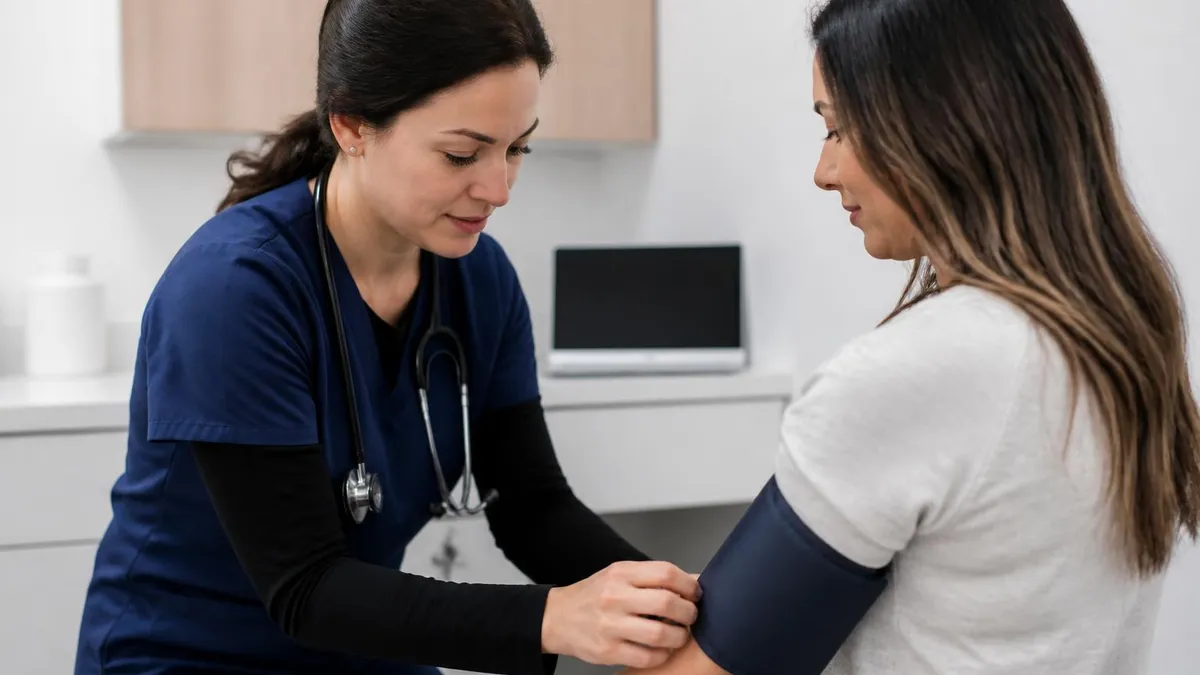
Seeing an NP vs an MD: Honest Tradeoffs
- +Shorter wait for new patient appointments, often within one week
- +Longer visit times allow real conversations about lifestyle, stress, and goals
- +Strong focus on patient education, prevention, and shared decision-making
- +Lower out-of-pocket cost for cash-pay visits at most practices
- +Available in retail clinics, telehealth, and rural areas where MDs are scarce
- +Excellent for routine primary care, chronic disease, and mental health management
- −Scope of practice limited in some states, requiring physician co-signature
- −May refer out for rare conditions or complex multi-system diagnoses sooner
- −Less training in surgical or procedural interventions than most physicians
- −Some specialty subfields still favor MD-led teams for the most complex cases
- −Patients with strong physician preference may need to specifically opt out at booking
- −Insurance reimbursement quirks occasionally affect coverage of NP-only visits
Vetting a Nurse Practitioner Near Me: 10-Point Checklist
- ✓Confirm active state license through your state Board of Nursing online lookup tool
- ✓Verify national certification through AANPCB or ANCC credential search
- ✓Match the NP's specialty (FNP, AGNP, PMHNP, PNP, WHNP) to your actual care needs
- ✓Check whether your state grants full, reduced, or restricted practice authority
- ✓Confirm the NP is currently accepting new patients of your age group and insurance
- ✓Ask about typical wait times for routine versus same-day urgent appointments
- ✓Verify the practice offers a patient portal for messaging, refills, and lab results
- ✓Read at least 10 recent reviews on Google, Healthgrades, and Zocdoc for consistency
- ✓Confirm after-hours coverage and which ER or urgent care they coordinate with
- ✓Ask whether they collaborate with a physician on site for complex case consultation
Always verify license status in the state where care will be delivered
Every state Board of Nursing publishes a free online license lookup. Search the NP's full legal name, confirm the license is active and unencumbered, and note the expiration date. This 60-second check protects you from clinicians whose credentials have lapsed, been disciplined, or never existed in your state to begin with.
Insurance coverage for nurse practitioners is essentially identical to physician coverage at this point. Medicare reimburses NPs at 85 percent of the physician fee schedule, but to you as the patient, the copay is the same. Every major commercial insurer — UnitedHealthcare, Anthem, Aetna, Cigna, Humana, Kaiser, and the BCBS family — credentials NPs as in-network primary care providers. Medicaid covers NP visits in all 50 states, often as the primary access point for enrolled families.
If you have a high-deductible health plan, the cash-pay difference between an NP and an MD visit at the same practice can be meaningful. A standard 99213 office visit at a typical private practice runs $135 to $200 with an MD and $95 to $160 with an NP. Retail clinics post flat pricing — usually $89 to $129 for a focused visit and $159 to $199 for a more comprehensive evaluation. These numbers are remarkably consistent across the country.
FQHCs operate on a sliding-scale fee structure based on household income and family size. A visit that would cost $150 cash at a private practice may cost $25 to $40 at an FQHC for a low-income family of four. Bring proof of income — a pay stub, tax return, or unemployment letter — to your first appointment so the discount can be applied immediately rather than retroactively.
Telehealth NP platforms typically charge $35 to $99 per visit, with subscription bundles available for ongoing conditions like ADHD, anxiety, weight management, or hormone therapy. These services rarely accept insurance for the visit itself, though the prescriptions written can still be processed through your pharmacy benefit. Read the fine print on subscription auto-renewal terms before you sign up — many users discover ongoing charges months after the original need has resolved.
One frustrating insurance quirk: some plans require a primary care provider (PCP) to be designated on file, and certain plans historically only allowed physicians in that role. Most have updated this policy, but if you choose an NP as your PCP, log into the member portal and confirm the designation actually saves. If it bounces back, call member services and ask them to manually override — it is almost always possible but rarely automatic.
If you are uninsured and not eligible for Medicaid, ask the front desk about a self-pay discount. Many private practices offer 20 to 40 percent off the listed price for patients who pay in full at the time of service. This is rarely advertised but almost always available. Combine it with a low-cost retail pharmacy program like Mark Cuban Cost Plus Drugs for prescriptions, and a full NP visit plus 90 days of medication can stay under $150 total.
For a deeper look at what NPs are legally allowed to prescribe in your state, the can nurse practitioners prescribe medication in texas guide breaks down full prescriptive authority, controlled substance schedules, and the handful of remaining state-specific restrictions you should know about before your first visit.

An NP is the right choice for the vast majority of outpatient needs, but chest pain, stroke symptoms, severe abdominal pain, suicidal ideation with a plan, or any sudden neurological change warrants an ER visit, not a clinic appointment. Suspected cancer, complex autoimmune disease, or rare genetic conditions usually benefit from physician-led specialty teams. When in doubt, an NP is fully trained to triage and refer — call the office first.
Booking your first visit is mostly logistics, but a few small choices set the tone for everything that follows. Call the office during low-volume hours — generally between 10 a.m. and 11:30 a.m. or 2 p.m. and 3:30 p.m. — to avoid lunchtime hold queues. Ask the scheduler three specific questions: how long the new patient slot is, what records the NP would like sent ahead, and whether labs can be drawn the same day. A 40-minute slot with labs in-house is the gold standard for an initial visit.
Request that your previous provider fax or electronically transmit records at least one week before the appointment. Use the practice's preferred fax number — emailing PHI is rarely allowed under HIPAA — and confirm receipt 48 hours before the visit. If you have results from outside imaging, bring a CD or thumb drive of the actual images, not just the radiologist's report. This single step prevents the most common first-visit frustration: repeating tests you already had done.
Make a written list of three to five things you want to address. Bring it on paper or open it on your phone before the NP walks in. New patients consistently underestimate how fast a 30-minute visit goes, and the items at the bottom of your mental list get cut. Putting it in writing forces prioritization and ensures the most important concern is voiced in the first five minutes when there is still time for a thorough discussion.
Bring a current medication list including doses, frequencies, and the reason for each prescription, plus any over-the-counter supplements and vitamins. Photographs of the pill bottles work in a pinch. Pharmacists call this medication reconciliation, and getting it right at the first visit prevents dangerous interactions, duplicate prescriptions, and the kind of refill mix-ups that cost patients hours of phone tag down the line.
Prepare for the social history questions. NPs are trained to ask about diet, exercise, sleep, alcohol, tobacco, recreational drugs, sexual activity, stress, and household composition. None of these are judgment — they are diagnostic. Honest answers lead to better care. If you smoke a pack a day, say so. If you drink five cocktails a week, say so. The visit is confidential, the chart is not shared with employers, and the NP cannot help you optimize what you hide.
Finally, plan your follow-up before you leave the exam room. Ask: "When should I come back, and what would prompt me to call sooner?" Get the patient portal login activated at the front desk on your way out. Schedule any recommended labs or imaging immediately so they happen before the next appointment rather than after. This single discipline turns a one-time visit into a real ongoing care relationship, which is where the long-term value of having a regular NP actually comes from.
If you are still weighing what NP specialty fits your situation, the Nurse Practitioner Education Requirements: Complete 2026 Guide explains the specific training that distinguishes a family NP from a psychiatric mental health nurse practitioner NP, an acute care NP, or a pediatric NP — and which specialty is most likely to be in your zip code.
Once you have an NP you like, a few practical habits make the relationship dramatically more effective over time. Use the patient portal for every non-urgent question. Portal messages are answered within one to two business days, become part of your permanent record, and free up phone lines for true urgent calls. Refill requests, lab questions, and form completions almost always belong in the portal, not on the phone or in unscheduled drop-ins to the office.
Schedule annual physicals at the same time of year — your birthday month is the classic memory trick. This makes it easy to track trends across years and ensures preventive screenings (mammograms, colonoscopies, A1C checks, lipid panels) stay on the recommended cadence. Most NPs run a preventive care checklist at the annual and will catch anything you have drifted on, but consistent scheduling means fewer gaps and earlier catches when something does change.
If you start a new medication, set a calendar reminder for 30 days out to evaluate how you are feeling. Make a one-line note: working, side effects, no change. Send that note through the portal at the 30-day mark. This is the single highest-leverage habit for chronic condition management. NPs rely on patient-reported outcomes to titrate doses, and a clean 30-day check-in often eliminates the need for an entire follow-up appointment.
Keep a simple home health log for any chronic condition. Blood pressure readings twice a week, blood sugar logs for diabetics, mood scores for mental health, peak flows for asthmatics. Apps work, but a paper notebook works just as well. Bring it to every appointment. NPs make better decisions with two months of real data than with one in-office reading taken when you are anxious about being at the doctor.
Get to know the medical assistants and front desk staff. They are the gatekeepers for refills, prior authorizations, referrals, and squeezed-in same-day slots. A friendly relationship — remembering names, saying thank you, dropping off cookies once a year — measurably improves response times when you need something urgently. This is not transactional; it is recognizing that healthcare runs on a team, not just on the clinician with their name on the door.
For mental health conditions, ask explicitly whether your NP is comfortable continuing your current regimen long-term or whether they would prefer to transition you to a health nurse health nurse. Many family NPs are excellent at initial SSRI prescribing but refer out for stimulants, mood stabilizers, or any complex polypharmacy. Getting this clarified upfront prevents the awkward six-month visit where the NP suddenly decides you need a specialist and your next available appointment is 90 days away.
Finally, know when to switch. If you consistently leave visits feeling unheard, if your messages go unanswered for more than three business days, if the office routinely runs more than 30 minutes late, or if your concerns are dismissed without explanation — find a new NP. There are hundreds within driving distance of almost every American zip code. Loyalty to a clinician who is not serving you well costs years of suboptimal care, and you have permission to move on.
NP Questions and Answers
Psychiatric Mental Health Nurse Practitioner Guide
Nurse Practitioner Test

Nurse Practitioner Degree Online: BSN and MSN Programs, Specialties, Costs, and Career Path for Aspiring NPs
Nurse Practitioner Education Requirements: Complete 2026 Guide

Can Nurse Practitioners Prescribe Medication? State Rules Explained
About the Author

Registered Nurse & Healthcare Educator
Johns Hopkins University School of NursingDr. Sarah Mitchell is a board-certified registered nurse with over 15 years of clinical and academic experience. She completed her PhD in Nursing Science at Johns Hopkins University and has taught NCLEX preparation and clinical skills courses for nursing students across the United States. Her research focuses on evidence-based exam preparation strategies for healthcare certification candidates.