
Is Nurse Practitioner a Masters Degree? NP Degree Levels Explained 2026 October
Is nurse practitioner a masters degree? Learn about MSN, DNP, and NP degree requirements, program lengths, and career outcomes. 🎓

Is nurse practitioner a masters degree? The short answer is yes — the minimum educational requirement to become a licensed nurse practitioner in the United States is a Master of Science in Nursing (MSN), which typically takes two to three years beyond a bachelor's degree in nursing. However, the landscape has shifted significantly over the past decade, and many programs now offer the Doctor of Nursing Practice (DNP) as the preferred or even required terminal degree for advanced practice registered nurses entering the field.
The distinction matters for several reasons. Employers increasingly prefer — and some hospital systems now require — DNP-prepared NPs for leadership roles, specialized practice areas, and positions that involve quality improvement oversight or systems-level decision-making. At the same time, the MSN remains widely accepted for licensure and board certification in all fifty states, so graduates of master's-level programs are fully eligible to sit for credentialing exams and practice with the same prescriptive authority as DNP-prepared colleagues in most clinical settings.
Understanding the different degree pathways helps prospective NPs make informed decisions about the investment of time and money required for each option. An MSN program generally involves 36 to 54 graduate credit hours and can be completed in as few as two years for full-time students who already hold a Bachelor of Science in Nursing (BSN). Bridge programs exist for registered nurses who hold an Associate Degree in Nursing (ADN), allowing them to complete BSN coursework concurrently with or prior to graduate study.
The DNP, by contrast, typically requires 72 to 84 post-baccalaureate credit hours and adds one to three additional years of study beyond the MSN. Students who pursue a post-MSN DNP — meaning they already have a master's degree and are upgrading credentials — may complete the terminal degree in as little as two years of part-time study. The capstone of a DNP program is a scholarly practice project rather than original research, distinguishing it from the research-focused PhD in nursing science.
For anyone weighing career options, comparing the nurse practitioner degree level against other advanced practice pathways is an essential early step, since educational requirements, scope of practice, and salary trajectories differ meaningfully across professions. NPs, physician assistants, and certified nurse midwives all require graduate-level education, but the specific degrees, clinical hour requirements, and certification bodies vary considerably.
Board certification is the bridge between degree completion and clinical practice. After earning either an MSN or DNP with the appropriate population-focused specialty, graduates must pass a national certification exam administered by the American Nurses Credentialing Center (ANCC) or the American Academy of Nurse Practitioners Certification Board (AANPCB), depending on their specialty. Passing this exam, combined with state licensure, grants the legal authority to diagnose, treat, and prescribe — the hallmarks of advanced practice nursing.
This article walks through every major aspect of NP degree levels: what each credential entails, how long programs take, what they cost, how employers view each credential, and which specialty tracks are available at the master's and doctoral levels. Whether you are a pre-nursing student mapping out a decade-long career plan or an experienced RN deciding whether to pursue an MSN or jump straight into a DNP program, the information below will help you choose the path that aligns with your goals, timeline, and budget.
NP Degree Level by the Numbers
MSN vs DNP: Understanding the Two NP Degree Pathways
The minimum degree required for NP licensure. Typically 36-54 credit hours completed in 2-3 years. Graduates are fully eligible for board certification and independent practice in full-practice-authority states.
The terminal clinical degree for NPs. Requires 72-84 post-baccalaureate credit hours. Increasingly preferred by employers for leadership, specialized roles, and academic positions. Includes a practice-focused capstone project.
Designed for MSN-prepared NPs seeking doctoral credentials. Can be completed in 2-3 years of part-time study. Focuses on systems leadership, quality improvement, and evidence-based practice at an advanced level.
Allows BSN-prepared RNs to bypass the MSN and earn a DNP in one continuous program. Typically 3-4 years full-time. Becoming increasingly common as the DNP gains traction as the preferred entry-level NP degree.
The academic structure of nurse practitioner programs — whether MSN or DNP — follows a consistent framework established by accrediting bodies including the Commission on Collegiate Nursing Education (CCNE) and the Accreditation Commission for Education in Nursing (ACEN). All programs must meet defined standards for graduate-level nursing theory, advanced pharmacology, advanced health assessment, and pathophysiology, often called the three Ps. These foundational courses typically occupy the first year of study and prepare students for population-focused specialty coursework in subsequent semesters.
Beyond the core courses, students complete a series of specialty-track credits aligned with their chosen patient population. The National Organization of Nurse Practitioner Faculties (NONPF) has defined six population foci: family/individual across the lifespan, adult-gerontology, neonatal, pediatrics, women's health/gender-related, and psychiatric-mental health. Programs must demonstrate that graduates achieve competency across all NP core competencies within their chosen population focus, regardless of whether the degree awarded is an MSN or DNP.
Clinical hours represent one of the most consequential differences between NP programs and the RN education that precedes them. Accreditation standards require a minimum of 500 supervised clinical hours for graduation, though many programs require 600 to 700 hours. Some states have enacted higher minimums — California, for instance, has historically required additional hours for certain NP categories. Students are responsible for finding and securing their own clinical placements in many programs, which adds logistical complexity to the education process and can extend timelines for students in rural or underserved areas.
Online and hybrid NP programs have grown substantially since 2015, driven partly by demand from working RNs who cannot relocate for a residential program. Fully online programs complete all didactic coursework virtually while students complete clinical hours with preceptors in their local communities. The quality of online programs varies, and prospective students should verify CCNE or ACEN accreditation and confirm that the program is approved in the state where the graduate intends to practice, as some states have restrictions on out-of-state online programs.
The DNP curriculum adds several layers of content not found in MSN programs: healthcare policy and advocacy, interprofessional collaboration, advanced biostatistics and epidemiology, healthcare informatics, and an organizational or systems-level practice improvement project. This final scholarly project — often called the DNP capstone or DNP project — is the defining feature of the degree and distinguishes it from the research dissertation required for a PhD in nursing. DNP capstone projects address real clinical or organizational problems using evidence-based interventions and must demonstrate measurable outcomes.
Tuition costs vary dramatically by institution type. Public universities typically charge $500 to $900 per credit hour for graduate nursing programs, while private institutions may charge $1,000 to $1,800 per credit hour. A 42-credit-hour MSN program at a public university might total $21,000 to $38,000, while the same credential at a private university could exceed $70,000. DNP programs, with their higher credit requirements, carry proportionally higher costs. Many employers offer tuition reimbursement for nurses pursuing advanced degrees, and federal student loans, graduate assistantships, and HRSA nursing workforce development grants provide additional funding pathways.
Accreditation is non-negotiable when evaluating programs. Only graduates of CCNE- or ACEN-accredited programs are eligible to sit for national certification exams administered by the ANCC and AANPCB. State boards of nursing verify accreditation status before granting advanced practice licenses, so attending a non-accredited or provisionally accredited program carries significant professional risk. The CCNE and ACEN both maintain publicly searchable databases of accredited programs, and prospective students should cross-reference a program's claimed accreditation status with these official sources before enrolling.
NP Specialty Tracks by Degree Level
The Family Nurse Practitioner (FNP) track is the most popular NP specialty in the United States, available at both the MSN and DNP levels. FNPs are trained to provide primary care across the entire lifespan — from newborns through older adults — making graduates highly versatile in outpatient clinics, urgent care centers, community health centers, and rural health settings. The FNP certification exam is offered by both the ANCC (Family Nurse Practitioner board certification) and the AANPCB (FNP-C credential).
FNP programs require clinical rotations across pediatrics, adult medicine, women's health, and geriatrics to ensure comprehensive population coverage. Most programs mandate 600 to 700 clinical hours distributed across these areas. Graduates who pursue a DNP in family practice gain additional expertise in quality improvement and health systems leadership, making them well-positioned for roles as clinic medical directors, telehealth program managers, or academic faculty in nursing schools that require terminal degrees for tenure-track positions.

MSN vs DNP: Weighing the Degree Decision
- +MSN can be completed 1-3 years faster than a DNP, allowing earlier entry into practice
- +MSN programs generally cost $20,000-$40,000 less in total tuition than DNP programs
- +Both MSN and DNP graduates are eligible for board certification and full prescriptive authority
- +DNP opens doors to leadership, academic, and executive nursing roles requiring a terminal degree
- +DNP capstone projects develop advanced quality improvement skills valued by health systems
- +BSN-to-DNP programs let motivated students earn a terminal degree in one continuous track
- −DNP requires 72-84 credit hours versus 36-54 for MSN, representing a major time commitment
- −DNP tuition costs can exceed $80,000-$100,000 at private institutions
- −Some employers still treat MSN and DNP NPs identically in salary and role assignment
- −DNP capstone projects add scholarly workload that may be challenging for practicing nurses
- −Not all states have reached consensus on DNP as the required entry-level NP degree
- −Online NP programs vary widely in quality and clinical placement support — accreditation vetting is essential
Steps to Earn Your NP Degree: A Complete Roadmap
- ✓Earn a Bachelor of Science in Nursing (BSN) from an ACEN- or CCNE-accredited program
- ✓Pass the NCLEX-RN and obtain a registered nurse license in your state
- ✓Gain at least 1-2 years of clinical RN experience in your intended specialty area
- ✓Research and compare accredited MSN and DNP programs approved in your target practice state
- ✓Complete prerequisite graduate courses if required (statistics, research methods) before or during enrollment
- ✓Finish all graduate core nursing courses: advanced pharmacology, pathophysiology, and health assessment
- ✓Complete your population-focused specialty track courses aligned with your chosen NP certification
- ✓Log the required supervised clinical hours (minimum 500, ideally 600-700) with qualified preceptors
- ✓Complete DNP capstone or MSN scholarly project as required by your program
- ✓Apply for graduation and request official transcripts for licensure and certification applications
AACN Has Long Recommended DNP as the Entry-Level NP Degree
The American Association of Colleges of Nursing (AACN) first recommended the DNP as the preferred terminal degree for advanced practice nurses back in 2004, with implementation originally targeted for 2015. While that deadline was not enforced universally, the movement has continued. By 2026, over half of NP programs at research universities have moved to DNP-only entry, and many major health systems now list DNP as preferred or required for senior NP positions. Students beginning NP education today should factor this trajectory into their degree decision.
The financial calculus of NP education involves weighing upfront educational costs against lifetime earnings potential — and the numbers are compelling regardless of whether a graduate holds an MSN or DNP. The Bureau of Labor Statistics reports a 2024 median annual salary for nurse practitioners of approximately $126,000, with the top ten percent of earners exceeding $168,000. These figures represent a substantial premium over the registered nurse median of approximately $89,000, meaning the income gain from NP licensure typically recoups educational investment within three to five years of practice.
The salary differential between MSN- and DNP-prepared NPs is narrower than many prospective students expect. Most systematic salary surveys find that DNP-prepared NPs earn between $5,000 and $15,000 more annually than MSN-prepared colleagues in equivalent clinical roles, though this gap widens significantly for administrative, academic, and executive positions where the DNP is increasingly table stakes. Hospital chief nursing officers, nursing school deans, and system-level quality directors often require doctoral preparation, making the DNP an investment in career ceiling as much as immediate salary.
Geographic variation in NP compensation dwarfs the MSN-versus-DNP differential. NPs in California, Oregon, Washington, New York, and Massachusetts consistently earn $130,000 to $160,000 or more annually, while those in the South and Midwest may earn $95,000 to $115,000 in similar clinical roles. Full practice authority states — where NPs can practice without physician oversight — tend to offer higher compensation, particularly in independent practice or rural health settings where NPs fill primary care gaps that might otherwise go unmet.
Specialty also drives substantial salary variation independent of degree level. Certified Registered Nurse Anesthetists (CRNAs), who must now graduate from DNP programs under 2025 accreditation mandates, earn median salaries exceeding $220,000. Acute care NPs working in critical care, emergency medicine, and surgical subspecialties typically earn more than primary care-focused NPs, reflecting the complexity and acuity of patient populations they manage. PMHNP salaries have risen sharply in recent years, with telehealth platforms offering signing bonuses and productivity-based compensation that can push total earnings well above base salary surveys.
Employer-sponsored tuition benefits significantly alter the financial picture for many NPs. The majority of major health systems offer some form of tuition assistance for RNs pursuing advanced degrees, with benefits ranging from $2,500 to $10,000 annually in reimbursement. Some institutions have partnerships with specific nursing schools that offer discounted tuition or fully funded scholarship programs in exchange for practice commitments after graduation.
Federal programs including the NURSE Corps Loan Repayment Program offer up to 85 percent student loan forgiveness for NPs who commit to practicing in Health Professional Shortage Areas (HPSAs), which can dramatically reduce the net cost of NP education for graduates willing to serve underserved communities.
Return on investment calculations should also factor in the opportunity cost of extended education. A nurse earning $89,000 annually who spends two additional years in a DNP program — rather than entering NP practice after a two-year MSN — foregoes approximately $50,000 in additional NP salary during those extra years of study, on top of the higher tuition costs. However, for a nurse planning a 25-to-30-year career, a higher salary ceiling enabled by doctoral credentials can more than recoup this foregone income over time, particularly for those who move into academic or executive roles that require terminal degrees.
Financial aid literacy is an underappreciated competency for prospective NP students. Many applicants focus exclusively on tuition sticker prices without fully exploring fellowships, traineeships, and loan repayment programs specific to nursing. The Health Resources and Services Administration (HRSA) administers several workforce development programs with nursing-specific funding streams, including the Nurse Faculty Loan Program, which forgives up to 85 percent of loans for graduates who teach in nursing programs for at least four years. Exploring these options early — ideally before selecting a program — can substantially reduce the total cost of NP education regardless of degree level.

A small number of states have enacted or are considering regulations that impose additional educational requirements for NP licensure beyond the national minimum. Before enrolling in any NP program, verify that the degree level and program format you choose meet the specific requirements of the state where you intend to practice. Out-of-state online programs may not be approved in all states, and some hospital systems in restrictive-practice states require DNP preparation for clinical privileges. Contact your state board of nursing directly for the most current information.
Choosing the right NP degree pathway requires honest self-assessment of career goals, financial situation, family obligations, and tolerance for extended academic commitment. For a registered nurse who simply wants to transition into clinical practice as quickly as possible — whether to earn more, gain prescriptive authority, or take on more autonomous patient management — a well-regarded MSN program from an accredited institution is a perfectly sound and professionally respected choice. The MSN is the established, proven credential for NP practice, and the vast majority of NPs currently in practice hold master's degrees.
That said, the professional landscape is unambiguously tilting toward doctoral preparation over time. Major academic medical centers, integrated health systems, and Veterans Affairs facilities have increasingly listed DNP as preferred or required for senior NP positions, faculty appointments, and administrative leadership roles. Nurses who aspire to lead quality improvement programs at scale, shape institutional policy, or teach in nursing schools where terminal degrees are required for tenure should factor these realities into their degree planning, ideally making the decision about degree level before beginning their graduate program rather than returning for additional credentials later.
The BSN-to-DNP direct entry model deserves particular attention for nurses earlier in their careers who are willing to invest four to five years in continuous graduate study. While the time commitment is significant, this pathway allows students to enter practice with a terminal degree, avoiding the need to return for a post-MSN DNP later — a transition that working NPs often find logistically difficult while managing a clinical practice and family responsibilities. Many BSN-to-DNP students complete their degrees in their early to mid-thirties, giving them decades of practice at the doctoral level.
Part-time enrollment is another important variable in degree planning. Most NP programs — at both the MSN and DNP levels — offer part-time tracks designed for working nurses who cannot step away from income-generating employment during graduate study. Part-time MSN programs may take three to four years rather than two; part-time DNP programs may take four to six years. The extended timeline adds to total educational costs through ongoing tuition and delayed salary increases, but for many nurses, maintaining employment and health insurance while studying makes part-time enrollment the only viable option.
Program selection criteria beyond accreditation and cost include NCLEX-style board pass rates, clinical placement support, faculty accessibility, and alumni outcomes. Prospective students should ask programs directly about their most recent ANCC and AANPCB certification exam pass rates for graduating students, as pass rates vary meaningfully across institutions. Programs with strong clinical placement offices that actively recruit and vet preceptors ease one of the most stressful aspects of NP education; those that leave students entirely on their own for clinical placement can create significant delays and gaps in clinical training.
Residency and fellowship programs represent an emerging layer of post-graduate training for NPs, particularly in high-acuity specialties. Modeled on physician residency programs, NP residencies offer one to two years of supervised practice in settings like emergency medicine, primary care, or critical care before a new graduate transitions to independent practice. While not yet required or standardized, these programs are gaining traction at major health systems as a strategy for onboarding new NPs with limited specialty experience. DNP-prepared NPs are often preferred candidates for these competitive programs, creating another downstream advantage for doctoral credentials.
Ultimately, the question of whether a nurse practitioner is a master's or doctoral level clinician does not have a single right answer — it depends on the individual's career trajectory, practice setting, and long-term ambitions. What is clear is that investing in high-quality graduate nursing education, maintaining certification through continuing education, and staying current with evolving scope-of-practice regulations are the constants that define successful NP careers at any degree level. The degree is the foundation; the career built on top of it is the structure that matters most.
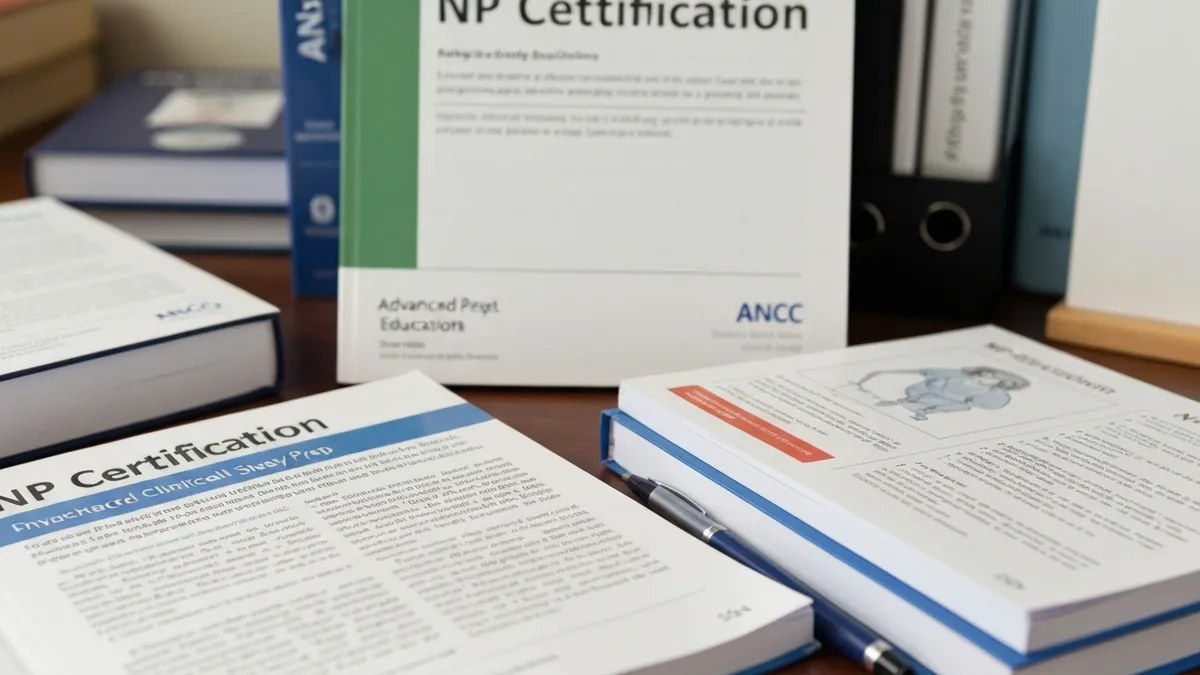
Preparing effectively for NP board certification exams requires a strategy that goes well beyond passively reviewing lecture notes. Whether you are sitting for the ANCC Family Nurse Practitioner board certification, the AANPCB FNP-C exam, the AGACNP exam, or any other NP credential, the most successful candidates combine systematic content review with extensive practice question exposure across all tested domains. Starting exam preparation early — ideally six months before your scheduled exam date — gives you time to identify and address knowledge gaps without the pressure of a looming deadline.
Content mastery across the three Ps — advanced pharmacology, advanced pathophysiology, and advanced health assessment — forms the backbone of most NP certification exams. Questions in these domains frequently require multi-step clinical reasoning: identifying the correct diagnosis based on a presenting symptom cluster, selecting the most appropriate first-line medication based on patient characteristics, or determining which physical exam finding is most significant given a specific clinical context. These question types reward deep conceptual understanding over rote memorization, making active learning strategies like case-based practice more effective than passive reading.
Time management during exam preparation is itself a learnable skill. NP certification exams typically allow three to four hours for 150 to 200 questions, which translates to roughly 90 seconds per question. Many candidates find that their knowledge is sufficient but their pacing suffers under timed conditions, leading to avoidable errors on questions they knew the answer to. Simulating exam conditions — including timing, question format, and limited break intervals — during practice sessions trains the mental endurance needed for a high-stakes three-hour exam.
The value of peer study groups is often underestimated during NP exam preparation. Explaining a clinical concept to a classmate reveals gaps in understanding that silent self-study misses entirely. Study groups also provide accountability structures that keep preparation on track during the months between graduation and exam sitting. Online communities of NP students and recent graduates share question banks, study schedules, and test-day experiences that can inform your own preparation strategy and reduce the uncertainty that accompanies any high-stakes professional exam.
Clinical experiences during the program contribute to exam readiness in ways that cannot be replicated through content review alone. Students who actively engaged with diverse patient populations during their clinical rotations — asking preceptors to explain their diagnostic reasoning, reviewing evidence-based guidelines in real time, and practicing physical examination skills on actual patients — enter board preparation with an experiential foundation that makes abstract content more memorable and applicable. If your clinical placements were limited or narrowly focused, consider supplementing your preparation with case-based resources that expose you to a wider variety of clinical presentations.
Post-exam, the process of maintaining NP certification introduces an ongoing commitment to continuing education. The ANCC and AANPCB both require periodic recertification — typically every five years — through a combination of continuing education hours, pharmacology-specific credits, and demonstrated practice activity. DNP-prepared NPs who move into academic or administrative roles must take care not to let clinical skills atrophy, as recertification requires evidence of ongoing clinical practice. Planning for recertification from the beginning of your NP career prevents the scramble that many clinicians experience as their certification renewal deadline approaches.
The NP profession is growing faster than almost any other healthcare occupation. The Bureau of Labor Statistics projects a 40 percent employment growth rate for nurse practitioners through 2033, compared to a seven percent average growth rate across all occupations.
This extraordinary demand reflects both the primary care physician shortage and the growing body of evidence demonstrating that NPs provide high-quality, cost-effective care across a broad range of clinical settings. For nurses contemplating the investment of graduate education, these workforce projections offer reassurance that the career opportunity ahead — whether built on an MSN or a DNP — is strong, durable, and deeply needed by American patients.
NP Questions and Answers

Nurse Practitioner vs Physician Assistant: Side-by-Side

How Long to Become a Nurse Practitioner: 6-8 Year Timeline

Travel Nurse Practitioner Salary: 2026 Pay Guide, Contract Rates, Stipends, and How to Maximize Your Earnings

Nurse Practitioner Taxonomy Code: Complete 2026 Guide to NPI Classification, Specialty Codes, and Billing Compliance

Family Nurse Practitioner Remote Jobs: Complete 2026 Guide to Telehealth Careers
About the Author

Registered Nurse & Healthcare Educator
Johns Hopkins University School of NursingDr. Sarah Mitchell is a board-certified registered nurse with over 15 years of clinical and academic experience. She completed her PhD in Nursing Science at Johns Hopkins University and has taught NCLEX preparation and clinical skills courses for nursing students across the United States. Her research focuses on evidence-based exam preparation strategies for healthcare certification candidates.