
What Is the Purpose of a Notary Public? Roles, Duties & How to Become One
What is a notary public and why does it matter? ✅ Learn the purpose, duties, stamp requirements, and how to become one in your state.

Understanding what is the purpose of a notary public is essential for anyone dealing with legal documents, real estate transactions, financial agreements, or official government paperwork. A notary public is a state-commissioned official authorized to serve as an impartial witness during the signing of important documents. Their core mission is to deter fraud by verifying the identity of signers, confirming that all parties are signing willingly, and certifying that documents are authentic and properly executed under the law.
What is a notary public, exactly? At its simplest, a notary is a trusted public officer appointed by a state government — typically the Secretary of State — to perform specific legal acts. These acts include administering oaths, taking acknowledgments, witnessing affidavits, and certifying copies of documents. The notary's official notary public seal or notary public stamp serves as proof that the notarization was performed correctly and that the signer's identity was verified through government-issued identification.
Notaries play a vital role across virtually every sector of American life. From home purchases and vehicle title transfers to business contracts and immigration documents, the notary's signature and seal transform ordinary paperwork into legally recognized instruments. Without notarization, many critical transactions simply cannot proceed. Banks, courts, government agencies, and private businesses all routinely require notarized documents as a condition of doing business.
The demand for notary services has grown substantially in recent years, driven by an expanding real estate market, increased international business transactions, and growing awareness of identity fraud. Modern notaries can now offer services not only in traditional office settings — such as notary public in Bank of America branches and UPS stores — but also through remote online notarization platforms that allow signers to connect with a notary via video conference from anywhere in the country.
Many people search for free public notary near me or free notary public near me options because notarization costs can add up, especially for those handling multiple documents. Fortunately, many banks, credit unions, public libraries, and AAA branches offer complimentary notary services to their members or customers. Knowing where to find these resources can save significant time and money during complex transactions.
If you are considering a career in this field, you will need to pass a how to become a notary public in florida examination and meet your state's specific requirements. The notary public exam tests your knowledge of state laws, proper notarial procedures, acceptable forms of identification, and ethical obligations. Preparing thoroughly for this exam is the first step toward building a rewarding career as a commissioned notary public.
This guide covers everything you need to know: the history and legal framework behind notarial acts, the specific duties notaries perform daily, how the notary public stamp and seal work, how to find notary services near you, and a complete roadmap for becoming a commissioned notary in your state. Whether you are a consumer needing services or a candidate preparing for the notary public exam, this comprehensive resource will give you the knowledge foundation you need to succeed.
Notary Public in the U.S. by the Numbers
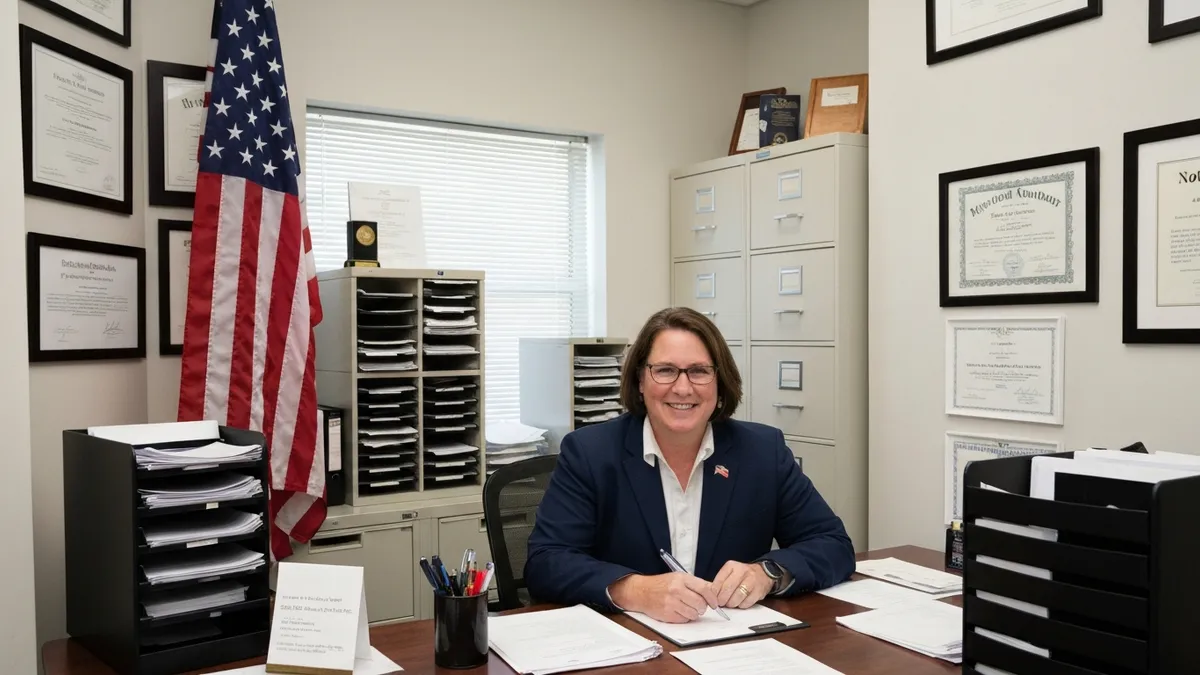
Core Duties of a Notary Public
Notaries must examine government-issued photo identification — such as a driver's license, passport, or state ID — to confirm that each signer is who they claim to be. This single duty prevents most document fraud and is the cornerstone of every notarial act.
The notary observes each party physically sign the document and confirms the signer did so freely, without coercion or duress. This is critical for wills, power of attorney forms, real estate deeds, and contracts that require an independent witness as a matter of law.
For affidavits, depositions, and sworn statements, the notary administers a verbal oath or affirmation, placing the signer under a legal obligation to tell the truth. False statements made after a notarial oath can constitute perjury under state and federal law.
Notaries can certify that a photocopy of an original document is a true and complete reproduction. Common uses include certified copies of diplomas, passports, and business records that must be submitted to government agencies or foreign courts.
Most states require notaries to maintain a chronological record book — called a notary journal or register — logging every notarial act performed. This journal creates an auditable trail that protects both the notary and signers if a transaction is later disputed in court.
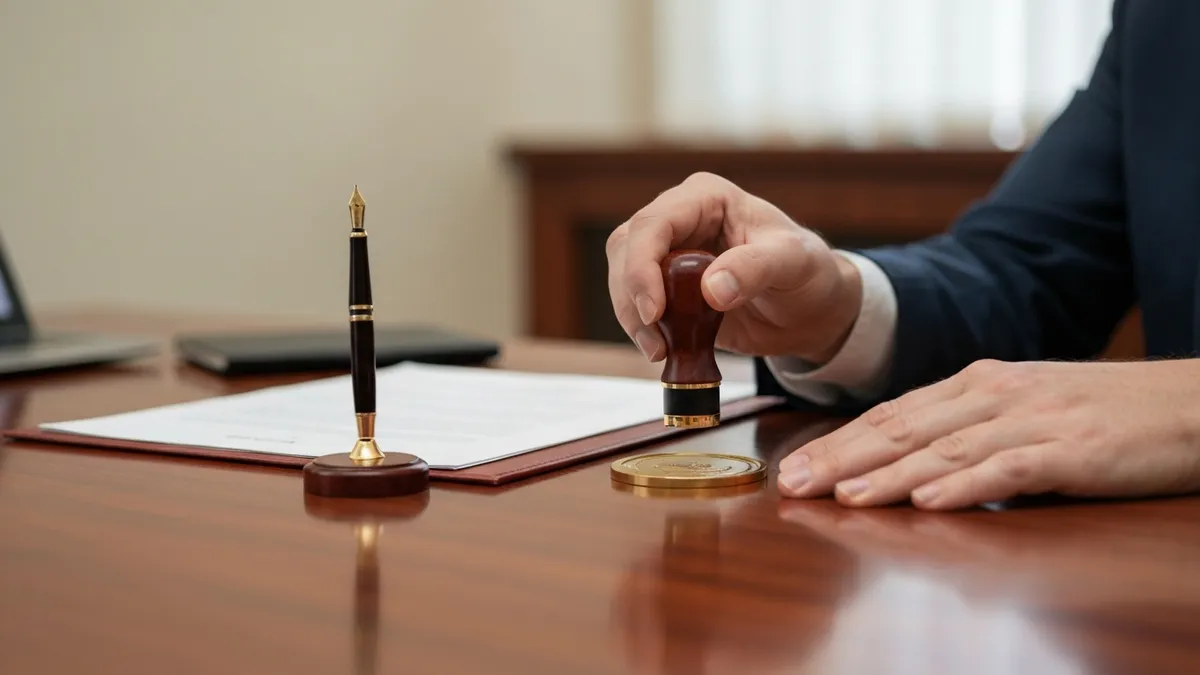
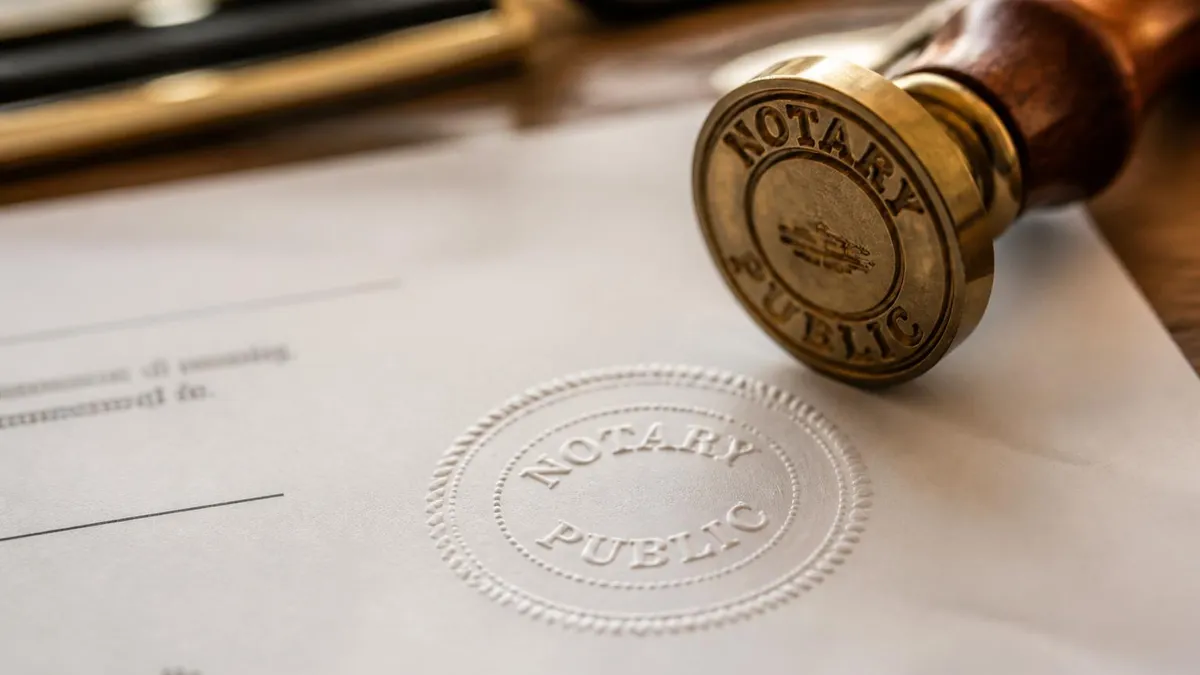
The notary public stamp and notary public seal are among the most recognizable symbols in American legal practice, yet many people do not fully understand what these tools represent or why they matter. The stamp (or embossed seal) is the official mark of a commissioned notary. When applied to a document, it communicates to any receiving party — a bank, courthouse, foreign government, or business — that a trained, state-authorized official has properly verified the transaction. Without this mark, many documents are considered legally incomplete or unacceptable.
Every notary public seal must contain specific information required by state law. At minimum, most states mandate that the seal display the notary's full legal name exactly as it appears on the commission, the words "Notary Public," the name of the state where the commission was issued, and the commission's expiration date. Some states also require the county of commission or a unique commission number. Any seal that is illegible, incomplete, or does not match the notary's current commission information can cause documents to be rejected by courts, title companies, or government agencies.
Notary stamps come in two primary formats: inked rubber stamps (which produce a flat impression in ink) and embossing seals (which create a raised impression on the paper). Many states accept both types, while others specify one format for certain document types. For international documents that will be submitted abroad, an apostille is often required — a separate certification issued by the Secretary of State that authenticates the notary's seal for use in countries that are parties to the Hague Convention.
Notaries are personally responsible for safeguarding their stamp and seal at all times. A lost or stolen notary stamp must be reported immediately to the state commissioning authority, and the notary may be required to apply for a replacement commission. Using another person's notary stamp, or allowing someone else to use yours, is a serious violation that can result in criminal charges, immediate revocation of the commission, and civil liability for any fraudulent documents created as a result.
The notary public renewal process typically requires notaries to surrender their old seal and obtain a new one reflecting the updated commission dates. Failing to use a current, valid seal is one of the most common errors that notaries make, and it can render years of notarized documents legally questionable. Best practice is to review your commission expiration date at least 90 days before it lapses and begin the renewal process immediately to avoid any gap in authority.
Digital and electronic notary seals have become increasingly important as remote online notarization (RON) has expanded across the country. Electronic seals are cryptographically linked to a notary's digital identity, making them tamper-evident and highly secure. States that have adopted RON legislation specify exactly what an electronic seal must contain and how it must be applied to electronically signed documents, ensuring that the same verification standards that apply to paper documents are upheld in the digital environment.
For candidates studying for the notary public exam, understanding the technical requirements for your state's seal is not just test prep trivia — it is practical knowledge you will use every single time you perform a notarial act. Exam questions frequently test whether candidates know what must appear on the seal, what to do if the seal is damaged or illegible, and the consequences of using an expired or improper seal. Mastering these details will help you score well on the exam and serve your clients with confidence throughout your career.
Types of Notarizations: Acknowledgments, Jurats & More
An acknowledgment is the most common type of notarial act in the United States. When a notary takes an acknowledgment, the signer appears before the notary and declares — or "acknowledges" — that they signed the document voluntarily and for the purpose stated within it. The notary verifies the signer's identity, confirms their willingness to sign, and completes a notarial certificate that becomes part of the document. Acknowledgments are used on real estate deeds, mortgages, power of attorney forms, and most contracts.
The critical distinction in an acknowledgment is that the signer does not have to sign in the notary's presence — they may have signed the document previously. What matters is that they appear before the notary and verbally confirm the signature is theirs and was made freely. This flexibility makes acknowledgments practical for high-volume real estate closings where documents are sometimes pre-signed and then brought to a closing agent or notary for final certification and sealing.
Is Becoming a Notary Public Worth It? Pros and Cons
- +Low barrier to entry — most states require only a brief application, background check, and passing a notary public exam
- +Flexible income stream — notaries can earn fees per notarial act, making it an excellent side business or supplemental income source
- +High demand across industries — real estate, legal, financial, medical, and government sectors all regularly need notary services
- +Remote work opportunities — remote online notarization allows notaries to serve clients nationwide from a home office
- +Career enhancement — adding notary credentials boosts resumes in legal, banking, insurance, and administrative fields
- +Community service aspect — offering free or low-cost notarizations helps underserved residents access important legal processes
- −State-specific rules create complexity — laws, fees, and procedures vary significantly from state to state, requiring ongoing education
- −Personal liability risk — notaries can be sued for errors, omissions, or improper notarizations even when acting in good faith
- −Surety bond and insurance costs — many states require a surety bond and most professionals recommend E&O insurance, adding upfront costs
- −Commission renewal requirements — notaries must track expiration dates, renew applications, and purchase new seals on a regular cycle
- −Scope limitations — notaries cannot give legal advice, prepare legal documents, or explain document content to signers
- −Fraud exposure — notaries are often targeted by fraudsters using fake IDs or forged documents, creating ongoing vigilance demands
Notary Public Exam Prep Checklist
- ✓Download your state's official notary public handbook and read it cover to cover before taking any practice tests.
- ✓Memorize the elements required on your state's notary public seal, including name, commission number, and expiration date format.
- ✓Learn the difference between an acknowledgment and a jurat — this distinction appears on nearly every state exam.
- ✓Study acceptable forms of identification your state allows for verifying signer identity during notarial acts.
- ✓Practice filling out notarial certificate wording for acknowledgments, jurats, oaths, and copy certifications.
- ✓Review your state's prohibited acts — including what notaries cannot do, such as giving legal advice or notarizing for close family members.
- ✓Understand journal requirements — what must be recorded, how long records must be kept, and what to do if the journal is lost or stolen.
- ✓Research the surety bond amount required in your state and compare E&O insurance providers before applying.
- ✓Take at least three full-length notary public practice exams and review every wrong answer with the corresponding state law citation.
- ✓Confirm your state's application deadlines, exam scheduling procedures, and commission activation timeline before submitting paperwork.
The Notary's Role Is Prevention, Not Authentication of Truth
A common misconception is that a notary public certifies that the contents of a document are true or legally valid. In reality, a notary's job is to verify the identity of the signer and confirm the signing was voluntary — not to evaluate whether the document's terms are fair, accurate, or enforceable. Understanding this boundary is critical for both the notary exam and professional practice, because overstepping it can constitute unauthorized practice of law.
Learning how to become a notary public is a straightforward process in most states, but the specific requirements — educational hours, exam format, bond amounts, and fees — vary considerably across the country. The first step is to check your state's eligibility criteria. In general, you must be at least 18 years old, a legal resident of the state where you are applying, and free of felony convictions or prior notary commission revocations. Some states, such as California and Florida, impose additional requirements including mandatory education courses and proctored state exams.
The application process typically begins by completing a state-issued notary commission application form, which you can usually download from the Secretary of State's website. This form asks for your personal information, employment background, and disclosure of any prior criminal history. You will also need to secure a surety bond — which protects the public against financial harm caused by notary errors — in the amount specified by your state. Bond amounts typically range from $500 to $25,000 depending on the jurisdiction.
In states that require a notary public exam, you will need to schedule and pass the exam before your commission is approved. The exam tests knowledge of state notary laws, acceptable identification procedures, notarial certificate requirements, prohibited acts, and journal-keeping obligations. Some states administer the exam through the Secretary of State's office, while others use third-party testing vendors. Preparation time varies, but most candidates report spending two to four weeks studying before attempting the exam.
Once your application is approved, you will receive your official notary commission certificate from the state. Before you can begin performing notarial acts, you must purchase your notary public stamp or embossing seal, and in many states you must also file your oath of office with the county clerk's office. Some states also require you to file your surety bond with the county before your commission becomes active, so review your state's specific activation checklist carefully to avoid delays.
The notario publico designation is worth noting here, particularly for notaries serving Spanish-speaking communities. In Latin American countries, a notario publico is a highly trained legal professional equivalent to a civil law attorney. This is fundamentally different from the U.S. notary public role. In the United States, it is actually illegal in many states for a notary to advertise themselves as a "notario publico" if they are not also a licensed attorney, because the term implies a level of legal authority that U.S. notaries simply do not have. This distinction is important both ethically and legally.
Many candidates wonder about texas notary public requirements specifically, as Texas is one of the larger states with a significant notary workforce. Texas requires applicants to be 18 or older, a Texas resident, and to submit a $10,000 surety bond along with the application fee. Texas does not require a pre-commission exam, but notaries are expected to understand state law and proper procedures. The commission term in Texas is four years, and notaries must renew before their commission expires to avoid a lapse in authority.
Continuing education after commissioning is strongly encouraged even in states where it is not mandated. Notary law changes regularly as legislatures update statutes to address electronic notarization, remote online notarization, and new types of documents requiring notarization. Joining a professional organization such as the National Notary Association (NNA) provides access to updated training materials, legal hotlines, and a community of peers who can help you navigate unusual situations. Investing in your professional development as a notary is one of the best ways to protect yourself from liability and build a strong reputation in your market.
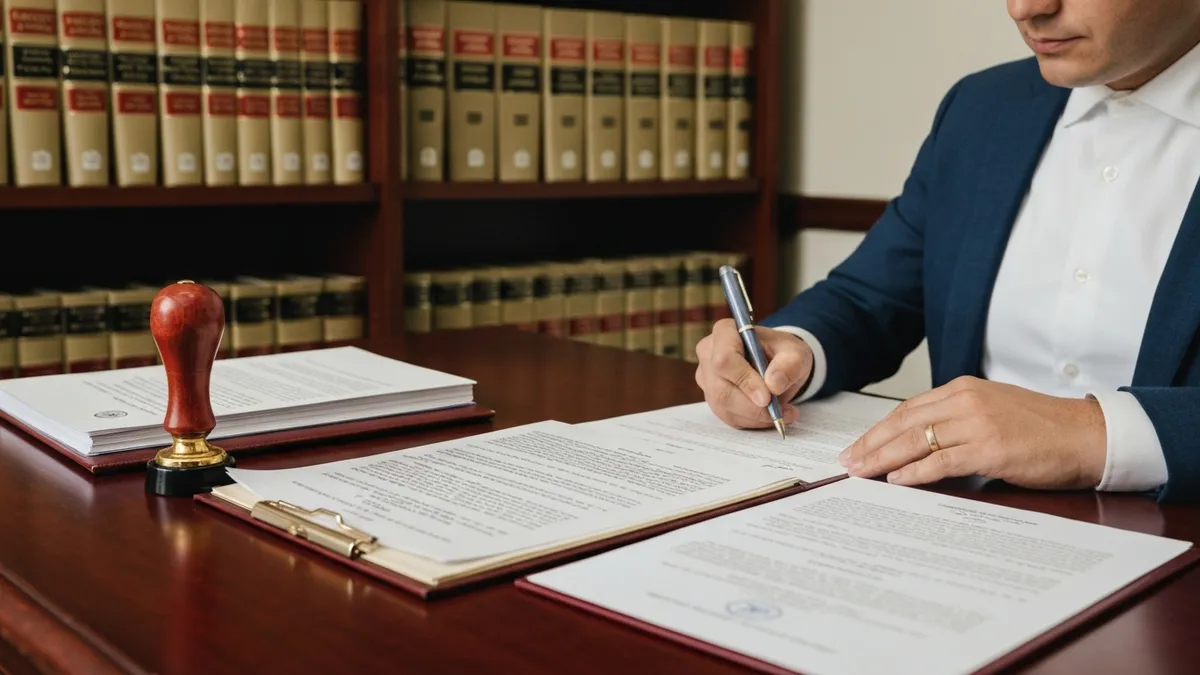
Advertising as a "notario publico" without being a licensed attorney is illegal in California, Texas, Florida, and several other states. The term implies full legal authority in Latin American countries, which can mislead Spanish-speaking clients into believing the notary can provide legal advice or prepare immigration documents. Always clarify the scope of your role in plain language — and in writing if necessary — to protect both your clients and your commission.
Finding notary services near you has never been easier, thanks to online directories, mobile notary apps, and the widespread availability of free notarizations through financial institutions. If you need a document notarized quickly and affordably, your first call should be to your bank or credit union.
Major institutions including Bank of America, Chase, Wells Fargo, and most credit unions offer notary public services at no charge to their account holders. Notary public in Bank of America locations is particularly convenient because the bank operates thousands of branches nationwide, and many branches staff at least one commissioned notary during regular business hours.
Public libraries have become an increasingly popular destination for people searching for free notary public near me options. Many library systems in urban and suburban areas now station trained notaries on specific days or by appointment, making legal document services accessible to community members who might not have bank accounts or cannot easily travel to a bank branch. Call your local library ahead of time to confirm availability, as staffing hours for notary services can vary week to week.
UPS Store locations, FedEx Office centers, and AAA branches are other reliable options for finding a notary quickly. These businesses typically charge a small fee per notarial act — usually between $5 and $15 — but their widespread locations and extended business hours make them convenient for time-sensitive needs. Shipping stores often handle notarizations alongside document printing, scanning, and mailing, allowing you to complete all steps of document submission in one stop.
Mobile notaries are commissioned officers who travel to clients' locations — offices, hospitals, nursing homes, jails, and private residences — to perform notarizations on site. Mobile notaries charge a travel fee in addition to the standard per-act fee, but they are invaluable for clients who are homebound, hospitalized, or incarcerated and cannot travel to a traditional notary location. Many mobile notaries are also loan signing agents who specialize in real estate closings and can handle large multi-document packages at a single appointment.
Remote online notarization (RON) platforms such as Notarize, PandaDoc Notary, and DocVerify have made it possible for signers anywhere in the country to connect with a commissioned notary via live video conference, sign documents electronically, and receive a notarized digital file — all in under 15 minutes.
RON is now legal in more than 40 states and is particularly valuable for out-of-state real estate transactions, international business agreements, and clients who live in rural areas without easy access to local notary services. If you need a public notary near me free resource, check whether your state has a directory of RON-enabled notaries who offer reduced fees for low-income clients.
For those preparing for the notary exam, understanding the landscape of notary services also means knowing how to advise future clients effectively. Clients will frequently ask you where they can get a document notarized for free, how long the process takes, and whether electronic notarization is accepted for their specific document type. Being able to answer these questions confidently builds trust and distinguishes professional notaries from those who simply stamp documents without adding meaningful guidance or assurance to the transaction.
When evaluating any notary you plan to use — whether in person or online — always verify that their commission is current and in good standing. Most state Secretary of State websites offer a free online search tool that allows you to confirm a notary's name, commission number, and expiration date. Taking 60 seconds to verify credentials before a transaction can prevent the costly and frustrating experience of discovering that a document was notarized by an expired or improperly commissioned notary, which can result in the document being rejected entirely by the receiving institution.
Building a successful career as a notary public requires more than passing the exam and purchasing a stamp. It demands an ongoing commitment to accuracy, ethical conduct, and professional development. One of the most important habits for any notary is meticulous journal-keeping. Every notarial act should be recorded immediately — not at the end of the day — with the date, type of act, document description, signer's name, identification type and number, and the fee charged. A well-maintained journal is your best defense if a transaction is ever questioned in court or by a regulatory authority.
Fraud prevention is a critical skill that all notaries must develop over time. Common fraud schemes targeting notaries include the use of high-quality counterfeit identification documents, signers who appear nervous or are accompanied by a controlling third party, documents with altered dates or blanks left for later completion, and requests to notarize documents outside your commission's geographic jurisdiction. Training yourself to recognize these red flags — and to refuse notarization when something feels wrong — protects both your clients and your commission from serious harm.
Professional notaries also need to understand the concept of notary errors and omissions (E&O) insurance. While a surety bond protects the public from financial harm caused by your mistakes, it does not protect you personally — the bonding company can seek reimbursement from you after paying a claim. E&O insurance, by contrast, covers your defense costs and any damages you are legally required to pay because of an error or oversight in your notarial work. For notaries who handle high-volume or high-value transactions, carrying E&O insurance is not optional — it is an essential cost of doing business responsibly.
Technology is transforming the notary profession at a rapid pace. Electronic notarization, remote online notarization, and blockchain-based document verification are all changing how notarial acts are performed and recorded. Notaries who invest time in learning these technologies early will be positioned to capture growing segments of the market, particularly in commercial real estate, cross-border business transactions, and estate planning. Many states now offer separate endorsements or certifications for electronic and remote notarization that you can add to your standard commission.
Marketing your notary services effectively is another skill set that separates successful notaries from those who struggle to build a client base. Create a professional profile on notary-finding platforms such as Notary Rotary, 123Notary, and the NNA's Signing Agent database. Build relationships with local real estate agents, mortgage lenders, estate planning attorneys, and insurance agents who regularly need notary services for their clients. Offering reliable, same-day or after-hours availability is a powerful differentiator in markets where traditional bank and office notaries are only available during weekday business hours.
Pricing your services fairly and competitively is essential for building a sustainable notary business. Research the maximum per-act fees allowed in your state — many states cap the amount a notary can charge per signature or stamp — and set your rates accordingly. For loan signing agents handling mortgage closings, fees are typically negotiated separately from per-act notary fees and can range from $75 to $250 or more per signing appointment depending on complexity, travel, and turnaround time required. Transparent, upfront pricing builds trust and reduces the likelihood of client disputes.
Finally, staying current with changes to your state's notary laws is a professional obligation that should not be overlooked. State legislatures update notary statutes regularly to address new document types, emerging fraud schemes, and evolving technology platforms. Subscribe to your state's Secretary of State newsletter, join a professional notary association, and set a calendar reminder to review your state's notary handbook at least once per year. The knowledge you invest in staying current will pay dividends in client confidence, exam preparedness if you ever need to re-test, and protection against inadvertent violations that could jeopardize your commission.
Notary Public Questions and Answers

How to Become a Notary Public: Complete State-by-State Training Guide

NC Notary Public Course: Complete Training Guide for North Carolina

Notary Public Commission Application: Complete Step-by-Step Guide for 2026
What Is a Notary Public Office? Everything You Need to Know

Notary Public Directory: How to Find, Verify, and Use a Trusted Notary in 2026
About the Author

Notary Public Law Expert & State Notary Exam Specialist
Georgetown University Law CenterAttorney Sarah Williams is a licensed attorney and National Notary Association (NNA) certified notary with a Juris Doctor from Georgetown University Law Center. She has 13 years of experience in notarial law, document authentication, and real estate closings. Sarah coaches candidates through state notary public examinations, notary signing agent certification, and loan signing agent training programs.