
Does Walgreens Have a Notary Public? Find Notary Services Near You
Does Walgreens have a notary public? 🔎 Learn where to find free notary services, what notaries do, and how to prepare your documents today.

If you've ever asked yourself does Walgreens have a notary public, you're not alone. Millions of Americans search for convenient, affordable notary services every year, often turning to pharmacies, banks, and retail chains they already trust. The short answer is that Walgreens does not offer notary public services at most of its locations as a standard feature, though policies can vary by store. Understanding what a notary public actually does, and where you can reliably find one, is essential before you rush out the door with your documents in hand.
A notary public is a state-commissioned official authorized to serve as an impartial witness to the signing of important documents. Their primary job is to verify the identity of signers, confirm that signatures are given voluntarily, and affix an official notary public stamp or notary public seal to certify the transaction. These certifications prevent fraud and ensure that legal documents — from real estate deeds to power of attorney forms — hold up in court and government offices across the country.
The demand for notary services has grown significantly in recent years, partly because more legal and financial transactions require notarized documents. Whether you need a free public notary near me for a last-minute affidavit or a mobile notary for a real estate closing at your kitchen table, options exist far beyond the pharmacy counter. Knowing where to look saves time, money, and unnecessary stress, especially when document deadlines loom.
Banks are among the most reliable sources of free notary services. Notary public in Bank of America branches, for example, is a commonly searched phrase because many major banks offer complimentary notarizations to account holders. Credit unions, UPS stores, libraries, and courthouses also provide access to commissioned notaries, often at low or no cost. Checking ahead by phone is always wise because notary availability depends on staffing at any given location.
For Spanish-speaking communities, the term notario publico carries a different connotation. In many Latin American countries, a notario publico is a highly trained legal professional similar to a lawyer who can draft contracts and authenticate legal transactions at a much broader level than a U.S. notary. This important distinction means that U.S. notaries cannot provide the same services as a notario in Mexico or Colombia, and relying on that assumption can lead to serious legal and immigration complications.
If you're preparing documents that require notarization, it helps to know in advance exactly what the notary will need from you. Most notaries require a valid, government-issued photo ID, the unsigned document (never sign before the notary witness), and in some cases, any required witnesses. Being organized before you arrive at a bank, library, or UPS store will make the process fast and smooth, typically taking less than fifteen minutes for standard documents.
For those interested in becoming a commissioned notary themselves, the path involves completing a notary public exam, submitting a commission application, and purchasing a notary bond. If you want to serve your home state, resources like guides for texas notary public requirements can help you understand the specific steps your state demands before you can legally notarize documents for others.
Notary Public Services by the Numbers

Top Places to Find a Notary Public Near You
Most major banks including Bank of America, Chase, and Wells Fargo offer free notary services to account holders. Call ahead to confirm availability, as not every branch has a commissioned notary on duty at all times.
Shipping and business service centers frequently employ on-site notaries for a small fee, typically ranging from $5 to $15 per signature depending on state fee limits. No appointment is usually needed.
Many local public libraries offer free or low-cost notary services to community members. Availability varies by branch and day, so calling your local library branch before visiting is strongly recommended.
A mobile public notary travels to your location for a premium fee, ideal for real estate closings or clients with limited mobility. Remote Online Notarization (RON) is now legal in most U.S. states.
County clerk offices, courthouses, and many city government buildings provide notary services, sometimes at no charge. These are excellent options for legal documents that must remain within the official government system.
Understanding what is a notary public at a fundamental level helps you know when you actually need one — and when you don't. A notary public is a public officer appointed by a state government, typically by the secretary of state, to serve as an official, impartial witness during the signing of documents. The notary's role is not to provide legal advice or explain what a document means, but strictly to verify identities, confirm voluntary consent, and apply the official notary public seal that authenticates the transaction.
The types of notarial acts vary by state, but the most common include acknowledgments, jurats, oaths and affirmations, copy certifications, and signature witnessing. An acknowledgment confirms that the signer personally appeared before the notary and acknowledged signing the document of their own free will. A jurat, by contrast, requires the signer to swear or affirm that the contents of a document are true, making it more commonly used for affidavits and sworn statements submitted to courts or government agencies.
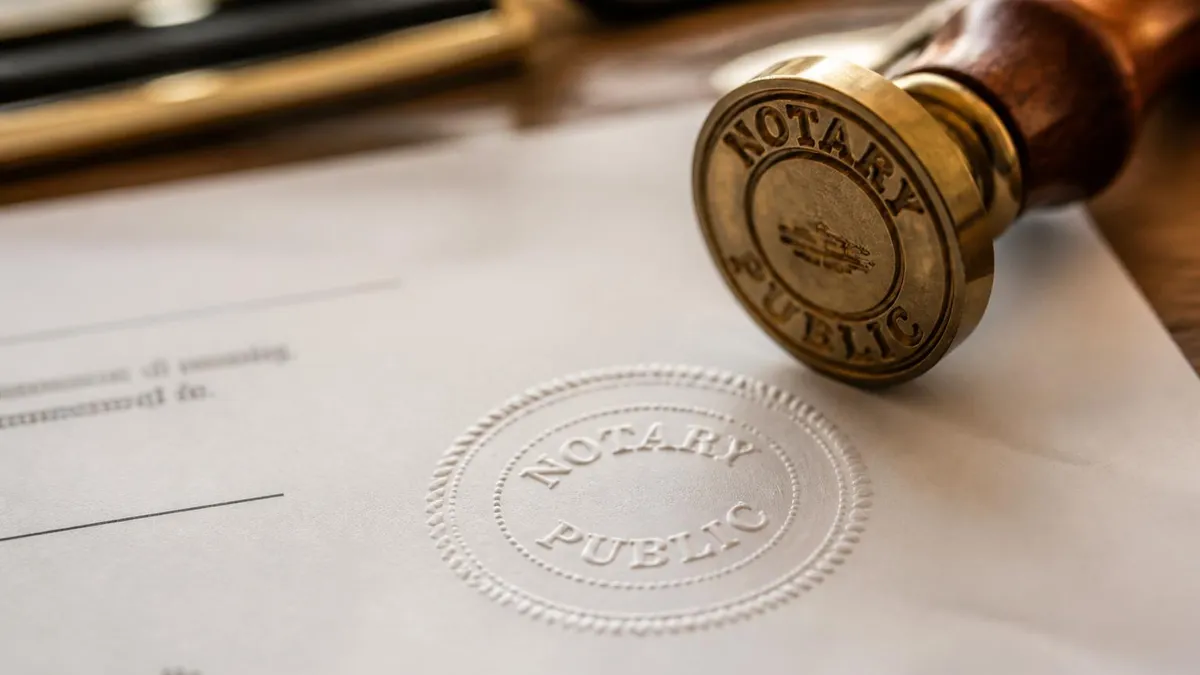
The notary public stamp is the tangible symbol of the notary's authority. This stamp — or in many states, an embossed seal — includes the notary's name, commission number, the state of commission, and the commission expiration date. Without this seal properly applied, many institutions and government offices will reject the notarized document entirely. Notaries are required by law to keep their seal secure and may face serious penalties if it is used improperly or by another person.
The notarization process itself is straightforward once you understand the steps. First, the signer must appear in person before the notary with valid, government-issued photo identification such as a driver's license, passport, or military ID. The notary verifies the ID against the person present. Then the signer signs the document in the notary's presence — never before arrival. The notary then completes their journal entry if required by state law, applies the seal, and signs the notarial certificate attached to or printed on the document.
It's important to understand that not all documents require notarization. Common documents that typically do require it include real estate deeds and mortgage documents, power of attorney forms, wills (in some states), certain affidavits, vehicle title transfers, and international documents requiring an apostille. Documents like standard employment contracts, personal letters, or most business contracts do not typically require notarization unless a specific party requests it for their own verification purposes.
For people in Spanish-speaking communities, the distinction between a U.S. notary public and a notario publico cannot be overstated. Unauthorized practitioners in some immigrant communities have fraudulently held themselves out as notarios capable of providing immigration legal services, which is illegal and has resulted in serious harm to thousands of families. The Federal Trade Commission and many state attorneys general have taken enforcement action against such fraud. If you need immigration legal help, only consult a licensed attorney or accredited immigration representative.
Those interested in the formal path to becoming a commissioned notary should know the steps differ significantly by state. Florida applicants, for example, must complete a state-approved education course — you can learn more through resources covering how to become a notary public in florida and similar state-level programs. Most states require applicants to be at least 18 years old, a legal resident, and free of certain criminal convictions before they can apply for their commission.
Free Notary Public Near Me: Comparing Your Best Options
Banks are the most widely available source of free notary public near me services across the United States. Major institutions including Bank of America, Chase, Wells Fargo, and Citibank offer complimentary notarizations to customers with active accounts. The service is typically available during regular banking hours, though you should always call ahead to confirm that a commissioned notary will be on duty that day, as branch staffing schedules change frequently.
Credit unions are another excellent option and often serve non-members as well as members at little or no cost. To use a bank notary, bring your unsigned document, a valid government-issued photo ID, and any required witnesses. The process is usually completed in under fifteen minutes. If your document requires multiple signatures from different parties, make sure everyone who must sign can appear at the same time, as notaries cannot notarize remote or later-arriving signers for the same session.
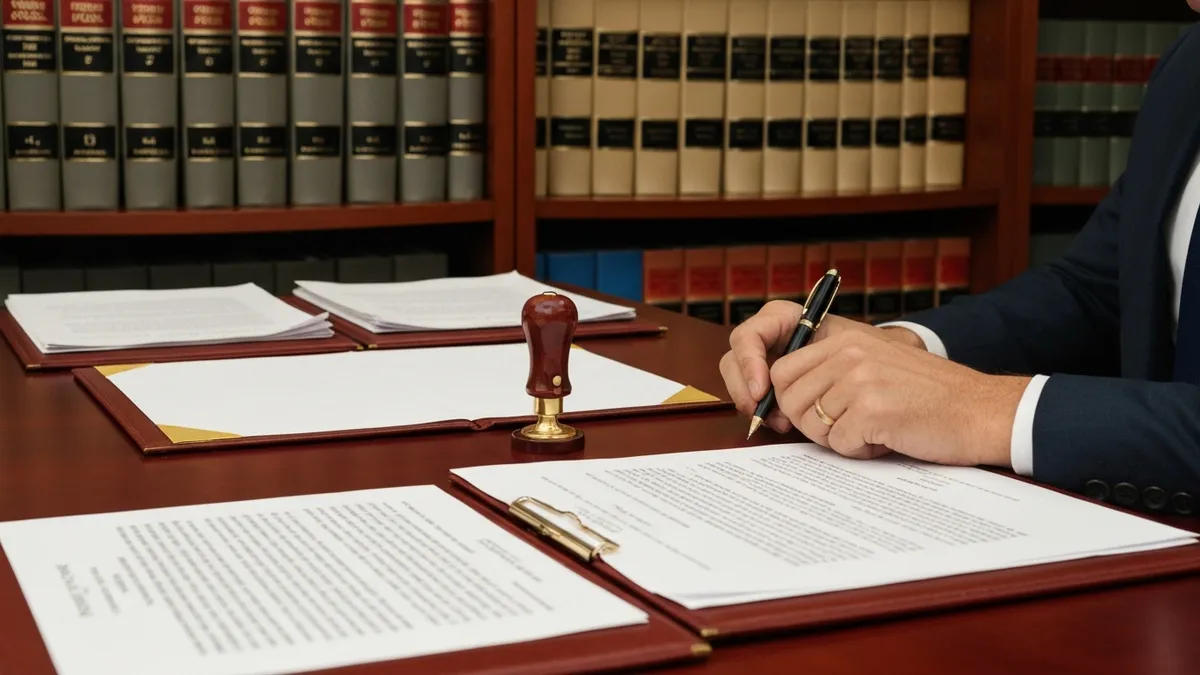
Pros and Cons of Using a Retail Notary vs. Bank Notary
- +Bank notaries are often completely free for account holders, saving $5 to $15 per signature
- +Retail notaries at UPS Store and FedEx have extended hours including weekends and evenings
- +Mobile notaries travel to your location, eliminating the need to leave home or office
- +Online notarization via RON platforms is available 24/7 from any device with a camera
- +Government offices and libraries often provide free notary services to all community members
- +Many credit unions notarize documents for non-members at low cost as a community service
- −Bank notaries may not be on duty at every branch or every hour, requiring advance planning
- −Retail notary fees add up quickly if you have multiple documents or multiple signers
- −Mobile notary travel fees can be expensive, sometimes exceeding $100 for a single visit
- −Remote online notarization is not accepted by all institutions or in all states as of 2026
- −Library and government office notaries may have limited hours or require appointments
- −Walgreens and most pharmacies do not offer notary services, disappointing many walk-in searchers
Notarization Preparation Checklist: What to Bring and Do
- ✓Bring a valid, unexpired government-issued photo ID such as a driver's license, passport, or military ID.
- ✓Do NOT sign the document before appearing before the notary — signatures must be witnessed in person.
- ✓Confirm that all required co-signers or witnesses can appear at the same time and location.
- ✓Call ahead to verify that a commissioned notary will be available at your chosen location and time.
- ✓Review the document thoroughly so you understand what you are signing before the appointment.
- ✓Bring any required witnesses if the document type mandates witness signatures in addition to notarization.
- ✓Check whether your document requires a specific notarial act type such as an acknowledgment or a jurat.
- ✓Confirm the notary fee schedule in advance so you bring the correct payment method.
- ✓Ask whether your institution requires the document to be notarized in a specific state jurisdiction.
- ✓After notarization, make a certified copy of the completed document for your own personal records.
Notary Availability Is Never Guaranteed Without Confirmation
Even banks, UPS Stores, and libraries that regularly offer notary services can have gaps in availability due to staff schedules, leave, or commission renewals. Before driving to any location with time-sensitive documents, always call ahead to confirm a commissioned notary will be present. This single step prevents wasted trips and last-minute document deadline crises.
Learning how to become a notary public is a goal for many professionals who want to add a valuable credential, earn supplemental income, or serve their community. The process is governed entirely at the state level, meaning requirements vary significantly depending on where you live. However, most states share a common framework that includes an application, a background check, an educational component, a bond requirement, and in many states, a formal notary public exam that tests your knowledge of notarial laws and procedures.
The first step in most states is confirming your eligibility. Generally, you must be at least 18 years of age, a legal resident of the state where you wish to be commissioned, able to read and write English, and free of felony convictions or certain misdemeanor offenses. Some states also require that applicants not have had a prior notary commission revoked. Once eligibility is confirmed, the application process typically begins through your state's secretary of state website, where forms, fees, and instructions are posted.
Education requirements vary widely. Some states require applicants to complete a state-approved training course before submitting their application, while others require a training course only after appointment. A growing number of states require passage of a written notary public exam as a condition of commissioning. These exams test knowledge of notarial vocabulary, proper procedures for common notarial acts, identification requirements, prohibited activities, and record-keeping obligations. Exam formats differ — some are proctored in-person exams while others are open-book or online.
After completing any required education and passing the exam, applicants typically submit their commission application along with the application fee, which ranges from about $15 to $120 depending on the state. A notary bond — a type of surety bond that protects the public in case a notary causes financial harm through misconduct — is required in most states before the commission is issued. Bond amounts typically range from $500 to $15,000, and the annual premium paid by the notary is usually just a small fraction of that amount.
Once your commission is approved and you receive your certificate of commission, you must purchase your official notary supplies: a notary seal or stamp and, in most states, a notary journal. The notary public stamp must contain specific information required by state law, and using a non-conforming stamp can invalidate notarizations. Most states also require notaries to file an oath of office with their county clerk before performing any notarial acts, completing the final step in the commissioning process.
Notary commissions are not permanent — they expire, typically after four years, though some states issue two-year or other term-length commissions. Renewing your commission requires going through a similar process, which may or may not include retaking an exam depending on the state's current rules. Staying current on continuing education, joining a notary association, and regularly reviewing your state's notary handbook helps ensure you perform every notarization correctly and avoid the liability risks that come with errors or misconduct.
Notaries who want to expand their practice often pursue additional certifications, such as becoming a Notary Signing Agent (NSA) for real estate loan closings or obtaining RON authorization to perform remote online notarizations. The notary public nj and similar state-specific office resources can help you navigate the exact requirements in your jurisdiction and understand what additional steps may open up more notarization opportunities in specialized fields.

In the United States, a notary public is NOT authorized to provide immigration legal advice, prepare visa petitions, or draft legal contracts — regardless of whether they advertise as a notario publico. Only licensed attorneys or accredited representatives can legally provide immigration services. Unauthorized practice of immigration law is a federal crime, and victims often lose thousands of dollars and face deportation consequences. Always verify credentials before paying for document preparation services.
Preparing for the notary public exam requires targeted, structured study that covers the full range of topics your state's examination will address. Most state notary exams test candidates on the definitions and distinctions between notarial acts, proper identification procedures, prohibited activities, record-keeping requirements, handling of signers who cannot write or speak English, and the ethical obligations of a commissioned notary. Understanding these areas in depth — not just memorizing definitions — is what separates candidates who pass on the first attempt from those who must retake the exam.
Start your preparation by obtaining your state's official notary handbook or administrative code, which is the primary source for exam content. Most state handbooks are available as free PDF downloads from the secretary of state website. Read the handbook at least twice, making notes on specific rules, exceptions, and procedures that seem unfamiliar. Pay particular attention to sections covering improper notarizations, situations where a notary must refuse to act, and the specific language required on notarial certificates for acknowledgments versus jurats.
Practice tests are an invaluable preparation tool. Simulating exam conditions with timed practice questions helps you identify weak areas, build test-taking stamina, and reduce anxiety on exam day. When reviewing incorrect answers, always trace the reasoning back to the specific rule or statute, not just the correct answer. This approach builds genuine understanding rather than surface-level pattern recognition that collapses under slightly rephrased exam questions. Using multiple practice sources exposes you to a wider variety of question formats and scenarios.
Common exam pitfalls include confusing acknowledgments with jurats, misunderstanding when a notary must use a journal versus when it is optional, and incorrectly answering questions about credible witness procedures for signers without acceptable ID. Many candidates also struggle with questions about multi-state scenarios — for example, whether a California notary can notarize a document that will be used in Texas, or how to handle a document that arrives pre-signed. Reviewing these edge cases carefully during study preparation prevents costly exam failures.
Time management during the actual exam is critical. If your state's exam is timed, practice answering questions at a pace that leaves you time to review flagged items before submitting. Read each question twice before answering — notary exam questions frequently include key qualifying words like "always," "never," "may," and "must" that completely change the correct answer. Eliminating clearly wrong choices first and then selecting the best remaining option is a reliable strategy when you are uncertain between two plausible answers.
For those pursuing the exam in states like Florida, where a state-approved education course must be completed first, the course content itself serves as a strong study base. Supplement it with practice questions focused specifically on the areas the course covered lightly. Resources are available for people studying how to become a notary in multiple states — for example, texas notary public materials can be cross-referenced to understand how neighboring states handle similar notarial scenarios, which sometimes reinforces the underlying principles more effectively than reading a single state's materials in isolation.
After passing the exam and receiving your commission, ongoing education remains important. Many states now require continuing education credits for commission renewal, and even where it is not required, staying current on legislative changes, court decisions affecting notarial acts, and technology developments like remote online notarization ensures you continue to serve signers correctly and professionally throughout your entire commission term and beyond.
Beyond passing the exam, building a successful notary practice requires understanding the business and ethical dimensions of the role. Notaries who treat their commission as a serious professional credential — rather than a rubber-stamp service — build reputations for reliability and accuracy that generate referrals and repeat clients. Whether you plan to notarize documents for friends and family, offer walk-in services from a home office, or become a full-time Notary Signing Agent, professionalism in every interaction is the foundation of long-term success.
Marketing yourself as a notary has changed dramatically with the rise of notary finder platforms. Services like the National Notary Association's directory, Notary Rotary, and 123Notary allow you to create a searchable profile that clients use when they search for free notary public near me or specialized mobile notary services. Keeping your profile accurate, including your hours, fee schedule, language capabilities, and any specialty certifications, dramatically increases your visibility to potential clients who need services you are specifically qualified to provide.
Errors and omissions (E&O) insurance is a critical but often overlooked tool for working notaries. While your surety bond protects the public if you cause financial harm through misconduct, E&O insurance protects you personally from the cost of legal defense if a client sues you for a notarial error — even an innocent mistake. Many professional notaries and all serious Notary Signing Agents carry E&O coverage in amounts ranging from $25,000 to $100,000. The annual premium is modest compared to the protection it provides against potentially career-ending liability.
For notaries working in real estate, understanding the loan signing process is essential. Loan document packages used in mortgage closings can contain 150 or more pages and require multiple notarized signatures from borrowers. Signing agents must be able to guide borrowers efficiently through documents, answer procedural questions without crossing into legal advice territory, and manage multi-party signings involving buyers, sellers, and real estate agents. Certification from the National Notary Association or the Loan Signing System is widely recognized and expected by title companies and signing services.
Keeping a thorough, accurate notary journal is one of the most important habits a notary can develop, whether or not their state legally requires one. Your journal is your best defense if a notarization is later challenged in court.
A complete journal entry includes the date and time of the notarial act, the type of act performed, the type and identifying information of the ID presented, the name and signature of the signer, the title of the document notarized, and the fee charged. Courts have repeatedly relied on notary journal records to resolve disputes about whether a legitimate notarization took place.
Notaries should also understand their absolute obligation to refuse a notarization when something is wrong. A notary must decline to notarize if the signer cannot be properly identified, if the signer appears to be under duress or lacks the mental capacity to understand what they are signing, if the document is incomplete, or if the notary has a personal financial interest in the transaction.
These refusals protect both the signer and the notary from involvement in fraud. A notary who notarizes improperly — even under pressure from a client or employer — faces commission revocation, fines, civil liability, and in egregious cases, criminal prosecution.
Whether you are looking for a quick notarization at your local bank, searching for a free public notary near me option, or preparing to launch your own notary career, the resources available today make both goals more accessible than ever. Practice tests, state handbooks, online training courses, and professional associations provide everything you need to succeed as a signer seeking services or as an aspiring notary building a meaningful credential and career.
Notary Public Questions and Answers

How to Become a Notary Public: Complete State-by-State Training Guide

NC Notary Public Course: Complete Training Guide for North Carolina

Notary Public Commission Application: Complete Step-by-Step Guide for 2026
What Is a Notary Public Office? Everything You Need to Know
Notary Public Salary: How Much Notaries Really Earn in 2026
About the Author

Notary Public Law Expert & State Notary Exam Specialist
Georgetown University Law CenterAttorney Sarah Williams is a licensed attorney and National Notary Association (NNA) certified notary with a Juris Doctor from Georgetown University Law Center. She has 13 years of experience in notarial law, document authentication, and real estate closings. Sarah coaches candidates through state notary public examinations, notary signing agent certification, and loan signing agent training programs.