
Notarios Publicos: What Is a Notary Public and How to Become One in the US
Learn what a notary public is, how notarios publicos work in the US, notary stamps, seals, and how to become certified. Complete 2026 September guide. 🟢
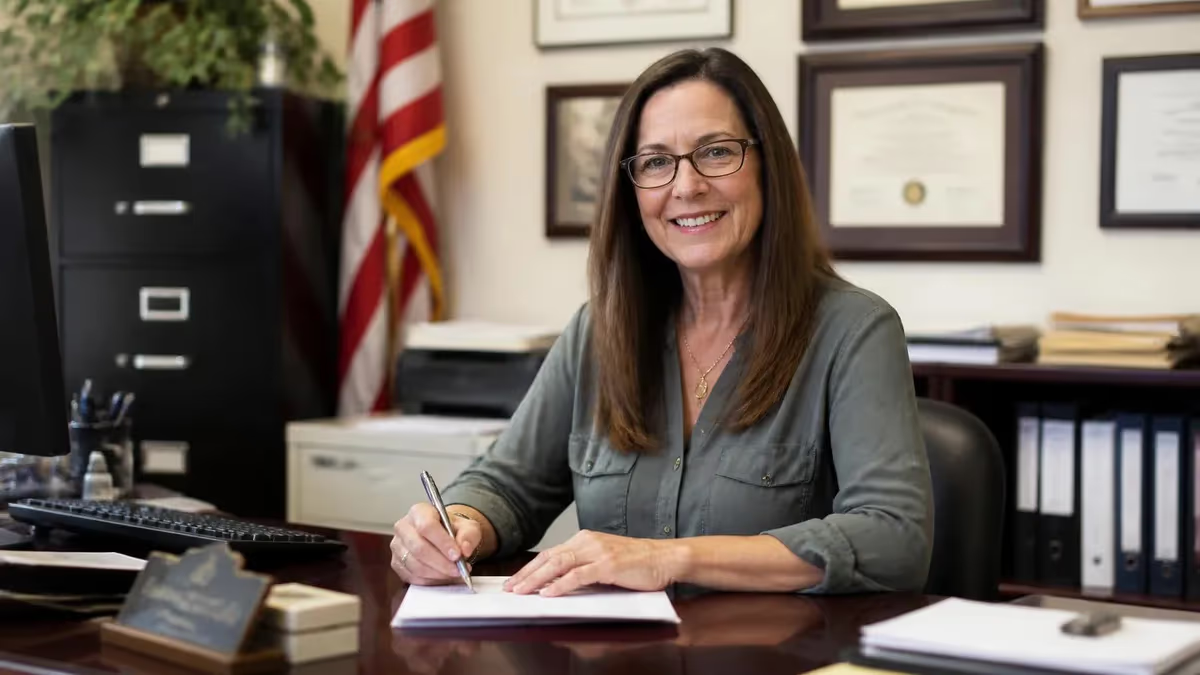
Understanding what is a notary public is essential for anyone navigating legal documents, real estate transactions, immigration paperwork, or financial agreements in the United States. A notary public is a state-commissioned official authorized to witness signatures, administer oaths, certify copies of documents, and perform other acts designed to deter fraud. For Spanish-speaking communities across the US, the term notarios publicos carries particular weight — and important distinctions that every immigrant and legal professional should understand before seeking notarization services.
The role of a notary public in the United States is very different from that of a notarios publicos in Latin American countries. In Mexico, Colombia, Argentina, and most of Latin America, a notario publico is a highly trained legal professional — roughly equivalent to an attorney — who can draft legal documents, authenticate property transfers, and provide extensive legal counsel. In the US, however, a notary public has a narrower, administrative role focused primarily on identity verification and signature witnessing rather than legal advice or document preparation.
This distinction matters enormously for immigrant communities. Unscrupulous individuals in the US sometimes advertise themselves as notarios publicos to mislead Spanish-speaking clients into believing they are receiving full legal services. These fraudulent practitioners may charge high fees for immigration forms, legal filings, or visa applications — work they are not licensed to perform. Understanding the true, limited scope of a US notary public can protect you from costly scams and unauthorized practice of law.
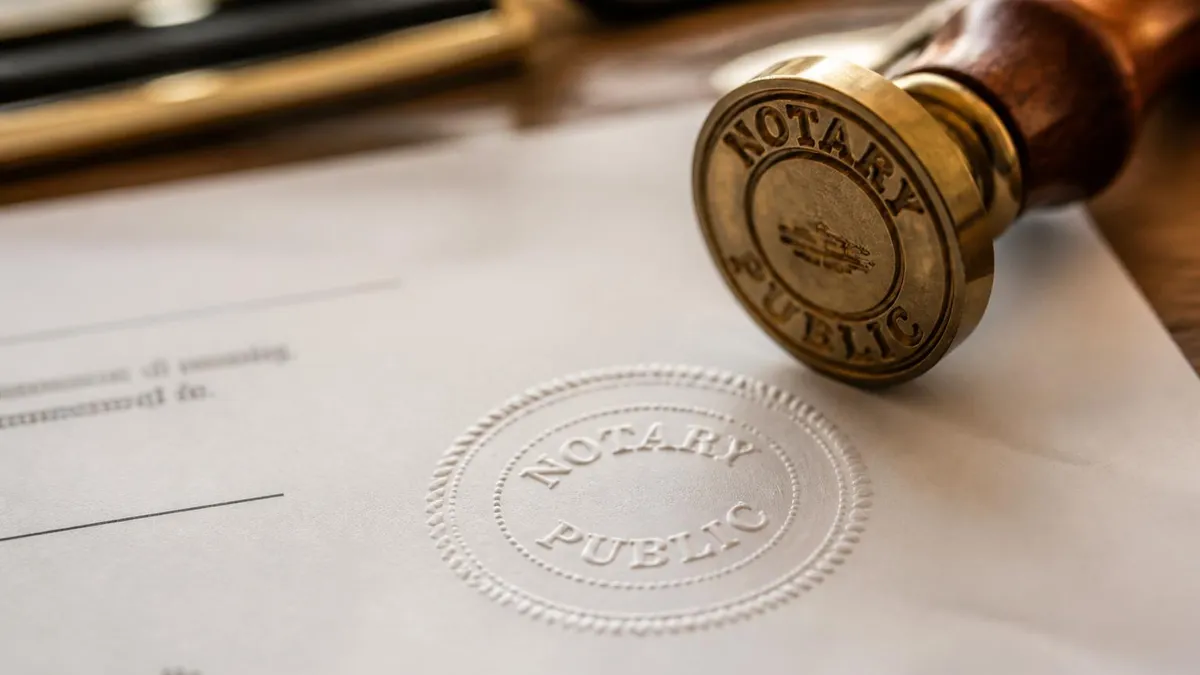
A notary public stamp and notary public seal are the two most recognizable symbols of a commissioned notary. The stamp — typically a rubber ink stamp — imprints the notary's name, commission number, state, and expiration date onto documents. The seal, which may be embossed or inked, serves the same authenticating function. Both tools signal that a licensed official has verified the signer's identity and witnessed the signature, lending the document legal credibility recognized by courts, financial institutions, and government agencies nationwide.
Finding free notary public services near you is easier than many people realize. Major banks like Bank of America, Chase, and Wells Fargo routinely offer complimentary notarization to account holders. Public libraries, credit unions, shipping centers like UPS and FedEx, and even some grocery stores provide notary services, often at no charge or for a nominal fee. Searching online for free notary public near me or free public notary near me typically surfaces dozens of local options within a few miles of most US addresses.
For those interested in becoming a commissioned notary, the notary public exam is a required step in many states, including California, New York, and several others. The exam tests knowledge of state-specific notary laws, proper notarial acts, acceptable forms of identification, journal-keeping requirements, and ethical obligations. Passing the exam and completing the full application process leads to an official commission that allows you to serve the public as a trusted, legally recognized official.
This comprehensive guide covers everything you need to know about notary publics in the US context — from the meaning of the notario publico designation to step-by-step instructions on how to become a notary public, what the notary public stamp and seal represent, where to find free services, and how to prepare for the notary public exam. Whether you are a signer, a first-generation immigrant, or an aspiring notary yourself, this article provides the foundational knowledge you need.
Notary Public in the US by the Numbers
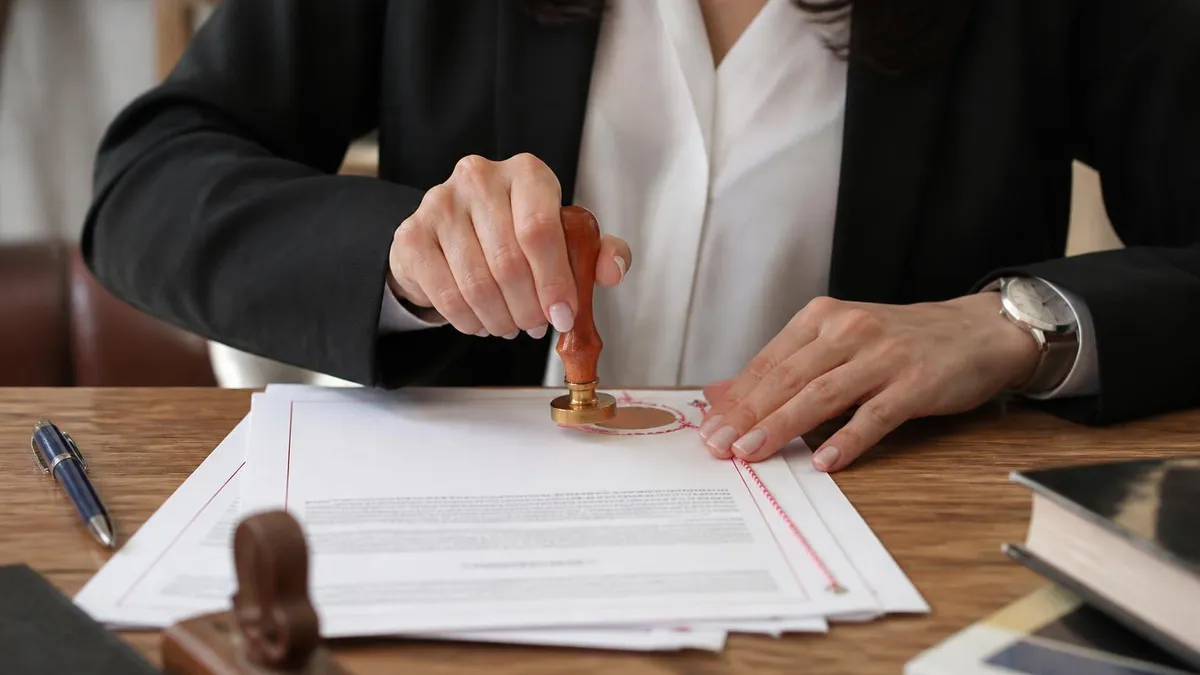
US Notary Public vs. Latin American Notario Publico
A state-commissioned official with limited authority to witness signatures, verify identity, administer oaths, and authenticate documents. Cannot provide legal advice, draft contracts, or represent clients in any legal proceeding.
A highly trained legal professional — often requiring a law degree plus postgraduate notarial studies — authorized to draft legal instruments, authenticate property transactions, and provide binding legal counsel.
Unauthorized individuals in the US who falsely claim notario publico status and offer immigration legal services are committing fraud. Report them to your state attorney general or the local bar association immediately.
Witness and attest signatures on deeds, affidavits, loan documents, and powers of attorney; administer oaths for sworn statements; certify that a copy is a true copy of an original document.
A US notary cannot provide legal advice, tell you which documents to sign, represent you in immigration court, prepare legal contracts for a fee, or guarantee a document's legal effect.
The notary public stamp and notary public seal are more than decorative marks — they are legally binding indicators that a qualified official has performed a notarial act according to state law. Every US state has specific requirements governing what information must appear on the stamp or seal, how it must be applied, and under what circumstances it can be used. Failing to use the correct tools, or using expired credentials, can invalidate an otherwise properly executed document.
A notary public stamp typically takes the form of a rectangular rubber stamp that leaves an inked impression on paper. It must include the notary's full legal name exactly as it appears on the commission certificate, the state in which the commission was issued, the commission number assigned by the state, and the expiration date of the commission. Some states also require the county where the notary is registered. The stamp must be legible and applied in a way that does not obscure any text on the document.
The notary public seal serves a similar authenticating purpose but often takes a different physical form — most commonly a circular or rectangular embossing tool that creates a raised impression in paper. Some states require an inked seal, others accept or require an embossed seal, and many states allow either format. California, for example, requires notaries to use an inked stamp with specific content; New York requires a rubber stamp or embossed seal bearing the notary's name, the words 'Notary Public State of New York,' the county where the notary is qualified, and the commission expiration date.
Both tools must be stored securely. State laws universally prohibit notaries from allowing unauthorized persons to use their stamp or seal, and many states require notaries to immediately notify the commissioning authority if their stamp or seal is lost, stolen, or damaged. Some states impose criminal penalties for misuse or unauthorized possession of a notarial seal. When a notary's commission expires or is revoked, the stamp and seal must be destroyed or surrendered to prevent fraudulent use.
For remote online notarization (RON), which is now authorized in more than 40 states, the physical stamp and seal are replaced by an electronic equivalent — a digital image or cryptographic certificate that carries the same legal weight. RON platforms such as Notarize, DocVerify, and NotaryCam generate tamper-evident electronic seals that are embedded into the document's metadata, making unauthorized alteration detectable. The rise of e-notarization has expanded access significantly, particularly for elderly individuals, people with disabilities, and those living in rural areas far from in-person notary services.
Understanding what appears on a notarial certificate — the written text that accompanies the stamp or seal — is equally important. A notarial certificate describes the specific act performed: an acknowledgment certifies that the signer appeared before the notary and acknowledged signing voluntarily; a jurat certifies that the signer swore an oath before the notary that the contents of the document are true. Using the wrong certificate wording for the type of act required can render the notarization defective and require the entire process to be repeated.
Many documents arrive with pre-printed notarial certificate language, but in some cases a notary must attach or complete a separate certificate form. Notaries are not permitted to choose which certificate to use based on what the signer prefers — the document or its requesting authority dictates the required form. When in doubt, a notary should direct the signer to consult an attorney rather than guess, since providing legal advice falls outside the permissible scope of notarial practice in every US state.
Types of Notarial Acts: Acknowledgments, Jurats, and More
An acknowledgment is the most common notarial act in the United States. The signer appears before the notary and declares — acknowledges — that they signed the document willingly and understand its contents. The notary verifies the signer's identity using acceptable government-issued photo identification, such as a driver's license or passport, confirms that the signer is willing and aware, and then completes the notarial certificate. Acknowledgments are required for deeds, mortgages, powers of attorney, and many real estate closing documents.
Unlike a jurat, the signer does not need to sign the document in the notary's presence during an acknowledgment — they may have signed earlier, as long as they personally appear and acknowledge the signature. However, the notary must still verify identity and assess whether the signer appears to be acting under duress or lacks capacity. If the notary has any reasonable doubt about the signer's willingness or identity, the act should be declined. Acknowledgment wording varies by state, so notaries must use the correct statutory language for their jurisdiction.

Pros and Cons of Becoming a Notary Public
- +Low barrier to entry — most states require only a short course, an exam, and a modest application fee
- +Flexible side income — mobile notaries can earn $75–$200 per loan signing appointment
- +Strong community demand — businesses, law offices, banks, and individuals constantly need notarization services
- +Career enhancer — notary credentials add credibility for paralegals, real estate agents, and administrative professionals
- +Remote online notarization opens a national client base without geographic limitations
- +Short learning curve — most applicants can prepare for the notary public exam in two to four weeks with structured study
- −Commission is state-specific — relocating across state lines requires a new application and sometimes a new exam
- −Liability exposure — errors in notarization can lead to lawsuits; errors and omissions (E&O) insurance is strongly recommended
- −Income is unpredictable as a primary career — most notaries treat it as supplemental income rather than a full-time profession
- −Strict rule-following required — even minor procedural mistakes can invalidate a document and damage professional reputation
- −Fee caps in many states — some jurisdictions set maximum per-act fees as low as $2–$10, limiting earning potential for in-office notaries
- −Continuing education and renewal required — commissions expire every 2–5 years depending on the state, requiring ongoing investment
How to Become a Notary Public: Complete Step-by-Step Checklist
- ✓Confirm your state's eligibility requirements — typically 18+ years old, legal US residency, and no felony convictions.
- ✓Complete any required notary education course mandated by your state (California requires 6 hours; other states vary).
- ✓Submit your notary public application to the state commissioning authority along with the required application fee.
- ✓Pass the notary public exam if required in your state — study using practice tests and official state notary handbooks.
- ✓Pass the mandatory background check, which reviews criminal history and professional conduct records.
- ✓Purchase a surety bond in the amount required by your state (commonly $5,000–$15,000) to protect the public against notary errors.
- ✓Take your official oath of office at the county clerk's office or authorized swearing-in location within the required timeframe.
- ✓Order your official notary public stamp and notary public seal from a licensed supplier after receiving your commission certificate.
- ✓Purchase a notary journal and begin recording every notarial act performed, including signer details and document type.
- ✓Consider purchasing Errors and Omissions (E&O) insurance to protect yourself from liability claims arising from notarial mistakes.
US Notary ≠ Notario Publico in Latin America
In the United States, a notary public cannot provide legal advice, prepare immigration applications, or represent clients in any legal matter — even if they advertise as a notario publico. If someone charges you for immigration legal services while claiming to be a notario, report them to your state attorney general immediately. Always consult a licensed immigration attorney for legal representation.
Preparing for the notary public exam requires a focused, structured approach. Unlike many professional licensing exams, the notary exam is not designed to be extraordinarily difficult — but it does require genuine familiarity with your state's specific notary statutes, the definitions of notarial acts, acceptable identification documents, journal-keeping obligations, and the boundaries of what a notary may and may not do. Candidates who treat the exam casually and skip systematic study often fail on their first attempt, which delays their commission and requires paying additional fees.
The first and most important study resource is your state's official notary public handbook or manual. Every commissioning state publishes a comprehensive guide that outlines the laws governing notarial practice in that jurisdiction. California's Secretary of State, for example, publishes a detailed Notary Public Handbook that covers the entire body of California notary law. New York's Department of State publishes a similar guide. These documents are free, authoritative, and precisely aligned with what the exam will test — they should be read at least twice before exam day.
Practice questions and mock exams are the second pillar of effective exam preparation. Working through realistic practice scenarios helps candidates identify weak areas, builds familiarity with question formats, and trains the test-taking mindset needed to interpret tricky or nuanced answer choices. Many candidates discover through practice testing that they misunderstood a concept they thought they knew well — catching that gap before the real exam is invaluable. Free practice resources are widely available online, including the quizzes on PracticeTestGeeks.com that cover notarial duties, fraud prevention, identification verification, and ethics.
Understanding the exam format specific to your state is also critical. California's notary exam, administered by a third-party testing provider, consists of 45 multiple-choice questions with a 70% passing score requirement. New York's exam is a written test administered at designated testing sites. Some states use online proctored exams. Knowing the format, time limit, and passing threshold before you sit for the exam removes unnecessary anxiety and allows you to pace yourself appropriately during the test.
Common exam topic areas across most states include the definition and purpose of notarial acts, the difference between acknowledgments and jurats, acceptable forms of signer identification, journal requirements (what must be recorded, how long records must be retained), the notary's duty to refuse a notarization under specific circumstances, prohibited acts such as notarizing a document in which the notary has a financial interest, and the consequences of commission violations including revocation and civil or criminal penalties.
Many aspiring notaries underestimate the importance of understanding identification requirements. Most states require that signers present current, government-issued photo identification — but the specific list of acceptable ID types varies by state. California accepts a driver's license, US passport, inmate identification card, and certain other documents. Texas has a different list. Some states allow credible identifying witnesses to vouch for a signer who lacks photo ID. Memorizing your state's specific acceptable ID requirements is essential for both the exam and for performing notarizations correctly once commissioned.
Time management during study is as important as the content itself. Most candidates need two to four weeks of consistent preparation — roughly one to two hours per day — to feel confident going into the exam. A structured approach works better than marathon cramming sessions. Study the handbook chapter by chapter, quiz yourself on each section before moving to the next, and spend the final week doing timed practice exams under conditions that simulate the real test. Arriving well-rested, with your ID and any required materials, on exam day will help you perform at your best.

Individuals who falsely hold themselves out as notarios publicos offering legal services — including immigration form preparation, visa applications, or legal document drafting — are engaging in the unauthorized practice of law. Victims can lose thousands of dollars and face irreversible immigration consequences. If you or someone you know has been victimized, contact your state attorney general's consumer protection office or a licensed immigration attorney immediately.
Finding free notary public near me services is simpler than most people expect once you know where to look. The most reliable and widely available source is your bank or credit union. Bank of America, Chase, Wells Fargo, US Bank, and most major financial institutions provide complimentary notarization services to their account holders, typically during regular banking hours. Some branches may require an appointment, especially for loan signings or complex document packages, so calling ahead is always a good idea to confirm availability and avoid a wasted trip.
Public libraries are another outstanding free resource. Many library systems across the United States — from New York Public Library branches to small-town county libraries — employ notaries on staff or schedule regular notary office hours. The service is typically offered at no cost to library cardholders, and some libraries serve non-cardholders for a minimal fee. Library notary services are particularly valuable for elderly residents, individuals without bank accounts, and members of low-income communities who need affordable access to notarization.
Shipping and business service centers are a convenient paid option that mimics the accessibility of free services. UPS Store locations, FedEx Office centers, and Staples stores offer notarization, typically for $5–$25 per signature depending on the state's fee cap. While not free, these locations offer extended hours including evenings and weekends that banks and libraries rarely match, making them practical for working adults who cannot access daytime services.
Mobile notary services bring the notary to you — whether at your home, hospital, nursing facility, or workplace. Mobile notaries charge a travel fee on top of the per-act notarization fee, but for individuals with mobility limitations, medical conditions, or urgent document needs outside of business hours, the convenience often justifies the cost. Many mobile notaries specialize in loan signings and real estate closings and can handle complex multi-document packages that a bank teller might not be equipped to manage. Apps and platforms like Notarize, Pavaso, and Snapdocs connect clients with available mobile and remote notaries in minutes.
For notarization of Spanish-language documents or for signers who are more comfortable in Spanish, seeking a bilingual notary is especially important. A notary is not required to be fluent in the signer's language — the notary's job is to verify identity and witness the signature, not to explain the document's contents — but a bilingual notary can facilitate communication and ensure the signer understands what they are signing, reducing the risk of errors or challenges to the notarization later. Many communities with large Hispanic populations have notary offices that specifically serve Spanish-speaking clients.
Remote online notarization (RON) has transformed access to notary services for people across the country. Through a secure video call, a commissioned RON notary can verify a signer's identity using multi-factor authentication, witness the electronic signature in real time, and apply a digital notarial seal — all without either party leaving home. As of 2026, over 40 states have enacted RON legislation, and interstate recognition of remotely notarized documents continues to expand. For individuals in rural areas, frequent travelers, or anyone dealing with time-sensitive international documents, RON offers a level of convenience that traditional in-person notarization cannot match.
When searching for notary services, always verify that the notary's commission is current and active. Many states maintain an online searchable database of commissioned notaries — California's Secretary of State website and New York's Department of State both offer free commission verification tools. Confirming a notary's commission status before your appointment protects you from having a document invalidated because it was notarized by someone whose commission had already expired. A few minutes of verification can prevent significant legal complications down the road.
Once you hold a notary commission, building a successful practice requires more than just having the right tools and credentials. Professionalism, accuracy, and ethical conduct are the foundations of a trustworthy notary reputation. Every notarization you perform should be treated with the same careful attention to procedure — whether it is a simple one-page affidavit or a complex 200-page real estate loan package. Cutting corners on identification verification, journal entries, or certificate wording creates legal risk for both the signer and yourself.
Maintaining a thorough notary journal is one of the most important habits you can develop. Many states legally require notaries to keep a sequential record of every notarial act, including the date and time of the notarization, the type of act performed, the document title and date, the signer's name and address, the type of identification presented, and the notary fee charged.
Even in states where a journal is not mandated, maintaining one is a best practice that protects you if your notarization is ever challenged in court. A well-kept journal provides a contemporaneous record of your compliance with state law.
Continuing education is increasingly important as notary laws evolve. Many states have introduced electronic notarization and remote online notarization statutes within the past five years, and the regulatory landscape continues to change. Subscribing to updates from your state's commissioning authority and from professional organizations like the National Notary Association (NNA) keeps you informed of new requirements before they become compliance issues. The NNA also offers certification programs, background screening, and E&O insurance that enhance your professional credibility.
For aspiring notaries who want to maximize their earning potential, specialization is worth considering. Loan signing agents — notaries certified to handle real estate and mortgage closings — can earn $75–$200 per appointment and often complete multiple signings per day. Becoming a certified loan signing agent requires additional training beyond the basic notary commission, but the investment pays for itself quickly in a market where demand for experienced signing agents consistently exceeds supply. The Notary Signing Agent certification from the NNA or similar providers is the industry standard credential for this specialty.
Ethics and boundary-setting are non-negotiable aspects of notary practice. A notary must refuse a notarization any time there is a reasonable doubt about a signer's identity, willingness, or mental competence to understand the document being signed. Notarizing for a family member on a document in which you have a direct financial interest is prohibited in most states. Accepting a bribe or fee above the state-mandated maximum, pre-signing or post-dating notarial certificates, and notarizing a document you know to be fraudulent are all grounds for commission revocation and potential criminal prosecution.
Marketing your notary services effectively requires understanding your community's needs. In areas with large Spanish-speaking populations, advertising as a bilingual notary who serves the community — while making crystal clear that US notary services are distinct from the legal advisory role of a Latin American notario publico — can differentiate you from competitors and build trust with clients who have been confused or victimized by notario fraud in the past. Transparency about what you can and cannot do, offered consistently and respectfully, builds the kind of professional reputation that generates referrals and repeat business.
Finally, renewing your commission before it expires is critical. Most states issue commissions for four years, though some issue two-year terms. Mark your renewal deadline on your calendar six months in advance. Some states require taking the exam again at renewal; others simply require a renewal application and fee. Allowing your commission to lapse — even unintentionally — means any notarizations you perform during the lapse period are legally invalid, potentially exposing you to liability. Staying ahead of your renewal schedule is one of the simplest and most important aspects of maintaining a professional notary practice.
Notary Public Questions and Answers
What Is a Notary Public Office? Everything You Need to Know

Mobile Notary Public Near Me: How to Find, Book, and Use One in 2026

Notary Public Classes: Complete 2026 Guide to Training, Certification, and Exam Prep

30-Day Notary Public Exam Study Plan — Pass on Your First Try

Notary Public License: What It Is, How to Get One, and Everything You Need to Know
About the Author
Notary Public Law Expert & State Notary Exam Specialist
Georgetown University Law CenterAttorney Sarah Williams is a licensed attorney and National Notary Association (NNA) certified notary with a Juris Doctor from Georgetown University Law Center. She has 13 years of experience in notarial law, document authentication, and real estate closings. Sarah coaches candidates through state notary public examinations, notary signing agent certification, and loan signing agent training programs.